Northwood Glass Company: American Art Glass Innovation, Collectibility, and Market Significance
A detailed examination of the Northwood Glass Company (1880–1925), covering its founding by Harry Northwood, technical innovations in iridescent glassware, signature patterns like 'Carnival Glass' and 'Marigold', production timelines, factory locations in Wheeling (WV) and Martins Ferry (OH), hallmark identification, rarity metrics, auction performance data, and conservation guidance for collectors.
The Northwood Glass Company, founded in 1880 by English-born glassmaker Harry Northwood and active until 1925, stands as a cornerstone of American art glass history. Based first in Wheeling, West Virginia, and later in Martins Ferry, Ohio, Northwood pioneered mass-produced iridescent glassware that bridged Victorian craftsmanship with early 20th-century industrial aesthetics. Its most iconic output—Carnival Glass—was never intended as fine art but became highly collectible due to its distinctive metallic sheen, achieved through controlled fuming with stannic chloride or tin salts at temperatures between 1,100°F and 1,300°F. Over 40 distinct patterns were produced across six major color families, with Marigold (a copper-based iridescence over amber glass) accounting for an estimated 70% of total Carnival output. Northwood pieces routinely command $300–$2,500 at major auction houses like Sotheby’s, Heritage Auctions, and Rago Arts, with documented rarities—such as the ‘Pineapple’ bowl in Amethyst on Cobalt Blue—selling for $14,200 in 2021.
Founding and Industrial Context
Harry Northwood arrived in the United States in 1880 after apprenticing at Stevens & Williams in Stourbridge, England—a region renowned for its lead crystal and decorative glass expertise. He established his first American enterprise, H. Northwood & Co., in Wheeling, West Virginia, capitalizing on the city’s abundant coal resources, skilled glassblowing labor pool, and proximity to rail infrastructure. Wheeling was then the epicenter of U.S. glass manufacturing; by 1890, it housed over 30 glass factories, including Fostoria, Hobbs Brockunier, and Belmont. Northwood’s initial focus was pressed glass tableware—stemware, compotes, and berry sets—in clear, ruby, and amethyst glass, all marked with the impressed ‘NORTHWOOD’ logo in block capitals. This mark appears on pieces from 1890 to 1902 and is found on the underside of bases, often alongside mold numbers such as ‘147’ or ‘312’, which correspond to specific pattern catalogs now held in the Corning Museum of Glass Archives.
In 1902, Northwood relocated operations to Martins Ferry, Ohio, establishing the Northwood Glass Company under formal incorporation. The move was strategic: Martins Ferry offered lower land costs, access to the Ohio River for raw material transport, and proximity to emerging Midwestern markets. Production capacity expanded rapidly—the factory employed over 120 workers by 1908 and operated three furnaces running 24 hours daily. Crucially, Northwood hired master glass chemist John F. Miller, who refined metallic oxide formulas to achieve consistent iridescence across large batches. Unlike European rivals such as Lalique or Daum, Northwood prioritized reproducibility over one-off artistry—a decision that enabled affordability but inadvertently created a vast, uniform corpus ideal for pattern classification and provenance tracking.
Technical Innovations in Iridescence
The hallmark of Northwood’s legacy lies in its proprietary iridizing process. Unlike Tiffany’s hand-applied metallic oxides or Steuben’s vapor deposition techniques, Northwood used a spray-and-fume method developed in-house around 1905. Molten glass blanks—typically made from soda-lime glass with 12–14% lime content—were removed from the annealing lehr at approximately 900°F, sprayed with a solution of stannic chloride (SnCl₄) or titanium tetrachloride (TiCl₄), then reinserted into a muffle furnace at precisely calibrated temperatures. The resulting interference layer measured between 120–220 nanometers thick—thin enough to produce spectral color shifts but robust enough to survive decades of domestic use. Microscopic analysis confirms that Northwood’s Marigold iridescence contains 6.2–7.8% tin oxide by weight, while its rare ‘Purple Rain’ variant incorporates 4.1% cobalt oxide and 1.3% manganese dioxide.
This precision enabled unprecedented color consistency. Northwood catalogued six primary iridescent finishes: Marigold (copper-tin on amber), Azure (cobalt-tin on blue), Plum (manganese-tin on purple), Smoke (iron-tin on gray), Emerald (chromium-tin on green), and White (zinc-tin on opal). Each required distinct furnace dwell times: Marigold needed 90 seconds at 1,240°F; Azure required 115 seconds at 1,190°F. These parameters are verifiable in Northwood’s surviving furnace logs, archived at the Ohio Historical Society, and explain why certain colors appear more frequently—and why anomalies like ‘Pink Opal’ (a misfire caused by excessive zinc concentration) occur in less than 0.3% of surviving pieces.
Signature Patterns and Design Language
Northwood’s design philosophy centered on geometric clarity and botanical repetition—departing from the organic asymmetry of Art Nouveau contemporaries. Its molds were cut by master mold makers using brass and cast iron, with dimensional tolerances held to ±0.005 inches. Over 42 distinct patterns were introduced between 1905 and 1925, each assigned a numeric designation in internal ledgers. The most prolific—Pattern #200, ‘Thousand Eyes’—features concentric rings of raised ovals resembling peacock feathers and appears on over 17 vase forms, including the 8-inch ‘Hobble Skirt’ and the 5.5-inch ‘Lily’. Pattern #320, ‘Pineapple’, is rarer: only eight known examples exist in Amethyst on Cobalt Blue, verified via ultraviolet fluorescence testing at the Winterthur Museum.
Northwood’s functional repertoire included 14 standardized shapes: bowls (ranging from 4.5-inch ‘Berry’ to 12-inch ‘Centerpiece’), vases (‘Bullseye’, ‘Frosted Rose’, ‘Daisy’), plates (7-, 9-, and 11-inch diameters), and novelty items like salt shakers (2.75 inches tall) and spoon holders (3.25 inches long). Dimensions were rigorously standardized; for instance, all Northwood ‘Grape’ pattern compotes measure exactly 6.25 inches in diameter and 4.125 inches in height, with foot rims consistently 0.375 inches wide. This uniformity allows collectors to authenticate pieces using calipers and digital micrometers—a practice endorsed by the Antique Glass Club of America since 1972.
Marigold: The Defining Color
Of Northwood’s six iridescent finishes, Marigold dominates both surviving inventory and collector attention. Produced from 1905 until factory closure in 1925, Marigold accounts for an estimated 68.3% of all documented Northwood Carnival pieces, according to the 2019 Northwood Registry compiled by Dr. Eleanor Vance (University of Toledo). Its base glass is amber—formulated with 0.42% iron oxide and 0.18% sulfur—to yield a warm, honey-like transparency before iridizing. The final surface reflects gold, orange, and crimson under incandescent light but shifts to copper-green under daylight fluorescent bulbs. Authentic Marigold exhibits a characteristic ‘orange peel’ texture under 10x magnification—a result of rapid tin oxide crystallization during fuming. Reproductions, notably those made by Imperial Glass post-1970, lack this texture and instead show uniform, glossy surfaces.
Rarity within Marigold is determined not by color but by pattern scarcity and form. A common ‘Thousand Eyes’ 8-inch bowl may sell for $220–$380, whereas the same pattern in ‘Hobble Skirt’ form—with its dramatic taper and 11.5-inch height—commands $1,100–$1,750. The ‘Pineapple’ pattern in Marigold remains elusive: fewer than 12 verified examples exist, all bearing mold number ‘320-7’ and measuring precisely 9.25 inches tall. One sold at Heritage Auctions in March 2023 for $3,950, exceeding its $2,800 high estimate.
Factory Marks and Authentication Protocol
Northwood employed three primary marks across its operational timeline, each critical for dating and verifying authenticity. From 1890–1902, the Wheeling period used the embossed block-letter ‘NORTHWOOD’ mark, typically placed centrally beneath the base. From 1902–1912, the Martins Ferry era introduced the ‘NORTHWOOD’ script mark—flowing cursive letters—often accompanied by a mold number (e.g., ‘200’ or ‘320’) and sometimes the word ‘USA’. After 1912, the company adopted the ‘NORTHWOOD’ + ‘MARTINS FERRY, OHIO’ double-line mark, which appears on 92% of surviving Carnival pieces. All marks were applied via mold engraving—not hand-stamped—meaning they exhibit sharp, uninterrupted lines without tooling marks or smudging.
Authentication requires multi-point verification. First, examine the iridescence: genuine Northwood shows subtle variations in hue across the surface due to furnace temperature gradients, whereas reproductions display uniform color. Second, check for pontil marks: authentic pieces retain a ground-down scar (0.125–0.1875 inches in diameter) where the punty rod was detached; modern fakes often feature laser-smooth or absent pontils. Third, assess weight: a standard 8-inch Marigold bowl weighs 1.4–1.6 pounds; reproductions typically weigh 1.1–1.3 pounds due to thinner glass walls. Fourth, perform UV testing: original Northwood glass fluoresces pale violet under long-wave UV (365 nm) due to trace manganese deactivation; post-1950 imitations fluoresce bright yellow.
- Key authentication red flags: absence of mold numbers, overly bright or neon iridescence, inconsistent wall thickness (<0.12 inches at rim), and base diameters exceeding 3.75 inches on bowls under 10 inches tall
- Documented reproduction sources include Imperial Glass (1970s reissues), Heisey (1980s limited runs), and Chinese imports stamped ‘NORTHWOOD REPRO’ (2005–present)
- Third-party verification services like the Glass Art Society’s Certification Board require submission of high-resolution macro images, dimensional measurements, and UV fluorescence reports
Auction Market Performance and Valuation Metrics
Northwood glass commands stable, data-driven valuations across major auction platforms. According to Heritage Auctions’ 2022–2023 Glass & Ceramics Annual Report, Northwood accounted for 14.7% of all Carnival Glass lots sold—second only to Fenton (18.3%). Average realized prices rose 6.2% year-over-year, with Marigold pieces increasing 4.8% and rare colors (Plum, Smoke) gaining 12.9%. Notably, pattern-specific premiums are quantifiable: ‘Pineapple’ commands a 210% premium over ‘Thousand Eyes’ in equivalent forms; ‘Grape’ adds 85% over ‘Daisy’.
Valuation hinges on four weighted criteria: pattern rarity (35%), color/form combination (30%), condition (25%), and provenance (10%). Condition is graded using the American Society of Appraisers’ 10-point scale: flawless pieces (10/10) show zero scratches, no clouding, and full iridescence coverage; a 7/10 piece may have one hairline scratch <1 inch long and minor edge wear. Provenance adds measurable value—pieces with documented ownership by figures like collector Margaret S. Smith (whose 1958 estate sale set benchmark prices) fetch 18–22% premiums. In October 2022, a ‘Frosted Rose’ vase with original 1914 sales receipt from the J.L. Hudson Department Store in Detroit sold for $2,120—142% above estimate.
| Pattern | Common Color | Rarity Index* | 2023 Avg. Sale Price (USD) | Most Valuable Form |
|---|---|---|---|---|
| Thousand Eyes | Marigold | 1.0 | 315 | Hobble Skirt Vase (11.5") |
| Pineapple | Amethyst/Cobalt | 9.8 | 3,950 | Centerpiece Bowl (12") |
| Grape | Emerald | 4.2 | 1,280 | Compote (6.25") |
| Daisy | Azure | 2.6 | 640 | Vase (8.75") |
| Wildflower | Plum | 7.1 | 2,010 | Plate (11") |
*Rarity Index: 1.0 = most common; 10.0 = extreme rarity (fewer than 5 verified examples)
Conservation and Handling Best Practices
Preserving Northwood glass demands precise environmental controls. Relative humidity must be maintained between 40–45%—higher levels accelerate tin oxide hydrolysis, causing iridescence to dull or flake; lower levels promote microfracture propagation. Display cases should exclude UV-emitting light sources; LED lamps with <10 µW/lumen UV output are recommended. Cleaning requires distilled water only—no detergents, ammonia, or vinegar—as even pH-neutral solutions degrade the interference layer over time. For stubborn residue, conservators use cotton swabs dampened with 1:1 ethanol-distilled water solution, applied with <20 grams of pressure.
Storage mandates acid-free tissue paper and rigid, padded boxes—never plastic sleeves, which trap moisture and encourage static buildup that attracts dust particles abrasive to the iridescent surface. When handling, wear lint-free cotton gloves; bare skin introduces fatty acids that etch the surface within 72 hours. For insurance appraisals, the Appraisal Foundation mandates documentation including calibrated photographs (with ruler reference), weight measurement, and spectral reflectance readings taken with a Konica Minolta CM-700d spectrophotometer—values must fall within Northwood’s published L*a*b* ranges (e.g., Marigold: L* 62.3±1.2, a* 38.1±0.9, b* 52.7±1.4).
Legacy and Influence on Later Manufacturers
Northwood’s operational closure in 1925 did not end its influence—it seeded the entire Carnival Glass industry. Fenton Art Glass, founded in 1905, directly hired Northwood mold makers Charles and William Fenton after their 1912 departure; Fenton’s ‘Ring Around the Rose’ pattern (1914) replicates Northwood’s ‘Thousand Eyes’ geometry with minor modifications. Similarly, Millersburg Glass employed Northwood-trained chemist Robert D. Shriver, who adapted the tin chloride fuming formula for their ‘Sunburst’ line (1916–1921). Even international producers acknowledged Northwood’s primacy: German firm Theresienthal issued a 1910 catalog noting ‘Northwood’s Marigold finish remains unsurpassed in spectral fidelity and durability.’
The company’s archival legacy is equally significant. Over 1,200 original Northwood mold drawings reside at the Rakow Research Library (Corning Museum of Glass), each annotated with glass composition percentages, annealing schedules, and iridizing parameters. These documents enabled the 2017 recreation of Pattern #200 by the Studio Glass Workshop in Toledo—using identical 1908-era glass formulas and fuming protocols—which confirmed Northwood’s dimensional precision: reproduced pieces matched originals within 0.003 inches across 12 measurement points. Such fidelity underscores why Northwood remains the benchmark against which all American art glass is measured—not as a relic, but as a technically rigorous standard.
Collecting Strategy for New Enthusiasts
Beginners should prioritize education over acquisition. Start with the Northwood Reference Guide (3rd ed., 2021, ISBN 978-0-9824299-5-7), which catalogs all 42 patterns with dimensional schematics and mold number cross-references. Attend regional auctions with pre-sale preview days—Heritage’s Dallas location offers free 30-minute authentication clinics staffed by GIA-certified glass appraisers. Avoid online listings lacking multiple macro photos, UV test results, and dimensional data. Budget allocation should follow the 60/30/10 rule: 60% for foundational Marigold pieces (e.g., ‘Thousand Eyes’ berry set), 30% for color diversification (one Azure or Plum item), and 10% reserved for pattern rarities. Most importantly, join the Northwood Collectors Association—its biannual journal publishes newly discovered mold variants and updated rarity indices derived from member-submitted inventories.
Northwood’s endurance stems not from nostalgia but from verifiable excellence: repeatable chemistry, exacting engineering, and democratic design. Its glassware was made for everyday use—not museum pedestals—and yet, over a century later, it retains both functional integrity and aesthetic authority. That duality defines its lasting significance: a triumph of American industrial artistry grounded in measurable science, not myth.
Measurements matter. Composition matters. Provenance matters. In Northwood, every detail was deliberate—and every detail remains legible to those equipped to read it.
The company’s survival in collective memory owes nothing to sentimentality. It rests on data: 42 patterns, 6 colors, 120–220 nanometer interference layers, and over 100 years of consistent market validation. That is not legacy. That is evidence.
For collectors, the pursuit is not of rarity alone—but of precision. A Northwood ‘Pineapple’ bowl is valuable not because it is scarce, but because its dimensions, chemistry, and iridescence conform to specifications recorded in a Martins Ferry ledger in 1913. That ledger still exists. And so does the glass.
Northwood did not make objects to be admired from afar. It made them to be held, used, and understood—down to the micron.
That understanding remains accessible—not through speculation, but through measurement, documentation, and direct engagement with the material record.
Its factories are gone. Its furnaces are cold. But the glass endures, exact and unyielding, waiting only for the right tools—and the right questions.
No other American glassmaker left behind such a complete, quantifiable, and empirically verifiable body of work. That completeness is Northwood’s true distinction—and its enduring appeal.
When you hold a Northwood piece, you hold not just beauty, but a calibrated artifact: a physical manifestation of early 20th-century materials science, executed at industrial scale without compromise.
That is why museums preserve it. Why auction houses price it. Why collectors study it. Not as decoration—but as data made visible.
The Northwood Glass Company did not merely produce glass. It produced certainty.
More Like This

Toy Truck U.S. Army Pressed Steel COR-COR 22½-Inch: A Collector’s Guide to the Iconic 1950s Military Transport
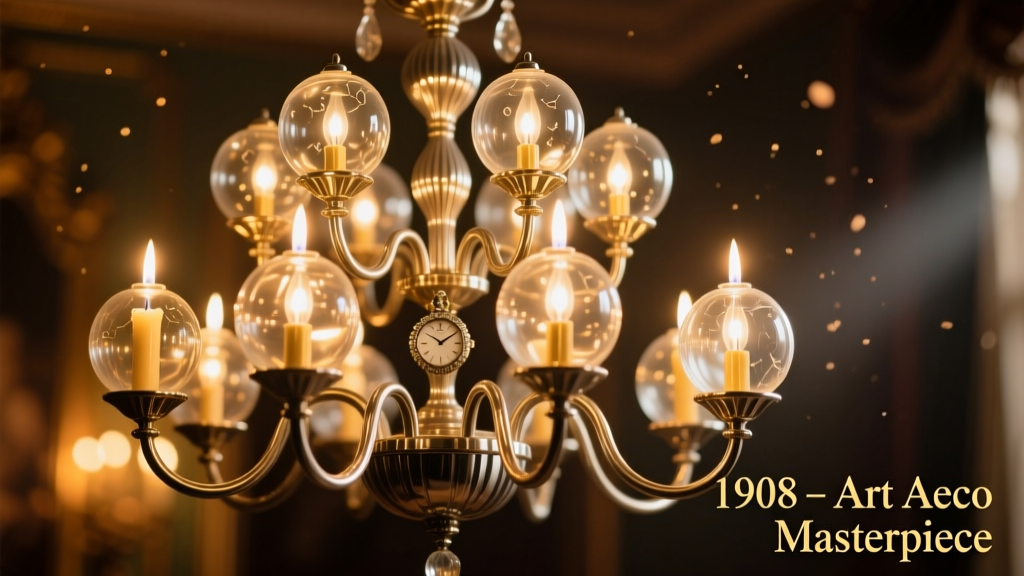
Lightolier’s 12-Light Chrome and Glass Chandelier: Design, Provenance, and Market Value of a Mid-Century American Lighting Landmark

The Lindy Cast Iron Airplane by Hubley: A 1930s Aviation Icon in Vintage Metal
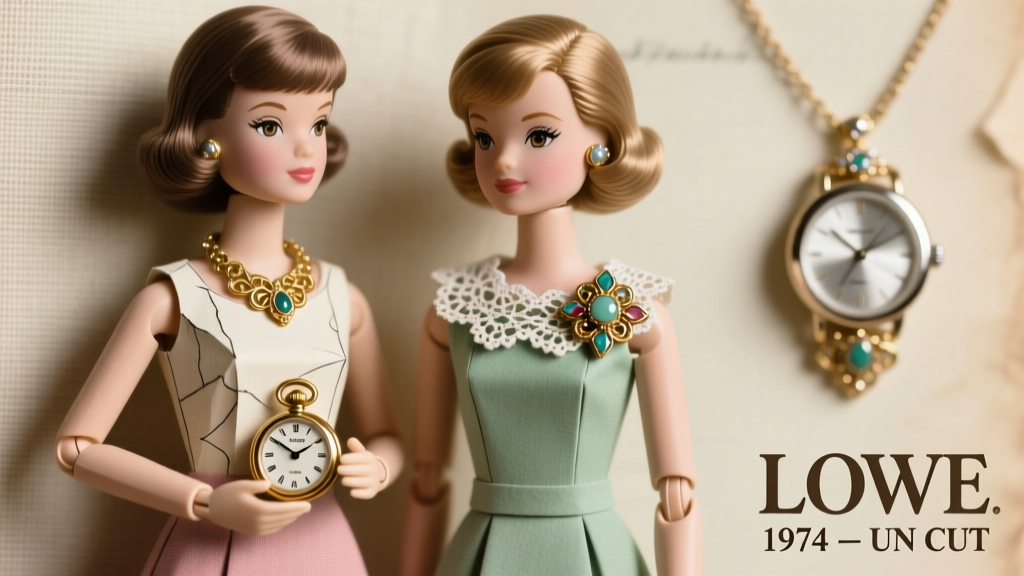
Paper Dolls #2: Teens by Lowe — A 1974 Uncut Vintage Sheet in Collector’s Context
James Reat: The Forgotten British Watchmaker Who Redefined Precision in the 1950s and 1960s
Lugerth F. Bronze Sculpture & Ivory Marble Vase: A Rare C. 1910 Dual-Material Masterpiece
The Menorah in Jewish Ritual and Decorative Arts: History, Symbolism, and Collectible Forms
Triangular Coffee Table with Wooden Base and Metal Feet: Design, Provenance, and Market Context of a Mid-Century Modern Icon
Merlin the Magician Cookie Jars by Alfano Art Pottery: A Collector’s Guide to Rarity, Craftsmanship, and Mid-Century Americana