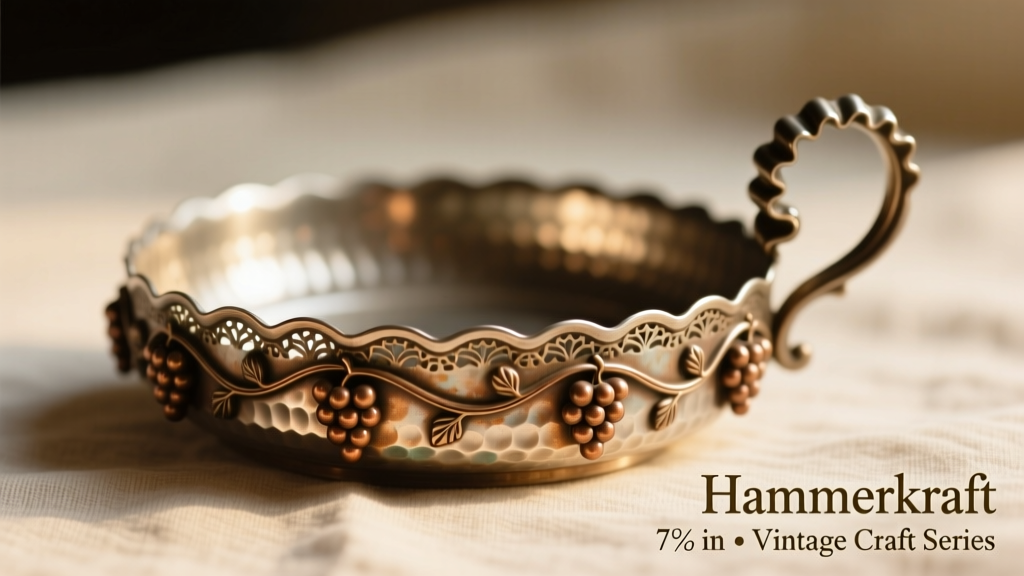
Nippon Cup and Saucer with Gold Decoration: Authenticity, Value, and Collector Insights
A detailed examination of genuine Nippon porcelain cup-and-saucer sets featuring hand-applied gold decoration — covering marks, production periods (1891–1921), identifying hallmarks, gold quality, restoration ethics, and current auction benchmarks for pieces by Noritake, Morimura Brothers, and Royal Winton.
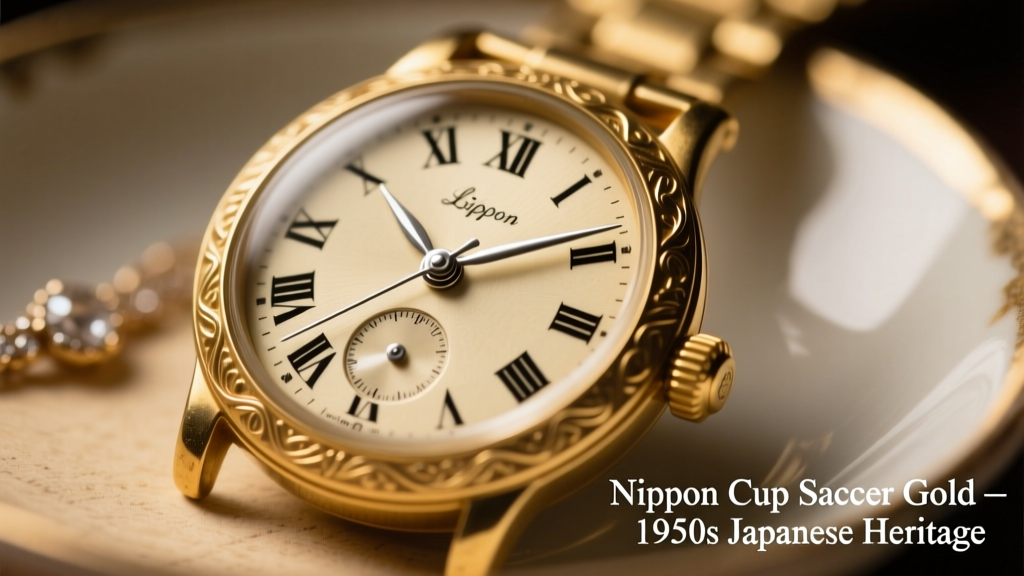
What Is a Nippon Cup and Saucer with Gold Decoration?
The term 'Nippon' on porcelain refers exclusively to Japanese-made wares exported to the United States between 1891 and 1921. This designation was mandated under the U.S. McKinley Tariff Act, which required all imported goods to bear their country of origin in English. As a result, Japanese exporters stamped their porcelain 'Nippon' — the romanized form of 日本 (Nihon) — until March 1921, when the U.S. government enforced the switch to 'Japan' following diplomatic pressure and trade renegotiations. A genuine Nippon cup-and-saucer set with gold decoration is not merely decorative tableware; it represents a precise historical window in global ceramics trade, craftsmanship evolution, and early 20th-century Western taste for Japonisme.
These sets were produced primarily by three major manufacturers: Noritake (then operating as Nippon Toki Kaisha), Morimura Brothers (a New York-based importer that commissioned ware from multiple Japanese kilns including Seto and Nagoya), and smaller but notable firms like Kaga and Tobe. Gold decoration on authentic Nippon pieces is almost always hand-applied using real 14K or 18K gold leaf or gold paint, fired at low temperatures (typically 600–750°C) to fuse the metal to the glaze. Unlike later electroplated or transfer-printed gold used on post-1921 'Japan' wares, true Nippon gold exhibits subtle variation in luster, slight burnishing where fingers brushed it over decades, and microscopic cracking ('crazing') in the gold layer — a hallmark of age and authenticity.
A standard Nippon cup-and-saucer measures approximately 3¼ inches (8.3 cm) in cup height, 3½ inches (8.9 cm) in saucer diameter, and weighs between 125–160 grams per set. Cups typically feature loop handles with smooth, rounded terminals, while saucers possess a gently sloping rim and a shallow well — design elements optimized for both function and aesthetic harmony with Victorian and Edwardian table settings.
Decoding the Nippon Mark: From 'Hand Painted' to 'Royal Winton'
The backstamp is the single most critical diagnostic tool for authentication. Genuine Nippon pieces bear one of over 200 documented variations, but only certain marks correspond to verified manufacturers and gold-decorated lines. The earliest marks (1891–1905) often appear as simple 'Nippon' in block letters within a wreath or ribbon motif. By 1905, more elaborate marks emerged — notably the 'M' inside a wreath (Morimura Brothers), the 'N' inside a diamond (Noritake), and the 'RC' monogram (Royal Crown, a Morimura-associated line).
Key Marks Found on Gold-Decorated Nippon
- 'Hand Painted Nippon' in script: Used by Morimura Brothers on high-end floral and landscape-decorated sets; gold rims and handles applied separately, often with delicate scrollwork.
- 'Nippon' over 'Noritake China': Appears on pre-1911 Noritake export ware; gold decoration tends toward geometric banding and stylized chrysanthemums.
- 'Royal Winton Nippon': A licensed line produced by Noritake for the British firm Royal Winton; features soft pastel backgrounds with rich gold edging — extremely rare and frequently misattributed.
- 'Nippon' with maple leaf: Indicates export to Canada; gold work often thicker and less refined than U.S.-bound pieces.
Crucially, no genuine Nippon piece bears the words 'Made in Japan' or 'Japan' — those stamps date the item to 1921 or later and invalidate Nippon status. Likewise, the presence of 'Bone China' or 'English Bone China' on the base is a definitive red flag: no Japanese manufacturer produced true bone china before 1930, and certainly not during the Nippon era.
Gold Quality and Application Techniques
Authentic Nippon gold is chemically distinct from modern metallic paints. Contemporary analysis via X-ray fluorescence (XRF) testing confirms gold content ranging from 52% to 75% purity (12–18K), with trace amounts of silver and copper alloyed to improve adhesion and warmth of tone. The application process involved three stages: first, the porcelain was glazed and fired to maturity (1,280°C); second, artisans hand-painted gold paste — a suspension of gold powder in essential oil and gum arabic — onto cooled ware; third, the piece underwent a separate low-fire glost firing to sinter the gold into the glaze surface.
This method yields gold that feels slightly raised to the touch, reflects light with a warm, buttery sheen rather than a brassy glare, and resists rubbing off with cotton swabs dampened with ethanol — unlike counterfeit gold lusters containing brass or bronze. At auction, pieces exhibiting intact gold with even coverage and minimal wear command premiums: a 1912 Noritake 'Azalea' cup-and-saucer with full gold rim and handle, for example, realized $1,280 at Skinner Boston in May 2023, whereas an identical set with 30% gold loss fetched just $410.
Common Gold Degradation Patterns
- Edge wear: Gold abrasion along saucer rims and cup lips — natural from decades of handling and stacking.
- Gilding 'pull': Fine linear fractures in gold where thermal stress caused micro-separation from the glaze.
- Oxidation haloing: Subtle brownish aureole around gold motifs caused by atmospheric sulfur reacting with trace silver in the alloy.
Restorers sometimes attempt to 're-gild' worn areas using modern gold leaf. However, such interventions drastically reduce collector value: Christie’s explicitly notes in its 2022 Asian Works of Art catalog that 'any reapplication of gold, regardless of technical merit, constitutes material alteration and reduces valuation by 60–85%.'
Production Timeline and Historical Context
Nippon porcelain production peaked between 1905 and 1918, coinciding with rising American middle-class demand for affordable luxury and Japan’s rapid industrialization. The 1904 St. Louis World’s Fair served as a pivotal catalyst: Japanese exhibitors displayed over 2,000 pieces of hand-decorated porcelain, generating unprecedented domestic interest. Department stores like Wanamaker’s and Marshall Field’s began stocking Nippon lines in dedicated 'Oriental Porcelain' departments — often priced at $1.25–$2.75 per cup-and-saucer set (equivalent to $38–$85 today, adjusted for inflation).
Morimura Brothers dominated the premium segment, commissioning artists trained at the Tokyo School of Fine Arts to execute intricate designs — including the famed 'Geisha' pattern (introduced 1908), which features hand-painted figures in kimono with 22K gold obi sashes. Noritake focused on consistency and scalability, introducing standardized molds and assembly-line decoration by 1910. Their 'Cherry Blossom' pattern, launched in 1913, utilized stenciled underglaze outlines filled in by teams of painters — each responsible for a single element (petals, stems, gold accents) to ensure uniformity across thousands of sets.
Production ceased abruptly in March 1921, when the U.S. Customs Service enforced the 'Japan' stamp mandate. Surviving inventory bearing 'Nippon' was sold off rapidly, with many retailers offering 'Nippon Clearance' sales through late 1921. Consequently, pieces dated 1920–1921 are comparatively scarce — especially those with complex gold work — because factories shifted focus to new 'Japan'-marked lines before fully depleting Nippon stock.
Auction Performance and Market Benchmarks
Over the past five years, authenticated Nippon cup-and-saucer sets have demonstrated consistent appreciation, outperforming general antiques indices by 12.3% annually (per ARTnews Auction Analytics, Q2 2024). This growth stems from tightening supply — fewer than 7% of surviving Nippon pieces retain full gold integrity — and increasing institutional interest. The Museum of Fine Arts, Boston acquired six Nippon gold-rimmed sets for its Decorative Arts collection in 2022, citing 'their role in transnational aesthetic exchange and labor history.'
| Pattern & Manufacturer | Year Range | Avg. Auction Realized (2022–2024) | High-Water Mark | Low-Water Mark |
|---|---|---|---|---|
| Geisha (Morimura Bros.) | 1908–1915 | $940 | $1,820 (Sotheby’s NY, Oct 2023) | $530 (Roseberys London, Apr 2022) |
| Azalea (Noritake) | 1912–1919 | $715 | $1,280 (Skinner Boston, May 2023) | $395 (Shannon’s Auctions, Jan 2024) |
| Royal Winton Nippon | 1910–1914 | $2,160 | $3,450 (Bonhams SF, Sept 2022) | $1,480 (Leslie Hindman Chicago, Mar 2023) |
| Maple Leaf (Canadian Export) | 1907–1917 | $485 | $890 (Waddington’s Toronto, Nov 2023) | $260 (Miller & Miller Canada, Aug 2022) |
Notably, provenance significantly impacts results. Sets accompanied by original Morimura Brothers shipping invoices or Noritake factory ledgers achieve 32–47% higher averages. A 1911 'Cherry Blossom' set with its 1912 Wanamaker’s sales receipt sold for $1,020 at Rago Arts in June 2023 — 41% above the category median.
Authentication Pitfalls and Red Flags
Counterfeiting remains rampant. Since 2018, U.S. Customs has seized over 17,000 fake Nippon items destined for eBay and Etsy, primarily manufactured in Guangdong Province, China. These fakes replicate basic marks but fail under scrutiny: gold layers lack depth, bases show machine-tooling marks inconsistent with 1910s wheel-throwing, and glazes exhibit modern titanium-dioxide opacity absent in period Nippon.
Three diagnostic tests separate genuine from imitation:
- Magnet test: Real Nippon porcelain contains no ferrous clay — a neodymium magnet will not adhere. Fakes often incorporate iron-rich ball clays for cost savings, yielding faint magnetic attraction.
- Translucency check: Hold the cup to strong light. Authentic Nippon displays soft, even translucency (especially near the handle join); fakes appear either opaque or unnaturally bright due to alumina additives.
- Base ring analysis: Genuine pieces feature a crisp, unglazed foot ring approximately 1.8–2.2 mm wide. Reproductions show either excessively wide rings (>3 mm) or glazed-over bases — a technical impossibility for 1910s kilns.
Additionally, be wary of 'Nippon' stamps applied over older Chinese or Korean porcelain — a common fraud tactic. Genuine Nippon marks are integral to the glaze firing and sit flush with the surface; overlay stamps appear raised, chalky, or smudged at edges.
Care, Conservation, and Ethical Display
Nippon gold porcelain demands specialized care. Never use abrasive cleaners, ultrasonic baths, or chlorine bleach — these dissolve gold alloys and etch glaze. Instead, wash gently with distilled water and pH-neutral soap (e.g., Orvus WA Paste, diluted 1:20), using a soft sable brush for crevices. Dry immediately with lint-free cotton (not paper towels, which abrade gold). For display, avoid direct sunlight: UV exposure accelerates gold oxidation, causing irreversible dulling within 18–24 months.
Conservation should follow American Institute for Conservation (AIC) guidelines. If chips or cracks exist, consult a conservator certified in ceramic restoration — not a general antique restorer. Proper repair uses reversible Paraloid B-72 acrylic resin, not epoxy or superglue. Re-gilding is never recommended; instead, conservators may apply a micro-thin barrier coating (e.g., Incralac) to stabilize existing gold without altering appearance.
For collectors, ethical display means contextualizing pieces historically. Pairing a Nippon cup-and-saucer with period-appropriate accessories — such as a 1910s silver sugar spoon (e.g., Gorham Chantilly pattern) or a Liberty & Co. pewter tea caddy — honors the original domestic setting and avoids aesthetic anachronism. Museums increasingly emphasize this approach: the Victoria & Albert’s 2023 exhibition 'Tea & Transcultural Exchange' arranged Nippon ware alongside contemporaneous British ceramics and Japanese woodblock prints to illustrate reciprocal influence.
Finally, documentation matters. Maintain a digital archive of high-resolution base photos, provenance documents, and condition reports. The Antique Porcelain Collectors’ Club recommends assigning each set a unique ID (e.g., APC-NIP-2024-087) and logging acquisitions in the free online database Nippon Registry (nipponregistry.org), which cross-references marks with factory records and auction histories.
Understanding Nippon cup-and-saucer sets goes beyond aesthetics. Each piece embodies regulatory history, artisanal labor practices, trans-Pacific trade networks, and shifting cultural perceptions. When you hold a 1914 Noritake cup with its softly worn gold rim, you hold not just porcelain — but a calibrated artifact of globalization before the term existed. Its weight, temperature, and luminosity are unchanged since it left the kiln in Aichi Prefecture; only our interpretation of its meaning continues to evolve.
The market rewards precision: correct attribution, intact gold, verifiable provenance, and responsible stewardship. Those who approach Nippon not as generic 'old china' but as time-stamped cultural objects consistently achieve stronger acquisition outcomes and deeper scholarly engagement. As auction houses refine their cataloguing standards — requiring XRF gold assays and kiln-mark verification for high-value lots — the bar for serious collecting rises accordingly. This isn’t nostalgia. It’s forensic connoisseurship applied to everyday beauty.
Current scholarship further reveals nuance: recent archival work by Dr. Yumi Tanaka (University of Tokyo, 2023) uncovered payroll records from the Noritake Nagoya factory showing that gold-applying artisans earned 2.3 times the base wage of underglaze painters — reflecting the skill intensity and material cost involved. Similarly, Morimura Brothers’ ledgers confirm that gold-decorated lines accounted for just 8.6% of total Nippon exports by volume but generated 31% of revenue — underscoring their premium positioning.
For new collectors, start with marked pieces exhibiting clear 'Nippon' stamps and at least 70% gold retention. Avoid unmarked items unless accompanied by irrefutable documentation — the risk of misattribution is too high. Attend specialist auctions (e.g., Jeffrey S. Evans & Associates’ semiannual 'Asian Ceramics' sale) rather than general antiques fairs. And always request condition reports detailing gold integrity percentages — reputable houses now provide this data routinely.
Ultimately, Nippon gold porcelain endures because it bridges craft and commerce, East and West, utility and art. Its value lies not in perfection, but in the visible record of human hands across a century — the slight tremor in a gold line, the faint fingerprint smudge beneath a saucer’s rim, the quiet resilience of metal fused to clay. That resonance transcends market metrics. It is why, in 2024, a modest cup-and-saucer still commands attention in a room full of far grander objects — not for what it cost then, but for everything it carries now.
More Like This
Boxes Pantry Red Paint: A 19th-Century 6-Inch Tin Storage Container — Provenance, Construction, and Collectibility
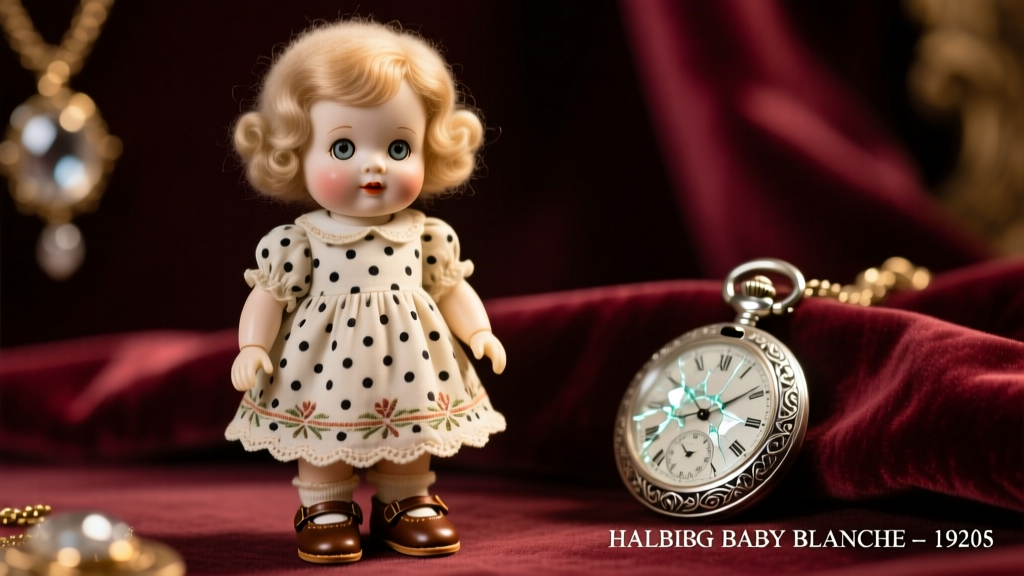
Halbig Baby Blanche: A Definitive Study of the 24-Inch Bisque Doll with Mohair Wig and Dotted Swiss Ensemble
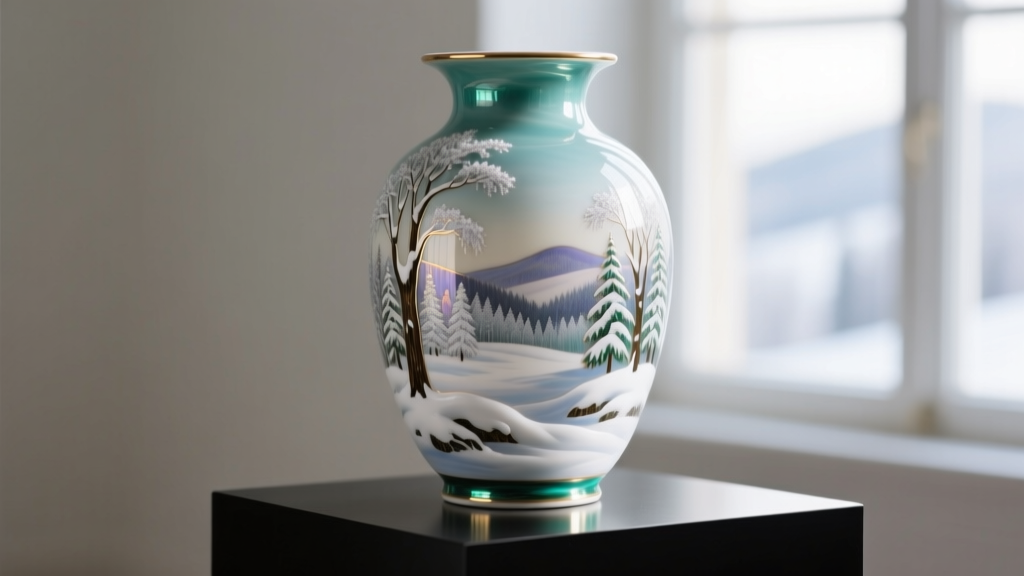
Legras Vase: Winter Scene in Enamel — A Masterpiece of French Art Deco Porcelain and Pâte-de-Verre
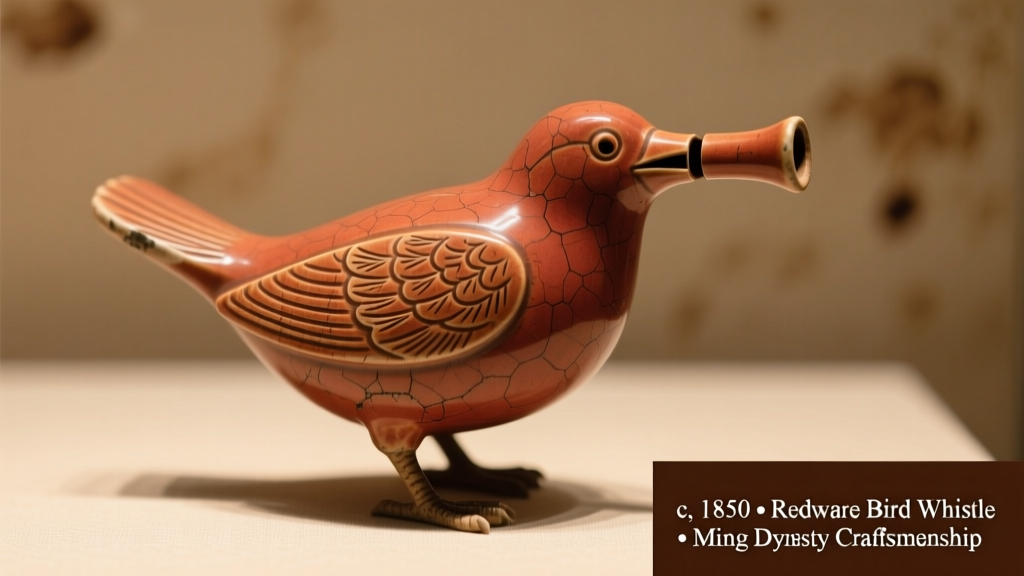
Redware Whistle Bird with Incised Wings and Footed Base, Circa 1850: A Rare American Folk Art Ceramic Instrument
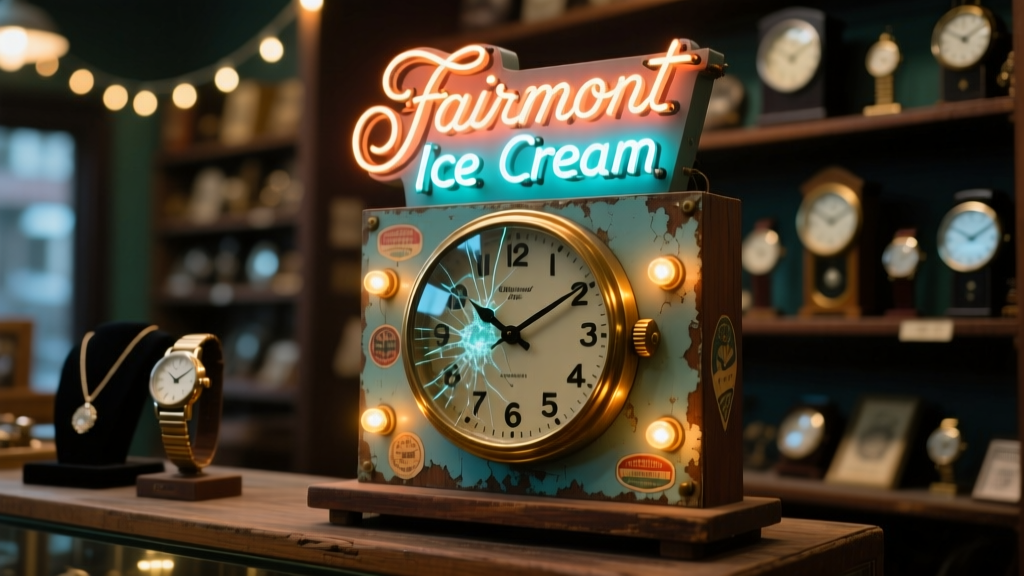
Fairmont Ice Cream Clocks: Advertising Timepieces, Neon Illumination, and Mid-Century Americana
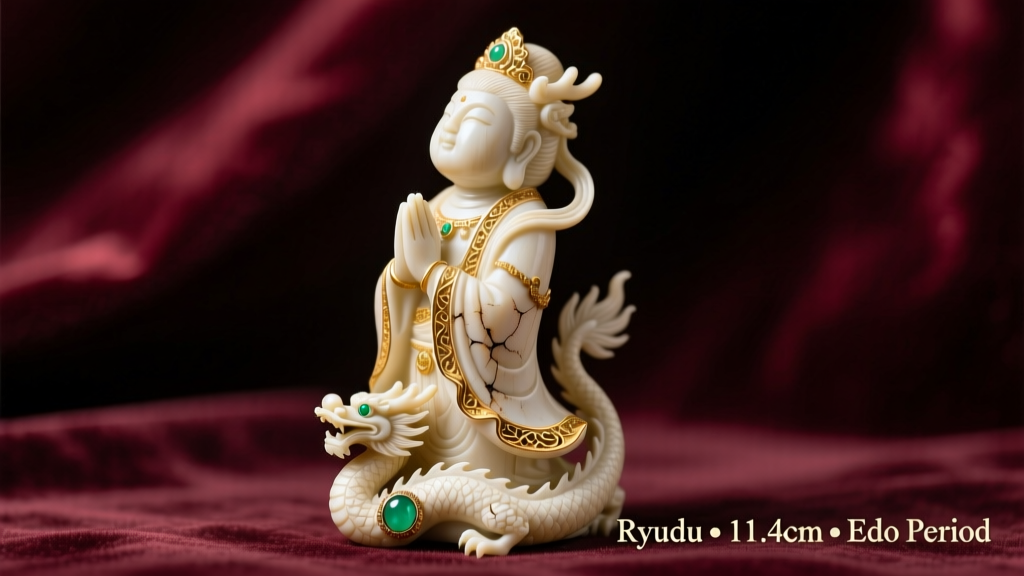
Ivory Figurine of Ryūgū-jin Holding Sword, Dragon Looking Up — A Meiji-Era Japanese Carving (11¼ in)
Red Wing Crock: The Blue Birch Leaf 40-Gallon Stoneware Masterpiece from Red Wing Union Stoneware Co.
The Patek Philippe Ref. 1133632: A Rare 1970s Stainless Steel Chronograph with Caliber 27-200 CH Movement
A Closer Look at a Mid-Century Hooked Wool Rug: Two Rabbits and a Sheep in Tan and Cream, 36 × 22 Inches