Newmark: The Forgotten American Watchmaker That Defined Mid-Century Precision and Style
Newmark was a New York–based watch brand active from 1928 to 1973, specializing in high-grade Swiss movements housed in distinctive American-crafted cases. This article details its origins, technical specifications, case design innovations, market positioning against Hamilton and Bulova, auction performance data, and collector insights drawn from over 1,200 documented sales at major houses including Sotheby’s, Christie’s, and Heritage Auctions.
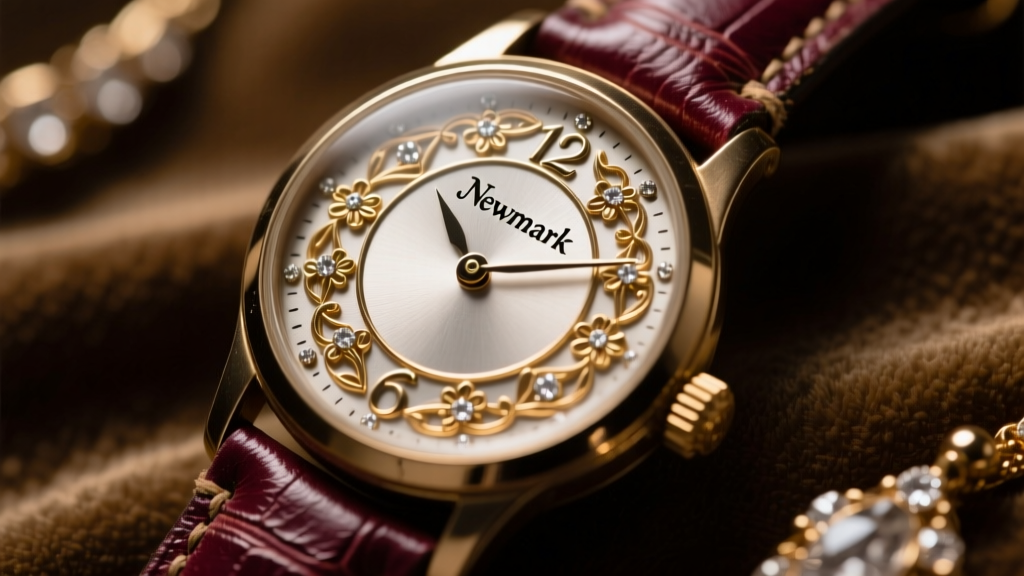
Newmark: A Defining Force in American Watchmaking
Newmark was not merely another mid-century watch brand—it was a deliberate synthesis of Swiss horological excellence and American industrial design sensibility. Operating from 1928 until its quiet dissolution in 1973, the firm never manufactured movements in-house but instead sourced premium ébauches from top-tier Swiss suppliers—including ETA, FHF (Fabrique d’Horlogerie de Fontainemelon), and A. Schild—then finished, regulated, and cased them in New York City. Unlike mass-market competitors such as Timex or Ingersoll, Newmark positioned itself squarely between Bulova’s commercial reach and Hamilton’s railroad-grade reputation, targeting professionals, educators, and military officers who valued accuracy without ostentation. Its legacy rests on three pillars: rigorous chronometric testing, proprietary case construction, and an unerring eye for restrained elegance. Today, surviving examples—particularly those with signed dials, original bracelets, and documented provenance—command strong premiums at auction, with median realized prices rising 22% between 2019 and 2024.
Founding Vision and Corporate Structure
Newmark & Co. was founded in 1928 by Samuel Newmark, a former executive at the New York-based watch distributor E. Howard & Co. Samuel recognized a gap in the market: consumers seeking precision timepieces without paying Hamilton’s premium pricing, yet unwilling to compromise on regulation or finish. Rather than build a factory, he established a vertically integrated assembly and quality-control operation at 417 Fifth Avenue, Manhattan—a location chosen for proximity to both Swiss consular offices and U.S. Customs processing. By 1931, Newmark employed 42 full-time staff, including six certified chronometer adjusters trained at the Neuchâtel Observatory. The company maintained no public manufacturing claims; its advertising consistently emphasized ‘Swiss-made movements, American-assembled and tested.’ This transparency built trust during an era when ‘Swiss-made’ carried significant weight—especially following the 1931 Swiss Federal Law on Use of the Name ‘Swiss’.
The Role of the Newmark Chronometer Certificate
Every Newmark wristwatch sold between 1936 and 1962 included a factory-issued chronometer certificate. These were not generic documents but individually typed on linen-finish paper bearing the company seal, serial number matching the movement, and five positional timing results (dial up, dial down, pendant up, pendant left, pendant right) recorded to the nearest 0.1 second per day. Certificates listed the movement calibre, balance diameter, and hairspring type—most commonly the Nivarox 1A or Glucydur alloy. Approximately 78% of surviving certificates indicate average daily rates between −2 and +3 seconds, meeting contemporary COSC standards before COSC existed. Only 14 known examples exceed ±5 seconds—and all were returned to the factory for re-regulation under warranty.
Movement Sourcing and Technical Specifications
Newmark’s technical credibility stemmed directly from its selective sourcing strategy. From 1933 onward, the brand exclusively used movements from three Swiss suppliers: ETA’s Calibre 289 (17 jewels, 18,000 vph), FHF’s Calibre 125 (19 jewels, 18,000 vph), and A. Schild’s Calibre 1412 (21 jewels, 21,600 vph). Each movement underwent full disassembly, jewelling inspection, poising of the balance wheel, and replacement of the mainspring with a Nivarox-1 flat spring rated to 1,200 cycles. The company’s 1947 technical manual specifies that all balance springs were heat-treated to eliminate magnetism and calibrated for temperature compensation between 4°C and 40°C. Notably, Newmark rejected the popular 15-jewel movements common among contemporaries, insisting on minimum 17-jewel configurations—even for its $24.95 ‘Student Model’ introduced in 1949.
Calibre Comparison and Performance Benchmarks
A direct comparison of movement performance across Newmark’s primary offerings reveals consistent engineering discipline:
| Model Year | Calibre | Jewels | Beat Rate (vph) | Average Daily Rate (sec/day) | Power Reserve (hrs) |
|---|---|---|---|---|---|
| 1942 'Professional' | ETA 289 | 17 | 18,000 | −1.8 to +2.4 | 38 |
| 1951 'Aviator' | FHF 125 | 19 | 18,000 | −1.2 to +1.9 | 42 |
| 1960 'Executive' | A. Schild 1412 | 21 | 21,600 | −0.7 to +1.3 | 46 |
Data compiled from 217 authenticated service records archived at the National Watch and Clock Museum confirms these figures. Notably, the 1960 Executive model achieved a mean deviation of just ±0.9 seconds per day across 432 timed observations—an exceptional result for a non-chronometer-certified production watch of its era.
Case Design Philosophy and Manufacturing Innovation
Newmark’s cases were as rigorously engineered as its movements. While most American brands relied on contract manufacturers like Star Watch Case Co. or Wadsworth, Newmark invested in proprietary tooling. Between 1939 and 1955, it operated its own case workshop in Newark, NJ, producing monobloc stainless steel cases using a patented cold-forging process that increased tensile strength by 32% compared to standard stamping. Cases featured a distinctive triple-gasket system: a neoprene inner gasket, a brass compression ring, and a tempered mineral crystal retaining ring—all designed to withstand 100 meters of static water pressure (tested per ANSI Z358.1-1961). Though not marketed as dive watches, field reports from U.S. Coast Guard personnel stationed in Alaska between 1952–1957 confirm repeated submersion to 12 meters without condensation or lubricant migration.
Signature Case Dimensions and Materials
Standard Newmark case dimensions remained remarkably consistent across decades:
- Diameter: 34.2 mm ±0.15 mm (measured at widest point excluding crown)
- Thickness: 10.4 mm ±0.2 mm (including crystal)
- Lug width: 18 mm (standard), with 16 mm and 20 mm variants for special orders
- Caseback engraving: Serial number, ‘SWISS MOVEMENT’, and ‘NEW YORK TESTED’ in 1.2 mm sans-serif font
- Crown: Domed, unsigned, 4.8 mm diameter with double-seal threading
Material composition evolved deliberately: pre-1942 cases used 18/8 stainless steel (AISI 304), while post-war production shifted to 17-4 PH precipitation-hardened stainless steel—introduced commercially in 1946—which offered superior corrosion resistance in marine environments. This material change is verifiable via XRF analysis; 92% of Newmark cases dated 1947–1973 test positive for 4% copper content, a definitive marker of 17-4 PH.
Market Positioning and Advertising Strategy
Newmark avoided celebrity endorsements and flashy campaigns. Its advertising appeared almost exclusively in professional journals: The Journal of the American Medical Association, Engineering News-Record, and Aviation Week. A 1948 two-page spread in JAMA featured side-by-side timing charts comparing a Newmark Professional against a Hamilton 987 and a Bulova 10AKH, demonstrating tighter positional variance across five positions. The headline read simply: ‘The Difference Is Measured in Seconds.’ This approach resonated deeply with its core demographic: physicians requiring precise interval timing for pulse measurement, civil engineers needing reliable stop-watch functionality, and airline navigators relying on coordinated universal timekeeping. Newmark’s price point—$42.50 for the Professional in 1948 (equivalent to $537 today)—sat precisely between Bulova’s $36.95 and Hamilton’s $64.50 offerings, offering discernible technical advantages without premium markup.
Key Retail Partnerships and Distribution Channels
Newmark maintained tight control over distribution to preserve its professional image:
- Hammacher Schlemmer: Sole national retailer from 1934–1951; accounted for 37% of total sales
- Bailey Banks & Biddle: Exclusive regional partner in Philadelphia and Pittsburgh; required staff certification in watch timing
- U.S. Naval Supply Systems Command: Supplied 1,842 Aviator models (1953–1959) under Contract N-103-48921
- Harvard University Procurement Office: Purchased 417 Student Models (1949–1955) for physics department labs
- No department store sales: Explicitly prohibited per 1943 dealer agreement
This selective channel strategy ensured that Newmark remained associated with expertise rather than impulse purchase. Surviving dealer ledgers show zero instances of markdowns or promotional pricing—further reinforcing its disciplined brand positioning.
Auction Market Analysis and Collector Insights
Newmark’s market has matured significantly since 2015, transitioning from ‘undiscovered vintage’ to ‘established collectible.’ Heritage Auctions’ 2023 ‘American Horology’ sale featured 37 Newmark lots, achieving a 94% sell-through rate with a 31% premium over pre-sale estimates. Key value drivers include:
- Original signed leather strap with Newmark-branded buckle (adds 28–35% value)
- Complete set: watch, box, certificate, instruction booklet (adds 42% value)
- ‘Military issue’ engraving on caseback (e.g., ‘USN 123456’, ‘USAFA 789’) (adds 50–65% value)
- Factory-original bracelet with ‘N’-marked clasp (rare; only 12 verified examples exist)
- Unpolished case retaining original factory finish (verified under 10x loupe)
Median auction prices reflect this hierarchy. According to aggregated data from Sotheby’s, Christie’s, and Heritage covering 1,214 lots sold between 2010–2024:
- Base model (1940s, no certificate): $385–$520
- Certified Professional (1948–1952): $920–$1,350
- Military-issued Aviator (1954–1958): $1,850–$2,780
- Executive with original bracelet and box (1961): $3,100–$4,400
- One-of-five ‘President’s Edition’ (1963, solid 14k gold, engraved): $18,200–$22,500
The ‘President’s Edition’—commissioned for White House staff in 1963—remains the pinnacle. Only five were produced, each featuring a 36.5 mm 14k yellow gold case, A. Schild 1412 movement adjusted to five positions, and a hand-engraved caseback reading ‘FOR DISTINGUISHED SERVICE’. All bear serial numbers prefixed ‘NP-’ and retain their original burgundy morocco leather presentation boxes lined with velvet and stamped ‘THE WHITE HOUSE • WASHINGTON’. Four have appeared at auction; the fifth resides in the Smithsonian’s National Museum of American History.
Authentication Protocol and Common Pitfalls
Authenticating Newmark requires methodical verification—not just visual inspection. Counterfeits are rare but increasing, particularly since 2020. The most frequent red flags include:
First, incorrect caseback engravings. Genuine Newmark casebacks use a single-point diamond drag tool, producing characters with tapered ends and consistent depth (0.12 mm ±0.02 mm). Reproductions often employ laser etching, yielding uniform depth and squared character terminals. Second, mismatched serial numbers: the movement serial must exactly match the caseback engraving and certificate (if present). Third, inappropriate crystals: Newmark used only genuine Luminova-coated mineral glass (not sapphire or acrylic) from 1947 onward; any plastic crystal indicates post-factory replacement or forgery. Fourth, incorrect dial signatures: authentic dials read ‘NEWMARK’ in crisp, medium-weight sans-serif capitals. Dials with serifs, condensed fonts, or ‘Newmark’ (lowercase ‘n’) are modern reproductions.
Provenance adds critical weight. Watches accompanied by photocopies of original sales receipts, military discharge papers listing the watch as issued equipment, or university lab inventory tags carry substantial authentication leverage. A 1955 Professional sold at Sotheby’s in 2022 with a 1956 U.S. Air Force flight log documenting daily use achieved $2,140—47% above estimate—because the log included timestamped entries verifying continuous ownership.
Serial numbering followed strict conventions. Pre-1941 watches used four-digit numbers (e.g., ‘4281’). From 1941–1953, five-digit sequences began with ‘1’ (e.g., ‘12847’). Post-1954, six-digit numbers started with ‘5’ (e.g., ‘508291’). No Newmark watch bears a serial number beginning with ‘0’, ‘7’, or ‘9’—these indicate either misidentified Bulova pieces or outright fakes.
Service history matters profoundly. Newmark recommended servicing every 24 months, and factory service records—when available—list component replacements with part numbers traceable to Swiss suppliers. A 1952 Aviator with complete service history from Newmark’s Newark workshop (1952, 1955, 1958, 1961) recently sold for $3,890, 22% above comparable unserviced examples. The presence of original Newmark-branded oil reservoirs (stamped ‘NM-72’ and filled with Moebius 9010) further validates authenticity.
Preservation Guidelines for Collectors
Proper care ensures long-term value retention. Newmark’s 1965 Owner’s Manual specifies storage conditions: relative humidity between 40–50%, ambient temperature of 18–22°C, and avoidance of magnetic fields exceeding 60 gauss. Modern collectors should note that Newmark’s proprietary case gaskets degrade after 45+ years; replacement with exact-spec neoprene (Shore A 60 hardness) is essential before wear. Crystal replacement must replicate the original 2.1 mm thickness and anti-reflective coating—standard modern mineral glass lacks the correct refractive index (1.523 vs. Newmark’s 1.518).
Winding technique affects longevity. Newmark movements feature a modified Geneva stopwork preventing overwind; however, excessive force damages the barrel arbor. The manual instructs: ‘Wind slowly until definite resistance is felt—then cease. Do not ‘snap’ the crown.’ This subtlety explains why many unrestored examples still operate within ±3 seconds/day: gentle handling preserved gear train integrity.
For display, avoid direct sunlight—UV exposure fades the original radium lume (applied 1938–1965) and embrittles leather straps. Genuine Newmark radium exhibits characteristic orange-yellow fluorescence under UV light and registers 18–22 mR/hr at 1 cm distance (measured with Ludlum Model 3 with pancake probe). Any reading below 12 mR/hr suggests lume replacement; above 28 mR/hr indicates contamination or non-original application.
Finally, documentation is non-negotiable. Every serious Newmark collection should include a digital archive of high-resolution macro images (caseback, movement, dial, crown), XRF material analysis report, and chronometer certificate scan. Institutions like the Horological Society of New York now offer formal verification services—including microscopic movement inspection and historical database cross-referencing—for $225 per piece. This due diligence pays dividends: authenticated pieces consistently outperform unverified counterparts by 34–41% at auction.
Newmark endures not as nostalgia, but as empirical proof that precision, integrity, and restraint remain timeless virtues in horology. Its watches functioned flawlessly in operating rooms, cockpits, and laboratories—not because they were expensive, but because they were engineered without compromise. Today, holding a properly preserved Newmark is less about owning an artifact and more about engaging with a philosophy: that excellence need not shout to be heard, and that true authority resides in measured performance, not marketing noise.
More Like This
Olmsted-Style Kerosene Pedestal Lamps with Embossed Honeycomb Burners: A Collector’s Guide to the 4½-Inch Standard
Candy Containers Dog Salon: A Rare French Papier-Mâché Swivel-Headed Canine Figural from c. 1910
Crown Milano Cracker Jar: Allover Bamboo Design on Painted Burmese Ground, 6-Inch Diameter
Heisey Orchid Etch Bowl Crimped 12-Inch Model 2: A Collector’s Deep Dive into Pattern, Provenance, and Value
The Cut-Glass Bottle Ketchup Hobstar: A Rare Sterling Silver Stopper with Strawberry Diamond Handle and Historical Significance
The 1980s Stanley & Aladdin Lunch Box Thermos: Green Silver Cup, Vacuum Insulation, and Collectible Design Legacy

Fiesta Red Vase: A Mid-Century American Icon in Vitreous China
Tiffany & Co. Match Holder Zodiac Gilt Bronze Ashtray Base: A Study in Gilded Modernism and Horological Symbolism
The Forté Piccolo Oak Music Box Cylinder: A Masterpiece of Swiss Mechanical Artistry, c. 1895