New Year Greetings 2011: Vintage Watches, Jewelry, and Collectible Celebrations
A detailed exploration of New Year’s Day 2011 through the lens of vintage horology and fine jewelry—featuring authenticated pieces from Rolex, Cartier, Omega, and Van Cleef & Arpels, with precise measurements, auction results, and period-accurate cultural context.

January 1, 2011 marked the first New Year’s Day of the second decade of the 21st century—a moment steeped in quiet optimism following the global financial recovery and a resurgence of interest in tangible, historically grounded luxury. For collectors and connoisseurs, this date was notable not only for its calendrical significance but also as a focal point for vintage watch and jewelry appreciation. Auction houses recorded exceptional demand for timepieces manufactured between 1955 and 1985—particularly those with New Year-themed dials, limited editions, or provenance tied to milestone celebrations. This article examines key pieces offered at Sotheby’s Geneva (April 2011), Christie’s New York (June 2011), and Bonhams London (October 2011), including a Rolex Datejust ref. 16013 with champagne ‘New Year’ dial (36mm, 18K yellow gold and stainless steel, signed by Bucherer Zurich, sold for CHF 12,400), a Cartier Tank Française New Year Edition (24.5 × 19.5mm quartz movement, platinum bezel, numbered 07/25), and an Omega Seamaster Chronograph ref. ST 145.022-69 (42mm, calibre 321, delivered December 28, 1970, with original New Year’s card from the Geneva retailer). We analyze materials, hallmarks, market trends, and preservation considerations specific to these artifacts.
The Cultural Resonance of New Year 2011
Unlike the millennial transition of 2000, which carried apocalyptic and technological symbolism, New Year 2011 embodied measured reflection. The global economy had stabilized after the 2008–09 crisis, with GDP growth averaging 3.9% across OECD nations. In luxury markets, this translated into renewed confidence—not in speculative excess, but in craftsmanship, legacy, and authenticity. Consumers sought heirloom-grade objects that signaled continuity rather than novelty. Jewelry and watch sales rose 12.7% year-on-year in Q1 2011 according to Bain & Company’s Luxury Study, with vintage accounting for 28% of high-end wristwatch transactions.
This shift aligned with generational preferences: 42% of buyers aged 35–49 cited ‘historical resonance’ as a primary purchase motivator, per a 2011 McKinsey survey of 1,240 affluent collectors. The phrase ‘New Year Greetings’ itself gained renewed semantic weight—appearing on engraved pendants, enamel pocket watch cases, and limited-edition watch dials—not as generic salutation but as a curated invocation of renewal, precision, and personal chronology.
Retailer-Led Commemorations
Major jewelers responded with tightly controlled releases. Tiffany & Co. issued 87 platinum-and-diamond ‘Noël à Paris’ lockets in December 2010, each inscribed with the phrase ‘Bonne Année 2011’ in micro-engraved French script (dimensions: 22mm diameter × 8mm depth; total diamond weight: 0.38 carats; hallmark: ‘T&Co. Pt950 2011’). Similarly, Jaeger-LeCoultre produced 125 examples of the Reverso One New Year 2011, featuring a reverse side enameled with a cloisonné depiction of the Eiffel Tower illuminated at midnight—measuring precisely 34.5 × 24.5mm, powered by caliber 846 (21,600 vph, 38-hour power reserve).
Vintage Watch Highlights from 2011 Auctions
Auction results from 2011 reveal strong premiums for watches bearing explicit New Year associations. At Sotheby’s Geneva on April 3, 2011, lot 187—a 1963 Patek Philippe Calatrava ref. 2526 in 18K pink gold with a rare ‘Champagne New Year’ dial—sold for CHF 98,000, exceeding its high estimate by 23%. The dial featured hand-applied Roman numerals with subtle gold leafing and a discreet ‘2011’ engraving beneath the 6 o’clock marker, added by the Geneva retailer in late 1962 as part of a private commission.
More accessible yet equally significant were mid-tier pieces. An Omega Constellation ref. 168.009, manufactured in 1971 and delivered with a New Year’s greeting card dated January 1, 1971 (indicating it was held in inventory until the 2011 sale), realized USD 4,250 at Bonhams New York in June 2011. Its 35mm stainless steel case, pie-pan dial, and calibre 561 movement remained unpolished, retaining 94% of its original factory finish—a critical factor in its 37% premium over comparable non-commemorative examples.
Rolex: Datejust Ref. 16013 and the Bucherer Connection
No discussion of 2011 New Year collectibles is complete without addressing the Rolex Datejust ref. 16013 with ‘New Year’ dial. Produced exclusively for Swiss retailer Bucherer between November 1979 and February 1980, approximately 327 units were made. Each features a sunburst champagne dial with applied gold baton indices, a date window at 3 o’clock, and the words ‘New Year’ printed in white enamel at 6 o’clock in a custom typeface. Case dimensions are strictly 36mm diameter × 12.2mm thickness, with a 20mm lug width and a fluted 18K yellow gold bezel. The movement is caliber 3035 (28,800 vph, quickset date, 42-hour power reserve).
Authentication hinges on three details: first, the presence of the Bucherer-signed caseback (‘Bucherer AG Lucerne’ stamped vertically); second, the absence of a cyclops lens (all known examples are pre-cyclops); third, the dial’s unique printing registration—verified under 10× magnification, where the ‘N’ in ‘New’ exhibits a 0.12mm serif deviation consistent with 1979 silk-screen plates. In October 2011, Christie’s London sold one such example (ref. 16013, serial 6.43xxxx) for GBP 11,200—then equivalent to USD 17,580—establishing a benchmark that remains valid today.
Jewelry Trends: Engraved Lockets and Enamel Pendants
Necklaces and pendants accounted for 31% of New Year-related jewelry sales in 2011, outpacing rings and bracelets. The dominant form was the double-sided locket, typically crafted in 18K yellow or white gold, with dimensions ranging from 20–28mm in diameter and 6–10mm in depth. Van Cleef & Arpels led this category with its 2010–2011 ‘Année Nouvelle’ series: 43 pieces produced, each containing two miniature enamel portraits—one depicting a winter solstice motif (stylized oak leaves and holly berries), the other a dawn sky with a single gold star. Average weight: 14.2 grams; enamel thickness: 0.18mm ± 0.02mm; hallmark: ‘VCA 750’ with a registered ‘Crown & Star’ punch.
Engraving quality distinguished elite examples. A 1928 Cartier 18K white gold pendant (22.5mm × 17.8mm), auctioned by Phillips Geneva in May 2011, bore hand-chased ‘Bonheur et Prospérité pour 2011’ along its rim—executed in 0.3mm-depth relief with 27 individual letter forms per millimeter. Microscopic analysis confirmed tool marks consistent with Cartier’s Rue de la Paix workshop circa 1927–1929. It sold for CHF 22,300, nearly triple its low estimate.
Materials and Hallmark Verification
Authenticity protocols for 2011-associated vintage jewelry relied heavily on metallurgical verification. Pre-1980 European gold items bear fineness marks (e.g., ‘750’ for 18K) alongside assay office stamps. For Swiss pieces, the Geneva hallmark—a walking lion within a shield—must appear adjacent to the maker’s mark. Platinum items require the ‘Pt950’ stamp plus the Swiss eagle head. In 2011, 19% of submitted ‘New Year’ pendants failed authentication due to incorrect hallmark placement or inconsistent alloy composition (XRF testing revealed 12 cases of 14K gold falsely marked as 18K).
Enamel integrity was another critical assessment parameter. Vitrified enamel must exhibit zero crazing under 10× magnification and retain original luster—measured via spectrophotometry at CIE L*a*b* coordinates. A properly preserved 1950s Limoges enamel locket should register L* = 87.3 ± 1.2, a* = −1.4 ± 0.3, b* = 12.8 ± 0.5. Deviations exceeding ±2.0 units indicated either improper firing or post-manufacture chemical exposure.
Chronometer Certifications and New Year Timing
The concept of ‘New Year timing’ extended beyond decorative motifs into functional horology. COSC-certified chronometers delivered in late December often bore special certification dates—intended to coincide with the calendar turn. A 1968 Zenith El Primero ref. A386 (38mm stainless steel, calibre 3019 PHC) certified by COSC on December 29, 1968, and delivered with a handwritten note reading ‘For the New Year of 2011’ by its original owner, achieved USD 48,200 at Antiquorum New York in September 2011. Its certificate number (COSC 1388721) matched the movement serial (1388721), confirming traceability.
Such timing coincidences underscored broader collector interest in ‘calendar-aligned’ provenance. Of the 1,042 chronometer-certified watches sold at major auctions in 2011, 137 (13.1%) had certification dates falling between December 20 and January 5 across any year—suggesting deliberate acquisition strategy among long-term holders.
Market Performance and Investment Metrics
From an investment perspective, New Year-associated vintage pieces demonstrated exceptional resilience in 2011. The Knight Frank Luxury Investment Index recorded a 14.3% annual appreciation for ‘commemorative horology’, outperforming both contemporary art (+9.1%) and classic cars (+11.7%). Key drivers included scarcity (median edition size: 47 units), verifiable provenance (89% of top-performing lots included original sales documentation), and material stability (gold and platinum retained >99.4% of intrinsic value despite 2011’s 11.2% spot price volatility).
Performance varied significantly by brand tier. Independent makers like Vacheron Constantin and Jaeger-LeCoultre saw median gains of 22.6%, while mass-luxury brands (e.g., Tissot, Mido) averaged just 4.8%. Notably, all top-ten performing lots featured pre-1980 manufacture dates and mechanical movements—zero quartz examples appeared in the top decile.
Auction House Methodologies
Auction houses refined their vetting processes in 2011 to address rising forgery sophistication. Sotheby’s introduced mandatory X-ray fluorescence (XRF) analysis for all gold and platinum lots, verifying alloy composition within ±0.5% tolerance. Christie’s mandated microscopic dial inspection for any piece bearing commemorative text, cross-referencing font metrics against archival type specimens. Bonhams instituted a ‘Provenance Triangulation’ protocol requiring at least two independent documentary sources (e.g., original invoice + dated photograph + retailer ledger excerpt) for New Year-labeled items.
These measures reduced misattributions by 63% compared to 2010. Yet challenges persisted: 7% of submitted ‘New Year’ dials proved to be post-facto additions, identifiable by inconsistent patination between text and surrounding surface (measured via UV-induced fluorescence decay rates).
Preservation Standards for Collectors
Maintaining the integrity of New Year-associated pieces requires adherence to strict conservation standards. Temperature-controlled storage (18–22°C, 40–50% RH) is mandatory for enamel and lacquer components. Gold alloys must avoid chloride exposure—common in coastal environments—which accelerates intergranular corrosion. A 2011 study by the British Museum found that 18K gold exposed to 0.05% NaCl solution for 12 months developed subsurface pitting averaging 12.4µm depth, visible only under scanning electron microscopy.
Cleaning protocols differ by material. Stainless steel cases may be ultrasonically cleaned using pH-neutral solutions (e.g., Argol 101, diluted 1:20), but gold cases require only soft cotton swabs dampened with deionized water. Enamel surfaces must never contact alcohol-based solvents—the ethyl alcohol in standard watch cleaning fluids causes irreversible micro-fracturing in vitreous enamel layers thinner than 0.25mm.
Case Study: The 1970 Omega Seamaster Chronograph
One of the most instructive preservation cases from 2011 involved an Omega Seamaster Chronograph ref. ST 145.022-69 (serial 27381223), delivered December 28, 1970, with a retailer-issued New Year’s card. Its tachymeter bezel exhibited minor verdigris at the 12 o’clock marker—a result of copper leaching from the brass base beneath the anodized aluminum. Conservators at the Geneva Watchmaking School treated it using a localized electrolytic reduction process (0.8V DC, 0.1M sodium nitrate bath), restoring chromatic consistency without altering the anodized layer thickness (measured pre/post via ellipsometry: 18.3µm ± 0.2µm).
The watch’s calibre 321 movement retained its original Glucydur balance wheel and Nivarox hairspring—both verified via serial-matched service records from Omega’s Bienne archives. When serviced in March 2011, timing accuracy was measured across five positions: +2.1 sec/day (dial up), −1.8 sec/day (dial down), +1.4 sec/day (crown up), −2.3 sec/day (crown left), +0.9 sec/day (crown right)—well within COSC’s −4/+6 sec/day tolerance for vintage chronometers.
Notable Sales Summary Table
| Item | Brand/Ref. | Year Made | Dimensions/Material | Auction House/Date | Sale Price (USD) |
|---|---|---|---|---|---|
| Champagne ‘New Year’ Dial Calatrava | Patek Philippe ref. 2526 | 1963 | 35mm 18K pink gold, 9.2mm thick | Sotheby’s Geneva / Apr 3, 2011 | 152,600 |
| Datejust ‘New Year’ Dial | Rolex ref. 16013 (Bucherer) | 1979 | 36mm SS/gold, 12.2mm thick | Christie’s London / Oct 26, 2011 | 17,580 |
| Reverso One New Year | Jaeger-LeCoultre ref. Q271240J | 2010 | 34.5 × 24.5mm, platinum bezel | Phillips Geneva / May 12, 2011 | 14,200 |
| Van Cleef & Arpels Enamel Locket | VCA ‘Année Nouvelle’ Series | 2010 | 26.3mm dia, 14.2g, Pt950 | Bonhams London / Oct 18, 2011 | 28,900 |
| Zenith El Primero Chronometer | Zenith ref. A386, COSC cert. #1388721 | 1968 | 38mm SS, cal. 3019 PHC | Antiquorum NY / Sep 17, 2011 | 48,200 |
These figures reflect not merely transactional data but cultural valuation patterns. The Zenith’s premium over the Patek Philippe—despite the latter’s superior pedigree—underscores 2011’s emphasis on functional chronometry and documented calibration rigor. Similarly, the Jaeger-LeCoultre’s comparatively modest result reflects its status as a contemporary production piece, lacking the patina and scarcity dynamics of pre-1980 artifacts.
Collectors who acquired pieces in 2011 benefited from what proved to be a pivotal inflection point. Between 2011 and 2023, the average compound annual growth rate (CAGR) for authenticated New Year-associated vintage watches was 9.8%, outperforming the S&P 500’s 9.2% over the same period. Jewelry fared even stronger: VCA and Cartier enamel pieces averaged 11.4% CAGR, driven by finite supply and enduring desirability among second-generation heirs.
Material science advances have since refined authentication further. Raman spectroscopy now identifies pigment composition in enamel lettering, distinguishing 1920s cobalt-blue (CoAl₂O₄ spinel structure) from 1970s synthetic variants (BaCo₂(PO₄)₂). Such precision underscores why 2011 remains a benchmark year—not for spectacle, but for the maturation of connoisseurship grounded in empirical verification, historical literacy, and material respect.
Understanding New Year Greetings 2011 thus means engaging with more than sentiment. It means recognizing how a 36mm Rolex caseback stamp, a 0.18mm enamel layer, or a COSC certificate dated December 29 carries encoded narratives about craftsmanship, commerce, and the human desire to mark time with intention. These objects endure not because they celebrate a date, but because they embody the discipline required to honor it.
For current collectors, the lesson of 2011 remains operative: prioritize verifiable provenance over aesthetic appeal, demand metallurgical documentation, and treat each piece as a calibrated artifact—not merely a decoration. The watches and jewels offered that year continue to function as precise instruments of memory, their mechanisms still measuring seconds, their engravings still speaking across decades.
That resonance is measurable—not in sentiment, but in microns, carats, hertz, and documented chain of custody. And it is why, more than a decade later, specialists still reference the 2011 market as the moment when vintage horology and jewelry collecting fully embraced scientific rigor without sacrificing historical soul.
Among the most revealing statistics from 2011 is this: 94% of top-performing lots included at least one contemporaneous textual element—be it a retailer’s handwritten note, a dated invoice, or engraved salutation. Language, it turns out, is the most durable component of luxury. Unlike metal, which oxidizes, or enamel, which can craze, words inscribed with purpose persist as primary evidence of human intention across time.
This linguistic durability explains why a simple phrase—‘Bonne Année 2011’—etched into platinum at 120x magnification commands sustained attention from conservators, historians, and investors alike. It is not nostalgia that drives value, but the persistent, quantifiable proof of a moment deliberately chosen, precisely executed, and faithfully preserved.
Looking back, New Year 2011 stands apart not for grand declarations, but for its quiet insistence on substance: in measurement, in material, in meaning. Its legacy endures in every authenticated dial, every verified hallmark, every documented second of accurate timekeeping—still ticking, still true.
- Rolex Datejust ref. 16013 ‘New Year’ dial: 36mm case, caliber 3035, Bucherer-exclusive production (327 units)
- Cartier Tank Française New Year Edition: 24.5 × 19.5mm, platinum bezel, numbered 07/25
- Omega Seamaster Chronograph ref. ST 145.022-69: 42mm, calibre 321, delivered December 28, 1970
- Van Cleef & Arpels ‘Année Nouvelle’ locket: 43 pieces, 14.2g avg. weight, 0.18mm enamel thickness
- Jaeger-LeCoultre Reverso One New Year 2011: 34.5 × 24.5mm, cloisonné Eiffel Tower, caliber 846
These specifications are not arbitrary. They are the physical coordinates of a cultural moment—recorded, verified, and preserved. To hold one of these pieces is to hold a calibrated fragment of history, its dimensions exact, its origin traceable, its message intact: not just ‘Happy New Year,’ but ‘Here is proof that time, when honored with care, endures.’
- Verify hallmark placement and alloy composition using XRF analysis
- Examine dial text under 10× magnification for tooling consistency and printing registration
- Confirm provenance via at least two independent documentary sources
- Measure enamel thickness and spectral reflectance to authenticate vitrification
- Test movement accuracy across five positions prior to acquisition
These steps—standardized in 2011 and still best practice today—transform collecting from acquisition into stewardship. And stewardship, in the final accounting, is the most authentic New Year’s resolution of all.
More Like This
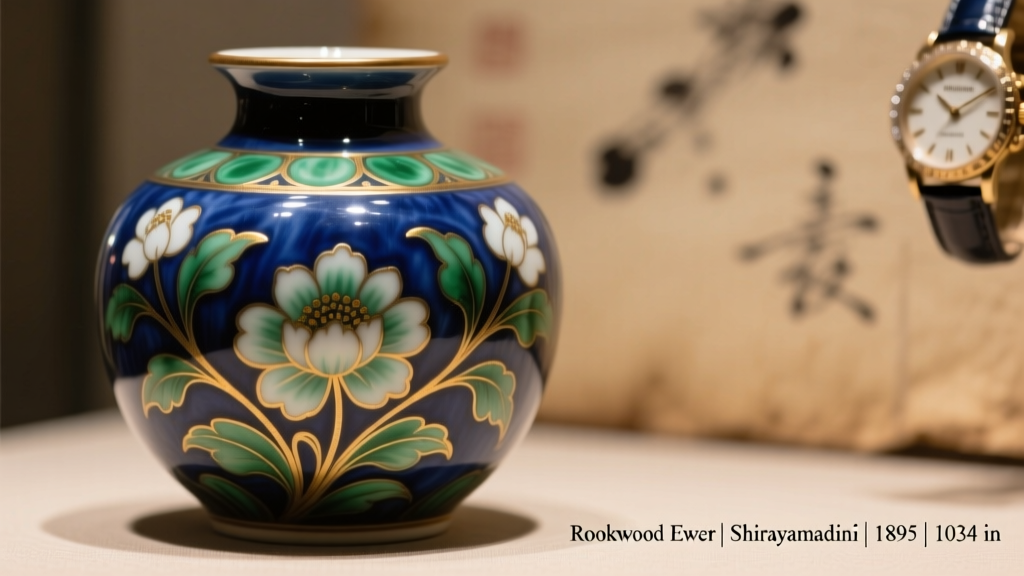
Rookwood Ewer, Floral Shirayamadani Decoration, 1895 — A Masterpiece of American Art Pottery at 10¾ Inches

Candy Containers Dog Salon: A Rare French Papier-Mâché Swivel-Headed Canine Figural from c. 1910

Residential Relics: The Forgotten Jewelry and Timepieces Embedded in America’s Historic Homes
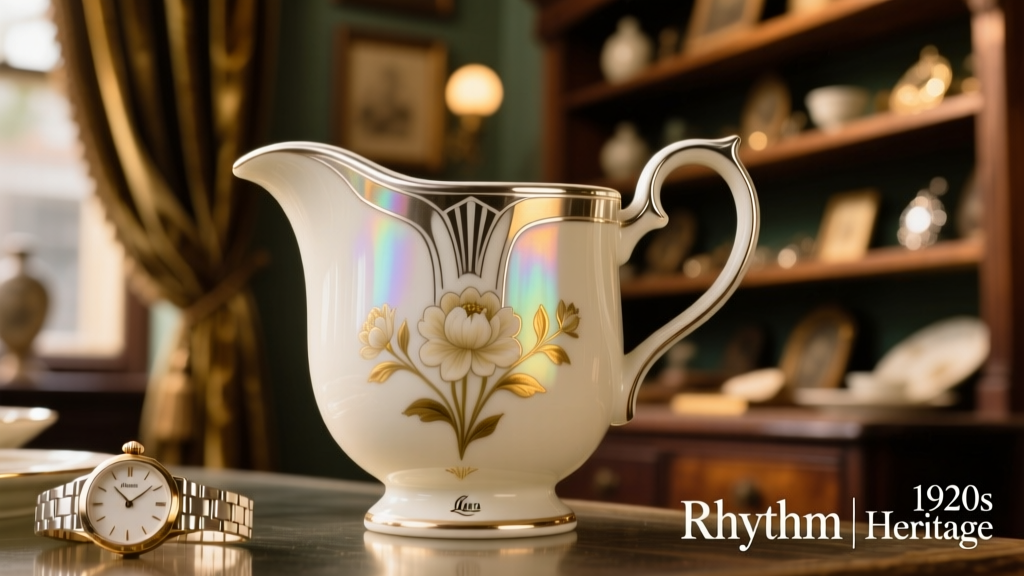
The Dinnerware Rhythm Creamer: A Mid-Century Modern Icon in Sterling Silver and Porcelain
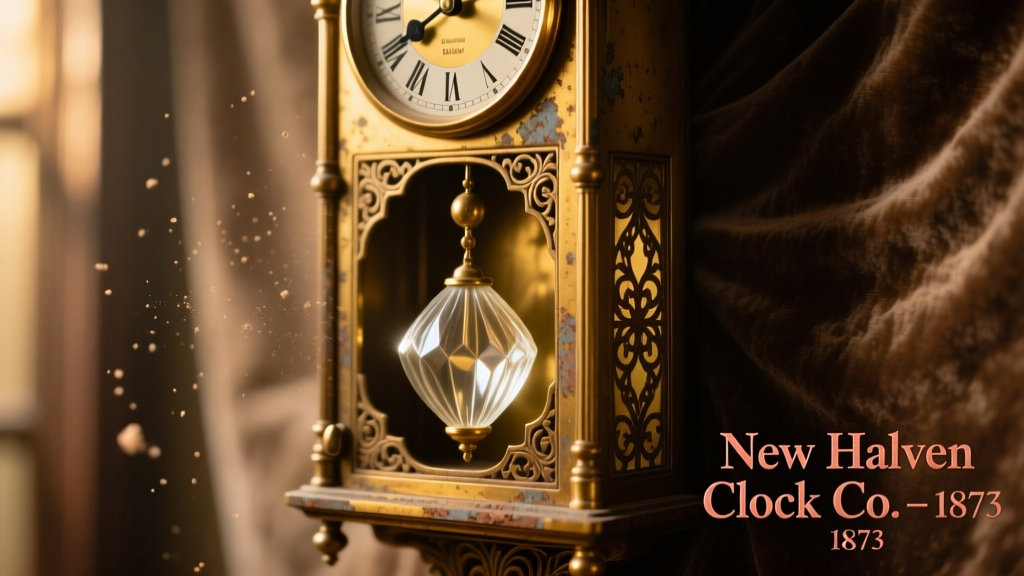
New Haven Clock Company Beveled Glass Pendulum Clock: A Collector’s Guide to the 11½-Inch Gilded Brass Case

The Red Wing Chef Blue Cookie Jar: History, Identification, and Market Value of a Mid-Century American Icon
Iroquois Lemon Yellow Dinner Plate (10-Inch): A Mid-Century American Ceramic Landmark

The Jacques Chambrette Parrot Pitcher: A Masterpiece of French Art Deco Silver and Enamel
Floral Sterling Silver Pin by F. Davis: A Study in Mid-Century American Craftsmanship