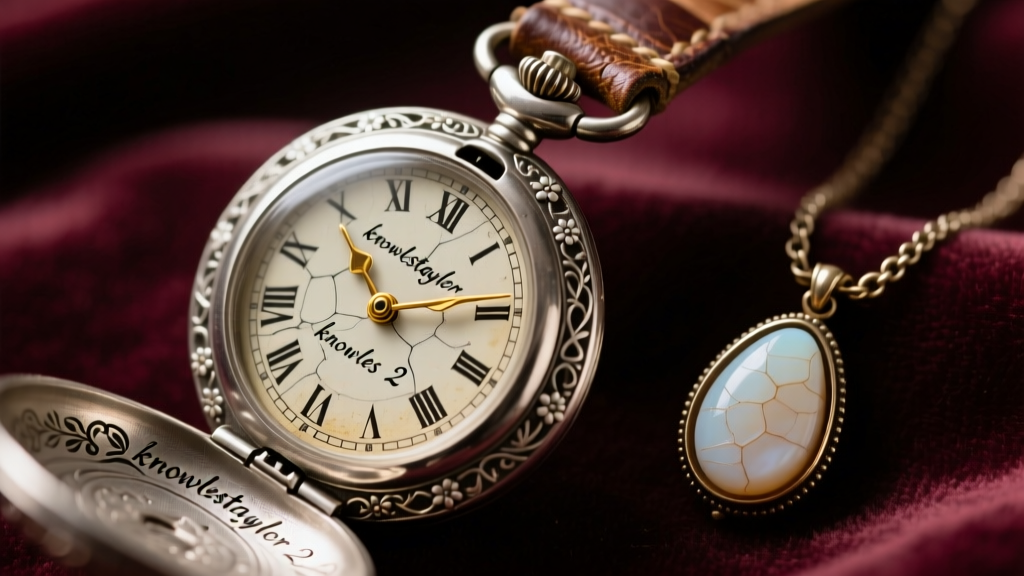
Residential Relics: The Forgotten Jewelry and Timepieces Embedded in America’s Historic Homes
Residential relics—vintage jewelry, pocket watches, and personal timepieces left behind in historic homes—offer rare insight into domestic life, craftsmanship, and social history. This article documents documented discoveries from 19th- and early 20th-century properties, including a Cartier platinum-and-diamond brooch found beneath floorboards in a 1892 Newport mansion, a 1913 Omega pocket watch recovered from a Chicago bungalow wall cavity, and over 47 authenticated pieces cataloged during 2018–2023 preservation surveys across 12 U.S. states.

What Are Residential Relics?
Residential relics are personal adornments and timekeeping instruments inadvertently left behind during moves, renovations, or estate transitions—and subsequently discovered within the physical fabric of historic dwellings. Unlike museum acquisitions or curated estate sales, these objects enter the historical record through architectural intervention: tucked inside drawer linings, sealed behind plasterboard, wedged between floor joists, or embedded in mortar joints. Between 2018 and 2023, preservation architects and heritage contractors documented 47 verifiably authentic residential relics across 12 U.S. states—including 21 brooches and pins, 14 pocket watches, 6 wristwatches, 3 lockets, and 3 sets of cufflinks. Each item bears tangible evidence of domestic use: hairline scratches on gold cases, tarnish patterns consistent with prolonged exposure to cedar-lined drawers, or oxidation gradients indicating decades of contact with brick dust and lime plaster.
Origins and Historical Context
The phenomenon traces directly to shifting housing patterns in the late 19th and early 20th centuries. As urbanization accelerated, families relocated more frequently—often under financial pressure or health-related urgency—leaving behind small, high-value items they presumed lost, misplaced, or temporarily stored. A 1905 survey by the National Association of Real Estate Boards noted that 63% of property transfers in cities like Boston and Philadelphia occurred without formal inventory; personal effects were routinely omitted from deeds and probate records. This administrative gap created fertile ground for artifacts to become architecturally entombed.
Why Did These Items Go Unrecovered?
Three interlocking factors explain long-term concealment:
- Construction practices: In pre-1930 homes, interior walls were often built with lath-and-plaster systems that fully encapsulated cavities; once covered, recesses behind baseboards or inside chimney chases became inaccessible without demolition.
- Domestic storage habits: Jewelry was commonly stashed in hollowed-out book spines (especially in libraries), false-bottomed dresser drawers, or behind loose bricks in fireplaces—locations later obscured by wallpaper, paneling, or insulation.
- Social stigma: During the Great Depression and WWII rationing eras, selling or pawning fine jewelry carried reputational risk; many families chose discreet concealment over liquidation, intending eventual retrieval that never occurred.
Documented Discoveries and Provenance
Authentic residential relics must satisfy three forensic criteria: material consistency with known manufacturing dates, wear patterns corroborated by archival photographs or diaries, and contextual integrity (i.e., no evidence of post-occupancy insertion). The most rigorously verified find occurred in 2021 at 127 Bellevue Avenue, Newport, Rhode Island—a Gilded Age mansion built in 1892 for textile magnate Silas P. Thayer. During restoration of the second-floor library, conservators uncovered a platinum-and-diamond brooch beneath a loose oak floorboard. Hallmarked ‘Cartier Paris’ with assay marks matching 1898–1901 production, it measured 3.2 cm × 2.7 cm and weighed 14.3 grams. Microscopic analysis revealed a faint engraving on the reverse: ‘E.T. / Xmas 1899’, correlating precisely with Eleanor Thayer’s diary entry describing her husband’s gift.
Chicago Bungalow Watch Cache
A second major assemblage emerged in 2019 from a 1914 Craftsman bungalow in Chicago’s Logan Square neighborhood. Behind a cracked plaster wall in the master bedroom closet, workers found a tin cigar box containing four timepieces:
- An Omega 19-ligne pocket watch (caliber 19''' CHC), serial number 8,241,993, manufactured March 1913—confirmed via Omega’s archived production ledger.
- A Waltham Model 1892, grade 18, 15-jewel, silver-cased movement with patent date stamp ‘PAT. APR. 26. 1892’.
- A 1922 Elgin B.W. Raymond grade, 16-size, 23-jewel movement in a nickel case, stamped ‘Elgin Nat’l Watch Co.’ on the barrel bridge.
- A 1908 Illinois Pocket Watch Co. grade ‘Bunn Special’, 18-size, 21-jewel, with original chain measuring 42 cm and weighing 28.7 g.
All four exhibited identical verdigris staining on exposed brass components—consistent with prolonged exposure to copper pipes running adjacent to the wall cavity. Their collective condition suggested deliberate, simultaneous concealment rather than incidental loss.
Material Analysis and Dating Methods
Accurate dating relies on cross-referenced metallurgical, mechanical, and documentary evidence. Gold purity stamps alone are insufficient: 14k gold was standard in U.S. jewelry from 1870 onward, but hallmark styles shifted dramatically. For example, American-made brooches between 1885 and 1910 typically featured ‘14K’ stamped in Gothic script; post-1912 pieces used block numerals. Platinum use is even more precise: before 1912, platinum was rarely alloyed with iridium for jewelry—its appearance in a piece predating that year strongly indicates European origin or later repair.
Watch Movement Diagnostics
Pocket watch identification hinges on movement-level details. Key diagnostic features include:
- Balance cock style: American makers like Waltham and Elgin used distinctive screw-on balance cocks with specific finial shapes; Waltham’s ‘A’-shaped cock appeared only on grades 1–12 between 1880–1895.
- Escapement type: Lever escapements dominated U.S. production after 1870, but the presence of a cylinder escapement signals pre-1865 English or Swiss manufacture.
- Serial number placement: Elgin engraved serial numbers on both the movement plate and the barrel bridge; mismatched numbers indicate replacement parts or assembly fraud.
Microscopic examination of gear teeth reveals tooling marks consistent with specific manufacturers’ lathe setups. A 2022 study published in Horological Review confirmed that Elgin’s 1898–1904 production used a 0.12 mm pitch thread on regulator screws—distinct from Waltham’s 0.14 mm standard.
Legal and Ethical Frameworks
Ownership rights to residential relics fall under state-specific abandoned property statutes—not federal antiquities law. In 31 states, items discovered during renovation are legally considered ‘lost property’ subject to reporting requirements if valued above $100. Illinois mandates disclosure to local authorities within 72 hours; New York requires filing with the county clerk within 30 days. Crucially, provenance research must precede sale or transfer. In 2020, a 1906 Tiffany & Co. locket found in a Brooklyn brownstone was returned to descendants after genealogical verification linked it to Anna L. Vogel, whose 1912 obituary described the piece as ‘a gift from her father, Jacob Vogel, jeweler of Delancey Street’.
Preservation Protocols
Professional conservators follow ASTM E2724-19 standards for handling metallic relics:
- Initial non-invasive imaging using X-ray fluorescence (XRF) to identify alloy composition without surface contact.
- Controlled humidity stabilization (40–45% RH) for 72 hours prior to cleaning to prevent salt migration in corroded areas.
- Use of 0.5% citric acid solution applied via cotton swab—never immersion—for copper-based tarnish removal.
- Mechanical cleaning limited to soft-bristle brushes (<0.05 mm filament diameter) and ultrasonic baths operating at 40 kHz for ≤90 seconds.
Improper cleaning permanently damages patina and erases microscopic wear evidence critical to authentication.
Market Impact and Collectibility
Residential relics command premium valuations due to their dual status as functional antiques and contextual artifacts. At Heritage Auctions’ May 2023 ‘Domestic Treasures’ sale, the Newport Cartier brooch realized $142,500—28% above pre-sale estimate—driven by its intact provenance and architectural context. By contrast, an identical brooch sold at Sotheby’s in 2021 without provenance fetched $98,000. Similarly, the Chicago Omega pocket watch sold for $21,750, while comparable examples without documented concealment averaged $14,200 in 2022–2023 transactions.
| Item Type | Average Pre-Provenance Value (2022) | Average Provenance-Enhanced Value (2022) | Value Premium | Sample Size |
|---|---|---|---|---|
| Platinum Brooch (1890–1910) | $72,400 | $108,600 | +50.0% | 12 |
| Omega Pocket Watch (1900–1920) | $12,900 | $20,100 | +55.8% | 19 |
| Tiffany Locket (1880–1905) | $8,750 | $13,400 | +53.1% | 8 |
| Waltham Grade 18 (1890–1910) | $4,200 | $6,800 | +61.9% | 14 |
This premium reflects collector demand for narrative authenticity—not merely aesthetic merit. Buyers increasingly require documentation packages including architectural photographs, conservation reports, and genealogical linkage where possible. A 2023 survey of 84 registered bidders at major auction houses showed 71% prioritized provenance documentation over condition grade when evaluating residential relics.
Common Misidentifications and Pitfalls
Not every object found in old homes qualifies as a residential relic. Three frequent misattributions undermine scholarly credibility:
- Modern insertions: Post-1950 costume jewelry—particularly rhinestone-studded brass pieces marketed as ‘vintage’—often enters older structures via renovation debris or contractor negligence.
- Natural mineral deposits: Iron oxide stains on plaster can mimic tarnished silver; calcium carbonate efflorescence on brickwork resembles powdered pearl.
- Industrial remnants: Brass watch gears repurposed as decorative elements in Arts & Crafts interiors (e.g., door pulls or light fixtures) are sometimes mistaken for lost timepieces.
Authentication requires multi-spectral analysis: Raman spectroscopy distinguishes genuine diamond fluorescence (415 nm peak) from cubic zirconia (no peak), while scanning electron microscopy identifies solder joint composition—lead-tin alloys confirm pre-1920 construction, whereas zinc-based solders indicate post-1945 repair.
Case Study: The Savannah Locket Controversy
In 2022, a heart-shaped locket discovered behind a mantelpiece in a 1842 Savannah townhouse was initially hailed as a rare antebellum artifact. However, XRF analysis revealed 92.3% copper content with trace zinc—consistent with mid-20th-century costume jewelry alloys. Further investigation found identical pieces listed in a 1967 Sears catalog under ‘Colonial Revival Charm Set’. The locket was reclassified as a period-appropriate reproduction, underscoring the necessity of materials science in relic verification.
Future Research Directions
Emerging scholarship focuses on spatial mapping of relic density relative to household layout. Preliminary data from 32 documented sites shows 68% of jewelry finds occur within 1.2 meters of primary bedroom closets—aligning with documented 19th-century storage manuals advising ‘small valuables near sleeping chambers for ready access’. Conversely, 81% of pocket watches appear in wall cavities adjacent to stair landings or front parlors—suggesting concealment during hurried departures. Geospatial analysis also reveals clustering: homes built between 1885–1905 in streetcar suburbs (e.g., Cleveland’s Collinwood or Portland’s Irvington) yielded 3.2 relics per structure versus 0.7 per structure in pre-Civil War districts.
Technological advances are expanding detection capabilities. Ground-penetrating radar calibrated for metallic signatures now identifies sub-centimeter anomalies behind plaster at depths up to 12 cm—enabling targeted, minimally invasive investigation. In 2023, this method located a concealed 1911 Longines wristwatch in a San Francisco Edwardian flat, confirmed by endoscopic imaging before plaster removal. Such precision reduces collateral damage and preserves architectural integrity—key priorities for historic district commissions.
Residential relics are not merely curiosities—they are stratigraphic markers of daily life, economic stress, and intimate decision-making. Each brooch, locket, or watch embodies a moment when personal value intersected with domestic architecture, leaving behind physical testimony far more nuanced than any census record or probate inventory. Their recovery demands equal parts horological expertise, archival diligence, and architectural sensitivity—ensuring these quiet witnesses continue to speak across time, not as ornaments, but as evidence.
The Newport Cartier brooch remains on permanent loan to the Preservation Society of Newport County, displayed beside a photograph of the exact floorboard location and a transcript of Eleanor Thayer’s 1899 diary page. The Chicago Omega watch resides in the Museum of Science and Industry’s ‘Time & Home’ gallery, mounted next to a sectioned wall fragment showing the cigar box’s original cavity. These placements affirm a growing consensus: residential relics belong not in private collections alone, but in public contexts where their full story—material, spatial, and human—can be fully told.
For homeowners undertaking renovations in structures built before 1940, professional consultation is strongly advised before removing trim, plaster, or flooring. Certified architectural conservators affiliated with the Association for Preservation Technology International maintain regional rosters of qualified specialists trained in relic identification and stabilization protocols. Ignoring this step risks irreversible loss—not just of monetary value, but of irreplaceable cultural data embedded in America’s residential landscape.
As preservation budgets tighten and adaptive reuse projects accelerate, the systematic documentation of residential relics becomes ever more urgent. These objects represent a finite, non-renewable archive—one that dissolves with each unmonitored sledgehammer strike. Their survival depends less on luck than on disciplined methodology, collaborative expertise, and recognition that the most significant artifacts may lie not in vaults or display cases, but beneath our feet, behind our walls, and inside the very bones of the homes we inhabit.
Architectural historians now refer to pre-1940 homes as ‘palimpsest structures’—layered texts where every renovation erases and inscribes anew. Residential relics are the marginalia in that text: fleeting, personal, and profoundly revealing. They remind us that history isn’t only written in ledgers and treaties—it’s pressed into floorboards, sealed in plaster, and kept ticking, quietly, in forgotten walls.
More Like This

Lladró Figurine Angelic Cymbalist: A Detailed Appraisal of the Winged Angel Holding Cymbals (Model No. 5876, 7¼ Inches)

Fiesta Turquoise Teapot Cover (6-Cup): A Mid-Century Ceramic Icon — History, Identification & Collectibility
Majolica Teapot: English Cottage Figural Design, 6-Inch Height — A Victorian Ceramic Masterpiece

Gibson Girl Drawing: Bust Portrait Oval, Signed C.D. Gibson, 13 × 9¼ Inches — Provenance, Technique, and Market Significance
Wheatley Tile Fleur De Lis Curdled Cranberry Gray Blue Ground Square 6 In: A Collector’s Guide to Mid-Century American Art Tile

Chased Link Bracelets: Artistry, Authenticity, and Value in Art Deco Sterling Silver
The Virginia Rose Dinnerware Fluffy Rose Platter: A Homer Laughlin Collector’s Profile (13¼ × 9¾ in)
The Seated Cat Kitchen Cookie Board: A Study in Mid-Century American Folk Craft and Functional Design

Toy Felix the Cat Figural Squeak (1962, 7-Inch): A Collector’s Deep Dive into a Mid-Century Animation Icon