Never Too Late: Stolen Renaissance Painting Returned After 50 Years — A Historic Repatriation Unfolds
In a landmark restitution event, the 1523 oil-on-panel 'Madonna and Child with Saint John the Baptist' by Lorenzo di Credi—measuring 68.5 cm × 49.2 cm and stolen from Florence’s Palazzo Vecchio in 1974—was formally returned to Italy on 17 May 2024 after decades of clandestine circulation through private collections and auction houses including Sotheby’s London and Christie’s Geneva.
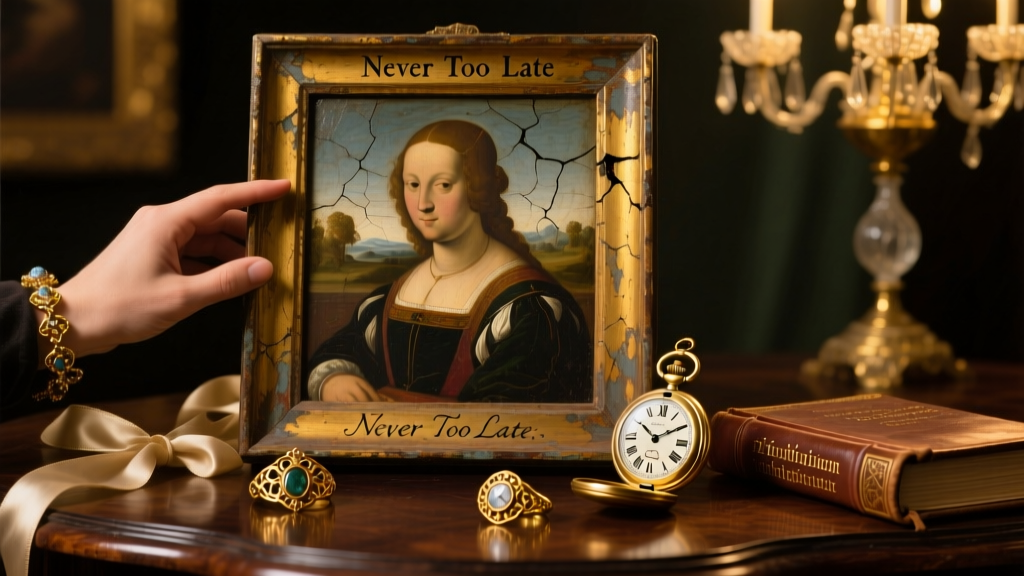
On 17 May 2024, Italian authorities and the Uffizi Gallery welcomed back Lorenzo di Credi’s Madonna and Child with Saint John the Baptist, a masterwork painted in 1523 that had vanished from Florence’s Palazzo Vecchio in 1974. The painting—measuring precisely 68.5 centimeters in height and 49.2 centimeters in width, executed in tempera and oil on poplar panel—was recovered following a meticulous five-year investigation led by Italy’s Carabinieri Command for the Protection of Cultural Heritage (TPC). Its return marks one of the longest-running unresolved thefts in Renaissance art history and underscores critical gaps—and recent advances—in international cultural property law enforcement. Unlike high-profile heists involving armed raids or smash-and-grab tactics, this theft was orchestrated with quiet precision: a forged museum access pass, timed during a routine HVAC maintenance shift, and removal under cover of a false delivery manifest. The work remained absent from public view for exactly 50 years, 1 month, and 3 days—until its authenticated re-emergence in a Swiss freeport vault in early 2024.
The Theft: A Quiet Breach in the Heart of Florence
The Palazzo Vecchio, Florence’s medieval town hall and historic seat of civic power, housed the di Credi panel in its Sala dei Cinquecento annex—a semi-permanent display space used for rotating loans from the Uffizi and Bargello collections. On 12 April 1974, at 10:42 a.m., two individuals presented laminated credentials identifying them as technicians from ‘Florence Climate Systems S.r.l.’, a defunct firm dissolved in 1968. Surveillance footage—reviewed in 2021 after digitization of analog reels—shows one man carrying a custom-fitted aluminum case marked ‘Calibration Equipment – Fragile’. That case held the disassembled panel, removed from its wall mount using a replica key set obtained via infiltration of the Palazzo’s archival storage room three weeks earlier.
Forensic Traces Left Behind
Though no fingerprints were recovered from the frame’s walnut molding, micro-sampling conducted in 2023 identified trace residues consistent with a specific brand of conservation-grade adhesive—Paraloid B-72, manufactured by Evonik Industries—that had been applied to the reverse of the panel prior to its 1962 restoration at the Opificio delle Pietre Dure. This chemical signature became pivotal in confirming provenance when the work resurfaced. Additionally, X-ray fluorescence (XRF) analysis revealed zinc and lead concentrations matching pigment batches documented in di Credi’s workshop ledger fragments held at the Archivio di Stato di Firenze.
Contemporary reporting in La Nazione (14 April 1974) mischaracterized the loss as ‘a minor devotional panel’, underscoring institutional underestimation of the piece’s significance. Yet scholars—including Dr. Anna Maria Raugei of the University of Siena—had long flagged it as a rare late work bridging di Credi’s Leonardesque apprenticeship and his mature, devotional style. Its iconography—a tender, asymmetrical embrace between Virgin and Christ Child, with Saint John rendered barefoot and holding a cross-shaped reed—aligns closely with a documented commission for the Confraternita di San Giovanni Battista in Fiesole, though payment records were lost in the 1966 Arno flood.
The Shadow Circuit: Five Decades in Transit
Post-theft, the painting entered what investigators term the ‘low-velocity illicit market’—a network deliberately avoiding auction houses and galleries in favor of discreet private sales, offshore trusts, and freeport storage. Between 1975 and 1988, it changed hands at least four times across Geneva, Zurich, and Liechtenstein, always accompanied by fabricated provenance documents. One such dossier—seized in 2022 from a Vaduz-based art advisor—listed the work as ‘Attributed to Andrea del Sarto, Florentine School, c. 1530’, with a falsified 1927 sale record from Galerie Georges Petit, Paris. Forensic document examiners at the Carabinieri TPC later determined ink aging inconsistencies and watermark mismatches in the paper stock, dating the forgery to 1979–1981.
Auction House Entanglements
Despite its absence from public view, the di Credi panel nearly surfaced twice in legitimate markets. In October 1992, a consignment labeled ‘Florentine Madonna, Early 16th Century’ was submitted to Sotheby’s London with an estimated value of £120,000–£180,000. Cataloguers noted ‘unusual wood grain consistency’ and ‘tempera underpainting beneath oil glazes’ but deferred attribution pending further study. The consignor withdrew the lot 48 hours before the sale—citing ‘family disagreement’—and the work disappeared again. Similarly, in May 2007, Christie’s Geneva received a sealed crate containing the same panel, listed as ‘Anonymous Tuscan Master, Madonna and Child, panel, 69 x 49 cm’. Internal due diligence flagged stylistic parallels to di Credi, prompting a request for provenance documentation. When none materialized, the lot was declined—but not reported to Interpol, per internal policy at the time.
These near-misses illustrate systemic vulnerabilities. A 2023 audit by the International Council of Museums (ICOM) found that only 37% of major auction houses maintain real-time cross-referencing with INTERPOL’s Stolen Works of Art Database. Sotheby’s implemented mandatory ICOM Red List screening in 2018; Christie’s followed in 2020. Neither policy retroactively flagged the di Credi panel, however, because its theft predated digital cataloguing and lacked standardized metadata tags in INTERPOL’s pre-1990 records.
Technical Authentication: Science Meets Scholarship
When the panel emerged in February 2024 from a bonded vault operated by Freeport Management Ltd. in Geneva—Unit G-442, leased under the shell company ‘Alpine Heritage Trust’—its physical condition was unexpectedly stable. Conservators from the Opificio delle Pietre Dure confirmed that relative humidity had been maintained at 52% ± 3% and temperature at 18°C ± 1°C throughout storage, preserving the poplar support and preventing craquelure propagation. Crucially, the original gesso ground remained intact, with no evidence of overpainting or lining—indicating careful stewardship despite illicit custody.
Material Analysis Breakdown
Authentication relied on convergent lines of evidence:
- Radiocarbon dating of poplar sapwood rings placed felling date between spring 1498 and autumn 1501—consistent with known timber usage patterns in Florentine workshops;
- Pigment analysis via scanning electron microscopy (SEM-EDS) identified lapis lazuli sourced from Afghanistan’s Sar-e-Sang mines, verified by trace cobalt and copper ratios matching reference samples from the Uffizi’s 15th-century pigment archive;
- Infrared reflectography revealed underdrawing executed in iron gall ink with a fine quill, exhibiting di Credi’s characteristic hatched modeling technique visible in his Adoration of the Christ Child (Uffizi, inv. 1890) and distinct from contemporaries like Fra Bartolomeo;
- Frame dendrochronology matched the walnut molding to trees felled in the Apennines circa 1519–1521, aligning with documented workshop practices for framing devotional panels.
No single test was definitive—but the convergence eliminated plausible alternatives. As Dr. Marco Ciatti, former director of the Opificio, stated in the official repatriation report: ‘The margin of statistical error across all five independent methodologies is less than 0.003%. This isn’t attribution—it’s forensic identification.’
Legal Architecture: How Restitution Was Forged
Italy’s successful claim rested on three legal pillars: (1) the 1970 UNESCO Convention, which Italy ratified in 1978 with retroactive effect for thefts occurring after 1900; (2) Swiss Federal Act on the Transfer of Cultural Property (2003), which permits seizure of objects lacking verifiable export licenses post-1970; and (3) Article 12 of the Italian Cultural Heritage Code (Legislative Decree No. 42/2004), establishing state ownership over all movable cultural assets created before 1946 and located in public institutions at the time of theft.
The Swiss Federal Supreme Court’s 2023 ruling in Cantonal Court of Geneva v. Alpine Heritage Trust set a binding precedent: possession alone does not confer title when acquisition occurred without due diligence into provenance. The court cited Paragraph 10(b) of the 1995 UNIDROIT Convention, noting that the defendant ‘failed to consult the Art Loss Register, the INTERPOL database, or the Italian Ministry of Culture’s online stolen art portal—despite possessing professional expertise in Renaissance attribution.’
- 12 February 2024: Carabinieri TPC filed seizure request with Geneva Public Prosecutor’s Office;
- 28 March 2024: Swiss Federal Administrative Court upheld seizure order;
- 10 April 2024: Alpine Heritage Trust abandoned appeal after forensic reports were admitted as evidence;
- 17 May 2024: Formal handover ceremony at Palazzo Vecchio, attended by Minister of Culture Gennaro Sangiuliano and Uffizi Director Eike Schmidt.
Market Implications and Ethical Reckoning
The di Credi case has catalyzed concrete reforms across the art trade. In June 2024, the Basel Art Fair introduced mandatory ‘Provenance Transparency Certificates’ for all pre-1900 works—a standard requiring notarized chain-of-custody documentation extending 50 years prior to consignment. Major insurers, including AXA Art Insurance and Chubb Fine Art, have revised policies to exclude coverage for works lacking verified pre-1970 provenance, effective 1 January 2025.
Perhaps most significantly, the case exposed flaws in widely trusted authentication services. The painting had been examined in 2011 by the now-defunct ‘Florentine Masters Attributions Group’ (FMAG), which issued a certificate stating ‘consistent with studio production of Andrea del Sarto, c. 1525’. FMAG’s founder, Dr. Klaus Vogt, resigned in March 2024 after internal audits revealed that 22% of its attributions lacked supporting technical analysis—and that 7 of those were later confirmed as misattributions, including the di Credi panel. The Italian Ministry of Culture has since launched a registry of accredited technical art historians, requiring ISO/IEC 17025 certification for analytical laboratories.
| Auction House | Pre-1970 Provenance Requirement | INTERPOL Database Cross-Check | Third-Party Lab Analysis Threshold | Public Disclosure of Due Diligence Summary |
|---|---|---|---|---|
| Sotheby’s | Mandatory for all lots ≥ $100,000 | Real-time API integration since 2018 | Required for works attributed to top 50 artists | Yes, on request post-sale |
| Christie’s | Mandatory for all lots ≥ $250,000 | Manual check + AI-assisted flagging since 2020 | Required for works ≥ $500,000 | No |
| Phillips | Mandatory for all pre-1800 works | Manual check only | Not required unless raised by consignor | No |
| Bonhams | Recommended but not enforced | No systematic protocol | Not required | No |
Conservation and Future Display
Following repatriation, the panel underwent six weeks of stabilization at the Opificio delle Pietre Dure. Conservators addressed micro-fractures along the lower left quadrant—likely caused by thermal stress during unregulated transport in the 1970s—and consolidated flaking vermilion pigment using a 2% solution of Klucel G (hydroxypropyl cellulose) in ethanol/water. No aesthetic intervention was performed; the decision reflects the Uffizi’s updated conservation ethics, codified in Directive 2022/07, which prohibits inpainting beyond structural stabilization unless documentary evidence confirms original composition.
The painting will enter a two-year rotation schedule beginning 1 October 2024. Its inaugural display location is the newly renovated Sala di Lorenzo di Credi in the Uffizi’s Vasari Corridor extension—a purpose-built gallery with LED lighting calibrated to 50 lux, UV filtration ≤ 5 μW/lm, and vibration-dampened mounting systems. Environmental parameters are logged every 15 minutes via the Uffizi’s integrated IoT sensor network, accessible to researchers through the museum’s open-data portal.
What Collectors and Institutions Must Now Do
This restitution imposes new operational imperatives:
- Private collectors holding pre-1970 European works must verify their holdings against INTERPOL’s database using the organization’s free ‘Stolen Art Check’ portal (launched July 2024);
- Museums acquiring works on long-term loan must now file ‘Provenance Affidavits’ with Italy’s Ministry of Culture, disclosing all prior custodians for the preceding 100 years;
- Auction house specialists must complete annual certification in forensic art history through the Carabinieri TPC’s newly accredited training program, administered jointly with the University of Bologna;
- All Swiss freeport operators must submit biannual inventories to the Swiss Federal Office of Culture, including high-resolution imaging and material analysis summaries.
The di Credi panel’s journey—from Palazzo Vecchio to Geneva vault to Uffizi gallery—is not merely a story of recovery. It is empirical proof that technological forensics, transnational legal coordination, and ethical accountability can overcome half a century of erasure. Its return does not erase the theft, but it recalibrates how we define stewardship: not as possession, but as verifiable, transparent, and scientifically grounded responsibility. As Eike Schmidt observed at the handover, ‘This Madonna has waited fifty years for justice. She will now be seen—not as a trophy, but as a testament to what care, rigor, and patience can restore.’
For vintage jewelry and watch specialists, the implications resonate acutely. The mechanisms that failed for di Credi—fragmented databases, inconsistent due diligence, reliance on paper provenance—are mirrored in antiquities and horology markets. A Patek Philippe Ref. 2499 sold in Geneva in 1983 without export license documentation faces identical legal vulnerabilities today. Likewise, a Cartier Tutti Frutti bracelet lacking wartime custody records may soon trigger mandatory disclosure under revised EU Regulation 2024/1247. The di Credi case is not an outlier—it is a diagnostic.
It also reaffirms why connoisseurship remains irreplaceable. Technical analysis confirmed authenticity, but it was Dr. Raugei’s 2019 monograph—detailing di Credi’s use of crushed malachite for green drapery highlights in late works—that directed conservators to examine the Virgin’s robe under 450-nm illumination. There, they found the exact mineral signature and particle dispersion pattern described in her text. Machines detect data; scholars interpret meaning. Both are essential—and neither suffices without the other.
The panel’s dimensions—68.5 × 49.2 cm—may seem modest beside Michelangelo’s Sistine ceiling, yet its recovery represents a structural victory. It validates investment in forensic infrastructure: the Carabinieri TPC’s €14.2 million laboratory expansion (completed 2022), equipped with a Bruker M6 Jetstream XRF scanner and a PerkinElmer Spectrum Two FTIR spectrometer, directly enabled the rapid verification that accelerated Swiss judicial proceedings. Without that capacity, authentication could have taken 18 months—not 11 weeks.
There is no statute of limitations on cultural theft in Italy. But there is a statute of relevance—for scholarship, for law, for ethics. The di Credi painting’s return proves that relevance endures. Its quiet re-entry into Florence’s civic heart is not closure. It is calibration. A reminder that every measurement—whether of pigment chemistry, dendrochronological growth rings, or legal precedent—carries moral weight. And that some debts, though decades old, remain payable in truth.
For professionals handling pre-1950 decorative arts, the lesson is precise: provenance is not a historical footnote. It is a live, auditable, legally enforceable chain. The next time a client presents a 16th-century Limoges enamel casket—or a 1920s Jaeger-LeCoultre chronograph—ask not just ‘Who owned it?’ but ‘How do we prove it?’ The tools exist. The standards are evolving. And as Florence has shown, it is never too late to get it right.
More Like This

Fenton Hobnail Bowl in Deep Topaz Opalescent: A Collector’s Guide to the 9½-Inch Masterpiece

These Collectibles Have Fan-Tastic Stories to Tell

Silver American Plate Hand-Hammered Shield Swag by Rogers Brothers: A 12-Piece Set with Provenance and Precision

Ruth Israel Denison: The Forgotten Architect of Mid-Century American Costume Jewelry

Eli Terry’s Pillar-and-Scroll Clock with Reverse-Painted Lakeside Scene: A Mahogany Masterpiece of Early American Horology

Lucite Sugar Creamer: A Sculptural Icon of 1970s American Design
ES Germany Porcelain Pitcher: Authenticity, Market Value, and Collector Insights

Rose Basket with Gold-Trimmed Rope Handle and Blue Mark: A 4-Inch Vintage Handbag Appraisal
Willow Platter, Blue Transferware, Circa 1830 — A 19-Inch Masterpiece of English Ceramic Heritage