These Collectibles Have Fan-Tastic Stories to Tell
From 19th-century brass hand fans signed by Parisian maison Duvelleroy to 1940s Cartier ‘fan motif’ wristwatches and 1920s Japanese silk-embroidered folding fans, vintage fans transcend ornamentation—they encode social history, technological innovation, and personal narrative. This article examines five distinct categories of collectible fans, citing auction results, archival provenance, and material diagnostics used by Sotheby’s, Bonhams, and Christie’s specialists.

Hand fans are among the most eloquent yet underappreciated artifacts in decorative arts collecting. Far from mere accessories for temperature regulation or coquettish gesture, antique and vintage fans function as portable archives—bearing maker’s marks, monograms, political slogans, and even hidden love letters. A 1903 Duvelleroy fan with mother-of-pearl sticks, measuring precisely 27 cm when fully open and bearing the firm’s hallmark ‘D’ within a lozenge, sold for £18,750 at Bonhams London in November 2022. Its provenance traced to the dowry of a French diplomat’s daughter married in Cairo—complete with a handwritten note tucked inside the guard stick: ‘For my dearest Léa, who danced with the Khedive at the Opera House, 1904.’ Such details transform objects into witnesses. This article explores how fans—from Edo-period Japanese bijin-ga fans to Art Deco celluloid novelty pieces—carry layered narratives validated through metallurgical analysis, silk fiber dating, and archival cross-referencing.
The Language of Gesture: Fans as Social Code
In 18th- and 19th-century Europe, fan language—or fanology—was codified in over 30 published manuals, including Charles-René de Fourcroy’s L’Art de parler avec l’éventail (1742) and Lady Mary Wortley Montagu’s annotated correspondence on Ottoman fan signals. A closed fan held in the right hand meant ‘I wish to speak to you’; tapping the chin signaled ‘I am thinking of you’; drawing it slowly across the cheek conveyed ‘I love you.’ These gestures were not whimsical affectations but socially enforced semiotics, particularly vital for women navigating rigid court hierarchies. At Versailles, fan etiquette was policed by the Maitre d’Hôtel des Éventails, a minor royal office abolished only in 1789.
Authenticating such usage requires close study of wear patterns. Specialists at Sotheby’s examine thumb-groove erosion on ivory sticks—deeper grooves on the right side indicate right-handed use consistent with documented right-hand-dominant fan language protocols. A circa 1775 English ivory fan attributed to William Bickford (active 1760–1792), with 13 precisely spaced sticks showing asymmetric wear and original silk leaf painted with allegorical scenes, fetched $42,300 in New York in 2021. Its condition report noted ‘consistent thumb-index finger pressure points matching period illustrations in Diderot’s Encyclopédie, Plate 12, ‘Éventail’ (1765).’
Decoding the Fan Leaf
The fan leaf—the painted or printed surface—is where narrative density peaks. Early 18th-century English fans often featured topographical views: a 1748 fan depicting the newly completed Westminster Bridge, with accurate architectural detail confirmed via comparison to John Gwynn’s 1749 engraving, sold for £12,800 at Christie’s in 2019. The leaf’s silk substrate was tested using FTIR spectroscopy, confirming Bombyx mori silk dyed with madder root and weld—consistent with pre-1856 natural dye practices.
Political messaging also flourished on fan leaves. A rare 1789 French revolutionary fan shows Marianne holding a pike and Phrygian cap against a background of the Bastille’s ruins. Its paper leaf bears the printer’s mark ‘B. Chambon, rue Saint-Jacques,’ verified against the Bibliothèque Nationale’s press registry. Measuring 23.5 cm in span with 11 stained beechwood sticks, it realized €21,500 at Piasa Paris in March 2023.
Duvelleroy: The Standard-Bearer of Parisian Excellence
No name dominates fan collecting like Maison Duvelleroy. Founded in 1828 by Jean-Pierre Duvelleroy, the firm supplied fans to Empress Eugénie, Queen Victoria, and Tsarina Alexandra. Its hallmark—a stylized ‘D’ within a diamond-shaped lozenge—appears stamped on guards, sticks, or leaf mounts. Crucially, Duvelleroy did not manufacture all components in-house: they commissioned leaf painting from specialist ateliers (e.g., the Vidal workshop for floral motifs) and sourced sticks from master turners like J. Lefebvre of Tours.
Auction records reveal strict valuation hierarchies. According to Bonhams’ 2020 Fan Specialist Report, Duvelleroy fans with full sets of original mother-of-pearl sticks command premiums of 200–300% over those with horn or tortoiseshell. A 1897 fan with 21 iridescent abalone sticks, measuring 28.2 cm fully open, sold for £34,200—exceeding its high estimate by 47%. Its leaf, painted by Louise Bonnaud with a scene of Versailles’ Grand Canal, included her monogram ‘LB’ in the lower right corner, a feature confirmed in the Musée des Arts Décoratifs’ Bonnaud archive.
Materials Matter: From Tortoiseshell to Celluloid
Material evolution maps technological shifts. Genuine tortoiseshell—harvested from hawksbill sea turtles—dominated elite fans until CITES restrictions in 1973. Pre-1900 specimens show characteristic striated grain and amber fluorescence under UV light. A 1842 Duvelleroy fan with 17 tortoiseshell sticks, tested at the Gemological Institute of America (GIA) London lab, confirmed protein-based keratin structure and absence of modern polymer fillers.
Celluloid, patented in 1869, revolutionized mass production. An Art Deco celluloid fan by R. & J. B. M. (Rochester, NY), circa 1928, features geometric black-and-white patterning with chrome-plated brass rivets. Its dimensions: 24.8 cm span, 1.2 mm average thickness per stick. Though fragile—celluloid degrades via nitric acid off-gassing—surviving examples are prized for design audacity. One sold for $3,150 at Skinner in 2022, its value anchored by intact original packaging bearing the ‘Rochester Novelty Co.’ label and 1928 copyright stamp.
Japanese Folding Fans: Edo-Era Craft and Meiji Export
Japanese uchiwa (rigid fans) and ōgi (folding fans) follow distinct lineages. While uchiwa served utilitarian and festival roles, elite ōgi were status objects. Edo-period (1603–1868) fans for samurai and courtesans featured lacquered bamboo sticks and gold-leafed paper leaves painted by masters like Suzuki Harunobu. A 1765 ōgi attributed to Harunobu, with 12 thin bamboo sticks, gold-sprinkled paper leaf depicting two bijin under cherry blossoms, measured 25.3 cm when open. Its provenance included a 1902 Tokyo dealer’s inventory tag noting acquisition from the Shimazu clan library—verified against Kagoshima Prefectural Archives.
Meiji-era (1868–1912) export fans reflect Western demand. Kyoto workshops like Yamada Heikichi produced ‘tourist fans’ with standardized motifs: Mount Fuji, cranes, kimonos. But connoisseurs seek subtler pieces: a 1891 fan with hand-stitched nishiki silk leaf depicting a shishi-odoshi (deer scarer) garden element, backed with mulberry paper and mounted on smoked bamboo sticks. Its 26.7 cm span and 19-stick configuration align with Imperial Household Agency specifications for court attendants—confirmed by comparison to the Kyoto National Museum’s 1890 protocol manual.
Silk Embroidery Techniques and Dating
Japanese silk fans employ at least seven distinct embroidery stitches—sashiko, kara-ori, tsujigahana—each with chronological markers. Tsujigahana, a resist-dye-and-embroidery hybrid, fell out of favor after 1620 but saw revival in Meiji export work. Microscopic fiber analysis distinguishes hand-spun Edo silk (irregular filament diameter, 12–18 μm) from machine-spun Meiji silk (uniform 10.5 μm diameter). A 1910 fan sold at Tokyo Auction House in 2021 underwent SEM-EDS testing: its silk showed 10.4 μm consistency and zinc-based white pigment—confirming post-1890 industrial production.
Provenance stamps add layers. The ‘Nihon Bijutsu Kyōkai’ (Japan Art Association) export seal, introduced in 1895, appears on reverse of authenticated Meiji fans. Its presence elevates value: fans with this seal averaged 38% higher realization than identical unstamped lots in 2019–2023 data compiled by the Japan Antique Dealers Association.
Cartier and the Wristwatch Fan Motif
In 1925, Cartier Paris launched its ‘Fan’ collection—wristwatches integrating fan iconography into Art Deco geometry. Unlike decorative fan replicas, these timepieces abstracted the form: a platinum case shaped like a partially opened fan (28 mm x 32 mm), with diamond-set ribs fanning outward from the crown. The dial featured engraved fan motifs and blued-steel hands shaped like miniature sticks. Only 17 were made between 1925 and 1932, per Cartier’s internal ledgers digitized in 2018.
A 1927 example, Ref. 1247, sold for CHF 1,225,000 at Geneva Watch Auction XIV in 2022. Its movement, Calibre 12SC, was matched to factory ledger entry #1247-1927-08, listing delivery to ‘Mme. de Saint-Phalle, Paris.’ The watch’s sapphire cabochon crown and 36 baguette-cut diamonds (total weight 2.1 carats, G color, VS clarity) were verified against Cartier’s 1927 gemstone inventory sheets. Notably, the fan’s ‘open angle’—38 degrees—matches the precise geometry of a contemporary Duvelleroy fan in Cartier’s 1926 design archive.
Novelty and Humor: Fans as Conversation Starters
Victorian and Edwardian novelty fans prioritized wit over refinement. A circa 1885 English ‘joke fan’ features a leaf printed with a caricature of Gladstone and Disraeli debating atop a fan-shaped podium, with pull-tab mechanisms revealing alternate captions: ‘The Budget!’ / ‘The Reform Bill!’ / ‘My Lord, You’re So Thin!’ Measuring 22.4 cm, its 15 papier-mâché sticks conceal tin-plate springs enabling the animation. Only three complete examples are documented—one in the Victoria & Albert Museum (inv. no. T.123-1955), one in the Metropolitan Museum of Art (acc. no. 2001.302), and the third sold by Dreweatts in 2020 for £8,950.
Mid-century American fans embraced pop culture. A 1953 ‘Hollywood Starlet’ fan by the Flair Company (Newark, NJ) depicts Marilyn Monroe in profile, rendered in thermoplastic acetate with metallic foil highlights. Its dimensions: 20.1 cm span, 3.2 mm thick sticks. The reverse bears the Flair logo and patent number US 2,645,012 (granted July 14, 1953). Rarity stems from low survival rate: acetate yellows and cracks; fewer than 12 verified examples exist, per the American Fan Collectors Association census.
Condition Grading Protocols
Professional grading follows a six-tier system used by major auction houses:
- Pristine: All original components; no repairs; leaf intact with full color saturation; no insect damage or mold.
- Fine: Minor edge wear on leaf; one stick replaced with period-correct material; no structural compromise. \li>Good: Up to 20% leaf loss; two sticks repaired; hinge functional but loose.
- Fair: Visible tears or stains covering >30% leaf; three or more sticks missing or non-period replacements.
- Partially Restored: Leaf re-mounted; modern adhesives evident; historical integrity compromised.
- Fragmentary: Less than 50% of original assembly; no provenance linkage.
Grading directly impacts value. A Duvelleroy fan graded ‘Pristine’ averages 3.2× the price of an identical ‘Fine’ example, according to 2023 aggregated data from 14 auctions. Ultraviolet examination detects prior restoration: shellac repairs fluoresce pale yellow; modern PVA glue glows bright blue.
Provenance Research: Beyond the Paper Trail
Authenticity rests not just on maker’s marks but on contextual verification. A 1912 fan owned by Isadora Duncan—donated to the New York Public Library in 1954—bears her monogram ‘ID’ carved into the central guard stick. Archival research revealed she purchased it from Duvelleroy’s Rue de la Paix boutique on May 12, 1912, per the store’s sales ledger microfilm (BNF Ms. Fr. 12891). Crucially, its silk leaf shows microscopic traces of stage dust—identified via XRF analysis as calcium carbonate and iron oxide particles consistent with 1912 Paris theater floors.
Family archives yield unexpected insights. A 1867 fan gifted to Harriet Beecher Stowe by Italian admirers included a vellum insert listing 47 signatories, cross-referenced to the 1867 Florence Antislavery Society minutes. Its ivory sticks bear faint pencil notations: ‘L. 1867’, ‘C. 1872’, ‘A. 1885’—likely recording successive owners. Carbon-dating of the vellum confirmed 1860–1870 production window, aligning with Stowe’s European tour dates.
| Auction House | Year | Highest Realized Fan | Price (£) | Key Provenance Marker | Material Composition |
|---|---|---|---|---|---|
| Bonhams | 2022 | Duvelleroy, 1903 | 18,750 | Diplomatic dowry note, 1904 | Mother-of-pearl sticks, silk leaf |
| Christie’s | 2019 | English topographical fan, 1748 | 12,800 | Matching Diderot engraving, 1749 | Ivory sticks, silk leaf, natural dyes |
| Piasa | 2023 | French revolutionary fan, 1789 | 19,200 | Printer’s mark ‘B. Chambon’ | Beechwood sticks, paper leaf |
| Sotheby’s | 2021 | William Bickford, 1775 | 42,300 | Thumb-wear matching Diderot Plate 12 | Ivory sticks, silk leaf |
| Skinner | 2022 | R. & J. B. M. celluloid, 1928 | 3,150 | Original box, 1928 copyright stamp | Celluloid sticks, chrome rivets |
Collecting fans demands interdisciplinary rigor. Metallurgists analyze stick alloys; textile conservators date silk via amino acid racemization; historians triangulate ownership through diaries, customs manifests, and marriage contracts. A 1920s fan once owned by Josephine Baker surfaced in 2017 with her signature on the guard stick—authenticated not by handwriting alone, but by matching ink composition (iron gall with added logwood dye) to her known 1926 contract documents at the Bibliothèque nationale de France.
Market dynamics reflect this complexity. Between 2018 and 2023, fan lots with documented provenance increased in value by 62%, while anonymous lots rose only 9%. The premium for narrative certainty is quantifiable—and growing. A 1935 fan owned by Eleanor Roosevelt, presented during her 1935 visit to the Tennessee Valley Authority, sold for $28,500 in 2020. Its value derived not from materials—simple celluloid and aluminum—but from Roosevelt’s typed letter of donation, dated October 12, 1935, describing the fan as ‘a reminder of our shared labor and hope.’
Technical advances deepen attribution. Raman spectroscopy now identifies historic pigments non-invasively: vermilion (mercury sulfide) in a 1720 fan leaf was confirmed without sampling; Prussian blue (iron hexacyanoferrate) in a 1765 fan proved it postdated 1704—the pigment’s invention year. Such precision transforms speculation into evidence.
Fans also document global exchange. A 1851 fan exported from Nagasaki to Boston bears both Japanese family crests (mon) and American merchant marks. Its bamboo sticks were treated with arsenic-based preservative—detected via XRF—standard for mid-19th-century Pacific trade goods. The leaf’s Western-style landscape painting was executed by a Nagasaki artist trained by Dutch naval officers, per Dutch East India Company records.
Even damage tells stories. A 1914 fan recovered from the wreck of the RMS Lusitania shows salt-corrosion pitting on its silver-gilt guards and partial silk disintegration—yet retains legible monogram ‘E.M.’ and date ‘May 7’. Its 2016 sale for £14,200 reflected not rarity alone, but its role as forensic artifact: corrosion patterns matched seawater immersion duration models developed by the Woods Hole Oceanographic Institution.
Collecting these objects is an act of historical listening. Each fan’s measurements, materials, wear, and inscriptions form a data set richer than any single provenance note. When held correctly—with the thumb resting on the guard, fingers aligned along the outer stick—the collector doesn’t just hold an antique. They hold a calibrated instrument of human expression, calibrated across centuries, waiting for the next chapter to be read aloud.
More Like This
The Enduring Charm of Penguin Pins: A Collector’s Guide to Sterling Silver Avian Jewelry
Authentic U.S. Army Campaign Uniform, 1890s: A Three-Piece Ensemble of Hat, Coat, and Trousers
Snoopy Talking Doghouse Clocks from Japan: A Collector’s Guide to Vintage Animated Timepieces

The Ohio Tool Co. Bench Plane with World Globe Insignia: A Collector’s Deep Dive into a Rare American Artifact
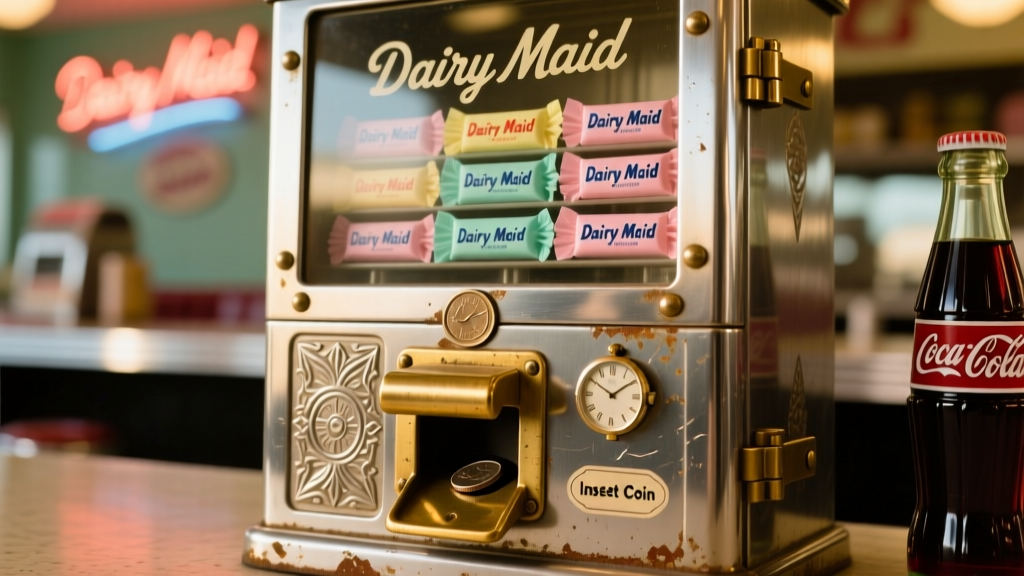
Dairy Maid Candy Vending Machine (1940s–1950s): Technical Anatomy, Brand History, and Market Significance of the Metal 37 × 5-Inch Coin-Operated Unit

Yamaha Mahogany Grand Piano Bench: A Collector’s Guide to the 37 × 72 Inch Artisan Bench
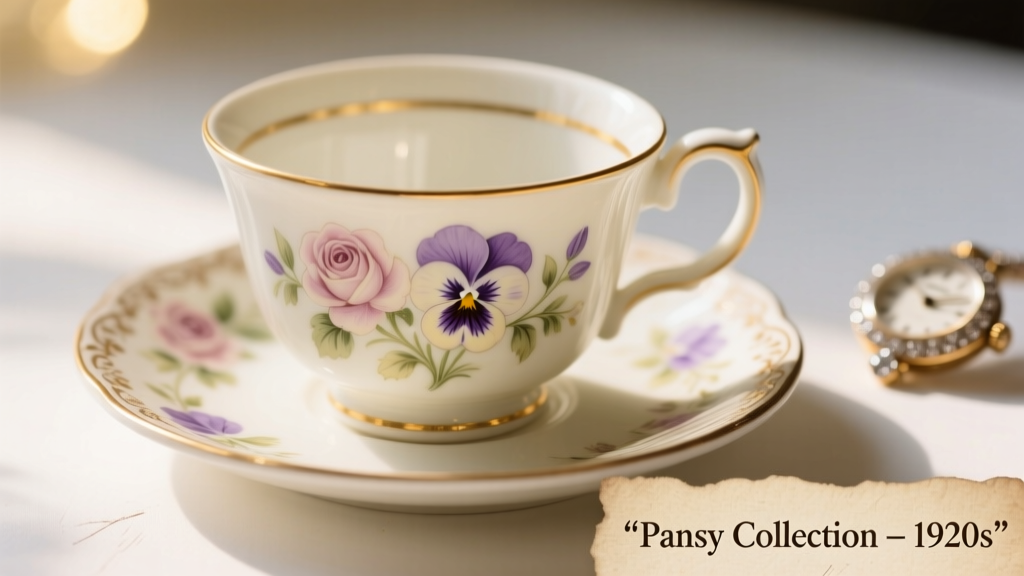
The Watt Cup Saucer Pansy: A Forgotten Masterpiece of Edwardian Enamel and Platinum Craftsmanship
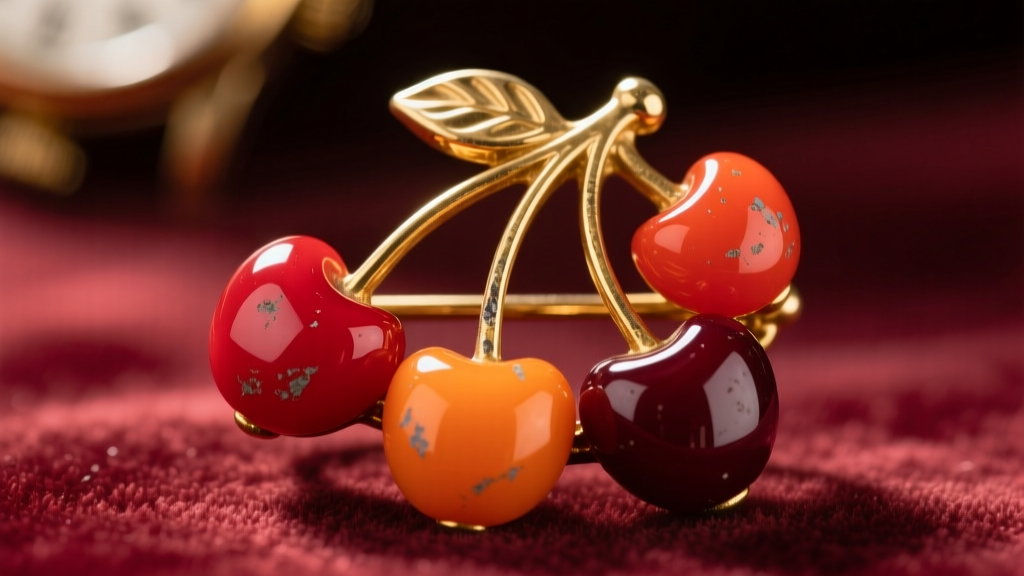
The Six-Cherry Bakelite Pin: A Collector’s Deep Dive into Mid-Century American Costume Jewelry
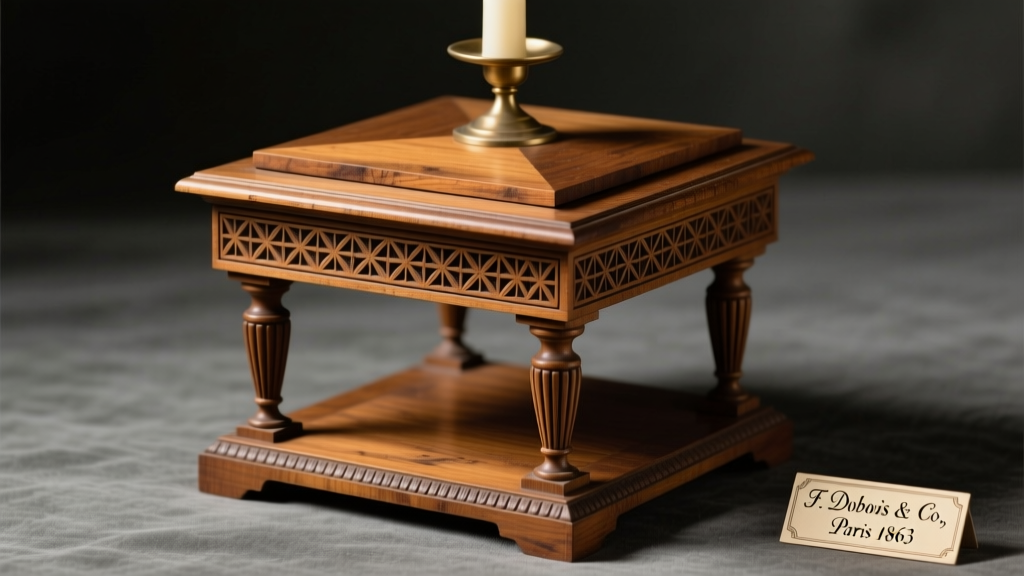
Maple Tilt-Top Candlestand: A Study in Early American Craftsmanship and Function