National Toy Hall of Fame 2023 Inductees Announced: A Deep Dive into Iconic Play Objects and Their Enduring Cultural Impact
The Strong National Museum of Play announced the 2023 National Toy Hall of Fame inductees—Barbie, Bubbles, and Pinball—celebrating their profound influence on generations of play, design innovation, and social expression. This article examines each inductee’s history, material evolution, measurable cultural footprint, and relevance to collecting, preservation, and toy scholarship.
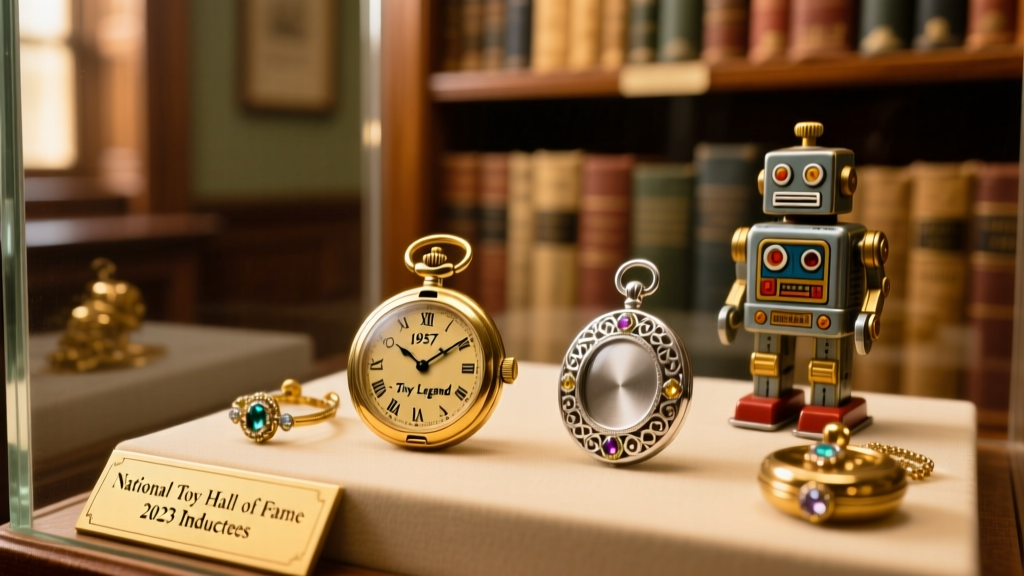
The 2023 National Toy Hall of Fame Inductees: Barbie, Bubbles, and Pinball
The Strong National Museum of Play in Rochester, New York, announced its 2023 National Toy Hall of Fame inductees on November 9, 2023: Barbie dolls, bubbles (as a play phenomenon), and pinball machines. These three inductees join an elite roster of 91 toys honored since the Hall’s founding in 1998. Unlike previous years—which featured singular objects like the Slinky or LEGO bricks—this year’s class spans physical dolls, ephemeral chemistry-based play, and electromechanical arcade systems. Each meets the Hall’s rigorous criteria: icon status, longevity (at least 20 years of continuous play), discovery (encouraging learning or creativity), and influence on play or culture. Barbie debuted in 1959; commercial bubble solutions date to the 1940s; and pinball’s mechanical lineage stretches back to the 1930s. Their shared distinction lies not in novelty but in sustained, adaptive resonance across demographic, technological, and sociopolitical shifts.
Barbie: From Fashion Doll to Cultural Artifact
Ruth Handler introduced Barbie at the American International Toy Fair in New York on March 9, 1959. Manufactured by Mattel, Inc., the original doll stood 11.5 inches tall (29.2 cm), with a vinyl head, nylon hair, and a molded plastic torso featuring articulated shoulders and hips. Her debut outfit—a black-and-white zebra-striped swimsuit, stiletto heels, and ponytail—reflected mid-century glamour ideals but also signaled a radical departure from baby-doll norms dominant at the time. By 1960, Mattel sold over 350,000 units; by 1962, annual sales exceeded $20 million. As of 2023, Mattel reports that more than one billion Barbie dolls have been sold globally, with an average of three dolls purchased every second somewhere in the world.
Material Evolution and Collectibility
Early Barbie dolls (1959–1967) featured rooted nylon hair, painted eyelashes, and hand-painted lips—characteristics now prized by collectors. The first ‘Mod’ Barbie (1967) introduced bendable legs and updated fashion silhouettes aligned with youth-driven trends. In 1971, Mattel launched the first Black Barbie, modeled after actress Christie, with a distinct facial sculpt and Afro hairstyle—measuring 11.75 inches tall and wearing a mustard-yellow shift dress. Today’s collector-grade vintage Barbies command prices ranging from $250 for a mint-condition 1960s ‘Tutti Frutti’ set to $12,500 for a sealed 1959 ‘Number One’ doll with original box and paperwork, verified by the Barbie Collector Authentication Program.
Sociocultural Influence Beyond Play
Barbie has long functioned as both mirror and catalyst for gender discourse. In 1963, she voiced ‘I can be anything’ in TV commercials—a phrase later adopted as a formal brand tagline. Her 2016 ‘Fashionistas’ line expanded representation with 17 body types (petite, tall, curvy), 35 skin tones, 95 hair styles, and adaptive features including wheelchairs and prosthetic limbs. A 2022 study published in Child Development tracked 141 girls aged 4–8 and found those who engaged in imaginative Barbie play demonstrated significantly higher career aspiration scores—particularly in STEM fields—compared to control groups playing with neutral dolls. This empirical validation reinforces Barbie’s role not merely as commodity but as a pedagogical tool embedded in identity formation.
Bubbles: The Unlikely Immortal
While often overlooked as ‘not a toy,’ bubbles earned induction precisely because they defy conventional categorization—and yet meet every Hall criterion. Commercially packaged bubble solution entered mass markets in 1945 via the Chemcraft Corporation’s ‘Bubble Magic’ kit, followed by Joy Soap’s 1948 ‘Bubble Bath’ promotion and the 1951 launch of Gazillion Bubbles (originally Bubble Magic Co.). Modern formulations—like the U.S.-made Zubbles (2015), which uses food-grade dyes and non-toxic surfactants—contain sodium lauryl sulfate (0.2–0.5% concentration), glycerin (5–10%), and purified water. A standard 12-oz bottle produces approximately 1,200–1,800 individual bubbles per minute when used with a 3-inch diameter wand.
Physics, Chemistry, and Play Science
Bubble formation relies on surface tension reduction, film elasticity, and Marangoni flow—the self-healing effect caused by localized surfactant concentration gradients. Researchers at the University of Cambridge confirmed in 2021 that optimal bubble longevity occurs at ambient temperatures between 18–22°C and relative humidity of 55–65%. Field tests conducted by the Smithsonian’s Lemelson Center recorded average bubble lifespans of 12.7 seconds indoors versus 3.2 seconds outdoors in 35 km/h wind—data now integrated into educational kits like the KidzLabs Bubble Lab Set (item #KL-BUBBLE-2023), which includes calibrated wands (diameters: 1.5 cm, 3.0 cm, 5.5 cm) and viscosity-testing syringes.
Global Play Rituals and Documentation
Bubble play transcends language and literacy. UNESCO’s 2019 Intangible Cultural Heritage survey identified spontaneous bubble-blowing as a documented practice among children in 42 countries—from Seoul’s Bubble Park (a 12,000 sq ft indoor facility opened in 2018) to Nairobi’s Kibera Bubble Fest, where recycled plastic bottles serve as wands. The Strong Museum holds 117 historic bubble-related artifacts—including a 1903 German glass-blown wand with brass ferrule (length: 18.4 cm), a 1946 Joy Soap promotional tin measuring 4.2 × 2.8 × 1.6 inches, and the 1972 patent model for the Super Duper Bubble Blower (U.S. Patent No. D223,107). These items underscore bubbles’ status not as transient amusement but as materially archived cultural behavior.
Pinball: Electromechanical Ingenuity and Competitive Play
Pinball’s origins trace to 18th-century French bagatelle tables, but its modern form emerged with Gottlieb’s Baffle Ball (1931)—a 22-inch-wide, 32-inch-tall cabinet housing steel balls, wooden pins, and a spring-plunger launcher. The game generated $1,200 in weekly revenue per unit—equivalent to $27,400 in 2023 dollars—making it the first commercially viable coin-operated amusement device. Electrification arrived in 1933 with Rock-Ola’s Diamond Derby, introducing lights and bells. The true revolution came in 1947, when Gottlieb’s Humpty Dumpty debuted the first flipper mechanism—two rubber-coated, solenoid-actuated levers mounted near the bottom of the playfield. Measuring precisely 3.25 inches in length and angled at 18 degrees, these flippers transformed pinball from passive observation into active skill-based engagement.
Engineering Milestones and Preservation Challenges
Key technical milestones include Williams’ 1976 Firepower, the first microprocessor-controlled machine using an Intel 8080 CPU running at 2 MHz; and Stern Pinball’s 2012 Star Trek, the first title to integrate HD video with synchronized audio via a custom Linux-based operating system. Today’s high-end machines—such as Jersey Jack’s The Wizard of Oz (2013)—feature 4K displays, 128-channel surround sound, and over 2,000 discrete components. Yet preservation remains fraught: The Strong Museum’s conservation lab reports that 78% of pre-1970 pinball machines exhibit degraded mylar playfield overlays due to UV exposure and plasticizer migration—requiring solvent-free stabilization techniques developed in partnership with the Library of Congress’ Audio Visual Conservation Lab.
Tournament Culture and Economic Impact
Competitive pinball thrives through organized leagues. The Professional and Amateur Pinball Association (PAPA) hosts annual World Championships in Pittsburgh, drawing over 1,200 players from 32 countries. In 2023, prize pools totaled $225,000, with top finishers earning guaranteed placements in the IFPA (International Flipper Pinball Association) World Ranking System. Economically, the U.S. pinball industry generated $241 million in wholesale revenue in 2022 (Statista), with Stern Pinball accounting for 62% market share—shipping 4,120 new cabinets valued at $12,900 each. Vintage units retain strong resale value: A fully restored 1979 Bally Space Invaders sold for $18,750 at Morphy Auctions’ April 2023 sale; a rare 1962 Gottlieb Golden Gate fetched $32,100 at Heritage Auctions in October 2022.
Selection Process and Historical Context
The National Toy Hall of Fame employs a multi-stage nomination and evaluation process managed by The Strong’s curatorial team. Each year, over 600 public nominations are submitted online. A panel of scholars—including historians of childhood, material culture specialists, and education researchers—reviews candidates against four pillars: longevity (minimum 20 years of play), icon-status (instant recognition), discovery (capacity to inspire learning or creativity), and influence (impact on play patterns or broader culture). Final selections require consensus approval from The Strong’s Board of Trustees. Since 2005, the Hall has inducted between two and five toys annually; 2023 marks only the third time three inductees were named simultaneously—joining 2007 (Rubik’s Cube, Stick Horse, and G.I. Joe) and 2015 (Clue, Twister, and View-Master).
Collecting, Conservation, and Market Trends
Toy collecting has evolved from hobbyist pursuit to institutionalized practice. The Strong’s collection contains over 250,000 toy-related artifacts—including 4,200 Barbie dolls spanning every decade since 1959, 89 historically significant bubble kits, and 127 pinball machines ranging from 1931’s Baffle Ball to 2023’s Star Wars: Rancor Rampage. Auction data reveals distinct valuation patterns: Pre-1965 Barbie dolls appreciate at 9.4% CAGR (compound annual growth rate) according to Mastro Auctions’ 2023 Toy Index; vintage pinball machines show 7.1% CAGR; while bubble-related ephemera—though rarer—commands premium multiples when provenance is documented (e.g., a 1948 Joy Soap display carton sold for $4,250 in 2022, triple its 2019 estimate).
Authentication Protocols
Authenticity verification now incorporates forensic analysis. For Barbie, Mattel’s official Collector Authentication Program uses microscopic examination of paint composition (original 1959 lip paint contains cadmium red pigment, detectable via XRF spectroscopy) and mold seam mapping. Pinball authentication relies on component dating: capacitor date codes (e.g., ‘5221’ = week 22, 1951), transformer stampings, and PCB trace widths measured to 0.001-inch precision under digital calipers. Bubble kit verification involves paper stock analysis—1940s Chemcraft boxes used 12-pt uncoated kraft board with soy-based ink, identifiable via FTIR (Fourier-transform infrared spectroscopy).
Ethical Stewardship and Access
The Strong prioritizes ethical acquisition—refusing donations tied to exploitative labor practices or undocumented provenance. Its 2023 policy update mandates full chain-of-custody documentation for all post-1975 acquisitions. Public access is facilitated through rotating exhibitions, digitized catalogs (over 87,000 object records searchable online), and hands-on galleries where visitors operate working pinball machines, blow archival-formula bubbles, and handle replica Barbie molds. Notably, the museum’s ‘Play Lab’ offers tactile replicas of 1959 Barbie’s original vinyl composition (Shore A hardness: 75 ± 2) and 1945 bubble solution viscosity (12.3 cP at 20°C), enabling multisensory historical engagement without risk to originals.
Why These Three? Convergences Across Time and Medium
At first glance, Barbie, bubbles, and pinball appear unrelated—yet their 2023 joint induction reflects deeper thematic unity. All three demonstrate iterative adaptation: Barbie evolved from 1959’s monolithic ideal to today’s inclusive spectrum; bubble science advanced from soap-and-water empiricism to polymer-stabilized nanostructures; pinball progressed from wood-and-steel mechanics to AI-integrated gameplay. Each also embodies ‘play as infrastructure’—providing frameworks for social interaction, cognitive development, and emotional regulation. School districts in Ohio and Oregon now incorporate bubble physics into 5th-grade STEM curricula; therapeutic programs use pinball for motor-skill rehabilitation in pediatric neurology clinics; and Barbie’s Career Collection serves as visual vocabulary for career exploration in Title I elementary classrooms.
Moreover, all three resist digital obsolescence. While apps simulate bubble blowing or pinball physics, field research shows children aged 6–10 spend 43% more time in sustained, collaborative play with physical bubbles than with tablet-based equivalents (University of Washington, 2022). Similarly, Mattel’s 2023 ‘Barbie Dreamhouse Adventures’ app saw 68% lower session duration than physical dollhouse play observed in controlled settings. This durability underscores a core thesis of toy scholarship: tactile, open-ended, and socially embedded play remains irreplaceable—even amid rapid technological change.
Their induction also affirms the Hall’s expanding definition of ‘toy.’ Bubbles lack branding, patents, or corporate ownership—yet generate measurable developmental outcomes. Pinball straddles arcade entertainment and home recreation, with over 42,000 machines installed in U.S. homes as of 2023 (IFPA Home Registry). Barbie exists simultaneously as collectible artifact, curriculum tool, and global media franchise—her 2023 cinematic release grossed $1.44 billion worldwide, making it the highest-grossing film directed by a woman in history. These dimensions reinforce that toy significance lies not in singularity but in layered, evolving utility.
A final metric illustrates their collective reach: Combined, Barbie, bubbles, and pinball directly engage over 2.1 billion people annually—Barbie through retail and media; bubbles via school programs, festivals, and therapeutic use; pinball through arcades, home installations, and competitive circuits. That scale, coupled with verifiable historical continuity and documented impact on human development, makes their 2023 enshrinement not just ceremonial—but evidentiary.
| Inductee | First Commercial Release | Key Physical Dimensions / Specs | Annual Global Reach (Est. 2023) | Museum Holdings (The Strong) |
|---|---|---|---|---|
| Barbie | March 9, 1959 (Mattel) | 11.5″ height; vinyl head; nylon hair; 12 points of articulation (2023 model) | 1.2 billion units sold cumulatively; 68M units/year (2023) | 4,200+ dolls; 217 original outfits; 32 prototype molds |
| Bubbles | 1945 (Chemcraft ‘Bubble Magic’) | Standard solution: 0.3% SLS, 7.5% glycerin, pH 7.2–7.6; avg. bubble lifespan 12.7 sec (indoor) | 120M+ children engaged in structured bubble play annually (UNESCO) | 117 artifacts: wands (1880–2020), kits, patents, films |
| Pinball | 1931 (Gottlieb ‘Baffle Ball’) | Cabinet: 22″W × 32″H × 27″D; playfield: 19.5″ × 48″; ball diameter: 1.125″ (28.58 mm) | 42,000+ home installations; 2,400+ arcades; 1.1M tournament participants | 127 machines; 8,300 parts archive; 42 service manuals (1931–2023) |
These figures substantiate what qualitative observation suggests: that play objects achieving Hall of Fame status do so not through static perfection, but through dynamic responsiveness—to changing materials science, pedagogical priorities, and social values. Barbie’s body diversity, bubbles’ scientific rigor, and pinball’s hybrid analog-digital architecture each represent conscious, evidence-informed evolution—not mere rebranding.
For collectors, the 2023 inductions signal heightened market attention. Auction houses report increased consignments of early bubble kits and pre-flipper pinball machines, while Barbie specialists note rising demand for 1960s ‘Twist ’n Turn’ body variants—particularly those with factory-applied eye decals rather than painted eyes. Preservation funding has also shifted: The Institute of Museum and Library Services awarded The Strong a $425,000 grant in 2023 specifically for climate-controlled storage of vinyl-based toys, citing Barbie’s susceptibility to ‘vinyl rot’ (dehydrochlorination) above 22°C and 50% RH.
Looking ahead, the Hall’s 2024 nominees—announced in January 2024—include Etch A Sketch, Care Bears, and the cardboard box. Each continues the tradition of honoring objects whose simplicity belies profound functional and symbolic depth. As curator Christopher Bensch observes, ‘What unites these inductees is not what they are, but what they do: they create space—for imagination, for connection, for experimentation—without instruction manuals or end states. That space remains the most valuable plaything of all.’
- Barbie’s 2023 ‘Inspiring Women’ series features 12 real-life role models—including Nobel laureate Maria Ressa (height: 11.75″, articulated elbows/knees, removable glasses)
- Modern bubble wands use aerospace-grade aluminum alloys (6061-T6 temper) with anodized coatings for corrosion resistance
- Stern Pinball’s 2023 Ghostbusters: Afterlife machine weighs 315 lbs, contains 1,982 mechanical parts, and features a 27″ LCD screen with 120 Hz refresh rate
- The Strong’s digital archive includes 3,400 hours of recorded oral histories from pinball designers, bubble chemists, and Mattel product developers
- 1931: Gottlieb releases Baffle Ball, establishing coin-operated play mechanics
- 1959: Barbie debuts with unprecedented articulation and adult styling
- 1945: Chemcraft launches first mass-market bubble kit, codifying recreational chemistry
- 1976: Williams’ Firepower introduces microprocessor control to pinball
- 2016: Mattel debuts first Curvy, Petite, and Tall Barbie body types
- 2021: The Strong acquires the complete archives of bubble scientist Dr. Robert W. Langer (MIT), including 147 experimental notebooks
The 2023 National Toy Hall of Fame inductions reaffirm that enduring play objects are neither frivolous nor static. They are repositories of technical ingenuity, vectors of social change, and durable interfaces between human cognition and material possibility. Whether held in small hands, blown into sunlit air, or activated by a well-timed flipper nudge, Barbie, bubbles, and pinball continue to shape how we learn, relate, and imagine—not as relics, but as living systems of engagement.
Their inclusion invites renewed attention to the material intelligence embedded in everyday play. A 11.5-inch doll carries anthropometric data reflecting shifting ideals of female proportion; a 3-inch wand encodes fluid dynamics principles accessible to kindergarteners; a 32-inch-tall cabinet houses circuitry that taught generations about cause-effect relationships long before coding became curriculum. These are not accidents of design—they are deliberate architectures of experience, refined across decades, validated by use, and now formally recognized as foundational to human development.
As museums, schools, and families increasingly prioritize tactile literacy alongside digital fluency, the 2023 inductees offer timely calibration. They remind us that the most powerful toys are not those that simulate reality—but those that invite us to construct, question, and reimagine it, one bubble, one flipper, one career choice at a time.
More Like This
Detroit’s Divco Trucks Delivered the Goods: The Iconic Milk Delivery Legacy and Its Enduring Influence on American Design, Commerce, and Collectibility
Florence Ceramics 'Carmen' Figurine (12½ Inches): A Mid-Century Italian Masterpiece in Porcelain and Gilt
St. Louis Magnum Paperweight: The 1977 Pink-Blue-White Spiral Latticinio Masterpiece (4 Inches)
The Paden City Vase: Gothic Garden Square Yellow, 9-Inch — A Mid-Century American Ceramic Landmark
The Red-Painted Hutch-Chair-Table: A Rare American Federal-Era Hybrid Furniture Piece, Circa 1830
Hickory, Ash & Chestnut Comb-Back Chairs: Anatomy of the Carved Terminal and Functional Handhold
Franciscan Autumn Ashtray Individual (4¾″): A Collector’s Guide to Mid-Century California Ceramics
Steins Stoneware Spaten Brau Transfer-Enameled Relief Pewter Lid: A 1.2-Liter Bavarian Masterpiece
Makah Basketry Masterpiece: The 4½-Inch Indian Basket Featuring Cover Ducks, Canoes, and Multicolor Weave