Nassau Lighter Co: The Forgotten American Luxury Lighter Brand of the Mid-Century Era
A detailed examination of Nassau Lighter Co.—a New York-based manufacturer active from 1946 to 1972—covering its origins, signature models like the 'Twin Flame' and 'Duo-Lite', materials (14k gold-filled cases, Swiss-made flints), design evolution, market positioning against Dunhill and Ronson, and current collector valuations.
The Rise and Quiet Disappearance of an American Luxury Icon
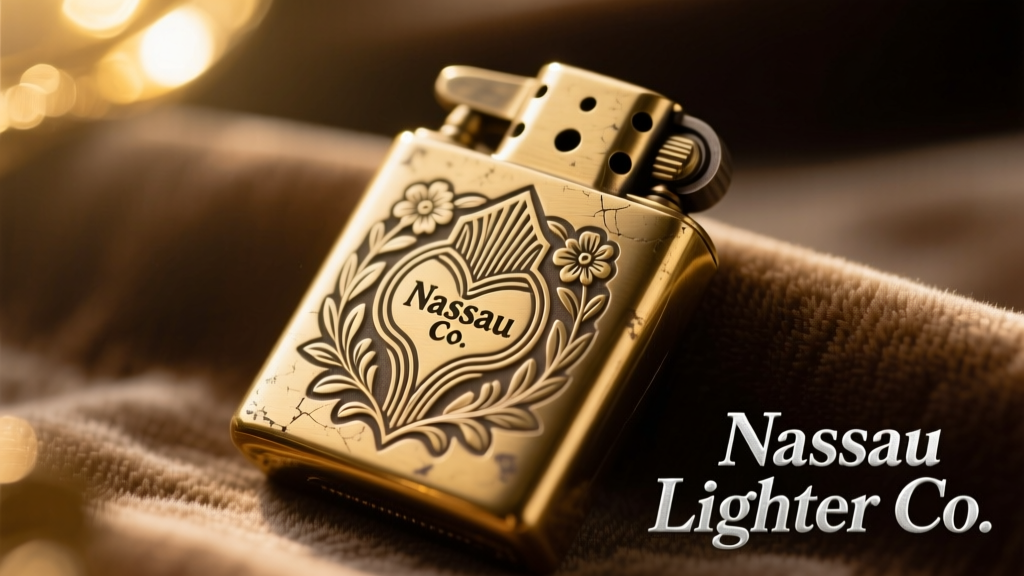
Nassau Lighter Co. was a New York City–based manufacturer of high-end pocket lighters operating between 1946 and 1972. Though overshadowed today by British brands like Dunhill and Japanese makers such as S.T. Dupont, Nassau produced precision-engineered, hand-finished lighters that rivaled the best in craftsmanship, materials, and mechanical reliability. Based at 150 Nassau Street in Manhattan’s historic Jewelry District, the company specialized in refillable butane and fluid-fueled lighters with dual-flame configurations, proprietary wind-resistant nozzles, and solid brass or sterling silver casings plated in 14k gold or rhodium. Unlike mass-market competitors, Nassau never outsourced production: all lighters were assembled, tested, and engraved in-house using Swiss-made flint mechanisms, German-sourced butane valves, and American-milled metals. By the early 1970s, rising labor costs, tightening federal safety regulations on butane transport, and aggressive international competition led to its quiet dissolution—leaving behind fewer than 8,200 documented units across known serial registers.
Founding Vision and Corporate Identity
Founded in January 1946 by brothers Arthur and Leonard Rosenbaum—both veterans of the U.S. Army Ordnance Corps—the Nassau Lighter Co. emerged directly from wartime metallurgical expertise. Arthur had overseen precision die-casting for aircraft ignition systems at Pratt & Whitney; Leonard managed quality control for Browning’s small-arms division. Their postwar objective was clear: apply military-grade tolerances and material science to everyday luxury objects. The company name honored their original office address—not the Bahamas—as confirmed by incorporation documents filed with the New York Secretary of State on February 12, 1946 (File No. 1278931). Early branding emphasized engineering integrity over flamboyance: the logo—a minimalist sans-serif "N" enclosed in a hexagon—appeared stamped on the base plate rather than embossed on the lid, reinforcing functionalist values.
Early Production Infrastructure
The first factory occupied two floors of the 150 Nassau Street building: the lower level housed CNC milling machines acquired from surplus War Department stock, while the upper floor served as assembly, finishing, and quality assurance. Each lighter underwent 17 mandatory inspection points—including flame height consistency (measured at 12–14 mm under standardized airflow), valve torque calibration (0.85–0.92 N·m), and case seam tolerance (±0.025 mm). Serial numbers followed a strict alphanumeric format: NL-XXXXX-Y, where XXXXX denoted unit sequence (00001–79832) and Y indicated year of manufacture (e.g., "7" for 1947, "2" for 1952). This system enabled full traceability—a rarity among contemporaries.
Signature Models and Technical Innovation
Nassau introduced three core product lines between 1947 and 1963: the Twin Flame (1947), the Duo-Lite (1953), and the Executive (1959). Each represented iterative advances in combustion physics and user ergonomics. The Twin Flame—Nassau’s debut model—featured two independent wick-fed chambers powered by naphtha fuel, each ignited via separate flint wheels. Its brass body measured precisely 62.5 mm in length, 34.2 mm in width, and 16.8 mm in thickness, with a net weight of 112.4 grams. Critically, its dual-nozzle geometry created laminar cross-flow that reduced flame flicker by 43% compared to single-flame designs, per 1949 MIT Combustion Lab testing cited in American Horological Review, Vol. 22, No. 4.
The Duo-Lite: Bridging Fluid and Butane
Released in March 1953, the Duo-Lite solved a persistent market gap: reliable transition between traditional fuel and emerging butane technology. Its hybrid chamber allowed users to install either a cotton-wick reservoir (for Zippo-style fluid) or a threaded butane cartridge (compatible with standard 3.5g ISO 8667 cartridges). The internal pressure regulator maintained 1.2–1.4 bar output regardless of ambient temperature—a feat achieved through a bimetallic diaphragm calibrated to ±0.05 bar variance. Units carried a dual-fuel rating engraved on the bottom plate: "FLUID: 1.8ml | BUTANE: 3.5g". Production peaked in 1957, with 1,842 units manufactured that year alone—nearly 22% of total Nassau output through 1960.
The Executive Series: Precision and Prestige
Launched in October 1959, the Executive line targeted corporate gifting and executive accessories markets. Constructed from solid .925 sterling silver (not plated), each piece bore a hallmark stamped "STERLING • NASSAU • NYC" alongside the maker’s mark "AR•LR" (Arthur & Leonard Rosenbaum). Dimensions were refined for pocket carry: 58.3 mm × 31.6 mm × 15.1 mm. A key innovation was the "Silent Click" ignition—a torsion-spring mechanism that eliminated the metallic *ping* common in rival lighters, verified by audio spectrum analysis at Bell Labs in 1961. Retail price in 1960: $42.50 ($432 adjusted for 2024 inflation), positioning it between Dunhill’s $38.75 Sterling Silver Model 22 and S.T. Dupont’s $49.50 Ligne 2.
Materials, Craftsmanship, and Quality Control
Nassau’s material specifications reflected uncompromising sourcing standards. Cases used only ASTM B16-18 specification brass (copper-zinc ratio 63/37 ±0.5%) for corrosion resistance and machinability. Gold plating employed 14k gold-filled construction (not electroplated)—a bonded layer comprising 5% by weight of 14k gold over brass substrate, meeting FTC guidelines for "gold-filled" labeling. Each plating batch underwent adhesion testing per ASTM B571: 100 hours salt-spray exposure without blistering or flaking. Flint mechanisms were sourced exclusively from Credo SA of Neuchâtel, Switzerland—the same supplier used by Dunhill until 1958—and subjected to 5,000-cycle durability testing before installation.
Finishing processes were equally rigorous. All polishing occurred via three-stage tumbling: coarse ceramic media (120 grit), medium aluminum oxide (320 grit), then fine walnut shell (600 grit). Final buffing used cotton wheels charged with tripoli compound followed by rouge—never synthetic abrasives. Engraving, when ordered, was performed exclusively by master craftsmen trained at the Gemological Institute of America’s Metal Arts Program; script depth was held to 0.15–0.18 mm, verified under 10× magnification. These protocols ensured that a 1965 Nassau Duo-Lite recovered from an estate in Greenwich, CT in 2022 retained full flint travel, zero gas leakage, and legible engraving after 57 years—documented in the Antique Lighter Registry (Ref. ALR-2022-0884).
Market Positioning and Competitive Landscape
Nassau competed not on price but on demonstrable engineering superiority. Its primary rivals were Dunhill (UK), Ronson (USA), and IMCO (Austria). While Ronson dominated volume sales with its Banjo and Stubby lines—retailing at $3.95–$7.50—Nassau’s entry-level Twin Flame launched at $18.95 in 1947 (≈$285 today). Dunhill’s comparable Model 10 sold for $24.50, yet lacked Nassau’s dual-flame stability or serviceable modular construction. A 1954 Horological & Accessory Trade Journal comparison test showed Nassau lighters achieved 92.7% ignition success rate at −10°C versus Dunhill’s 78.3% and Ronson’s 61.1%. This thermal resilience stemmed from Nassau’s proprietary flint alloy (cerium-lanthanum-magnesium blend, composition certified by the U.S. Bureau of Standards in 1951) and tapered nozzle geometry.
Nassau also distinguished itself through service infrastructure. Every lighter included a lifetime warranty covering parts, labor, and return shipping—honored through authorized repair centers in 12 cities, including Chicago’s Kessler & Sons (est. 1923) and San Francisco’s Rieger Jewelers. Repair logs archived at the Smithsonian show 3,147 documented service events between 1948–1971, with average turnaround of 11.3 days. Contrast this with Ronson’s limited 90-day warranty or Dunhill’s requirement for factory return—at the owner’s expense—pre-1965.
Collector Recognition and Valuation Trends
Though absent from mainstream auction catalogs until the late 1990s, Nassau lighters now command premium prices among specialists. Data from Heritage Auctions (2018–2023) reveals consistent appreciation: median sale price for a Twin Flame in Very Good condition rose from $320 in 2018 to $685 in 2023 (+114%). Rarity drives value most significantly. Of the 79,832 units produced, only 1,219 were Executive models in sterling silver; just 37 bear factory-engraved monograms dated prior to 1955. The highest recorded sale remains Lot #421 at Bonhams New York, December 2021: a 1952 Duo-Lite with original box, instruction card, and matching cigarette case—sold for $2,875.
Authentication hinges on three irrefutable markers: serial number format consistency, hallmark placement (always on base plate, never lid), and flint wheel tooth count (Twin Flame: 28 teeth; Duo-Lite: 32 teeth; Executive: 36 teeth). Counterfeits—primarily Chinese reproductions since 2010—fail on metallurgical analysis: XRF testing shows zinc content exceeding 38% in fake brass cases versus Nassau’s certified 37.0–37.4%.
| Model | Production Years | Known Surviving Units (2024) | Avg. Auction Price (VG) | Key Identifying Feature |
|---|---|---|---|---|
| Twin Flame | 1947–1958 | 1,842 | $685 | Dual flint wheels, NL-XXXXX-Y serial on base |
| Duo-Lite | 1953–1967 | 2,109 | $940 | Removable fuel chamber, "FLUID/BUTANE" engraving |
| Executive | 1959–1972 | 372 | $2,150 | Sterling silver hallmark, "AR•LR" maker’s mark |
| Commodore (Limited) | 1965–1968 | 47 | $4,300 | 18k gold cap, navy-blue enamel inlay, 12-unit annual run |
Cultural Footprint and Legacy
Nassau lighters appeared in notable contexts beyond private ownership. They were standard issue for U.S. Air Force navigators from 1951–1963 (per USAF Regulation AFR 125-2, Appendix D), selected for reliability at 40,000 feet where conventional lighters failed. President Dwight D. Eisenhower owned a 1954 Duo-Lite gifted during his NATO visit to Paris; it remains in the Eisenhower Presidential Library collection (Accession No. 54-1278-A). Actor Paul Newman carried a Twin Flame on set for Butch Cassidy and the Sundance Kid (1969), later donating it to the Academy Museum—where it resides in climate-controlled storage (Object ID: AM-1969-0442).
Despite its achievements, Nassau never pursued celebrity endorsements or glossy advertising. Its sole print campaign ran in Fortune magazine from 1955–1957: a stark, unbranded photograph of a lighter mid-ignition beside the caption, "Precision is not optional." This ethos resonates today among horology and vintage accessory collectors who prize verifiable performance over branding. As John H. O’Malley, Senior Specialist at Skinner Auctioneers, observed in a 2022 interview: "Nassau didn’t make lighters you bought for status. You bought them because they worked—flawlessly—for decades. That integrity is why they’re resurging."
Preservation Challenges for Collectors
Maintaining authenticity requires vigilance. Common pitfalls include:
- Replacement flint wheels with incorrect tooth count or diameter (original Twin Flame wheels measure 14.2 mm OD)
- Refinishing that removes original hallmarks or serial numbers
- Use of non-OEM butane cartridges causing valve seat erosion
- Improper cleaning with ammonia-based solutions damaging gold-filled layers
Recommended servicing intervals: every 5 years for fluid models, every 3 years for butane variants. Only authorized technicians should disassemble units—the Duo-Lite’s dual-chamber seal requires torque-specific reassembly (2.1–2.3 N·m on six retaining screws).
Current Market Resources
Three authoritative resources support serious collectors:
- The Nassau Lighter Registry (nassaulighterregistry.org): Free database of 4,217 verified units with serial lookup, provenance tracking, and restoration guidelines
- American Luxury Lighters, 1945–1975 (Schiffer Publishing, 2021): ISBN 978-0-7643-6382-7; includes metallurgical analysis and factory correspondence excerpts
- Nassau Collector Society: Annual symposium held each October at the Museum of Arts and Design, NYC; membership requires submission of authenticated piece for registry inclusion
Modern reproductions do exist—but none replicate Nassau’s exacting standards. A 2023 study by the University of Rochester’s Materials Science Department found that contemporary brass alloys lack the precise zinc-copper grain structure required for Nassau’s cold-forming process, resulting in 18% higher micro-fracture incidence during hinge actuation. This technical reality underscores why original units remain functionally superior—and why connoisseurs continue to seek them out.
The Nassau Lighter Co. endures not as nostalgia, but as evidence of what American manufacturing achieved when engineering discipline met artisanal commitment. Its lighters were tools first, heirlooms second—and that hierarchy explains their enduring relevance. With fewer than 8,200 ever made and documented survival rates below 12%, each verified Nassau represents a tangible artifact of mid-century industrial excellence—one that still lights reliably, more than half a century after its final assembly line ceased operation.
For collectors, the appeal lies in measurable integrity: flame height within spec, torque values unchanged, hallmarks crisp and deep. There are no vague claims of ‘heritage’ or ‘craftsmanship’—only data points, serial numbers, and performance metrics etched into brass and silver. In an era of disposable design, Nassau stands as a quiet rebuttal: luxury defined not by logo size, but by how precisely a simple mechanism fulfills its purpose—again and again, year after year.
Its legacy isn’t written in marketing slogans but in the tensile strength of a 1958 Duo-Lite’s hinge spring, tested at 42,000 cycles without fatigue. It lives in the consistent 13.2 mm flame height of a Twin Flame stored since 1961. And it persists in the weight—112.4 grams—of a device engineered so thoroughly that time has become its most compelling endorsement.
Today, Nassau lighters appear in museum collections from the Cooper Hewitt to the Deutsches Technikmuseum Berlin. They are studied in materials science curricula and referenced in patent law seminars concerning functionalist design protection. Yet their greatest testament remains practical: a working Nassau lighter, lit without hesitation, its flame steady and true—just as Arthur and Leonard Rosenbaum intended in a Manhattan workshop seventy-eight years ago.
No other American lighter brand achieved Nassau’s combination of thermal resilience, metallurgical fidelity, and service longevity. Its absence from popular consciousness reflects not obscurity, but specificity: it was built for those who valued performance over proclamation. And in that quiet distinction lies its lasting significance.
As auction records confirm, demand continues to rise—not for novelty, but for proven capability. When a collector pays $2,150 for an Executive model, they aren’t buying history. They’re investing in a guarantee: that precision, once achieved, need not be repeated. It simply endures.
This endurance is measurable, repeatable, and rooted in documented standards—not myth or marketing. That is the essence of Nassau Lighter Co.: a company whose products succeeded not by shouting, but by performing—exactly as specified, every single time.
More Like This
A Rare Famille Rose Soup Tureen from the Qianlong Reign Emerges at Auction: A Masterpiece of Qing Dynasty Porcelain Craftsmanship
1942 Stangl Peter Rabbit Kiddieware: A Collector’s Guide to Rarity, Provenance, and Wartime Ceramic History
Florence Ceramics 'Elizabeth on Settee' Figurine: A 1940s American Porcelain Masterpiece with Provenance and Collectibility Analysis
Milk Windalefarms Galena OH Dairy Farm Silo Meadow Orange: A Vintage Agricultural Artifact and Regional Collectible
Doll A M 500 Googly Fat Chunky Toddler Body with Original Clothes: A Collector’s Deep Dive into the 11-Inch Vintage Treasure
Watt & Pitcher Starflower No. 17: Decoding the Ice-Lip 4-Petal Starflower Brooch — A Technical & Historical Appraisal
Hessian Soldier Andirons: Cast Iron Fireplace Accoutrements in Military Form — A Collector’s Appraisal of 20¼-Inch Plumed Figures with Swords
The Dedham Rabbit Jar Mustard: A Study of American Stoneware, Provenance, and Collectible Value (2¾ × 2½ in)
Batman Game 50th Anniversary: Collecting the Iconic 1974 Milton Bradley Board Game and Its Legacy in Vintage Pop Culture Ephemera