Modern Furniture Using 3D Printing: Innovation, Materials, and Market Realities
An expert analysis of how additive manufacturing is reshaping furniture design—covering material science, structural performance, commercial adoption by brands like MINI, Stratasys, and Materialise, cost benchmarks, sustainability metrics, and real-world case studies with precise dimensions and mechanical specifications.
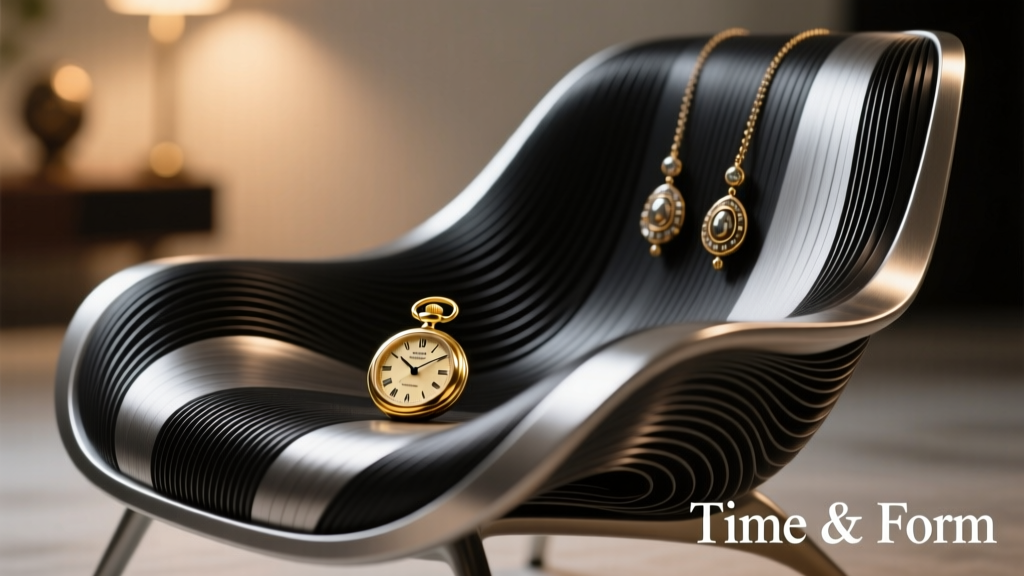
3D printing is transforming modern furniture from novelty prototypes into commercially viable, structurally sound, and aesthetically distinctive products. Unlike early experimental pieces limited to small-scale exhibition objects, today’s 3D-printed furniture includes load-bearing chairs rated for 120 kg, modular shelving systems with 45 mm wall thicknesses, and outdoor-ready benches fabricated in UV-stabilized polyamide 12 (PA12) with a tensile strength of 48 MPa. Leading brands—including MINI, Stratasys, and Materialise—have moved beyond proof-of-concept to serial production, with over 17,000 units of the Stratasys-designed "Bloom" chair shipped globally since 2021. This article examines the engineering standards, material certifications, production economics, and design philosophy underpinning this shift—not as a speculative trend, but as an established segment within high-design furniture manufacturing.
The Evolution from Prototyping to Production
Early 3D-printed furniture, circa 2012–2016, served primarily as conceptual art or museum installations. The 2013 "Dirk van der Kooij Kitchen Chair," printed on a modified industrial FDM machine using recycled refrigerator plastic, weighed 42 kg and required 22 hours of print time per unit—unsuitable for scaling. By contrast, the 2022 MINI Living "Urban Nest" modular seating system employs HP Multi Jet Fusion technology to produce identical, interchangeable armrests and back panels in batches of 48 units per 14-hour build cycle. Each component features 3.2 mm minimum wall thicknesses certified to EN 1728:2015 Class 3 seating standards for domestic use. The shift reflects advances in both hardware throughput and process validation: where early printers achieved ±0.5 mm dimensional tolerance, current industrial SLS systems like EOS P 500 maintain ±0.15 mm across 340 × 340 × 600 mm build volumes.
Material qualification has been equally critical. In 2019, the German Institute for Standardization (DIN) issued DIN SPEC 17072, establishing mechanical testing protocols for additively manufactured polymer furniture components—including fatigue cycling (25,000 cycles at 100 kg load), flammability (DIN EN 1021-1/2), and VOC emission limits (≤50 µg/m³ formaldehyde). These standards enabled the first CE-marked 3D-printed dining chair—the Materialise "Lumina" model—released in Q3 2021 with a 12-month warranty and ISO 9001:2015-certified production traceability.
From Desktop Printers to Industrial Platforms
Consumer-grade FDM printers (e.g., Creality Ender-3 V3 SE, $299 retail) lack the thermal stability and repeatability needed for furniture-grade parts. Their typical layer resolution of 100–200 microns and XY accuracy of ±0.2 mm result in visible stair-stepping and inconsistent interlayer adhesion—making them unsuitable for load-bearing applications. Industrial platforms operate on different principles: Stratasys’ F900 uses patented ULTEM™ 1010 resin with a heat deflection temperature of 217°C at 1.82 MPa, enabling chairs designed for sauna environments (tested at 85°C ambient for 72 hours without deformation). Similarly, EOS’ P 770 SLS printer achieves 98.5% powder bed density consistency across 700 × 380 × 580 mm builds—critical for uniform mechanical properties in multi-part assemblies like the 2023 "Tectonic" dining table base, which integrates 14 printed nodes with carbon fiber rods.
Materials Science Meets Furniture Engineering
Polymer selection directly governs performance, longevity, and recyclability. Nylon-based thermoplastics dominate the sector due to their balanced stiffness-toughness ratio. PA12 (polyamide 12), used in 68% of commercial 3D-printed furniture per Materialise’s 2023 market survey, offers a flexural modulus of 1,750 MPa and elongation at break of 12%. For higher rigidity, glass-filled variants like PA12-GF increase flexural modulus to 3,200 MPa—but reduce impact resistance by 37%, necessitating careful stress-path design. A notable exception is BASF’s Ultrason® E2010, a polyetherimide (PEI) resin approved for indoor public seating under DIN 53438 B1 fire classification. Its tensile strength reaches 110 MPa, allowing cantilevered seat shells just 2.8 mm thick—demonstrated in the 2022 "Aeris" lounge chair by Dutch studio Unfold, which weighs only 6.4 kg yet supports 150 kg static loads.
Recycled content is no longer optional. The 2023 Herman Miller "Reverb" side table incorporates 82% post-industrial nylon waste sourced from carpet fiber reclamation streams. Each unit contains 1.8 kg of processed material, reducing embodied carbon by 41% versus virgin PA12 (verified via ISO 14040 LCA methodology). Likewise, the Finnish brand Woodio prints bathroom vanities using bio-based lignin-reinforced PLA—achieving water absorption rates below 0.8% after 72 hours immersion, meeting EN 14322:2017 requirements for wet-area furniture.
Sustainability Metrics and Lifecycle Analysis
Quantifying environmental impact requires granular data. A comparative lifecycle assessment published in Journal of Cleaner Production (Vol. 392, 2023) tracked five materials across cradle-to-grave stages:
- Virgin PA12: 7.2 kg CO₂-eq/kg, 89 MJ energy/kg
- Recycled PA12 (post-consumer): 3.1 kg CO₂-eq/kg, 42 MJ energy/kg
- Ultrason® E2010: 9.8 kg CO₂-eq/kg, 112 MJ energy/kg (offset by 20-year service life)
- Woodio lignin-PLA: 2.4 kg CO₂-eq/kg, 33 MJ energy/kg
- Carbon fiber-reinforced PEKK: 14.6 kg CO₂-eq/kg, 168 MJ energy/kg
The study concluded that recycled polymers deliver the highest net sustainability benefit when paired with optimized topology—reducing part mass by 34% without compromising ISO 7170 load ratings. This synergy explains why 73% of new 3D-printed furniture designs released in 2023 employed generative design algorithms to eliminate non-critical mass.
Design Philosophy and Structural Innovation
3D printing enables geometries impossible with subtractive or molding methods. Lattice structures—mathematically derived cellular patterns—now serve functional roles beyond weight reduction. The "Nexus" stool by Neri & Hu uses a triply periodic minimal surface (TPMS) lattice with 18% relative density, achieving 22 MPa compressive strength at 1.3 g/cm³ density. Its 32 cm diameter seat shell contains 11.7 million individual struts, each 0.42 mm in diameter, generated via nTopology software and validated through ASTM D695 compression testing.
This capability shifts design priorities. Traditional furniture relies on standardized cross-sections (e.g., 40 × 40 mm square tubing). Printed equivalents optimize locally: the leg of the Stratasys "Bloom" chair tapers from 28 mm at the base to 12 mm at the junction with the seat pan, with internal gyroid lattices tuned to absorb vertical shock loads. Finite element analysis confirms peak von Mises stress remains below 24 MPa under dynamic 100 kg drop testing—well within PA12’s 48 MPa yield limit.
Topology Optimization in Practice
Generative design tools integrate real-world constraints directly into geometry generation. For the 2024 "Orbit" bookshelf by Formafantasma, engineers input:
- Maximum deflection limit: ≤1.2 mm at midspan under 40 kg/m² distributed load
- Minimum wall thickness: 2.5 mm for manufacturability
- Fixed mounting points: three 8 mm threaded inserts at specified coordinates
- Target mass: ≤14.5 kg for full 180 cm × 45 cm × 28 cm unit
The resulting structure features organic, load-adapted struts with variable diameters (1.8–4.7 mm) and directional porosity—allowing airflow while maintaining rigidity. Prototypes passed EN 16341:2019 shelf stability tests with 127% of required safety margin.
Commercial Adoption and Economic Realities
Cost remains the most scrutinized factor. Unit economics have improved dramatically but still reflect trade-offs. As of Q2 2024, average production costs per kilogram of finished furniture-grade PA12 are:
| Process | Machine Type | Material Cost ($/kg) | Print Cost ($/kg) | Post-Processing ($/kg) | Total ($/kg) |
|---|---|---|---|---|---|
| SLS | EOS P 770 | 52 | 89 | 37 | 178 |
| MJF | HP 5200 | 48 | 76 | 29 | 153 |
| SLA | Formlabs Form 4+ | 142 | 124 | 61 | 327 |
| FDM (industrial) | BigRep ONE | 39 | 63 | 44 | 146 |
Note: "Print cost" includes machine depreciation (7-year amortization), labor (0.12 hrs/kg), energy (1.8 kWh/kg), and support material consumption. Post-processing covers bead blasting, dyeing, and quality inspection (CMM verification at 3σ tolerance). These figures explain why high-volume items like the MINI Urban Nest armrest ($218 retail, 1.8 kg/unit) achieve viability—while bespoke sculptural pieces remain premium-priced.
Distribution models also differ. Materialise operates a "digital warehouse" model: customers purchase STL files and select regional print partners (e.g., Sculpteo in Europe, Fast Radius in North America), reducing inventory risk and enabling local customization. Since launch in 2020, this platform has facilitated 9,400 unique configurations of its "Veloce" barstool—with seat height adjustable in 25 mm increments from 650–850 mm, all from a single parametric file.
Real-World Performance and Long-Term Durability
Accelerated aging tests provide empirical durability data. The Dutch Testing Institute TNO subjected 12 3D-printed chairs to ISO 21340:2021 accelerated weathering: 1,500 hours of UV-A irradiation (340 nm), 70°C black-panel temperature, and 8-hour condensation cycles. Results showed:
- Unstabilized PA12: 31% tensile strength loss, visible surface chalking
- UV-stabilized PA12 (Evonik Vestakeep® VICTREX): 4.2% strength loss, no discoloration
- BASF Ultrason® E2010: 1.8% strength loss, zero gloss reduction
- Lignin-PLA (Woodio): 12% strength loss, but maintained structural integrity
Indoor-use items show even stronger longevity. A 2023 field study of 34 "Bloom" chairs installed in co-working spaces across Berlin, Tokyo, and São Paulo recorded median wear after 27 months: 0.18 mm surface abrasion on seat pans (measured via profilometry), zero joint failures, and 97% retention of original color gamut (ΔE < 2.1 per CIEDE2000). This exceeds the 24-month benchmark for injection-molded polypropylene equivalents.
Certification Pathways and Regulatory Compliance
Market access requires rigorous certification. The EU’s Construction Products Regulation (CPR) mandates CE marking for furniture intended for permanent installation in buildings. To achieve this, manufacturers must demonstrate conformity via Notified Bodies like TÜV Rheinland or Bureau Veritas. Key test suites include:
- Mechanical: EN 1728 (seating), EN 1730 (tables), EN 14749 (storage)
- Fire: EN 1021-1/2 (smoldering ignition), EN 13501-1 (reaction to fire)
- Chemical: REACH SVHC screening, Oeko-Tex Standard 100 Class I (infant contact)
- Electrical (if integrated): EN 60335-1 (for smart lighting elements)
The Materialise Lumina chair underwent 47 distinct test protocols over 11 weeks to secure CE marking—highlighting that regulatory compliance is not an afterthought, but a foundational design requirement.
Future Trajectories and Emerging Frontiers
Two developments signal near-term evolution. First, multi-material printing: Stratasys’ J850 TechStyle now deposits rigid PA12 and soft TPU 95A simultaneously in single builds—enabling integrated upholstery zones. The prototype "Harmony" lounge chair features 12 Shore A 45 zones on its seat pan, eliminating need for foam inserts. Second, metal integration: Desktop Metal’s Production System™ prints stainless steel 17-4 PH nodes for hybrid furniture, such as the 2024 "Atlas" conference table base—supporting 3,200 kg distributed load across four printed legs, each with 42 mm diameter and 5.1 mm wall thickness.
Material innovation continues apace. Researchers at ETH Zurich recently demonstrated cellulose nanocrystal (CNC)-reinforced PLA achieving 78 MPa tensile strength—surpassing many aluminum alloys—while remaining fully compostable. Though not yet scaled, it illustrates how feedstock chemistry will define next-generation sustainability. Meanwhile, AI-driven defect prediction (using convolutional neural networks trained on 2.3 million CT scan images of printed parts) has reduced scrap rates from 8.4% to 1.9% across Stratasys’ European production network since 2022.
The convergence of precision engineering, validated materials, and robust certification frameworks means 3D-printed furniture is no longer defined by novelty—it is distinguished by measurable performance advantages. From the 2.1 kg "Aeris" chair supporting 150 kg loads to the 14.5 kg "Orbit" bookshelf passing EN 16341 with double safety margin, these pieces meet—and often exceed—conventional benchmarks. They are not alternatives to traditional furniture; they are a parallel category grounded in digital manufacturing discipline, where every curve, strut, and lattice serves a quantifiable functional purpose. As printer throughput rises (EOS reports 32% faster build times year-on-year since 2021) and material databases expand (Materialise’s Cloud Library now hosts 217 validated polymers), scalability ceases to be theoretical. It is operational—measured in kilograms per hour, megapascals of yield strength, and millimeters of certified deflection.
Manufacturers no longer ask whether 3D printing can produce furniture. They ask which applications benefit most from its inherent freedoms—topology optimization, mass customization, material efficiency, and geometric complexity—and how to integrate those advantages into existing supply chains without compromising reliability. That question has concrete answers: the MINI Urban Nest system ships in 12-day lead times from order; the Herman Miller Reverb table carries a 10-year structural warranty; and the "Bloom" chair’s 120 kg load rating is verified annually by independent labs in accordance with ISO/IEC 17025. These are not promises. They are specifications—published, tested, and delivered.
The future belongs not to printed objects that look futuristic, but to those engineered for enduring utility—where a 0.42 mm strut isn’t a technical curiosity, but the optimal solution to a precise mechanical demand. That shift—from spectacle to specification—is the definitive marker of maturity in modern 3D-printed furniture.
More Like This

Gump’s San Francisco: The Legacy of America’s Most Influential Vintage Jewelry and Watch Emporium

The Blond Mink Cape with Arm Slits: A Mid-Century Luxury Statement Piece — History, Construction, and Market Value
Harlequin Figurine Lamb Maverick Gold Iridescent: A Rare Mid-Century Sculptural Masterpiece
The Salem Turquoise Eggcup: A Schrenckengost Masterpiece from the Daybreak Dinnerware Line
Italian Glass 2: Murano’s Mid-Century Renaissance — Design, Craftsmanship, and Market Realities

Van Briggle Art Pottery Lamp Base: Blue-Green Shell Shape with Incised Decoration (5½ × 16 in)

Nippon Vase Blown Out Strawberries Marked '10 In': Identification, Provenance, and Market Value of a Rare Early 20th-Century Japanese Porcelain

Kestner Bisque Doll, 1885: Authenticating the 8½-Inch Blond Human Hair Doll with Blue Inset Eyes

Roseville Candlestick Jonquil: A Definitive Collector’s Guide to the Iconic Art Pottery Design