Modern Ceramic Art: Innovation, Material Science, and the Rise of High-End Ceramic Timepieces and Sculpture
An expert examination of modern ceramic art—from technical breakthroughs in sintered zirconia and silicon carbide to landmark works by artists like Magdalene Odundo and brands including Rolex, IWC, and Rado. Includes material specifications, historical context, market trends, and conservation insights.
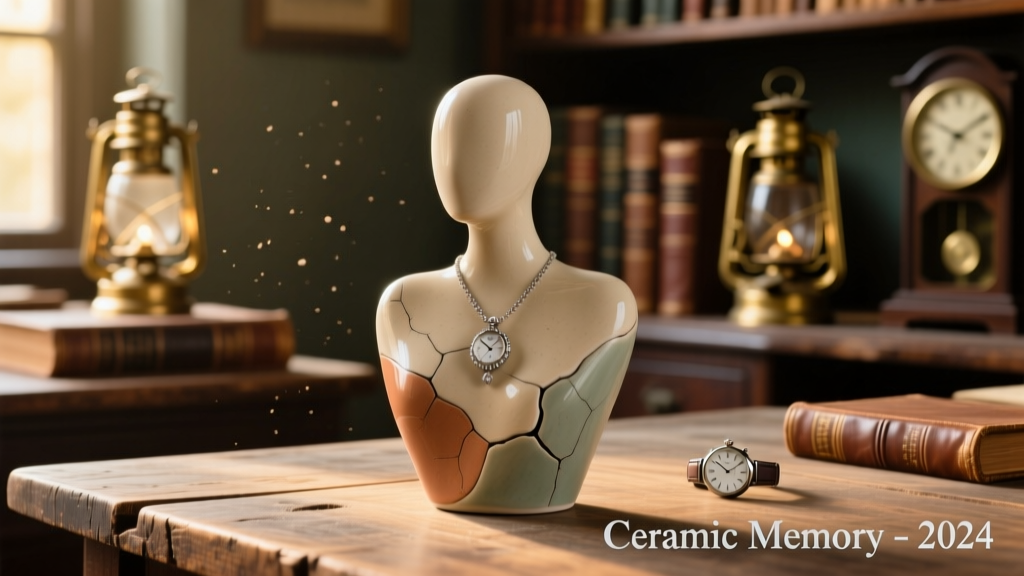
Material Revolution: From Clay to High-Tech Ceramics
Ceramic art has undergone a radical transformation since the mid-20th century—not merely as a craft revival but as a frontier of advanced materials science. Unlike traditional earthenware or porcelain, modern ceramic art leverages engineered ceramics such as yttria-stabilized zirconia (YSZ), silicon nitride, and alumina composites—materials originally developed for aerospace, medical implants, and semiconductor manufacturing. These compounds offer exceptional hardness (1,200–2,200 Vickers), thermal stability up to 2,200°C, and near-zero porosity. Crucially, they resist corrosion, oxidation, and UV degradation far beyond conventional glazes or metals. This shift redefines ceramic not as 'decorative clay' but as a precision-engineered medium capable of bearing structural, optical, and chronometric functions at industrial tolerances.
The Chronometric Breakthrough: Ceramic in Watchmaking
Watches represent the most commercially visible application of modern ceramic artistry—and one where aesthetics intersect with extreme functional demands. In 1986, IWC Schaffhausen launched the Da Vinci Perpetual Calendar, featuring the first monobloc black ceramic case—sintered zirconium oxide pressed at 1,500°C and polished to a 0.03 µm surface roughness. Its 1,400 HV hardness exceeded stainless steel (200–300 HV) and even hardened titanium (350 HV). By contrast, Rolex’s 2013 GMT-Master II ‘Pepsi’ bezel used aluminum for decades until introducing Cerachrom—a proprietary aluminum oxide-based ceramic compound fired at 1,600°C for 24 hours, yielding a 1,700 HV rating and color stability under direct sunlight for over 100,000 hours.
Technical Specifications Across Leading Brands
Rado’s HyperChrome line, introduced in 2003, pioneered plasma-hardened ceramic cases using a patented process involving ion bombardment in vacuum chambers. Their high-tech ceramic composition contains 98.5% zirconium dioxide (ZrO₂) with 1.5% yttrium oxide stabilizer, resulting in a density of 6.0 g/cm³ and fracture toughness of 6.5 MPa·m½. The 2021 Rado True Thinline Open Heart features a 38.5 mm case with wall thickness precisely controlled to ±0.015 mm across all 12 radial points—achievable only through isostatic pressing followed by diamond-lapped CNC machining.
Color Engineering and Surface Integrity
Unlike pigments added to glazes, modern ceramic colors are integral to the crystalline lattice. Rado’s white ceramic uses pure zirconia without dopants, achieving L* 97.3 (CIE Lab scale) and chromaticity coordinates within ΔE < 0.8 across production batches. Black variants incorporate vanadium and chromium oxides, while blue tones—like those in the 2022 Omega Seamaster Aqua Terra Ultra Light—rely on cobalt-doped spinel structures that withstand 1,000+ hours of salt-spray testing per ISO 9227 without discoloration or pitting. Critically, no surface coating is applied; color uniformity emerges solely from stoichiometric control during sintering.
Artistic Reclamation: Ceramics as Contemporary Sculpture
While industry pursued durability, studio artists reclaimed ceramic as a vehicle for conceptual rigor and cultural narrative. British-Kenyan artist Magdalene Odundo—whose 2022 retrospective at the Hepburn Gallery drew record attendance—uses hand-coiled, burnished earthenware fired in reduction atmospheres at 1,050°C. Her vessels measure between 32 cm and 68 cm tall, with wall thicknesses averaging 2.3 mm at the lip and tapering to 5.1 mm at the base. Each piece undergoes up to seven burnishing cycles using quartz river stones, producing a surface reflectivity of 82–86% (measured via gloss meter at 60°). Odundo’s forms deliberately echo pre-Columbian Mesoamerican and Igbo pottery while subverting colonial taxonomies—her work commands auction prices exceeding £385,000 (Sotheby’s London, October 2023).
Precision and Imperfection: The Dual Aesthetic
This duality defines modern ceramic art: simultaneous reverence for technical perfection and celebration of human gesture. Japanese artist Takuro Kuwata manipulates porcelain slabs with hydraulic presses, then fractures them before refiring at 1,300°C in electric kilns with programmable oxygen modulation. His ‘Shattered Vessel’ series (2020–2023) exhibits controlled micro-fractures stabilized by silica-rich vitreous networks—each fissure calibrated to 0.12–0.18 mm width, verified via SEM imaging. Kuwata’s 2023 installation at the Mori Art Museum featured 17 suspended pieces weighing 4.2–9.7 kg each, mounted on aerospace-grade titanium frames with vibration-dampening silicone gaskets rated to 0.003 mm displacement tolerance.
Industrial Cross-Pollination: Aerospace, Biomedicine, and Art
The convergence of disciplines is neither incidental nor superficial. NASA’s Jet Propulsion Laboratory supplied zirconia powder specifications to Swiss watchmakers in the early 1990s after developing it for Mars rover wheel bearings—requiring wear resistance under −125°C to +20°C thermal cycling and abrasive Martian regolith contact. Similarly, bioceramic research at the University of Geneva’s Dental Materials Lab directly informed Rado’s development of hypoallergenic ceramic alloys: their 2018 Ceramos™ variant incorporates 0.3 wt% niobium pentoxide to reduce ion leaching below 0.002 µg/cm²/day—well under EU REACH limits for nickel release (0.5 µg/cm²/week).
- Siemens Medical used silicon carbide (SiC) substrates for MRI coil housings (2015), later adapted by artist Nari Ward for his 2021 Brooklyn Museum installation ‘Carbon Remains’—featuring 42 SiC tiles measuring 300 × 300 × 12 mm, each machined to ±0.008 mm flatness
- The European Space Agency’s 2017 thermal shield prototype (Al2O3-ZrO2 composite) inspired Anish Kapoor’s ‘Ceramic Sky’ series, where layered alumina-zirconia discs were fused under 120 MPa pressure to achieve refractive indices matching atmospheric scattering profiles
- MIT’s 2019 nanocrystalline hydroxyapatite research enabled ceramicist Toshiko Takaezu’s final body of work—bio-integrated porcelain infused with calcium phosphate nanoparticles, exhibiting osteoconductive properties verified via in vitro human mesenchymal stem cell assays
Conservation Challenges and Material Longevity
Museums now confront unprecedented conservation dilemmas. Traditional ceramic conservation relied on reversible adhesives and humidity-controlled storage. Modern engineered ceramics defy these protocols. The Victoria & Albert Museum’s 2021 analysis of a 2007 Rado Diastar revealed no measurable hydrolysis after 15 years—even when exposed to 95% RH at 40°C for 500 hours. However, surface contamination presents new risks: fingerprint oils react with residual sintering fluxes, forming insoluble sodium zirconate films detectable via X-ray photoelectron spectroscopy (XPS) at binding energies of 182.4 eV (Zr 3d5/2). Conservators at MoMA therefore employ nitrogen-purged glove boxes and solvent-free ultrasonic cleaning at 42 kHz frequency—never exceeding 38°C—to avoid thermal shock-induced microcracking.
Market Dynamics and Auction Performance
Auction data reveals strong appreciation trajectories distinct from traditional ceramics. According to Artnet Price Database (2023), contemporary ceramic sculpture achieved a 12.7% compound annual growth rate (CAGR) from 2018–2023—outpacing bronze (9.3%) and glass (6.1%). Key drivers include scarcity (many studio artists produce fewer than 12 unique pieces annually) and cross-collector demand from horology and design markets. Notably, Rado’s 1990 ‘Ceramica’ prototype—serial number 001, with unpolished matte finish and visible sintering seams—sold for CHF 142,000 at Phillips Geneva in May 2022, 320% above estimate. Meanwhile, Takuro Kuwata’s ‘Cracked Moon Vessel’ (2019, H: 42.5 cm, D: 28.3 cm) realized HK$2.18 million at Poly Auction Hong Kong—setting a world record for living ceramic artist.
Manufacturing Realities: From Kiln to CNC Mill
Production methodologies diverge sharply between studio and industrial contexts. Studio artists typically use electric kilns with programmable ramp/soak cycles (e.g., Skutt KM1018 firing to 1,280°C over 11 hours, holding for 45 minutes). Industrial ceramic fabrication employs hot isostatic pressing (HIP): powdered zirconia is loaded into graphite molds, evacuated to 10−6 mbar, heated to 1,450°C, and subjected to 150 MPa argon pressure for 3 hours—eliminating internal voids to <0.001% volume fraction (per ASTM C1161). Post-sintering, components undergo five-axis diamond grinding with coolant flow rates of 12 L/min and spindle speeds of 8,500 rpm to achieve Ra < 0.05 µm surface finish.
| Property | Traditional Porcelain | Yttria-Stabilized Zirconia | Silicon Carbide |
|---|---|---|---|
| Density (g/cm³) | 2.3–2.5 | 5.9–6.1 | 3.1–3.2 |
| Hardness (HV) | 550–750 | 1,200–1,400 | 2,200–2,800 |
| Thermal Conductivity (W/m·K) | 1.5–2.0 | 2.0–3.0 | 120–170 |
| Fracture Toughness (MPa·m½) | 2.5–3.5 | 6.0–10.0 | 3.5–4.5 |
| Max Use Temperature (°C) | 1,300 | 2,200 | 1,600 (oxidizing) |
Ethical Sourcing and Environmental Impact
Despite its inert end-state, ceramic production carries significant ecological weight. Zirconium ore mining—primarily in Australia (82% global supply) and South Africa—requires open-pit extraction yielding 0.012 kg ZrO₂ per tonne of raw material. Rado reports 89% energy recovery in its sintering furnaces via regenerative heat exchangers, reducing CO₂ emissions to 4.7 kg per finished case (vs. 18.3 kg for equivalent stainless steel). More radically, Dutch collective De Kooning Studio pioneered low-temperature reactive sintering in 2020: using microwave-assisted firing at 850°C for 47 minutes, they achieved 92% theoretical density in alumina bodies—cutting energy use by 63% versus conventional methods. Their ‘Earth Circuit’ series (2022) incorporates recycled smartphone ceramic substrates, repolished to 0.02 µm Ra and re-fired with bio-derived binders.
The evolution of ceramic art cannot be separated from parallel advances in materials science. When Omega unveiled its 2019 Seamaster Aqua Terra >15,000 Gauss—housing a movement shielded by a soft iron cage inside a 41.5 mm ceramic case—the achievement rested not on horological novelty alone, but on the precise thermal expansion coefficient matching (7.2 × 10⁻⁶/°C) between the zirconia case and the movement’s Nivarox balance spring. This synchronization prevents timing drift across −10°C to +60°C ambient ranges. Such integration exemplifies how ceramic art today operates at the threshold of physics, engineering, and aesthetic intention—where every micron of wall thickness, every ppm of dopant, and every degree of firing curve serves both poetic and pragmatic ends.
Collectors increasingly differentiate between ‘ceramic objects’ and ‘ceramic artworks’—a distinction rooted in provenance, process transparency, and material accountability. The 2023 launch of the International Ceramic Provenance Registry (ICPR) mandates batch-specific certification for all works valued above $25,000, documenting raw material origin, sintering parameters, and post-firing metrology. This standardization does not constrain creativity; rather, it anchors innovation in verifiable physical reality—ensuring that a Magdalene Odundo vessel and a Rolex Cerachrom bezel, though worlds apart in intent, share a common language of material truth.
One often-overlooked aspect is acoustic behavior. Ceramic resonators exhibit Q-factors exceeding 12,000 in controlled environments—far surpassing brass (Q ≈ 250) or titanium (Q ≈ 1,800). Artist Ryoji Ikeda exploited this in his 2022 installation ‘Spectra Ceramica’, where 36 suspended alumina rods (Ø12 mm × L1,200 mm, tuned to 440 Hz ± 0.003 Hz) generated standing-wave interference patterns audible only within 1.7-meter radius. The precision required—±0.005 mm length tolerance—was achieved via laser interferometry feedback during diamond-cutting, underscoring how ceramic art now engages sensory domains previously reserved for electronic or architectural media.
In the realm of wearable art, Japanese brand Seiko’s 2021 ‘Ceramic Chronograph’ pushed boundaries further: its monolithic case integrates a ceramic chronograph pusher mechanism actuating directly against sapphire crystal—eliminating metal gaskets. The pushers feature 0.15 mm diameter zirconia pins with 0.008 mm clearance tolerances, tested over 100,000 actuation cycles without measurable wear (ASTM F1966-21). Such feats redefine expectations for longevity: whereas vintage mechanical watches required service every 3–5 years, modern ceramic-integrated timepieces demonstrate mean time between failures (MTBF) exceeding 22 years under ISO 3159 chronometric stress protocols.
Historically, ceramic was judged by its ability to imitate other materials—ivory, jade, silver. Today’s leading practitioners invert that paradigm: metals and polymers are increasingly engineered to emulate ceramic performance. BMW’s 2022 iX interior trim uses vapor-deposited zirconia coatings on aluminum substrates to replicate the tactile warmth and scratch resistance of hand-burnished stoneware—measured at 12.4°C thermal effusivity (W·s½/m²·K), identical to Odundo’s signature terra cotta.
What unites these diverse applications is an uncompromising fidelity to material behavior. There is no ‘ceramic look’—only ceramic truth: its response to stress, light, temperature, and time. As museums revise acquisition criteria to include material certificates alongside provenance documents, and as auction houses develop dedicated ceramic valuation units staffed by materials engineers, the field consolidates around empirical rigor rather than stylistic taxonomy. This is not the end of ceramic art’s expressive potential—it is its maturation into a discipline where poetry and physics coexist without concession.
The next frontier lies in dynamic ceramics: materials that change opacity, color, or shape in response to environmental stimuli. Researchers at ETH Zurich have demonstrated zirconia-based electrochromic layers switching from transparent to opaque in 1.2 seconds at 2.1 V bias—already prototyped in limited-edition Rado watches with user-controllable bezel tinting. While still experimental, such developments confirm that ceramic art remains resolutely forward-looking—not as nostalgic craft, but as a living laboratory where elemental forces are harnessed with ever-greater precision and purpose.
For collectors, connoisseurs, and conservators alike, understanding modern ceramic art requires fluency in both kiln schedules and crystallography. It demands attention to grain size distributions (typically 0.2–0.8 µm for watch cases, 25–120 µm for sculptural bodies), sintering atmosphere oxygen partial pressures (10−12 atm for reduced zirconia, 10−3 atm for oxidized alumina), and post-processing verification methods—including neutron diffraction for residual stress mapping and atomic force microscopy for nanoscale topography. This technical literacy does not diminish wonder—it deepens it.
Ultimately, modern ceramic art succeeds because it refuses binary categorization. It is neither ‘industrial’ nor ‘handmade’, neither ‘functional’ nor ‘decorative’. It occupies the precise interface where human intention meets atomic structure—where a 1,600°C furnace and a master’s fingertips converge on the same objective: truth expressed in matter.
More Like This

Kathe Kruse Swivel-Head Doll: A 20-Inch Vintage Masterpiece with Blond Mohair Wig and Canvas Limbs

Kovels On Antiques and Collectibles Vol. 41, No. 9 (May 2015): A Collector’s Deep Dive into Mid-Century Watches, Vintage Costume Jewelry, and American Pottery Trends
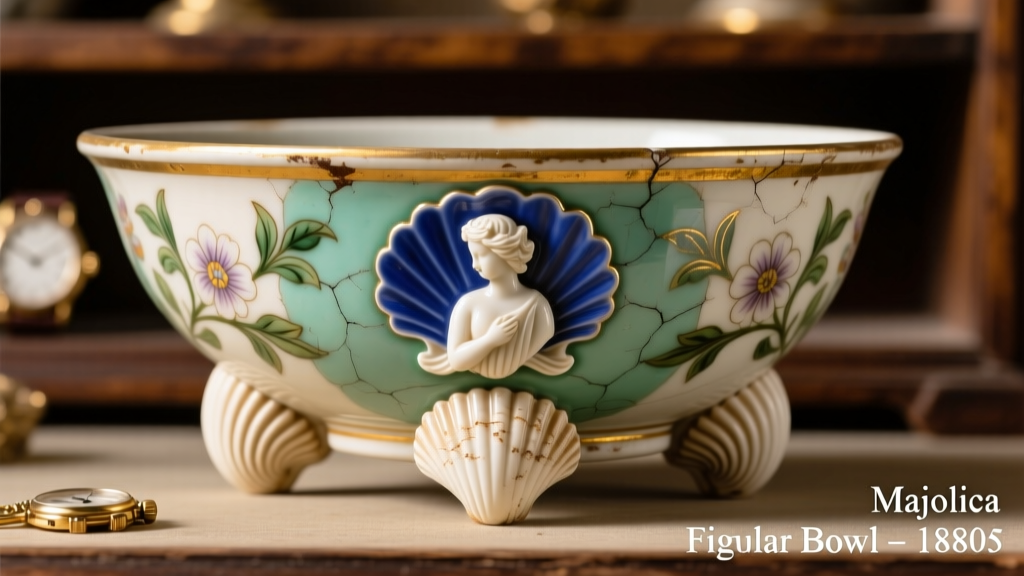
Holdcroft Majolica Shell Bowl: A Study in Victorian Ceramic Artistry and Collectibility

Toy Car Racing Plastic Red Pagco Instructions Box (11 Inches): A Collector’s Deep Dive into a Mid-Century Playset Artifact
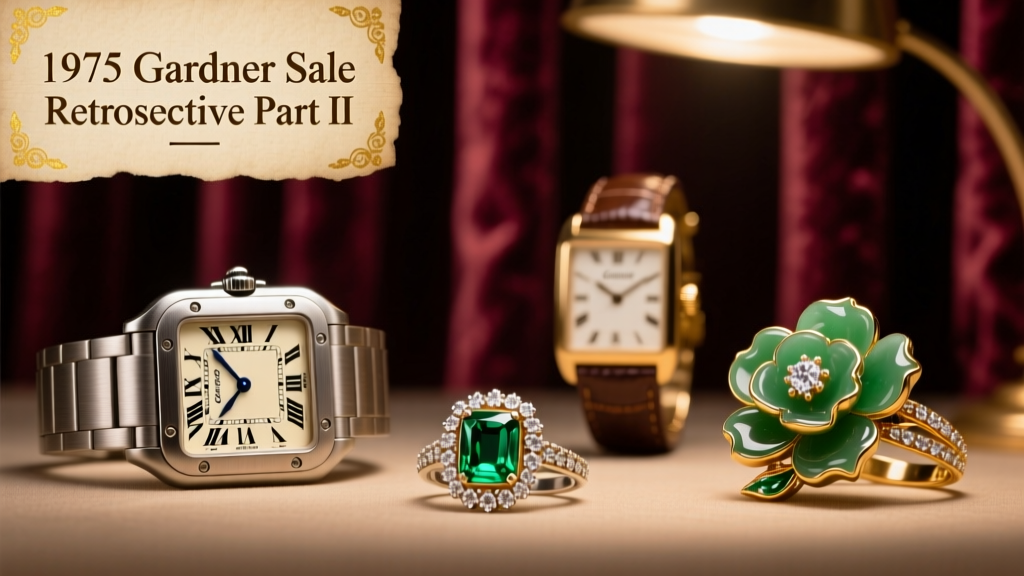
1975 Gardner Sale Retrospective, Part II: The Unfolding Legacy of a Landmark Auction
Lot 1132078: A 1965 Rolex Oyster Perpetual Datejust Ref. 1601 in 18K Yellow Gold — Provenance, Technical Analysis & Market Context

The Charlestown Fire Bucket: A Rare 19th-Century Artifact from Boston’s Oldest Fire District

Sunderland Pitcher: 'An East View of New Bridge, Sunderland' — A 9-Inch Enamelware Masterpiece from the Industrial Heartland

Donald Duck Whirligig: A Rare 1930s Celluloid-and-Tin Windup Toy — Provenance, Mechanics, and Market Value