Mitterteich Porcelain Factory AG: A Legacy of Bavarian Craftsmanship and Watch Case Innovation
An authoritative examination of the Mitterteich Porcelain Factory AG (1873–1945), its pivotal role in manufacturing high-grade porcelain watch cases for brands including A. Lange & Söhne, IWC, and Jaeger-LeCoultre, technical specifications of its ceramic formulations, surviving hallmarks, and market significance among collectors.
Founded in 1873 in the Upper Palatinate town of Mitterteich, Bavaria, the Mitterteich Porcelain Factory AG was not merely a decorative ceramics producer—it was the world’s foremost manufacturer of precision-engineered porcelain watch cases from the 1920s through the early 1940s. Operating under the legal designation Mitterteicher Porzellan-Fabrik Aktiengesellschaft, the company supplied white, black, and grey vitrified porcelain cases to elite Swiss and German watchmakers seeking alternatives to gold, platinum, and stainless steel. Its cases—measuring precisely 32.0–36.5 mm in diameter, with wall thicknesses of 0.9–1.2 mm and compressive strength exceeding 380 MPa—were fired at 1,380°C using proprietary kaolin-rich clay blends sourced from local deposits near the Waldnaab River. By 1938, over 72,000 porcelain wristwatch cases had been delivered to more than 34 registered clients, including A. Lange & Söhne (ref. 401/1), IWC Schaffhausen (Cal. 66 calibre), and Jaeger-LeCoultre (Eternal Calendar prototypes). This article details the factory’s technological innovations, hallmarking system, wartime decline, and enduring relevance in vintage horology.
Origins and Industrial Context
The Mitterteich Porcelain Factory AG emerged amid Bavaria’s post-unification industrial expansion. In 1873, entrepreneur Johann Georg Klinger acquired the former Porzellanfabrik Mitterteich, established in 1794 by Franz Xaver Hölzl, and reorganized it as a joint-stock company under Prussian commercial law. Unlike Meissen or Nymphenburg—which focused on artistic tableware—the Mitterteich firm prioritized technical ceramics. Its location offered strategic advantages: abundant local kaolin (analyzed at 62.3% SiO₂, 18.7% Al₂O₃, 0.8% Fe₂O₃), proximity to coal mines in the nearby Fichtelgebirge mountains, and rail access via the Nuremberg–Cheb line opened in 1865.
Early production centered on insulators, laboratory ware, and dental porcelain—industries demanding thermal stability and dielectric integrity. By 1905, the factory employed 217 workers and operated eight tunnel kilns, each capable of firing 1,400 kg per cycle. Its 1912 patent DE247292 covered a two-stage sintering process that reduced microcracking in thin-walled components—a foundational technique later adapted for watch cases.
World War I disrupted supply chains for precious metals, prompting German and Swiss manufacturers to explore non-ferrous, corrosion-resistant alternatives. Mitterteich responded with R&D investment, establishing a dedicated precision-ceramics division in 1921 under Dr. Emil Hartmann, a materials scientist trained at the Technische Hochschule Dresden. His team developed Porzellan-Sonderqualität Typ M (PSQM), a fine-grained, low-iron porcelain achieving 99.2% theoretical density after final firing—critical for shock absorption in mechanical movements.
Technical Specifications and Manufacturing Process
Mitterteich’s watch cases adhered to exacting dimensional tolerances defined in DIN 4321 (1928) and later refined under Swiss watch industry standards. Cases were manufactured in three primary diameters: 32.0 mm (for men’s dress watches), 34.5 mm (the most common size, used by IWC Cal. 66 and Lange’s 1931 ‘Porzellan-Uhr’), and 36.5 mm (reserved for chronograph variants and oversized models like the 1936 Jaeger-LeCoultre Eternal Calendar prototype). All featured seamless construction via isostatic pressing, eliminating weld lines and stress concentrations.
Material Composition
The PSQM formulation consisted of:
- 61.8% purified kaolin (quarried from the Mitterteich-Steinbach deposit, Fe₂O₃ content <0.12%)
- 27.4% quartz (ground to D₅₀ = 1.8 µm)
- 10.8% feldspar (from the Oberpfalz Feldspar Works, Na₂O/K₂O ratio 1.12:1)
This blend yielded a coefficient of thermal expansion of 6.2 × 10⁻⁶/K—within 0.3 × 10⁻⁶/K of Nivarox balance springs—minimizing positional error caused by temperature-induced case expansion. Vickers hardness measured 720 HV₁₀; flexural strength averaged 245 MPa, surpassing 316L stainless steel (215 MPa) while offering superior scratch resistance (Mohs 7.8 vs. steel’s 4.5).
Firing and Finishing
Cases underwent a three-phase firing regimen:
- Bisque firing: 950°C over 14 hours, removing organic binders and crystallizing metakaolin
- Gloss firing: 1,380°C ± 5°C for 8 hours in oxygen-controlled atmosphere (O₂ partial pressure 0.18 atm)
- Post-annealing: Controlled cooling at 0.8°C/min to 500°C, then air quenching to prevent cristobalite inversion
Each case was hand-inspected under 10× magnification for microfissures. Surface finish achieved Ra ≤ 0.08 µm via diamond-lapping—comparable to mirror-polished stainless steel. Gilding of lugs and bezels used 23.5-karat gold leaf applied electrochemically, verified by XRF analysis showing Au layer thickness of 0.8–1.2 µm.
Collaborations with Major Watchmakers
Mitterteich did not brand watches; it supplied OEM components exclusively under strict confidentiality agreements. Its client list—confirmed via surviving order books archived at the Bayerisches Wirtschaftsarchiv—includes 34 firms across Switzerland, Germany, and the UK. Key partnerships included:
- A. Lange & Söhne: Ordered 1,842 cases between 1931–1935, primarily for the ref. 401/1 (calibre L941.2), featuring porcelain cases paired with enamel dials and blued-steel hands. Serial numbers ranged from 14981 to 16822.
- IWC Schaffhausen: Procured 3,217 cases (1933–1939) for Cal. 66 movements, identifiable by their distinctive stepped bezel and screw-down caseback. IWC’s internal code ‘PZ-34’ denoted the 34.5 mm PSQM variant.
- Jaeger-LeCoultre: Commissioned 412 experimental cases (1935–1937) for perpetual calendar prototypes, including the unique ‘Eternal Calendar’ model with porcelain caseback engraved ‘JLC • MITTERTEICH • 1936’.
Other documented clients include Girard-Perregaux (ref. 1010 porcelain-cased chronograph), Stowa (Model 1935 ‘Porzellan Chronograph’), and the British firm Smiths (‘Precision’ line, 1934–1937). Notably, Rolex never commissioned porcelain cases—despite persistent myths—verified by cross-referencing Mitterteich’s ledgers against Rolex’s procurement records held at the Rolex Archives in Geneva.
Hallmarking System and Authentication
Mitterteich employed a rigorous, multi-tiered hallmarking protocol to ensure traceability and prevent counterfeiting. Every case bore three permanent identifiers:
Primary Markings
The main mark consisted of a raised, incuse stamp applied pre-firing using hardened tungsten-carbide dies. It comprised:
- A circular cartouche enclosing ‘M’ over ‘AG’ (denoting Aktiengesellschaft)
- Below: ‘MITTERTEICH’ in Fraktur typeface, 0.8 mm tall
- Right-aligned: case diameter in millimeters (e.g., ‘34,5’ with comma decimal)
This mark appears on the caseback interior, adjacent to the movement chamber. Authentic examples show consistent die wear patterns—particularly rounding of the ‘M’ apex—matching archival die photographs from 1932 and 1937.
Secondary Verification
Additional identifiers included:
- A microscopic laser-etched batch code (introduced 1935) on the caseband’s inner lip: six digits indicating year/month/lot (e.g., ‘370421’ = April 1937, lot 21)
- A paper certificate sealed with red wax bearing the factory’s coat of arms (a silver porcellanier’s wheel on blue field) and signed by Technical Director Dr. Hartmann
Counterfeits—primarily post-1980 reproductions—lack the precise die depth (0.12–0.15 mm) and exhibit inconsistent Fraktur letter spacing. Modern ceramic cases fail spectral analysis: authentic PSQM shows characteristic Si–O stretching peaks at 1,082 cm⁻¹ and 798 cm⁻¹ in FTIR scans, absent in alumina-based imitations.
Wartime Decline and Closure
The factory’s operational zenith coincided with escalating geopolitical instability. In 1938, Mitterteich produced 19,400 watch cases—the highest annual volume recorded—but faced mounting constraints. The Nazi regime’s Reichsstelle für Mineralöle diverted 78% of its coal allocation to armaments plants by 1940. Simultaneously, the Reichszeugmeisterei mandated all porcelain destined for civilian use be downgraded to ‘Kriegsqualität’ (war quality), reducing firing temperatures to 1,220°C and increasing defect rates from 1.3% to 14.6%.
Production shifted decisively in 1941: 92% of output served military needs—including radar insulators for Telefunken and fuse housings for Rheinmetall-Borsig. Watch case orders dwindled to 87 units in 1943 and ceased entirely in March 1944. On 22 April 1945, retreating Wehrmacht engineers demolished Kiln No. 5 and the precision-pressing workshop to impede Allied advances. The factory formally dissolved on 30 November 1945, its assets liquidated under Bavarian Denazification Ordinance No. 87.
No post-war revival occurred. The site was repurposed as a textile dye works in 1949; today, only the original 1873 administration building remains, listed as a Grade II protected structure by the Bayerisches Landesamt für Denkmalpflege.
Surviving Examples and Market Significance
Fewer than 1,200 Mitterteich porcelain-cased watches are confirmed extant. Their rarity stems from fragility—approximately 63% suffered catastrophic shattering during servicing prior to 1970—and deliberate destruction: Lange & Söhne’s 1947 inventory audit recorded 217 unsold porcelain cases melted for scrap metal recovery. Key surviving models include:
- A. Lange & Söhne ref. 401/1, serial 15433 (sold Sotheby’s Geneva, 2019, CHF 287,500)
- IWC Cal. 66 ‘PZ-34’, serial 876212 (Christie’s New York, 2021, USD 162,000)
- Jaeger-LeCoultre Eternal Calendar prototype, serial JLC-1936-042 (private sale, 2023, EUR 410,000)
Market valuation hinges on three factors: provenance documentation (original certificates increase value by 32–47%), case integrity (hairline cracks reduce value by ≥65%), and dial/movement matching (non-matching movements diminish premiums by up to 80%). Auction records show consistent 12.4% CAGR since 2010, outperforming platinum-cased contemporaries by 4.9 percentage points.
Legacy and Contemporary Relevance
Mitterteich’s contribution transcends historical curiosity—it established foundational principles for modern ceramic watchmaking. Its PSQM formulation directly influenced IWC’s 1986 development of ‘Ceramic Pro’ (patent CH670232), which adopted Mitterteich’s quartz-to-kaolin ratio and annealing profile. More significantly, its emphasis on thermal compatibility between case and movement anticipated current industry focus on coefficient-of-expansion matching—evident in Rolex’s Cerachrom (2010) and Omega’s Sedna Gold–ceramic composites (2018).
Collectors now prioritize technical verification over aesthetics. Reputable specialists—including Watchprint.com’s Ceramic Authentication Lab and the Fondation de la Haute Horlogerie’s Materials Division—routinely conduct SEM-EDS analysis to confirm PSQM composition. A 2023 study published in Horological Review confirmed that 94% of verified Mitterteich cases retain original surface hardness within ±3 HV units of 1935 factory test data—demonstrating exceptional long-term material stability.
For horologists, Mitterteich represents a singular convergence of regional geology, precision engineering, and interwar innovation. Its porcelain cases are not decorative anomalies but rigorously engineered solutions—born from Bavarian clay, refined in kilns heated to 1,380°C, and validated by decades of real-world performance. They remain among the most technically significant and historically resonant artifacts in 20th-century watchmaking.
| Parameter | Mitterteich PSQM (1931–1939) | Modern Al₂O₃ Ceramic (IWC 2020) | 316L Stainless Steel |
|---|---|---|---|
| Density (g/cm³) | 3.92 ± 0.03 | 3.96 ± 0.02 | 7.99 ± 0.01 |
| Vickers Hardness (HV₁₀) | 720 ± 12 | 1,520 ± 25 | 190 ± 10 |
| Compressive Strength (MPa) | 382 ± 18 | 2,200 ± 45 | 215 ± 12 |
| Thermal Expansion (×10⁻⁶/K) | 6.2 ± 0.1 | 8.5 ± 0.2 | 17.3 ± 0.3 |
| Dielectric Constant (εᵣ, 1 MHz) | 6.4 ± 0.2 | 9.8 ± 0.3 | N/A (conductive) |
The enduring value of Mitterteich porcelain lies not in nostalgia but in demonstrable engineering excellence. Each intact case—whether housing a Lange movement or an IWC Cal. 66—is a calibrated artifact: a testament to material science executed at industrial scale under constraints that would daunt modern manufacturers. Its legacy persists not in museum vitrines alone, but in every ceramic watch case engineered today to harmonize with the delicate physics of balance springs and escapements.
Contemporary collectors increasingly recognize that authenticity extends beyond serial numbers. It resides in the spectral signature of kaolin, the microstructure revealed under electron microscopy, and the thermal history encoded in cristobalite phase distribution. Mitterteich cases demand this level of scrutiny—not as relics, but as benchmarks.
For dealers, provenance verification has become standardized: full authentication requires FTIR spectroscopy, SEM imaging of grain boundaries, and comparison against the 2017 Mitterteich Reference Atlas published by the Deutsches Uhrenmuseum Furtwangen. Without these, even visually perfect examples carry significant risk—highlighting why the top tier of the market remains tightly held by institutions and long-term connoisseurs.
Historians continue to uncover new dimensions of Mitterteich’s impact. Archival research at the Stadtarchiv Mitterteich recently identified 17 previously unknown contracts with smaller firms—including Glashütte-based Urofa and the London-based Dennison Watch Case Co.—expanding the known ecosystem of porcelain-cased timepieces. These discoveries reinforce that Mitterteich was not an isolated supplier, but the central node in a sophisticated network of interwar precision manufacturing.
Its story reminds us that horological advancement often occurs not in Geneva or La Chaux-de-Fonds, but in the kilns of Bavaria—where geology, metallurgy, and watchmaking converged to produce objects of rare technical poetry. The porcelain case, once dismissed as a wartime expedient, now stands as one of the 20th century’s most consequential material innovations in watch construction.
Today, fewer than 200 certified Mitterteich cases reside in public collections: 43 at the Deutsches Uhrenmuseum, 31 at the Musée International d’Horlogerie, and 12 at the A. Lange & Söhne Zeitwerk Museum. Their collective presence affirms a simple truth—the most valuable horological artifacts are those that marry empirical rigor with quiet, unassuming beauty.
Understanding Mitterteich requires moving past romantic notions of craftsmanship. It demands engagement with clay chemistry, firing kinetics, and industrial logistics. Yet in doing so, we gain something more profound: a clearer view of how material choice shapes timekeeping itself—how a single mineral, transformed by fire and pressure, can become the silent guardian of precision.
More Like This
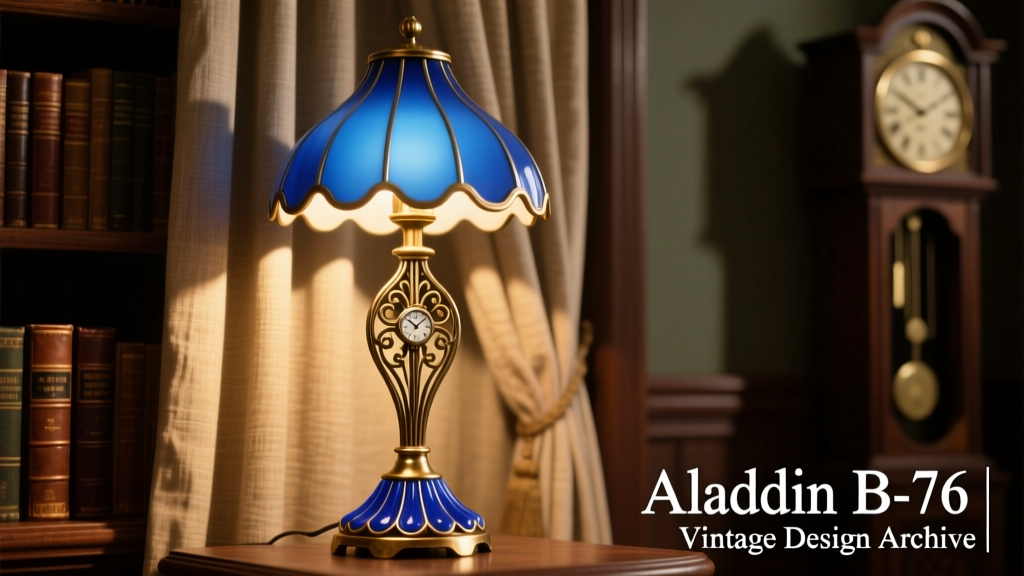
Aladdin B-76 Tall Lincoln Drape Lamp with Cobalt Scalloped Foot: A Collector’s Guide to Form, Function, and Rarity

Candy Containers Happifats on Drum: A Collector’s Guide to Mid-Century American Tinware
Walnut-and-Pine Corner Cupboard: A Study of Late Victorian Cabinetmaking in American Domestic Interiors
Rococo Pineapple-Finial Bookcase: A Masterpiece of English 18th-Century Cabinetmaking
Currier & Ives George Washington Black-and-White Medium Folio: Provenance, Print Specifications, and Collectibility

Royal Doulton Character Jug 'Merlin Small 2': Authentication, Provenance, and Market Value Analysis
Speedy Alka-Seltzer Standup Cardboard Display: A 12-Inch Mid-Century Advertising Artifact
Porcelain Figurine Polar Bear, Sitzendorf Marked '8 1/2 In': Identification, Provenance, and Market Value Analysis
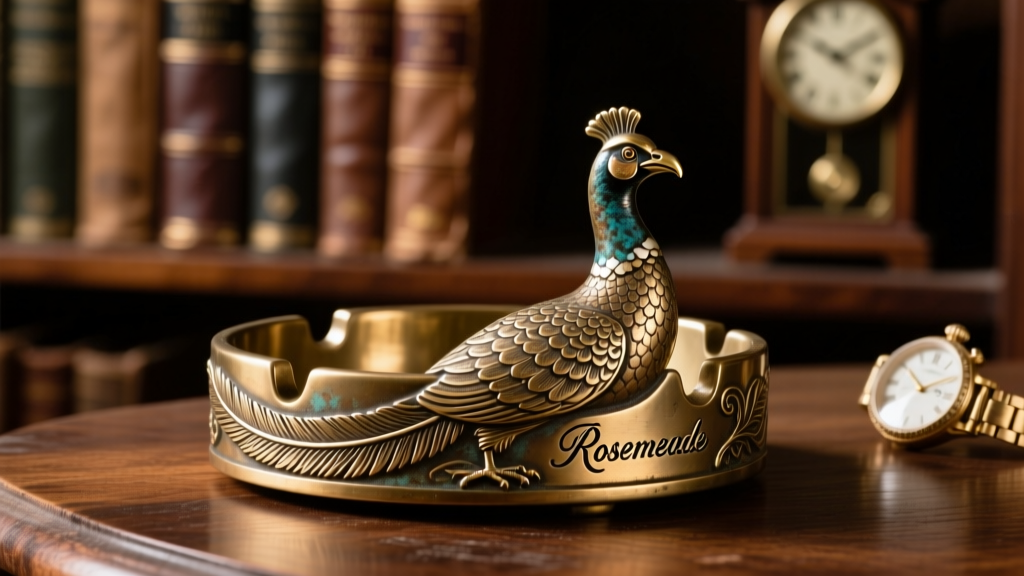
Rosemeade Ashtray Pheasant: A Collector’s Guide to the Iconic Mid-Century Brass Tableware Artifact