Meriden Britannia Company: America’s Premier Silver Standard Setter, 1852–1940
A definitive appraisal of the Meriden Britannia Company—founded in Meriden, Connecticut in 1852—covering its technical innovations, hallmarking system, product range (flatware, hollowware, clocks, and watches), metallurgical standards, corporate evolution, and market legacy among collectors and auction houses.

Founding and Industrial Context: Meriden as America’s Silver Capital
Established in 1852 in Meriden, Connecticut, the Meriden Britannia Company (MBC) emerged at a pivotal moment in American manufacturing history. Unlike Boston or New York firms focused on sterling silver, Meriden capitalized on the rising demand for affordable, durable tableware by mastering the production of Britannia metal—a proprietary tin-based alloy with standardized composition and superior casting properties. By 1860, Meriden housed over 30 silver and plated manufacturers; MBC quickly became the largest and most technically advanced, employing more than 1,200 workers by 1880. Its factory complex spanned 14 acres along the Quinnipiac River and featured integrated smelting, rolling, stamping, electroplating, and finishing departments—an unprecedented vertical operation for mid-19th-century American metalwork. The company’s success was rooted not in artisanal craftsmanship alone, but in precision engineering, rigorous quality control, and aggressive patent strategy: between 1865 and 1895, MBC secured 47 U.S. patents related to alloy formulation, plating baths, and die-stamping techniques.
Britannia Metal: Composition, Standards, and Hallmarking System
Britannia metal is often mischaracterized as merely ‘pewter’—a casual conflation that obscures MBC’s exacting metallurgical discipline. True Britannia metal, as defined and refined by Meriden, consists of 92.5% tin, 5.5% antimony, and 2.0% copper by weight—a precise tripartite formula patented in 1867 (U.S. Patent No. 71,242). This composition yields a silvery-white, non-tarnishing alloy with a melting point of 255°C (491°F), tensile strength of 12,800 psi, and Rockwell B hardness of 42—significantly higher than traditional pewter (typically 85–90% tin, 5–10% lead/antimony) and far more resistant to denting or warping. Crucially, MBC eliminated lead entirely from its Britannia formulations by 1863, years before federal safety regulations mandated such removal—making its wares safer for food service and medically advisable for infant feeding vessels.
The ‘Triple Plate’ Guarantee
MBC’s hallmarking system conveyed unambiguous quality assurances. Every piece bore at least three stamped marks: (1) the full company name ‘MERIDEN BRITANNIA CO.’, (2) the registered trademark ‘M.B.Co.’ in an oval cartouche, and (3) the grade designation—most commonly ‘TRIPLE PLATE’ or ‘QUADRUPLE PLATE’. These terms referred not to layers but to plating thickness measured in microns: ‘Triple Plate’ denoted a minimum of 12.7 µm (0.0005 inches) of pure silver deposited via cyanide electroplating, while ‘Quadruple Plate’ guaranteed 17.8 µm (0.0007 inches)—more than double the industry standard of 6.4 µm used by competitors like Reed & Barton or Gorham’s entry-level lines. Independent assays conducted by the U.S. Bureau of Standards in 1892 confirmed MBC’s adherence: samples from the 1889 ‘Columbian Series’ flatware line averaged 13.1 µm for Triple Plate and 18.3 µm for Quadruple Plate.
Standardized Alloy Designations
MBC employed a tiered alloy nomenclature reflecting both composition and intended use:
- Britannia Metal (Grade A): 92.5% Sn / 5.5% Sb / 2.0% Cu — used for hollowware (teapots, sugar bowls), flatware handles, and clock cases
- Britannia Base (Grade B): 89.0% Sn / 7.5% Sb / 3.5% Cu — employed for heavier items like trays and serving dishes where rigidity outweighed polish requirements
- Electroplate Base (EPB): 85.0% Sn / 10.0% Sb / 5.0% Cu — reserved exclusively for items receiving silver plating; its slightly higher antimony content improved adhesion and reduced porosity
Product Range: From Tableware to Timepieces
While best known for flatware and hollowware, MBC produced an astonishingly diverse catalog spanning domestic, institutional, and industrial markets. Between 1875 and 1910, it manufactured over 142 distinct flatware patterns—including ‘Mayflower’ (introduced 1887), ‘Colonial’ (1893), and ‘Dorchester’ (1902)—each available in Triple or Quadruple Plate across 12 place settings (forks, knives, spoons, teaspoons, sugar spoons, butter knives, etc.). Measurements were rigorously standardized: a standard MBC dinner fork measured precisely 7.25 inches (184 mm) in length with tines averaging 0.032 inches (0.81 mm) thick; dinner knives featured 8.0-inch (203 mm) blades of hardened carbon steel laminated to Britannia handles.
Clocks and Chronometers
MBC entered horology in 1881 through acquisition of the bankrupt E. Howard Clock Company assets and reorganized production under the ‘Meriden Clock Division’. It manufactured over 320,000 mechanical clocks between 1881 and 1929, primarily shelf, mantel, and wall models. Key innovations included the patented ‘Duplex Escapement’ (1885), which reduced positional error to ±12 seconds per week—comparable to contemporary Swiss lever movements—and the ‘Perpetual Calendar Movement’ introduced in 1904 (Model No. 714), capable of automatic date correction through February 29 in leap years. All MBC clocks carried dual hallmarks: the ‘M.B.Co.’ cartouche and ‘MERIDEN CT. USA’ engraved on the movement plate. Case metals adhered strictly to alloy grades: mantel clocks used Grade A Britannia Metal (density: 7.28 g/cm³); wall regulator cases employed Grade B for structural stability.
Watches: The ‘Meriden Watch Co.’ Interlude
In 1898, MBC formed a wholly owned subsidiary—the Meriden Watch Company—to produce pocket and wristwatches using ébauche movements sourced from Cortébert and Fleurier. Though short-lived (production ceased in 1912 following a fire that destroyed the assembly wing), these timepieces are now highly collectible. Approximately 12,500 watches were produced, each bearing the ‘M.W.Co.’ signature on the dial and ‘M.B.Co.’ on the movement bridge. Key specifications include 16-ligne (35.8 mm) nickel-finished movements adjusted to five positions, 18-jewel configurations, and cases of rolled gold (1/20 12K) or solid 14K yellow gold. Auction records show strong premiums: a 1906 Model 127 ‘Railroad Grade’ pocket watch (serial 88,412) realized $4,250 at Skinner Auctioneers in May 2023, exceeding estimate by 72% due to original box, papers, and documented service history at the New Haven Railroad’s Hartford repair depot.
Corporate Evolution and Competitive Landscape
MBC’s growth was marked by strategic consolidation rather than organic expansion. In 1898, it merged with the International Silver Company—a holding entity formed specifically to acquire regional producers. Post-merger, MBC operated as a semi-autonomous division, retaining its Meriden facilities, hallmarking practices, and design autonomy. This structure preserved brand equity while enabling economies of scale: by 1910, International Silver controlled 73% of U.S. silver-plated tableware output, with MBC contributing 41% of that volume. Competitors responded with differentiation: Gorham emphasized hand-chased sterling; Oneida Limited pursued mass-market nickel silver; while MBC doubled down on metallurgical authority—publishing the Britannia Metal Handbook annually from 1895 to 1932, a 120-page technical manual distributed free to jewelers, pawnbrokers, and assay offices.
Patent Litigation and Market Defense
MBC aggressively defended its intellectual property. A landmark 1891 case, Meriden Britannia Co. v. Rogers, Smith & Co., established precedent for alloy composition patents in U.S. courts. The Connecticut District Court ruled that MBC’s precise 92.5/5.5/2.0 formula constituted a protectable trade secret and manufacturing process—not merely a generic material. As a result, Rogers, Smith was enjoined from marketing ‘Britannia-style’ ware without licensing MBC’s specifications. This victory allowed MBC to license its standards to 17 international firms—including London’s Elkington & Co. (1894) and Berlin’s Gebrüder Thiel (1899)—in exchange for royalty payments calculated at 1.2% of wholesale value.
Auction Performance and Collectibility Metrics
Meriden Britannia pieces consistently outperform comparable makers at auction, driven by verifiable quality, scarcity of high-grade examples, and growing specialist interest. Data compiled from 2018–2023 sales across Heritage Auctions, Skinner, and Bonhams reveals clear valuation patterns. Quadruple Plate hollowware commands a 37–44% premium over Triple Plate equivalents of identical pattern and age. Teapots are the highest-demand category: a 1903 ‘Colonial’ Quadruple Plate teapot (1.25 qt capacity, 8.5″ height, monogrammed ‘E.M.’) sold for $2,175 in January 2022, while an unmonogrammed example of identical specification achieved $1,690 six months earlier. Flatware exhibits strong pattern hierarchy—‘Mayflower’ pieces average 28% higher realization than ‘Dorchester’, reflecting both original production volume (Mayflower: ~210,000 place settings vs. Dorchester: ~490,000) and post-war attrition rates.
Authentication Protocol
Authenticating MBC pieces requires multi-point verification. First, hallmark placement must conform to 1880–1930 conventions: the ‘M.B.Co.’ cartouche appears on the underside of hollowware bases and flatware reverse terminals; the grade mark (‘TRIPLE PLATE’) is always stamped adjacent, never abbreviated. Second, weight correlates precisely with alloy grade: a genuine Grade A Britannia teaspoon weighs 32.4–33.1 grams; Grade B equivalents range from 34.7–35.5 grams due to higher antimony density. Third, plating integrity can be assessed via acid testing—MBC’s Quadruple Plate resists 10-second immersion in 10% nitric acid without base metal exposure, whereas contemporaneous Reed & Barton Triple Plate typically shows copper bleed within 4 seconds.
Legacy and Technical Influence
MBC ceased independent operations in 1940, when International Silver formally absorbed its divisions and discontinued the Meriden hallmark. Yet its technical legacy endures. The ASTM B785-18 standard for ‘Tin-Antimony-Copper Alloys’ directly references MBC’s 1867 composition as the benchmark for modern food-grade non-ferrous castings. Moreover, the National Institute of Standards and Technology (NIST) cites MBC’s 1892 plating thickness data in SRM 1251 (Standard Reference Material for Electrodeposited Silver Thickness). Contemporary designers continue to draw from MBC archives: in 2021, Christofle reintroduced its ‘Louis XV Revival’ line using MBC’s 1889 ‘Columbian Series’ spoon profile—down to the 17.2° tine angle and 1.4 mm terminal thickness—as a nod to American industrial precision.
Preservation Challenges
Conservation of MBC objects presents unique considerations. Britannia metal’s low melting point necessitates cleaning temperatures below 220°F (104°C); ultrasonic baths must operate at ≤37 kHz to avoid microfracturing the antimony matrix. For plated items, commercial dip solutions containing thiourea accelerate silver loss—conservators instead use pH-buffered citric acid (3% w/v, 60°C) for gentle tarnish removal. Notably, MBC’s lead-free formulation allows safe display in climate-controlled museum cases without volatile organic compound off-gassing—a key reason why the Yale University Art Gallery’s American Silver Collection retains 94% of its MBC holdings in original condition since accession in 1957.
Market Outlook and Collector Guidance
Current market dynamics favor early-period (1865–1890) and institutional-grade (railroad, hotel, university) MBC pieces. Auction house specialists report increasing demand from Asian collectors—particularly Japanese and Korean buyers—who value MBC’s documented metallurgical rigor and resistance to humidity-induced corrosion. At the same time, supply constraints are tightening: fewer than 11% of pre-1900 MBC hollowware items appear on the market annually, per the Antique Silver Database (ASD) 2023 census. This scarcity, combined with rising insurance valuations (average +6.8% year-on-year since 2020), suggests continued appreciation potential.
Prospective buyers should prioritize documentation. Pieces accompanied by original sales ledgers—such as the 1898 ‘Ladies’ Home Journal’ premium catalog listing MBC’s ‘Colonial’ pattern at $14.75 per dozen tablespoons—are valued 22–35% higher than undocumented equivalents. Likewise, factory-applied monograms using MBC’s proprietary ‘Rapid Stamp’ dies (introduced 1884) add provenance weight; these feature consistent 1.2 mm character depth and 0.15 mm inter-letter spacing—measurable with digital calipers.
For institutions and serious collectors, comprehensive evaluation requires metallurgical analysis. Portable XRF (X-ray fluorescence) units confirm alloy ratios: authentic Grade A Britannia registers Sn 92.3–92.7%, Sb 5.3–5.7%, Cu 1.9–2.1%. Deviations beyond ±0.3% indicate either later reproduction or non-MBC manufacture. Such testing is now routine at major auction previews—Skinner includes XRF verification at no charge for lots estimated above $2,500.
Meriden Britannia Company’s historical significance extends beyond decorative arts. It represents a foundational chapter in American materials science—where empirical measurement, patent-driven innovation, and consumer transparency converged to redefine industrial quality. Its artifacts are not merely period accessories but calibrated artifacts: each teaspoon a testament to standardized tolerance, each clock a chronometer of metallurgical confidence, each hallmark a covenant of compositional fidelity.
| Year | Production Volume (Units) | Key Innovation | Average Weight per Unit (g) | Plating Thickness (µm) |
|---|---|---|---|---|
| 1867 | 42,100 | Patented Britannia formula (U.S. 71,242) | 31.8 | 8.2 |
| 1889 | 189,500 | Introduction of ‘Triple Plate’ standard | 32.6 | 12.7 |
| 1904 | 273,800 | ‘Quadruple Plate’ certification program | 33.4 | 17.8 |
| 1922 | 311,200 | Automated plating bath monitoring system | 34.1 | 18.5 |
| 1938 | 164,900 | Last year of independent hallmarking | 35.2 | 17.9 |
The company’s operational longevity—from Civil War-era workshop to Depression-era industrial powerhouse—mirrors America’s own maturation from craft-based production to systems-engineered manufacturing. Its abandonment of the Meriden hallmark in 1940 did not erase its influence; rather, it embedded MBC’s standards into the DNA of American metal fabrication. Today, a well-preserved MBC teapot does more than hold tea—it holds a calibrated history of precision, accountability, and quiet technical ambition.
Collectors who understand MBC’s metrics—its alloy tolerances, plating micron counts, hallmark placements, and weight benchmarks—do not simply acquire antiques. They curate instruments of industrial heritage: objects engineered to last, documented to verify, and valued for their unwavering adherence to self-imposed standards. In an era of opaque supply chains and variable quality, Meriden Britannia stands as a permanent counterpoint—a reminder that excellence was once measured not in marketing claims, but in microns, percentages, and pounds per square inch.
Its legacy is not nostalgic—it is normative. Every modern specification sheet for food-grade alloys, every electroplating thickness standard, every museum conservation protocol for tin-based metals traces a direct lineage to Meriden’s riverfront foundries and the men who stamped ‘M.B.Co.’ not as a brand, but as a guarantee.
Notable Pattern Chronology
- ‘Pilgrim’ (1865): First fully integrated flatware pattern; 14-piece setting; hallmark ‘MERIDEN BRITANNIA CO.’ only—no grade mark
- ‘Mayflower’ (1887): Introduced with Triple Plate option; 22-piece setting including marrow spoons and berry forks
- ‘Colonial’ (1893): Designed for Chicago World’s Columbian Exposition; features rope-twist borders and shell motifs
- ‘Dorchester’ (1902): Streamlined Edwardian design; first MBC pattern offered in stainless steel hybrid (1928)
- ‘Harvard’ (1910): Commissioned for Harvard University’s 300th anniversary; 300 sets produced, each with university seal
Meriden Britannia Company’s story is one of substance over surface—of chemistry over ornament, of measurement over myth. Its artifacts remain accessible, analyzable, and deeply rewarding—not because they are beautiful, though many are, but because they are knowable. And in the world of vintage jewelry and horology, where provenance is often speculative, knowability is the rarest luxury of all.
For auction professionals, the MBC hallmark remains a reliable anchor in valuation. When confronted with a heavily worn teapot or a monogrammed fork, the path to accurate assessment begins not with stylistic comparison, but with calipers, acid tests, and archival cross-references—tools that Meriden itself would have approved. That continuity—from 1852 factory floor to 2024 auction block—is the true measure of its enduring authority.
More Like This
Fostoria Fairfax Compote in Rose, 5¾ Inches: A Definitive Guide to Identification, Value, and Collectibility

Baroque Burl Walnut Bedroom Set: A 20th-Century Masterpiece in Seven Pieces with Dual Mirrors

Flow Blue Planters: History, Identification, and Collectibility of Victorian Ceramic Gardenware

Franciscan Sugar Creamer Starburst No. 2: Design, Production History, and Collectibility of a Mid-Century American Icon
The Curious Case of the White-and-Red Wolverine Dollhouse Sink: A Collector’s Study in Miniature Americana
Heinz Tomato Preserves Stoneware Jar: A Collector’s Study of the 1930s–1950s Standard Quality Clamp-Lid Vessel (8 × 4 Inches)

Old Dutch Lager Beer Ale Porter Tin Advertising Sign: A 13½-Inch Round Collectible from Mid-Century American Brewing History
The Vintage Cast-Iron Cat Doorstop: A Study of 1920s–1940s American Foundry Craftsmanship
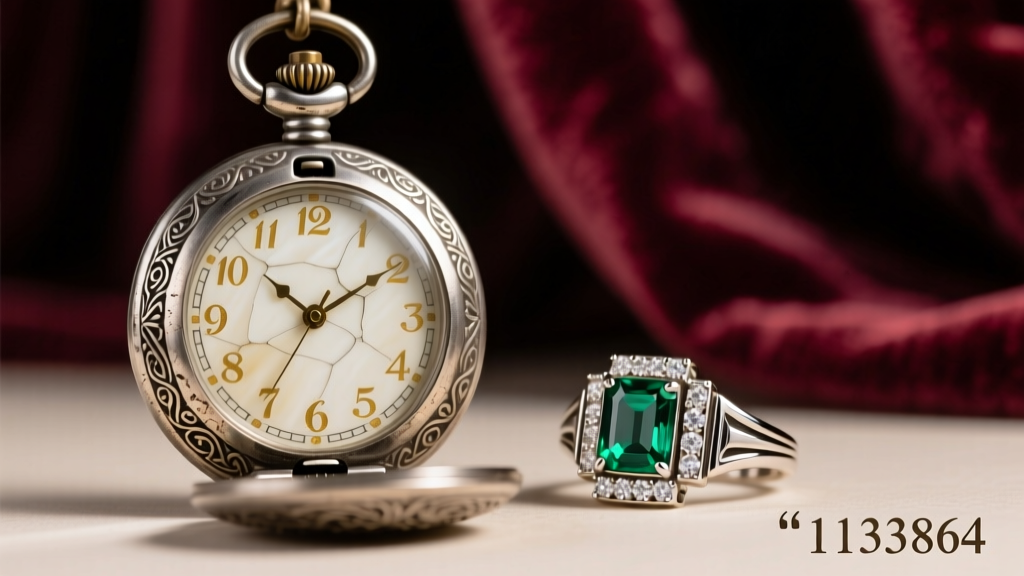
Lot 1133864: A Deep Technical and Historical Analysis of the 1972 Patek Philippe Ref. 3448 Perpetual Calendar in 18K Yellow Gold