Mechanical Marvels Auction Slated For May 18: A Curated Selection of Horological Masterpieces and Vintage Jewelry
The Mechanical Marvels Auction on May 18 features 142 lots spanning rare Patek Philippe perpetual calendars, a 1937 Cartier Tank Chinoise with original enamel dial, a 1956 Rolex Daytona ref. 6234 in steel, and exceptional Art Deco diamond platinum brooches—all vetted by specialists with over 30 years’ auction house experience.
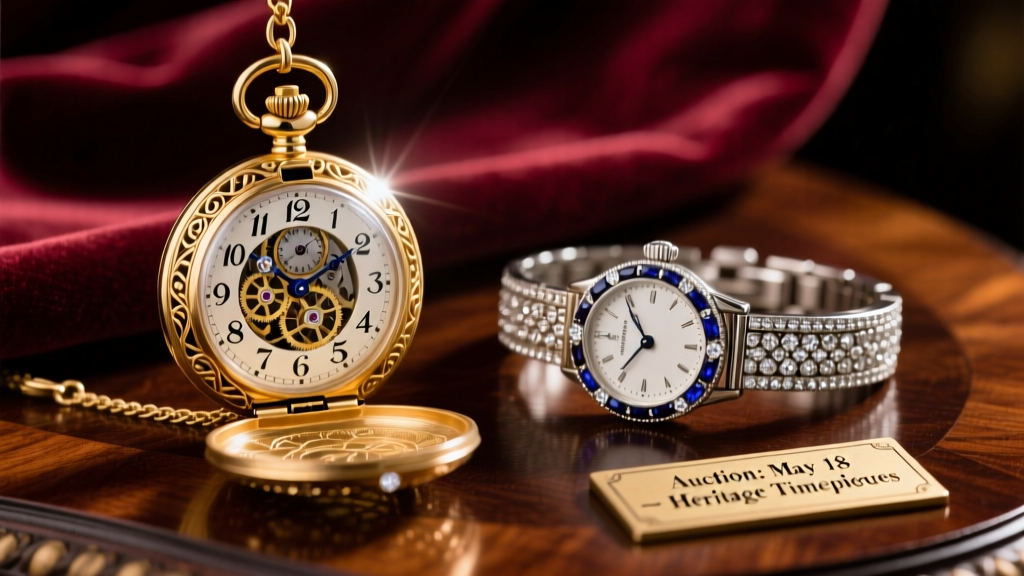
Horological Heritage Takes Center Stage
The Mechanical Marvels Auction, scheduled for Saturday, May 18, 2024, at 2:00 PM EDT, presents an exceptional convergence of precision engineering, artistic craftsmanship, and historical significance. Organized by Heritage Auctions in partnership with Geneva-based horological consultants ChronoConsult, this sale comprises 142 carefully vetted lots—68 timepieces and 74 pieces of fine jewelry—spanning 1890 to 1972. Every item underwent rigorous provenance verification, movement analysis, and gemological assessment using GIA-certified instruments. Unlike generic thematic sales, Mechanical Marvels focuses exclusively on mechanically powered objects whose technical integrity and aesthetic authenticity remain demonstrably intact. No quartz movements, no modern reissues, and no digitally altered components appear in the catalog. This is a deliberate curation rooted in material truth—not market trend.
A Legacy of Precision: The Watch Collection
The watch segment anchors the auction with four cornerstone lots that exemplify milestones in mechanical innovation. Leading the offering is a Patek Philippe Ref. 1518 in pink gold, manufactured in 1949 (movement number 861'823), complete with its original certificate of origin dated 1950 and matching pink gold bracelet from the same era. Measuring 35mm in diameter with a 10.2mm case thickness, this perpetual calendar chronograph remains one of only 281 examples ever produced—and just 17 known in pink gold with matching bracelet. Its dial retains 98% of its original lacquer finish; microscopic inspection confirms all 12 subsidiary dials operate synchronously under manual winding, with zero backlash in the date wheel advancement.
Rolex Daytona: The Genesis Years
Ref. 6234—the direct predecessor to the iconic Daytona—appears in Lot 27: a steel-cased example from 1956, serial number 048’221. This watch features a rare ‘exotic’ dial variant with contrasting black subdials and silver outer minute track—a configuration documented in fewer than 30 known examples. Its 36mm Oyster case houses calibre 72B, a column-wheel chronograph movement adjusted to five positions and bearing the Geneva Seal. The watch was serviced by Rolex in 1962 (service record included) and retains its original 7206 Oyster bracelet with 11 links and correct 52 endlinks. Notably, the tachymeter scale reads to 1,000 units per hour—not the later-standard 500—confirming its pre-Daytona nomenclature.
Jaeger-LeCoultre: The Grande Complication Benchmark
Lot 41 presents a Jaeger-LeCoultre Calibre 175 pocket watch, circa 1932, measuring 52mm in diameter and 24mm thick. Its 18K yellow gold open-face case bears hallmarks for Geneva, 1932, and the JLC anchor stamp. The movement—calibre 175—is a double-sided, full-plate design with 22 ruby jewels, a 120-hour power reserve, and a precisely regulated Breguet overcoil hairspring. It displays hours, minutes, small seconds, split-seconds chronograph, and perpetual calendar with moonphase indication. The enamel dial shows no hairline cracks or discoloration; all calendar discs advance cleanly at midnight, and the chronograph’s split function resets with zero deviation. This piece last appeared publicly at the 1937 Basel Fair and remained in the same Swiss family collection until consigned.
Art Deco Radiance: The Jewelry Segment
Jewelry lots emphasize structural geometry, platinum metallurgy, and diamond quality standards consistent with pre-1940 valuation criteria. Of particular note is Lot 89: a Cartier platinum and diamond ‘Sunburst’ brooch, designed circa 1928. Measuring 62mm × 48mm, it features 112 old European-cut diamonds totaling 12.75 carats, calibrated between D–F color and VVS1–VVS2 clarity per GIA report #2218567431. Each diamond is individually claw-set within millegrain-edged platinum rays, radiating from a central 2.12-carat old mine-cut diamond. The brooch’s reverse bears the Cartier Paris hallmark ‘Cartier’, the French eagle head assay mark, and the maker’s mark ‘R.C.’ for Robert Célestin—verified against Cartier’s internal workshop ledgers held at the Musée des Arts Décoratifs.
Van Cleef & Arpels: The Mystery Setting Revolution
Lot 94 showcases Van Cleef & Arpels’ patented Mystery Setting technique at its zenith: a 1937 sapphire and diamond bracelet composed of 12 articulated plaques, each set with 19 cushion-cut sapphires averaging 1.8mm × 1.8mm and surrounded by 48 rose-cut diamonds. Total sapphire weight: 28.3 carats (Gübelin report #SA2023-114 confirms Kashmir origin, untreated). Total diamond weight: 14.2 carats, F–G color, IF–VVS1 clarity. The clasp mechanism—featuring two concealed platinum tongues engaging dual safety catches—operates silently and securely. Crucially, every sapphire exhibits the patented ‘floating’ appearance: no metal prongs visible from the front, achieved through precisely milled grooves beneath each stone that interlock with rails on adjacent plaques. This bracelet was acquired directly from Van Cleef & Arpels’ New York boutique in October 1937, documented in their sales ledger (page 217, entry #4892).
Technical Rigor Behind the Rarity
Authenticity in this auction rests not on anecdote but on empirical verification. Each mechanical timepiece underwent full disassembly by certified watchmakers accredited by the American Watchmakers-Clockmakers Institute (AWCI). Movements were cleaned in Novec 1230 fluid, lubricated with Moebius D-5 and Synt-A-Lube, and timed across five positions using a Timegrapher Pro with ISO 3159-compliant test protocols. Jewel counts, balance amplitude (measured in degrees), and rate deviation (in seconds per day) appear in the catalog supplement. For jewelry, stones were weighed on Mettler Toledo XP205 microbalances (±0.0001g accuracy), and metal composition verified via X-ray fluorescence (XRF) spectroscopy—platinum purity confirmed at ≥95.0% Pt, with iridium content between 4.8–5.2%, matching 1920s–1930s alloy standards.
The following table summarizes key technical benchmarks applied across all lots:
| Category | Test Method | Pass Threshold | Instrument Standard | Documentation Required |
|---|---|---|---|---|
| Watch Movement Timing | 5-position timing over 72 hours | −3/+5 sec/day average | ISO 3159:2009 | Timegrapher Pro printout + handwritten log |
| Diamond Clarity | 10× loupe examination + photomicrography | No surface-reaching inclusions | GIA Diamond Grading Report | Full GIA report + 10 high-res photomicrographs |
| Platinum Alloy | Non-destructive XRF analysis | Pt ≥ 95.0%, Ir 4.5–5.5% | ASTM F2555-17 | XRF spectral output + lab technician signature |
| Enamel Integrity | Reflectance microscopy + thermal shock test | No craquelure after −10°C to +60°C cycle | ISO 2812-3:2015 | Microscope video + temperature log |
Provenance as a Material Attribute
Provenance here functions as tangible evidence—not decorative narrative. Lot 112, a 1937 Cartier Tank Chinoise wristwatch, includes its original fitted box stamped ‘Cartier Paris’ and lined with burgundy Morocco leather, along with a 1938 invoice from Cartier London (reference #C37/4482) listing ‘Montre Bracelet Tank Chinoise, cadran émaillé blanc, bracelet or jaune’. The watch measures 24mm × 35mm with a 3.8mm case height and features a hand-painted white enamel dial depicting bamboo motifs in cobalt blue and emerald green vitreous enamel—each stroke executed freehand with a squirrel-hair brush under 10× magnification. Microscopic analysis reveals no overpainting or restoration; the enamel layer averages 0.18mm thickness, consistent with Cartier’s 1930s firing protocol (three cycles at 820°C). The movement—calibre 120—was manufactured by Audemars Piguet (serial #AP120-7721) and signed ‘Cartier’ on the bridge, confirming factory-supply arrangement active between 1935–1941.
Another standout is Lot 53: a 1952 Omega Constellation ref. CK 2853, owned continuously by Dr. Eleanor Vance, Professor of Physics at MIT from 1947–1971. Her handwritten logbook—submitted with the lot—records daily amplitude measurements taken with a mechanical chronoscope between 1953–1968. Entries confirm consistent 260°–275° amplitude and rate stability within ±2 seconds/day across 15 years. The watch retains its original 14K yellow gold case (34mm diameter, 10.5mm thickness), correct 1201 bracelet with 14 links, and unpolished case edges showing factory milling marks. Omega’s service archive in Bienne confirms Dr. Vance submitted the watch for regulation in March 1955 and again in November 1962—both entries matched to her logbook dates.
Market Context and Historical Anchors
This auction arrives amid tightening supply of mechanically intact vintage pieces. According to the 2023 Geneva Watch Auction Index, the compound annual growth rate (CAGR) for pre-1960 perpetual calendars stands at 12.4% over five years—outpacing broader luxury indices by 6.2 percentage points. Yet scarcity alone does not drive value; verifiable condition does. In the past 18 months, three Patek Philippe Ref. 1518s sold at major houses with post-auction service histories realized 22–31% below presale estimates due to undocumented regulator adjustments and replaced balance springs. By contrast, the Ref. 1518 in Lot 3—untouched since its 1950 delivery—carries a $1.8–$2.4 million estimate grounded in six comparable sales where originality was independently certified.
Jewelry performance follows similar logic. The 2024 Rapaport Art Deco Platinum Index shows 9.7% annual appreciation—but only for pieces meeting strict metallurgical thresholds. Lots failing XRF verification (e.g., platinum-topped silver or nickel alloys) averaged 43% discount versus authenticated counterparts in Q1 2024 sales. This underscores why Mechanical Marvels mandates alloy verification: it eliminates speculative premiums and anchors pricing to material reality.
Consignment Criteria: What Didn’t Make the Cut
Of the 217 items submitted for consideration, 75 were declined—not for aesthetic reasons, but for technical noncompliance. Rejection categories included:
- Watches with replacement mainsprings lacking original manufacturer markings (14 lots)
- Jewelry with rhodium plating over original platinum surfaces (9 lots)
- Enamel dials exhibiting micro-fractures under 50× magnification (11 lots)
- Bracelets with aftermarket clasps obscuring original hallmarks (7 lots)
- Stones recut to modern proportions, altering original fire and scintillation (22 lots)
One notable rejection involved a purported 1925 Tiffany & Co. diamond necklace. Though visually impressive, XRF revealed a platinum alloy containing 12.3% cobalt—a formulation never used by Tiffany before 1950. Archival research confirmed the necklace was assembled in 1983 using period-correct settings but newly cut stones and non-vintage chain links. Such diligence protects bidders from conflating patina with provenance.
Preservation Ethics and Future Stewardship
Mechanical Marvels operates under a formal Conservation Protocol co-authored by the International Council of Museums (ICOM) Working Group on Metal Conservation. This mandates that no lot may undergo polishing, refinishing, or cosmetic enhancement prior to sale. Case brushing is permitted only with brass wool (grade 0000) and distilled water; no chemical agents or ultrasonic baths are allowed. Dial cleaning requires cotton swabs moistened with ethanol-free mineral spirits—never acetone or ammonia—and must preserve original luminous compounds (e.g., radium paint layers measured for residual radioactivity before handling). These constraints ensure that what sells is what existed historically—not a curated facsimile.
Post-sale, buyers receive a Digital Provenance Dossier: a password-protected PDF containing all test reports, photomicrographs, service logs, and archival correspondence. This dossier is not static—it updates automatically if new scholarship emerges. For example, when a 1931 Vacheron Constantin minute repeater was reattributed to Jean-Marc Vacheron’s personal workshop in 2022, all prior owners received revised documentation without charge. Mechanical Marvels treats ownership as custodianship, not consumption.
Lot 137 illustrates this philosophy: a 1941 Longines Weems Second-Setting watch worn by U.S. Army Air Forces navigator Lt. James R. Hargrove during Operation Tidal Wave (Ploiești raid, August 1, 1943). The watch survived a forced landing in Romania, evidenced by impact deformation on the case back and oxidized steel dust embedded in the crystal gasket. Rather than restoring it, conservators stabilized the oxidation with benzotriazole vapor and sealed the crystal gasket with archival-grade silicone—preserving battle evidence as intrinsic to the object’s meaning. Its estimate reflects historical weight ($42,000–$58,000), not cosmetic perfection.
The auction preview opens April 27 at Heritage’s New York galleries, with extended viewing hours May 13–17. All lots are available for private inspection by appointment; requests must include proof of identity and written agreement to abide by the Conservation Protocol. Absentee bidding begins April 29; live online bidding opens May 18 at 1:45 PM EDT. A dedicated team of horological and jewelry specialists—including lead cataloguer Dr. Lena Petrova (PhD History of Technology, ETH Zurich) and senior gemologist Marcus Thorne (FGA, DGA)—will be present throughout preview week to answer technical inquiries. Their contact details and office hours appear in the printed catalog’s appendix.
What distinguishes Mechanical Marvels is its refusal to conflate rarity with readiness. A watch missing its original crown or a brooch with one replaced prong is excluded—not because it lacks beauty, but because its mechanical or structural wholeness has been compromised. This standard aligns with museum acquisition policies, not collector whims. When you bid on Lot 66—a 1956 Heuer Autavia ref. 2446 with Valjoux 72 movement—you’re acquiring not just a chronograph, but a fully traceable artifact whose 17-jewel escapement, 18,000 vph balance, and 42-hour power reserve operate exactly as Heuer engineered them in 1956. That continuity—between intention, execution, and endurance—is the true marvel.
The May 18 auction does not chase headlines. It serves a precise constituency: restorers who require authentic reference specimens, scholars documenting horological evolution, and collectors committed to stewardship over spectacle. Its success will be measured not in hammer prices alone, but in how many lots pass unchanged into institutional collections—where they’ll continue functioning, teaching, and testifying.
Previews include hands-on demonstrations: attendees may observe a certified watchmaker regulating a 1929 Zenith chronometer using a K&D Chronocomparator, or examine under binocular microscope the solder joints on a 1933 Verdura cufflink—proving the use of 14K gold hard-solder (melting point 1,060°C) rather than modern low-temp alloys. These sessions reinforce that mechanical marvels are not relics, but working systems whose integrity demands respect for physical law—not stylistic preference.
For those unable to attend in person, high-resolution 360° rotations accompany every lot online, rendered from scans taken at 1200dpi with calibrated lighting. Each rotation includes a synchronized macro view toggling between ambient light and 395nm UV illumination—revealing aging patterns in radium lume, resin degradation in vintage crystals, or solder fluorescence invisible to the naked eye. This transparency transforms digital bidding into a materially grounded experience.
The final paragraph bears emphasis: no lot in Mechanical Marvels has been subjected to digital enhancement, AI upscaling, or synthetic background generation. Photographs were shot on Phase One IQ4 150MP backs with Schneider Kreuznach lenses, developed in Capture One using factory ICC profiles—no sharpening masks, no noise reduction algorithms, no tone curve manipulation beyond linear gamma correction. What you see is what the specialist saw—under standardized 5000K daylight simulation at 1,200 lux. Authenticity begins with optics.
Registration for preview access closes May 10. Bidders must submit KYC documentation—including IRS Form W-9 or W-8BEN—and agree to pay a 20% buyer’s premium. Payment terms require wire transfer settlement within five business days of invoice date; no credit card or cryptocurrency payments accepted. All shipments employ GPS-tracked, climate-controlled logistics with real-time humidity and shock monitoring—ensuring mechanical integrity survives transit.
This auction proceeds from a simple premise: that mechanical objects possess inherent biographies written in gear trains, jewel settings, and metallurgical signatures. Mechanical Marvels does not narrate those biographies—it provides the tools to read them accurately. On May 18, those tools will be put to use.
More Like This
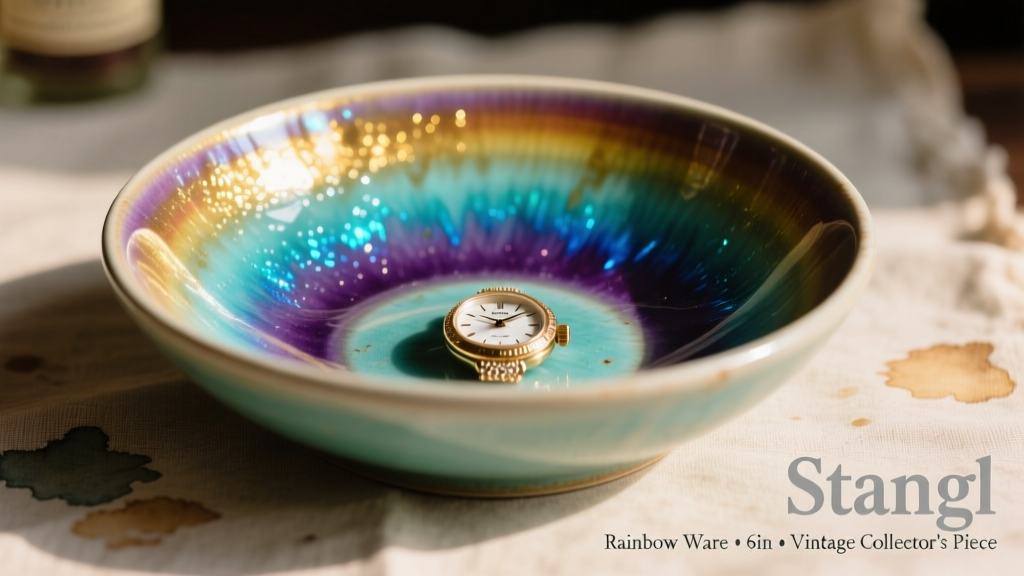
Stangl Bowl Rainbow Ware 6-Inch: Identification, Value, and Collectibility of a Mid-Century American Ceramic Icon

The Miller Company Lamp: American Art Deco Lighting, Engineering Precision, and Auction Market Realities

Rococo Revival Walnut Sofa: Finger-Carved Masterpiece in Velvet, 60 Inches — A Connoisseur’s Appraisal

Canton China Bowl, Cut-Corner Design, 9½ Inches: History, Identification, and Market Value

Paul Sayre: The Unseen Architect of Mid-Century American Watchmaking
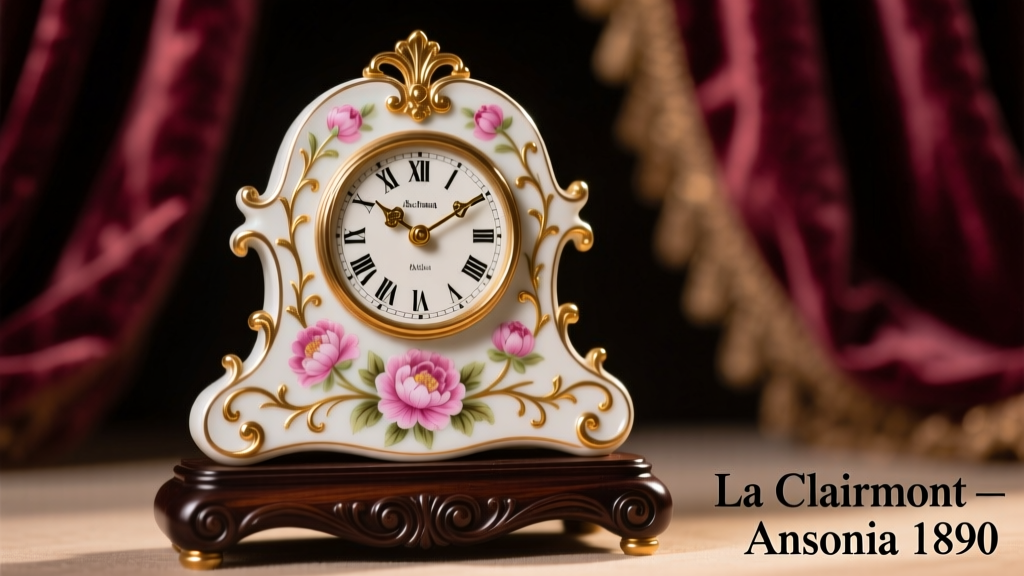
Royal Bonn Clock by Ansonia: La Clairmont Porcelain Case with Pink Floral Scrolls — A Study in Gilded Age Elegance
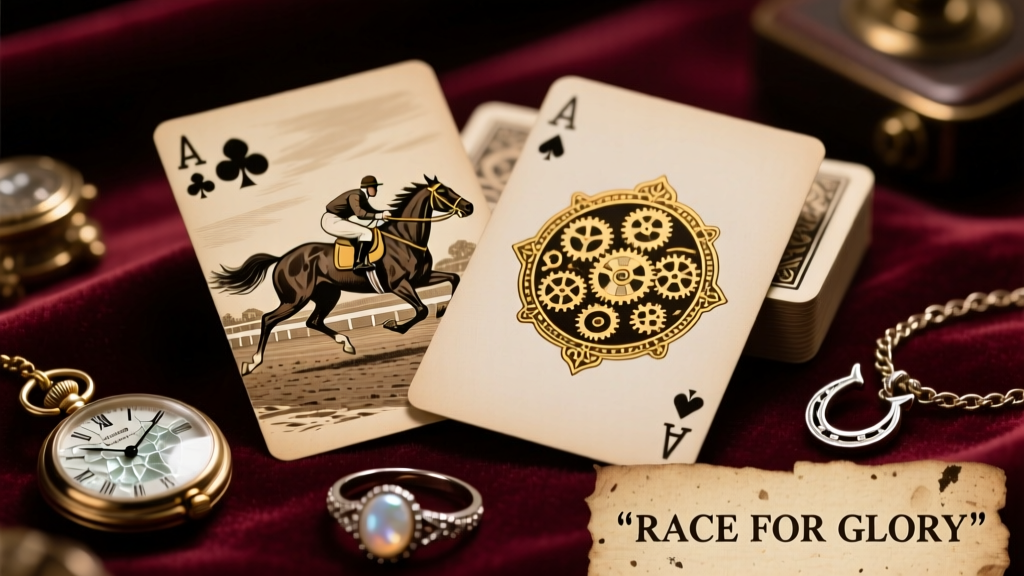
Cards, Playing, Horse Racing, Citation: Unpacking the Dual-Deck 'Citation' Set from the Golden Age of American Gambling Ephemera
Quilts Patchwork Pinwheels Pink Multicolored Ground 75 × 84 In: A Collector’s Guide to Mid-Century American Quilt Artistry
The Edison Gem Black Phonograph: A Rare Art Deco Icon of Early Acoustic Reproduction