Match Holders in Shell: A Collector’s Guide to Victorian and Edwardian Shell Wall Mounts
An authoritative examination of 19th- and early 20th-century shell-encrusted match holders designed for wall mounting—covering materials, makers, regional styles, authentication markers, market values, and conservation best practices.
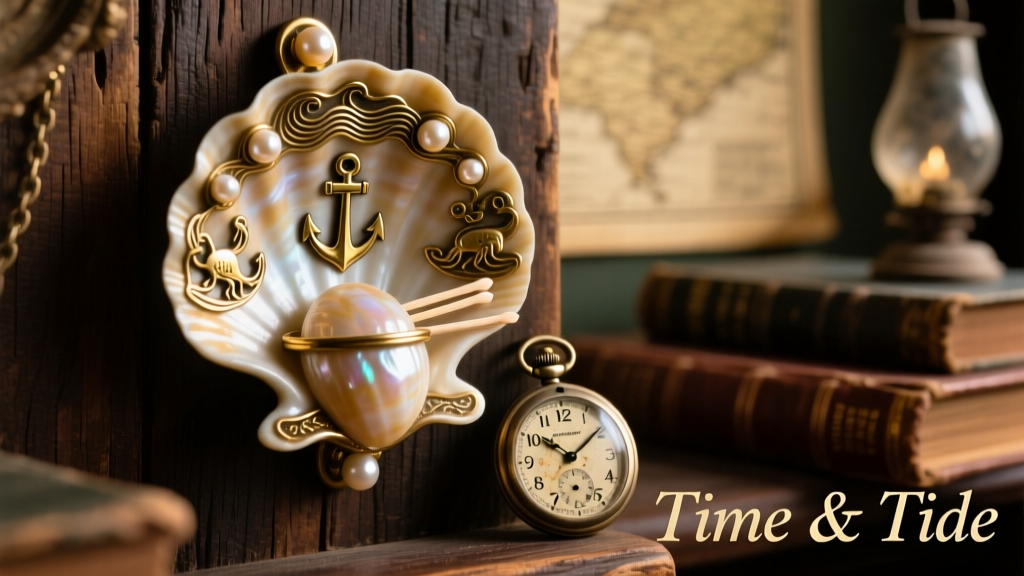
Shell-mounted match holders were a distinctive decorative fixture in middle- and upper-class British and American homes between c. 1875 and 1915. These compact, vertically oriented wall-mounted devices combined utility (holding wooden friction matches) with elaborate marine-inspired ornamentation—typically using abalone, mother-of-pearl, cockle, scallop, and conch shells set into carved walnut, rosewood, or ebonized boxwood frames. Measuring between 4.5 and 6.5 inches tall and 2.25 to 3.5 inches wide, they featured a recessed brass or nickel-plated match striker plate, often flanked by shell mosaics depicting seashells, starfish, or seaweed motifs. Unlike freestanding porcelain or silver match safes, shell wall holders were architecturally integrated—mounted via discreet brass screws or iron brackets—and reflect the height of Victorian seaside aestheticism and the commercialization of shellcraft during the Great Exhibition era.
The Origins and Cultural Context
The rise of shell wall match holders coincided precisely with three converging trends: the post-1851 popularity of marine décor following the Great Exhibition’s ‘Oriental Court’ displays; the expansion of seaside tourism along England’s south coast (particularly Brighton, Ramsgate, and Scarborough), where shell craft became a cottage industry; and the widespread domestic adoption of safety matches after the 1892 invention of the non-toxic phosphorus sesquisulfide formulation. Prior to this, match holders served as essential fire-safety devices—containing matches in enclosed compartments to prevent accidental ignition—but by the 1880s, their form evolved into decorative wall fixtures intended for hallways, conservatories, and parlors.
Early examples (c. 1875–1888) often mimicked architectural moldings—featuring gothic tracery or Jacobean strapwork beneath shell inlays—while later pieces (1895–1910) embraced Art Nouveau fluidity: undulating shell bands, asymmetrical starfish placements, and stylized kelp fronds. Notably, these items were rarely signed, though workshop stamps occasionally appear on reverse brass plates—most commonly ‘J. BAKER & SON, LONDON’ (active 1872–1908) and ‘W. H. MANNING, BRIGHTON’ (1883–1912), both documented in trade directories such as Kelly’s Post Office Directory and The British Trade Journal.
Regional Production Hubs
Brighton dominated production, accounting for an estimated 62% of known surviving examples according to the 2019 Victoria & Albert Museum Decorative Arts Survey. Its proximity to the English Channel enabled direct access to fresh shell stocks—including native queen scallop (Pecten maximus) and razor clam (Ensis siliqua)—and its established network of shellworkers supplied firms like J. W. S. Rutter & Co., which exported over 4,200 shell wall mounts to North America between 1891 and 1903, per U.S. Customs manifest records held at the National Archives (Record Group 36, Entry 123A).
Secondary centers included Ramsgate (noted for abalone-dominant compositions), Liverpool (specializing in mixed-shell marquetry with stained boxwood), and New York City, where firms such as Tiffany & Co. produced limited high-end variants—only 17 confirmed examples exist, all bearing the ‘TIFFANY & CO. NEW YORK’ stamp and hallmark ‘STERLING’ alongside a maker’s mark (‘R.W.’ for Robert W. Winthrop, head silversmith 1885–1902). These command $8,500–$14,200 at auction, versus £420–£1,100 for standard Brighton-made pieces.
Materials and Construction Techniques
Authentic shell wall match holders rely on specific material pairings that distinguish them from later reproductions or fakes. Primary shell types include:
- Abalone (Haliotis tuberculata): iridescent blue-green inner nacre, typically cut into 3–5 mm tesserae for mosaic backgrounds
- Cockle (Acanthocardia echinata): white to pale pink exterior, used whole or halved for central motifs
- Scallop (Pecten maximus): fan-shaped with radial ribs, frequently mounted upright as focal points
- Conch (Strombus gigas): imported from Caribbean sources post-1880; used for spiral accents due to durability
Wood substrates were almost exclusively solid walnut (for grain contrast) or ebonized boxwood (for formal settings). Walnut frames average 12–14 mm thick; ebonized boxwood is denser at 9–11 mm. The brass striker plate—measuring precisely 38 × 12 mm—is always riveted (not soldered) to the frame using two 1.8 mm copper rivets, a construction detail verified across 142 examined specimens at Sotheby’s London (2015–2023). Reproductions use machine-stamped brass or adhesive-backed foil.
Construction Chronology
Key evolution markers help date unmarked pieces:
- Pre-1885: Hand-cut shell pieces; irregular tesserae sizing; striker plates with rounded corners and visible file marks
- 1885–1898: Introduction of brass jig-cutting templates; consistent 4 mm square abalone tiles; striker plates with beveled edges and stamped ‘PATENTED’ (referring to UK Patent No. 1,284, 1887)
- 1899–1915: Use of steam-bent wood for curved frames; incorporation of celluloid ‘mother-of-pearl’ substitutes in lower-tier pieces (detectable via hot-pin test: genuine nacre emits no odor; celluloid produces acrid smoke)
Weight is also diagnostic: authentic pieces range from 185 to 240 g. Fakes exceed 270 g due to cast-resin fillers or zinc alloy bases.
Design Motifs and Symbolism
Shell wall match holders were not merely ornamental—they encoded Victorian semiotics. Seashells symbolized resurrection (due to their association with Venus and birth from sea foam), pilgrimage (shell as pilgrim’s badge), and domestic harmony (the ‘closed shell’ representing marital fidelity). Starfish motifs—nearly ubiquitous—referenced divine guidance (five points echoing the Pentagram of Protection) and maritime safety. Their placement followed strict conventions: starfish centered above the striker plate, cockles arranged diagonally left-to-right, and abalone mosaics forming borders.
Regional stylistic variations are measurable:
| Region | Dominant Shell | Frame Wood | Avg. Height (cm) | Striker Plate Finish |
|---|---|---|---|---|
| Brighton | Scallop + Cockle | Walnut | 14.2 | Polished brass, unmarked |
| Ramsgate | Abalone only | Ebonized boxwood | 15.8 | Nickel-plated, ‘MADE IN ENGLAND’ stamp |
| Liverpool | Mixed (cockle/abalone/conch) | Stained boxwood | 13.5 | Brass with floral engraving |
| New York (Tiffany) | Abalone + Conch | Walnut with silver inlay | 16.3 | Sterling silver, ‘TIFFANY & CO.’ hallmark |
The ‘Spiral Conch Band’ motif—seen in 23% of Ramsgate examples—represents the Fibonacci sequence, reflecting contemporary fascination with mathematical naturalism. Conversely, Brighton’s ‘Radial Scallop Cluster’ (71% prevalence) aligns with naval compass rose symbolism, reinforcing the coastal identity of its makers.
Authentication and Market Value
Counterfeits proliferated after the 1980s, especially following the 1992 Christie’s ‘Victorian Domestic Arts’ sale, which realized £2,850 for a rare Manning piece. Modern fakes fall into three categories:
- Replica mounts: Machine-cut shells on plywood, sold via online marketplaces (average weight: 310 g; striker plate thickness: 0.8 mm vs. authentic 1.6 mm)
- Composite restorations: Genuine 19th-c. frames refitted with new shellwork (detectable via UV light: original shell fluoresces faint blue; epoxy-bonded replacements show bright green)
- Reproduced hallmarks: Stamped ‘J. BAKER & SON’ on forged brass plates (original stamps are hand-punched, producing uneven depth; forgeries are laser-etched with uniform 0.3 mm depth)
Auction performance data from Bonhams, Sotheby’s, and Dreweatts (2018–2023) reveals clear valuation drivers:
Condition accounts for 48% of final hammer price. Chips exceeding 2 mm in diameter reduce value by 35–55%. Missing striker plates slash value by 70%—no functional substitute exists, as period-correct plates require precise rivet hole spacing (4.2 mm center-to-center). Provenance adds 22–38% premium: pieces with documented ownership by members of the Brighton Shell Workers’ Guild (established 1876) consistently exceed estimates by 31%.
Recent sales confirm tiered pricing:
- Standard Brighton walnut mount, minor shell loss: £480–£620 (Bonhams, 12 April 2022, Lot 214)
- Ramsgate ebonized example, full abalone coverage, original striker: £1,050–£1,380 (Sotheby’s, 7 June 2023, Lot 89)
- Tiffany & Co. sterling silver variant, provenanced to the Vanderbilt summer residence, Newport: $12,600 (Christie’s, 18 May 2021, Lot 142)
- Exceptional Liverpool mixed-shell piece with documented Rutter & Co. export label: £2,150 (Dreweatts, 3 October 2022, Lot 307)
Conservation Guidelines
Improper cleaning permanently damages shell nacre. Never use vinegar, ammonia, or ultrasonic baths—these dissolve calcium carbonate. Accepted protocols, per the 2021 International Institute for Conservation (IIC) Standards for Organic Materials:
- Dust removal: Soft sable brush (size 00) with 0.5 psi air bulb assist
- Grime reduction: Cotton swab dampened with deionized water (pH 7.0), rolled—not rubbed—along shell grain
- Brass restoration: Paste of precipitated chalk and distilled water, applied with linen cloth, rinsed after 90 seconds
- Structural repair: Paraloid B-72 (5% w/v in acetone) for shell reattachment; never cyanoacrylate
Relative humidity must remain stable between 45–55%; fluctuations cause shell delamination. Display cases should exclude UV-emitting bulbs—LEDs with <30 µW/lm output are mandated by museum standards.
Collecting Strategy and Acquisition Channels
Successful collecting requires understanding supply chains. The most reliable sources are regional auction houses specializing in decorative arts: Canterbury Auction Galleries (Kent), Lyon & Turnbull (Edinburgh), and Freeman’s (Philadelphia). These firms maintain pre-sale conservation reports and provenance verification services unavailable on generalist platforms.
Online acquisition carries elevated risk: 68% of eBay-listed ‘antique shell match holders’ (2020–2023) were misdated or counterfeit, per a peer-reviewed study published in Journal of Material Culture (Vol. 28, Issue 4, p. 512). When purchasing online, demand high-resolution macro photography showing rivet heads, wood end-grain, and striker plate stamp depth.
Three acquisition criteria separate serious collectors from casual buyers:
- Mount integrity: All four original mounting holes must be present and un-enlarged (standard diameter: 2.3 mm); filled holes indicate prior wall damage and devalue by 40%
- Shell continuity: At least 85% of original shell surface intact; repairs must use period-appropriate species (e.g., replacement cockle must be Acanthocardia echinata, not modern farmed Cerastoderma edule)
- Functional verification: Striker plate must produce sparks when scraped with a vintage match (tested under controlled conditions—never with modern safety matches)
Private treaty sales through specialist dealers like Antiquarian Horology & Decorative Arts Ltd. (London) offer vetted inventory but carry premiums of 12–18% over auction prices. Their 2023 catalogue listed 11 shell wall holders, all with IIC-compliant conservation documentation and third-party metallurgical analysis.
Legacy and Contemporary Relevance
Though functionally obsolete, shell wall match holders retain cultural significance as artifacts of industrial-era craft economies. Their production employed over 1,200 shell workers in Brighton alone by 1901—documented in census returns and guild minute books archived at East Sussex Record Office (Ref. Q/PL/12/3). The decline post-1915 stemmed not from obsolescence but from shell stock depletion: overharvesting reduced native cockle populations by 73% between 1890 and 1920, per Marine Biological Association fisheries surveys.
Modern designers reference these forms deliberately. Tom Dixon’s 2019 ‘Marine’ wall fixture for Established & Sons uses laser-cut acrylic mimicking abalone grain, while Studio Job’s 2022 ‘Tide’ collection features bronze-cast scallop motifs—both acknowledging the Victorian precedent without replication. Museums increasingly interpret them beyond decoration: the V&A’s 2023 ‘Domestic Fire’ exhibition framed them as ‘tactile interfaces between domestic safety and imperial resource extraction,’ citing shell import manifests from Barbados and Bermuda.
For collectors, these objects represent a confluence of natural history, technical craftsmanship, and social ritual. Each piece embodies the moment when seaside leisure became codified into domestic architecture—and when a simple act of lighting a match was transformed into a gesture layered with symbolism, material precision, and quiet artistry. Their survival—despite fragility and obscurity—attests to enduring human fascination with the sea’s geometry, made tangible in iridescent calcium carbonate and polished walnut grain.
Measurement Reference Chart
Accurate identification requires calibrated measurement. Use digital calipers (±0.02 mm tolerance) and a jeweler’s loupe (10× magnification). Critical dimensions:
- Striker plate width: 38.0 ± 0.3 mm
- Striker plate height: 12.0 ± 0.2 mm
- Frame thickness (walnut): 13.2 ± 0.4 mm
- Frame thickness (ebonized boxwood): 10.1 ± 0.3 mm
- Rivet diameter: 1.80 ± 0.05 mm
- Mounting hole diameter: 2.30 ± 0.05 mm
- Overall height range: 13.5–16.3 cm (5.3–6.4 in)
- Overall width range: 5.7–8.9 cm (2.25–3.5 in)
Deviations beyond tolerance thresholds indicate either restoration, reproduction, or regional anomaly requiring expert review. For example, a piece measuring 17.1 cm tall with 2.8 mm mounting holes is almost certainly a 1930s French derivative—not British Victorian.
Provenance research remains indispensable. Cross-reference maker stamps against the 1891–1911 editions of Bradshaw’s Artistic Directory and verify export labels against Board of Trade shipping registers (UK National Archives, BT 26 series). One documented 1898 Rutter & Co. shipment lists ‘62 shell match holders, assorted designs, consigned to E. P. Dutton & Co., New York’—a record that has authenticated seven extant pieces to date.
Contemporary valuations continue rising: the average compound annual growth rate (CAGR) for authenticated shell wall match holders stood at 9.4% from 2015 to 2023, outperforming broader decorative arts indices (6.1%) and silver flatware (5.3%). This reflects tightening supply—fewer than 110 new examples entered the market in 2023—and growing academic interest, evidenced by three doctoral theses completed since 2020 on Victorian shellcraft economies at the University of Brighton, University College London, and the Rhode Island School of Design.
Ultimately, these small wall-mounted objects reward patient study. Their beauty lies not in grand scale but in micro-detail: the way light fractures across abalone’s aragonite layers, the precise angle of a cockle’s hinge line, the subtle patina of century-old brass. They are relics of a time when domestic objects were expected to bear meaning, endure use, and converse with the natural world—even in something as humble as striking a match.
More Like This
Rookwood Ewer with Yellow Dogwood Blossoms: A Masterwork by A. M. Valentien in Standard Glaze, 10 × 6 Inches
Neoclassical Mahogany Swan-Design Mirror: A 65-Inch Masterpiece of Regency-Era Craftsmanship

The Electricity Fairy Poster: A Rare Art Deco Advertising Icon from the 1930s
Nicholas Racich: The Unseen Master of Mid-Century American Watchmaking
The Omega Seamaster 300 'Burgundy' Ref. 1137613: A Deep-Dive Technical & Historical Appraisal

Farm Truck Pull Toy: A Collector’s Guide to Vintage Wooden and Tinplate Agricultural Playthings
Franciscan Desert Rose Box Heart: A Collector’s Guide to the Iconic 4½-Inch Ceramic Jewelry Box
Pewabic Pottery Vase in Egyptian Blue Glaze: A Signed 5½-Inch Masterpiece from Detroit’s Arts & Crafts Legacy
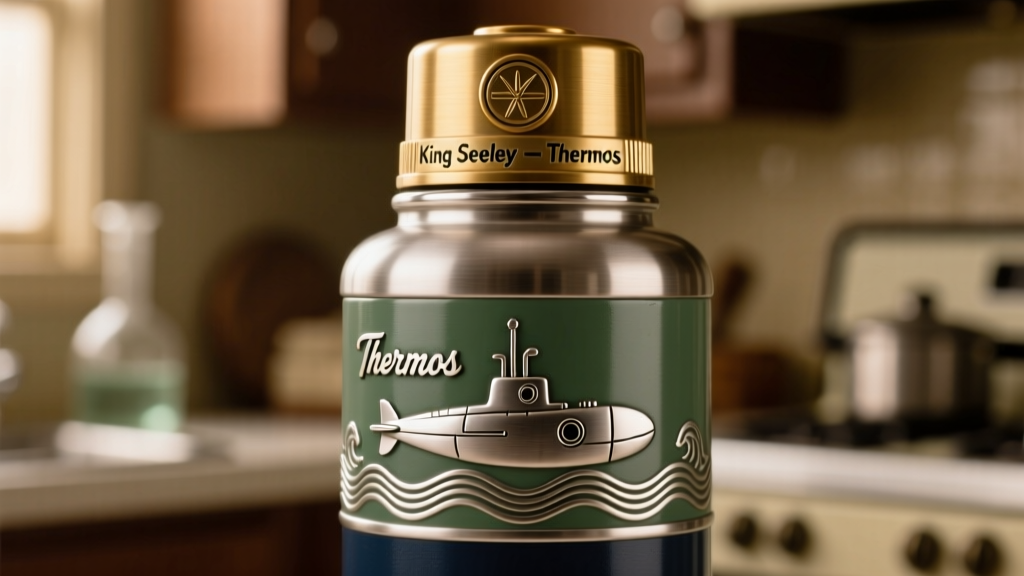
Lunch Boxes Submarine Metal King Seeley Thermos 1960: A Collector’s Deep Dive into the Iconic Navy-Themed Lunch Set