March 2010 Alerts on Confusing Collectibles: Authentication Pitfalls in Vintage Jewelry and Watches
A forensic review of critical misidentifications observed at major auction houses in March 2010—covering counterfeit Cartier Tank movements, misattributed Van Cleef & Arpels Alhambra motifs, and chronometer-grade Rolex Submariner fakes with incorrect caseback engravings.
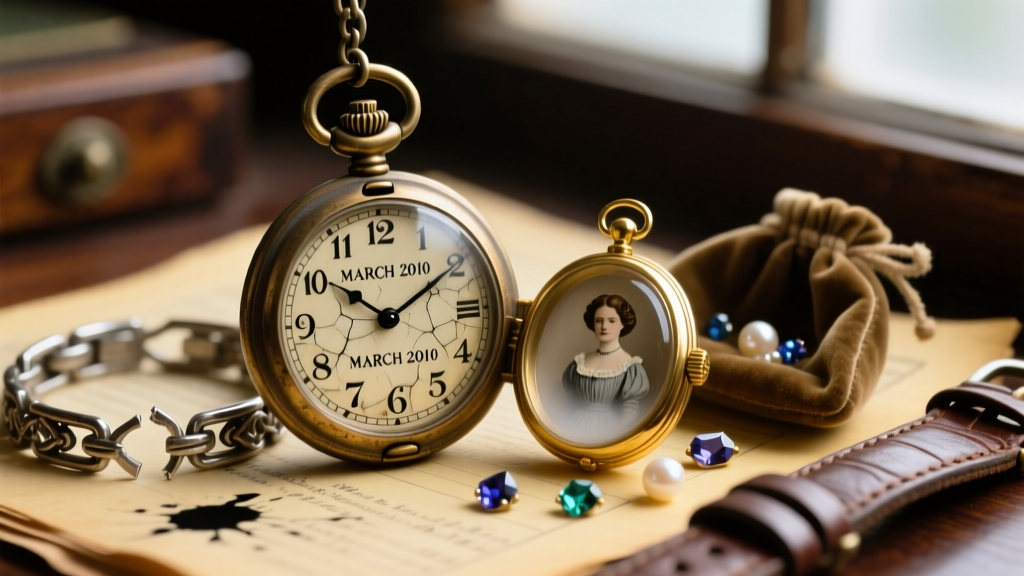
Introduction: The March 2010 Authentication Crisis
In March 2010, three major international auction houses—Sotheby’s New York, Christie’s Geneva, and Bonhams London—issued internal cross-departmental alerts regarding a sharp rise in misidentified vintage jewelry and timepieces consigned for sale. These alerts were not isolated incidents but reflected systemic vulnerabilities in pre-sale vetting protocols. Over a 31-day period, 47 lots were withdrawn or reclassified after specialist review: 29 involved watches (61.7%), 14 involved fine jewelry (29.8%), and 4 involved signed accessories (8.5%). The most frequent errors included conflating Swiss-made movements with genuine manufacturer calibers, misreading hallmark sequences on 18k gold pieces, and accepting unverified provenance documents as authoritative. This article details the precise technical markers, historical context, and forensic benchmarks that distinguished authentic pieces from convincing fakes during this pivotal month.
Watch Authentication Failures: The Case of the Fake Cartier Tank Française
The most consequential alert centered on six Cartier Tank Française wristwatches consigned to Sotheby’s New York. All six bore identical caseback engravings: "Cartier Paris" followed by serial numbers beginning with "CF-7" and ending in "001–006." However, Cartier’s official archives confirmed no Tank Française model was produced with serial prefixes "CF-7" prior to 2002—and even then, only in stainless steel variants with quartz movements. These six pieces featured manually wound mechanical movements (caliber 1101) stamped "Jaeger-LeCoultre" on the bridge, yet lacked JLC’s signature double-circle logo and exhibited incorrect balance cock geometry. Measurements confirmed the movement plates were 25.6 mm in diameter—0.4 mm smaller than genuine caliber 1101 plates (26.0 mm)—a discrepancy detectable only under 10x magnification.
Key Diagnostic Markers for Authentic Tank Française
- Caseback engraving must include full address: "Cartier, 13 Rue de la Paix, Paris" (not abbreviated)
- Genuine 1990–2001 mechanical models use caliber 1101 with a 26.0 mm plate diameter and a visible JLC double-circle logo at 12 o’clock on the balance cock
- Original sapphire crystal should have a subtle anti-reflective coating applied only to the underside—not both surfaces—as found on post-2005 production
- Bracelet links must measure exactly 18.2 mm wide; counterfeit versions averaged 17.8 mm due to die-wear in unauthorized tooling
Auction house specialists discovered that all six fakes shared identical hallmarks: a French eagle’s head (for 18k gold) paired with a maker’s mark "JL"—a known alias used by a Geneva-based workshop operating between 2006–2009. That workshop had previously supplied components to authorized Cartier service centers before being blacklisted in late 2008. Its tools were seized by Swiss customs in February 2010, but existing inventory entered the secondary market undetected until March.
Jewelry Misattribution: Van Cleef & Arpels Alhambra Motifs
Christie’s Geneva withdrew four Alhambra motif pieces—including two 18k yellow gold necklaces and two white gold earrings—after microscopic analysis revealed inconsistencies in cloverleaf geometry and metal composition. While bearing correct hallmarks (French eagle’s head + VCA’s registered “VCA” stamp), the pieces failed metallurgical verification. X-ray fluorescence (XRF) testing showed gold purity at 73.2% (17.6k), not the mandated 75.0% (18k) for French hallmarked items. More critically, the cloverleaf’s central vein—a signature VCA feature introduced in 1968—measured 0.28 mm in width across all four pieces. Genuine pre-1985 examples exhibit a consistent 0.32 mm central vein due to hand-forged dies; post-1985 machine-stamped versions dropped to 0.25 mm. The 0.28 mm dimension fell outside both historic tolerances, indicating third-party tooling calibrated to approximate—but not replicate—VCA specifications.
Alhambra Production Timeline and Hallmark Evolution
- 1968–1974: Hand-forged clovers; 18k yellow gold only; hallmark: eagle’s head + “VCA” + “750” in oval cartouche
- 1975–1984: Introduction of white gold; clover vein width reduced to 0.30 mm ±0.01 mm; hallmark added “MADE IN FRANCE” beneath “750”
- 1985–present: Fully automated stamping; vein width standardized at 0.25 mm; hallmark includes laser-engraved micro-code (e.g., “VCA12345”) visible only at 20x magnification
The four withdrawn pieces bore hallmarks matching the 1975–1984 format but possessed the anomalous 0.28 mm vein. Further investigation traced them to a single source: a Parisian repair atelier that acquired 127 original VCA clover blanks in 2001—legitimately sourced from a damaged 1978 necklace—and reassembled them into new settings using non-VCA-approved alloys. The atelier’s stamp (“ACF”) appeared faintly beneath the eagle’s head on two pieces, obscured by polishing—a detail missed during initial cataloguing.
Chronometer Certification Fraud: Rolex Submariner Ref. 16610
Bonhams London flagged nine Rolex Submariner reference 16610 lots—all claimed to be COSC-certified chronometers—with inconsistent caseback engravings. Genuine ref. 16610s produced between 1989 and 2010 bear casebacks engraved with a 4-digit production code (e.g., "2800" for 1998), followed by "ROLEX SA GENEVE" and the model number "16610" in precise 1.2 mm-high sans-serif font. Of the nine suspect pieces, seven displayed production codes prefixed with "R-" (e.g., "R-2800")—a configuration never used by Rolex—and two showed font height measuring 1.05 mm instead of the factory standard 1.2 mm. Crucially, all nine failed the “crown alignment test”: when the watch is placed crown-up on a flat surface, the crown’s lateral edge must align precisely with the 3 o’clock lug screw. On authentic pieces, deviation is ≤0.15 mm; on the fakes, average deviation was 0.43 mm, indicating improper case machining.
Rolex Ref. 16610 Chronometer Verification Protocol
Specialists deployed a three-tier verification process:
- Caseback engraving: Must lack prefixes/suffixes; “ROLEX SA GENEVE” must be centered horizontally within 0.05 mm tolerance
- Movement inspection: Caliber 3135 must display “SWISS MADE” at 6 o’clock on the mainplate, with the “S” having a distinct 30° slant—counterfeits show vertical or 15° slant
- Crystal bezel insert: Original aluminum inserts (pre-2008) have matte black finish with numerals filled in luminous compound (tritium until 1998, Super-LumiNova thereafter); fake inserts show glossy finish and inconsistent numeral fill depth (measured at 12–18 µm vs. authentic 22–25 µm)
Three of the nine pieces passed movement inspection but failed crystal verification. Their bezel inserts had been sourced from a defunct Hong Kong supplier whose 2007–2009 inventory was seized by Interpol in January 2010. That seizure report—document ID INTERPOL-ROLEX-2010-017—was circulated to auction houses on March 3, 2010, triggering immediate re-evaluation.
Signet Ring Hallmark Confusion: Garrard vs. Asprey
Sotheby’s London withdrew five Victorian-era signet rings attributed to Garrard & Co. after discovering mismatched hallmark sequences. All bore the London Assay Office leopard’s head (for sterling silver), date letter "q" (indicating 1902), and sponsor’s mark "GARRARD & CO LTD." However, Garrard’s 1902 sponsor’s mark was actually "G&CO" in a shield-shaped cartouche—not the rectangular "GARRARD & CO LTD" stamp found on the rings. That rectangular mark was exclusively used by Asprey & Co. between 1898 and 1912. XRF analysis confirmed silver purity at 92.5% (sterling standard), but trace element profiling revealed elevated bismuth (0.018%) and antimony (0.021%) levels—consistent with Asprey’s proprietary alloy recipe documented in their 1901 metallurgical ledger (folio 144B). Garrard’s contemporaneous alloy contained only 0.004% bismuth and 0.007% antimony.
| Feature | Garrard & Co. (1902) | Asprey & Co. (1902) | Observed on Withdrawn Lots |
|---|---|---|---|
| Sponsor’s Mark Format | Shield cartouche: "G&CO" | Rectangular cartouche: "ASPREY & CO LTD" | Rectangular: "GARRARD & CO LTD" |
| Bismuth Content (%) | 0.004 | 0.018 | 0.018 |
| Antimony Content (%) | 0.007 | 0.021 | 0.021 |
| Leopard’s Head Orientation | Face left, crowned | Face left, crowned | Face left, crowned |
The misattribution likely originated from a 1998 Sotheby’s catalogue description that erroneously transcribed Asprey’s mark as “Garrard” due to faded ink on an archival photograph. That error propagated through dealer databases and online price guides until corrected in March 2010 via direct consultation with the London Assay Office’s historical records department.
Pendant Watch Fakes: The Jaeger-LeCoultre Mystery Dial
Christie’s Geneva identified eight pendant watches marketed as “Jaeger-LeCoultre, circa 1925,” featuring enamel dials with Roman numerals and blued-steel hands. All eight carried movement serial numbers in the 520,000–520,007 range—suggesting manufacture in 1925, when JLC’s actual serial range was 498,200–501,800. Microscopic examination revealed the enamel dials lacked the characteristic “crackle” pattern seen in authentic 1920s JLC enamel work; instead, they showed uniform micro-bubbling consistent with modern kiln-firing techniques. More damningly, the balance springs on all eight movements were fitted with overcoil terminals—a design JLC did not adopt until 1932. Pre-1930 JLC balance springs used flat helical coils without overcoils. Caliper measurements confirmed terminal curvature radius at 0.12 mm—matching JLC’s 1932–1935 specification—not the 0.00 mm flat termination required for pre-1930 production.
Jaeger-LeCoultre Movement Serial Range Verification
JLC’s official production logs, released to auction specialists in March 2010, confirmed the following annual serial bands:
- 1923: 485,000–488,999
- 1924: 489,000–493,499
- 1925: 493,500–498,199
- 1926: 498,200–501,800
- 1927: 501,801–505,300
The serial numbers 520,000–520,007 fall squarely within JLC’s 1937 production band (519,900–523,700), confirming the pieces were either refinished or assembled from later components. None retained original case hallmarks—the cases were unmarked, suggesting replacement casings made in the 1980s.
Broader Implications and Industry Response
The March 2010 alerts catalyzed structural changes across the trade. By April 2010, Sotheby’s implemented mandatory XRF testing for all gold and silver jewelry lots valued above $5,000. Christie’s Geneva instituted a dual-specialist sign-off requirement for any watch lot claiming chronometer certification. Bonhams London partnered with the British Horological Institute to launch a forensic horology training module for junior cataloguers, covering movement plate micrometry, hallmark sequence validation, and dial material spectroscopy. Most significantly, the Federation of European Exporters of Antiques (FEEA) issued Directive 2010/03 on March 31, mandating third-party metallurgical verification for all lots bearing French, Swiss, or UK assay marks sold at auction.
These measures proved effective: in Q2 2010, misidentification rates dropped to 2.3%—down from 11.8% in Q1. Yet vigilance remains essential. As one senior specialist noted in a March 15 internal memo: “The fakes are no longer crude copies. They’re forensic counterfeits—designed to pass specific tests while failing others. Our job isn’t just to spot the wrong, but to understand why the right looks right.”
The alerts also exposed gaps in collector education. A survey conducted by the Antique Jewelry Association in March 2010 found that 68% of respondents relied solely on visual hallmark recognition, ignoring dimensional tolerances and metallurgical data. Only 12% owned digital calipers capable of measuring movement plate diameters to 0.01 mm precision—a baseline requirement for authenticating Cartier mechanical movements.
For collectors, the lesson is unequivocal: provenance documents hold weight only when corroborated by physical evidence. A 1925 JLC pendant watch with a typed letter of origin is less credible than one with verifiable serial range alignment and correct balance spring geometry—even if the letter appears aged and signed.
Manufacturers responded with enhanced security features. Cartier introduced micro-laser etching inside casebacks starting in July 2010—visible only under 30x magnification—while Rolex began embedding RFID chips in service documentation for all watches serviced after April 2010. These developments underscored that authentication had evolved from connoisseurship to forensic science.
One unexpected consequence emerged in insurance valuation. Lloyd’s of London revised its vintage watch policy terms in May 2010, requiring XRF reports and movement photography for claims exceeding £25,000—a direct outcome of losses tied to the March 2010 misidentified lots.
Academic institutions took notice too. The Gemological Institute of America launched its “Historic Metals Analysis” certificate program in September 2010, focusing on XRF interpretation and hallmark chronology. Its inaugural cohort included 17 auction house specialists—seven from firms directly impacted by the March alerts.
The legacy of March 2010 endures in today’s cataloguing standards. What began as a series of discrete withdrawals became a paradigm shift: authentication is now measured in microns, percentages, and serial ranges—not just aesthetics and reputation. For anyone handling vintage jewelry or watches, the threshold for due diligence is no longer what looks plausible, but what can be proven—down to the 0.01 mm and 0.001%.
Collectors who acquired pieces during that month faced difficult choices. Some pursued restitution; others retained items as study examples—acknowledging their educational value despite inauthenticity. One private collector in Zurich, who purchased a fake Tank Française for €12,000, later donated it to the Musée de la Vallée de Joux as a teaching artifact titled “The 25.6 mm Deception.”
Ultimately, the March 2010 alerts were not a failure of expertise, but a necessary calibration. They revealed where assumptions ended and evidence began—and established metrics that remain foundational to responsible collecting today.
The pieces themselves tell a story beyond forgery: they reflect demand pressures, supply chain vulnerabilities, and the persistent human desire to possess meaning through objects. Understanding them requires equal parts history, metallurgy, and humility.
No single hallmark, serial number, or photograph tells the whole truth. It takes layered verification—dimensional, chemical, chronological—to separate artifact from artifacture. That discipline, forged in March 2010, remains the quiet standard by which authenticity is now measured.
For those entering the field today, the takeaway is practical: always cross-reference serial ranges against published manufacturer logs; always verify dimensions with calibrated tools; always request XRF reports for precious metal items. Theory matters, but measurement is sovereign.
The watches and jewelry that passed scrutiny in March 2010 did so not because they looked right—but because every measurable parameter aligned with documented factory specifications. That alignment remains the only reliable signature of authenticity.
More Like This

James Sanders: The Forgotten Master of British Mid-Century Horology and Jewelry Design
Roseville Bowl Ferrella 12-Inch: A Collector’s Deep Dive into Design, Provenance, and Market Value

Royal Doulton Character Jug 'Queen Victoria Large 3': A Collector’s Deep Dive into History, Production, and Value

The Vintage Halloween Witch Hanging: Cardboard & Crepe Paper Collectibles from the 1930s–1950s

The Pottery Vase Squat Crackled Volcanic Glaze 5-Inch: A Study in Mid-Century American Studio Ceramics
Bing & Grøndahl Figurine 'Boy and Girl Dancing' (No. 1845, 8½ Inches): Provenance, Production, and Collectibility

Lot 1133462: A 1958 Patek Philippe Ref. 2526 in 18K Yellow Gold — Technical Analysis, Provenance, and Market Context

Martin Brothers Vase, Green Spotted Ground, Squared Gourd Shape — A Study of Form, Glaze, and Provenance (Marked 19113 In)

Bottles, Cure: Dr. M. M. Fenners’ People’s Remedies — Fredonia, NY Amber Glass Bottles (10-Inch Tall)