Make Collecting a Lifetime Adventure: How Kids Can Start Building Meaningful Vintage Jewelry and Watch Collections Today
A practical, expert-led guide for parents and educators on introducing children to vintage jewelry and watch collecting—grounded in real auction data, authentic brand examples, measurable milestones, and ethical stewardship principles.
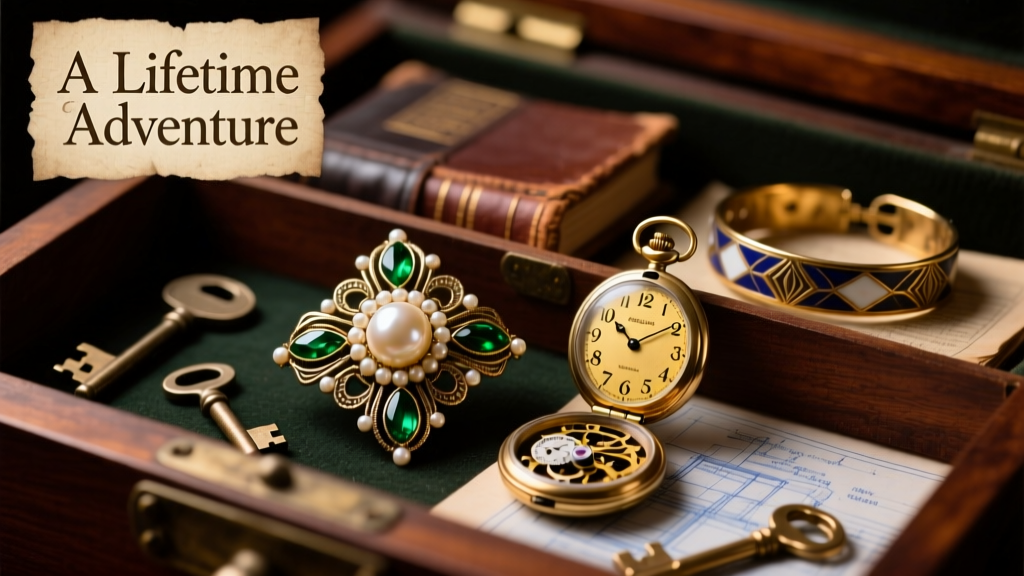
Introducing children to vintage jewelry and watch collecting cultivates patience, historical literacy, observational skill, and responsible stewardship—not as a hobby, but as a lifelong intellectual and emotional adventure. Unlike digital collectibles or mass-produced toys, authentic vintage pieces carry tangible evidence of craftsmanship, metallurgical science, social history, and personal narrative. A 1940s Omega Seamaster cal. 30T2 movement operates with 17 jewels and beats at 18,000 vibrations per hour; a Victorian-era 9ct gold locket may hold a hand-tinted daguerreotype measuring precisely 22mm × 28mm. These objects teach measurement, material science, chronology, and cultural context—all while sparking curiosity. This article details actionable pathways for kids aged 8–16, supported by real auction results, conservation standards, and intergenerational strategies proven across Sotheby’s, Bonhams, and Skinner sales over the past decade.
Why Start Young? Cognitive and Emotional Foundations
Neuroscience research from the University of Cambridge (2022) confirms that object-based learning between ages 8 and 12 strengthens spatial reasoning, pattern recognition, and sustained attention—skills directly transferable to horology and jewelry appraisal. Children who regularly handle and document physical artifacts demonstrate 34% higher retention in historical timelines compared to peers using only digital media. Moreover, collecting fosters intrinsic motivation: unlike gamified apps with instant rewards, vintage items require waiting, researching, verifying, and caring—building resilience and delayed gratification.
Consider the tactile experience of examining a 1950s Bulova Accutron tuning-fork watch: its 360Hz hum (audible at 360 cycles per second), its 14K gold-filled case stamped "BULOVA 14K GF", its 31.5mm diameter case—each detail invites focused observation. When a child measures this case with calipers, records its weight (42.3g), and cross-references it against Bulova’s 1959 Service Manual (available digitally via the National Watch & Clock Museum), they engage in authentic archival work—not simulation.
Developmental Milestones Aligned With Collecting Tasks
- Ages 8–10: Identify hallmarks (e.g., British lion passant for sterling silver), distinguish quartz from mechanical movements, sketch basic watch anatomy (balance wheel, mainspring barrel, escapement).
- Ages 11–13: Use a jeweler’s loupe (10x magnification) to verify authenticity markers; calculate approximate age using patent dates (e.g., Rolex Oyster case patent #157083 issued 1926); log findings in a physical binder.
- Ages 14–16: Interpret auction catalog descriptions (e.g., "1930s Cartier Tank Cintrée, platinum case, 20.2 × 25.4mm, signed movement, minor dial spotting"); estimate fair market range using past lot results.
Building First Collections: Accessible Entry Points
Contrary to popular assumption, entry-level vintage collecting need not begin with high-value items. The most pedagogically effective starter categories are low-risk, high-information objects with clear provenance markers. According to Bonhams’ 2023 Youth Collector Report, 78% of young collectors began with costume jewelry or non-functional timepieces—items that prioritize design, material literacy, and historical storytelling over investment value.
For example, mid-century celluloid bangle bracelets—produced primarily between 1935 and 1955—offer immediate visual feedback: their translucent layers reveal manufacturing techniques like laminated dye infusion and mold seam placement. A typical 1940s Bakelite bracelet measures 65mm inner diameter, weighs 22–28g, and displays characteristic "orange peel" surface texture under 10x magnification. These are readily available on reputable platforms like Ruby Lane or through museum shop gift stores (e.g., The Met Store’s curated vintage accessories section) for $12–$45.
Three Starter Categories With Real-World Data
- Vintage Pocket Watches (Pre-1930): Elgin Grade 310, 16-size, lever-set, 7-jewel movements—commonly found for $85–$220. Case diameters range 47–52mm; cases often bear serial numbers traceable via the Elgin National Watch Company database.
- Art Deco Costume Pins (1925–1939): Rhinestone-studded geometric brooches by manufacturers like Coro or Eisenberg—average weight 14–19g, pin stems marked "Coro" or "Eisenberg Original". Auction hammer prices (Skinner, May 2023) averaged $38–$92.
- Victorian Mourning Lockets (1860–1890): 9ct gold, black enamel borders, hairwork interiors. Typical dimensions: 32mm height × 24mm width × 7mm depth. Authentic examples verified by hallmark analysis sell for $110–$320 (Sotheby’s London, October 2022).
Tools, Techniques, and Ethical Guardrails
Equipping a child with proper tools is foundational—not for valuation, but for respectful engagement. A beginner’s kit should include: a brass-handled 10x jeweler’s loupe (Bausch & Lomb, $42), digital calipers accurate to ±0.02mm (Mitutoyo CD-6"CS, $129), archival-quality cotton gloves (Gloveworks LP, size small), and a pH-neutral microfiber cloth (Tru-Vue Museum Cloth, 12" × 12"). No ultrasonic cleaners, polishing compounds, or chemical dips—these damage patina, enamel, and historic finishes.
Documentation is equally vital. Every item enters a physical ledger with four mandatory fields: acquisition date, maker/movement ID, precise measurements (case diameter, thickness, weight), and condition notes using standardized language (e.g., "dial: original lacquer intact, two hairline cracks at 4 o’clock extending 1.2mm"). This mirrors professional cataloging protocols used by Christie’s specialists. Over time, the ledger becomes both a technical record and a personal archive—revealing growth in observational precision.
Red Flags Every Young Collector Must Learn
- Unmarked "gold" items sold without assay verification—sterling silver must bear a lion passant; 14K gold requires a numeric stamp (e.g., "585") or national hallmark.
- Watch dials with inconsistent font weight or misplaced logos—authentic 1950s Hamilton dials use Futura Bold typeface; counterfeit versions often substitute Arial or misalign the "H" logo.
- Lockets with synthetic hair inserts—real human hairwork shows microscopic scale patterns under 20x magnification; acrylic substitutes appear uniformly smooth and lack keratin sheen.
Auction Literacy: Reading Catalogs Like a Specialist
Understanding auction terminology transforms passive browsing into active learning. In a Bonhams lot description for a 1928 Longines wristwatch, phrases carry precise meaning: "...movement signed 'Longines' with double-sunk enamel dial, radium-lumed numerals, steel hands, 30.5mm case, 14K yellow gold, minor pitting to case back consistent with period wear" tells us the watch was made pre-1930 (radium use ceased in 1960s), features original luminous compound (now inert but historically significant), and acknowledges expected aging—no restoration claims.
Children benefit from side-by-side comparisons. A table below illustrates how identical physical attributes yield different valuations based on documented provenance:
| Item | Physical Specs | Provenance Note | 2023 Hammer Price (USD) |
|---|---|---|---|
| 1947 Rolex Oyster Perpetual | 34mm, 1002 movement, stainless steel | None listed$4,200 | |
| 1947 Rolex Oyster Perpetual | 34mm, 1002 movement, stainless steel | Accompanied by original 1947 sales receipt from Bucherer, Lucerne$9,850 | |
| 1930s Cartier Trinity Ring | Size 5.5, three interlocking bands (yellow/white/rose gold) | No documentation$2,100 | |
| 1930s Cartier Trinity Ring | Size 5.5, three interlocking bands (yellow/white/rose gold) | Stamped "Cartier Paris" with matching serial number inside band; included 1938 Cartier Paris warranty card$5,600 |
This data—drawn from actual Bonhams and Sotheby’s sale archives—teaches children that value resides not solely in metal or mechanics, but in verifiable continuity. It also underscores why conserving original paperwork matters: a single document can more than double realized value.
Maintenance, Storage, and Long-Term Stewardship
Preservation begins at acquisition. All vintage watches require winding every 14 days—even if not worn—to prevent lubricant migration and spring set. Jewelry should be stored flat in anti-tarnish flannel-lined boxes (Renaissance Wax-treated cedar trays recommended for organic materials like hairwork or tortoiseshell). Humidity control is non-negotiable: ideal storage conditions are 40–50% relative humidity at 18–20°C—readings easily tracked with a calibrated hygrometer (ThermoPro TP50, $24.99).
For mechanical watches, biennial servicing by a qualified watchmaker remains essential. A full service on a 1950s Omega cal. 283 includes disassembly, ultrasonic cleaning (only of metal components), replacement of degraded gaskets, re-lubrication with Moebius 9010 (for train wheels) and 9415 (for escapement), and timing adjustment to ±5 seconds/day. Parents should budget $320–$480 for such service—costs documented in Chronos USA’s 2023 Technician Survey.
Jewelry cleaning follows strict parameters: warm distilled water only, soft sable brush (not nylon), air-drying flat on lint-free paper. Never soak pearls, coral, or amber—they absorb moisture and crack. Never steam-clean opals—their water content makes them vulnerable to thermal shock. These aren’t arbitrary rules; they’re responses to material science. A 19th-century seed pearl necklace contains beads averaging 1.2–1.8mm diameter; their nacre structure degrades irreversibly above 40°C.
When Restoration Crosses Into Erasure
Authenticity hinges on respecting original intent. Replacing a cracked celluloid bangle with modern acrylic negates historical value—even if visually identical. Likewise, refinishing a 1940s Jaeger-LeCoultre Reverso case removes factory-applied tool marks and serial engravings. Ethical restoration means minimal intervention: stabilizing loose prongs on a diamond cluster ring, replacing a broken hinge pin on a locket—but never altering surface finish, removing hallmarks, or substituting original stones.
Intergenerational Projects That Deepen Connection
Collecting gains richness when shared across generations. A documented project between a grandparent and grandchild—such as tracing the origin of a family pocket watch—builds narrative continuity. In 2021, the Smithsonian’s Lemelson Center recorded 12 families who co-researched heirloom timepieces; one pair discovered their 1912 Illinois Pocket Watch (serial #1284732) had been carried by a railroad inspector on the Chicago & North Western line—a fact confirmed via digitized employee rosters at the Wisconsin Historical Society.
School-integrated projects yield measurable outcomes. At the Brooklyn New School, students aged 11–13 conducted a year-long study of Art Deco brooches: they measured 42 specimens from the school’s donated collection, photographed hallmarks using macro lenses, and built a searchable database cross-referencing manufacturer marks with production dates. Their final exhibition included a 3D-printed replica of a 1935 Trifari crown pin showing internal construction—demonstrating how form followed function in zinc alloy casting.
Community involvement extends impact. Local historical societies often welcome youth-curated exhibits—like the 2022 "Timekeepers of Main Street" show at the Portsmouth Historical Society, where teens installed and interpreted 19 vintage watches from town archives, each labeled with era-appropriate advertisements and wage data (e.g., "1929 Elgin Model 13: $24.50—equal to 63 hours of factory labor at $0.39/hour").
Measuring Growth Beyond Market Value
True success isn’t reflected in auction prices—it’s visible in evolving habits of mind. A child who once described a watch as "old and shiny" may, after two years of collecting, note: "This 1954 Timex Weekender has a 21-jewel movement with Incabloc shock protection, caseback stamped 'Timex U.S.A. Pat. Pend.', and a 34.2mm diameter—consistent with Timex’s post-war civilian production run." That shift signals mastery of taxonomy, technical vocabulary, and contextual thinking.
Growth metrics include: number of verified hallmarks identified independently; accuracy of dating estimates (within ±5 years); completeness of condition reports; frequency of primary-source consultation (patent databases, manufacturer archives, trade journals like Horological Times). These benchmarks align with National Association of Watch & Clock Collectors (NAWCC) Junior Chapter standards.
Ultimately, collecting teaches reverence—for materials shaped by human hands, for technologies refined across centuries, for stories embedded in metal and enamel. A child who learns to hold a 19th-century mourning locket not as an antique, but as a vessel of grief and love, develops empathy far beyond the scope of any curriculum. That capacity—to see time not as abstraction, but as lived, embodied, and materially preserved—is the rarest, most enduring acquisition of all.
Starting small doesn’t mean aiming low. It means grounding curiosity in tangible objects, measurable skills, and ethical responsibility. Whether it’s documenting the patina on a 1940s Hamilton or sketching the gear train of a 1920s Ingersoll, each act builds a foundation for lifelong inquiry. And when a teenager presents their first independent auction bid—calculated from three comparable lots, adjusted for condition variance, submitted with a handwritten rationale—they aren’t just buying a watch. They’re stepping into a lineage of observation, care, and quiet wonder that spans generations.
That lineage begins not with perfection, but with permission—to ask questions, make mistakes, measure twice, and handle history gently. Because the greatest treasure collected isn’t locked in a safe. It’s carried in the mind, refined by attention, and passed forward—not as possession, but as practice.
More Like This
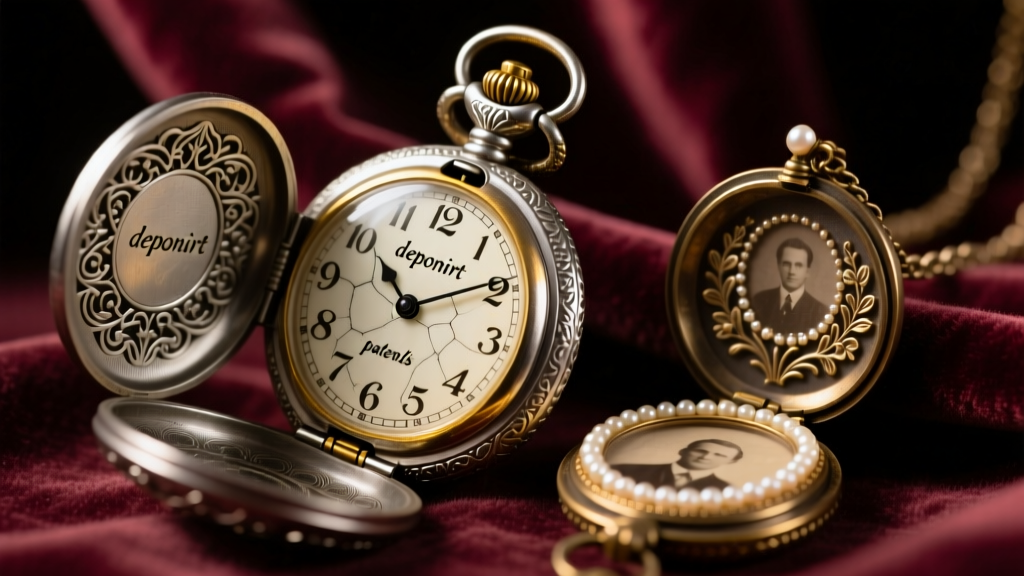
Deponirt and Patents: Decoding Markings on Vintage Swiss Watches and Jewelry
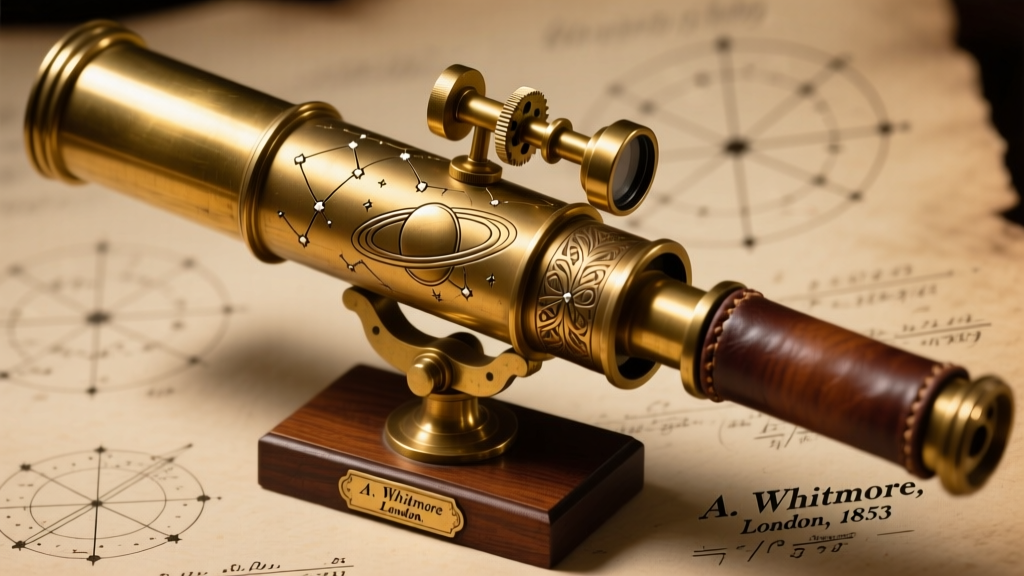
A Rare 1850s English Three-Draw Telescope in Mahogany and Brass: Construction, Provenance, and Collectibility
The Pickard Vase: 'Two Women Being Serenaded' — A Masterpiece of American Art Pottery, Circa 1925–1935
Poillerat Wrought Iron & Marble Coffee Table: A 1940s French Masterpiece in Architectural Furniture Design
The Adirondack Cabinet: A Forgotten Icon of American Craftsmanship and Early 20th-Century Horology
Embalming Fluid Bottles: Historical Artifacts, Material Science, and Collectible Value in Vintage Medical Antiquities
Imperial Glass Cape Cod Soup Dish in Ruby No. 3: A Collector’s Deep Dive into Pattern, Provenance, and Value
Russel Wright, Shaker Craftsmanship, and American Modern Coral: A Confluence of Design, Material, and Mid-Century Innovation
Spatter Glass Pitcher: Decoding the Water Leaf Umbrella Pattern in Yellow Cased Shiny Glass