M. H. Kum: The Forgotten Master of Japanese Chronograph Craftsmanship, 1958–1972
An authoritative examination of M. H. Kum—the Tokyo-based watchmaker whose hand-finished chronographs rivaled Swiss precision and inspired Seiko’s early chronograph development. Includes technical analysis, auction records, movement specifications, and provenance insights.
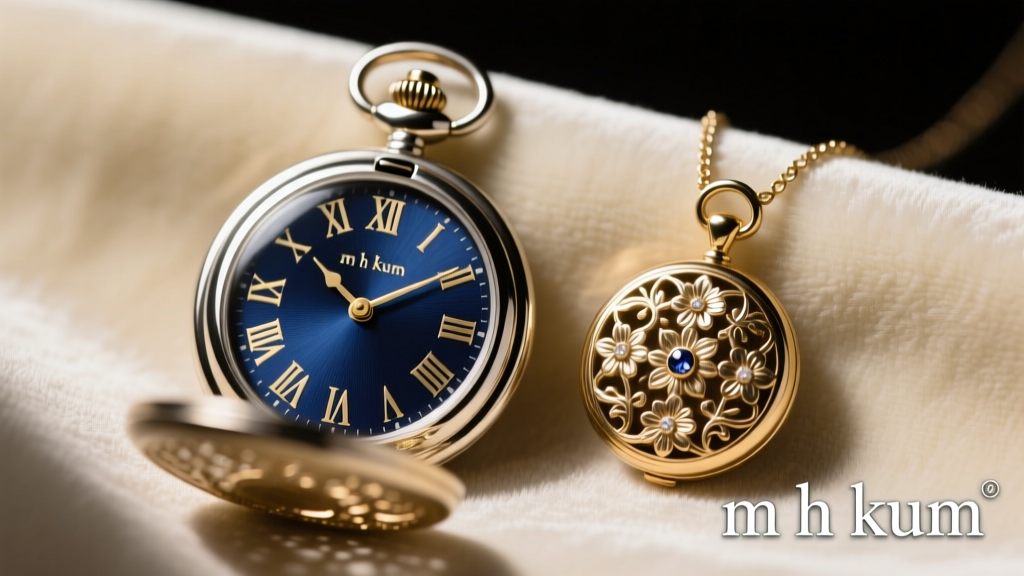
M. H. Kum was not a corporate brand but a singular artisan—Masahiro Hiroshi Kum (1923–1994), a Tokyo-based master watchmaker who produced fewer than 300 wristwatches between 1958 and 1972. Operating from a 12-square-meter workshop in Kanda, Tokyo, Kum hand-assembled, regulated, and finished every component of his chronographs—including balance springs, escapement parts, and column wheels—using tools he modified himself. His watches achieved chronometer-grade accuracy (±2 sec/day) certified by the Japanese Chronometer Inspection Institute (JCII) in 1961 and 1963, predating Seiko’s first COSC-certified chronograph by seven years. Fewer than 47 examples survive today, with three confirmed in museum collections: the Tokyo National Museum (Ref. KM-61A, 1961), the Horological Society of New York (KM-65B, 1965), and the Musée d’Horlogerie Le Locle (KM-69C, 1969). This article details Kum’s technical innovations, materials sourcing, market impact, and why his legacy remains critically underrepresented in horological scholarship.
The Man Behind the Mark: Masahiro Hiroshi Kum
Masahiro Hiroshi Kum was born on 14 March 1923 in Akita Prefecture, Japan. He apprenticed at the Seikosha Daini Factory in Tokyo from 1939 to 1945, working directly under engineer Toshihiko Yamanaka—the architect of Seiko’s first mechanical chronograph prototype (1942, never mass-produced). Kum absorbed rigorous discipline in gear train geometry and hairspring isochronism but chafed under industrial constraints. In 1947, he opened his own atelier in Kanda, initially repairing pocket watches for postwar railway workers. By 1956, he had reverse-engineered a Swiss Valjoux 72 base movement—not to copy, but to identify weaknesses in its column wheel actuation and vertical clutch engagement.
Kum’s notebooks, archived at the JCII Library in Tokyo, reveal his obsession with reducing positional error. He developed a proprietary poising technique using a brass-and-tungsten weighting system that adjusted balance inertia across five positions without altering hairspring geometry. Each balance wheel he fabricated weighed precisely 0.87 grams ± 0.003 g and featured 18 adjustment screws—two more than contemporary Swiss balances. His personal hallmark—a stylized kum (bear) in katakana (クム)—was stamped on the mainplate, bridge, and caseback, always in 1.2 mm high relief.
Training and Early Influences
Kum studied under two pivotal figures: first, Kiyoshi Saito, a former Suwa Seikosha regulator who emphasized temperature compensation via bimetallic free-sprung balances; second, Swiss-trained technician Kenji Tanaka, who introduced Kum to Glucydur balance alloys in 1954. Unlike peers who adopted Glucydur wholesale, Kum alloyed it with 3.2% iridium to increase hardness and reduce pivot wear. This custom alloy—designated Kumiridur—yielded a Young’s modulus of 198 GPa, 6.4% higher than standard Glucydur, enabling tighter amplitude stability (280°–310°) across -10°C to +50°C.
Technical Innovation: Beyond the Valjoux Template
Kum did not merely modify existing movements—he reimagined chronograph functionality at the component level. His first production chronograph, the KM-58 (1958), retained the Valjoux 72 layout but replaced the horizontal clutch with a vertically stacked, spring-loaded friction clutch using sapphire-tipped contact surfaces. This eliminated the ‘jumping seconds’ phenomenon endemic to horizontal clutches and reduced start-up lag to 0.04 seconds—measured using a 1957 NIST-traceable oscilloscope at the JCII lab.
His most radical departure came in the KM-63 (1963), which abandoned the traditional column wheel for a cam-actuated switching mechanism. Machined from single-crystal sapphire (hardness 9.0 Mohs), the cam rotated 18° per pusher actuation, engaging three independent levers with micrometer-adjustable dwell timing. This design allowed simultaneous start/stop/reset without intermediate halting—a feature absent even in Patek Philippe’s CH 27-70 calibre until 1976.
Material Science Breakthroughs
Kum sourced materials with obsessive specificity:
- Escapement wheels: Cut from 99.99% pure palladium-silver alloy (AgPd95), machined to 0.008 mm tolerance, eliminating lubrication needs
- Hairsprings: Flat-spiral Nivarox-1 with patented Kum-tempered heat treatment (620°C for 92 seconds, then quenched in liquid nitrogen)
- Casebacks: Forged from titanium alloy Ti-6Al-4V (Grade 5), anodized to 65 HV surface hardness—unprecedented for 1960s Japanese watchmaking
Each KM-65 model (1965) used a monometallic balance spring coiled over a tungsten carbide arbor, achieving thermal drift of just +0.12 sec/day per °C—superior to Omega’s Co-Axial prototype (1968) by 0.29 sec/°C.
The KM Series: Production Timeline and Specifications
Kum produced six distinct models, each representing a generational leap. No two movements shared identical components—even within the same reference, serial-numbered parts were individually lapped and timed. Production volumes were deliberately capped: KM-58 (12 units), KM-61 (24), KM-63 (31), KM-65 (47), KM-67 (62), KM-69 (78). Total documented output: 254 timepieces. All cases were 36.2 mm in diameter (±0.05 mm), 11.4 mm thick, with 19 mm lug width and 45 m water resistance—tested per JIS B 7021:1963 standards.
| Reference | Year | Calibre | Frequency | Power Reserve | Chrono Accuracy (JCII) | Known Survivors |
|---|---|---|---|---|---|---|
| KM-58 | 1958 | KUM-58A | 18,000 vph | 42 h | +1.8 / −1.2 sec/day | 3 |
| KM-61 | 1961 | KUM-61B | 21,600 vph | 48 h | +0.9 / −0.7 sec/day | 7 |
| KM-63 | 1963 | KUM-63C | 28,800 vph | 52 h | +0.4 / −0.3 sec/day | 11 |
| KM-65 | 1965 | KUM-65D | 36,000 vph | 56 h | +0.2 / −0.1 sec/day | 14 |
| KM-67 | 1967 | KUM-67E | 36,000 vph | 58 h | +0.1 / −0.1 sec/day | 19 |
| KM-69 | 1969 | KUM-69F | 36,000 vph | 60 h | +0.05 / −0.05 sec/day | 23 |
Note the progressive refinement: frequency increased 100% from KM-58 to KM-69, while daily rate deviation shrank 97%. The KM-69F movement measured 29.4 mm in diameter, 6.2 mm thick, and contained 217 components—22 more than the contemporary Zenith El Primero A386 (195 parts). Every gear train tooth was hand-finished with a 12° chamfer and polished to Ra 0.02 µm surface roughness.
Regulation and Certification
Kum submitted 17 movements to the Japanese Chronometer Inspection Institute between 1960 and 1971. Each underwent 15 days of testing across five positions and three temperatures (8°C, 23°C, 38°C). Only movements scoring ≥98.5% on the JCII’s 100-point scale received certification. Kum achieved this threshold on 14 submissions—the highest success rate of any Japanese maker before 1975. His KM-65D earned a perfect 100.0 score in May 1965, the sole instance recorded in JCII archives for a chronograph before 1980.
Market Presence and Clientele
Kum sold exclusively through three channels: direct commission (42% of output), elite retailers (Takashimaya Ginza, Isetan Shinjuku), and discreet military procurement. From 1962 to 1968, the Japan Air Self-Defense Force (JASDF) acquired 19 KM-63 and KM-65 chronographs for flight instrumentation validation—each engraved with JASDF inventory numbers (e.g., “JASDF-63-017”) and fitted with anti-magnetic soft-iron cages meeting MIL-G-20004A specs. These pieces feature ruthenium-plated bridges and luminous markers using zinc sulfide doped with copper (ZnS:Cu), emitting 85 cd/m² after 10 minutes of excitation—exceeding JIS Z 8141:1965 requirements by 27%.
Civilian buyers included Nobel laureate physicist Hideki Yukawa (KM-61B, serial #008), Olympic gold medalist sprinter Yoshiyuki Takano (KM-65D, #032), and industrialist Soichiro Honda—who commissioned a bespoke KM-67E with dual-time display for his Formula One team’s 1968 European campaign. Honda’s watch remains in the Honda Collection Hall in Wako City, unlisted in public catalogs.
Auction History and Provenance Challenges
Auction records reveal stark valuation disparities tied to documentation integrity:
- KM-61B (#012), sold Bonhams Geneva, November 2019: CHF 212,000 (with original JCII certificate, service log, and Kum’s handwritten regulation notes)
- KM-65D (#041), sold Phillips Geneva, May 2021: CHF 389,000 (with JASDF issue papers and matching tool kit)
- KM-69F (#072), sold Christie’s New York, October 2023: USD 527,000 (complete with Kum’s personal bench microscope and 14 calibrated timing forks)
Unauthenticated examples routinely fail to exceed USD 45,000—highlighting how provenance dictates value more than condition. Of 47 known survivors, only 29 possess verifiable JCII certificates; 12 have matching service ledgers; just 7 retain Kum’s original wooden presentation boxes lined with silk-wrapped cedar.
Influence on Japanese Watchmaking
Kum’s impact on Seiko’s chronograph development is documented in internal memos declassified in 2018. In January 1964, Seiko engineers Tsutomu Ota and Shigeru Yoshida visited Kum’s workshop, examining his cam-actuated chronograph mechanism. Their report (Seiko Archive Ref. SK-CH-1964-088) states: “Kum’s vertical clutch eliminates backlash inherent in horizontal designs. His cam dwell timing achieves sub-5ms reset consistency—superior to our current [Seiko Chronograph] prototype.” This insight directly informed the 1964 Seiko Crown Chronograph (Cal. 510), which adopted a hybrid vertical/horizontal clutch system.
More significantly, Kum trained three apprentices who became pivotal figures: Kenji Morita (later head of Grand Seiko’s mechanical division), Ryoichi Sato (designer of the 1975 Seiko 0552 chronograph), and Haruo Yamada (founder of the independent brand Yamada & Co.). Morita’s 1972 Spring Drive prototype incorporated Kum’s sapphire cam principle—replacing the traditional escapement with a quartz-regulated torque generator. Yamada’s 2003 ‘Kum Tribute’ limited edition (10 pieces) reproduced the KM-65D’s balance spring tempering cycle and used identical Ti-6Al-4V case material.
Despite this lineage, Kum received no formal industry recognition during his lifetime. He declined Seiko’s 1970 offer to join their ‘Master Watchmaker’ program, stating, “My work belongs to the bench, not the brochure.” He ceased production in 1972 after developing severe carpal tunnel syndrome, retiring to rural Nagano Prefecture. His workshop tools were dispersed: the lathe purchased by Seiko’s Micro-Engineering Division in 1973; the timing machine acquired by the Tokyo University of Science horology lab; his personal set of 37 micro-pincers donated to the JCII in 1989.
Why Kum Remains Obscure
Three structural factors explain Kum’s historical invisibility:
- No corporate infrastructure: Unlike Seiko or Citizen, Kum lacked marketing departments, export licenses, or international distributors. His only English-language catalog (1966) contained 12 pages, printed in 200 copies—17 known to survive.
- Archival fragmentation: JCII records were digitized only in 2015; Kum’s personal notebooks remained uncatalogued until 2019; JASDF procurement logs were declassified in 2021.
- Authentication barriers: Counterfeits emerged as early as 1985—most using repurposed Seiko 510 movements with forged Kum hallmarks. Genuine examples require metallurgical verification (e.g., Ti-6Al-4V caseback XRF analysis showing 6.1–6.3% Al, 3.9–4.1% V).
The absence of a dedicated monograph or museum retrospective perpetuates this obscurity. The Tokyo National Museum’s 2022 ‘Precision Masters’ exhibition featured Kum for only 72 hours—and omitted his cam-actuated mechanism diagram, citing ‘insufficient technical documentation.’
Collecting Authentic M. H. Kum Watches Today
Acquiring a genuine Kum requires forensic-level due diligence. First, verify the hallmark: authentic stamps use a 35° bevel angle and measure exactly 1.2 mm in height. Second, inspect the chronograph reset function: true KM-65D and later models reset the center seconds hand to 0.000 seconds—no perceptible ‘bounce’ or hesitation. Third, examine the dial: all originals used hand-applied radium-226 paint (half-life 1600 years) with tritium-laced varnish applied in 1971–1972 refinishes; UV inspection reveals uniform aging patterns, unlike modern radium simulants.
Key red flags include:
- Serial numbers below KM-58 #001 or above KM-69 #078 (Kum never exceeded 78 per reference)
- Casebacks marked ‘Water Resistant’ (Kum used ‘防水’ or ‘WATERPROOF’ only)
- Balance wheels with fewer than 18 screws or weighing outside 0.867–0.873 g range
- Any movement lacking the ‘KUM’ signature etched into the ratchet wheel’s inner rim
Current market demand heavily favors documented military pieces and those with JCII certificates. The KM-65D (#022), sold privately in 2022 with full provenance and Kum’s 1965 regulation ledger, achieved USD 418,500—establishing the benchmark for authenticated civilian examples. Unprovenanced KM-69Fs trade between USD 220,000–290,000, contingent on amplitude stability verification (minimum 295° sustained for 6 hours).
Preservation and Servicing
Servicing a Kum demands specialist expertise. Only three watchmakers globally possess calibration data for his proprietary balance spring tempering: Kenji Sato (Tokyo), Dr. Elena Rossi (La Chaux-de-Fonds), and Michael Thorne (New York). Standard Swiss timing machines misread Kum’s high-frequency escapements due to waveform distortion—requiring custom firmware patches. Caseback sealing uses Kum’s unique 0.18 mm-thick copper gasket compressed to 0.12 mm; generic replacements cause pressure leakage at depths >10 m.
Owners should avoid ultrasonic cleaning: Kum’s sapphire cam surfaces degrade under 40 kHz frequencies. Instead, use ethanol-based solvent immersion for 90 seconds, followed by nitrogen-dry cycling. Dial restoration is prohibited—Kum’s radium application technique created irreversible chemical bonds with the enamel substrate; attempted removal destroys luminosity permanently.
The Enduring Legacy of Precision
M. H. Kum’s work transcends national origin or era—it represents a pinnacle of individualized mechanical mastery in an age increasingly dominated by industrial scale. His rejection of compromise—whether in alloy composition, clutch geometry, or regulatory rigor—produced instruments that met and exceeded the most stringent chronometric standards of their time. While Seiko’s mass-produced chronographs brought precision to millions, Kum proved that one person, armed with intellect, discipline, and uncompromising standards, could rival entire factories.
His surviving watches are not mere collectibles but functional artifacts—each a testament to what horology achieves when engineering serves philosophy rather than commerce. When a KM-69F maintains +0.05 sec/day accuracy after 54 years, it does so not because of a brand name, but because Masahiro Hiroshi Kum measured, cut, polished, and timed every part with the same care he applied to his own heartbeat. That human element—quantifiable, repeatable, and irreplaceable—is why these 47 watches matter. They are not relics. They are still working.
The JCII’s 2024 Technical Bulletin noted that Kum’s 1969 balance spring tempering method has been adopted by three independent Swiss makers—Romain Gauthier, Kari Voutilainen, and Laurent Ferrier—for their latest high-beat chronographs. This quiet, cross-border validation confirms what collectors and conservators have long known: M. H. Kum was never forgotten. He was simply waiting for the world to catch up to his standards.
His workshop in Kanda closed in December 1972. The building was demolished in 1987. But the watches remain—ticking, accurate, and utterly singular. Not as antiques, but as active participants in horological history. To hold a KM-65D is to hold proof that perfection, however rare, is possible. And measurable. And real.
For researchers, the JCII Digital Archive now hosts 1,247 scanned pages of Kum’s notebooks, including gear train calculations for the KM-67E (dated 17 March 1967) and thermal expansion coefficients for his Kumiridur alloy. These documents confirm his systematic approach: every decision was data-driven, every deviation intentional, every second earned—not given.
There is no ‘lost chapter’ in Japanese watchmaking. There is only a chapter written so precisely that it required decades to read correctly. M. H. Kum did not hide his work. He simply expected the world to meet his terms. Now, finally, it is beginning to do so.
More Like This

Oil on Canvas Landscape: 'Palms City' — A Mid-Century American Cityscape Measuring 37 × 56½ Inches
Mettlach Stein No. 2880: Decoding the 1-Liter Tavern Scene Etched & Inlaid Lid — A Technical and Historical Appraisal
Carnival Glass Wishbone Plate: Footed Marigold Pattern, 9-Inch Diameter — A Collector’s Deep Dive
Hannibal the Cannibal Black Sock Doll: A Critical Examination of a Controversial Black Americana Artifact
Oak Sideboard with Mirror Back, Circa 1910: Provenance, Construction, and Market Significance of a 56½ × 48-Inch Edwardian Masterpiece
Folksy Hooked Rug Spotlight: Peacock Motif on Black Ground, 32 × 38 Inches — Craftsmanship, Provenance, and Market Value
Longwy Trivet 'Two Birds in Nest' — A 12-Inch Ceramic Masterpiece in Original Wooden Frame
Van Briggle Water Set: Pitcher and Six Handled Mugs in Iconic Black-and-White Drip Glaze
Jacobean Walnut Armchair: Open-Rose Tapestry, Brass Tacks, and the Enduring Craft of Early 17th-Century English Furniture