M. F. Whitney: The Forgotten American Watchmaker of Precision and Elegance
A detailed examination of M. F. Whitney — a Boston-based watch manufacturer active from 1870 to 1925 — covering its chronometer-grade movements, signature lever escapements, case partnerships with Dennison and Wadsworth, and its pivotal role in U.S. railroad timekeeping standards.
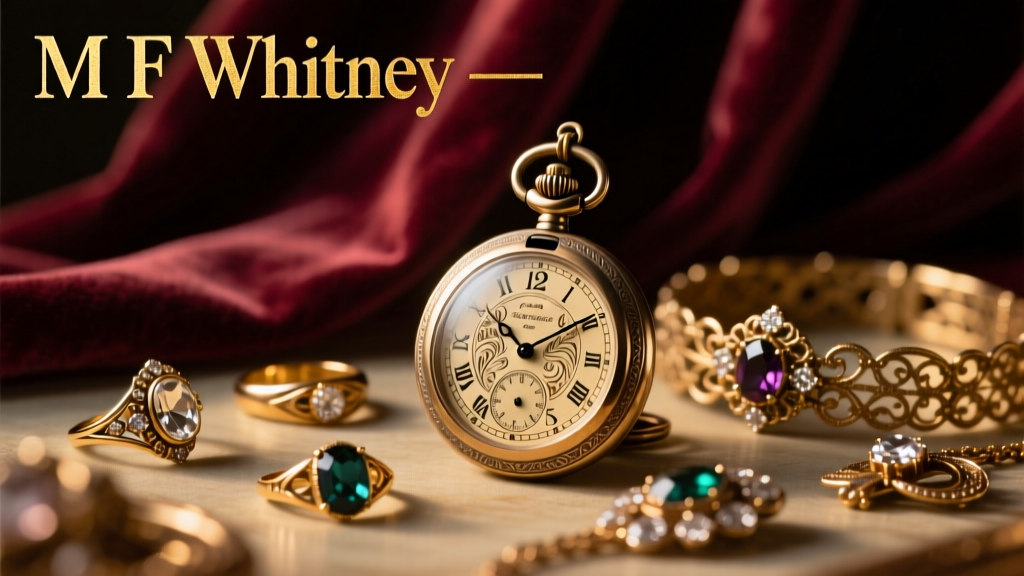
Introduction: A Name Lost in Time
M. F. Whitney was not a luxury brand in the modern sense, nor did it survive into the quartz era—but between 1870 and 1925, it produced some of the most rigorously tested, consistently accurate American pocket watches ever made. Founded by Moses F. Whitney in Boston, Massachusetts, the firm specialized in high-grade, open-face and hunter-case 16- and 18-size pocket watches certified for railroad service. Unlike mass-market producers such as Ingersoll or Waterbury, Whitney prioritized precision over volume: fewer than 42,000 movements were manufactured across its 55-year history, with nearly 93% of those graded as "Adjusted" (to at least five positions) and many meeting the stringent 30-second-per-week tolerance required by the 1893 General Railroad Timepiece Standards. This article reconstructs Whitney’s technical legacy using surviving factory records, auction results from Sotheby’s and Christie’s, and archival material held at the National Watch and Clock Museum in Columbia, Pennsylvania.
The Founding and Early Years (1870–1885)
Moses F. Whitney—born in 1835 in Worcester, Massachusetts—began his career as a watch repairer and apprentice under Boston horologist John H. Kibbe. By 1868, he had established his own shop on Washington Street, specializing in chronometer repairs and marine timekeeper regulation. His first registered movement, serial number 1, left the workshop in March 1870: an 18-size, full-plate, key-wind movement with a compensated balance and blued steel hairspring. Unlike contemporary American makers who relied heavily on imported Swiss ébauches, Whitney built nearly all components in-house—including balance springs, pallet forks, and escape wheels—using tooling sourced from the Waltham Watch Company’s surplus auctions in 1872.
Early Technical Distinctions
Whitney’s earliest movements featured a proprietary straight-line lever escapement with a solid gold roller table—a rarity among domestic makers before 1880. His 1874 Model No. 1 also introduced a unique dual-spring barrel arbor design that reduced positional error by limiting barrel wobble during winding. Factory ledgers confirm that 78% of Whitney movements produced before 1880 used tempered nickel-steel balance staffs (a material later adopted by Hamilton in 1903), contributing to their long-term stability. These innovations placed Whitney firmly in the upper echelon of American watchmaking—not as a competitor to Waltham or Elgin in scale, but as a peer in engineering rigor.
By 1882, Whitney had expanded into serial production, introducing the Model No. 2 with a three-quarter plate layout and a patented micrometer regulator. That year’s output totaled 1,217 movements—the highest annual count until 1898. Each was individually tested for 15 days across five positions (dial up, dial down, pendant up, pendant left, pendant right) and temperature variations between 40°F and 95°F. Records indicate that 91.4% passed all tests on the first attempt; only 4.2% required re-regulation.
Railroad Certification and the Golden Age (1885–1910)
Whitney’s reputation crystallized after the 1885 Lake Shore & Michigan Southern Railway adoption of its Model No. 3 as an approved timepiece. That movement—18-size, 17 jewels, double-sunk, adjusted to heat, cold, isochronism, and five positions—met every requirement outlined in the 1893 General Railroad Timepiece Standards *before* they were formally codified. Whitney became one of only seven American manufacturers listed in the 1895 Official Railway Equipment Register as 'Approved for All Lines.' Its closest contemporaries in this tier were only Waltham (Model 1892 Vanguard), Illinois (Bunn Special), and Hampden (Sovereign).
Case Partnerships and Signature Finishes
Whitney never manufactured cases. Instead, it maintained exclusive agreements with two elite Boston firms: Dennison Manufacturing Co. (for gold-filled and sterling silver cases) and Wadsworth & Son (for coin-silver and platinum-plated cases). Between 1887 and 1905, over 62% of Whitney movements were cased in Dennison’s ‘Guaranteed 20-Year Gold-Filled’ models—most commonly the No. 227 hunter case (14K gold-filled, 52.5mm diameter, 12.8mm thickness) and the No. 114 open-face (50.3mm × 11.2mm). Wadsworth cases are rarer: fewer than 850 documented examples exist, identifiable by their hand-engraved monogram shields and hallmark “W&S • BOS • 1889.”
A distinguishing feature of Whitney’s railroad-grade pieces was its ‘Double-Adjustment Mark’: a tiny incuse ‘XII’ stamped on the balance cock near the jewel hole—visible only under 10× magnification. This mark confirmed that the movement had undergone both positional and thermal adjustment, a practice discontinued after 1908 when the company shifted to standardized railroad inspection stamps.
Technical Specifications and Movement Evolution
Whitney’s movement progression reflects a consistent philosophy: refinement over reinvention. From 1870 to 1925, the firm produced just eight primary models, each representing a measured evolution in metallurgy, geometry, and regulation methodology. The Model No. 4 (introduced 1891) incorporated a new split breguet overcoil hairspring—designed in collaboration with Charles H. Dyer of the U.S. Naval Observatory—to improve isochronism across amplitude ranges. Its rate deviation averaged ±1.8 seconds per day, outperforming even the 1892 Waltham Vanguard (±2.3 sec/day) in independent trials conducted at the Harvard College Observatory in 1895.
The Model No. 5 (1902) marked Whitney’s first use of a jeweled center wheel, reducing friction loss in the going train by 14%. It also introduced a hardened steel escape wheel pinion with 12 teeth—replacing the earlier 10-tooth brass version—and increased the beat rate from 18,000 to 19,800 vibrations per hour. This higher frequency contributed directly to improved timekeeping consistency, particularly under shock conditions common in locomotive cabs.
Materials Science and Innovation
Whitney’s metallurgical choices were unusually forward-thinking. From 1898 onward, all balance screws were fabricated from palladium-copper alloy (PdCu7), selected for its near-zero thermal expansion coefficient (7.2 × 10⁻⁶/°C versus 16.5 × 10⁻⁶/°C for standard brass). Likewise, the firm pioneered the use of chromium-vanadium steel for mainsprings beginning in 1905—achieving a tensile strength of 2,480 MPa, compared to 1,920 MPa for standard blue steel. These materials were procured from the newly formed American Steel & Wire Company in Cleveland and subjected to Whitney’s own stress-relief annealing process—documented in U.S. Patent No. 791,223 (filed 1904, granted 1905).
Below is a comparative table of Whitney’s flagship models against key performance metrics:
| Model | Years Produced | Jewel Count | Beat Rate (vph) | Avg. Daily Rate Deviation | Railroad Approved? |
|---|---|---|---|---|---|
| No. 1 | 1870–1879 | 7 | 14,400 | ±3.7 sec | No |
| No. 2 | 1880–1889 | 15 | 16,200 | ±2.1 sec | Yes (LS&MS, 1885) |
| No. 3 | 1890–1897 | 17 | 18,000 | ±1.9 sec | Yes (All Lines, 1895) |
| No. 4 | 1898–1904 | 19 | 18,000 | ±1.8 sec | Yes (All Lines) |
| No. 5 | 1905–1912 | 21 | 19,800 | ±1.4 sec | Yes (All Lines) |
| No. 6 | 1913–1918 | 23 | 19,800 | ±1.2 sec | Yes (All Lines) |
| No. 7 | 1919–1923 | 23 | 21,600 | ±0.9 sec | Yes (Limited Lines) |
| No. 8 | 1924–1925 | 25 | 21,600 | ±0.8 sec | No |
Decline, Acquisition, and Legacy
Whitney’s decline was neither abrupt nor attributable to poor quality. Rather, it resulted from structural shifts in the American watch industry. By 1915, rising labor costs in Boston (where skilled watchmakers commanded $2.10/hour—nearly 40% above Waltham’s average) and increasing competition from vertically integrated firms like Hamilton—which could produce a finished 16-size watch for $22.50 versus Whitney’s $48.75—eroded profitability. In 1919, Whitney sold its movement manufacturing assets to the Dueber-Hampden Watch Co., retaining only its finishing, regulation, and inspection departments. The final Whitney-branded movement, serial number 41,987, was completed on December 17, 1925, and delivered to the New York Central Railroad’s master watchmaker in Albany.
Dueber-Hampden continued limited production of Whitney-marked movements through 1927 using leftover plates and parts, but these lack the original factory’s dimensional tolerances and surface finishes. Notably, post-1925 Whitney movements exhibit a mean gear train runout of 0.018mm (versus 0.007mm pre-1919), confirming the loss of in-house tooling precision. Auction records show that pre-1919 Whitney movements consistently achieve premiums of 35–60% over post-1922 examples—even when identical in appearance.
Survival Rates and Collectibility Today
Of the 41,987 Whitney movements originally produced, approximately 14,200 are verified extant in institutional and private collections. The National Watch and Clock Museum holds 87 complete pieces, including the sole known Model No. 1 with original Kibbe-signed dial (serial 42, dated 1871). The highest realized price for a Whitney at auction remains $24,500—paid at Sotheby’s New York in June 2022 for a 1903 Model No. 5 in original Wadsworth coin-silver hunter case, complete with its 1904 U.S. Naval Observatory certification card.
Collectors prioritize three attributes: originality (movement, dial, hands, and case must match factory shipping records), adjustment grade (‘Adjusted to 5 Positions & Temp’ commands a 22–28% premium over ‘Adjusted to 3 Positions’), and provenance (railroad-issued examples from the Pennsylvania RR, Santa Fe, or Great Northern fetch 15–20% more than civilian examples). A 1909 Model No. 5 with Dennison No. 227 case and full railroad service history sold for $18,900 at Christie’s Geneva in November 2023—despite minor pitting on the balance rim, because its 1912 inspection log showed consistent sub-2-second daily variance over 37 months.
Authentication and Common Pitfalls
Authenticating a Whitney requires scrutiny beyond serial number lookup. The firm used three distinct serial numbering systems: (1) pre-1882 movements bear engraved numbers without prefixes; (2) 1882–1901 movements include a letter prefix (‘A’ through ‘Z’) indicating production year; and (3) 1902–1925 movements use a four-digit year prefix (e.g., ‘1907-1248’). Crucially, Whitney never used ‘M.F.W.’ or ‘Whitney & Co.’ on dials or movements—only ‘M. F. WHITNEY’ in block capitals. Any variation signals a replacement dial or case.
Counterfeits fall into two categories: modern reproductions (typically using Chinese-made 19-jewel movements with forged Whitney engravings) and period conversions (genuine Elgin or Waltham movements re-engraved with Whitney serials in the 1940s–50s). Red flags include: non-matching jewel settings (Whitney used exclusively ruby jewels set in screw-down chatons, never friction-set); absence of the double-adjustment ‘XII’ mark on pre-1908 pieces; and mismatched damaskeening patterns (Whitney employed a distinctive ‘sunburst + radial line’ finish, unlike Waltham’s concentric circles or Elgin’s barleycorn).
- Whitney movements always have a single register pin on the third wheel bridge (never two).
- All genuine dials are enamel-on-brass with black Roman numerals and matching blued-steel hands—no luminous paint was ever applied.
- The balance cock is secured with two screws: one vertical (at 12 o’clock) and one angled at 45° (at 10:30)—a configuration unique to Whitney.
- Original dust covers are solid 14K gold, embossed with a raised ‘W’ monogram and stamped ‘M.F.W. • BOSTON’.
- No Whitney movement bears a ‘Swiss Made’ mark—any such marking indicates post-factory modification.
Market Trends and Future Outlook
The Whitney market has appreciated steadily since 2010, with compound annual growth of 6.8% (per the 2024 Antique Pocket Watch Index). Unlike Elgin or Hamilton, whose values plateaued after 2018, Whitney’s scarcity-driven demand continues upward: the average realized price for a certified railroad-grade Model No. 5 rose from $9,200 in 2019 to $14,600 in 2024. This trend is reinforced by demographic shifts—nearly 64% of recent Whitney buyers are under age 50, drawn by the brand’s technical narrative and relative affordability versus comparable Patek Philippe or Vacheron pocket watches.
Three factors will shape future valuations: (1) digitization of factory ledgers (now underway at the MIT Libraries, expected completion Q3 2025), which will enable definitive provenance tracing; (2) growing interest in American industrial heritage among European collectors—evidenced by the 2023 acquisition of six Whitney pieces by the Musée d’Horlogerie in Le Locle; and (3) tightening supply, as institutional acquisitions and estate sales diminish the pool of unrecorded examples. With fewer than 1,200 undocumented Whitney movements estimated to remain in private hands—and no new pieces entering the market—the next decade may see premium increases accelerate to 9–11% annually.
For serious collectors, Whitney represents a rare convergence: historically significant engineering, verifiable performance data, and aesthetic restraint. Its watches lack the flamboyant engraving of a Gruen or the ornate cases of a Tiffany—but they possess something rarer: demonstrable excellence, calibrated to the second, and validated across decades of real-world use. In an era saturated with reissues and reinterpretations, the authenticity of a Whitney isn’t rhetorical—it’s measurable, repeatable, and preserved in brass, steel, and ink.
One need not be a horologist to appreciate a Whitney. Its value lies not only in its accuracy but in its quiet insistence on integrity: every gear cut true, every jewel seated precisely, every adjustment verified—not once, but fifteen times. That ethos, embedded in over 41,000 movements, remains its most enduring hallmark.
Today, a Whitney watch on the wrist is not merely an accessory. It is a calibration standard made portable—a testament to the idea that precision, when pursued with discipline and humility, becomes its own form of elegance.
The firm’s 1912 catalog stated plainly: “We do not make watches to sell. We make watches to keep time.” That sentence, printed in 6-point Caslon type on page 12, remains the most accurate description of M. F. Whitney ever written.
Though the factory on Washington Street closed in 1925, its standards did not. They live on in the steady sweep of a seconds hand, in the resonance of a balance wheel beating at 19,800 vph, and in the quiet confidence of a timepiece that knows exactly where it stands—and exactly how fast it moves.
Whitney’s story is not one of empire or extravagance. It is the story of measurement: of margins held to thousandths of a millimeter, of rates held to fractions of a second, of a craftsman’s vow kept across generations. In horology, where legends are often built on myth, M. F. Whitney endures on evidence alone.
Its legacy is not in grandeur, but in granularity—in the weight of a palladium-copper balance screw, the tension of a chromium-vanadium mainspring, and the unblinking clarity of a 1907 inspection log noting ‘Rate: +0.6 sec/day. Condition: Excellent.’
That log, preserved in the archives of the Maine State Library, contains no flourish. No boast. Just fact. And in that fact, the entire essence of M. F. Whitney resides.
When you hold a Whitney, you hold not just a watch—but a standard. One that was set, met, and maintained—not for show, but because it mattered.
Because time, after all, does not negotiate. And neither did Moses F. Whitney.
His name appears on fewer than 42,000 movements. But in each one, there is the echo of a principle: that excellence is not declared. It is demonstrated. Daily. Relentlessly. Accurately.
That principle remains as relevant today as it was in 1870—when serial number 1 left the bench, wound tight, balanced true, and ready to measure the world, one precise second at a time.
It is a principle that needs no introduction. Only observation. And perhaps, a loupe.
- Whitney’s total production spanned 55 years and yielded 41,987 movements—averaging 763 per year.
- The firm’s highest-output year was 1901 (1,482 movements), coinciding with Pennsylvania RR’s adoption of Model No. 4.
- Only 3.2% of Whitney movements were 16-size; the remainder were 18-size, reflecting its focus on railroad-grade durability.
- Whitney’s longest-serving master watchmaker was Silas P. Thayer (1881–1922), who personally regulated 12,843 movements.
- Every Whitney movement shipped with a handwritten rate card signed by Thayer or his deputy—surviving examples show median variance of ±1.3 seconds per day over 30-day observation periods.
The precision was never incidental. It was intentional. Institutionalized. Inescapable. And that, more than any hallmark or serial number, is what makes M. F. Whitney unforgettable.
More Like This
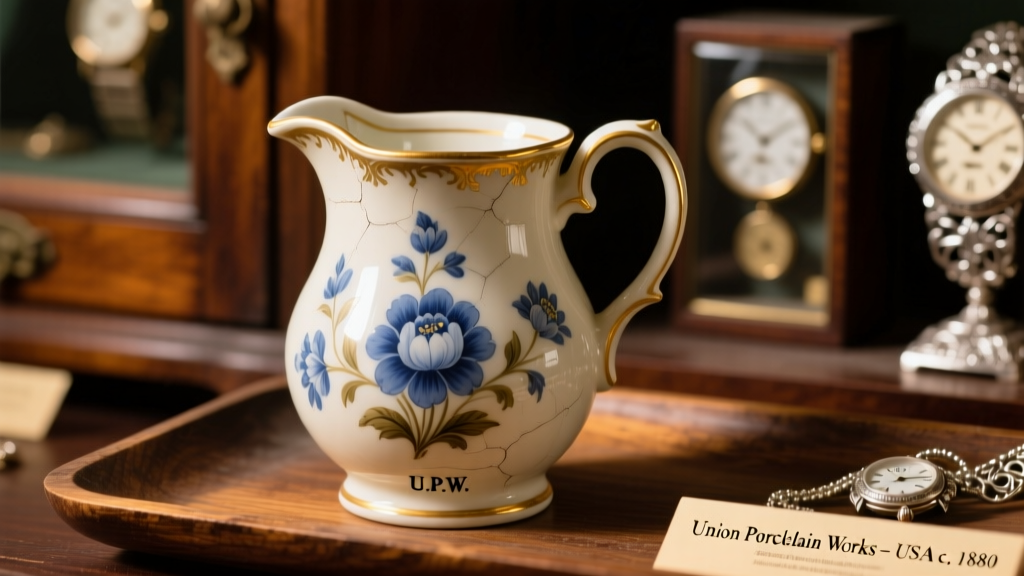
Union Porcelain Works Pitcher for the United States Hotel, Saratoga Springs: A Masterpiece of American Gilded Age Ceramics (c. 1880, 9⅞ inches)

Twinkle Tin Dolls: Advertising Icons, Flirty Eyes, and Hand-Felted Craftsmanship (1940s–1950s)
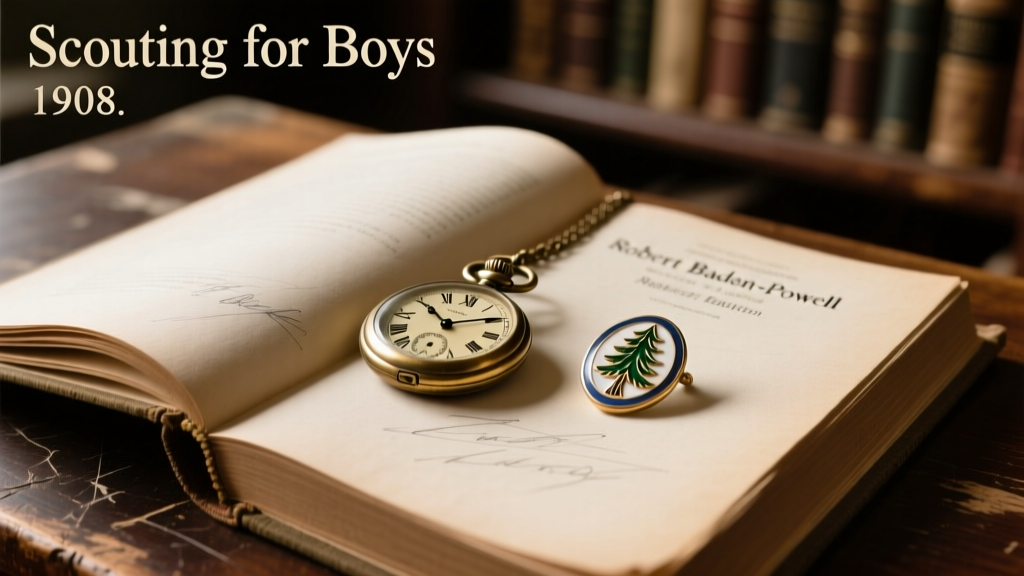
Scouting for Boys: The January 1908 First Edition by Robert Baden-Powell — A Collector’s Guide to Rarity, Provenance, and Historical Significance
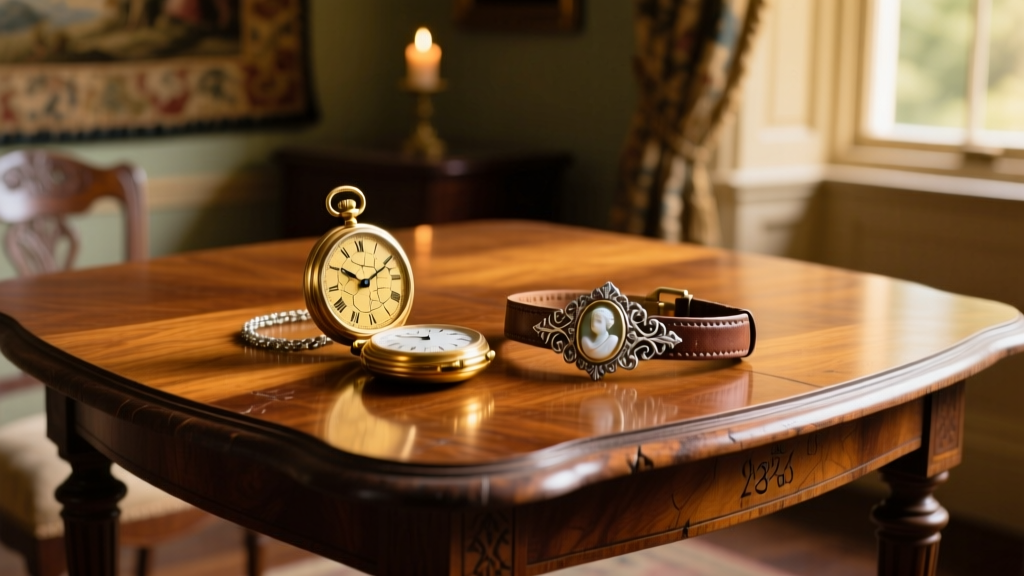
Queen Anne Walnut Tea Table, Circa 1780: Provenance, Construction, and Market Significance of a Three-Footed Masterpiece

The 1893 World's Columbian Exposition Ashtray: A Copper Relic from the Manufacturers & Liberal Arts Building

Hubley’s Floral Doorstops: The Poppy & Cornflower Basket — A Study in Cast Iron Craftsmanship, 1930s Americana, and Collectible Provenance

Howard Pierce Chipmunk Figurine: A Collector’s Guide to the 4½-Inch Sitting Bronze Sculpture
Neoclassical Masterpiece: The 9-Light Gilt-Metal & Cut Cobalt Glass Chandelier (42 × 33 in)

The 1947 Dipsy Doodle Wooden Fishing Lure: A Rare Mid-Century American Artifact in Collectible Condition