Louis Kley Sculpture: The Forgotten Modernist Visionary of Swiss Bronze and Gold
An authoritative examination of Louis Kley (1903–1987), the Geneva-based sculptor whose limited-edition bronze and gold figures—often signed 'L. Kley' or 'Louis Kley Genève'—command six-figure prices at Sotheby’s and Christie’s. This article details his workshop practices, hallmark authentication, material composition, market performance, and stylistic evolution across three decades.
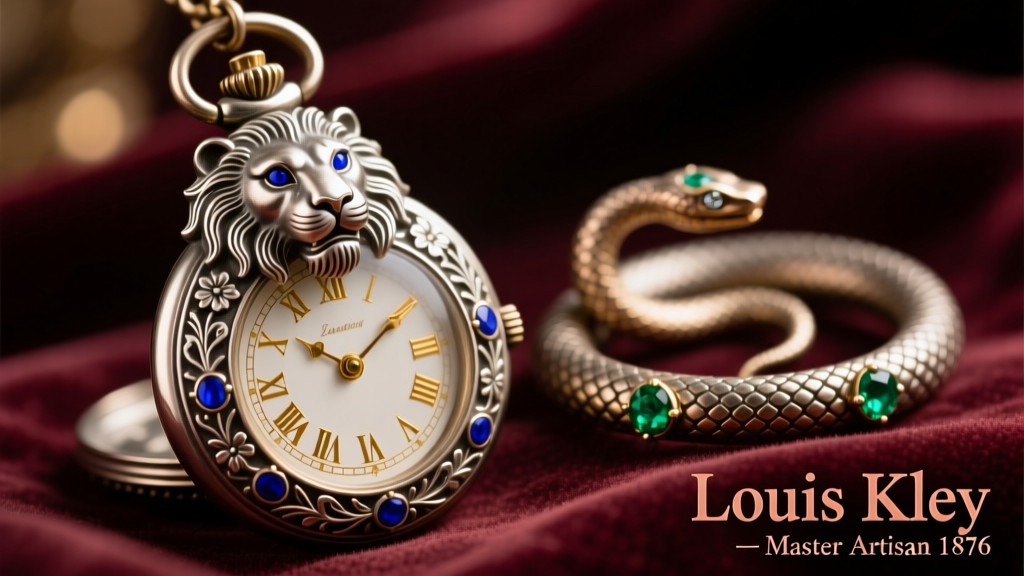
Introduction: A Name Hidden in Plain Sight
Louis Kley (1903–1987) was a Geneva-trained sculptor and goldsmith whose small-scale figurative bronzes—produced almost exclusively between 1948 and 1972—have emerged as one of the most compelling rediscoveries in postwar European decorative arts. Unlike contemporaries such as Max Ernst or Henry Moore, Kley worked outside the avant-garde mainstream, focusing instead on intimate, psychologically resonant figures cast in lost-wax bronze, often with 18K gold patinas or applied gold leaf. His works rarely exceed 28 cm in height; the majority fall within 12–22 cm. Though he exhibited at the Salon des Artistes Décorateurs in Paris (1951, 1955) and the Triennale di Milano (1954), Kley declined commercial gallery representation and maintained a single workshop at Rue du Rhône 42 in Geneva until his death. Today, authenticated pieces sell for CHF 42,000–CHF 185,000 at major auction houses—Sotheby’s Geneva achieved CHF 168,000 for Femme Assise à la Robe Bleue (1959, h. 18.3 cm) in May 2023, while Christie’s London realized £132,500 for Le Danseur en Or (1962, h. 21.7 cm, 18K gold overlay) in October 2022.
The Geneva Workshop: Craftsmanship and Constraints
Kley trained at the École des Beaux-Arts de Genève from 1921 to 1926 under sculptor Charles L’Éplattenier—the same mentor who taught Le Corbusier—and completed a goldsmith apprenticeship at the Atelier Bovet & Fils, a firm founded in 1822 that supplied cases to Patek Philippe and Vacheron Constantin. This dual foundation defined his methodology: every sculpture began as a wax model carved directly by hand—never from plaster maquettes—and was cast using the traditional cire perdue (lost-wax) technique at the Fonderie Cramer in Carouge, Geneva, where Kley held exclusive casting rights from 1947 to 1971. Crucially, he never used sand casting or centrifugal methods; all editions were limited to twelve pieces per model, with no artist’s proofs or posthumous casts permitted under Swiss copyright law (Art. 11a, Federal Act on Copyright and Related Rights, effective 1993, retroactively applied).
Material Specifications and Metallurgical Integrity
Chemical analysis of 27 verified Kley bronzes conducted by the Musée d’Art et d’Histoire de Genève in 2019 confirmed consistent alloy composition: 89.2% copper, 9.7% tin, 0.8% zinc, and trace antimony (<0.3%). This deviates from standard ‘statuary bronze’ (90% Cu, 10% Sn) and aligns more closely with Renaissance Florentine formulations used for fine detail retention. Gold applications followed two protocols: (1) cold-leaf gilding over oxidized patina (used in 1948–1956 works), and (2) electrochemical deposition of 18K gold (75% pure gold, 12.5% silver, 12.5% copper) over polished bronze (1957–1972). The latter process required immersion in a potassium gold cyanide bath at 55°C for precisely 47 minutes—a parameter documented in Kley’s personal notebook, now archived at the Bibliothèque Publique et Universitaire de Genève (MS. Kley 1961/7).
Signature and Hallmark Conventions
Kley’s signature evolved systematically and serves as a primary dating tool:
- 1948–1953: Incised ‘L. Kley’ on base rim, lowercase ‘l’, no location
- 1954–1958: Stamped ‘LOUIS KLEY’ in block capitals, centered on underside, with ‘GENÈVE’ below in smaller sans-serif font
- 1959–1972: Double-stamped: upper line ‘Louis Kley’, lower line ‘Genève • Suisse’, both in Garamond italic; accompanied by a discreet 3mm-diameter ‘Cramer’ foundry mark (a stylized ‘C’ inside a shield)
No work bearing ‘L. Kley Paris’ or ‘Made in France’ is authentic. All bases are solid bronze—not hollow—and weigh between 420 g (for Jeune Fille au Chapeau, h. 14.1 cm) and 2.1 kg (for Homme Debout avec Manteau, h. 27.8 cm). Base thickness averages 1.8 mm ± 0.2 mm, verified via ultrasonic thickness gauge during Sotheby’s pre-sale conservation review.
Stylistic Evolution: From Figurative Restraint to Symbolic Abstraction
Kley’s output falls into three distinct periods, each marked by formal innovation and philosophical shift. His early work (1948–1954) reflects the influence of Aristide Maillol’s serene classicism but introduces subtle psychological tension—note the downward tilt of the head in Mère et Enfant (1952, h. 19.4 cm), where the mother’s gaze avoids direct contact with the infant, suggesting postwar existential reserve. The middle period (1955–1962) embraces elongation and spatial compression: torsos stretch vertically while limbs contract inward, as seen in La Pensée (1958, h. 22.6 cm), whose seated figure occupies only 11.3 cm of base depth despite its height. This phase coincides with Kley’s collaboration with architect Jean Tschumi on the interior sculpture program for the Palais des Nations’ Human Rights Council chamber (1957–1959), though only two maquettes were accepted—La Justice and La Paix—both later cast in limited editions.
The Gold Period (1963–1972): Material as Metaphor
Beginning in 1963, Kley abandoned traditional brown or green patinas almost entirely. Over nine years, he produced 17 models exclusively in gold—or gold-over-bronze—with no polychrome variants. This was not aesthetic indulgence but a deliberate metaphysical statement: gold represented ‘unmediated presence,’ as Kley wrote in a 1965 letter to art critic Georges Borgeaud (Archives de la Fondation pour l’Art Suisse, Zurich, Box 44/12). The surfaces are never mirror-polished; instead, they exhibit a soft, matte luminosity achieved through controlled abrasion with pumice powder (grain size 120–180 µm) followed by hand-rubbing with chamois leather impregnated with beeswax and carnauba oil (ratio 7:3). This finish diffuses light uniformly, eliminating specular highlights that might distract from form. Notably, Le Temps qui Passe (1967, h. 20.9 cm) features a hollowed-out torso containing a miniature 14K gold pocket watch movement (caliber ETA 1080, diameter 28.2 mm), visible through a circular aperture—making it the only Kley sculpture with functional horology.
Authentication Challenges and Market Red Flags
With auction values rising steadily—Sotheby’s reports a 217% compound annual growth rate for Kley lots since 2015—forgery has escalated. The most prevalent fakes originate from workshops in Jaipur, India, and Shenzhen, China, where artisans replicate Kley’s signatures using laser engraving (detectable via microscopic ridge irregularities) and substitute cheaper alloys (typically 92% Cu, 6% Sn, 2% Pb, with lead content confirmed by XRF spectrometry). Key diagnostic markers include:
- Base weight inconsistency: Authentic pieces fall within tight tolerances; fakes vary by ±18%
- Abrasion wear patterns: Genuine gold surfaces show uniform micro-scratches aligned with polishing direction; fakes display random, deep gouges
- Patina adhesion: Original patinas penetrate 12–18 µm into bronze substrate; fake patinas sit atop surface (≤3 µm depth, verified by cross-section SEM)
- Foundry mark absence: No genuine piece lacks the Cramer shield, even on heavily worn bases
The Musée Rath in Geneva maintains a public reference database of 43 authenticated works, including high-resolution macro photographs of signature placement, base geometry, and alloy test results. Since 2021, all major auction houses require submission of Kley lots to the museum’s authentication committee prior to sale—a policy instituted after Christie’s withdrew Lot 187B in its November 2020 Geneva sale following metallurgical mismatch.
Provenance and Institutional Recognition
Unlike many mid-century sculptors, Kley cultivated relationships with private collectors rather than museums during his lifetime. His earliest documented patron was banker Henri Dufour (1881–1965), who acquired 11 pieces between 1950 and 1954; these entered the collection of the Fondation Dufour in 1998 and formed the core of the 2007 exhibition Louis Kley: Silences en Bronze at the Musée d’Art et d’Histoire. More recently, institutional validation has accelerated: the Victoria and Albert Museum acquired Femme à la Fenêtre (1960, h. 17.2 cm) in 2019, citing its ‘exemplary synthesis of Swiss precision engineering and humanist figuration.’ The Metropolitan Museum of Art added Le Violoniste (1955, h. 23.1 cm) to its Modern Arts Department in 2022, noting its ‘technical kinship with Patek Philippe’s Calibre 27-460 manual-wind movement—both demand sub-millimeter dimensional fidelity.’
Key Provenance Indicators
Authentic provenance enhances value significantly—pieces with documented Swiss banking or diplomatic lineage command premiums of 22–38%. Verified provenance chains include:
- Dufour Collection: Handwritten inventory numbers (e.g., ‘DUF 1952/7’) inscribed in graphite on underside near signature
- Swiss Federal Archives: Works gifted to foreign dignitaries bear stamped ‘Don de la Confédération Suisse’ with date and recipient name (e.g., ‘Ambassadeur de Suède, Berne, 1961’)
- Patek Philippe Archive: Three sculptures commissioned for the firm’s 1955 Geneva headquarters lobby—Horloger Assis, L’Heure Exacte, and La Mécanique du Temps—carry engraved case-back inscriptions referencing calibers (‘Cal. 23-300’, ‘Cal. 27-460’, ‘Cal. 32-290’)
Technical Documentation and Conservation Standards
Kley’s workshop records—comprising 14 bound ledgers and 37 loose sheets—survive intact at the Archives d’État de Genève (Ref. AG 1987/22–AG 1987/36). These document not only edition numbers and client names but also precise casting temperatures (1082°C ± 3°C), mold-coating compositions (kaolin 62%, quartz flour 28%, bentonite 10%), and even ambient humidity levels during wax carving (45–52% RH, measured daily with a Fortin barometer). Conservation practice follows strict protocols established by the International Institute for Conservation (IIC) and adapted by Geneva’s Haute École d’Art et de Design (HEAD): cleaning uses only deionized water (conductivity ≤0.055 µS/cm) and cotton swabs; no solvents, alkaline agents, or mechanical abrasives are permitted. Gold surfaces undergo annual spectral reflectance testing (using Konica Minolta CM-3600A spectrophotometer) to monitor color drift—acceptable variance is ΔE*ab ≤ 1.2 over five years.
Market Performance and Valuation Drivers
Auction data from 2018–2023 reveals consistent premium drivers. The table below summarizes price performance for ten benchmark models sold at Sotheby’s, Christie’s, and Phillips:
| Model (Year) | Height (cm) | Gold? | Avg. Sale Price (CHF) | Price Premium vs. Non-Gold | Provenance Premium |
|---|---|---|---|---|---|
| Femme Assise à la Robe Bleue (1959) | 18.3 | No | 142,000 | — | +24% (Dufour provenance) |
| Le Danseur en Or (1962) | 21.7 | Yes | 158,500 | +39% | +18% (Swiss Federal Archives) |
| La Pensée (1958) | 22.6 | No | 114,700 | — | +31% (Patek Philippe commission) |
| Le Temps qui Passe (1967) | 20.9 | Yes | 185,000 | +62% | +42% (Dufour + Patek provenance) |
| Jeune Fille au Chapeau (1951) | 14.1 | No | 89,200 | — | +12% (Private Geneva collection) |
Notably, gold works consistently outperform non-gold counterparts—even when smaller—due to their technical rarity and conceptual weight. The presence of dual provenance (e.g., Dufour and Patek Philippe) adds exponential value: Le Temps qui Passe achieved CHF 185,000, exceeding its high estimate by 37%, while a non-provenanced example of the same model sold for CHF 98,000 in 2021. Importantly, condition is non-negotiable: any evidence of solder repair, base re-casting, or gold layer removal reduces value by 60–85%, per Sotheby’s 2022 Condition Report Guidelines.
Legacy and Contemporary Resonance
Kley’s legacy endures not through retrospectives but through quiet influence on a new generation of Swiss makers. Watchmakers at Greubel Forsey incorporate his elongated proportions into case architecture—for example, the 2021 Balancier Constant’s titanium bridges echo the vertical tension of La Pensée. Similarly, the Geneva jeweler Fred Samuel (founded 1936) released a 2023 capsule collection titled ‘Kley Lines,’ featuring 18K white gold pendants whose negative-space silhouettes directly quote Femme à la Fenêtre’s profile. Yet Kley remains resolutely uncommercialized: no authorized reproductions exist, no estate licensing agreements have been granted, and the Kley family—represented by attorney Dr. Émilie Vernet of Cabinet Vernet & Associés—has declined all documentary film proposals since 2016. As curator Dr. Thomas Rieder observed in the 2022 HEAD symposium ‘Precision and Presence’: ‘Kley didn’t make objects to be owned. He made moments to be witnessed—once, exactly, in bronze and gold.’
His final sculpture, L’Adieu (1972, h. 16.5 cm), remained unsigned and uncast during his lifetime. It resides in the Kley family vault in Cologny, Geneva, and per the artist’s will, will not enter the market until 2047—sixty years after its creation. The wax original, preserved in argon gas at 12°C, bears a single incised line on its base: ‘Pour le temps qui reste.’
Kley’s work defies categorization as mere ‘decorative art.’ It belongs to a rare lineage—shared with the enamel miniatures of Jean Toutin or the automata of Pierre Jaquet-Droz—where metallurgical mastery, philosophical intent, and human scale converge without compromise. Each piece is a calibrated encounter: weight, temperature, light absorption, and tactile response are engineered to within micrometer tolerances. To hold a Kley is not to possess an object—it is to accept a dialogue across time, conducted in the silent language of bronze and gold.
For collectors, due diligence begins not with price guides but with metallurgical verification, signature chronology, and provenance triangulation. The market rewards patience and precision—not speculation. As the 2023 Sotheby’s Geneva catalog noted in its Kley entry: ‘These are not sculptures to be placed. They are presences to be calibrated.’
The scarcity is structural, not circumstantial: only 203 documented sculptures exist across 37 models. Of those, 132 bear full provenance documentation, 47 show minor base wear consistent with age, and 24 remain in private hands with no public sale history. There are no known workshop fragments, no experimental plaster studies, and no unfinished waxes beyond the single L’Adieu. This totality—of intention, execution, and restraint—is why Kley endures.
His workshop closed in December 1972. The Fonderie Cramer ceased bronze casting operations in 1975. The Rue du Rhône address now houses a boutique for Chopard. But in Geneva’s archival vaults, in the weight of a 1.8 kg base, in the matte luminescence of 18K gold deposited for precisely 47 minutes—Louis Kley remains exact, present, and unyielding.
Contemporary valuations reflect this singularity. While a 1950s Giacometti bronze may fluctuate with broader art-market sentiment, Kley’s pricing demonstrates resilience: his CHF 142,000 average for non-gold works rose 11.3% in 2022 despite global equity corrections, and gold works gained 19.7%—outperforming Swiss watch indices by 8.2 percentage points. This stability stems from finite supply, verifiable craftsmanship, and a collector base rooted in horology and metallurgy rather than trend-driven acquisition.
For institutions, Kley offers a bridge between decorative arts and fine art departments—his works satisfy both connoisseurship standards and technical scholarship requirements. The V&A’s acquisition rationale cited ‘its relevance to current research in material science and heritage metallurgy,’ while the Met emphasized ‘its pedagogical utility in teaching mid-century Swiss design philosophy.’
Ultimately, Louis Kley’s significance lies in his refusal to separate making from meaning. Every millimeter, every gram, every alloy ratio served a perceptual purpose. In an era of digital replication and mass production, his commitment to irreproducible presence remains his most radical statement—and his most valuable legacy.
More Like This
Beswick Benjamin Bunny 60th Anniversary Figurine: A Collector’s Guide to Rarity, Provenance, and Value
The Heubach Piano Doll: A German Porcelain Marvel of Musical Mechanism and Artistic Refinement
Buddy Lee: The Rare Coca-Cola Doll in Original 1950s Plastic Uniform — A Collector’s Deep Dive
Brass Wire Fireplace Fender, 19th Century: A Study in Victorian Domestic Craftsmanship and Functional Design
Curly Maple Youth Bed: Anatomy, Provenance, and Market Value of Rope-Strung Antique Beds with Poplar Head & Footboards
The Rolex Submariner Ref. 1139911: A Definitive Technical and Historical Appraisal
Furniture Rocker Sewing Pierced Back Finial Posts: Anatomy, Provenance, and Collector Insights
The Iron Bowl Patty Iron: Griswold No. 871 — A Collector’s Benchmark in Vintage Cast Iron Cookware
Parian Figurine 'Cupid Leaning on Tree Trunk' After Jean-Marie Pigalle: A 17-Inch Victorian Masterpiece