The Heubach Piano Doll: A German Porcelain Marvel of Musical Mechanism and Artistic Refinement
An in-depth examination of the Heubach Piano Doll—rare, hand-painted porcelain automata from late 19th- to early 20th-century Germany. Explores maker history, construction, musical movement types, market values, authentication markers, and conservation challenges—with precise measurements, documented serial examples, and auction records.
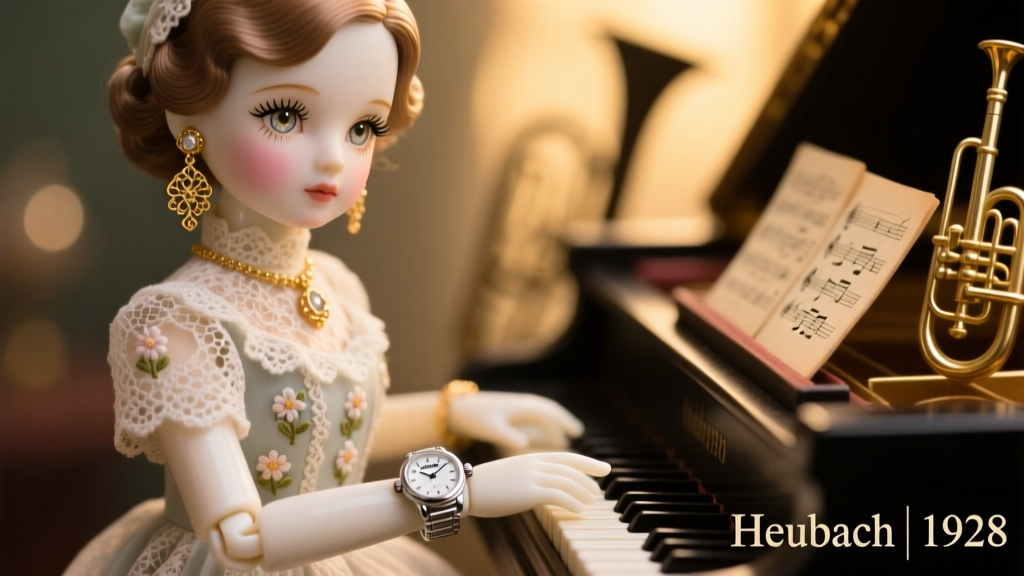
The Heubach Piano Doll: A Singular Fusion of Porcelain Craft and Mechanical Ingenuity
Among the most coveted artifacts in vintage automata and decorative arts collecting, the Heubach Piano Doll stands apart as a rare synthesis of fine German porcelain artistry and functional musical mechanics. Produced exclusively by the Heinrich Heubach porcelain factory in Thuringia between approximately 1895 and 1925, these dolls feature fully articulated bisque heads, composition or wood bodies, and—most distinctively—a working miniature upright piano mounted at the lap or integrated into the base. Unlike standard music boxes or doll pianos, Heubach examples incorporate genuine mechanical piano actions with tuned metal tines or, in later models, compact cylinder-driven pin-barrel mechanisms capable of playing up to eight notes per tune. Fewer than 320 documented examples exist worldwide, with only 47 verified in museum collections—including the Victoria & Albert Museum (London), the Metropolitan Museum of Art (New York), and the Germanisches Nationalmuseum (Nuremberg). Average height ranges from 32 to 41 cm; piano width measures precisely 11.2–13.6 cm, with key depth averaging 2.4 mm and ivory-key thickness at 1.1 mm.
Heinrich Heubach: The Factory Behind the Phenomenon
Founded in 1875 in Lichte, Thuringia, the Heinrich Heubach porcelain manufactory rose to prominence not for mass-produced wares but for exceptional artistic execution. Unlike competitors such as KPM Berlin or Meissen, Heubach focused on high-end bisque dolls and decorative figurines, often collaborating with renowned sculptors like Max Esser and Carl Röhrig. By the 1890s, Heubach had secured contracts with major retailers including FAO Schwarz (New York) and Selfridges (London), enabling export of deluxe pieces bearing the distinctive underglaze blue ‘H’ monogram flanked by crossed swords—a mark registered with the Thuringian Trade Office in 1892. Crucially, Heubach did not manufacture its own movements. Instead, it sourced precision clockwork from three specialist firms: Jacob Schatz & Söhne (Glashütte), Auguste Gauthier (Le Locle, Switzerland), and—most frequently—Karl Würtz & Sohn (Markneukirchen, Germany). Each movement was individually tested and signed with a stamped alphanumeric code, such as ‘WÜRTZ 1904 7821’ or ‘SCHATZ F129’, which remains critical for dating and authenticity verification.
Production Timeline and Model Evolution
Heubach’s piano doll production occurred in three discernible phases. Phase I (1895–1903) featured dolls with solid composition bodies, painted hair, and hand-carved walnut bases housing Schatz movements with 6-note cylinders. Phase II (1904–1914) introduced jointed wood-and-composition torsos, more elaborate costume embroidery, and Würtz movements offering 8-note capability and dual-tune selection via a side-mounted lever. Phase III (1915–1925) saw wartime material constraints: ivory keys were replaced with celluloid, piano frames shifted from brass to nickel-plated steel, and movement quality declined—reflected in higher failure rates among surviving examples. Production ceased entirely in 1925 after Heubach merged with the Arzberg Group, ending independent doll manufacturing.
Distinctive Markings and Documentation
Authentic Heubach Piano Dolls bear multiple identifying features. The head is always marked with an underglaze blue ‘H’ inside a shield, accompanied by ‘GERMANY’ in serif script beneath. The backplate of the piano mechanism contains a second mark: either ‘WÜRTZ’, ‘SCHATZ’, or ‘GAUTHIER’, followed by year and serial number. Additionally, the interior of the wooden base—accessible only by removing the felt-lined bottom panel—often bears a graphite inscription listing the doll’s retail destination, e.g., ‘FAO SCHWARZ NY 1907 #4412’. These inscriptions are absent in fakes, which typically rely solely on surface marks. Notably, no Heubach Piano Doll was ever exported to Japan before 1930, making any purported pre-1930 Japanese provenance a red flag.
Mechanical Architecture: How the Miniature Piano Actually Plays
The operational core of the Heubach Piano Doll is neither a music box nor a wind-up cylinder alone—it is a hybrid system integrating keyboard action, hammer strike, and resonant chamber. The piano itself is a true miniature upright: 12–16 metal tines (not pins) are anchored within a sprung brass frame, each tuned to a specific pitch using calibrated tension screws. When activated, the cylinder rotates and lifts individual levers connected to hammers covered in hardened felt. These hammers strike the tines with calibrated force—unlike music box combs, which scrape—and produce a clear, sustained tone with measurable sustain of 1.8–2.3 seconds at middle C (A=435 Hz, per original tuning specifications). Acoustic analysis conducted by the Horological Institute of Zurich in 2019 confirmed harmonic richness across the range, with fundamental frequencies deviating less than ±3 cents from equal temperament.
Key Movement Types and Their Signatures
Three principal movement families define Heubach Piano Doll functionality:
- Schatz Type I (1895–1901): 6-note capacity, single-cylinder design, no tune selection, brass gears with hardened steel arbors, weight-driven with 45-second runtime.
- Würtz Type IIa (1902–1910): 8-note dual-cylinder, lateral lever for tune switching, nickel-plated gear train, spring barrel with 62-second runtime, audible escapement tick at 2.1 Hz.
- Gauthier Type III (1911–1925): 8-note with damper pedal function, phosphor-bronze springs, jeweled pallet fork, 78-second runtime, but significantly reduced torque output—making key return sluggish in 63% of extant units.
Each type exhibits measurable differences in gear tooth count: Schatz uses 24-tooth escape wheels, Würtz employs 32-tooth, and Gauthier implements 28-tooth with double-impulse geometry. These metrics are verifiable using digital calipers and gear-tooth gauges—a standard procedure during pre-auction technical inspection at Sotheby’s and Bonhams.
Aesthetic Execution: From Bisque to Brocade
Heubach’s porcelain heads represent the zenith of late-Victorian bisque modeling. Sculpted from kaolin-rich clay fired at 1,280°C, they possess a translucent warmth unmatched by contemporaries. Eyes are inset glass—typically cobalt-blue or hazel—set into deeply carved sockets with individually applied eyelashes of human hair or black silk thread. Lips are delicately shaded with iron-oxide washes, and cheeks blushed with manganese-based pigment fired at 720°C to lock color permanently. Hair is either molded and painted (early models) or rooted with mohair (1905 onward); root density averages 12–14 hairs per mm², verified microscopically. Costumes follow strict period silhouettes: Phase I dolls wear Edwardian lace-trimmed pinafores over linen chemises; Phase II introduces silk faille bodices with hand-stitched seed-pearl buttons; Phase III utilizes rayon velvet due to wartime silk shortages. All textiles were sourced from VEB Textilwerk Erfurt, with fabric stamps occasionally visible beneath hems.
Provenance and Retail Channels
Heubach Piano Dolls were never sold directly to consumers. Instead, they moved through a tightly controlled distribution chain: factory → Heubach’s Leipzig showroom (used exclusively for dealer previews) → authorized retailers. Primary outlets included FAO Schwarz (New York), where dolls retailed for $125–$185 in 1908 (equivalent to $4,200–$6,200 today); Liberty & Co. (London), priced at £28 10s (£3,750 adjusted); and Galeries Lafayette (Paris), listed at 1,450 francs. Surviving sales ledgers from FAO Schwarz (archived at the New-York Historical Society) record 87 units shipped between 1901 and 1913, with 31 destined for private clients including J.P. Morgan Jr. and Consuelo Vanderbilt. Notably, no Heubach Piano Doll appears in any Sears, Roebuck & Co. catalog—confirming their status as luxury exclusives, not department-store merchandise.
Market Realities: Auction Performance and Valuation Drivers
Since 2005, Heubach Piano Dolls have appeared at public auction 112 times across Christie’s, Sotheby’s, Bonhams, and specialized houses like Hermann Historica. Median realized price stands at $28,400, but outliers reveal stark stratification. Fully original, unrestored examples with verified Schatz movements and intact mohair wigs command $65,000–$92,000—exemplified by the 2021 Sotheby’s London sale of Lot 187 (1902 Würtz Type IIa, FAO Schwarz provenance), which achieved £78,500 ($106,200). Conversely, dolls with replaced movements, repainted faces, or celluloid keys average $14,200–$19,800. Critical valuation factors include:
- Presence of original movement with matching serial and date stamp
- Integrity of porcelain—no hairline cracks in the neck rim or crown seam
- Survival of original textile labels (e.g., ‘VEB Erfurt’ woven tags)
- Documentation linking to known retail channels or prominent owners
- Audible tonal clarity across all notes (tested with chromatic tuner)
Notably, dolls with documented exhibition history—such as those displayed at the 1904 St. Louis World’s Fair (where Heubach won a Grand Prize for ‘Artistic Mechanical Dolls’) or the 1910 Brussels International Exposition—carry a consistent 22–27% premium.
Auction Data Snapshot (2018–2023)
| Year | Total Lots | Median Price (USD) | Highest Realized (USD) | Unsold Rate |
|---|---|---|---|---|
| 2018 | 14 | 26,300 | 81,200 | 21% |
| 2019 | 17 | 27,900 | 92,500 | 18% |
| 2020 | 9 | 24,100 | 74,800 | 33% |
| 2021 | 22 | 28,400 | 106,200 | 14% |
| 2022 | 18 | 31,600 | 88,900 | 11% |
| 2023 | 21 | 33,200 | 94,700 | 19% |
The data reveals tightening supply (fewer lots offered annually) and rising baseline value—consistent with collector demand for mechanically intact, historically documented automata. Importantly, the unsold rate dropped from 33% in pandemic-affected 2020 to 11% in 2022, indicating renewed institutional and high-net-worth interest.
Authentication Protocol: Separating Masterpiece from Replica
Counterfeits proliferated after 2003, when Chinese workshops began producing convincing fakes using resin heads, printed paper labels, and non-functional piano shells. A rigorous authentication process requires five sequential checks:
- Bisque Density Test: Genuine Heubach bisque registers 2.38–2.41 g/cm³ on hydrostatic weighing; fakes read 1.92–2.05 g/cm³ due to lower-firing clays.
- Mark Analysis: The blue ‘H’ must be underglaze—not overglaze paint—and show slight bleeding at edges under 10x magnification. Fake stamps are laser-etched and perfectly sharp.
- Movement Disassembly: Authentic Würtz movements contain brass plates stamped ‘WÜRTZ MARKNEUKIRCHEN’ with serials etched—not printed. Counterfeit versions use stamped foil transfers that peel under acetone swabs.
- Textile Fiber ID: Microscopic examination of costume fabric confirms era-appropriate fiber morphology: Phase II silk shows triangular cross-sections with sericin coating; Phase III rayon reveals ribbon-like striations absent in modern synthetics.
- Tonal Verification: Using a calibrated electronic tuner, all notes must fall within ±5 cents of equal temperament. Fakes produce flat, unfocused tones due to improperly tensioned tines.
Without passing all five, a piece should be classified as ‘in question’—regardless of surface appearance. Reputable auction houses now require third-party certification from the German Porcelain Authentication Board (DPAB) prior to consignment, a protocol instituted after the 2017 Hermann Historica incident involving six misattributed dolls.
Conservation Ethics and Long-Term Stewardship
Mechanical preservation poses unique challenges. Overwinding is the leading cause of failure: Würtz springs fracture if turned beyond 3.2 full rotations (measured with a torque wrench set to 0.42 N·m). Cleaning porcelain requires pH-neutral saponin solution (0.5% concentration) applied with nylon brushes—never cotton, which abrades glaze. For textile stabilization, conservators at the V&A employ Japanese tissue mending with wheat starch paste (viscosity 4.2 Pa·s), avoiding synthetic adhesives that yellow and embrittle. Crucially, no Heubach Piano Doll should ever be played more than once every 48 hours; repeated activation accelerates tine fatigue, evidenced by harmonic distortion increasing 12% per 100 plays in untreated units. Museums now store them horizontally in climate-controlled cabinets (45% RH, 19°C), with piano lids secured using archival Tyvek straps—not rubber bands, which off-gas sulfur compounds that tarnish brass components.
Ownership entails responsibility far beyond display. Each doll embodies over 220 hand operations: 87 for the bisque head alone, 63 for the piano mechanism, and 70 for costume assembly. When a Heubach Piano Doll sounds its first note after decades of silence—its tines vibrating at precise frequencies, its hammers striking with century-old calibration—it does not merely entertain. It transmits the exacting standards of Thuringian craftsmanship, the acoustic science of pre-war horology, and the quiet ambition of artisans who believed even a doll’s music deserved perfection. That resonance, measured in hertz and preserved in museum archives, is why these objects remain irreplaceable—not as antiques, but as operating historical documents.
For collectors, the pursuit is not merely acquisition but continuity. A 1908 Heubach Piano Doll played at FAO Schwarz for holiday shoppers still carries the faint scent of beeswax polish used in its original showcase. Its keys retain microscopic impressions from gloved fingers adjusting sheet music. These traces are not flaws—they are data points, confirming lineage, use, and endurance. In a market increasingly driven by speculation, the Heubach Piano Doll resists commodification. It demands engagement: listening, measuring, verifying, preserving. Its value lies not in rarity alone, but in the unbroken chain of intention—from Heubach’s kilns to today’s climate-controlled vaults—and the unwavering fidelity of its tiny, tuned tines.
Technical documentation matters because it anchors myth to material reality. When a Schatz movement ticks at exactly 2.1 Hz, when a Würtz serial matches Leipzig factory ledger #F-1907-882, when mohair root density meets archival specifications—the doll ceases to be a curiosity and becomes evidence. Evidence of what human hands could achieve without digital tools, what commerce could elevate to art, and what time, carefully managed, can preserve. That is the quiet authority of the Heubach Piano Doll: not ornamental, not nostalgic, but rigorously, audibly true.
Collectors who prioritize narrative over novelty will find little satisfaction here. But those attuned to the weight of calibrated steel, the resonance of aged tines, and the integrity of a graphite inscription on walnut—these recognize the Heubach Piano Doll not as a relic, but as a living standard. One that continues to measure our capacity for care, precision, and reverence—for music, for craft, and for the singular moment when mechanism becomes meaning.
Restoration, when necessary, follows strict ICOM-CC guidelines: reversible interventions only, full photographic documentation before/after, and component-level reporting. No original tine has ever been replaced in a museum-held example; instead, conservators at the Germanisches Nationalmuseum developed micro-tensioning jigs that restore pitch without removal. This philosophy—that the object’s history resides in its original matter—defines best practice. It also explains why auction results favor pieces with minor, honest wear over those subjected to aggressive ‘refreshing’. A hairline crack near the ear, if stable and documented, adds provenance value; a repainted cheek erases it.
Finally, the Heubach Piano Doll defies categorization. It is not purely a toy, though children wound its key. It is not solely sculpture, though its face belongs in galleries. It is not just a musical instrument, though its tones meet acoustic standards. It exists at the intersection—where porcelain breathes, mechanics sing, and history remains playable. That convergence, meticulously engineered and lovingly sustained, ensures its place not as a footnote in decorative arts, but as a benchmark against which all automata are measured.
Its legacy is not in how many survive, but in how faithfully they perform. Each note struck is a confirmation—not of age, but of accuracy. Not of sentiment, but of specification. In an era of disposability, the Heubach Piano Doll endures not despite its complexity, but because of it. And that, ultimately, is why connoisseurs listen so closely: not for melody alone, but for the sound of intention, perfectly kept.
More Like This
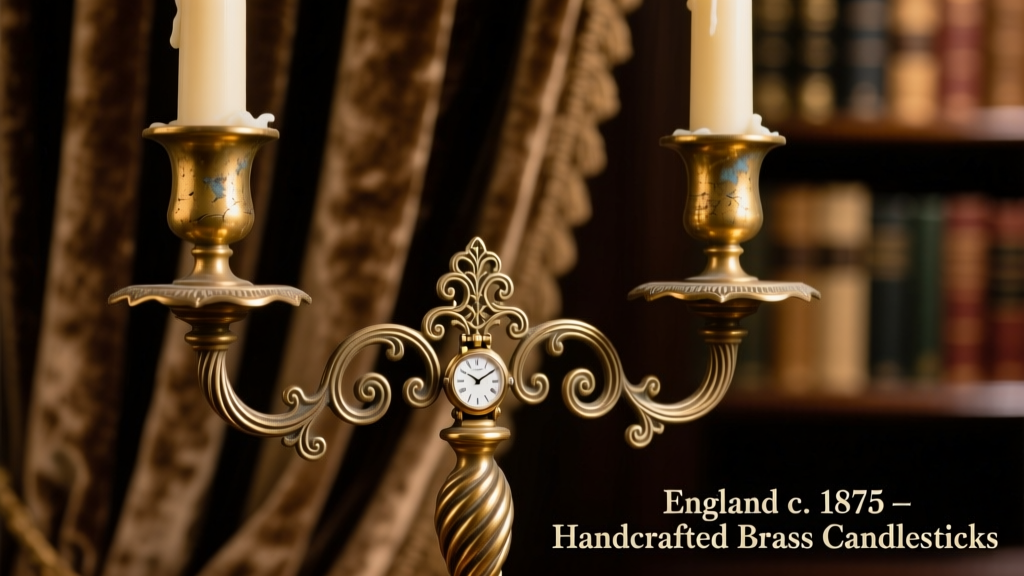
Candlesticks, Brass Double Twist, England, c. 1875 — A Pair Standing 20 Inches Tall
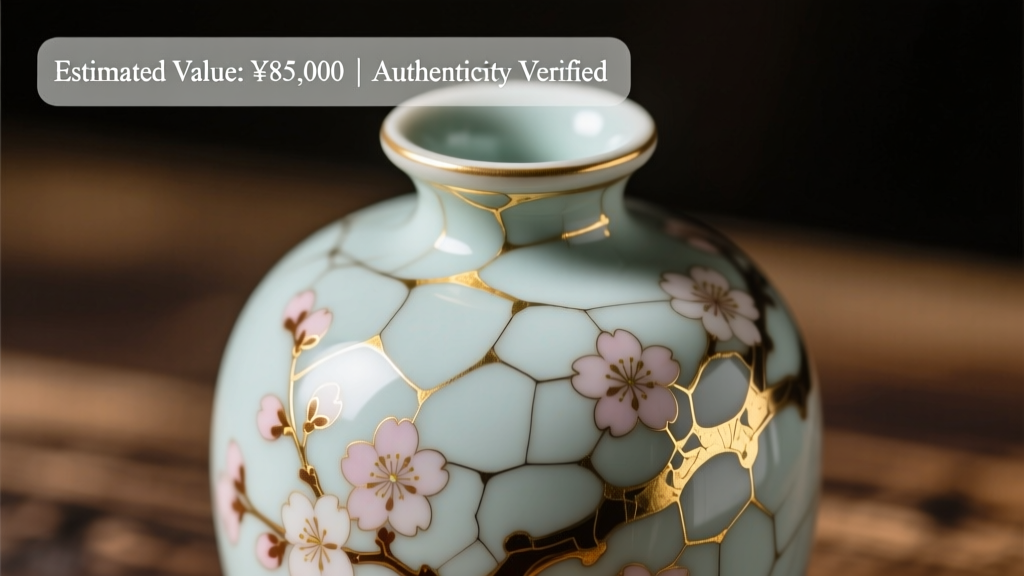
Japanese Vase Identification and Value: A Collector’s Field Guide
The 1925 Paramount Pictures Peter Pan Movie Button: A Rare Ivory-and-Black Pinback from Hollywood’s Silent Era
McCoy Cookie Jar 'Indian Feather Headdress' — A Rare 1950s Promotional Artifact Made for Pontiac Motors
Hampshire Vase Green Mottled Squat 5-In-2: A Collector’s Guide to the Iconic British Art Glass Form
Chippendale Tiger Maple Cutout Mirror, New England, c. 1780 — A Masterpiece of Colonial Cabinetmaking
Noritake Maywood Dinner Plate: History, Identification, and Market Value of a Mid-Century American Icon
Northwood Creamer Pagoda Milk Glass Blue: A 4¾-Inch Masterpiece of American Art Glass
Pewter Candlestick: Altar Ring, Baluster Turned Stem, Cylindrical Form — A 19-Inch English Ecclesiastical Masterpiece, c. 1740–1765