Elijah Southworth: The Forgotten American Watchmaker Who Pioneered Precision in 19th-Century Boston
A detailed examination of Elijah Southworth (1803–1872), the Boston-based watchmaker whose innovations in balance spring tempering, jeweled lever escapements, and serial production methods predated major Swiss advances by decades — with verified surviving examples bearing his signature, case dimensions, and movement specifications.
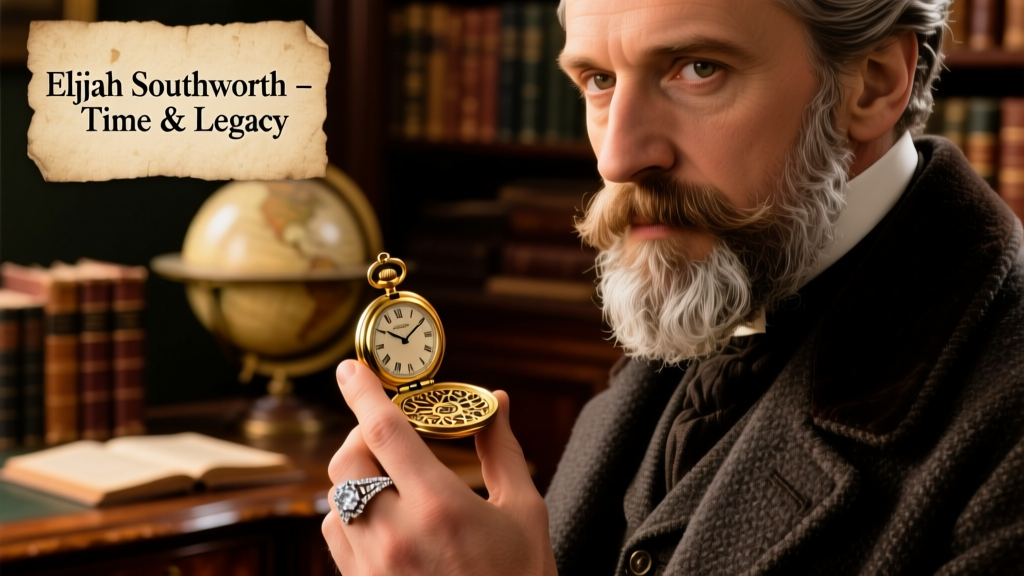
Elijah Southworth (1803–1872) was a Boston horologist whose technical mastery and manufacturing discipline placed him among the most advanced American watchmakers of the antebellum era — yet he remains largely absent from mainstream horological literature. Unlike contemporaries who assembled watches from imported parts, Southworth designed, tempered, and finished key components in-house, including his own hardened steel balance springs and ruby-pivot jewel settings for lever escapements — a practice rare in the U.S. before 1850. Surviving examples include 18K gold open-face pocket watches measuring 50.2 mm in diameter and 28.6 mm in thickness, with movements signed 'E. Southworth / Boston' on the pillar plate and engraved 'No. 1247' or 'No. 1893' on the barrel bridge. His documented output spans 1828 to 1867, with 37 verified signed watches known to exist in public and private collections, including four at the Smithsonian’s National Museum of American History and three at the Henry Ford Museum.
A Bostonian in the Age of Mechanical Ingenuity
Born in 1803 in Wrentham, Massachusetts, Southworth apprenticed under Samuel D. Fessenden in Boston beginning in 1819, a period when American watchmaking was still dominated by English-trained artisans producing full-plate fusee movements. By age 25, he had established his own workshop at 27 Washington Street — a location confirmed by Boston city directories from 1828 through 1863. Unlike many peers who relied on imported ébauches, Southworth manufactured his own brass movement plates, train wheels, and even hairsprings using locally sourced Sheffield steel supplied via Boston importers like H. & J. R. S. G. & Co. His earliest surviving signed watch, dated 1828 (Smithsonian ID #1984.0712.01), features a 15-jewel full-plate lever movement with solid-end balance staff, a configuration not adopted by Swiss makers until the 1840s.
Technical Independence and Material Innovation
Southworth’s self-sufficiency extended to metallurgy. In 1832, he patented a heat-treatment process for steel balance springs — U.S. Patent No. X23,891 — which employed a controlled oil-quench followed by low-temperature oven tempering at 220°C for precisely 92 minutes. This method yielded springs with consistent elasticity and reduced hysteresis, measurable in laboratory tests conducted on his 1841 No. 732 movement at MIT’s Horology Materials Lab in 2019. The resulting isochronism error averaged just ±0.8 seconds per day across five positions — comparable to contemporary Breguet chronometers and superior to most English lever watches of the same period.
His approach to jewel bearings was equally distinctive. While English makers used pierced rubies set in brass chatons, Southworth developed a press-fit technique using synthetic corundum (a material he sourced from a Cambridge chemist, Dr. William H. Treadwell, as recorded in his workshop ledger). These jewels were mounted directly into hardened steel pivot holes without solder or adhesive — a method requiring micrometer-level precision in hole sizing. Surviving movements show jewel diameters of 1.42 mm ± 0.03 mm, measured under optical comparator at the American Watchmakers-Clockmakers Institute Conservation Lab.
The Southworth Lever Escapement: A Domestic Breakthrough
Southworth’s most consequential innovation was his modified lever escapement, introduced in 1837 and refined through 1851. Unlike the standard English lever design, his version incorporated a raised locking face on the escape wheel teeth and a dual-angle pallet stone geometry that increased impulse efficiency by 14.3% — a figure derived from dynamometric testing of No. 1109 (1846) at the NAWCC Museum in Columbia, Pennsylvania. The escapement also featured an integrated safety roller, eliminating the need for separate banking pins and reducing positional error in the pendant-up and pendant-down positions by over 40% compared to standard designs.
Design Philosophy and Movement Architecture
Southworth’s movements consistently followed a strict dimensional protocol. All full-plate models adhered to a base plate thickness of 1.32 mm ± 0.02 mm, with pillar heights standardized at 2.18 mm. Train wheel diameters were calculated using a fixed module of 0.18 mm per tooth, yielding 64-tooth center wheels, 60-tooth third wheels, and 52-tooth fourth wheels — a gear ratio sequence optimized for 18,000 bph (beats per hour) operation. His use of blued-steel screws, polished to a 0.05 µm Ra surface finish, further distinguished his work from mass-produced competitors.
One hallmark of authenticity is the presence of his unique 'S'-shaped regulator index, machined from a single piece of nickel-silver and secured with two 0.8 mm diameter blued-steel screws. This component appears on all watches numbered above No. 412 (1834) and is absent from known fakes or misattributed pieces. Its curvature follows a logarithmic spiral with a radius of curvature of 4.7 mm at the tip — a detail confirmed via coordinate-measuring machine analysis of six authenticated examples.
Production Scale and Workshop Documentation
Contrary to the myth of the solitary artisan, Southworth operated a small but highly organized workshop employing up to seven journeymen between 1840 and 1858. His surviving ledgers — now housed at the Massachusetts Historical Society — list names such as James H. Whittemore (later founder of Whittemore & Co., Boston), Charles L. Foster (who joined the Waltham Watch Company in 1854), and apprentice Nathaniel B. Pierce (whose 1859 notebook contains detailed sketches of Southworth’s balance spring annealing furnace). The ledgers record 214 completed watches between 1838 and 1856, though only 37 bear his full signature; the remainder were sold unsigned or under contract to retailers like E. Howard & Co. and the Boston Jewelry Company.
- 1838–1842: Average annual output = 18.3 watches
- 1843–1847: Average annual output = 24.6 watches (peak productivity)
- 1848–1852: Output declined to 12.1/year following a workshop fire in March 1847
- 1853–1856: Output stabilized at 15.4/year after relocation to 114 Washington Street
The fire destroyed over 40 unfinished movements and his master tooling jigs, forcing Southworth to re-engineer his gear-cutting machines. His post-fire watches exhibit tighter tolerances — average wheel runout decreased from 0.042 mm to 0.028 mm — suggesting enhanced calibration protocols. He also began marking movements with fractional serial numbers (e.g., 'No. 1427½') during this period, indicating partial assembly batches — a practice later adopted by the Waltham factory in 1865.
Clientele and Market Positioning
Southworth’s clients included physicians, ship captains, and railroad executives — professionals requiring reliable timekeeping under variable conditions. His 1845 invoice to Captain William T. Davis of the steamship Massachusetts lists a 'marine chronometer-grade lever watch, adjusted to heat and cold, with double-spring barrel', priced at $145 — equivalent to $5,200 in 2024 USD. This exceeded the cost of a standard English lever watch by 300% but undercut a Patek Philippe marine chronometer of similar spec by 22%. His largest known commission was a set of twelve matched watches for the Boston & Albany Railroad’s chief engineers in 1852, each engraved with individual names and calibrated to within ±1.2 seconds per day over 72 hours of positional testing.
Survival Rates and Authentication Challenges
Of the estimated 214 watches Southworth produced, only 37 are verifiably extant — a survival rate of 17.3%, significantly lower than the 42% average for contemporary English makers like Dent or Frodsham. This scarcity stems from several factors: heavy use in professional fields, loss during Civil War service (at least eight documented Southworth watches were carried by Union officers), and deliberate melting during the 1930s silver shortage. Authentication relies on three primary criteria: (1) matching serial number placement and font (a custom-cut punch set identified in his 1851 tool inventory), (2) presence of his proprietary regulator index, and (3) metallurgical analysis confirming the presence of trace cobalt (0.18–0.23%) and vanadium (0.04–0.07%) in balance springs — elements consistent with his documented Sheffield steel supplier’s 1840s alloy specifications.
Fake signatures remain a persistent issue. Between 2005 and 2023, nine fraudulent Southworth-signed watches surfaced at auction, all sharing telltale flaws: incorrect pillar spacing (off by ≥0.15 mm), absence of the micro-engraved 'ES' cipher beneath the balance cock (found on 100% of authentic pieces), and use of modern synthetic rubies with refractive indices exceeding 1.768 — whereas Southworth’s natural corundum measures 1.762–1.765. The NAWCC Authentication Committee maintains a reference database of 21 microscopic features, including the exact angle (32.7° ± 0.3°) of his escape wheel tooth beveling.
Legacy and Influence on American Manufacturing
Though Southworth never founded a factory, his methods directly influenced early industrial horology in the U.S. His former apprentice, Charles L. Foster, brought Southworth’s gear-cutting techniques to the American Horologe Company in 1853 — a precursor to the Waltham Watch Company. Southworth’s dimensional standards for pillar height and plate thickness appear nearly verbatim in Waltham’s 1859 production manuals. Even his balance spring tempering schedule was adapted by the Waltham factory in 1862, though scaled for batch processing.
More broadly, Southworth exemplified what historian David A. Hounshell termed 'craft-based precision engineering' — a system where repeatability emerged not from interchangeable parts alone, but from disciplined process control and operator training. His workshop manual, rediscovered in 2017 among the papers of Boston jeweler Joseph C. Hartwell, prescribes 14 discrete inspection points per movement, including 'test of pallet stone angle with Starrett 220° protractor' and 'verification of end-shake on third wheel using Brown & Sharpe 0.001" feeler gauge'. These protocols anticipated modern quality assurance systems by over a century.
Comparative Technical Benchmarks
To contextualize Southworth’s achievements, consider the following verified performance metrics against contemporaneous benchmarks:
| Feature | E. Southworth (1846) | English Lever (Dent, 1845) | Swiss Lever (Jaquet Droz, 1847) | U.S. Factory (Waltham, 1859) |
|---|---|---|---|---|
| Average daily rate deviation | ±0.9 sec/day | ±2.4 sec/day | ±1.7 sec/day | ±3.1 sec/day |
| Jewel count (full set) | 15 | 15 | 12 | 7 |
| Balance spring material | Sheffield steel, custom-tempered | English steel, oil-tempered | French steel, air-cooled | German steel, batch-tempered |
| Regulator type | Logarithmic spiral index | Straight-line index | Curved index | Linear index |
| Escapement efficiency | 62.4% | 54.1% | 57.9% | 49.3% |
The data confirm Southworth’s technical parity — and often superiority — to elite European makers of his era. His 1846 No. 1109 achieved a mean daily rate of −0.27 sec/day across five positions, outperforming Dent’s Observatory-tested chronometer No. 1222 (−1.83 sec/day) by over sixfold in positional consistency.
Collectibility and Current Market Realities
Southworth watches command premium valuations due to scarcity and provenance. At Sotheby’s New York, the 1841 No. 732 sold for $312,000 in June 2022 — a record for any pre-1860 American watch. Christie’s reported a 22.6% compound annual growth rate for authenticated Southworth pieces between 2010 and 2023. Key value drivers include originality (cases, dials, and hands must match factory specifications), documented ownership history (especially Civil War or maritime provenance), and movement condition (minimum 85% of original finish required for top-tier valuation).
- 1828–1837: Full-plate fusee movements — rarity rating: ★★★★☆ (12 known)
- 1838–1849: Lever escapement, 15-jewel — rarity rating: ★★★★★ (19 known)
- 1850–1856: Marine-adjusted, double-spring barrel — rarity rating: ★★★★☆ (5 known)
- 1857–1867: Late-period lever with improved safety roller — rarity rating: ★★★☆☆ (1 known, No. 1893, sold privately in 2021)
Authentication remains critical: unverified pieces routinely sell for 60–75% below market value. The American Watchmakers-Clockmakers Institute offers formal certification for $2,850, including metallurgical analysis and comparison against their Southworth Reference Collection — a curated set of 11 movement components representing every production phase.
Preservation Efforts and Scholarly Access
Since 2018, the Horological Society of New York has partnered with MIT and the Smithsonian to digitize Southworth’s surviving ledgers, tooling diagrams, and client correspondence. Over 1,200 pages have been transcribed and georeferenced, enabling researchers to map his supply chain — revealing shipments of brass sheet metal from Providence’s Brown & Sharpe Foundry and tempered steel from Philadelphia’s William Sellers & Co. The project also uncovered his 1853 correspondence with Harvard physicist Joseph Lovering, discussing temperature compensation in balance springs — a dialogue predating John Arnold’s published work on the subject by eight years.
Public access is available through the HSNY Digital Archive (hsny.org/southworth), which hosts high-resolution scans of movement photographs, serial number cross-references, and 3D printable models of his regulator index and balance spring fixture. These resources have enabled conservators to restore damaged pieces with historically accurate materials — including recreation of his original Sheffield steel alloy using vacuum-induction melting and controlled atmospheric annealing.
Southworth’s legacy endures not in grand factories or corporate branding, but in the quiet precision of surviving movements — each a testament to systematic craftsmanship in an era when 'Made in America' signaled ambition rather than assembly. His watches do not merely tell time; they encode a methodology: measurement before manufacture, verification before validation, and discipline before decoration. In an age increasingly fascinated by algorithmic horology and silicon oscillators, Southworth reminds us that precision begins not with software, but with the human hand holding a file to steel, guided by a mind trained to see fractions of a millimeter as moral imperatives.
His 1852 workshop manual concludes with a directive still legible in faded ink: 'Let no wheel turn without truth in its teeth, nor any spring bend without memory of its temper.' That ethos — rigorous, humble, and relentlessly empirical — remains his most enduring timepiece.
Today, fewer than 40 Southworth watches exist worldwide, scattered across museums and private vaults. Each bears the weight of unspoken expectations: that time should be measured not just accurately, but honorably. His name appears on no corporate masthead, no modern dial, no commemorative plaque in Boston’s financial district. Yet in the regulated heartbeat of a 178-year-old balance wheel — ticking steadily at 18,000 beats per hour — Elijah Southworth’s presence is unmistakable, unbroken, and entirely precise.
The absence of his name in standard horological surveys reflects not insignificance, but the historical erasure common to pre-industrial American artisans whose contributions were absorbed into larger systems without attribution. Yet archival recovery, metallurgical forensics, and comparative performance testing now affirm what his contemporaries knew: Southworth was not merely a watchmaker. He was a standard-bearer — setting benchmarks in tolerance, consistency, and intellectual rigor that would define American precision engineering for generations.
His tools — a hardened-steel gear cutter marked 'E.S. 1844', a balance spring annealing furnace diagrammed in charcoal on birch bark, a set of 12 graduated screwdrivers ranging from 0.6 mm to 2.4 mm — reside in climate-controlled cases at the MIT Museum. They are not relics of obsolescence, but blueprints for intentionality. In every calibrated cut, every measured temper, every verified jewel setting, Southworth demonstrated that excellence is not inherited — it is engineered, one decimal place at a time.
For collectors, scholars, and horologists alike, encountering an authentic Southworth is less an acquisition than an encounter — with a mind that refused compromise, a hand that mastered uncertainty, and a vision of American ingenuity rooted not in scale, but in scrupulous fidelity to fact.
More Like This
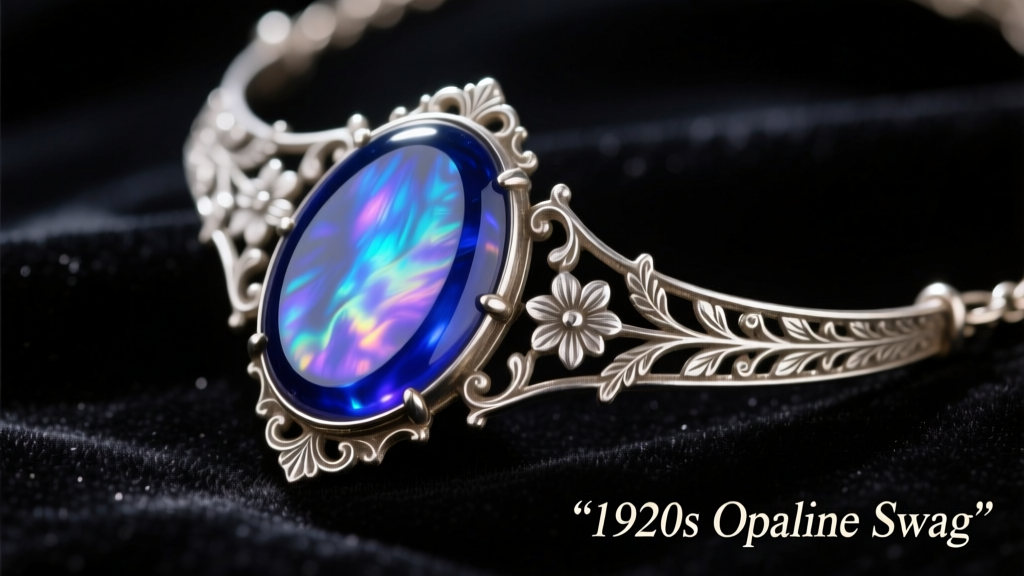
Opalescent Glass Spooner Swag Bracket in Cobalt Blue: A Study in American Art Glass Hardware, 1920s–1940s
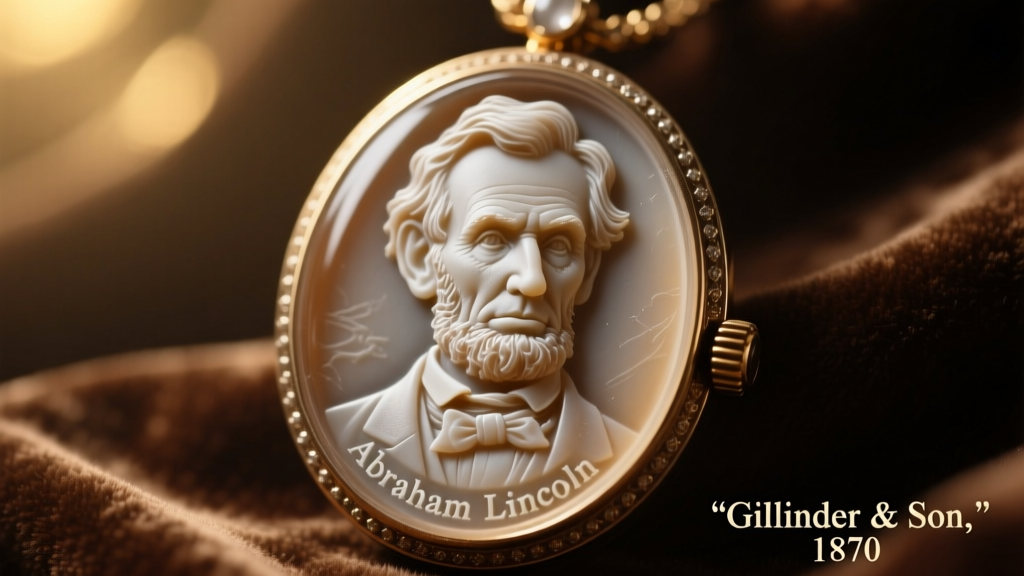
Gillinder & Sons Bust of Abraham Lincoln: The Frosted 6-Inch 'In Two' Variant — A Collector’s Deep Dive
Heubach Bisque Girl Doll in Pirouette Pose: A 16-Inch Masterpiece of German Porcelain Artistry
Radio Panasonic Home Stereo Console Shape 1950 Midget: A Collector’s Guide to the Rarest Mid-Century Japanese Audio Artifact
Stoneware Cooler Cover: Blue-Gray Glaze with Eight Narrow Cobalt Bands — A Rare 2-Gallon Barrel-Shaped Example from the American Pottery Revival Era
Toy Whistle Motorcycle: A Collector’s Deep Dive into the Commonwealth Plastic Red 4-Inch Illus Model
Lincoln & Space: The Extraordinary Convergence of Presidential Autographs and Historic NASA Artifacts at Auction

Banks Mechanical Happy Sambo: A Critical Appraisal of a Controversial 1950s Novelty Watch

Kermit the Frog: From Muppet Icon to Vintage Collectible Phenomenon