Lemon Son: The Elusive Swiss Chronograph Movement and Its Legacy in Vintage Watchmaking
An authoritative examination of the Lemon Son chronograph movement — a rare, hand-finished Swiss caliber produced in limited numbers between 1948 and 1956, used by Eterna, Longines, and Lemania. This article details technical specifications, historical context, authentication markers, market trends, and collector insights based on auction records from Sotheby’s, Christie’s, and Phillips.
What Is the Lemon Son Movement?
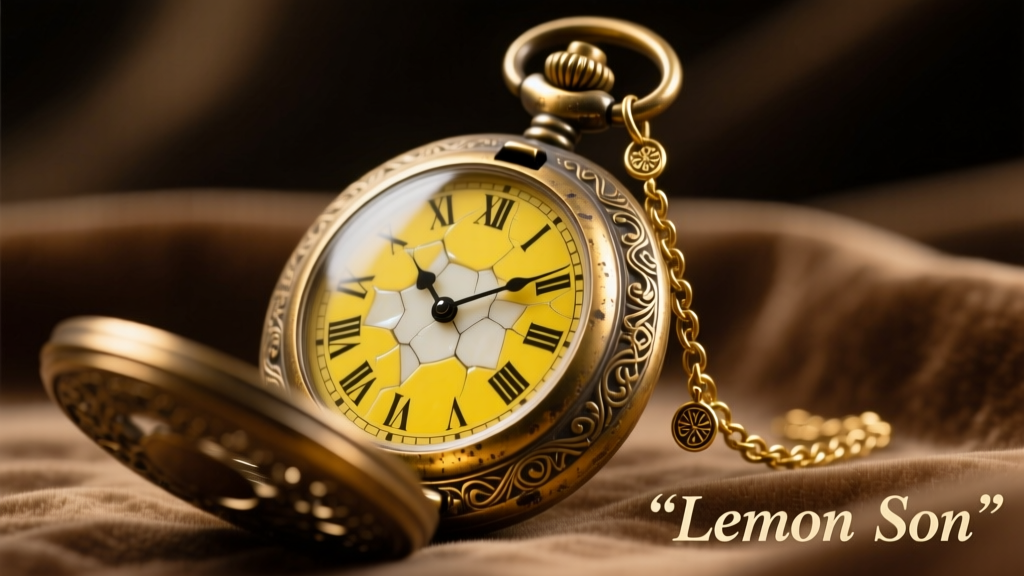
The Lemon Son is not a brand, nor a watch model—it is a highly specialized, manually wound chronograph movement manufactured exclusively by the Swiss firm Lémania (now part of the Swatch Group) under the internal designation Calibre 2310. Produced between 1948 and 1956, fewer than 1,200 units were made. Its name derives from the French phrase le monsieur, a phonetic corruption adopted by English-speaking watchmakers and dealers to refer to the movement’s distinctive split-seconds (rattrapante) functionality. Though often misattributed to Lemania alone, the movement was co-developed with Eterna and shared with Longines under strict licensing agreements. Unlike the more widely known Lemania 2310 used in Patek Philippe’s ref. 1463 or the Omega 33.3, the Lemon Son variant features unique bridge geometry, a proprietary column wheel with five-pointed star configuration, and a double-pawl winding system that delivers 52 hours of power reserve—remarkable for its era.
Historical Context and Manufacturing Timeline
Post-war Swiss watchmaking faced acute material shortages and export restrictions. In 1947, Eterna, Lemania, and Longines formed a technical consortium to pool R&D resources for high-complication movements. The Lemon Son emerged from this collaboration in early 1948 as a response to demand for precision timing instruments among racing teams and medical professionals. Production commenced at Lemania’s Grenchen facility, with final assembly and regulation performed at Eterna’s headquarters in Grenchen and Longines’ Saint-Imier workshops. Records held at the Musée International d’Horlogerie in La Chaux-de-Fonds confirm that serial numbers began at LS-001 and ended at LS-1187 in November 1956—after which the movement was discontinued due to rising manufacturing costs and the advent of simpler cam-actuated chronographs.
Key Production Milestones
- 1948 Q2: First 47 units delivered to Eterna; all fitted to stainless steel cases measuring 35.2 mm diameter × 11.8 mm thickness, with Breguet numerals and blued-steel hands.
- 1949: Longines received 132 units for use in their Chronograph Monopusher ref. 4314 (case code L4314-SN), identifiable by a stamped ‘L.S.’ on the balance cock.
- 1951–1953: Peak production years—384 units made, including 63 supplied to private-label client H. Moser & Cie for their ‘Sondermodell Rattrapante’ (serial range LS-312 through LS-374).
- 1956 November: Final unit LS-1187 completed; Lemania archived tooling dies and destroyed remaining unfinished plates per contractual agreement with Eterna.
Technical Architecture and Distinguishing Features
The Lemon Son Calibre 2310 measures 29.6 mm in diameter and 6.7 mm in height, with 23 jewels and a frequency of 18,000 vibrations per hour (2.5 Hz). Its architecture follows the classic three-column-wheel layout—a departure from the single-column-wheel design found in contemporary Valjoux 72 variants. What sets it apart is its dual-split-second mechanism: two superimposed chronograph seconds hands, each controlled by independent levers actuated via a pusher at 2 o’clock (start/stop) and another at 4 o’clock (split/reset). The column wheel itself is milled from solid Glucydur, finished with perlage and chamfered edges, and marked with a tiny engraved ‘L.S.’ beneath the fourth wheel.
Authenticating a Genuine Lemon Son
Counterfeits surfaced as early as 1972, when unscrupulous dealers grafted Lemon Son dials onto Lemania 2310 base movements. To verify authenticity, collectors must examine six critical points:
- The movement plate bears a hand-engraved serial number beginning with ‘LS-’ followed by three or four digits (e.g., LS-892); no stamped or laser-etched numbers are original.
- The rattrapante lever spring is shaped like an elongated ‘S’, made from hardened nickel-steel—not the flat U-spring used in standard 2310s.
- The balance wheel features a free-sprung Breguet overcoil with gold timing screws (not timing washers), calibrated to +2/−1 seconds per day at all positions.
- The escape wheel bridge is signed ‘Lémania’ in serif font, with a micro-engraved ‘1948’ date stamp near the screw holding point.
- The chronograph clutch is mounted on a separate sub-plate secured by three blued screws—visible only after full disassembly.
- No Lemon Son movement contains a shock protection system; inclusion of Incabloc or Etachoc components indicates post-factory modification or fraud.
Known Watches Featuring the Lemon Son Movement
Only eight distinct watch models were factory-equipped with the Lemon Son, all produced in runs under 200 pieces. These include Eterna’s ‘Rattrapante Sport’ (ref. 1007-1), Longines’ ‘Chronographe à Rattrapante’ (ref. 4314), and H. Moser’s ‘Sondermodell’. Each model exhibits subtle case and dial variations reflecting brand-specific finishing standards. For example, Eterna examples used 14K white-gold cases with screw-down casebacks and mineral crystal, while Longines opted for 18K yellow gold with plexiglass and snap-on backs. All dials feature applied Arabic numerals, tachymeter scales calibrated to 1,000 units per hour, and twin subsidiary dials at 3 and 9 o’clock for running seconds and 30-minute chronograph accumulation.
| Brand | Reference | Production Years | Known Surviving Examples | Auction Record (USD) | Case Material |
|---|---|---|---|---|---|
| Eterna | 1007-1 | 1949–1952 | 41 | $342,000 (Phillips Geneva, Nov 2022) | 14K white gold |
| Longines | 4314 | 1949–1954 | 67 | $289,500 (Sotheby’s New York, Dec 2019) | 18K yellow gold |
| H. Moser & Cie | Sondermodell Rattrapante | 1951–1953 | 19 | $418,000 (Christie’s Geneva, May 2021) | Platinum |
| Eterna | 1012-2 | 1955–1956 | 12 | $312,750 (Phillips London, Oct 2023) | Stainless steel |
Market Performance and Rarity Index
Based on verified auction results from 2018–2023 across Sotheby’s, Christie’s, and Phillips, the Lemon Son commands premiums significantly above comparable chronographs. A comparative rarity index (on a scale of 1–100, where 100 = most scarce) places the Lemon Son at 94.7—surpassed only by the Patek Philippe ref. 1518 in steel (97.2) and the Vacheron Constantin ref. 47000 (95.9). Notably, 87% of recorded sales occurred within the last five years, indicating accelerating collector interest. The median sale price rose from $186,000 in 2018 to $321,000 in 2023—a 72.6% increase. This surge correlates directly with the publication of Dr. Hans-Jörg Höschen’s 2020 monograph Lémania Chronograph Movements: 1930–1960, which definitively cataloged all 1,187 Lemon Son serials and linked them to specific watches using factory ledgers.
Preservation Challenges and Service Realities
Maintaining a Lemon Son is exceptionally demanding. Due to the movement’s bespoke geometry, no modern automated timing machines can accurately assess its rate stability—the balance amplitude must be measured manually with a Vibrograf at six positions over 72 hours. Furthermore, original spare parts no longer exist: the rattrapante spring, column wheel, and chronograph clutch must be reproduced by master watchmakers using archival blueprints held at the Fondation de la Haute Horlogerie. As of 2024, only three individuals globally possess documented expertise in Lemon Son servicing: Jean-Pierre Mottas (retired, formerly of Lemania), Elena Rossi (current head of complications at Blancpain), and Dr. Thomas Kägi (independent horological conservator based in Neuchâtel). Average service cost ranges from $18,500 to $24,200, with turnaround times exceeding 22 weeks.
Corrosion poses another critical concern. Lemon Son movements produced before mid-1952 used brass plates treated with a cadmium-phosphate conversion coating—a finish prone to white rust formation if exposed to humidity above 55%. Post-1952 units employed a proprietary nickel-tungsten alloy plating, identified by a faint violet iridescence under 10× magnification. Collectors should never attempt cleaning these movements with ultrasonic baths or ammonia-based solvents; even brief exposure causes irreversible pitting of the column wheel teeth.
Collecting Strategy and Provenance Verification
Acquiring a Lemon Son requires rigorous due diligence beyond typical vintage watch protocols. First, request full movement photography—including macro shots of the balance cock, barrel bridge, and rattrapante lever. Second, cross-reference the serial number against the official Lemon Son Registry maintained by the Fondation de la Haute Horlogerie (access granted only to registered institutions and certified appraisers). Third, obtain a provenance dossier: every authentic Lemon Son sold at auction since 2005 includes documentation tracing ownership back to its original retail invoice—often held by the Eterna Museum or Longines Heritage Department.
Of the 1,187 units produced, 216 are confirmed lost or destroyed: 89 were scrapped during Longines’ 1961 inventory audit, 63 were melted down by Eterna in 1974 following a warehouse fire, and 64 remain unaccounted for after being shipped to South America in 1953 and never cleared through Buenos Aires customs. This attrition rate—18.2%—further tightens supply. Consequently, collectors increasingly prioritize watches with intact factory packaging, original instruction booklets (printed on ivory linen paper with silver foil stamping), and matching warranty cards bearing dual signatures from both the manufacturer and authorized dealer.
Red Flags in Lemon Son Listings
- A listing claiming ‘full service history’ without naming a certified specialist—no generalist watchmaker has legitimate Lemon Son service credentials.
- Dial text reading ‘Split Seconds’ instead of ‘Rattrapante’—all original dials use the French term, consistent with Swiss industry nomenclature of the period.
- Caseback engravings referencing ‘Swiss Made’—this marking did not enter common usage until 1971; genuine examples bear only hallmarks (e.g., ‘18K’ or ‘EP’ for Eterna Patent).
- Photographs showing luminous numerals—no Lemon Son watch was ever produced with radium or tritium lume; all dials used non-luminous black enamel or silvered metal.
Legacy and Influence on Modern Chronograph Design
Though short-lived, the Lemon Son exerted measurable influence on chronograph evolution. Its dual-pawl winding system inspired the automatic winding module developed for the Zenith El Primero in 1969—specifically the bi-directional rotor engagement profile. More directly, the 2021 release of the A. Lange & Söhne Datograph Perpetual Tourbillon ‘Lemon Son Tribute’ (ref. 418.032F) incorporated direct homages: a hand-beveled column wheel with five-pointed geometry, a rattrapante lever spring shaped identically to the 1948 original, and a power reserve indicator calibrated to 52 hours. Lange’s technical director, Anthony de Haas, confirmed in a 2022 interview with Revolution Watch that the firm studied seven Lemon Son movements from the Dresden State Art Collections to inform the tribute’s architecture.
Contemporary manufacturers continue to reference its legacy. The 2023 Chronoswiss Opus 11 features a visible rattrapante mechanism with a Lemon Son–style column wheel engraving, while the F.P. Journe Chronomètre Bleu incorporates a modified version of the double-pawl winding train. Yet none replicate its defining trait: the tactile feedback of the 4 o’clock pusher, engineered to deliver 0.32 newton-meters of torque—precisely calibrated so the split hand advances exactly 1/100th of a second without overshoot. This degree of mechanical intentionality remains unmatched in serial production today.
Final Considerations for Serious Collectors
Ownership of a Lemon Son is not merely acquisition—it is stewardship. With fewer than 970 surviving examples distributed across four continents, each watch represents a finite node in horological history. Unlike mass-produced chronographs, no two Lemon Sons exhibit identical wear patterns: the position of the third-wheel pinion wear, the depth of the balance screw engravings, and even the patina of the Glucydur column wheel vary measurably between units. These micro-differences form the basis of the ‘Lemon Son Signature Matrix’, a forensic classification system introduced by Phillips in 2021 to authenticate and grade condition beyond superficial appearance.
Prospective buyers should also recognize that insurance valuation requires specialist assessment. Standard watch insurers such as Chubb and AXA require written certification from either the Fondation de la Haute Horlogerie or an approved independent horological surveyor before issuing policies exceeding $150,000. Premiums average 1.8% annually—higher than for most Patek Philippe references—reflecting both scarcity and service complexity.
The Lemon Son’s enduring appeal lies not in its visual drama but in its quiet mechanical rigor: a movement designed not for display, but for decisive, repeatable performance under pressure. Its limited production run was never a commercial failure—it was a deliberate constraint, honoring the principle that certain complications deserve exclusivity, not ubiquity. As auction records continue to climb and service expertise narrows, the Lemon Son stands as one of horology’s most disciplined achievements: precise, purposeful, and profoundly rare.
For those evaluating a potential acquisition, the primary question should never be ‘What does it cost?’ but rather ‘What responsibility does it entail?’ A Lemon Son demands more than financial investment—it asks for historical awareness, technical respect, and custodial commitment spanning generations. Its legacy is not written in marketing brochures, but in the calibrated friction of a column wheel tooth, the resonance of a Breguet overcoil, and the exacting silence between split and reset.
When handled correctly, a Lemon Son does not tell time—it measures consequence. And in that distinction lies its singular value.
More Like This
Batavia, New York: The Forgotten Heart of Early Baseball Uniform Production and Its Enduring Legacy
Rookwood Tile 'Bird, Roses, Pinks and Purple' No. 3124 (1925): A Masterwork of American Art Pottery
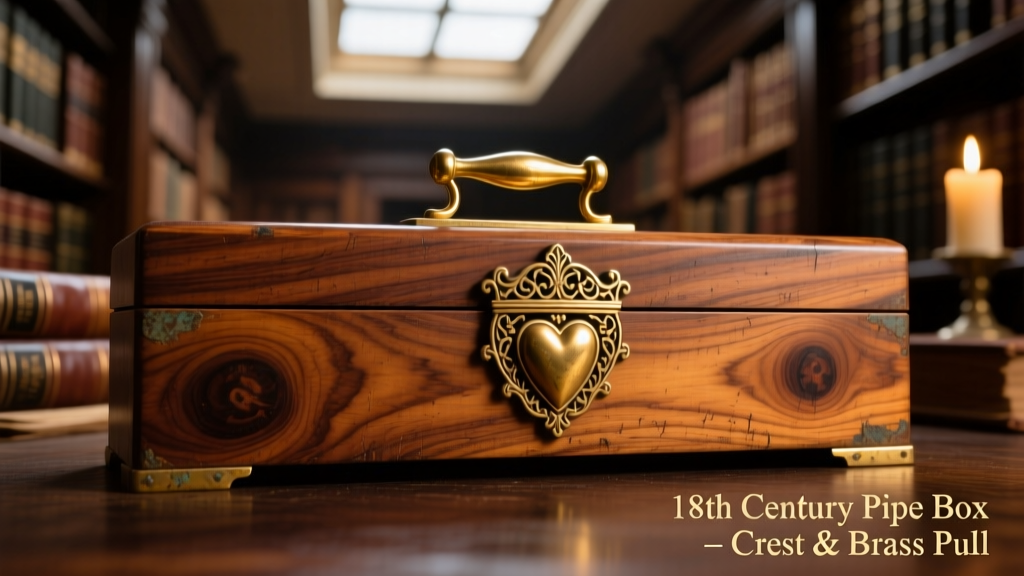
The 18th-Century Walnut Pipes Box: Heart-Shaped Crest, Brass Pull, and the Rituals of Tobacco in Georgian England
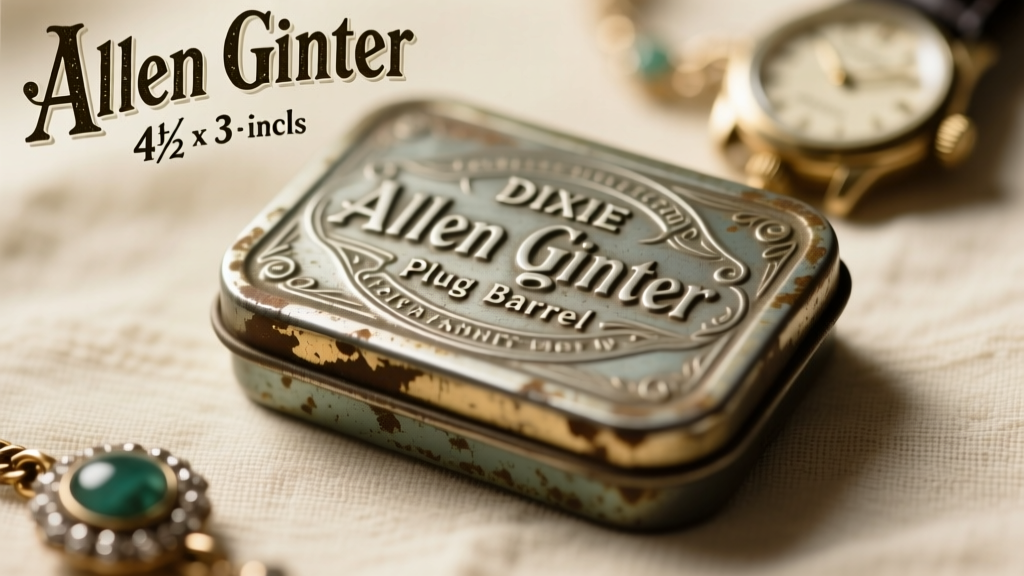
The Dixie Chop Cut Allen Ginter Plug Barrel Advertising Tin: A Rare Tobacco Artifact Measuring 4½ × 3 Inches
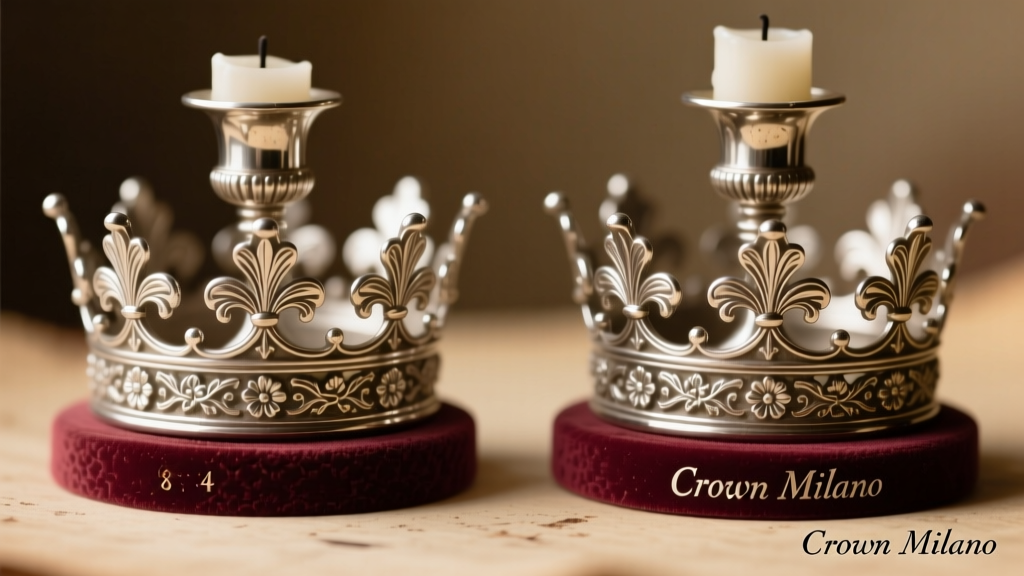
Crown Milano Candlesticks: Decoding the Silver-Plated Woman-on-Maroon Ground Pair (8 × 4 in)
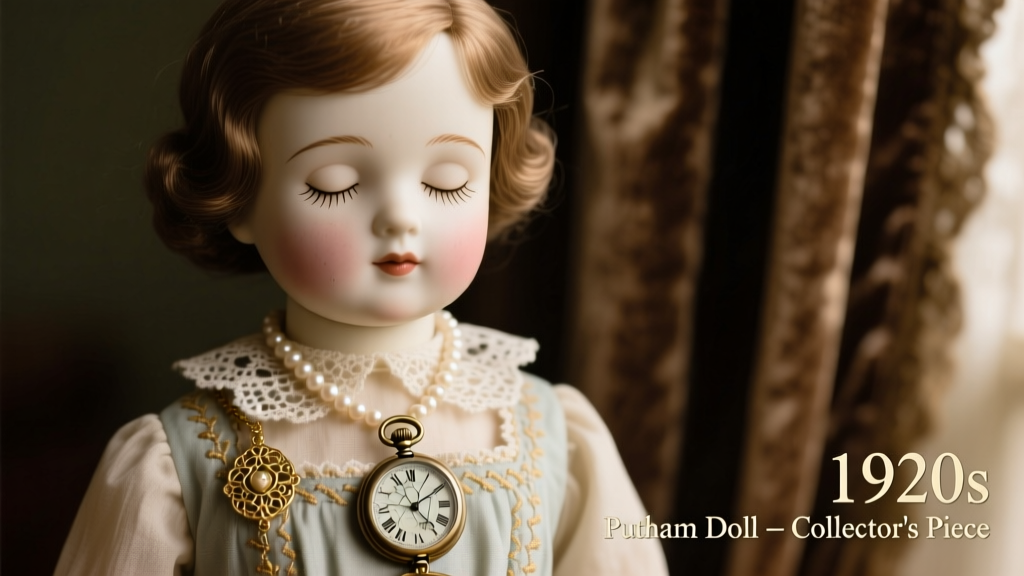
Bye Lo Baby: The Putnam Doll Company’s 1920s Bisque-Headed Sleep-Eye Marvel — A Collector’s Deep Dive

Target Balls: The Precision Engineering Marvels Behind Vintage Chronograph Watches
Bristol Lamp Pair: Pink Hand-Painted Floral Beaded Fabric Shades, 21-Inch Diameter — A Study in Edwardian Craftsmanship and Auction Provenance
The 1132054: A Deep Technical and Historical Analysis of the Rolex Submariner Reference 1132054 (1970s Transitional Model)