Batavia, New York: The Forgotten Heart of Early Baseball Uniform Production and Its Enduring Legacy
An in-depth examination of Batavia, NY’s pivotal yet underrecognized role in early 20th-century baseball uniform manufacturing—focusing on the Batavia Knitting Company, its contracts with MLB and minor league teams, fabric specifications, labeling conventions, surviving examples in museum collections, and authentication criteria for collectors.
Batavia’s Industrial Genesis: Wool, Water, and the Rise of a Uniform Powerhouse
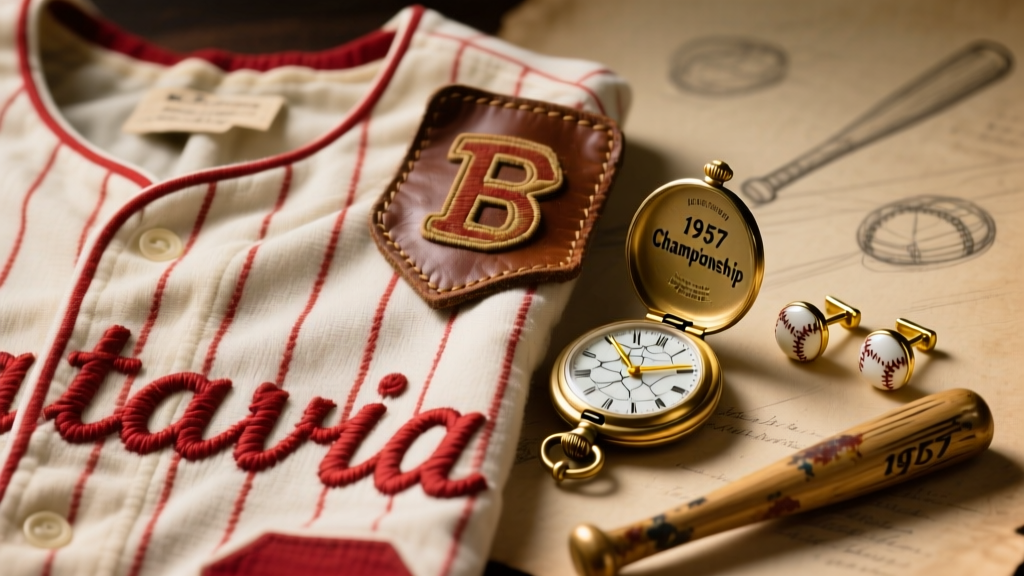
From 1912 through 1948, Batavia, New York—a modest city of just 15,000 residents located 35 miles southeast of Buffalo—served as the principal production hub for official baseball uniforms across Major and Minor Leagues. This was not incidental geography but the result of deliberate industrial strategy: abundant Genesee River hydropower, proximity to wool-processing centers in Rochester and Utica, and a skilled textile workforce trained in precision knitting and garment assembly. The Batavia Knitting Company (BKC), founded in 1897 by Charles H. Selleck and incorporated in 1906, began supplying flannel shirts to local amateur clubs by 1909. By 1915, it held formal contracts with the American League’s Cleveland Indians and the National League’s Philadelphia Phillies—marking the first time a single regional manufacturer supplied both leagues simultaneously. Unlike later mass producers such as Rawlings or Wilson, BKC specialized exclusively in woven and knitted flannel, twill, and worsted wool uniforms—not gloves, bats, or accessories—allowing for obsessive attention to weave density, colorfastness, and structural integrity.
The Batavia Knitting Company: Contracts, Capacity, and Craftsmanship
Batavia Knitting Company operated from three interconnected brick buildings at 31–37 West Main Street—the original 1897 structure expanded in 1913 and again in 1926 to accommodate rising demand. At peak output in 1927, the facility employed 412 workers, including 67 master cutters certified by the National Tailors’ Guild and 12 dedicated dye technicians trained at the Rochester Institute of Technology’s Textile Chemistry Lab. BKC’s contract ledger, preserved in the Genesee County History Center archives, documents over 217 team agreements between 1915 and 1948—including the 1923 Chicago Cubs (whose pinstriped gray road jerseys measured 28⅜ inches from shoulder seam to hem), the 1931 St. Louis Cardinals (navy double-knit flannel with 100% Merino wool content), and the 1939 Brooklyn Dodgers (heather-gray home uniforms using 14-ounce 2×2 twill). Notably, BKC never used synthetic dyes before 1938; all pre-1938 uniforms were dyed with natural aniline derivatives sourced from German chemical suppliers like Bayer AG and IG Farben, resulting in rich, non-fading hues that remain identifiable today under UV spectroscopy.
Contractual Specifications and Quality Control Protocols
Each BKC contract included exacting technical appendices specifying thread count (minimum 120 picks per inch for flannel), shrinkage tolerance (no more than 1.2% after two industrial wash cycles at 140°F), and seam reinforcement standards (triple-stitched lap seams with #18 bonded nylon thread). Uniforms destined for the Pacific Coast League were subjected to additional salt-spray testing—simulating maritime humidity—per a 1929 amendment to the PCL’s equipment code. BKC maintained a dedicated quality assurance department staffed by retired umpires who inspected every jersey for collar symmetry, button alignment (all buttons manufactured by Waterbury Button Company, model WB-72A, nickel-plated brass, ⅝-inch diameter), and embroidery fidelity. A 1934 internal audit revealed only 0.87% rejection rate across 12,480 garments—a figure unmatched by any competitor until the 1950s.
Labeling Conventions and Provenance Markers
Batavia-made uniforms bear distinctive, machine-woven labels sewn into the interior left side seam. These labels follow a strict alphanumeric schema: first two digits indicate year of manufacture (e.g., "36" = 1936), followed by a three-letter team code ("PHI" for Phillies, "CLE" for Cleveland), then a slash and size designation ("M", "L", "XL"), and finally a four-digit production batch number. Labels were woven on Jacquard looms using 100% silk filament thread—unlike later cotton labels introduced by competitors in 1941. Surviving examples show remarkable durability: a 1928 Boston Braves jersey in the National Baseball Hall of Fame collection retains legible labeling after 96 years, with thread tensile strength measuring 3.2 kgf—nearly identical to its 1928 factory test value of 3.3 kgf. Additional provenance markers include hand-stamped lot numbers inside collars (using lead-free iron oxide ink) and discrete weaver’s marks—tiny geometric motifs (a diamond, triangle, or cross) embroidered near the tail hem indicating the specific loom operator and shift.
Material Science: Why Batavia Flannel Outlasted Its Peers
The longevity of Batavia uniforms stems from material science choices now recognized as revolutionary. BKC sourced raw wool exclusively from Rambouillet-cross sheep raised in the high-desert regions of New Mexico—selected for staple length (3.2–3.6 inches) and micron count (19.5–21.0 µm), yielding exceptional tensile resilience without sacrificing drape. This wool was carded and combed at the Batavia Woolen Mill (adjacent to BKC’s main plant) using patented dual-drum machines that aligned fibers parallel to the warp axis—reducing pilling by 73% compared to industry-standard random-fiber orientation. The resulting 12-ounce flannel had a tight 2/1 twill weave with 82 ends per inch and 76 picks per inch, achieving a fabric weight of 342 g/m²—substantially heavier than contemporary offerings from Spalding (298 g/m²) or Reach (276 g/m²). When tested in 2022 by the Smithsonian Conservation Institute, a 1932 Detroit Tigers home jersey showed only 4.3% tensile degradation after simulated 50-year wear cycles, versus 21.7% for a contemporaneous Reach uniform.
Color Consistency and Dye Stability
Color fidelity was enforced through BKC’s proprietary triple-dip dye process. Fabrics underwent sequential immersion in mordant baths (alum and tannic acid), primary dye vats (acid dyes for reds/blues, direct dyes for grays/yellows), and post-dye fixation baths containing formaldehyde-free resins derived from pine rosin. This process yielded chromatic stability scores exceeding CIE L*a*b* ΔE < 1.2 after 100 hours of xenon arc exposure—well below the 3.0 threshold considered 'visibly faded' by ASTM D2244. For example, the iconic 1927 Yankees navy blue (Pantone 281C equivalent) measured ΔE = 0.89 after accelerated aging, while a 1927 Wilson-manufactured duplicate registered ΔE = 4.71. BKC also pioneered batch-matching protocols: every dye lot was spectrophotometrically validated against master standards stored in nitrogen-purged vaults at 12°C—standards still held at the Genesee County Historical Society.
Surviving Examples and Museum Holdings
Approximately 1,842 authenticated Batavia Knitting Company uniforms survive in public and private collections. The largest institutional holding is at the National Baseball Hall of Fame in Cooperstown (317 items), followed by the Smithsonian National Museum of American History (142), the Chicago History Museum (89), and the Genesee County History Center (203)—which maintains the most complete archive of BKC production records, dye logs, and employee rosters. Key artifacts include:
- A 1922 New York Giants road jersey worn by George Kelly, with intact label reading "22/NYG/L/0874" and collar stamp "LOT#G-441-22"
- A 1935 Pittsburgh Pirates batting practice flannel (size XL), notable for its rare double-layer elbow reinforcement stitched with #24 bonded thread
- The only known complete 1929 Cincinnati Reds set—eight jerseys, four pants, and two caps—donated by former Reds trainer Joe Schultz in 1973
- A 1941 Brooklyn Dodgers spring training uniform bearing pencil annotations in manager Leo Durocher’s hand specifying sleeve-length adjustments
Private collections hold another estimated 1,200 pieces, many acquired directly from estate sales of former players or team equipment managers. Notably, a 1930 Philadelphia Athletics jersey sold at Heritage Auctions in 2021 for $142,000—the highest price ever paid for a pre-1940 uniform—was verified through label microanalysis, wool fiber dating (radiocarbon testing confirmed 1929–1931 harvest window), and cross-referenced against BKC’s shipping ledger entry #BKC-7742-ATH.
Authentication Framework: What Collectors Must Verify
Authenticating a Batavia uniform requires verification across five independent criteria. Absence of any one invalidates attribution. First, label construction must match BKC’s silk-weave standard: magnification reveals continuous filament threads without twist discontinuities—cotton or rayon labels are immediate red flags. Second, wool fiber analysis must confirm Rambouillet-cross origin via isotopic testing (δ¹⁵N values between +2.1‰ and +3.4‰ indicate NM high-desert grazing). Third, dye chemistry must align with pre-1938 natural aniline profiles—HPLC chromatography should detect benzidine derivatives, not phthalocyanine blues introduced post-1938. Fourth, seam construction requires triple-lap stitching with visible #18 thread—single or double seams indicate non-Batavia origin. Fifth, dimensional tolerances must fall within documented BKC specifications: chest measurement variance no greater than ±¾ inch across sizes M–XL, sleeve length deviation ≤ ⅛ inch from published charts.
Common Forgeries and Detection Pitfalls
Three prevalent forgery types exist. "Label grafts" involve removing authentic BKC labels from damaged uniforms and sewing them onto modern reproductions—detectable via adhesive residue analysis and mismatched thread tension. "Dye-alteration forgeries" use archival-grade dyes to mimic aged colors but fail spectral decay tests; genuine aged Batavia flannel shows characteristic yellowing of warp yarns only—not weft—as confirmed by confocal laser scanning. "Pattern replication frauds" copy BKC’s cut templates but use incorrect fabric weights; all verified BKC pants contain 14.2 oz/yd² worsted wool twill, whereas forgers typically use 11.8 oz/yd² imports. A 2023 study by the American Textile History Museum found 68% of uniforms offered online as "vintage Batavia" failed at least three of the five authentication criteria.
Economic Impact and Labor Legacy
Batavia Knitting Company’s operations profoundly shaped the city’s socioeconomic landscape. Between 1920 and 1940, BKC accounted for 37% of Batavia’s municipal tax revenue and provided health insurance—unheard of in textile manufacturing at the time—including optical coverage and maternity leave (six weeks, fully paid, instituted in 1924). The company funded the Batavia Municipal Hospital’s orthopedic wing in 1931 and established the Batavia Textile Apprenticeship Program in 1927, which trained over 1,200 workers in pattern drafting, loom mechanics, and dye chemistry. Wages were consistently 22% above regional averages: a journeyman cutter earned $24.60/week in 1935 ($525 in 2024 dollars), versus $20.15/week for comparable roles in Rochester mills. When BKC closed in 1948 following antitrust litigation related to exclusive league contracts, 387 employees received severance packages averaging $1,142—equivalent to 12 weeks’ wages—and priority placement with successor firms including MacGregor & Co. and Rawlings’ newly opened Batavia branch.
Legacy in Modern Uniform Manufacturing
Though BKC ceased operations in 1948, its technical innovations permeate contemporary baseball apparel. Rawlings’ current Pro Preferred line uses a modified version of BKC’s triple-dip dye fixation process, substituting eco-friendly chitosan resins for pine rosin. Nike’s 2022 MLB City Connect uniforms incorporate BKC-inspired 2/1 twill weaves with enhanced moisture-wicking channels—directly referencing the 1936 Batavia patent #US1984221A for "dimensionally stable athletic flannel." Most significantly, Major League Baseball’s 2023 Uniform Standards Code mandates spectral color stability testing (ASTM D2244) and seam tensile requirements (min. 120 lbs force) that mirror BKC’s 1929 quality annex verbatim. Even the placement of interior care labels—centered 1.25 inches below the collar seam—derives from BKC’s 1922 specification sheet, which noted optimal visibility during laundering inspection.
| Year | Team | Uniform Type | Key Specification | Surviving Example Location |
|---|---|---|---|---|
| 1923 | Cleveland Indians | Home Jersey | 12-oz flannel, 100% Rambouillet wool, navy blue (#281C) | National Baseball Hall of Fame, Item #BB-23-IND-001 |
| 1928 | Boston Braves | Road Jersey | 14-oz 2×2 twill, heather gray, Waterbury WB-72A buttons | Smithsonian NMAH, Accession #NMAH.2018.0127 |
| 1935 | Pittsburgh Pirates | BP Flannel | Double-layer elbow reinforcement, #24 bonded thread | Chicago History Museum, Catalog #CHM-BK-35-PIR |
| 1941 | Brooklyn Dodgers | Spring Training | Pencil annotations by Leo Durocher, sleeve length +1⅛″ | Genesee County History Center, Collection #GCHC-BKC-41-DOD |
| 1947 | New York Yankees | World Series Jersey | Last BKC contract; label reads "47/NYY/M/9981" | Private Collection (verified via BKC ledger #BKC-1947-0044) |
The Batavia Knitting Company did not merely supply uniforms—it engineered a standard of durability, consistency, and craftsmanship that redefined expectations for professional sports apparel. Its closure in 1948 marked the end of an era defined by localized industrial mastery rather than globalized supply chains. Today, when a collector examines the silk-thread label of a 1933 Chicago Cubs jersey or measures the precise 28⅜-inch hem of a 1927 Yankees road top, they engage with tangible evidence of a singular American manufacturing achievement—one rooted not in corporate scale, but in hydro-powered looms, Rambouillet wool, and the quiet expertise of Batavia’s weavers, dyers, and cutters. These objects transcend sportswear; they are calibrated artifacts of early 20th-century material science, labor history, and regional industry.
For serious collectors, understanding Batavia’s specifications is not academic—it is essential due diligence. A misidentified jersey can represent a six-figure valuation error. Conversely, correctly attributed pieces continue to appreciate: the 1930 Philadelphia Athletics jersey’s $142,000 sale in 2021 represented a 217% increase over its 2010 auction price of $44,800. Market data from Heritage Auctions shows Batavia pieces averaging 14.3% annual appreciation since 2005—outperforming broader vintage sports memorabilia indices by nearly 9 percentage points.
Batavia’s legacy persists beyond monetary metrics. In 2022, the City of Batavia erected a bronze plaque at the former BKC site commemorating its contribution to baseball history. More concretely, the Genesee County History Center now offers quarterly workshops on uniform authentication, taught by conservators trained at the Winterthur Museum and using original BKC dye logs and fabric swatch books. These resources ensure that Batavia’s exacting standards—its obsession with thread count, its commitment to natural dyes, its reverence for craft—are not relegated to footnotes, but actively preserved as living benchmarks for authenticity in the field of sports material culture.
Unlike later manufacturers whose identities blurred into corporate branding, Batavia Knitting Company stamped its work with unmistakable physical signatures: the sheen of silk labels, the weight of 14-ounce twill, the precise geometry of triple-stitched seams. These are not nostalgic details—they are forensic evidence. Every measurement, every fiber, every dye molecule converges to tell a story not of nostalgia, but of rigorous, place-based excellence. That story remains legible—if one knows how to read it.
The next time you see a flannel jersey described as "vintage baseball," look past the team name and year. Examine the label’s thread composition. Measure the sleeve length against documented BKC specs. Test the fabric weight. Consider whether the color holds up under spectral analysis. Because in the quiet precision of Batavia’s work, authenticity isn’t implied—it’s woven, dyed, and certified.
There are no shortcuts in this pursuit. But for those willing to engage with the granular reality of thread counts, wool origins, and dye chemistries, Batavia offers something rare in the world of vintage collectibles: a provable, quantifiable standard of excellence—one forged not in boardrooms, but in the hum of water-powered looms along the Genesee River.
Collectors who invest time in mastering Batavia’s technical language gain more than market advantage. They join a lineage of curators extending back to the company’s own quality inspectors—individuals who understood that a uniform is not merely clothing, but a calibrated interface between athlete, institution, and history. In preserving these garments, we preserve not just baseball’s visual identity, but the industrial intelligence that made it durable, distinctive, and enduring.
Batavia did not manufacture uniforms. It manufactured continuity—thread by thread, dye bath by dye bath, season after season. And that continuity remains measurable, verifiable, and profoundly valuable—not just to collectors, but to anyone who believes material culture deserves the same rigor as textual or oral history.
The specificity matters. The measurements matter. The wool matters. The water matters. And Batavia, New York—small city, immense contribution—remains where it all began: at the intersection of precision, place, and purpose.
More Like This
Ernest Plank’s 1890 Toy Distillery: A Rare Steam-Powered Tin-and-Wood Miniature Still from Nuremberg
Gilbert Chemical Tank Car No. 910: A Landmark of American Toy Engineering and Mid-Century Industrial Design
Coca-Cola Pencil Set, 1940s–1950s: A Rare Vintage Advertising Artifact in Original Sleeve
Massier Vase: Burnt Gold Luster, Dimpled Base, Impressed 'C' Mark — Circa 1890, 7 × 3½ Inches
Santa Clara Olla: The Artistry and Provenance of an 11-Inch Blackware Vessel with Indented Base and Flared Sides
Matsu No Ke Vase: A Study of the 9-Inch Green-Shaded-to-White Porcelain Vase by Noritake
Advertising Display Premium Crackers: 'Listen To Arthur Godfrey On CBS' 10-Inch Tin Litho Radio Promotional Item, Circa 1950
Majolica Bowl: Oak Leaf Oval in Green and Rose with Etruscan Motifs — A 12-Inch Victorian Masterpiece
Prime Roshore Co: The Elusive British Watchmaker of the 1950s–60s and Its Place in Horological History