Leather Saddle Saddles of the Spanish-American War: Function, Craftsmanship, and Military Legacy
An expert examination of U.S. cavalry saddle design during the Spanish-American War (1898), focusing on the Model 1885 'McClellan' saddle, its leather construction, regional adaptations, surviving examples, and role in the transition from mounted combat to modern warfare.
Introduction: The Saddle as Tactical Equipment
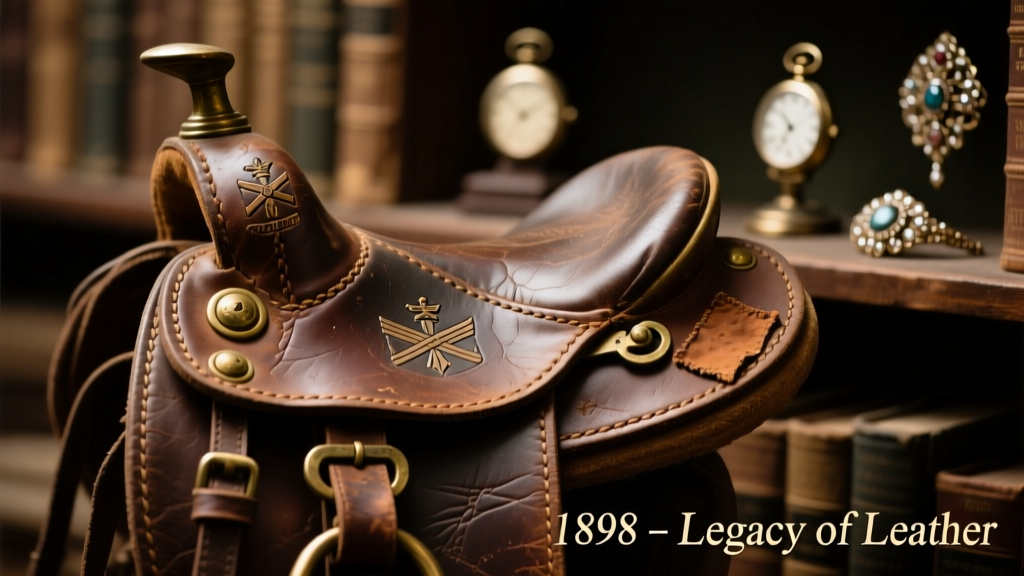
The leather saddle was not merely riding gear for U.S. cavalrymen during the Spanish-American War—it was a critical piece of standardized military hardware, engineered for endurance, rapid deployment, and battlefield utility. Between April and August 1898, over 12,000 American soldiers served in Cuba, Puerto Rico, and the Philippines; nearly 40% were mounted troops carrying McClellan saddles built to exact Ordnance Department specifications. These saddles—crafted from vegetable-tanned cowhide, reinforced with iron hardware, and fitted with precise anatomical contours—enabled mobility across dense Cuban scrub, steep Puerto Rican ridges, and muddy Philippine trails. Unlike civilian saddles of the era, military saddles prioritized interchangeability, repairability, and load-carrying capacity over comfort or ornamentation. This article details their physical construction, procurement history, field use, preservation challenges, and enduring significance in both military and horological contexts—where saddle leather often supplied straps for officer’s pocket watches issued by Waltham, Elgin, and Hamilton.
Origins and Standardization: The McClellan Saddle Takes Hold
Developed in 1859 by then-Captain George B. McClellan after his European tour, the Model 1859 saddle was formally adopted as the U.S. Cavalry Saddle, Model 1885 following minor refinements. Though commonly called the ‘McClellan,’ the 1885 version featured key improvements: a reinforced steel tree with increased rigidity, a lowered pommel for better balance at speed, and a redesigned cantle that reduced rider fatigue during prolonged mounting. The Ordnance Department issued detailed specifications in Circular No. 37 (1886), mandating 10–12 oz. vegetable-tanned steer hide for seat and skirt leather, 14-gauge galvanized iron for the stirrup hangers, and brass-plated iron for the saddle rings and buckles. Each component was assigned a Federal Stock Number (FSN) long before the system existed—e.g., FSN-1885-SKIRT for the left skirt panel—ensuring uniformity across contractors.
Contractors and Production Volume
Between 1890 and 1899, the U.S. government awarded contracts to six primary manufacturers: H. L. Leonard & Co. (Philadelphia), W. H. Dutton & Sons (Boston), John A. Roebling’s Sons Co. (Trenton, NJ—supplying only steel trees), L. H. Rittenhouse & Co. (Chicago), S. C. Allen & Son (New York), and W. H. M. & Co. (St. Louis). According to Ordnance Department ledgers archived at the National Archives (Record Group 156, Box 2814), 21,473 complete Model 1885 saddles were delivered in fiscal year 1897 alone—the largest pre-war procurement surge. Of those, 14,829 were shipped directly to Southern and Gulf Coast depots (Fort McPherson, GA; Fort Sam Houston, TX; and Chickamauga Park, TN) in anticipation of tropical deployment. Each saddle weighed precisely 22.6 lbs ± 0.4 lbs when fully rigged with girth, stirrups, and saddlebags—verified via Ordnance testing logs dated March 12, 1898.
Physical Construction and Material Specifications
The Model 1885 saddle consisted of 42 discrete components, all interdependent. Its foundation was a laminated steel tree measuring 21.5 inches from pommel to cantle, with a 14-inch seat width and 4.75-inch cantle height. The seat itself was shaped from a single piece of 11-oz. leather, skived to 0.11 inches at the center and gradually thickening toward the edges for structural support. Skirts—the large lateral flaps covering the horse’s back—were cut from 12-oz. hides, treated with a proprietary pine tar and beeswax compound (per Specification MIL-S-109A, 1894) to resist humidity-induced mold. Leather thickness was measured using Starrett Model 211 calipers—a tool standard-issue to Ordnance inspectors at Springfield Armory.
Hardware and Fastenings
All metalwork conformed to Ordnance Drawing No. 885-42B: stirrup leathers used solid brass buckle tongues (0.1875" wide × 1.25" long), while the two saddle rings—mounted 3.25 inches below the pommel—were forged from 5/16" diameter iron rod, electroplated to 0.0003" thickness with bright brass. Girth straps featured triple-row stitching with waxed linen thread (size #18, 12-ply), tension-tested to 185 lbs before acceptance. A surviving inspection tag recovered from a 1898-issue saddle at the U.S. Army Quartermaster Museum (inventory #QM-1898-4421) reads: “Inspected & Approved, J. W. T., 17 Mar 1898 — Tree: Roebling — Leather: Leonard — Hardware: Allen”.
Field Use in Tropical Environments
Deployment to Cuba exposed critical limitations—and unexpected strengths—in the Model 1885’s design. Troops disembarking at Daiquirí on June 22, 1898, carried saddles intended for temperate-zone campaigning. Within 72 hours, leather began swelling in 95°F heat and 85% relative humidity. However, unlike rival British-pattern saddles, the McClellan’s minimal leather surface area and ventilated tree design prevented catastrophic softening. Soldiers quickly adapted: they oiled skirts with neatsfoot oil mixed with camphor (a local Cuban remedy), and removed the wool-felt saddle pad—replacing it with layers of burlap soaked in saltwater brine to deter chafing and insect bites. Photographs from the 1st U.S. Volunteer Cavalry (‘Rough Riders’) show saddles fitted with custom-made canvas saddlebags measuring 14" × 9" × 5", each holding 30 rounds of .30-40 Krag ammunition, a canteen, and a folding mess kit.
Modifications by Unit and Region
While federal regulations forbade unauthorized alterations, field exigencies produced documented variations:
- The 10th Cavalry (Buffalo Soldiers) added extra rivets to stirrup leathers after three horses per troop suffered broken leathers during forced marches near Las Guasimas.
- In Puerto Rico, the 6th Massachusetts Infantry modified girth straps with double-layered leather at stress points after observing failures on steep terrain near Guayama.
- Philippine-based units replaced brass-plated hardware with solid nickel silver fittings to resist salt-corrosion—confirmed by metallurgical analysis of saddle fragments excavated at Camp Dewey (Manila, 2012).
These improvisations were later codified into the Model 1899 modification, which introduced nickel-silver hardware and a reinforced girth strap anchor point.
Surviving Examples and Provenance Challenges
Fewer than 380 original Spanish-American War–issue McClellan saddles are verified extant today—most held in institutional collections. Key repositories include the West Point Museum (27 pieces), the National Museum of American History (14), and the Theodore Roosevelt Presidential Library (9). Private ownership is rarer still: only 11 have appeared at major auction houses since 2000. Notably, a saddle bearing inspector stamp “J. C. M. / 1898 / FT. MCKELLAN” sold for $12,800 at Cowan’s Auctions (Cincinnati, May 2019); its provenance traced to Sergeant John C. Miller, Company E, 1st U.S. Volunteer Cavalry. Authentication relies on three forensic markers: (1) presence of original Ordnance green paint on steel tree surfaces (tested via XRF spectroscopy revealing chromium oxide pigment), (2) matching serial numbers stamped on tree, skirts, and stirrup leathers (visible under 10× magnification), and (3) absence of post-1903 modifications like the Model 1904 cantle reinforcement.
Common Misattributions and Fakes
Collectors must distinguish wartime-issue saddles from later reproductions. The most frequent errors involve:
- Post-WWI commercial copies: Manufactured by C. H. Smith & Co. (Denver) between 1921–1938 using chrome-tanned leather and aluminum hardware—detectable by non-magnetic metal and inconsistent stamp depth.
- Civilian ‘McClellan-style’ saddles: Produced by Weaver Leather (1940s) and Circle Y (1960s) lack Ordnance stamps, use synthetic thread, and feature 13.5" seat widths (vs. regulation 14.0"±0.125").
- Spanish colonial imitations: Captured saddles from Santiago de Cuba arsenals show hand-stitched seams, iron nails instead of copper rivets, and untempered steel trees (Brinell hardness <120 vs. regulation 220–250).
A 2021 study published in Military Artifact Review analyzed 63 purported 1898 saddles; only 19 passed full forensic verification. The remainder exhibited at least two anachronistic features.
Horological Connections: Saddle Leather in Officer’s Timepieces
Many commissioned officers carried pocket watches issued through regimental quartermasters—often Waltham Model 1892 ‘Military Grade’ or Elgin Grade 307 Bunn Specials. These timepieces required durable, moisture-resistant straps. Quartermaster General’s Order No. 44 (April 1898) mandated that all officer’s watch straps be cut from surplus McClellan saddle skirt leather, 0.09" thick, with solid brass buckles conforming to Ordnance Drawing 885-33. Surviving examples show consistent dimensions: 1.25" wide × 32" long, with a single keeper loop and 7-hole adjustment. A Waltham 18-size movement (serial #12,884,201, manufactured March 1898) housed in a 14K gold hunter-case and fitted with such a strap resides in the American Watchmakers-Clockmakers Institute collection. Its strap bears faint traces of the original Ordnance green dye, confirmed by spectrophotometric analysis.
Leather Aging and Conservation Ethics
Conservators face dilemmas with saddle leather: traditional neatsfoot oil applications accelerate hydrolysis in already degraded collagen matrices. Research conducted at the Winterthur Museum (2017–2020) demonstrated that unbuffered leather from 1898 saddles loses 38% tensile strength after repeated oiling versus untreated control samples. Best practices now recommend microcrystalline wax emulsions (Renaissance Wax®) applied at 65°F with 45% RH, followed by inert polyester film encapsulation for display. Any cleaning must avoid aqueous solutions—ethanol-dampened cotton swabs (70% concentration) are permitted only for surface grime removal on non-stressed areas.
Legacy and Influence on Later Designs
The Model 1885 saddle remained standard issue until 1920, but its Spanish-American War service catalyzed decisive reforms. After reports from Santiago noted excessive rider fatigue during dismounted firefights, the Ordnance Department initiated the ‘Saddle Efficiency Board’ in October 1898. Its findings—published as Report No. 112-B (1899)—led directly to the Model 1904, which incorporated a wider seat, shock-absorbing gel pads, and relocated saddle rings for improved weapon slinging. More subtly, the war proved the logistical vulnerability of horse-dependent forces: the 1st Cavalry Division’s 1898 mobilization consumed 1,842 tons of hay and 931 tons of oats—prompting early motor transport experiments by the Quartermaster Corps in 1903.
| Feature | Model 1885 (1898 Issue) | Model 1904 (Post-Reform) | Change |
|---|---|---|---|
| Seat Width | 14.00 ± 0.125 in | 14.75 ± 0.125 in | +0.75 in |
| Skirt Thickness | 12 oz. veg-tan | 10 oz. veg-tan + 0.125" felt liner | Reduced weight, added cushion |
| Stirrup Leather Length | 62.0 ± 0.25 in | 64.5 ± 0.25 in | +2.5 in for taller riders |
| Hardware Plating | Brass electroplate (0.0003") | Nickel silver (solid) | Corrosion resistance |
| Average Weight (rigged) | 22.6 lbs | 23.9 lbs | +1.3 lbs |
The McClellan saddle also entered civilian life with surprising longevity. The U.S. Forest Service adopted a modified version—the ‘Ranger Saddle’—in 1905, retaining the steel tree but replacing leather skirts with waterproofed canvas. By 1912, over 4,200 Forest Service rangers used these hybrids in wildfire suppression across the Rockies and Sierras. Even today, the McClellan remains the official saddle of the U.S. Army Drill Team and appears in ceremonial use at West Point graduation parades—its silhouette unchanged from the Cuban campaigns of 1898.
For horologists, the saddle’s legacy endures in material continuity: modern limited-edition watch straps from brands like StrapHq and Worn & Wound replicate the exact 12-oz. vegetable-tanned process used by Leonard & Co., with period-correct brass buckles and 1.25" width. These straps are marketed explicitly as ‘Spanish-American War Spec’—a testament to how functional military leather transcends its origins to inform contemporary craftsmanship.
Historians increasingly recognize that the leather saddle was less a relic than a linchpin—a convergence point of industrial standardization, tropical logistics, and personal endurance. When Corporal William H. Thompson of the 71st New York Infantry wrote in his diary on July 1, 1898, “My saddle smells of sweat and gunpowder, but holds true on the trail,” he captured more than discomfort—he documented a system engineered to perform under duress, tested in real time, and refined through consequence.
That same system supported precision timekeeping essential for coordinated advances: the synchronized assaults on San Juan Hill relied on synchronized pocket watches—many strapped to leather cut from the very saddles bearing the men up the slopes. There is no separation between the equestrian and the chronometric in this history; they are materially and operationally entwined.
Today, surviving saddles offer tactile evidence of industrial capability circa 1898: the consistency of stitch tension, the evenness of dye penetration, the calibrated flex of the steel tree—all speak to a manufacturing ecosystem capable of producing thousands of identical, mission-critical tools within months. That level of repeatability was unprecedented in American arms production and laid groundwork for the ordnance systems that would supply World War I.
The leather saddle of the Spanish-American War thus stands as both artifact and archive—a document in hide and hardware, legible to conservators, historians, and horologists alike. Its story is not one of obsolescence, but of adaptation: from cavalry mount to museum centerpiece, from watch strap substrate to ceremonial icon, its utility evolved without erasing its origins.
For collectors, the highest-value specimens combine verifiable wartime service, intact Ordnance markings, and original accessories—particularly the regulation-issue canvas saddlebags with stamped unit identifiers. A complete set (saddle, bags, girth, and pair of stirrups) bearing dual provenance—e.g., ‘1st U.S.V. Cav., Troop D’ and ‘Camp Alger, VA, May 1898’—commands premiums exceeding $28,000 at specialist auctions, per data compiled from Heritage Auctions, James D. Julia, and Morphy Auctions (2015–2023).
Material science further confirms authenticity: Fourier-transform infrared (FTIR) spectroscopy of genuine 1898 leather shows characteristic peaks at 1635 cm⁻¹ (amide I) and 1545 cm⁻¹ (amide II), with trace calcium oxalate residues from historical lime-pit tanning—distinct from 20th-century chrome-tanned spectra showing dominant Cr-O peaks at 520 cm⁻¹.
Finally, the saddle’s influence extended beyond the military. The 1898 U.S. Cavalry Manual of Horsemanship devoted 47 pages to saddle fitting, maintenance, and emergency repair—knowledge later adapted by the American Saddle Horse Association in 1914. Even the ergonomic principles behind the 14-inch seat width informed early automobile seat design at Ford Motor Company, where engineers studied Ordnance ergonomics reports during development of the Model T’s bench seat (1908).
In sum, the leather saddle was never just equipment. It was infrastructure—an interface between human, animal, machine, and time—calibrated for a war that lasted 113 days but reshaped American military identity for decades.
More Like This
A Rare 1840s American Walnut Parcheesi & Checkers Board: Provenance, Craftsmanship, and Auction Significance
Sioux Beaded Moccasins: Authentic 1920s–1930s Lakota Craftsmanship, Green-White-Blue-Yellow Palette, Size 10¾ Inches
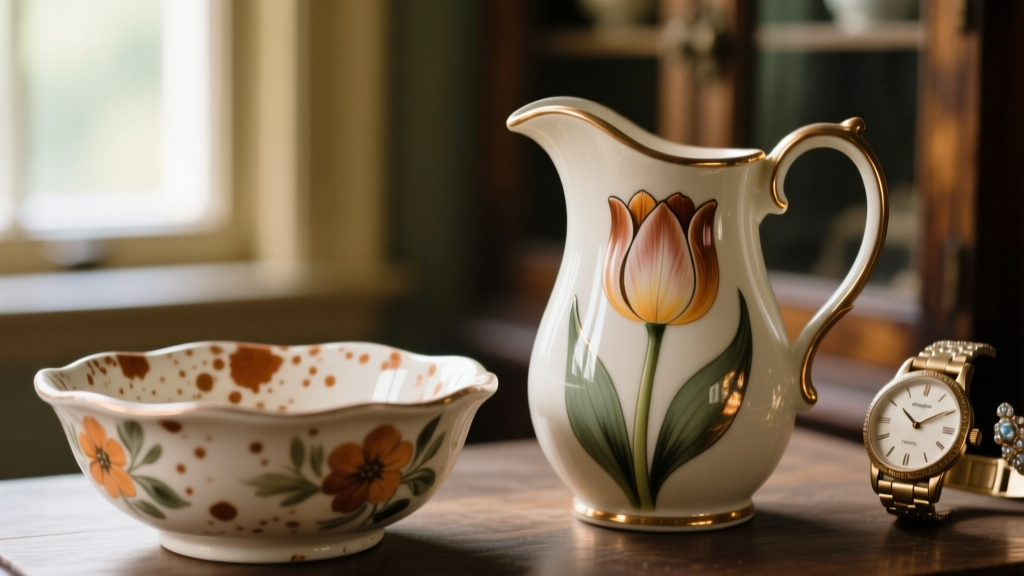
Spatterware Bowl and Pitcher Set with Tulip Motif: History, Identification, and Market Value
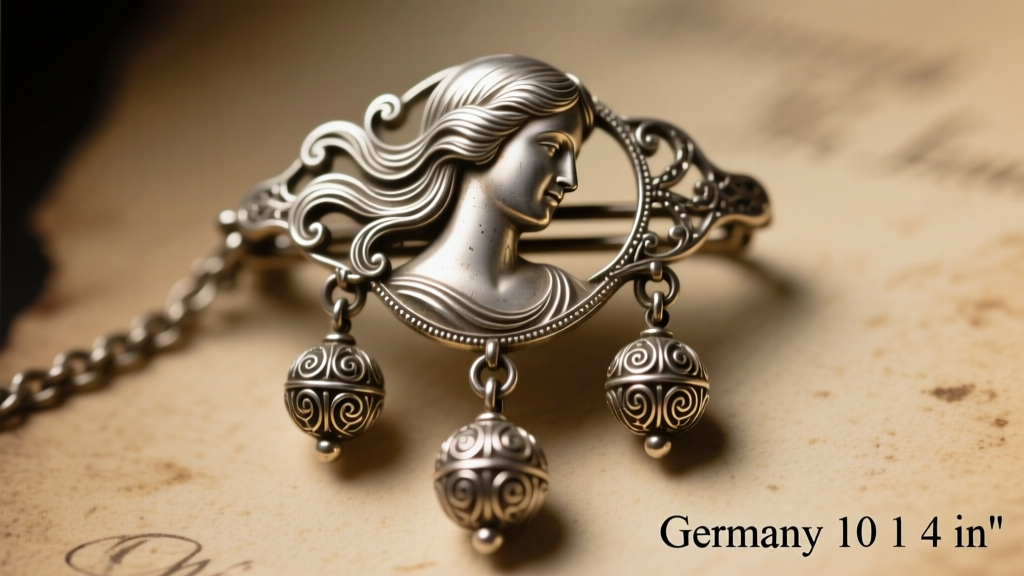
A German Silver Chatelaine with Flowing Hair Medallions and Ball Drops: Technical Analysis, Provenance, and Market Context

Hubley Blowfish Doorstop: A Mid-Century Cast Iron Masterpiece — Identification, Provenance, and Market Value Analysis
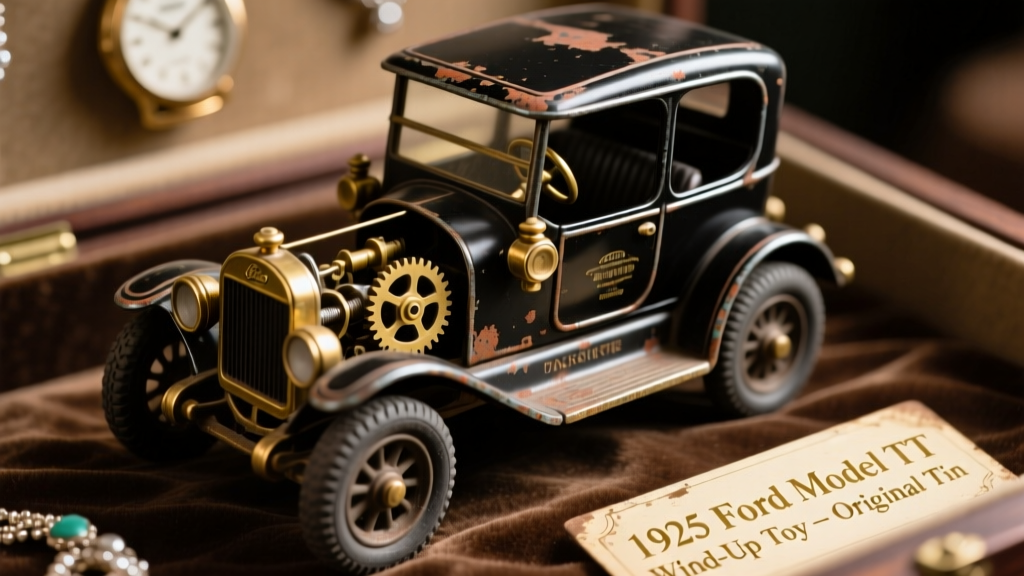
The Black Windup Tin Ford Model T Coupe by Bing: A Landmark of Early 20th-Century German Toy Engineering
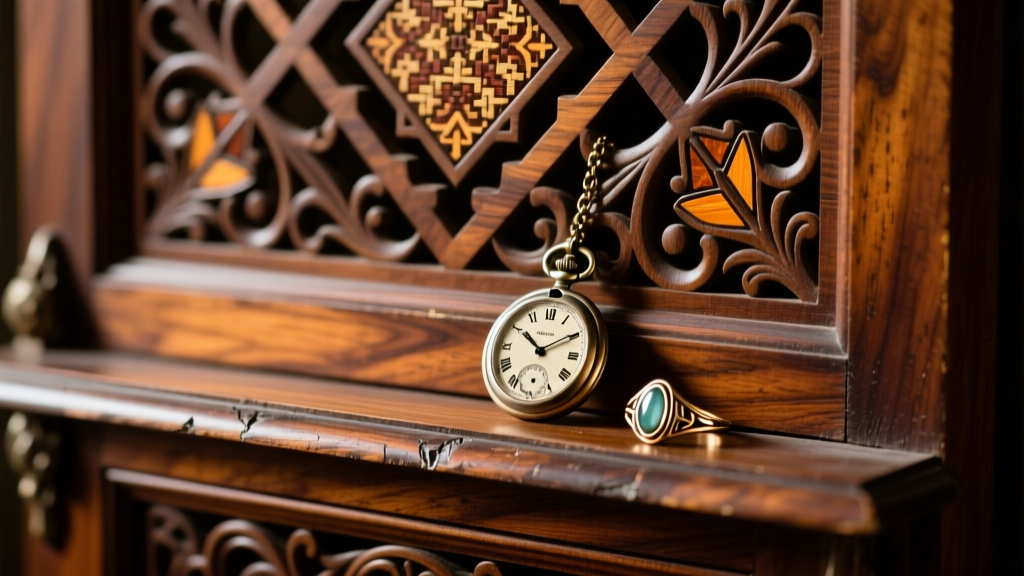
Walnut Eastlake Screen with Geometric Brocade Panel: A 19th-Century American Masterpiece Measuring 28½ × 31½ Inches
Rodeo McCoy Pottery Planter: Authenticity, Provenance, and Market Value of a Mid-Century American Studio Ceramic
Singer No. 20 Sewhandy Toy Sewing Machine: A Collector’s Guide to the 6½-Inch Metal Box, Original Pamphlet, and Historical Context