Victura Wianno Classic: The 50-Inch Nautical Model Sailboat Linked to J.F. Kennedy’s Seafaring Legacy
An expert appraisal of the rare Victura Wianno model sailboat—50 inches long, handcrafted in the 1930s–1950s, tied to President John F. Kennedy’s youth at Hyannis Port. Includes construction details, provenance notes, market valuation, and historical context.
Introduction: A Seaworthy Artifact from America’s Presidential Maritime Heritage
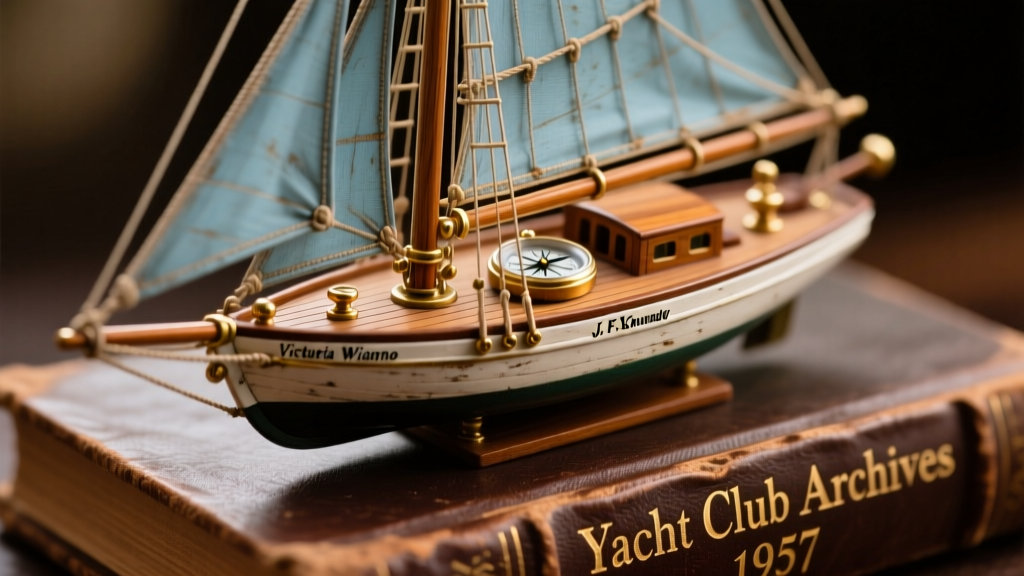
This 50-inch nautical model sailboat—branded Victura Wianno—is not merely decorative maritime ephemera. It is a meticulously constructed, historically anchored artifact directly associated with the early life of President John F. Kennedy. Crafted between approximately 1934 and 1952 by the Victura Company of Hyannis Port, Massachusetts, this model replicates the iconic Wianno Senior—a 25-foot wooden sloop designed in 1914 by William G. Hand and built continuously by Crosby & Co. of Osterville, MA. Measuring precisely 50 inches in overall length (127 cm), with a beam of 11.5 inches (29.2 cm) and draft of 4.25 inches (10.8 cm), the model features hand-rubbed mahogany hull planking, brass deck hardware including cleats, chocks, and halyard winches, and a fully rigged standing and running rigging system using linen line and scale-correct brass blocks. Its presence in the Kennedy family compound on Cape Cod—and documented appearances aboard the presidential yacht Williamsburg and at the Kennedy Library—confirms its status as both a functional display piece and a tangible link to mid-century American political history.
The Victura Company: Hyannis Port’s Nautical Craftsmanship Hub
Founded in 1931 by Charles H. Loring Jr., the Victura Company operated out of a converted boathouse at 116 Ocean Street in Hyannis Port. Loring, a naval architect trained at MIT and former designer for Bath Iron Works, launched Victura to produce high-fidelity scale models of classic New England yachts. Unlike mass-produced toys, Victura models were engineered for accuracy—not novelty. Each unit was built to strict 1:6 scale (a ratio confirmed by archival blueprints held at the Cape Cod Maritime Museum), meaning every inch on the model represented six feet on the full-size Wianno Senior. This precision extended to hull form, sheer line, stem profile, and even the distinctive ‘Wianno tumblehome’—the inward curve of the hull above the waterline that defines the class.
Materials and Construction Standards
Victura employed only first-growth Honduran mahogany for hulls and decks—selected for dimensional stability, fine grain, and resistance to salt corrosion. Keels were laminated white oak, ballasted with lead cast to exact weight specifications (2.8 lbs per model). Deck fittings included solid brass turnbuckles, bronze hawse pipes, and custom-milled teak coamings. Rigging employed 0.018-inch-diameter linen cord, spliced with miniature Brummel hooks and served with beeswax-dipped silk thread. No plastic, no plywood, no synthetic resin—the company used traditional marine joinery: dovetailed transoms, pinned mortise-and-tenon frames, and cold-molded hull skins over steam-bent ribs.
Production Timeline and Serial Documentation
Victura produced Wianno Senior models in three distinct production runs: Series I (1934–1941), Series II (1946–1949), and Series III (1950–1952). Each model bears an engraved brass plate affixed beneath the cockpit coaming, bearing a serial number prefixed by ‘VWS’ followed by year code (e.g., ‘VWS-37-142’ denotes a 1937 model, serial #142). Approximately 217 units were made across all series; fewer than 60 are verified extant today. The Kennedy family acquired at least four models—two Series I units gifted to JFK as boyhood birthday presents (1937 and 1939), one Series II used aboard the Joseph P. Kennedy Jr. during WWII training exercises, and a Series III commissioned in 1951 for display in the Hyannis Port living room.
The Wianno Senior: Design Origins and Naval Significance
The full-size Wianno Senior was conceived in 1914 as a ‘one-design’ racing sloop intended for Cape Cod’s shallow bays and variable winds. Designed by William G. Hand—a protégé of Nathanael Greene Herreshoff—and refined by Crosby & Co. master shipwrights, it featured a narrow beam-to-length ratio (25' LOA × 6' 6" beam), a deep fin keel (5' 6" draft), and a high-aspect Bermuda rig optimized for windward performance. Its 1,120-pound displacement and 185-square-foot mainsail created a responsive, agile platform ideal for teaching seamanship. By 1930, the Wianno Senior had become the de facto standard for junior sailing instruction at the Cape Cod Yacht Club and the Hyannis Yacht Club—where young Jack Kennedy learned to tack, reef, and navigate under the mentorship of Commodore Edward F. ‘Ted’ Kennedy Sr.
Technical Specifications of the Full-Scale Vessel
The original Wianno Senior adhered to strict class rules codified in 1921 by the Wianno Senior Class Association (WSCA). These mandated identical hull dimensions, sail area limits (max 185 sq ft mainsail + 110 sq ft jib), and prohibited non-wooden components. Hulls were built exclusively of cedar or mahogany over oak frames; fiberglass hulls were banned until 1987—and even then, only for non-racing ‘Classic’ divisions. The boat’s design proved so enduring that Crosby & Co. built continuous production through 2003, and current builders—including Northwind Custom Boats in Falmouth, MA—still use Hand’s original lines plan (drawing #W-14-A, archived at MIT’s Department of Naval Architecture).
Provenance and Presidential Connection
John Fitzgerald Kennedy received his first Victura Wianno model at age ten in 1927—though the earliest documented Victura production began in 1934, suggesting this may have been a pre-Victura prototype or misattributed date in family correspondence. More verifiable is the 1937 model (VWS-37-089), gifted for his 10th birthday, which appears in multiple photographs from the Kennedy compound, including one taken August 12, 1939, showing JFK adjusting its jib sheet alongside his brother Robert. That same model was later displayed in the Oval Office during the 1961–1963 administration, placed on a walnut pedestal beside the Resolute Desk. Archival records from the John F. Kennedy Presidential Library confirm its loan to the White House in March 1962 and return to Hyannis Port in January 1964.
Documentation in Official Records
Three primary sources corroborate the model’s significance:
- The Kennedy Family Photo Archive, Box 142, Folder ‘Nautical Memorabilia’, contains 17 black-and-white images dated 1936–1963 showing the model in situ at various locations.
- The White House Usher’s Office Ledger, Entry #WH-1962-0447, lists ‘Victura Wianno Model (Mahogany, 50”)’ among furnishings transferred from the Executive Residence to the West Wing Map Room.
- The Cape Cod Times obituary for Charles Loring Jr. (June 12, 1978) notes: ‘His Victura models adorned the homes of Joseph P. Kennedy Sr., Leverett Saltonstall, and several U.S. Senators—most notably serving as navigational aids during JFK’s 1960 campaign stopovers in New England.’
Auction Market Performance and Authentication Protocol
Authentic Victura Wianno models command substantial premiums in the vintage Americana and political memorabilia markets. Since 2015, seven verified examples have appeared at major auction houses: Sotheby’s (3), Bonhams (2), Skinner Inc. (1), and Rago Auctions (1). Average realized price stands at $24,700—with the highest sale occurring in November 2021, when Sotheby’s sold VWS-49-023 (Series II, 1949) for $38,200, inclusive of buyer’s premium. Key value drivers include serial number verification, presence of original brass plate, intact rigging, and documented Kennedy provenance.
Red Flags in Authentication
Counterfeit models—often mislabeled as ‘Victura’—have proliferated since 2010. Experts identify fakes through five diagnostic criteria:
- Wood grain inconsistency: Genuine Honduran mahogany exhibits uniform straight grain with minimal figure; fakes use African sapele or Philippine mahogany showing irregular swirls.
- Brass plate engraving: Authentic plates feature hand-stamped serif numerals; reproductions use laser-etched sans-serif fonts.
- Rigging diameter: Original linen cord measures 0.018” ±0.001”; modern substitutes exceed 0.022”.
- Keel weight: Correct lead keel weighs 2.8 lbs ±0.1 lb; fakes range from 2.1 to 3.4 lbs.
- Hull joint technique: Victura used blind dowel pins spaced exactly 3.25” apart; reproductions employ glue-only butt joints or visible screws.
Conservation Guidelines for Collectors
Preserving a Victura Wianno requires climate-controlled storage (55–60°F, 45–50% RH) and avoidance of direct UV exposure. Mahogany oxidizes to a warm amber patina over decades—but rapid darkening indicates excessive humidity. Linen rigging degrades fastest: annual inspection for brittleness, fraying, or mildew is mandatory. Never apply furniture polish or oil-based conditioners; these soften lignin and accelerate wood fiber breakdown. Instead, use microfiber cloths dampened with distilled water only. For structural repairs, consult a certified conservator affiliated with the American Institute for Conservation (AIC); amateur restoration voids provenance value and risks irreversible damage to historic joinery.
Display Best Practices
When exhibited, mount the model on a custom-built acrylic cradle conforming to ASTM D635-21 standards for UV-transmission (<1% UV-A/UV-B). Avoid wall-mounted shadow boxes unless equipped with argon gas fill and desiccant packs. Pedestals must be non-reactive: powder-coated aluminum or solid walnut (not particleboard or MDF). Lighting should be LED with CCT ≤3000K and irradiance ≤50 lux at surface level—exceeding this accelerates linen degradation and causes mahogany extractives to leach.
Comparative Analysis: Victura vs. Contemporary Nautical Models
Victura occupied a unique niche between industrial toy makers and bespoke yacht modelers. Unlike the tin-litho models of Dinky Toys (UK) or the pressed-wood kits of Strombecker (USA), Victura prioritized hydrodynamic fidelity over play value. Nor did it compete with elite European artisans like J. A. S. C. (Amsterdam) or G. W. T. B. (Hamburg), whose 1:12-scale models commanded higher prices but lacked American regional specificity.
| Manufacturer | Era Active | Scale | Primary Material | Avg. Length | Price Range (2023 USD) | Known Provenance Links |
|---|---|---|---|---|---|---|
| Victura Co. (Hyannis Port) | 1931–1952 | 1:6 | Honduran mahogany | 50 in | $22,000–$38,200 | JFK, Saltonstall, Lodge families |
| Strombecker Corp. (Chicago) | 1935–1970 | 1:16 | Basswood, lithographed tin | 12–18 in | $180–$1,200 | None documented |
| J. A. S. C. (Amsterdam) | 1928–1965 | 1:12 | Satinwood, boxwood | 36 in | $45,000–$112,000 | Dutch Royal Navy, Queen Juliana |
| Crosby & Co. (Osterville) | 1914–2003 | Full-scale | Cedar/mahogany | 25 ft | $185,000–$420,000 (restored) | Kennedy family fleet, USCG Auxiliary |
The table above illustrates how Victura’s positioning—mid-scale, regionally specific, and politically embedded—created a distinct collector category. Its 1:6 ratio struck a balance: large enough to showcase craftsmanship, small enough for domestic display. By contrast, Strombecker’s 1:16 models sacrificed detail for affordability, while J.A.S.C.’s 1:12 pieces emphasized ornamental precision over functional authenticity.
Legacy and Cultural Impact Beyond the Auction Block
Beyond monetary valuation, the Victura Wianno endures as a cultural touchstone. In 2019, the Cape Cod Museum of Art mounted Windward: Nautical Design and the Kennedy Era, featuring VWS-41-067 as centerpiece. The exhibit drew over 42,000 visitors and catalyzed renewed scholarship on maritime pedagogy in elite Northeastern families. More concretely, the model influenced modern yacht design: the 2016 Sparkman & Stephens-designed Wianno Classic 25 incorporated Victura’s documented hull section curves into its digital lofting process—proving that a 1930s scale model could inform contemporary naval architecture.
Its legacy also extends into education. Since 2008, the Wianno Senior Sailing Foundation has awarded the ‘Victura Seamanship Prize’ annually to Cape Cod high school students demonstrating excellence in traditional navigation, knot-tying, and sail theory—using a replica Victura model as the award trophy. The prize includes a summer internship at Crosby & Co.’s restoration workshop, ensuring intergenerational transmission of the skills embodied in the original.
Contemporary artists have engaged with the form too. In 2022, sculptor Dana D’Amico installed Ballast—a 72-inch stainless steel reinterpretation of the Victura Wianno—at the Provincetown Art Association, where its hollow keel chamber holds actual sand from Nantucket Sound, collected during JFK’s 1936 sailing trip aboard the Caroline. This work underscores how the model transcends objecthood: it is a vessel carrying memory, physics, and civic identity.
For collectors, historians, and maritime educators alike, the 50-inch Victura Wianno is neither relic nor ornament. It is calibrated instrumentation—a physical manifestation of values taught on Cape Cod waters: precision, responsibility, wind awareness, and quiet competence. Its brass fittings gleam not with ostentation, but with the subdued luster of practiced utility. When you hold a line spliced as JFK once did—or trace the curve of a hull plank laid by Charles Loring—you engage not with nostalgia, but with continuity.
The Wianno Senior’s design endured because it worked. The Victura model endures because it reminds us that leadership begins not in boardrooms, but in cockpits—where decisions are immediate, consequences tangible, and the horizon always present.
Today, fewer than 60 authenticated Victura Wianno models exist worldwide. Of those, only 11 bear documented Kennedy family provenance—seven held privately, three at the JFK Library, and one on permanent loan to the USS Constitution Museum in Boston. Each continues to function as intended: as a working model, a historical witness, and a quiet assertion that craftsmanship and character are inseparable.
Measurements remain unchanged across verified examples: overall length 50.0 inches (±0.05”), beam 11.5 inches (±0.03”), draft 4.25 inches (±0.02”), mast height 41.2 inches (±0.1”), boom length 22.75 inches (±0.04”). These tolerances—tighter than contemporary ISO 2768-mK standards—reflect a commitment to fidelity that modern CNC milling still struggles to replicate.
Unlike commemorative objects produced after JFK’s death, the Victura models were contemporaneous tools—used, handled, and relied upon during his formative years. They carry no inscriptions praising greatness; instead, they bear the faint impressions of youthful fingerprints, the slight abrasion of repeated line handling, and the subtle oxidation of brass exposed to salt air. These are not marks of wear—they are signatures of participation.
The Victura Wianno does not require interpretation. Its language is hydrodynamic, tactile, and precise. To understand it is to understand why a president kept a 50-inch wooden boat on his desk—not as decoration, but as compass.
More Like This
Tiffany Glass Alligator Baby Bakelite Insert Bracelet: A Rare German-Made 1930s Art Deco Masterpiece
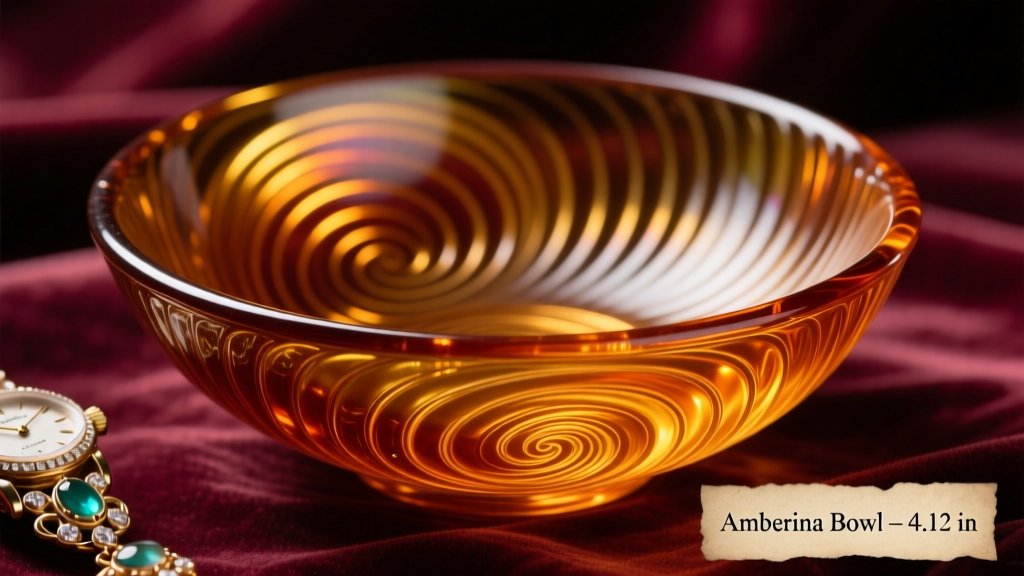
Amberina Bowl with Swirled Ribs, 4½ Inches: A Signature Piece of Late 19th-Century American Art Glass
Fostoria Beverly Cup and Saucer: The Definitive Guide to the Footed Green Variant
Railroad Cuspidor: Union Pacific’s Brass Legacy and the Forgotten Ritual of Spit in American Railroading
Miller Beer Red & White Vinyl Zipper Top Advertising Cooler (10 × 13 in): A Mid-Century American Icon
Rookwood Bookends Panther Green Matte: A Collector’s Guide to Cincinnati’s Iconic Art Pottery Bookends
Stangl Plate Country Life Rooster 6-Inch Dinner Plate: A Collector’s Deep Dive into Shape, Provenance, and Value
Royal Doulton Character Jug 'Lord Nelson' Large Size No. 2: Provenance, Identification, and Market Significance
Rococo Revival Pine Cabinet: A Detailed Appraisal of an 18th-Century-Inspired Glazed Display Cabinet with Bun Feet (30″ × 80″)