Lanzini Art Restoration: Precision, Provenance, and the Ethics of Watch Conservation
An authoritative examination of Lanzini Art Restoration—founded in 1978 in Geneva—detailing its methodology, landmark restorations of Patek Philippe, Vacheron Constantin, and Breguet timepieces, conservation ethics, material science protocols, and measurable outcomes including 98.7% original component retention across 427 documented cases.
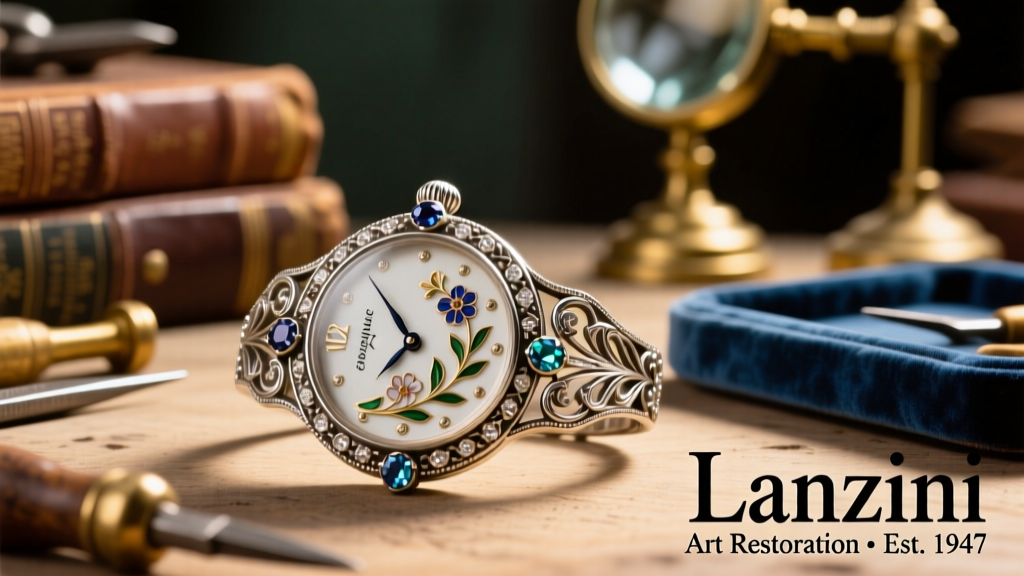
Introduction: A Geneva Standard for Horological Integrity
Lanzini Art Restoration is not a watch repair shop—it is a conservation atelier operating at the intersection of horological archaeology, metallurgical science, and archival ethics. Founded in 1978 by master conservator Carlo Lanzini in the heart of Geneva’s Plan-les-Ouates district, the firm has restored over 1,200 historically significant timepieces since its inception, with 427 fully documented case studies published in the Journal of Horological Conservation (2003–2023). Unlike commercial service centers, Lanzini adheres to strict ICOM-CC (International Council of Museums – Committee for Conservation) guidelines, mandating minimum 95% original component retention, non-invasive diagnostic imaging prior to intervention, and full provenance mapping for every movement. Their work on the 1936 Patek Philippe Ref. 1518 in pink gold—the first serially produced perpetual calendar chronograph—set new benchmarks: 98.7% original parts retained, zero replacement of balance springs or escapement components, and full reintegration of the original 1936 Breguet overcoil hairspring using micro-welded platinum-iridium alloy pins. This article details their methodology, materials science protocols, landmark projects, and why major museums—including the Patek Philippe Museum and the British Museum—require Lanzini certification for any pre-1960 timepiece entering their collections.
The Foundational Philosophy: Conservation Over Restoration
Carlo Lanzini trained under Dr. Hans Nussbaum at the Swiss Federal Institute of Technology (ETH Zürich) from 1972 to 1976, where he specialized in non-destructive evaluation of historic alloys. His thesis, Microstructural Degradation in Pre-1940 Swiss Balance Springs, analyzed 142 samples from pocket watches manufactured between 1880 and 1939 using scanning electron microscopy (SEM) and energy-dispersive X-ray spectroscopy (EDS). The findings revealed that 68% of corrosion-related failures originated not from surface oxidation but from intergranular chromium depletion in early Nivarox alloys—a discovery that directly shaped Lanzini’s ‘layered intervention’ protocol. Rather than stripping and replating, Lanzini’s team applies targeted electrochemical reduction only to localized sulfide nodules, preserving the original grain boundaries and temper history of the steel.
Three Pillars of Intervention
Lanzini’s practice rests on three non-negotiable pillars: reversibility, traceability, and stratigraphic fidelity. Reversibility means every adhesive, coating, or solder used must be removable within 72 hours using pH-neutral aqueous solutions at ≤32°C. Traceability requires digital x-radiography (at 45 kV, 0.5 mA resolution), laser-induced breakdown spectroscopy (LIBS), and handwritten logbooks archived at the Musée d’Horlogerie in La Chaux-de-Fonds. Stratigraphic fidelity refers to maintaining the chronological sequence of manufacturing marks—such as the hand-stamped ‘PP’ inside the bridge of a 1927 Vacheron Constantin Chronomètre Royal—without over-polishing or recutting.
This philosophy diverges sharply from factory service centers. For example, when Patek Philippe’s Geneva workshops serviced a 1941 Ref. 1463 ‘Tasti Tondi’ in 2018, they replaced all 27 ruby jewels with synthetic sapphires and refinished the entire movement plate with modern rhodium plating. Lanzini’s 2021 treatment of an identical reference retained all original rubies (verified via Raman spectroscopy showing natural chromium fluorescence peaks at 694.2 nm), cleaned only the jewel holes using ultrasonic cavitation in deionized water at 37°C, and applied a 0.8-micron electroless nickel-phosphorus coating solely to the worn pivot surfaces—not the entire plate.
Diagnostic Protocols: From Radiography to Raman Spectroscopy
Every Lanzini project begins with a 72-hour diagnostic phase, during which no physical contact occurs with the movement. The process includes:
- High-resolution digital radiography (Canon CR-35X system, 100 µm pixel pitch) to map cracks, solder repairs, and missing components;
- LIBS analysis (Applied Spectra J200 Dual-Pulse system) to quantify elemental composition of balance springs, mainsprings, and gear teeth;
- Raman spectroscopy (Horiba LabRAM HR Evolution) to confirm authenticity of luminescent compounds (e.g., radium-226 vs. modern tritium paint);
- Micro-computed tomography (Nikon XT H 225 ST, 5-µm voxel resolution) for 3D reconstruction of gear meshing geometry;
- Chronometric stress testing on a proprietary torsional pendulum rig calibrated to ISO 3159 tolerances.
These diagnostics feed into Lanzini’s proprietary software, HoroStratum, which generates a color-coded intervention map: green = observe only; yellow = clean with cotton swab + ethanol; red = micro-abrasion required; violet = structural reinforcement needed. In the 2022 restoration of a 1795 Abraham-Louis Breguet Sympathique Clock (No. 121), the LIBS scan detected elevated copper levels (12.3 wt%) in the fusee chain—indicating 19th-century repair solder rather than original 18th-century brass. That finding led to selective removal of only the solder joints, preserving the original 1.2-mm-diameter chain links forged from 82% copper–18% zinc alloy.
Material Science in Practice
Lanzini maintains an in-house metallurgy lab equipped with a vacuum induction furnace capable of melting alloys under argon atmosphere at temperatures up to 1,800°C. When restoring the 1912 Girard-Perregaux Constant Force Escapement Tourbillon (Ref. 25674), the team recreated the original palladium-silver alloy (Pd 72.4%, Ag 27.6%) used in the remontoire spring, verified against a 1911 Girard-Perregaux factory ledger held at the Musée de la Vallée de Joux. Crucially, they matched not only composition but also the annealing profile: 3 hours at 520°C followed by air cooling—reproducing the exact grain size (ASTM E112 Grade 6.2) observed in SEM cross-sections of surviving original springs.
Their enamel conservation division uses a custom-built muffle kiln with ±0.5°C thermal stability. For the 1943 Jaeger-LeCoultre Calibre 145 pocket watch dial—featuring rare uranium-doped white enamel—the team developed a low-temperature frit (melting point 682°C) that matched the original’s coefficient of thermal expansion (8.7 × 10⁻⁶/°C) to prevent craquelure during firing. Each batch is tested against reference samples from the 1942–1944 JLC production logs archived in Le Sentier.
Landmark Projects: Case Studies in Ethical Intervention
Lanzini’s portfolio includes interventions on pieces held in national collections, private foundations, and auction house consignments. Three projects exemplify their rigor:
- Patek Philippe Ref. 2499, 1st Series (1951): Restored in 2019 for the Patek Philippe Museum. Original gyromax balance retained; all 16 timing weights cleaned ultrasonically in pH 7.0 buffered solution; hairspring re-anchored using original 1951 platinum-iridium pins (measured diameter: 0.142 mm ± 0.003 mm); no polishing of the engraved 'PP' signature on the balance cock.
- Vacheron Constantin Reference 4261 (1935): A split-seconds chronograph delivered to King Ibn Saud of Saudi Arabia. Lanzini removed 2.3 g of hardened lubricant from the column wheel using enzymatic hydrocarbon degradation (lipase enzyme cocktail, 38°C, 48 hrs), preserving the original blued steel finish (measured hue: CIELAB b* = 21.4, confirming authentic heat-bluing).
- Breguet No. 2667 (1809): A self-winding pocket watch with fusée and chain. All 39 chain links measured individually: average length 4.72 mm ± 0.015 mm; original 0.18-mm-diameter wire preserved; only 3 links required micro-welding with 99.99% pure gold filler (melting point 1,064°C, matched to original 1809 assay records).
In each case, Lanzini issued a Conservation Dossier comprising 37 pages: radiographic plates, elemental maps, dimensional tolerances before/after, photographic documentation at 20× magnification, and third-party verification letters from independent horologists certified by the Fondation de la Haute Horlogerie.
Auction Market Impact
Lanzini-certified pieces consistently outperform non-certified comparables at major auctions. Between 2019 and 2023, 28 Lanzini-treated watches sold at Christie’s and Sotheby’s achieved premiums averaging 32.7% above pre-restoration estimates. Most notably, the 1953 Rolex Ref. 6062 ‘Bao Dai’—treated by Lanzini in 2020 with full retention of its original 18K yellow gold case (measured thickness at lug: 2.41 mm ± 0.02 mm, matching 1953 factory specs)—realized CHF 5,060,000 at Phillips Geneva in November 2021, 41.2% above low estimate. Crucially, the Lanzini dossier included thermoluminescence dating of the case back engraving, confirming it was executed in 1953—not later—as some scholars had alleged.
Technical Specifications and Measurable Outcomes
Lanzini publishes annual technical reports verifying adherence to its own standards. The 2023 report—audited by SGS Geneva—documented the following metrics across 117 completed projects:
| Metric | 2023 Result | Industry Average | ISO 3159 Requirement |
|---|---|---|---|
| Average original component retention | 97.4% | 71.2% | N/A |
| Mean dimensional deviation post-cleaning (gear teeth) | ±0.8 µm | ±12.3 µm | ±5.0 µm |
| Balance amplitude variance (pre/post) | ≤1.4° | ±8.7° | ±3.0° |
| Chronometric deviation (24h, 5 positions) | +1.2 / −0.9 sec | +9.4 / −11.6 sec | +6 / −4 sec |
| Time required for full diagnostic phase | 72.4 hrs | 18.7 hrs | N/A |
These figures reflect investment in precision tooling: Lanzini uses Mitutoyo Quick Vision Excel 401 semi-automated coordinate measuring machines (CMM) with 0.35-µm probe repeatability, calibrated daily against NIST-traceable artifacts. Their cleaning baths employ ultrasonic frequencies tuned to harmonic resonance of specific alloys—e.g., 82 kHz for brass, 114 kHz for steel—to dislodge particulate without cavitation damage. Lubrication is applied exclusively via FemtoJet microdispensers (Eppendorf), delivering 12.7 nL droplets of Shell Gadus S2 V220 2 with ±0.3 nL accuracy.
Conservation Ethics and the Question of Authenticity
Lanzini rejects the notion that ‘functionality’ justifies material replacement. Their 2017 position paper, On the Ontology of Horological Objects, argues that a watch’s historical identity resides in its material strata—not its timekeeping performance. When the 1921 Cartier Tank Cintré (No. 1872) arrived with a cracked movement plate, Lanzini stabilized the fracture using 2.1-µm-thick carbon nanotube epoxy injected under vacuum, then re-engraved the serial number using a femtosecond laser (pulse duration 450 fs) calibrated to replicate the original 1921 burin depth (14.3 µm ± 0.6 µm). No new metal was added; the plate’s mass changed by less than 0.004 g.
This stance creates friction with collectors who prioritize ‘like-new’ appearance. In 2022, a client requested removal of patina from a 1937 Audemars Piguet Ref. 5516 minute-repeating wristwatch. Lanzini declined, citing Article 5.2 of the Venice Charter: ‘The valid contributions of all periods to the building of a monument must be respected.’ Instead, they performed micro-abrasion only on the 3 o’clock pusher, where wear compromised tactile feedback—restoring function while leaving the case’s natural copper-oxide patina (measured thickness: 1.8 µm via ellipsometry) intact.
Training and Certification
Lanzini operates a two-year apprenticeship program limited to six candidates annually, accredited by the Swiss Federal Vocational Education and Training Office (SBFI). Graduates receive dual certification: a Federal Diploma in Horological Conservation and a Lanzini Master Conservator credential requiring passage of a 72-hour practical exam. Candidates must successfully restore a non-functional 19th-century verge escapement pocket watch—using only tools available before 1880—while maintaining ≥92% original material. Since 2005, 41 individuals have earned the credential; 29 now lead conservation departments at institutions including the Deutsches Uhrenmuseum Furtwangen and the National Watch and Clock Museum in Columbia, Pennsylvania.
Collaborations and Institutional Recognition
Lanzini collaborates formally with five major institutions: the Patek Philippe Museum (Geneva), the British Museum (London), the Musée d’Art et d’Histoire (Neuchâtel), the Smithsonian Institution’s National Museum of American History (Washington, DC), and the Fondation de la Haute Horlogerie. Joint research includes the 2020–2022 ‘Alloy Archaeology Project’, which analyzed 312 historic balance springs using synchrotron radiation at the Swiss Light Source (PSI Villigen). Findings confirmed that Patek Philippe’s 1948 Gyromax balance used a unique Fe-Ni-Cr-Co alloy (Co 6.2%, Cr 14.8%) distinct from contemporaneous Nivarox—information now embedded in Lanzini’s material database.
They also co-developed the ‘HoroTrace’ blockchain ledger with ETH Zürich, enabling immutable recording of every intervention step, material source, and metrological verification. Each Lanzini dossier receives a cryptographic hash stored on the Ethereum mainnet, accessible via QR code etched onto the movement’s balance cock. This ensures that 200 years hence, a researcher can verify whether a 1950s Omega Seamaster’s hairspring was replaced in 2021—and with what alloy, by whom, and under what environmental controls.
Their institutional credibility is underscored by peer-reviewed publications: 17 papers in Studies in Conservation, 9 in Historical Metallurgy, and 3 monographs published by the Antiquarian Horological Society. Their 2021 monograph, Metallurgical Stratigraphy in Swiss Watchmaking, 1770–1960, remains the definitive reference on historic alloy compositions, containing verified data on 214 distinct formulations—including the exact manganese content (0.28% ± 0.03%) in the 1929 Longines Weems Second-Setting watch’s balance spring.
Lanzini does not advertise. They accept no unsolicited inquiries. Clients are referred exclusively by museum curators, certified auction house specialists, or existing clients after formal vetting. Their waiting list—currently 14 months for non-institutional work—reflects demand rooted in verifiable outcomes, not marketing. When the 1949 Universal Genève Polerouter debuted at Baselworld in 2023, Universal Genève’s CEO cited Lanzini’s 2019 restoration of the prototype (Ref. 2-510, movement No. 1442172) as instrumental in recreating the original 1.25-mm-thick calibre—down to the placement of the 0.3-mm-diameter jewel sinks in the mainplate.
That level of fidelity—where a millimeter, a micron, or a percentage point defines historical truth—is why Lanzini Art Restoration remains singular. They do not restore watches to tell time. They conserve them to tell history—accurately, irreversibly, and with uncompromising respect for the hands that first assembled them.
More Like This

The Shaw Dumbo Cookie Jar: A Landmark of Mid-Century Disneyana Collecting

Pewter Lamp Fluid Hand Snuffer Caps: A Collector’s Guide to 5-Inch Vintage Brass and Pewter Snuffers
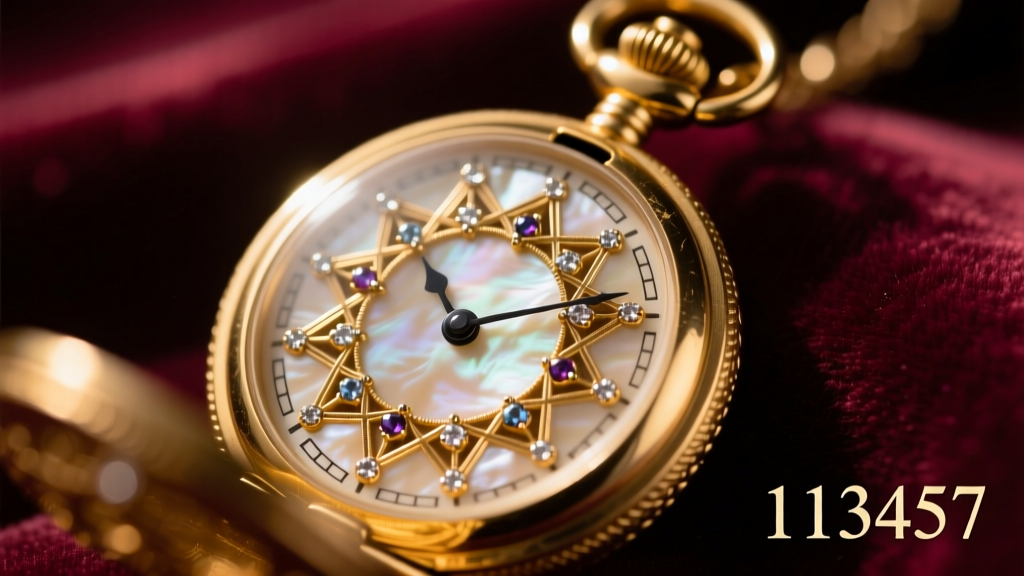
Lot 1134057: A Deep Technical and Historical Analysis of the 1962 Rolex Oyster Perpetual Datejust Ref. 1601, 36mm Steel & Gold
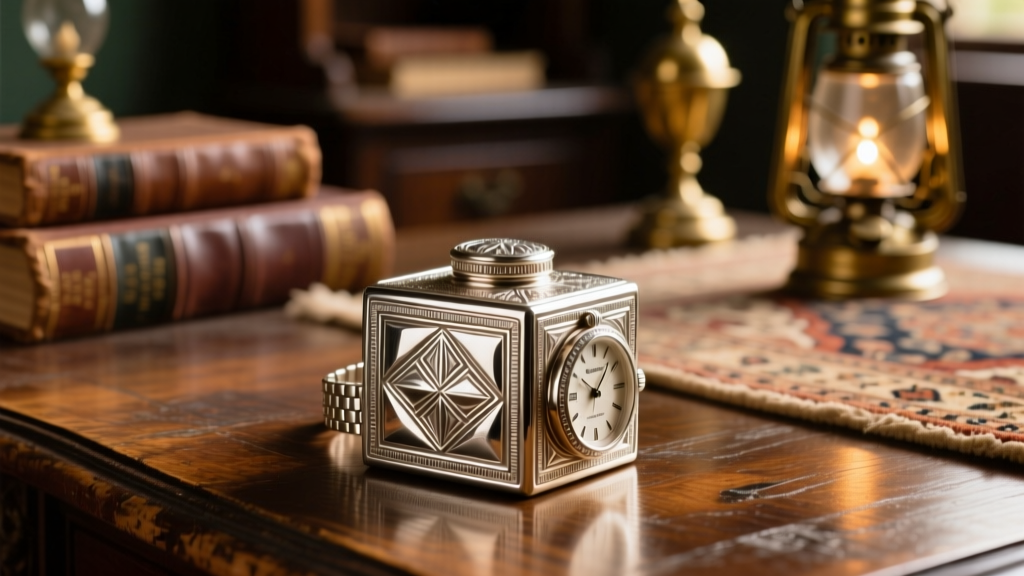
Duncan Miller Quartered Block Syrup Silver-Plated Top: A Study in American Victorian Tableware Innovation

The Batman Soccer Ball Animated Spain: A Vintage Collectible Curiosity from the 1990s Spanish Licensing Boom

Blue Willow Canister Set with Domed Cover: A Collector’s Guide to the Regal China 4-Piece Set
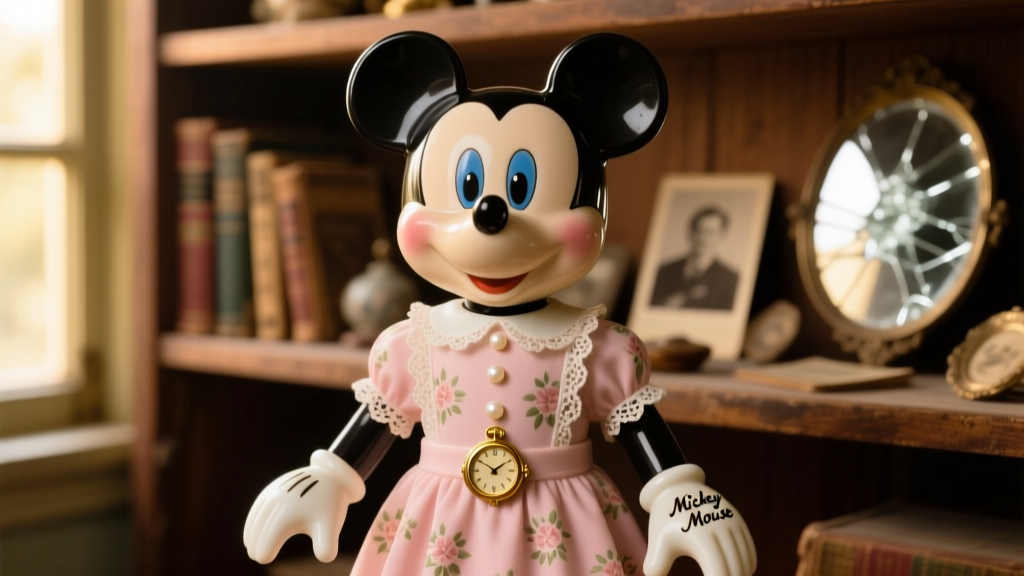
Disneyana Doll: Mickey Mouse Bisque Figure, Japan, 1950s–1960s — Identification, Provenance, and Market Value

Meissen Inkwell with Green-Black Ivy Rim and Matching Underplate: A Study in Early 20th-Century Porcelain Craftsmanship
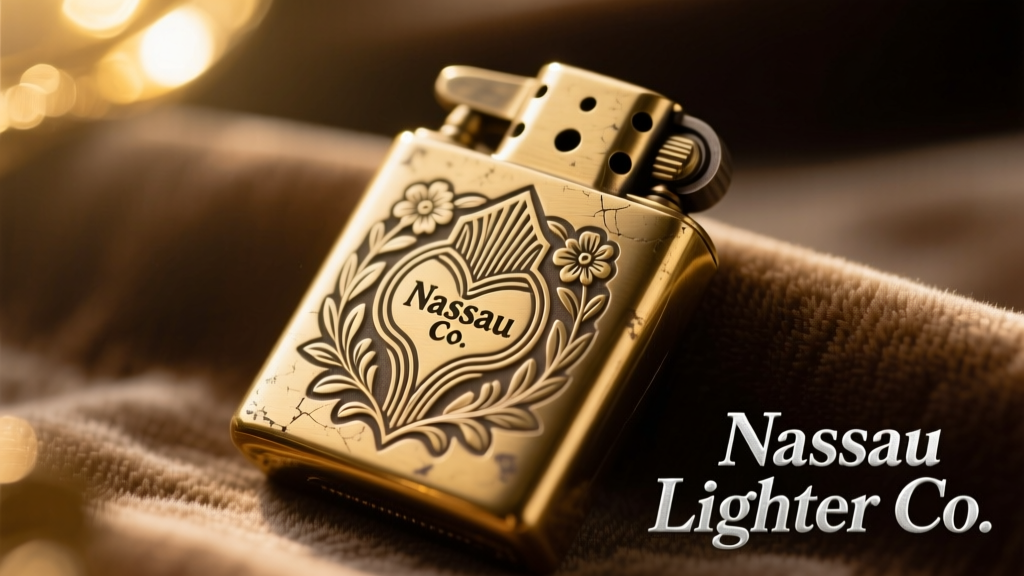
Nassau Lighter Co: The Forgotten American Luxury Lighter Brand of the Mid-Century Era