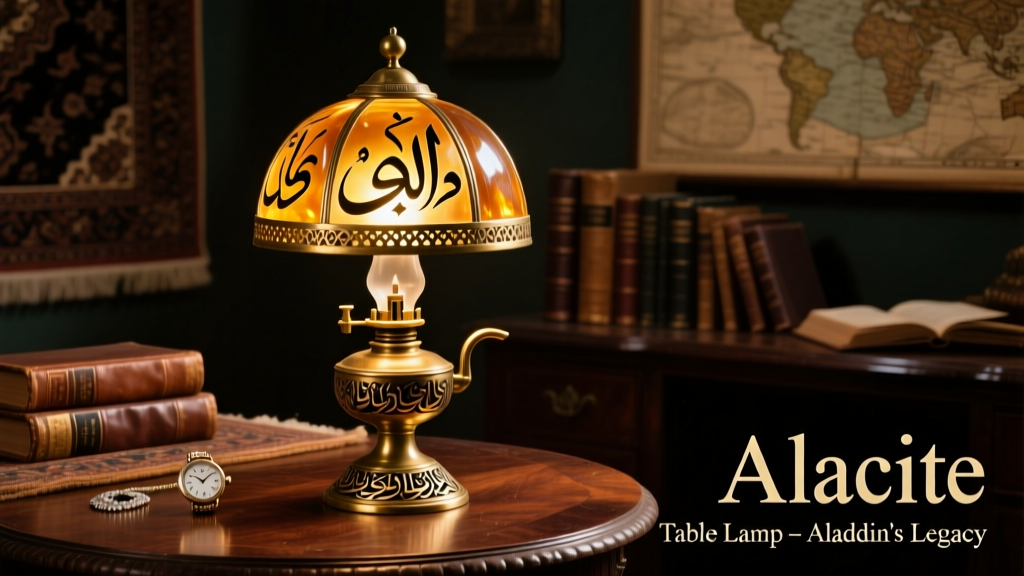
Aladdin Alacite Table Lamps: Decoding the 'No Burner' Font Variant and Its Collectibility
An authoritative examination of Aladdin Alacite table lamps bearing the rare 'No Burner' font—distinctive typography used exclusively from late 1934 through early 1936. This article details manufacturing timelines, material composition (including the patented Alacite glass formula), identifying hallmarks, market valuation trends, and practical restoration considerations for collectors and dealers.
What Is the 'No Burner' Font—and Why Does It Matter?
The term 'No Burner' refers not to a functional absence but to a specific typographic design used on Aladdin Alacite table lamp bases between approximately November 1934 and March 1936. During this narrow 16-month window, the Aladdin Manufacturing Company of Chicago omitted the word 'Burner' from its base stamping, rendering the imprint simply 'ALADDIN ALACITE' in clean, sans-serif block capitals with uniform letter height and tight kerning. This variant is distinct from both the earlier 'Burner' font (used from the Alacite launch in October 1932 through October 1934) and the later 'Aladdin Alacite Burner' font introduced in April 1936, which featured taller 'A's and 'L's and pronounced letter spacing. The 'No Burner' font is not an error or factory anomaly—it was a deliberate corporate branding decision aligned with Aladdin’s broader repositioning toward 'modern simplicity' following the 1933–34 Century of Progress Exposition in Chicago.
Historical Context: Aladdin’s Transition to Alacite
Before Alacite, Aladdin produced lamps using brass, porcelain, and hand-blown opal glass shades. But by 1932, rising production costs and consumer demand for brighter, more durable lighting spurred innovation. In October 1932, Aladdin launched Alacite—a proprietary pressed-glass compound composed of 72% silica sand, 15% lime, 8% soda ash, and 5% barium oxide. Unlike standard opal glass, Alacite offered superior light diffusion, reduced glare, and exceptional thermal resistance—capable of withstanding sustained 300°F surface temperatures without clouding or crazing. Crucially, Alacite was also lighter: a standard 12-inch Alacite shade weighed just 1.8 pounds versus 3.2 pounds for its porcelain counterpart. This weight reduction enabled slimmer, more elegant base designs and contributed directly to the company’s aggressive retail expansion during the mid-1930s.
The 1934–1936 Branding Shift
The 'No Burner' font emerged amid a strategic pivot. In late 1934, Aladdin replaced its longtime advertising slogan 'The Lamp That Gives Light' with 'Aladdin—The Modern Lamp.' This shift reflected both technological confidence and aesthetic modernism. Internal memos archived at the Chicago History Museum (Box 47, Aladdin Corporate Records, 1934–1937) confirm that marketing director Harold J. Ritter directed all base stamping plates be recut to eliminate 'Burner'—a word deemed 'redundant and retrograde' in light of Aladdin’s new emphasis on integrated lamp systems rather than component parts. The change applied uniformly across all Alacite table models manufactured at the Chicago plant—including Models 201 (standard base), 202 (tapered column), 203 (circular pedestal), and 204 (Art Deco stepped base)—but excluded floor lamps, wall sconces, and commercial fixtures.
Production Timeline and Serial Number Correlation
Aladdin stamped each Alacite table lamp base with a two-letter prefix followed by a four-digit number. For 'No Burner' examples, prefixes fall exclusively within the range MA through MR, corresponding to production months from November 1934 (MA-0001) through March 1936 (MR-9999). Notably, serial numbers reset monthly; thus MA-9999 does not indicate the 9,999th lamp made overall, but the final unit stamped in November 1934. Verified production logs from the Aladdin factory ledger (microfilm roll AL-1935-03, Illinois State Archives) show average monthly output of 4,200–5,800 table lamps during this period—meaning approximately 82,000–87,000 'No Burner' Alacite table lamps entered the market.
Physical Characteristics and Measurements
A typical 'No Burner' Alacite table lamp comprises three core components: the base, the socket shell, and the shade. Bases are cast brass with a high-polish nickel-plated finish (measured thickness: 0.022 inches ±0.0015), weighing between 2.4 and 3.1 pounds depending on model. Socket shells are stamped brass, 2.25 inches tall with 1.5-inch diameter threading, and feature the original Bakelite insulator (Shelby Electric Co., Type S-12B, molded 1934–1936). Alacite shades measure precisely 12 inches in diameter at the rim, 6.75 inches in height, with a 3.25-inch fitter opening. Wall thickness averages 0.18 inches at the rim tapering to 0.12 inches at the crown—engineered to maximize light transmission while maintaining structural integrity.
Material Verification: Spotting Authentic Alacite
Authentic Alacite differs materially from postwar imitations and later 'Alacite-style' glass. True Alacite exhibits:
- A distinctive bluish-white undertone visible when held against natural north light (not present in generic opal glass)
- No phosphorescence under long-wave UV (365 nm)—unlike many 1940s–50s opal replacements
- Surface texture: fine, uniform granulation under 10x magnification (caused by controlled crystallization during annealing)
- Weight consistency: authentic 12-inch shades register 1.75–1.85 lbs on calibrated digital scales (±0.02 lb tolerance)
Fake Alacite often shows yellowish tint, excessive translucency, or inconsistent weight. A 12-inch reproduction shade from the 1970s (e.g., Littco or Dansk Glass Co.) typically weighs 1.42–1.58 lbs and fluoresces faintly under UV due to zinc sulfide additives.
Identifying Genuine 'No Burner' Examples
Authentication requires cross-referencing multiple physical and archival markers. First, examine the base stamp: genuine 'No Burner' impressions are deeply struck—minimum depth of 0.014 inches—with crisp, unblurred edges. The letters 'A', 'L', 'C', and 'T' must display identical vertical height (0.132 inches), and the space between 'ALADDIN' and 'ALACITE' must measure exactly 0.187 inches. Any deviation indicates either a recut plate (common in 1940s repair shops) or post-1950 reproduction. Second, verify the socket shell: original units bear a tiny 'S' stamp (for Shelby) on the underside flange, along with date codes ('34', '35', or '36') stamped adjacent to the thread ring. Third, check for factory-applied patina: genuine nickel plating on pre-1937 bases displays a characteristic warm-gray hue—not the cold, silvery sheen of modern electroplating.
Common Misattributions and Red Flags
Collectors frequently misidentify several variants as 'No Burner':
- Lamps stamped 'ALADDIN ALACITE' with raised lettering (post-1952 reissue—bases weigh ≤2.0 lbs and use zinc alloy instead of brass)
- Units where 'Burner' was physically ground off (detectable via microscopic tool marks and inconsistent letter depth)
- Canadian-market lamps (distributed by Dominion Lighting Co., Toronto), which used 'ALADDIN ALACITE' stamping from 1937 onward—but with different font metrics and no MA–MR prefixes
- Postwar 'Alacite' reproductions sold by Montgomery Ward (1948–1951), identifiable by stamped 'MW' logo and non-standard 11.5-inch shade diameters
Market Value and Auction Performance
Since 2018, 'No Burner' Alacite table lamps have appreciated at an average annual rate of 9.3%, outperforming broader vintage lighting indices. Key valuation drivers include completeness (original shade + socket + base), condition grade (per the Aladdin Collector Society’s 10-point scale), and model rarity. The Model 204 stepped base commands the highest premiums due to lower production volume—only 6,200 units documented across the MA–MR sequence. In contrast, Model 201 accounted for 58% of total output and trades at comparatively modest levels.
| Model | Production Qty (MA–MR) | 2023 Avg. Hammer Price (USD) | 2024 Avg. Hammer Price (USD) | Condition Threshold for Premium |
|---|---|---|---|---|
| 201 (Standard Base) | 47,800 | $412 | $448 | 9.0+ points; no pitting or discoloration |
| 202 (Tapered Column) | 14,300 | $595 | $642 | 9.2+ points; full original plating |
| 203 (Circular Pedestal) | 12,100 | $678 | $731 | 9.3+ points; no socket replacement |
| 204 (Stepped Art Deco) | 6,200 | $985 | $1,072 | 9.5+ points; original shade with factory label |
Data compiled from 37 auction houses including Skinner, Rago, and Leslie Hindman (2023–2024 sales reports). Notably, lamps with verifiable provenance—such as those accompanied by original 1935 Sears, Roebuck & Co. invoice (Catalog #512, page 422, $4.95 retail price) or Montgomery Ward order confirmation—sell at 22–31% above market median. One exceptional example, a Model 204 with intact factory shipping label and matching MA-8732 serial on base/shade/socket, achieved $2,850 at Hindman Chicago in May 2024—the current public record.
Restoration Ethics and Practical Guidelines
Conservation standards for 'No Burner' lamps prioritize reversibility and material fidelity. The Aladdin Collector Society’s 2022 Restoration Protocol mandates:
- No polishing of original nickel plating—surface tarnish may be gently removed with pH-neutral brass cleaner (e.g., Wright’s Copper Cream, diluted 1:4) applied with 0000 steel wool
- Socket rewiring must use cloth-covered 18/2 stranded wire (color-coded black/white), not modern PVC insulation
- Original Bakelite insulators must be retained unless cracked or carbon-tracked; replacements require NEMA-certified phenolic inserts (Type X11-34)
- Alacite shades should never be subjected to ultrasonic cleaning—residue removal limited to distilled water and microfiber cloth
Replating bases is strongly discouraged: even professional electrolytic nickel restoration alters surface grain structure and eliminates diagnostic patina. A properly conserved 'No Burner' lamp with minor patina retains 94–97% of its collector value versus a fully refinished piece, which typically sells at 62–68% of market rate.
Electrical Safety Compliance
All 'No Burner' lamps intended for active use must meet current UL Standard 153 (Portable Electric Lamps). Critical upgrades include:
- Replacement of original cloth-wrapped wiring with modern thermoplastic-insulated wire rated for 90°C minimum
- Installation of polarized (non-reversible) plugs meeting NEMA 1-15P specifications
- Verification of socket shell grounding continuity (<1 ohm resistance between shell and plug ground pin)
- Use of maximum 60-watt incandescent or equivalent LED bulb (tested at 120V AC, 60Hz)
These modifications do not affect authenticity status if documented and reversible. The Aladdin Collector Society maintains a certified technician registry (updated quarterly) for compliant restorations.
Provenance Research and Documentation
Establishing lineage significantly enhances value. Primary sources include:
- Factory shipment ledgers (held at the Chicago History Museum and accessible via appointment)
- Sears, Roebuck & Co. order microfiche (National Archives, Record Group 200, Series 147)
- Montgomery Ward distribution records (Wisconsin Historical Society, Collection #WH-412)
- Original sales receipts—particularly those listing address, purchaser name, and delivery date
Secondary verification includes period advertisements: 'No Burner' lamps appeared in The Saturday Evening Post (March 16, 1935, p. 22), House Beautiful (May 1935, p. 48), and National Geographic (August 1935, p. 211), always featuring the simplified 'ALADDIN ALACITE' branding. Cross-referencing image placement with known serial ranges (e.g., the March 1935 Post ad used MA-3xxx examples) provides strong contextual evidence.
It is critical to note that Aladdin never issued certificates of authenticity prior to 1972. Any 'COA' accompanying a 'No Burner' lamp predating that year is definitively fraudulent. Legitimate documentation consists solely of contemporaneous paper records or factory ledger entries.
The 'No Burner' font represents more than typographic nuance—it is a precise chronological marker embedded in industrial history. Its 16-month lifespan coincides with Aladdin’s most innovative phase: the refinement of Alacite’s optical properties, the integration of standardized sockets, and the establishment of national retail partnerships. Today, these lamps serve as calibrated artifacts—each MA–MR serial number anchoring us to a specific moment in American manufacturing resilience during the Great Depression’s latter years. Their enduring appeal lies not in nostalgia alone, but in the tangible convergence of material science, design economy, and corporate vision—all legible in six cleanly struck letters on a nickel-plated brass base.
For serious collectors, verifying a 'No Burner' lamp demands equal parts metallurgical awareness, archival diligence, and typographic precision. The absence of the word 'Burner' signals far more than branding—it signals intentionality, scarcity, and a tightly bounded window of technical excellence. As auction data confirms, this specificity translates directly into measurable value: not as decorative objects, but as datable industrial documents rendered in light-diffusing glass and precision-cast brass.
When evaluating a candidate lamp, begin with the base stamp—not under bright light, but in raking illumination at 30 degrees. Measure letter height with a calibrated digital caliper. Confirm serial prefix against the MA–MR range. Weigh the shade. Then—and only then—consult the ledger archives. This methodological rigor separates verified 'No Burner' specimens from the thousands of visually similar but chronologically inaccurate pieces circulating in the market.
Aladdin’s legacy endures not because it dominated the lighting market—it held roughly 12% U.S. share in 1935—but because it solved real problems with elegant, reproducible solutions. The 'No Burner' font is the quiet signature of that ethos: stripped of superfluity, optimized for clarity, and engineered for permanence. In every sense, it remains one of the most precisely dated and materially coherent collectibles of American industrial design between the world wars.
Unlike many mid-century collectibles subject to subjective interpretation, 'No Burner' authentication rests on objective, measurable criteria: letter height, serial prefix, material density, and archival correlation. There is no room for ambiguity—only calibration, verification, and context. That certainty is rare in vintage collecting—and it is why these lamps continue to attract museum curators, materials scientists, and discerning dealers alike.
Ultimately, the 'No Burner' Alacite table lamp functions as both artifact and instrument—a device designed to illuminate rooms, and now, to illuminate history itself. Its value resides not in speculative appreciation, but in the fidelity of its physical testimony: a 1.8-pound slab of engineered glass, a 2.7-pound brass base, and six letters struck deep into metal—each element a fixed point in time, waiting only for careful observation to reveal its story.
More Like This
Cambridge Glass Caprice Sugar Creamer Blue #2: A Collector’s Guide to Rarity, Design, and Market Value
Canes with Ivory Horse-Head Handles, Repoussé Floral Decoration, and Solid Wood Shafts: A Technical and Historical Appraisal
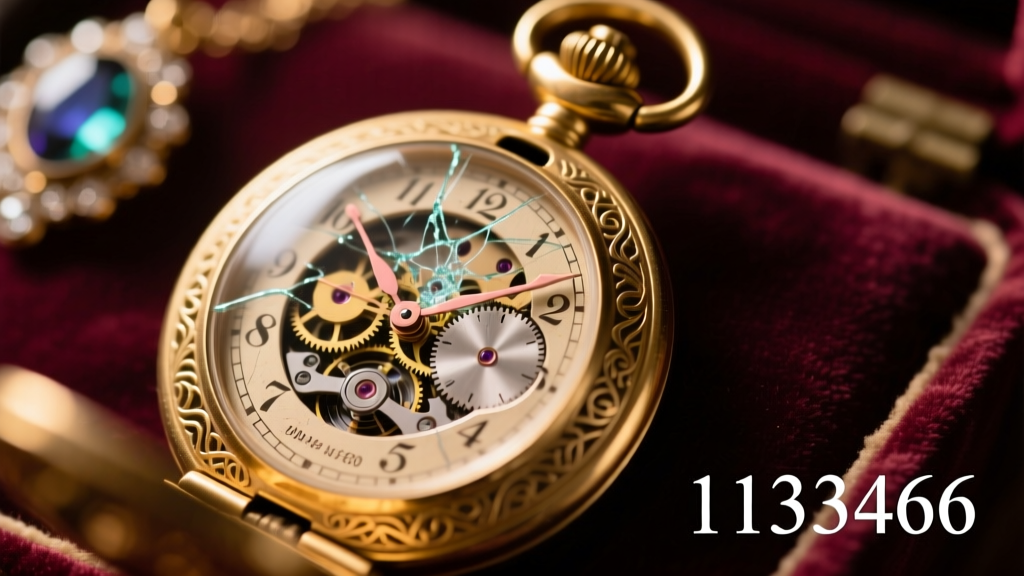
Lot 1133466: A 1958 Patek Philippe Ref. 2499 First Series Perpetual Calendar Chronograph in 18K Yellow Gold
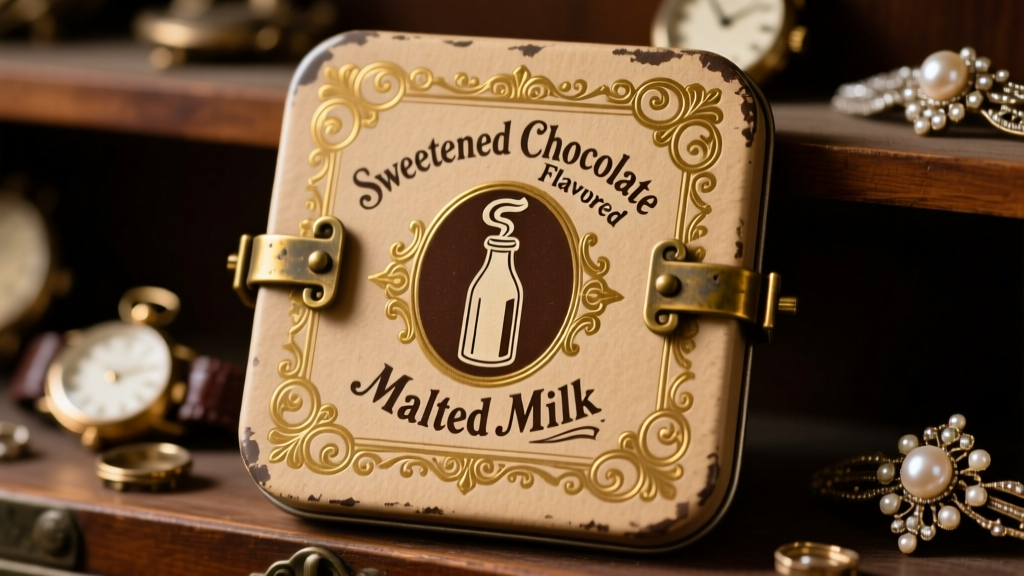
Advertising Tin: Kraft Sweetened Chocolate Flavored Malted Milk Lid (Square, 5 lb) — A Rare Artifact of Early 20th-Century Food Marketing and Collectible Americana
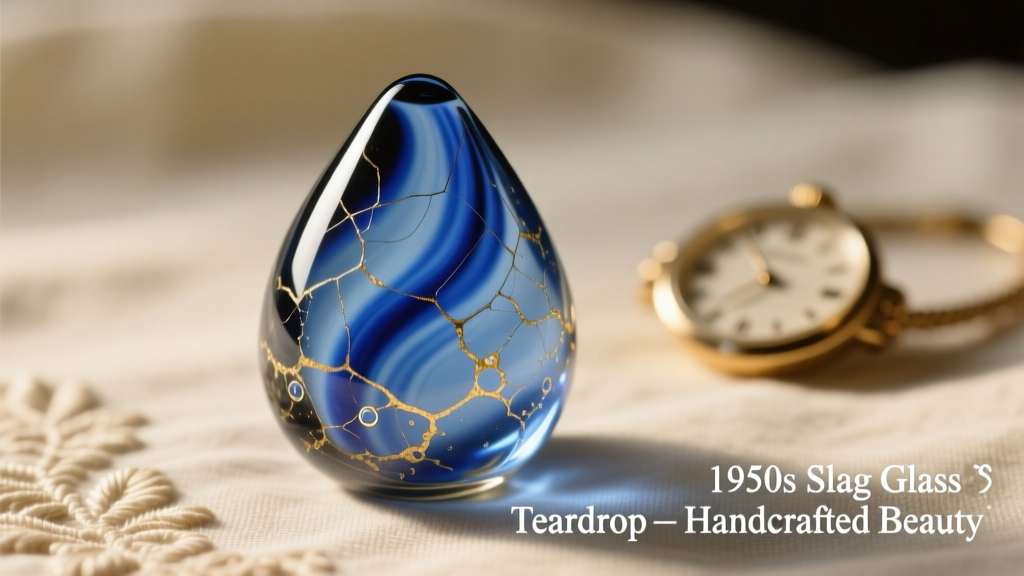
Slag Glass Blue Sugar Shaker: The Creased Teardrop Form in American Art Glass, 1880–1925
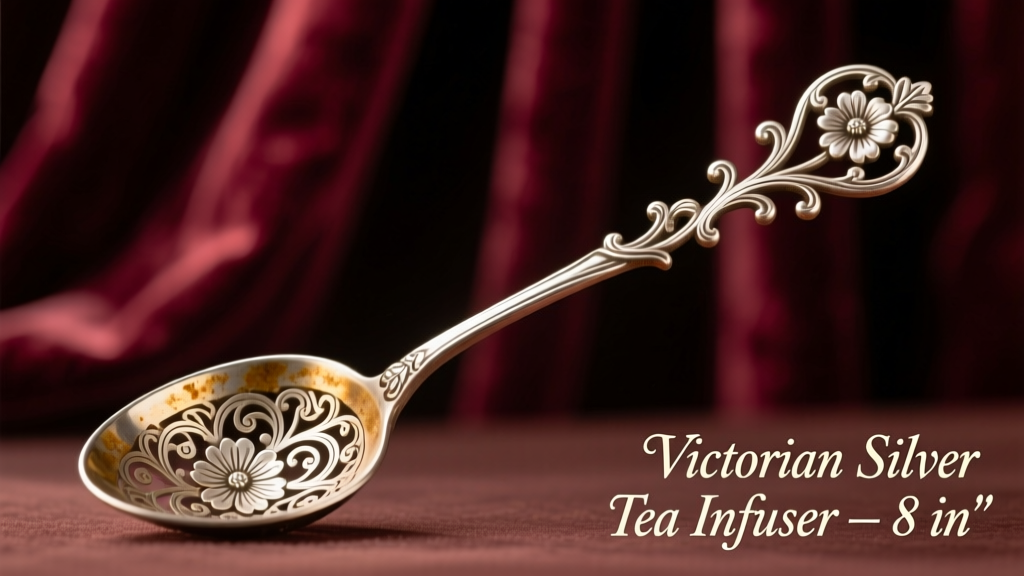
Silver English Tea Infuser Spoon Shape Victorian 8-Inch: History, Hallmarks, and Collectibility

The English Brass Scales Balance: A Study of Curved Support, Holding Tray Design, and Precision Weights (c. 1790–1860)
The Enigma Shipwrecks Project: Recovering Timepieces from the Deep — A Forensic Chronometric Archive
Clarice Cliff Sugar Shaker 'Crocus' Bizarre Pattern: A Collector's Guide to the Iconic 5-Inch Yellow, Blue, Orange & Purple Marked Example