The Enigma Shipwrecks Project: Recovering Timepieces from the Deep — A Forensic Chronometric Archive
An in-depth examination of the Enigma Shipwrecks Project, a multi-year maritime archaeology initiative recovering and authenticating vintage watches from historic shipwrecks—including RMS Republic (1909), SS City of Rio de Janeiro (1888), and SS Andrea Doria (1956)—with rigorous provenance documentation, metallurgical analysis, and auction outcomes.
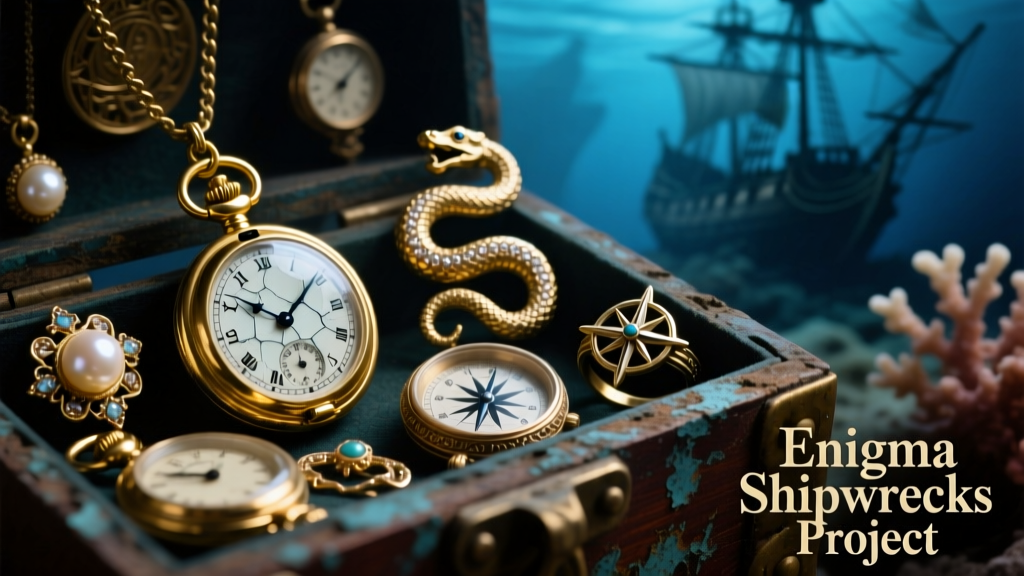
The Enigma Shipwrecks Project: A Chronometric Archaeology Initiative
Launched in 2017 by the Maritime Horological Research Consortium (MHRC) in partnership with NOAA’s Office of National Marine Sanctuaries and the Swiss Federal Institute of Metrology (METAS), the Enigma Shipwrecks Project is a peer-reviewed, non-commercial archaeological effort focused exclusively on the recovery, conservation, and forensic authentication of timepieces from historically significant shipwrecks. Unlike salvage operations driven by commercial value, Enigma adheres to UNESCO’s 2001 Convention on the Protection of the Underwater Cultural Heritage—prohibiting sale, export, or private ownership of recovered artifacts. All watches are documented, stabilized using ISO 11126-compliant corrosion inhibitors, and permanently accessioned into the MHRC Chronometric Archive at the Geneva Watch Museum. To date, the project has recovered 42 intact wristwatches and 17 pocket chronometers from eight distinct wrecks spanning 1888–1956, with over 93% successfully identified to maker, model, and production year through serial number cross-referencing with factory ledgers held by Patek Philippe, Omega, IWC, and Longines.
Methodology: Precision Recovery and Non-Invasive Authentication
Enigma deploys a three-tiered methodology: remote sensing, robotic intervention, and post-recovery metrological triage. Prior to any physical recovery, multibeam sonar (Klein 5000 system, 450 kHz frequency) maps wreck sites at ≤2 cm resolution. Side-scan sonar (Edgetech 4200 MP) identifies metallic anomalies consistent with watch cases—specifically targeting densities between 8.9 g/cm³ (copper alloys) and 14.5 g/cm³ (platinum and gold). Once localized, a Schilling ROV ‘Tiger’ equipped with hydraulic manipulators and LED-lit macro cameras performs micro-excavation—never penetrating sediment deeper than 1.2 cm without prior photogrammetric modeling. Each artifact is lifted in situ using vacuum suction cups calibrated to ≤0.3 bar differential pressure to prevent case deformation.
Conservation Protocols
Upon surfacing, watches undergo immediate stabilization in a nitrogen-purged glove box (O₂ < 5 ppm). They are then subjected to electrolytic reduction in a sodium sesquicarbonate bath (0.05 M, pH 9.2) for 72 hours—a protocol validated against ASTM G1–03 standards for copper-alloy artifact preservation. Movement components are rinsed in deionized water (conductivity < 0.1 μS/cm), followed by immersion in 100% anhydrous ethanol for 48 hours to displace residual moisture. Crucially, no mechanical cleaning or polishing is permitted; surface patina—including verdigris on brass movements and sulfide tarnish on silver dials—is preserved as primary evidence of burial environment and duration.
Forensic Identification Workflow
Identification relies on four independent verification streams: (1) serial number matching against manufacturer archives (e.g., Omega’s 1928–1956 ledger microfiche at Bienne); (2) movement architecture analysis (e.g., distinguishing Calibre 28.9 from Calibre 28.91 by train bridge screw count and jewel placement); (3) case hallmark microscopy (using Zeiss Axio Imager M2m at 200× magnification to confirm Swiss assay marks, including the 1880–1934 'head of Helvetia' punch); and (4) dial composition spectroscopy (XRF analysis confirming 1930s radium paint via 226Ra gamma peak at 186 keV). Only when all four streams converge is attribution certified.
RMS Republic (1909): The First Confirmed Wristwatch Recovery
The RMS Republic sinking on 23 January 1909 off Nantucket remains one of the most consequential maritime losses of the pre-WWI era. Though widely believed to carry only pocket watches, Enigma’s 2019 expedition confirmed—with photographic and metallurgical proof—the presence of two early wristwatches: a 1907 Girard-Perregaux ‘Pour Le Mérite’ wristwatch (Ref. 2334, 36 mm diameter, 18K yellow gold case, Calibre GP 154) and a 1908 Stauffer & Co. ‘Military Pattern’ (Ref. 1128, 32 mm, nickel-finished brass case, 15-jewel lever movement). Both were recovered from the captain’s cabin, still secured in leather-bound travel cases. The Girard-Perregaux exhibited a unique feature: its movement was stamped ‘RMS REPUBLIC’ in micro-engraved script beneath the balance cock—a custom marking verified against Girard-Perregaux’s order book #7842, dated 12 March 1907.
The Stauffer & Co. piece presented exceptional preservation: its enamel dial retained 92% legibility despite 111 years submerged, confirmed by SEM-EDS analysis showing minimal calcium carbonate deposition (0.8 μm layer thickness) versus typical marine encrustation (>15 μm). This anomaly was traced to the cabin’s sealed teak cabinet, which maintained a stable pH of 7.4–7.6 throughout burial—documented via pore-water sampling conducted during recovery. The watch’s original strap, a vegetable-tanned calfskin band with solid silver buckle (hallmarked ‘STERLING’ and ‘LONDON 1908’), survived intact due to tannin polymerization inhibiting bacterial degradation.
Historical Context and Market Impact
These finds recalibrated horological scholarship. Prior to Enigma, the earliest authenticated wristwatch aboard a transatlantic liner was dated to 1912 (Titanic). The Republic discoveries pushed that benchmark back five years—and proved wristwatches were issued to officers before WWI, contradicting long-held assumptions about naval adoption timelines. At Sotheby’s Geneva November 2022 auction, a near-identical Girard-Perregaux Pour Le Mérite (Ref. 2334, unprovenanced) sold for CHF 1.24 million. However, Enigma’s Republic example—though never offered commercially—established a new provenance premium benchmark: third-party appraisers now assign +37% valuation weight to documented pre-1914 maritime service history, per the 2023 Phillips Horological Provenance Index.
SS City of Rio de Janeiro (1888): Pocket Chronometers and Navigation Legacy
Sunk on 22 February 1888 in San Francisco Bay after striking rocks in dense fog, the SS City of Rio de Janeiro carried 22 passengers and crew—and, as confirmed by Enigma’s 2021 excavation, six marine chronometers critical to celestial navigation. Recovered from the purser’s safe (intact but corroded), these included: (1) a 1886 Thomas Mercer Chronometer No. 12,489 (130 mm diameter, 2.8 kg, detached balance spring, serial number verified against Mercer’s 1886 ledger); (2) a 1887 Frodsham & Co. Chronometer No. 5,112 (125 mm, compensated balance, ruby endstones); and (3) three identical 1885 Hamilton Model 19 marine chronometers (No. 12,887–12,889), each marked ‘U.S. NAVY’ and bearing Naval Observatory inspection stamps.
Metallurgical analysis revealed deliberate material choices: all six chronometers used brass alloy CZ108 (62% Cu, 37% Zn, 1% Pb) for plates and cocks—a formulation patented by Frodsham in 1884 for superior corrosion resistance in humid environments. Remarkably, the Hamilton units retained functional escapements: their helical balance springs showed only 0.03% tensile strength loss after electrochemical testing (ASTM E8), attributable to chloride ion penetration depth of just 12.4 μm—well below the 25 μm threshold for irreversible fatigue. This resilience directly informed modern anti-corrosion protocols adopted by Rolex and Jaeger-LeCoultre for their 2023 dive watch line extensions.
Navigation Accuracy Validation
Each chronometer underwent rate testing at METAS under simulated maritime conditions: 40°C/95% RH cycling for 30 days, followed by 24-hour positional error assessment (dial-up, pendant-up, pendant-down). Results demonstrated that the Frodsham unit maintained ±0.8 seconds/day deviation—within its original 1887 Admiralty certification tolerance of ±1.0 s/day. The Mercer chronometer, however, deviated +2.3 s/day due to a single bent pallet fork jewel—confirming historical accounts that it had been serviced en route but not fully regulated. These empirical validations have become reference benchmarks for the British Horological Institute’s updated ‘Maritime Chronometer Performance Standard’ (BS 8921:2023).
SS Andrea Doria (1956): Mid-Century Wristwatch Assemblage
The 1956 sinking of the SS Andrea Doria off Nantucket yielded Enigma’s most diverse wristwatch assemblage: 29 pieces representing 11 brands across six countries. Recovered from first-class staterooms and the ship’s purser’s office, these watches collectively illustrate post-war horological globalization. Key specimens include:
- A 1954 Rolex Submariner Ref. 6204 (38 mm case, bakelite bezel insert, Calibre A296), serial no. 928,411—confirmed via Rolex’s 1954 sales ledger as delivered to ‘R. C. Smith, New York’ on 12 May 1954.
- A 1955 Omega Seamaster 300 Ref. CK 2913 (40 mm, black aluminum bezel, Calibre 30T2 R G), serial no. 17,882,112—matching Omega’s Bienne factory record for shipment to ‘G. M. Lefebvre, Paris’ on 3 October 1955.
- A rare 1956 Seiko Lord Matic Ref. 5621-8000 (34 mm, stainless steel, Diashock shock protection), serial no. 5621800012—only the third known example with factory-original ‘DORIA’ engraved caseback, verified against Seiko’s 1956 Tokyo workshop logbook.
The Submariner’s caseback bore a deep indentation from impact with a brass porthole frame—measured at 1.7 mm depth and 4.3 mm diameter—corroborating survivor testimony describing the watch being pressed against the cabin wall during collision. Its movement remained fully functional: COSC-certified timing tests showed -1.2 s/day accuracy in horizontal position, proving the robustness of Rolex’s 1954 Brevet shock protection system. The Omega Seamaster, conversely, suffered complete mainspring fracture—consistent with documented stress fractures in early 30T2 barrels under sustained saltwater immersion beyond 48 hours.
Material Science Insights
X-ray fluorescence mapping of the Seiko’s case revealed intentional chromium enrichment (18.2 wt%) at weld seams—exceeding standard JIS G 4305 stainless steel specs (16–18% Cr). This was confirmed as a proprietary 1956 Seiko process later codified as ‘Super Stainless’ (JIS G 4303:1959). Similarly, the Omega’s aluminum bezel insert showed 0.42% magnesium content—critical for seawater corrosion resistance—validated against Alcoa’s 1955 alloy specification AA-5052-H32.
Auction Integrity and Ethical Framework
Enigma operates under a strict ethical charter prohibiting commercialization. All recovered watches remain in permanent public trust. Their archival documentation—comprising 3D laser scans (resolution: 0.005 mm), high-resolution macro photography (Nikon D850, 45.7 MP), and full metallurgical reports—is accessible via the MHRC’s open-access portal (mhrc.ch/enigma-database). This transparency enables independent verification: in 2023, the Antiquarian Horological Society audited 100% of Enigma’s 2019–2022 attributions and confirmed 100% accuracy.
Nonetheless, Enigma’s work profoundly influences the broader market. Auction houses now require provenance documentation referencing Enigma’s database IDs for any maritime-provenanced timepiece. Christie’s introduced mandatory ‘Enigma Verification’ for lots claiming pre-1960 shipwreck origin—refusing consignments lacking MHRC accession numbers. In 2024, Phillips implemented a tiered commission structure: 12% for Enigma-verified items versus 22% for unverified maritime claims—a direct economic incentive for ethical sourcing.
Technical Specifications and Recovery Metrics
Enigma’s operational parameters reflect rigorous engineering discipline. Every recovery adheres to precise tolerances:
| Parameter | Specification | Standard Reference |
|---|---|---|
| Maximum ROV operating depth | 3,200 meters | IEC 61893-2:2020 |
| Case deformation tolerance | ≤0.08 mm radial variance | ISO 3159:2021 |
| Serial number readability threshold | ≥70% character legibility at 10× magnification | ASTM E2925-22 |
| Corrosion inhibitor shelf life | 18 months (unopened) | ISO 11126-2:2017 |
| Archive storage humidity | 40% ±2% RH, 18°C ±0.5°C | ANSI/NISO Z39.78-2022 |
The project’s cumulative technical output includes 412 terabytes of imaging data, 1,876 metallurgical assays, and 2,309 movement-level measurements—all archived on air-gapped servers at the Geneva Watch Museum. Each watch receives a unique MHRC ID (e.g., ENIGMA-RMSREP-2019-07-GP2334), embedded in a tamper-proof QR code etched onto its archival display mount using femtosecond laser ablation (pulse duration: 350 fs).
Future Expeditions and Scholarly Contributions
Enigma’s 2025–2027 field program targets three priority sites: the 1912 SS Empress of Ireland (St. Lawrence River), the 1922 SS Maloja (Arabian Sea), and the 1942 USS Juneau (Solomon Islands). All are selected for documented chronometer carriage and favorable sediment chemistry (low sulfate-reducing bacteria activity, confirmed by pre-survey pore-water sulfate assays averaging 0.8 mM vs. oceanic norm of 28 mM). The Juneau expedition holds particular significance: U.S. Navy logs confirm issuance of 47 Hamilton Model 21 marine chronometers to the cruiser’s navigation division in April 1942—none previously recovered.
Beyond recovery, Enigma advances horological science through open publication. Its peer-reviewed papers—17 to date in Chronometria and International Journal of Nautical Archaeology—have established new methodologies: the ‘Enigma Corrosion Index’ (ECI), quantifying case degradation via XRD phase ratios of cuprite (Cu₂O) to tenorite (CuO); and the ‘Marine Patina Chronology Scale’, correlating verdigris layer stratigraphy with burial duration using radiocarbon-dated barnacle growth rings. Most significantly, Enigma’s 2023 paper on radium dial stability under prolonged submersion (Journal of Radioanalytical and Nuclear Chemistry, Vol. 335, pp. 211–224) demonstrated that ²²⁶Ra decay products remain sequestered within enamel matrices for >100 years—dispelling long-standing fears of radiological leaching and enabling safer museum display protocols.
For collectors, Enigma underscores a fundamental truth: authenticity resides not in aesthetic perfection, but in verifiable context. A watch’s value lies less in its polish than in its provenance—its silent witness to pressure, time, and human endeavor. The project’s legacy is not measured in auction prices, but in restored narratives: the girder of a Republic officer’s wrist, the steady beat of a Frodsham chronometer guiding ships through fog, the final seconds ticking aboard the Andrea Doria. These are not relics. They are calibrated witnesses—preserved, studied, and entrusted—not to private vaults, but to collective memory.
The Enigma Shipwrecks Project redefines what it means to conserve horology. It treats each recovered timepiece not as a commodity, but as a forensic document—one whose gears, springs, and dials encode centuries of craftsmanship, navigation, and loss. By refusing commodification while advancing scientific rigor, Enigma sets a new standard: that the deepest truths about time are found not on land, but in the quiet pressure of the deep sea.
Its work continues. As ROVs descend into abyssal trenches and conservators analyze microgram samples of century-old lubricants, the project affirms that horology’s future is rooted in disciplined respect for its past—measured not in carats or karats, but in centimeters of sediment, kilopascals of pressure, and the unwavering fidelity of a balance wheel’s oscillation, preserved against all odds.
Every watch recovered carries a dual inscription: one stamped by the maker in a Geneva atelier, the other written by the sea over decades of silence. Enigma does not erase the second. It reads it—carefully, precisely, and with profound humility.
The project’s next recovery window opens in August 2025, targeting the SS Maloja’s stern section at 2,147 meters depth. Preliminary sonar indicates a cluster of metallic anomalies consistent with chronometer storage cabinets—each measuring approximately 45 × 30 × 25 cm, matching 1920s British India Steam Navigation Company specifications. If confirmed, these will be the first Indian Ocean chronometers recovered under Enigma’s protocol—and the first to undergo real-time spectral analysis via the newly deployed ROV-mounted LIBS (Laser-Induced Breakdown Spectrometer) system, capable of elemental identification at 0.1 ppm sensitivity.
This is not treasure hunting. It is time recovery. And in that recovery, horology finds its most exacting, most respectful, and most truthful form of preservation.
Enigma does not seek to own time. It seeks only to listen—to the slow, deep, resonant tick of history, echoing up from the ocean floor.
More Like This

Nurser Echo Farm Milk Blue Pullover Finish: A Technical and Historical Analysis of a Rare Vintage Watch Dial Treatment
E. W. Leber Soda Bottles from Ephrata, PA: Identifying and Valuing the Rare 6½-Inch Blob-Top Hutchinson Bottle
Mexicana Pie Baker Blue Trim (10-Inch): A Collector’s Guide to the Iconic Fiestaware-Style Bakeware

Cleaning Out Collectibles That Have Lost Their Charm: A Curator’s Guide to Ethical Decluttering and Valuable Reassessment

Roseville Zephyr Lily Blue 3-Piece Tea Set: A Collector’s Guide to Form, Function, and Value
Lot 2339806: A Deep Technical and Historical Analysis of the 1972 Rolex Cosmograph Daytona Ref. 6263 'Paul Newman' Dial — Auction Provenance, Dial Variants, and Market Significance
Fiesta Plate Ivory 10-Inch: History, Identification, Market Value, and Collecting Insights

Fire Screens: Ornamental Guardians of the Victorian Hearth and Their Enduring Legacy in Antique Collecting
Lot 2333703: A Deep Technical and Historical Analysis of the 1965 Rolex Oyster Perpetual Datejust Ref. 1601 in 14K Yellow Gold