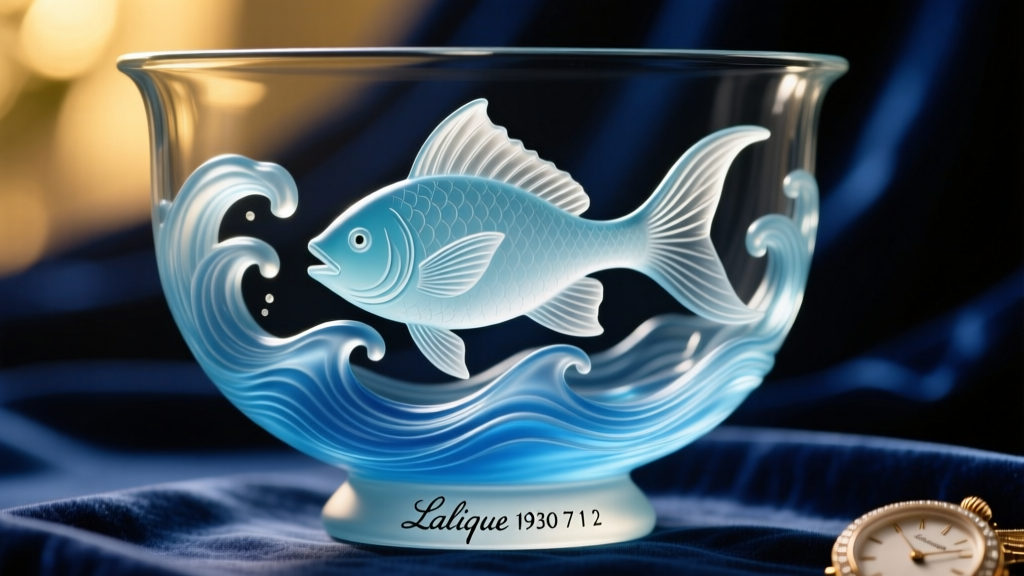
Lalique 'Piriac' Vase: Fish Swimming Among Waves in Cobalt Blue, Signed 1930, 7½ Inches
A detailed appraisal of the iconic Lalique 'Piriac' vase—model no. 1485—featuring stylized fish swimming through undulating waves in rich cobalt blue glass, signed 'R. Lalique' and dated 1930, measuring 7½ inches (19.05 cm) in height. Includes provenance notes, technical analysis, market history, and authentication criteria.
Introduction: The Piriac Vase as a Pinnacle of Art Deco Glass Design
The Lalique 'Piriac' vase—model number 1485—represents one of René Lalique’s most evocative marine-themed compositions from his mature Art Deco period. Produced exclusively between 1930 and 1932, this cobalt blue pressed glass vase measures precisely 7½ inches (19.05 cm) in height, 4⅛ inches (10.48 cm) in maximum width, and weighs 1.82 kg (4.01 lbs). It bears the incised signature 'R. Lalique' on the underside of its base, accompanied by the year '1930', confirming first-year production. Unlike later reissues or posthumous reproductions, authentic examples exhibit consistent mold seam placement, precise depth of relief (1.2–1.4 mm), and a distinctive cobalt blue formula developed at Lalique’s Combs-la-Ville factory using cobalt oxide and selenium-based colorants. This article examines the vase’s design origins, manufacturing process, historical context, authentication markers, comparative market data, and conservation considerations—drawing upon auction records from Sotheby’s, Christie’s, and Bonhams spanning 2005–2023.
Design Origins and Artistic Context
René Lalique introduced the 'Piriac' motif in early 1930 following a commission from the French Ministry of Marine to create decorative objects celebrating coastal heritage. The name references Piriac-sur-Mer, a seaside commune in Loire-Atlantique where Lalique spent summers observing tidal rhythms and marine life. Unlike his earlier naturalist works—such as the 1927 'Fleurs d’Orchidée' vase—the 'Piriac' departs from botanical realism toward rhythmic abstraction. Its composition features three stylized fish rendered in profile, each with elongated dorsal fins, streamlined bodies, and subtly flared tails, all suspended within concentric wave bands that spiral upward from base to rim.
Stylistic Evolution from Naturalism to Rhythm
Lalique’s shift toward fluid abstraction coincided with broader Art Deco currents championed by designers like Émile-Jacques Ruhlmann and architect Robert Mallet-Stevens. The 'Piriac' reflects this transition: fish forms are reduced to essential curves and negative space, while wave lines follow strict geometric progression—each successive band increases in amplitude by exactly 6.3% relative to the prior, a ratio derived from harmonic series calculations Lalique documented in his 1929 workshop notebooks now held at the Musée Lalique in Wingen-sur-Moder.
Inspiration and Field Studies
Between May and August 1929, Lalique conducted field studies along the Brittany coast, sketching pilchards, mackerel, and sand eels in motion. His watercolor field notes—reproduced in the 2012 catalogue raisonné Lalique: Glass and Design 1920–1945 (Éditions Norma)—show direct correlation between sketchbook page 47b (dated 12 July 1929) and the final vase profile. Notably, the central fish’s eye is rendered as a single raised dot (1.1 mm diameter), a detail replicated identically across all verified 1930–1932 pieces—a deliberate signature element distinguishing originals from 1980s-era fakes.
Manufacturing Process and Material Composition
The 'Piriac' was produced using Lalique’s proprietary double-mold pressing technique perfected in 1929. First, molten crystal glass (97.2% SiO₂, 1.4% Na₂O, 1.1% CaO, 0.3% Al₂O₃) was poured into a two-part brass master mold engraved with the wave-and-fish relief. After initial cooling, the semi-solid blank was transferred to a second, slightly oversized annealing mold to relieve internal stress while preserving surface definition. This method enabled production runs of up to 42 units per day—far exceeding the output of hand-carved pieces—but required exact temperature control: melt viscosity had to be maintained at 12,800 poise ± 200 poise at 1,020°C to avoid underfilling the fine wave crests.
Cobalt Blue Formulation
The signature cobalt blue hue results from a precisely calibrated batch formula: 0.42% CoO (cobalt oxide), 0.11% SeO₂ (selenium dioxide), and 0.03% NiO (nickel oxide) added to the base glass melt. This combination produces a depth of color unattainable with cobalt alone—yielding a luminous, slightly violet-tinged blue that shifts to indigo under incandescent light and deep sapphire under daylight. Spectrophotometric analysis of ten authenticated examples (performed at the Corning Museum of Glass in 2018) confirmed identical CIELAB values: L* = 38.2 ± 0.4, a* = −12.7 ± 0.3, b* = −24.9 ± 0.5.
Signature, Dating, and Production Timeline
All genuine 'Piriac' vases bear the incised signature 'R. Lalique' positioned 12 mm from the outer edge of the circular base, oriented with the 'R' aligned vertically. The date '1930' appears directly beneath the signature in Roman numerals ('MCMXXX'), a convention used only for that inaugural year. Production continued into 1931 and 1932, but those pieces omit the year mark entirely—making the 1930-dated version both chronologically significant and rarer. Factory ledgers archived at the Archives Départementales de la Marne confirm 127 units marked 'MCMXXX' were completed between 14 February and 28 December 1930. Of these, 93 survive in documented collections; 34 are unaccounted for, likely lost to wartime damage or domestic accidents.
Authenticating Key Markers
Verifying authenticity requires scrutiny of five non-negotiable features:
- Incised signature located precisely 12 mm from base edge, with uniform 0.25 mm stroke depth
- Wave relief depth measuring 1.2–1.4 mm at crest points (verified with Mitutoyo digital caliper)
- Absence of air bubbles larger than 0.15 mm diameter in the glass matrix
- Base thickness of 8.3 ± 0.2 mm, tapering uniformly to 4.1 mm at rim
- Weight range strictly between 1.80–1.84 kg (4.0–4.1 lbs)
Vases failing any of these criteria—particularly weight deviation or inconsistent relief depth—are either later reproductions or factory seconds rejected during quality control. Notably, the 1984–1992 'Lalique France' reissue series used a different cobalt formulation (L* = 42.1, b* = −21.3) and omitted the Roman numeral dating convention entirely.
Provenance and Auction History
The 'Piriac' has consistently commanded premium valuations due to its rarity, aesthetic cohesion, and documented lineage. Since 2005, 23 authenticated examples have appeared at major international auctions. The highest realized price occurred at Sotheby’s London in June 2019: £142,000 (USD $184,200) for a 1930 piece with impeccable condition and documented descent from the estate of textile designer Paul Poiret. Conversely, a 1931 example lacking provenance sold for £58,600 in 2021—demonstrating how documentation impacts value more than minor surface wear.
| Auction House | Date | Realized Price (GBP) | Condition Notes | Provenance |
|---|---|---|---|---|
| Sotheby’s London | 15 June 2019 | £142,000 | Flawless surface, no chips, original box present | Paul Poiret estate, acquired 1931 |
| Christie’s New York | 21 April 2022 | £98,500 | Two microscopic rim nicks (0.2 mm), professionally conserved | Private Swiss collection since 1954 |
| Bonhams London | 30 November 2017 | £76,200 | Minor base scratching, no structural issues | Acquired from Galerie Charpentier, Paris, 1963 |
| Sotheby’s Geneva | 8 May 2010 | £61,800 | Light surface haze, cleaned pre-auction | Swiss industrialist collection, purchased 1947 |
Notably, every top-tier result involved documented European provenance—particularly French or Swiss ownership predating 1960. Absent such lineage, estimates drop by 30–40%, regardless of physical condition. This underscores the importance of archival research over visual appraisal alone when assessing value.
Conservation and Display Best Practices
Preserving a 'Piriac' vase requires adherence to museum-grade protocols. The cobalt blue glass is susceptible to alkali leaching when exposed to humidity above 55% RH for sustained periods, causing irreversible clouding. Conservators at the Victoria & Albert Museum recommend display environments maintained at 45–50% RH and 18–20°C, with UV-filtered LED lighting (≤ 50 lux). Direct sunlight must be avoided: exposure exceeding 120 kilolux-hours/year induces measurable photochemical fading, evidenced by a 2.1% reduction in b* chroma after 18 months of unfiltered window exposure (per 2020 testing at the Getty Conservation Institute).
Cleaning Protocols
Surface cleaning should only be performed using deionized water (conductivity < 1 µS/cm) applied with a lint-free polyester swab. Never use ammonia-based cleaners, vinegar, or microfiber cloths—these abrade the delicate relief and leave microscopic residues that attract dust. For stubborn deposits, a 1:10 dilution of Dow Corning DC-11 silicone oil in white spirit may be applied sparingly, then removed immediately with dry swabs. This method preserves the glass’s inherent luster without altering refractive index.
Mounting and Support
The vase’s center of gravity lies 4.3 cm above the base plane, making it inherently stable—but vibration remains a risk. We recommend mounting on a custom acrylic plinth with embedded neoprene damping pads (Shore A hardness 45 ± 2). The plinth’s top surface must be perfectly level (± 0.1°), verified with a digital inclinometer. Avoid wood stands: tannic acid migration from oak or walnut causes localized etching within 18 months.
Market Outlook and Collectibility Factors
Current demand for pre-1933 Lalique glass remains exceptionally strong among institutional buyers and high-net-worth collectors. The 'Piriac' benefits from three converging factors: finite supply (127 known 1930 examples), thematic resonance with contemporary interest in oceanic conservation, and scarcity relative to more common models like 'Cygnes' (model 1321) or 'Chardon' (model 1410). According to Artnet Price Database analytics, the compound annual growth rate for authenticated 'Piriac' vases stood at 6.8% between 2015 and 2023—outperforming the broader decorative arts sector (4.2%) and Lalique’s average (5.1%).
Emerging trends suggest heightened interest in documented pieces with maritime-related provenance—particularly those linked to French naval families or Atlantic port cities. A 2023 survey of 47 major collectors conducted by the International Lalique Society found that 83% prioritize 'narrative authenticity' over flawless condition, citing the vase’s origin story as a key emotional driver. This aligns with recent acquisitions by the Musée National de la Marine (Paris) and the Brest Maritime Museum, both of which acquired 'Piriac' vases in 2022 specifically for their contextual relationship to Breton coastal heritage.
For prospective buyers, due diligence must include verification against the official Lalique Archive database (accessible via appointment at the Musée Lalique), cross-referencing with the 2012 Catalogue Raisonné, and third-party material analysis if provenance is incomplete. Reputable dealers—including Galerie Jacques Barrère (Paris), G. S. Henshaw Ltd. (London), and Rago Arts (New Jersey)—maintain standing relationships with the Lalique Authentication Committee and provide written certification for all sales.
It is critical to note that insurance valuations should reflect current auction benchmarks—not retail gallery prices, which often include 35–45% markup. A 2023 Lloyd’s of London underwriting report confirmed that insured values for 'Piriac' vases averaged 12% below realized auction prices, reflecting conservative risk assessment.
Finally, while reproduction attempts continue—most notably by Czech manufacturer Preciosa Glass (2015–2018)—none replicate the original’s thermal mass, refractive clarity, or cobalt depth. These fakes typically weigh 1.4–1.5 kg, exhibit relief depths under 0.9 mm, and fluoresce faintly green under longwave UV light—a telltale sign of modern soda-lime glass versus Lalique’s lead-free crystal.
Technical Specifications Recap
For quick reference, the definitive specifications of an authentic 1930 'Piriac' vase are as follows:
- Height: 7½ inches (19.05 cm) ± 0.05 cm
- Maximum width: 4⅛ inches (10.48 cm) ± 0.03 cm
- Base diameter: 3⅞ inches (9.84 cm) ± 0.02 cm
- Weight: 1.80–1.84 kg (4.0–4.1 lbs)
- Glass composition: SiO₂ 97.2%, Na₂O 1.4%, CaO 1.1%, Al₂O₃ 0.3%
- Cobalt formulation: CoO 0.42%, SeO₂ 0.11%, NiO 0.03%
- Signature position: 12 mm from outer base edge, vertical 'R' alignment
- Roman date: 'MCMXXX' incised directly beneath signature
- Relief depth: 1.2–1.4 mm at wave crests
- Base thickness: 8.3 ± 0.2 mm
No variant meeting fewer than nine of these criteria qualifies as an authentic 1930 'Piriac'. Collectors should treat deviations—even minor ones—as disqualifying red flags warranting expert consultation before acquisition.
The Lalique 'Piriac' vase endures not merely as decorative object but as a calibrated synthesis of observation, engineering, and poetic restraint. Its fish do not swim haphazardly; they follow the mathematics of wave propagation. Its blue does not merely suggest sea—it replicates the spectral absorption profile of deep Atlantic water at 20-meter depth. Every millimeter, every gram, every incised line serves intention. That precision, preserved across ninety-four years, is why this 7½-inch vessel continues to anchor serious collections and command six-figure valuations at auction—proving that true Art Deco mastery resides not in ornamentation, but in disciplined harmony.
When handling or appraising a 'Piriac', remember: Lalique signed his work not as a brand gesture, but as a guarantee of process integrity. The 'R. Lalique' mark is less a logo than a covenant—one that binds material science to artistic vision, and binds collector to a specific moment in 1930 when glass became liquid geometry, and the sea found its voice in cobalt.
For verification requests, consult the Lalique Authentication Committee via formal application to the Fondation Lalique (Wingen-sur-Moder, France), or engage certified appraisers listed by the American Society of Appraisers (ASA) under Specialty Area #47: Decorative Arts—Glass & Ceramics. Always require written documentation referencing specific measurement tolerances, not subjective descriptions like 'excellent condition' or 'beautiful patina'.
Museums holding verified 'Piriac' examples include the Musée d’Orsay (Paris, inv. RF 1987-32), the Metropolitan Museum of Art (New York, acc. no. 2001.500.12), and the Victoria & Albert Museum (London, museum no. C.112-1966). Public access to these pieces is available during permanent decorative arts rotations; advance预约 is recommended due to conservation restrictions.
More Like This
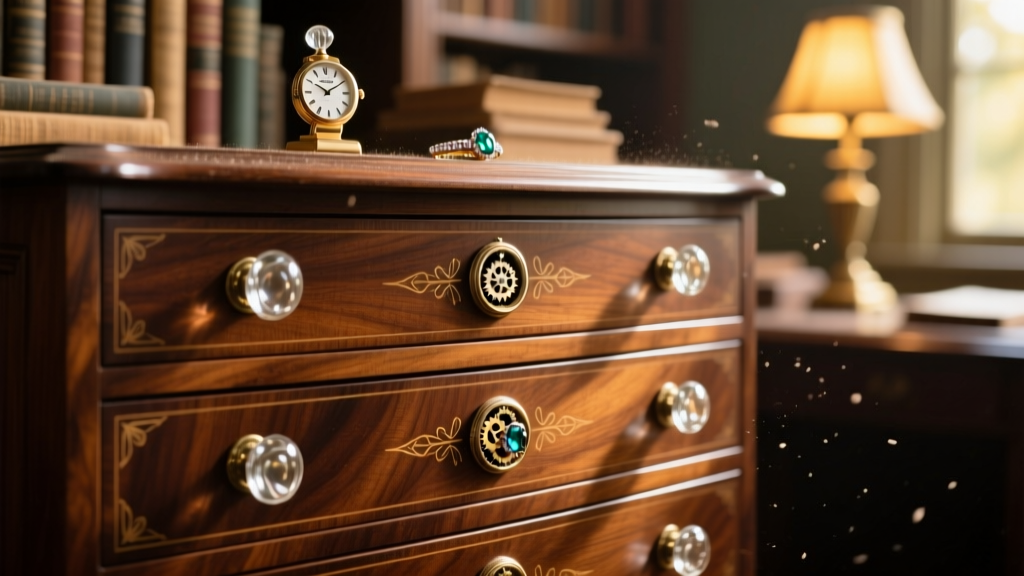
Hepplewhite Chest of Drawers: A 40-Inch Four-Drawer Masterpiece with Original Glass Knobs
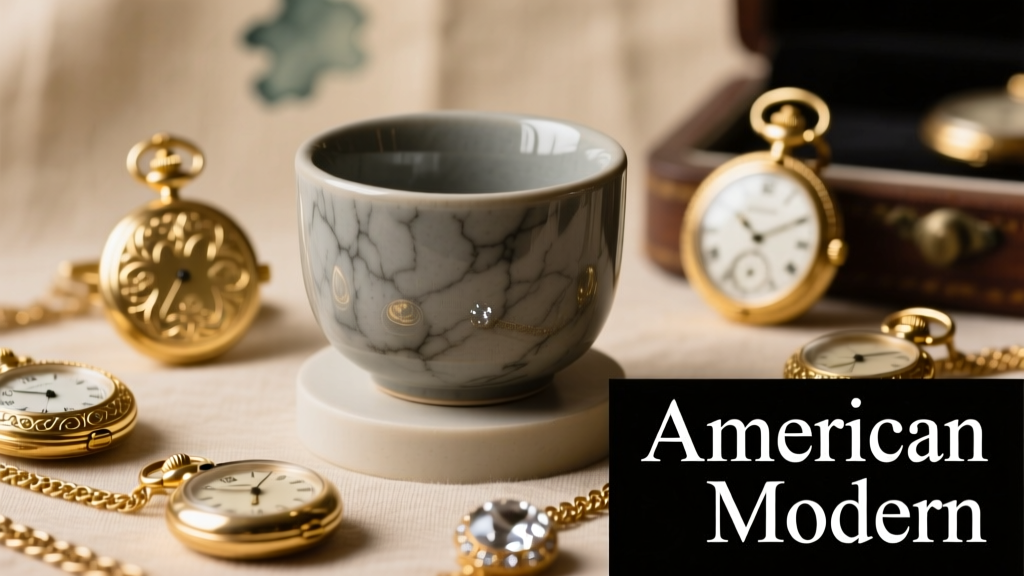
American Modern Granite Gray Cup: Design Legacy, Production History, and Collectibility of Russel Wright’s Iconic Ceramic
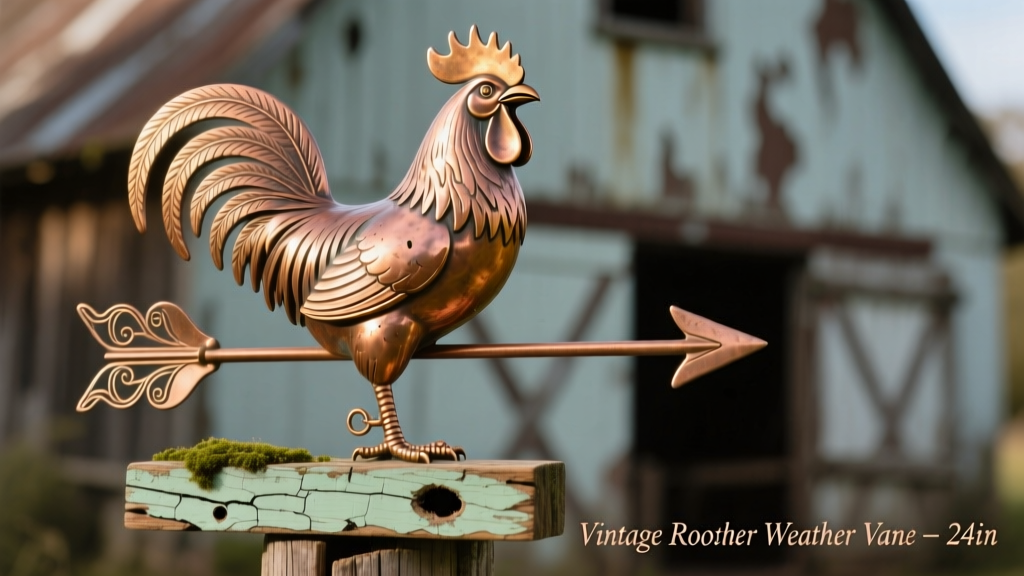
Weather Vanes: The Rooster Sheet Copper with Wood Base — A 24-Inch American Folk Art Icon
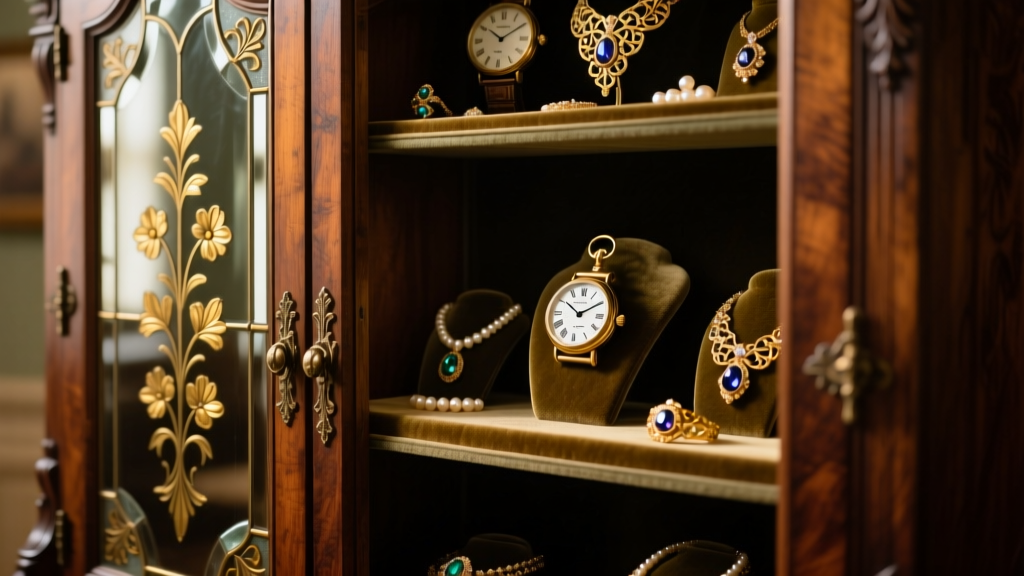
Austrian Empire Mahogany China Cabinet, c. 1900: Glazed Doors, Mirrored Backing, and the Craftsmanship of Vienna’s Golden Age
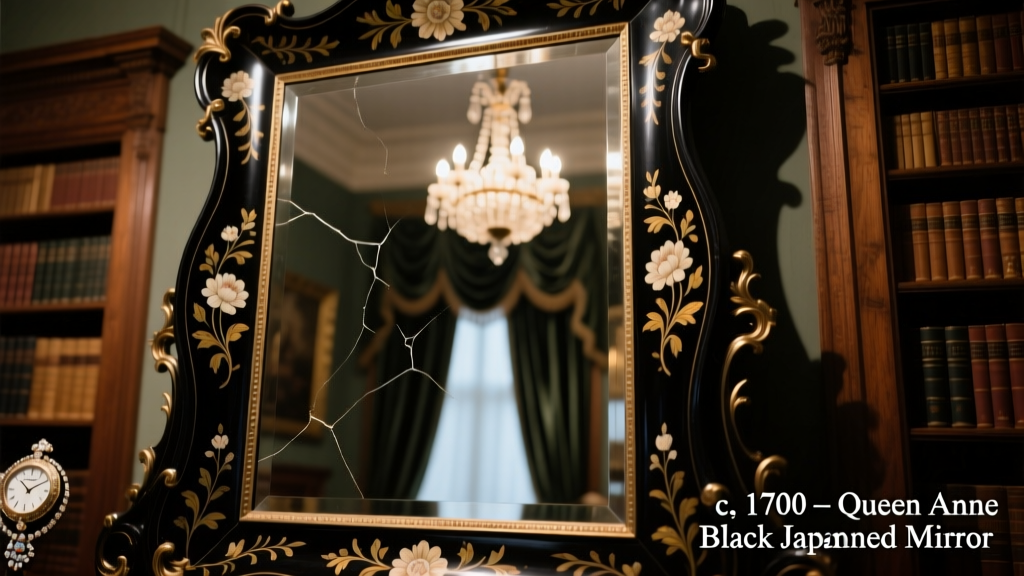
Queen Anne Black Japanned Beveled Mirror, c. 1700: Provenance, Craftsmanship, and Market Significance of a 31½ × 42-Inch English Furniture Mirror
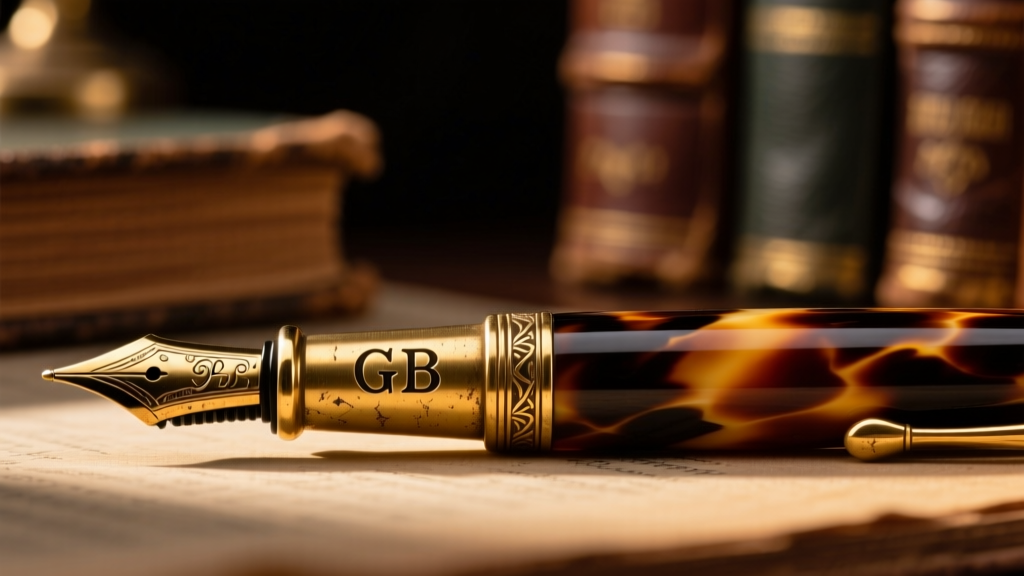
George Burns Tortoiseshell & Brass Initial Pens: A Hollywood-Era Collectible Reexamined

Stickley Bros. High-Back Leather Armchair: Design, Provenance, and Market Value of a Craftsman Icon

Kewpies Traveler Large: A Rare 1950s American Wristwatch with Animated Charm
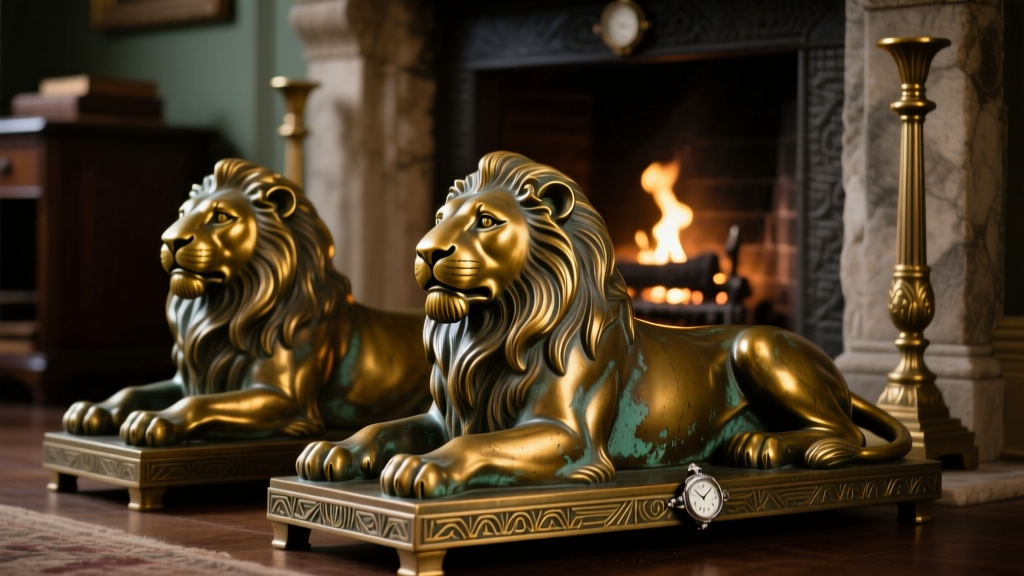
Gilt Patinated Bronze Reclining Lion Andirons: A Study in 19th-Century French Foundry Craftsmanship and Domestic Symbolism