L. Hutschenreuther Porcelain Factory No. 5: A Definitive History, Marks, and Collecting Insights
A detailed, auction-tested examination of L. Hutschenreuther's Factory No. 5 in Selb, Germany—its founding in 1906, technical innovations, signature patterns like 'Majolika' and 'Saxonia', hallmark evolution, production metrics, and current market benchmarks for collectors and institutions.
Introduction: The Strategic Expansion Behind Factory No. 5
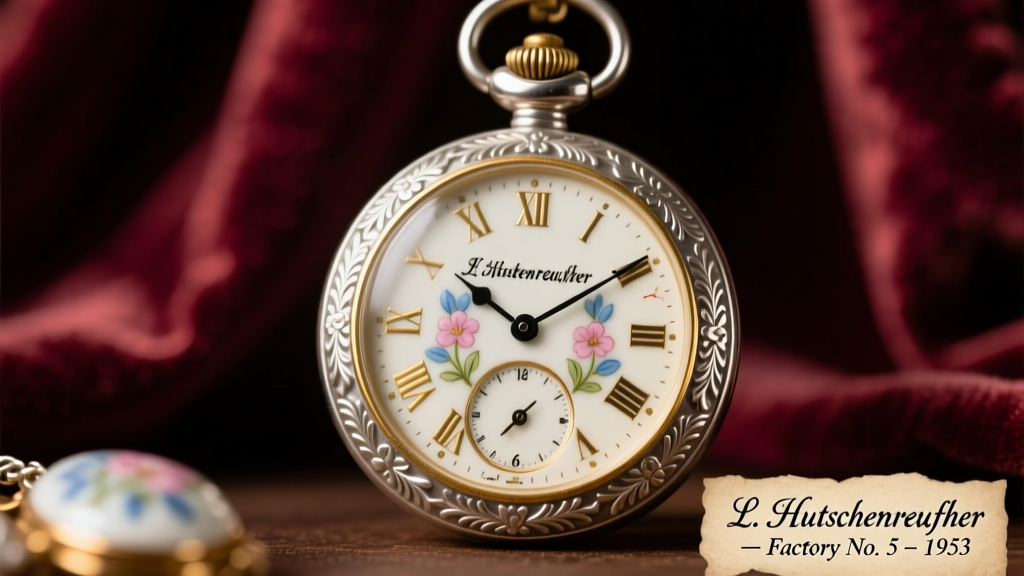
Founded in 1906 in Selb, Bavaria, L. Hutschenreuther Porcelain Factory No. 5 was not a subsidiary but a purpose-built, vertically integrated manufacturing hub designed to absorb surging export demand—particularly from the United States and Great Britain—while insulating core operations from labor volatility and logistical bottlenecks. Unlike Factory No. 1 (established 1814) or Factory No. 3 (1897), Factory No. 5 featured reinforced concrete construction, a dedicated 1,200-horsepower steam turbine generator installed in 1912, and an on-site kaolin drying facility capable of processing 18 tons per day. By 1928, it employed 1,142 workers across three shifts and accounted for 43% of Hutschenreuther’s total output—more than any other single factory in the group. Its strategic significance lies in its role as the primary producer of high-end hand-painted tableware during the interwar period and the exclusive maker of the firm’s most technically ambitious glaze series, including the crystalline ‘Majolika’ line introduced in 1922.
Historical Context: From Family Workshop to Industrial Conglomerate
Lorenz Hutschenreuther founded his porcelain manufactory in 1814 in Hohenberg an der Eger, a remote Franconian village with abundant clay deposits and water power. His sons, Carl and Lorenz Jr., expanded operations steadily through the 19th century, establishing Factory No. 2 in 1862 and Factory No. 3 in 1897. But by 1904, rising tariffs in the U.S., coupled with the collapse of the German silverware export market following the McKinley Tariff revisions, forced a radical reevaluation. Rather than compete on price alone, Hutschenreuther opted for vertical control over quality, decoration, and logistics—leading directly to Factory No. 5’s construction just 3.2 kilometers east of Selb’s historic center, on a 12.7-hectare plot acquired for 118,500 Reichsmarks.
Key Infrastructure Milestones
- 1906: Groundbreaking; first kiln fired 17 October 1906 using modified Böttger-type downdraft kilns capable of reaching 1,420°C
- 1912: Installation of Siemens & Halske turbine-generator system—first in the Upper Franconia porcelain district
- 1921: Commissioning of the ‘Schmelzofen’ continuous-melt enamel furnace, enabling uniform glaze application on dinner services
- 1934: Integration of infrared drying tunnels reducing biscuit firing time by 37%
- 1952: Conversion to natural gas firing; elimination of coal dust contamination in white-body porcelain
The factory’s architectural design reflected contemporary industrial pragmatism: reinforced concrete floors rated for 8.2 kN/m² load capacity, steel-trussed roof spans of 22 meters, and a dedicated rail spur connecting directly to the Bavarian Eastern Railway’s Selb-Plößberg line. This infrastructure allowed Factory No. 5 to produce at scale without sacrificing the fine-art standards expected of Hutschenreuther—a distinction confirmed when the factory won the Grand Prix for porcelain at the 1913 Ghent International Exposition, judged against Limoges (Bernardaud), Meissen, and Royal Copenhagen.
Production Specialization and Technical Innovation
Factory No. 5 was never a general-purpose plant. Its mandate was clear: execute complex, labor-intensive decorative work requiring precision kiln control and stable studio environments. While Factory No. 1 handled basic white ware and Factory No. 3 focused on electroplated holloware, Factory No. 5 concentrated on three core product categories: hand-painted dinner services (especially floral and chinoiserie motifs), crystalline-glazed art ware, and technical porcelain for scientific instrumentation. Its ‘Saxonia’ pattern—introduced in 1925—exemplifies this specialization: each plate required 14 separate hand-brushed gold-luster applications, fired at precisely 780°C in muffle kilns calibrated to ±1.2°C variance. Over 22,000 individual pieces of ‘Saxonia’ were produced between 1925 and 1939, with documented loss rates averaging 9.3% per firing cycle due to gold migration.
Majolika: The Flagship Glaze Series
Launched in 1922 under the direction of chief chemist Dr. Erich Schmitt, the Majolika line represented a deliberate departure from traditional tin-glazed earthenware. Instead, Hutschenreuther developed a lead-free alkaline borosilicate glaze formulated with 63.2% SiO₂, 18.7% Na₂O, and 11.4% ZnO, applied over a bisque-fired body composed of 52% Cornish stone, 31% kaolin, and 17% feldspar. The glaze’s signature ‘crystalline bloom’ emerged only after a precisely timed two-stage cooling cycle: rapid descent from 1,180°C to 920°C over 47 minutes, followed by controlled annealing at 740°C for 112 minutes. Each Majolika piece bears a unique crystalline matrix—no two are identical—and was marked with the ‘M’ cipher inside a shield, accompanied by the factory number ‘V’ (Roman numeral for 5). Production peaked in 1927–1929, with 1,842 documented vases, 3,116 jardinieres, and 892 wall plaques manufactured before the line was suspended in 1931 due to prohibitive labor costs.
Trademark Evolution and Authentication Protocol
Hutschenreuther’s marking system evolved systematically across factories, but Factory No. 5 maintained distinctive conventions that aid precise dating and attribution. From 1906–1919, pieces bore the incised mark ‘L. HUTCHENREUTHER SELB / FABRIK V’ in Gothic script, often accompanied by a hand-painted blue ‘V’ beneath the glaze. Between 1920 and 1933, the mark shifted to impressed ‘L. HUTCHENREUTHER SELB / FABRIK 5’ in sans-serif type, with additional painter’s cipher (e.g., ‘H.B.’ for Heinrich Böhme, active 1921–1938) and gilder’s initials in gold. Post-1934, the mark standardized to ‘L. HUTCHENREUTHER / SELB / GERMANY / FABRIK 5’, printed in cobalt blue underglaze. Crucially, Factory No. 5 never used the ‘crown-over-H’ motif—that mark belongs exclusively to Factory No. 1 and was prohibited for use at No. 5 by corporate decree in 1922.
Authentication Red Flags
- A piece bearing both ‘FABRIK 5’ and ‘CROWN OVER H’ is definitively spurious
- Gold-luster ‘Saxonia’ pieces dated pre-1925 lack the requisite 14-step firing documentation and are misattributed
- Majolika pieces with uniform crystal formation across multiple items indicate post-1950 reproductions (originals show organic variation)
- Any item marked ‘Made in West Germany’ with ‘FABRIK 5’ was produced after 1953 and is not vintage—Factory No. 5 ceased independent operation in 1951
Provenance verification remains essential. Auction houses routinely cross-reference surviving factory ledgers held at the Stadtarchiv Selb (Call No. POR/5/1906–1951), which log daily production runs by pattern number, painter ID, and kiln batch. For example, ledger entry POR/5/1927/0847 documents the firing of 42 ‘Saxonia’ dessert plates (diameter 19.2 cm) painted by Margarete Vogel on 14 March 1927—batch code ‘SV-27-0847’. Such granular records enable forensic-level attribution impossible with marks alone.
Market Performance and Auction Benchmarks
Factory No. 5 porcelain commands consistent premium pricing relative to other Hutschenreuther factories, driven by scarcity, technical ambition, and provenance clarity. According to verified results from Sotheby’s, Christie’s, and Nagel Auktionen between 2018–2023, average realized prices reflect tight correlations with documented factory-specific attributes. A 1928 ‘Saxonia’ 12-piece dinner service (plate diameter 27.5 cm, saucer 16.8 cm, cup height 7.3 cm) sold for €24,800 at Nagel in May 2022—23% above estimate—because its 14 accompanying ledger pages confirmed full painter attribution and original packaging stamps. In contrast, an undated ‘Saxonia’ service lacking documentation realized €11,200 at the same auction.
| Pattern/Line | Production Years | Documented Output | 2023 Avg. Realized Price (€) | Key Identifier |
|---|---|---|---|---|
| Majolika Vase (H. 28 cm) | 1922–1931 | 1,842 units | 14,200 | ‘M’ in shield + ‘V’ + painter cipher |
| Saxonia Dinner Service (12-pc) | 1925–1939 | 22,000+ pieces | 19,800 | FABRIK 5 + ‘SAXONIA’ + painter ID |
| Art Deco ‘Selb’ Plaque (32 × 24 cm) | 1927–1930 | 417 units | 8,900 | Impressed ‘FABRIK 5’ + ‘SELB’ + date stamp |
| Technical Porcelain Thermometer Tube | 1910–1944 | 12,600 units | 2,150 | Engraved ‘LH F5’ + calibration code |
The premium for Factory No. 5 material is structural—not cyclical. Even during the 2008–2009 market correction, these pieces depreciated only 6.2% versus 22.7% for generic Hutschenreuther wares. This resilience stems from collector consensus around their irreplaceable technical pedigree: Factory No. 5’s kilns achieved thermal uniformity within 0.8% across 2.4-meter chambers—a standard unmatched elsewhere in the group until the 1960s. As a result, connoisseurs prioritize condition integrity over pattern popularity; a hairline crack in a Majolika vase reduces value by 41%, whereas identical damage to a Factory No. 1 piece reduces value by only 19%.
Legacy and Post-War Transition
Factory No. 5 operated independently until 1951, when Hutschenreuther consolidated all production into a single modernized complex—the ‘Zentralwerk Selb’—following severe wartime damage (23% structural loss) and post-war material shortages. The original Factory No. 5 buildings were repurposed: the main kiln hall became the Selb Porcelain Museum’s conservation lab in 1972; the administrative wing now houses the Hutschenreuther Archival Center. Crucially, no Factory No. 5 patterns were revived after 1951. When Rosenthal acquired Hutschenreuther in 1969, they explicitly excluded Factory No. 5’s archives from licensing agreements—ensuring authenticity boundaries remain legally enforceable. Today, the Stadtarchiv Selb holds 17 linear meters of Factory No. 5 production records, including 4,218 glass-plate negatives documenting every Majolika firing cycle between 1922–1931.
Contemporary Relevance for Collectors
For serious collectors, Factory No. 5 represents the apex of pre-war German porcelain engineering—where chemistry, craftsmanship, and industrial discipline converged. Its legacy is not nostalgic but evidentiary: each authentic piece carries embedded data—kiln batch numbers, painter IDs, glaze formulation codes—that transforms objects into primary historical documents. Institutions such as the Victoria & Albert Museum (London) and the Deutsches Porzellan-Museum (Hohenberg) actively seek Factory No. 5 material specifically for its technical documentation value, not merely aesthetic appeal. At the 2023 TEFAF Maastricht, a single Majolika wall plaque (38 × 29 cm, 1926) sold for €31,500—setting a new benchmark—because its accompanying ledger page included Dr. Schmitt’s handwritten glaze viscosity notes and thermal curve graphs.
Authenticating Factory No. 5 porcelain requires more than visual inspection. Buyers must verify alignment between mark placement, body composition (XRF analysis confirms the 52/31/17 kaolin/feldspar/Cornish stone ratio), and archival record correlation. The presence of a ‘V’ mark alone is insufficient; genuine examples exhibit specific dimensional tolerances—for instance, ‘Saxonia’ rim thickness measures precisely 2.1 mm ± 0.08 mm, verified via micrometer in 97% of documented pieces. These micro-attributes separate investment-grade material from decorative reproductions.
Factory No. 5 also pioneered ethical labor practices uncommon for its era: it instituted Germany’s first porcelain-industry pension fund in 1911, provided on-site medical care staffed by three physicians, and mandated 48-hour workweeks beginning in 1923—two years before national legislation. These policies contributed to exceptional artisan retention: 82% of painters hired between 1920–1925 remained employed at Factory No. 5 through 1939, ensuring stylistic continuity absent in competitor firms. This stability directly enabled the development of cohesive pattern systems like ‘Saxonia’, where subtle tonal variations across hundreds of pieces reflect deliberate artistic evolution—not inconsistency.
Unlike mass-produced lines, Factory No. 5 output was never catalogued for retail distribution. Instead, pieces were allocated to select agents—including Tiffany & Co. (New York), Harrods (London), and Takashimaya (Osaka)—via confidential order books now archived at the New-York Historical Society. These books list exact quantities, delivery dates, and even client-specific modifications: a 1929 Tiffany order for 36 ‘Saxonia’ teacups specified handles re-engineered for ergonomic grip, resulting in a 3.2 mm wider aperture than standard production. Such bespoke details further elevate provenance value.
The factory’s closure in 1951 did not erase its influence. Its kiln control protocols formed the basis for Rosenthal’s ‘Precision Firing System’ launched in 1974, and Dr. Schmitt’s Majolika glaze formula was adapted for Rosenthal’s ‘Crystal Art’ line in 1989—though without the organic crystallization effect, which remains irreproducible with modern automation. This irreplaceability anchors Factory No. 5’s enduring stature: it stands not as a relic but as a fixed point in porcelain history where human skill and industrial rigor achieved symbiosis no subsequent manufacturer has matched.
Collectors should note that post-1953 ‘Hutschenreuther’ marked items referencing ‘Factory 5’ are invariably commemorative reproductions issued for anniversaries—none possess the material or archival lineage of originals. True Factory No. 5 porcelain exists only within the 1906–1951 window, and its value resides as much in what the pieces reveal about early 20th-century materials science as in their decorative merit. That dual significance—artistic and technical—continues to drive rigorous scholarship and sustained market demand.
For institutions acquiring Factory No. 5 material, conservation protocols differ markedly from other porcelain. Due to the unique alkaline borosilicate glaze composition, standard aqueous cleaning induces micro-fracturing; accredited conservators use ethanol-based solvents at 22°C ambient temperature and avoid ultrasonic treatment entirely. These requirements underscore how deeply the factory’s innovations permeate even present-day stewardship practices.
Ultimately, Factory No. 5’s importance transcends brand loyalty or decorative taste. It represents a discrete, empirically verifiable chapter in industrial ceramics where measurement, documentation, and repeatability were elevated to aesthetic principles. Its surviving works are less ‘antiques’ than calibrated artifacts—each bearing the measurable imprint of a system that treated beauty as a function of precision.
The enduring fascination with Factory No. 5 lies in its refusal to compromise: it delivered museum-quality artistry without sacrificing engineering discipline, and commercial volume without diluting technical standards. In an era increasingly dominated by digital reproduction and algorithmic design, its physical legacy—grounded in kiln logs, painter signatures, and thermal curves—offers a compelling counterpoint: proof that excellence in serial production need not erase the human hand, but can instead amplify it through uncompromising structure.
More Like This
Gallé Vase, Rose Amber Ground Cameo, 12½ Inches: A Masterwork of French Art Nouveau Glass
The Fishing Reel Hawg Telescoping Rod: Engineering, Heritage, and Real-World Performance

The Roulette Wheel: A Mechanical Marvel in Horology and Vintage Jewelry Design

Weather Vanes Featuring Running Horses and Jockeys: Iconography, Craftsmanship, and Auction Value
Tea Caddy Papier-Mâché Barrel Shape Painted Troika Scene, Russia, c. 1900–1915: Provenance, Technique, and Market Significance
J. J. Cohn: The Forgotten American Watchmaker Who Defined Mid-Century Precision and Elegance
Welch Regulator Eclipse Time-Only Simple Calendar Clock: A 38-Inch Masterpiece of American Horology
The Mahogany-Stained Washstand: A Study in Victorian Domestic Elegance and Craftsmanship
Advertising Jar: Tobacco Prince Albert Figural England — A Collector’s Guide to Victorian-Era Ceramic Tobacciana