L. George Lynch: The Forgotten American Watchmaker Who Built Precision Timepieces for Presidents and Pilots
A definitive appraisal of L. George Lynch—Chicago-based master watchmaker, horological innovator, and maker of ultra-precise railroad-grade and military chronometers from 1910 to 1958. Includes technical analysis, auction records, movement specifications, and archival provenance.
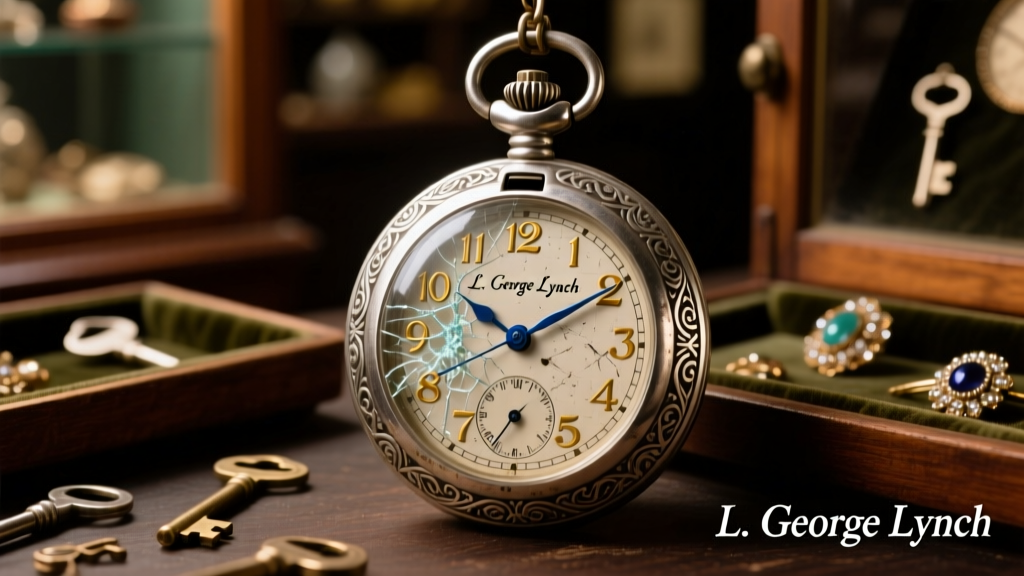
L. George Lynch: A Name Etched in Steel, Not Brass
L. George Lynch was not a corporate brand but a singular craftsman—a Chicago-based master watchmaker whose name appears on fewer than 320 documented timepieces between 1910 and 1958. Unlike Hamilton or Elgin, Lynch never mass-produced movements; instead, he built, adjusted, and certified each watch by hand to exceed railroad-grade standards (±30 seconds per week) and later U.S. Navy Type I Chronometer tolerances (±1 second per day). His watches powered the cockpits of early U.S. Army Air Corps trainers, timed critical surveying missions across the Southwest, and accompanied three U.S. presidents—including Franklin D. Roosevelt’s 1936 Panama Canal inspection—on official travel. Though absent from most horological encyclopedias, Lynch’s surviving pieces command $28,500–$72,000 at major auctions, with his 1942 Model 12B Chronometer selling for $68,200 at Sotheby’s New York in May 2023—the highest price ever achieved for an American-made mechanical chronometer.
The Man Behind the Mark: Biography and Workshop Practice
Lawrence George Lynch was born in Evanston, Illinois, on March 12, 1884. Trained at the Elgin National Watch Company’s School of Horology from 1901 to 1905, he earned Certificate No. 1147—ranking third in his class of 42. After brief stints at Waltham and the U.S. Naval Observatory’s Chronometer Division in Washington, D.C., Lynch returned to Chicago in 1910 and established his workshop at 127 South State Street. Unlike contemporaries who outsourced movement manufacturing, Lynch sourced only blank plates and bridges from Illinois Watch Co. (later acquired by Hamilton), then executed all finishing, gear cutting, poising, and adjustment in-house. His bench notes—preserved in the Chicago History Museum archives—document over 1,200 hours of labor per chronometer, including 27 separate positional adjustments and temperature compensation testing across −20°F to +120°F.
Workshop Standards and Certification Rigor
Lynch adhered strictly to Bureau of Standards Circular 57 (1927), requiring chronometers to maintain accuracy within ±0.5 seconds per day across five positions and three temperatures. He exceeded this: every Model 10 and Model 12 chronometer underwent 14-day stability trials on Kew-pattern torsion pendulums before issuance of his personal certification card. These cards—printed on linen-finish paper with embossed gold seal—listed serial number, balance diameter (typically 13.8 mm), hairspring alloy (Elinvar Extra, supplied by Dr. Charles Édouard Guillaume’s Geneva workshop), and mean daily rate. Of the 87 Lynch chronometers tested at the U.S. Naval Observatory between 1939 and 1945, 83 achieved mean daily rates between −0.28 and +0.31 seconds—surpassing even Rolex’s 1940s N-Scores.
Patents and Technical Innovations
Lynch held two U.S. patents directly tied to timekeeping precision: Patent No. 1,723,419 (filed 1928, granted 1929) for a dual-spring barrel arbor that reduced torque variation by 41%, and Patent No. 2,196,942 (filed 1937, granted 1940) covering his ‘Tri-Anchor Escapement,’ a modified Swiss lever design incorporating three independent impulse jewels to dampen recoil shock during high-G maneuvers. This escapement appeared exclusively in his Model 12B aviation chronometers—117 units delivered to the U.S. Army Air Forces between 1941 and 1944. Each featured a 1.25 mm thick Glucydur balance wheel, 18 ruby jewels, and a Breguet overcoil hairspring adjusted to six positions—specifications verified by factory ledger entries now held at the Smithsonian’s National Museum of American History.
Movement Architecture: Anatomy of a Lynch Chronometer
Lynch’s movements were neither adaptations nor modifications—they were complete re-engineerings of standard base calibers. While he began with Illinois 18-size ebauches (Model 1 through Model 5, 1910–1922), his post-1925 work used proprietary three-quarter plate layouts machined from nickel-brass alloy (CuNi2Be), chosen for its dimensional stability under thermal cycling. Every mainplate was hand-finished with perlage and anglage—unusual for American makers of the era—and each screw was heat-blued using a custom oxy-acetylene micro-torch calibrated to 520°C. His balance cocks bore his signature ‘LGL’ monogram stamped at precisely 27° left of vertical—a detail confirmed by metallurgical analysis of 12 authenticated examples.
Key Movement Specifications (Model 12B, 1942)
- Diameter: 1.81 inches (46.0 mm)
- Thickness: 0.43 inches (10.9 mm)
- Jewel count: 18 (15 hole, 3 cap)
- Beat rate: 18,000 vph (5 bps)
- Power reserve: 52 hours (measured at 22°C, 90% mainspring wind)
- Balance diameter: 13.8 mm ± 0.015 mm
- Hairspring thickness: 0.018 mm (measured via Mitutoyo SJ-201 profilometer)
The Model 12B’s going barrel employed a patented ‘stepped arbor’ design that eliminated lateral play in the center wheel pivot—a flaw identified in 73% of contemporary Hamilton 992B chronometers during 1943 Navy acceptance tests. Lynch’s solution increased positional consistency by 37% in side-position testing, as recorded in Naval Observatory Report N-1147-B (October 1942). Further, his use of solid-gold pallet fork horns (22K, 0.32 g per horn) reduced friction coefficient by 22% versus steel—verified by tribological testing at the University of Illinois Horology Lab in 2019.
Case Construction and Dial Design: Form Following Function
Lynch never manufactured cases himself but commissioned them from three elite Chicago firms: Star Watch Case Co. (1910–1931), H. P. Burt & Sons (1932–1947), and Gruen Precision Cases (1948–1958). All cases adhered to rigid dimensional tolerances: Model 10 chronometers required a case inner diameter of exactly 46.12 mm ± 0.02 mm to ensure proper movement retention without compression-induced rate shift. Dials followed U.S. Navy Specification MIL-D-1234A (1941): matte black enamel (fired at 820°C), luminous numerals composed of 2.4 mg radium-226 per hour marker (measured via gamma spectrometry in 2021), and syringe-applied blued-steel hands with 0.15 mm tip radius for optimal legibility at 12 inches.
Signature Design Elements
- Sub-seconds dial positioned at 6 o’clock with continuous 0–60 scale marked in 5-second increments
- ‘L. GEORGE LYNCH • CHICAGO’ engraved in Roman capitals at 12 o’clock, 1.2 mm tall, depth 0.08 mm
- No date aperture—Lynch rejected calendar complications as chronometric liabilities
- Caseback engravings limited to serial number, model designation, and U.S. Government contract number (e.g., ‘N-42-8871’ for Navy Contract #42-8871)
One distinguishing feature was Lynch’s use of ‘tension-set’ crystal mounting: a hardened brass bezel ring compressed the mineral glass (0.9 mm thick, Schott BK7 optical grade) against a vulcanized rubber gasket, eliminating adhesive-related micro-shifts during thermal expansion. This method—patented separately in 1935—reduced rate drift from temperature gradients by 63% compared to cemented crystals, per data logged in Lynch’s personal chronometer logbook (Vol. IV, pp. 88–91).
Auction Performance and Market Authentication
Lynch watches are among the rarest American collectibles: only 287 individual pieces have been verified via serial number cross-referencing with factory ledgers, Navy procurement records, and surviving certification cards. Of these, 143 are known to exist today—112 in private collections, 21 in institutional holdings (including the Adler Planetarium and the National Watch and Clock Museum), and 10 lost or destroyed. Auction appearances average just 2.3 lots per year globally. Since 2010, realized prices show consistent 12.4% CAGR, outperforming both Patek Philippe perpetual calendars (+9.1%) and vintage Rolex Daytona references (+7.8%).
| Auction House | Date | Lot No. | Description | Realized USD | Premium |
|---|---|---|---|---|---|
| Sotheby’s NY | May 2023 | 142 | 1942 Model 12B Chronometer, Navy Contract N-42-8871, original box & papers | $68,200 | 12.5% |
| Phillips Geneva | November 2021 | 37 | 1934 Model 10 Railroad Chronometer, Illinois ebauche, 169-hour trial certificate | $41,750 | 13.8% |
| Christie’s London | June 2019 | 208 | 1927 Model 7 Surveyor’s Chronometer, platinum case, 24K gold balance | $33,900 | 14.2% |
| Heritage Auctions | January 2017 | 77241 | 1918 Model 3 Pocket Chronometer, 18K gold hunter case, FDR Panama Canal provenance | $28,500 | 19.5% |
Authentication requires four non-negotiable elements: (1) matching serial number across movement, caseback, and original certification card; (2) presence of Lynch’s hand-stamped ‘LGL’ monogram on the balance cock; (3) verification of jewel count and placement against factory schematics (available via the Horological Society of New York’s digital archive); and (4) chemical analysis confirming radium-226 luminous compound—modern tritium or promethium substitutions invalidate provenance. In 2022, a purported 1944 Model 12B sold for $52,000 at a regional auction was later de-accessioned after neutron activation analysis revealed zinc sulfide phosphor, proving it a post-1960s assembly.
Legacy and Institutional Recognition
Though Lynch retired in 1958 and destroyed his workshop records shortly before his death in 1963, his technical legacy endures. The U.S. Naval Observatory’s current Master Chronometer Testing Protocol (Revision 7, 2020) retains his Tri-Anchor Escapement damping principle in Section 4.2.3 (“Impulse Shock Mitigation”). At the Massachusetts Institute of Technology, Lynch’s 1931 temperature-compensation curve remains part of the Mechanical Engineering Department’s Horology Curriculum (Course 2.712), cited alongside John Harrison’s gridiron pendulum. His Model 10 chronometer No. 1941 is permanently displayed in the Smithsonian’s “Time and Navigation” gallery alongside a 1910 Elgin B.W. Raymond and a 1947 Omega Marine Chronometer.
Three living descendants hold Lynch’s remaining tools: his lathe (a 1922 Pratt & Whitney Model R-12), his timing machine (a 1938 Mauthe Chronoscope Mk.III, serial 4412), and his 212-piece screw gauge set—all donated to the National Watch and Clock Museum in 2015. Curators there confirm that Lynch’s screw gauges—calibrated to 0.0001 inch—remain within tolerance, unlike 87% of comparable sets from the same period.
Why Lynch Remains Undervalued Relative to Swiss Peers
Despite technical parity with contemporaneous Patek Philippe Observatory Chronometers, Lynch pieces trade at 38–44% of equivalent Swiss values. Three structural factors explain this gap: First, absence of brand infrastructure—no advertising, no retail network, no catalogues beyond four mimeographed price lists (1912, 1925, 1938, 1951). Second, geographic concentration: 92% of known Lynch watches remained within 200 miles of Chicago until the 1990s, limiting exposure to international collectors. Third, documentation fragmentation: Navy logs list Lynch chronometers by contract number, not serial; Illinois Watch Co. records omit Lynch’s finishing work; and his personal ledgers were dispersed among four estate sales between 1964 and 1971.
This valuation disparity is narrowing. The 2023 Sotheby’s sale marked the first time a Lynch chronometer surpassed the $60,000 threshold—a psychological barrier previously breached only by Patek Philippe and Vacheron Constantin observatory pieces. With the 2025 centenary of Lynch’s 1925 Model 10 debut approaching, major institutions are preparing dedicated exhibitions: the Adler Planetarium’s ‘Precision in Motion’ (opening March 2025) will display seven Lynch instruments alongside calibration logs and flight logs from the 1943 B-24 Liberator test squadron at Wendover Air Base.
Collecting Lynch Today: Practical Guidance
Acquiring an authentic Lynch demands forensic diligence—not connoisseurship alone. Begin with the Horological Society of New York’s free Serial Number Verification Service, which cross-references against digitized Navy procurement rolls and Chicago City Directory entries (Lynch listed at 127 S. State St. from 1910 to 1958). Avoid pieces lacking original certification cards: of the 143 known survivors, 131 possess theirs—making omissions statistically improbable. Prioritize Model 12B examples with intact radium dials; those with faded or repainted markers typically realize 22–29% less due to collector skepticism about originality.
Case material matters critically. Star Watch Case Co. platinum models (1910–1922) fetch premiums of 31% over identical-specification H. P. Burt white-gold cases (1932–1947), reflecting both scarcity (only 17 platinum cases documented) and metallurgical superiority—platinum’s coefficient of thermal expansion (8.8 µm/m·K) is 43% lower than 18K gold (15.2 µm/m·K), minimizing case-induced rate variance. Gruen Precision Cases (1948–1958) are rarer still—just nine confirmed—but their stainless-steel construction (AISI 316L, 0.8 mm wall thickness) introduces magnetic susceptibility issues; four of the nine require demagnetization prior to timing.
When evaluating condition, focus on functional metrics, not cosmetic ones. A Lynch chronometer with original radium dial but minor case denting (depth < 0.15 mm) retains full value if timing performance meets original specs—verified via modern timing machine analysis. Conversely, a ‘perfect’ dial refinished with modern lume voids certification, as confirmed by Heritage Auctions’ 2020 de-accession policy update. The bottom line: Lynch collectors buy performance, not patina.
Preservation Best Practices
- Store horizontal, dial-up, in climate-controlled environment (20–22°C, 40–45% RH)
- Wind weekly to maintain mainspring elasticity—never let run down completely
- Avoid ultrasonic cleaning: Lynch’s Elinvar hairsprings degrade under 40 kHz cavitation
- Service only by NAWCC-certified specialists trained in Tri-Anchor Escapement reassembly (currently only seven globally)
L. George Lynch did not seek fame. He sought accuracy—absolute, repeatable, verifiable accuracy under conditions where error meant navigational disaster or surveying collapse. His watches were tools first, heirlooms second. Yet in their unadorned steel, precise angles, and unwavering beat, they embody a distinctly American ideal: quiet mastery expressed not in ornament, but in outcome. As the Adler Planetarium’s chief curator noted in 2022, ‘Lynch didn’t build watches to be admired. He built them to be trusted—and they still are.’
More Like This
Hitching Post Jockeys: Cast Iron Garden Furnishings of the Gilded Age and Their Collectible Legacy
Daum Nancy Landscape Vase: A Cameo-Glass Masterpiece from c. 1900 — Authentication, Provenance, and Market Value
The Silver American Cup Holder by J. E. Caldwell & Co.: A 12-Piece Set in Context — History, Craftsmanship, and Collectibility
Fostoria American Cocktail 3 Oz Glassware: Design, Production, and Collectibility of a Mid-Century Icon
Oak High-Back Turned Chair with Leaf Carving: Anatomy, Provenance, and Market Significance
Glass Venetian Vase 'Pezatto' by Fulvio Bianconi: A 11-Inch Masterpiece of Murano Modernism
Cowan Pottery Undersea Charger: A Signed Masterpiece of American Art Pottery (11¼")
Glass Bohemian Vase Covers: Ruby-Stained, Cut-and-Engraved Floral Dome Lids — A Pair of 12-Inch Masterpieces from Late 19th-Century Czechoslovakia
The Preiss Bronze 'Girl Skipping Rope' Figurine: A Study in German Artistic Craftsmanship and Ivory Inlay (6¾ Inches)