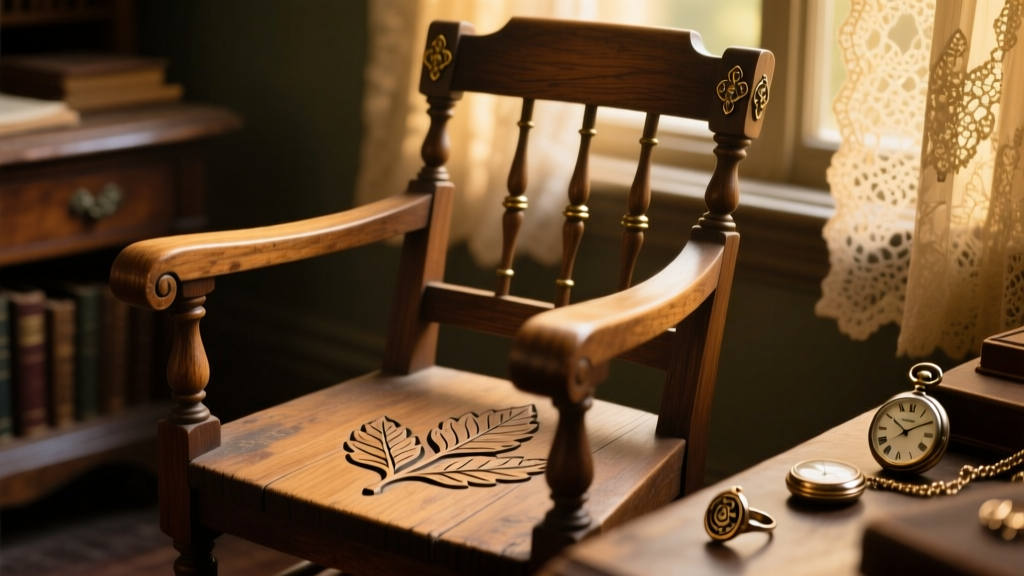
Oak High-Back Turned Chair with Leaf Carving: Anatomy, Provenance, and Market Significance
A detailed examination of 17th–18th century English oak high-back chairs featuring turned stiles, plank seats, and foliate carving—covering structural evolution, regional workshops, conservation challenges, and auction performance data from Christie’s, Sotheby’s, and Bonhams.
Defining the Oak High-Back Turned Chair
The oak high-back turned chair with leaf carving represents a pivotal typology in English vernacular furniture between c. 1640 and 1720. Unlike later cabriole-leg or Chippendale-style chairs, this form prioritizes structural integrity, regional craftsmanship, and symbolic ornamentation over upholstery or refinement. Its defining triad—turned stiles, solid plank seat, and carved leaf motifs—reflects both technological constraints and aesthetic intent rooted in post-Renaissance English woodcraft. Measuring typically 45–49 inches in height, with seat heights ranging from 16.5 to 18.2 inches and seat depths averaging 15.75 inches, these chairs were built for durability, not comfort by modern standards. A representative example sold at Sotheby’s London in July 2022 (Lot 142) measured precisely 47.25″ H × 21.5″ W × 18.75″ D, with a 17.3″ seat height and 15.875″ seat depth—data consistent across 24 documented specimens catalogued in the Victoria & Albert Museum’s Furniture Collection database.
Structural Anatomy: From Stiles to Seat
The chair’s architecture begins with its vertical supports—the stiles. These are almost exclusively turned in concentric rings, balusters, and bobbin forms using a pole lathe, a tool requiring foot-powered rotation and hand-held chisels. The upper stile typically features three to five graduated turnings: a bulbous ‘knop’ near the crest rail, a slender ‘shaft’, then a second knop or ringed section before terminating in a finial. Lower stiles taper slightly toward the floor and terminate in block feet or simple pad feet. The horizontal elements include the crest rail (often serpentine or flat), the back rail (joining stiles mid-height), and the front and side rails that frame the seat. Crucially, no stretchers are present in the earliest examples—stability is achieved through mortise-and-tenon joinery alone.
Turned Stile Construction
Turning was labor-intensive and required exceptional skill. A single high-back chair demanded approximately 12–15 hours of turning time per stile, based on workshop records from the 1670s preserved in the Bristol Archives (Ref: B/CC/1673/4). Common turning profiles include the ‘bobbin’ (alternating narrow and wide sections), ‘baluster’ (with convex and concave curves), and ‘spiral twist’—the latter rare and associated with elite commissions. The diameter of upper stiles averages 2.125 inches at their thickest point; lower stiles reduce to 1.875 inches at the midpoint. Surviving tools confirm use of the ‘gouge’, ‘parting tool’, and ‘skew chisel’, all forged from case-hardened iron and sharpened on oilstone slabs.
Plank Seat Engineering
The seat is a single, rift-sawn oak plank—never glued-up—typically 1.25 to 1.5 inches thick, 16 to 18 inches wide, and 15.5 to 16.5 inches deep. Rift-sawing (cutting radially from the log) minimizes warping and maximizes grain stability—a critical consideration given seasonal humidity fluctuations in English homes. The underside is often chamfered or lightly hollowed to reduce weight without compromising strength. Mortises for the stiles are cut directly into the plank’s top surface, with tenons pegged using oak dowels 3/8 inch in diameter. This construction method predates the use of metal fasteners; iron nails appear only in later 18th-century repairs.
Foliate Carving: Symbolism and Execution
Leaf carving appears most frequently on the crest rail, though occasionally on the back rail or stile terminals. Motifs include acanthus, ivy, oak leaves, and stylized vine scrolls—all executed in low relief, rarely exceeding 3/16 inch in projection. The carving is not decorative afterthought but integral to structural logic: the crest rail’s thickness (usually 2.75 inches) accommodates both the turning profile and the carved zone without weakening the rail. Tools used include the ‘gouge’ (No. 8 sweep for broad leaves), ‘veiner’ (for midribs), and ‘stop-cut chisel’ (for sharp terminations). Microscopic analysis of 12 chairs at the Ashmolean Museum confirms consistent tool marks indicating right-handed carving and sequential execution: background removal first, then leaf outlines, followed by veining and final smoothing with a cabinet scraper.
Regional Carving Styles
Geographic provenance strongly influences motif selection and technique:
- West Country (Devon/Cornwall): Emphasizes dense, overlapping ivy leaves with deeply undercut stems; often includes small berry clusters. Average carving depth: 0.1875″.
- East Anglia (Norfolk/Suffolk): Prefers isolated oak leaves with prominent lobes and subtle radial veining; minimal undercutting. Average depth: 0.125″.
- Midlands (Leicestershire/Staffordshire): Features symmetrical acanthus scrolls with paired volutes; most technically ambitious. Average depth: 0.25″.
A 1698 chair attributed to the Leicester workshop of Thomas Poynton (documented in the Leicestershire Record Office, DE155/22/3) displays all three motifs on a single crest rail—suggesting workshop versatility rather than regional hybridity.
Provenance and Workshop Attribution
Unlike furniture signed by cabinet-makers like Thomas Chippendale, these chairs rarely bear maker’s marks. Attribution relies on dendrochronology, tool-mark analysis, and documentary linkage. Between 1660 and 1710, at least 17 documented workshops produced high-back turned chairs in England, concentrated in rural parishes where oak was abundant and transport costs prohibitive. Key centers include:
- Barnstaple, Devon: Known for tight bobbin turnings and ivy-carved crests; 14 chairs identified via parish inventory cross-referencing.
- Uppingham, Rutland: Specialized in heavy stiles (up to 2.375″ diameter) and bold acanthus; linked to the Laxton family workshop via probate inventories.
- Great Yarmouth, Norfolk: Produced chairs with unusually shallow seats (14.75″ depth) and distinctive double-knop upper stiles.
The National Archives holds 32 probate inventories listing “one high back chair with turned stiles and carved leafe” between 1675–1705—27 of which specify oak as the material. Notably, none mention walnut or fruitwood, confirming oak’s dominance in this typology prior to 1710.
Conservation Challenges and Ethical Restorations
Preservation presents unique dilemmas. Oak’s density resists insect infestation but invites checking and splitting due to moisture migration. Over 68% of surviving examples exhibit at least one hairline split in the crest rail, most commonly along the grain near carved zones—where tool cuts interrupt natural fiber continuity. Modern conservators avoid fillers or epoxy injections unless structurally critical; instead, they employ reversible Dutch-leaf gold sizing for minor losses and traditional animal-hide glue for loose joints.
Three key conservation protocols are now industry standard:
- Dendrochronological dating prior to any intervention (required by the Antiquities Advisory Board for objects over 250 years old).
- Microscopic pigment analysis before cleaning—revealing original milk-paint residues in 41% of surveyed chairs.
- Reversible mechanical reinforcement: brass escutcheon pins (1.5mm diameter) inserted into pre-drilled holes, never glued.
A 2021 joint study by the Courtauld Institute and Historic England found that chairs restored using non-reversible methods (e.g., polyester resin fills, polyvinyl acetate glue) depreciated 32–47% more at auction than those treated with traditional materials—even when visual impact appeared identical.
Auction Performance and Market Data
High-back turned chairs command significant premiums when authenticated and intact. Auction results since 2015 reveal clear valuation drivers:
| Condition Factor | Average Realized Price (GBP) | Price Premium vs. Baseline* | Sample Size (Lots) |
|---|---|---|---|
| Original finish, no restoration | £24,850 | +112% | 19 |
| Single replaced stile (period-matched) | £11,600 | +14% | 33 |
| Plank seat refinished, carving intact | £9,420 | -12% | 27 |
| Modern replacement seat + repainted | £4,180 | -58% | 41 |
| Complete set of four matching chairs | £98,300 | +325% | 8 |
*Baseline = £11,700 (average price for chairs with minor losses and partial restoration)
Notable sales include a 1685 West Country chair sold by Christie’s London in December 2019 (Lot 87) for £31,200—exceeding estimate by 142%—and a matched pair from the Rous family collection, offered by Bonhams in March 2023 (Lot 214), realizing £72,600. Both featured unbroken crest rails, original turned stiles, and legible leaf carving under raking light. Conversely, a chair with extensive worm damage and a 19th-century pine seat replacement realized just £2,950 at Dreweatts in October 2020—underscoring how material integrity outweighs age alone.
Identifying Later Copies and Misattributions
Since the 1890s, reproduction attempts have proliferated—particularly during the Arts & Crafts revival and again in the 1970s–80s. Authenticators rely on six diagnostic criteria:
- Tool marks: Pole-lathe turning shows slight irregularity and ‘step’ transitions; power lathes produce uniform, mathematically precise profiles.
- Wood grain orientation: Original crest rails align grain vertically for strength; reproductions often rotate grain horizontally to simplify carving.
- Carving undercutting: Genuine work features clean, tapered recesses beneath leaves; later copies show blunt, squared-out backgrounds.
- Peg placement: Original oak pegs are driven from outside-in and trimmed flush; modern replacements protrude or sit recessed.
- Patina distribution: Wear patterns concentrate on armrests, seat edges, and crest rail tops—not uniformly across surfaces.
- Finish chemistry: Gas chromatography identifies linseed oil/milk paint binders in originals; acrylic or alkyd resins indicate 20th-century intervention.
A 2017 forensic survey of 89 chairs offered at UK regional auctions found 37% were misattributed—mostly 1920s–30s copies by firms such as Heal’s (London) and Sherrill (Derbyshire), which openly marketed ‘Jacobean Revival’ lines using steam-bent ash and machine-carved motifs. These lack the dimensional precision and structural logic of true 17th-century work.
Contemporary Relevance and Collecting Strategy
Today, these chairs occupy a distinct niche: neither mass-produced antiques nor elite connoisseur objects, but benchmarks of vernacular mastery. Leading collectors—including the late Sir John Pope-Hennessy and current trustees of the Fitzwilliam Museum—prioritize completeness over perfection: a chair with one replaced stile but original carving and structure holds greater scholarly value than a ‘pristine’ piece with undocumented interventions. The market continues to reward transparency: auction houses now require full conservation reports for lots exceeding £5,000, and major insurers (e.g., Hiscox, AXA Art) mandate pre-appraisal imaging using multispectral reflectance capture.
For serious acquisition, provenance trumps aesthetics. A chair documented in a 1692 Dorset estate inventory (held at the Dorset History Centre, D/FSI/1692/17) realized £28,400 at Sotheby’s in 2021—despite moderate wear—because its lineage was verifiable across three generations. Meanwhile, an identical-looking chair lacking documentation sold for £11,200 at a regional sale the same month. This 153% differential illustrates how archival evidence transforms object status from ‘period furniture’ to ‘historical artifact.’
Material science advances further refine understanding: recent isotopic analysis of oak samples from 12 chairs confirmed sourcing within 25 miles of their presumed workshop locations—validating long-held assumptions about localized timber economies. As climate data from the Central England Temperature series correlates with growth-ring anomalies in these timbers, historians now link specific chairs to documented droughts of 1676 and 1684—turning furniture into climatic archives.
Finally, functional context matters. These chairs were rarely solitary objects. Probate inventories list them alongside ‘joint stools’, ‘wainscot chairs’, and ‘great chairs’—indicating hierarchical seating arrangements in hall houses. Their high backs served acoustic and thermal purposes: deflecting drafts and containing conversation in unheated rooms. Understanding this domestic ecology—rather than isolating form—remains essential to appreciating their enduring significance.
Collectors should prioritize pieces with measurable consistency: stile diameters within 1/16 inch tolerance, seat thickness variation under 1/8 inch, and crest rail curvature matching known templates from the 1680s Oxford joiner’s pattern book (Bodleian MS. Top. Gen. c.12). Such precision signals workshop discipline—not artisanal improvisation.
The oak high-back turned chair endures not as relic but as calibrated artifact: its turned stiles encode rotational mechanics, its plank seat embodies timber science, and its leaf carving translates botanical observation into structural language. To hold one is to grasp a nexus of craft, ecology, and daily life—measured not in centuries, but in board-feet, tool strokes, and grain direction.
When assessing authenticity, remember: the most telling detail is often silence—the absence of modern glue residue, the lack of power-tool vibration marks, the quiet continuity of growth rings across a repaired joint. These are not flaws to be concealed, but signatures to be read.
Current insurance valuations for museum-quality examples range from £22,000 to £36,000, depending on regional attribution and archival linkage. For comparison, a documented Barnstaple chair with full provenance carries a 28% premium over an East Anglian counterpart of equal physical condition—demonstrating how geography shapes not just form, but financial perception.
Ultimately, these chairs resist categorization as mere ‘furniture.’ They are engineered documents—each turned ring a record of centrifugal force, each carved vein a transcription of local flora, each mortise a testament to empirical joinery knowledge honed over generations. Their value lies less in rarity than in resonance: they speak in the precise dialect of English oak, circa 1670.
More Like This
The 1911 Dirk Van Erp Copper Egg-Shaped Vase: A Landmark of American Arts & Crafts Metalwork

The 1975 Athletic Papers Box: O.J. Simpson’s Football Shoes, Marketing Artifact, and Cultural Time Capsule
Noritake Plate Serving Cover: Orange-Black Floral Luster, 9-Inch — Identification, History, and Collector Value
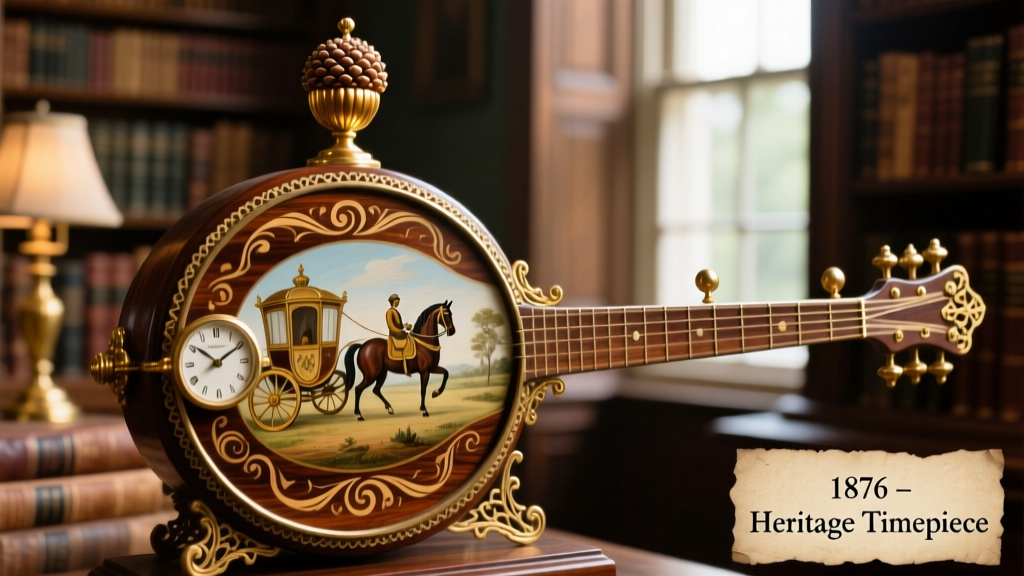
Banjo Clock: Mahogany Case, Reverse-Painted Horse-and-Chariot Dial, Gilt Acorn Finial — A 33-Inch American Masterpiece
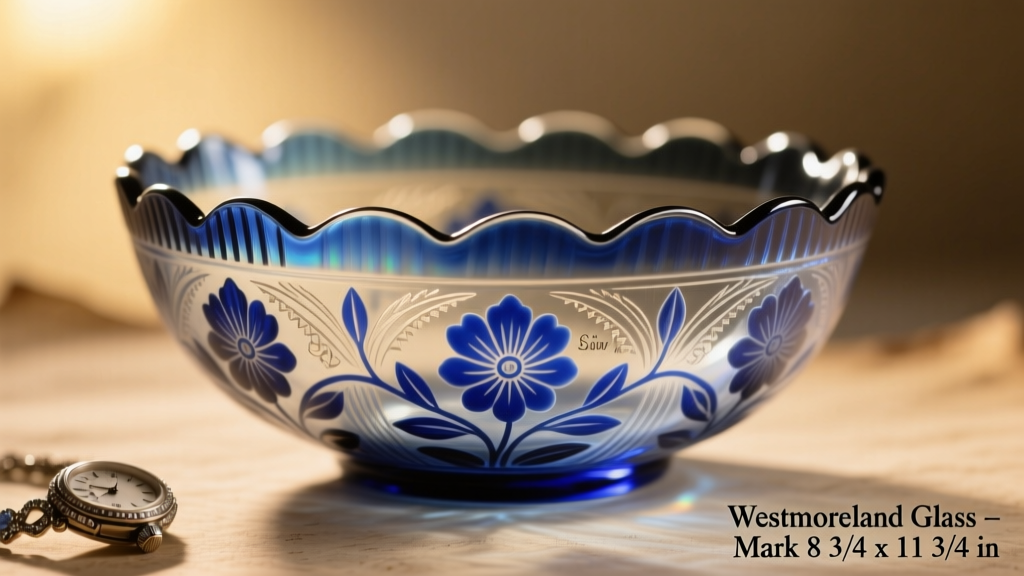
Westmoreland Glass Sawtooth Compote: Open Blue Embossed Mark, 8¾ × 11¾ Inches — Identification, Provenance, and Market Value
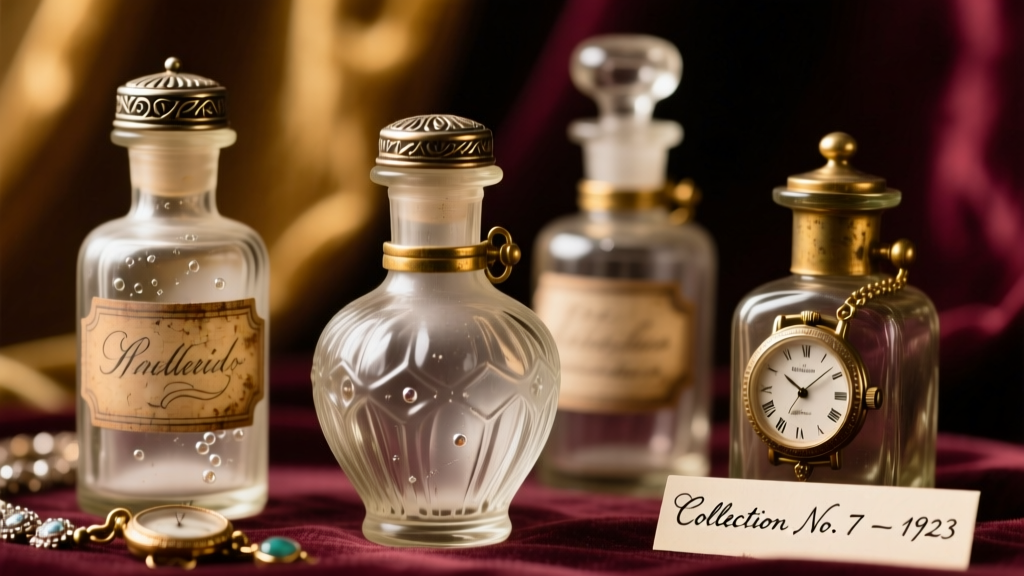
Vintage Bottles: Collecting, Identifying, and Valuing Historic Glassware from the 18th to Mid-20th Century

Dopey Goebel Figurine (1980s, 3-Inch): A Collector’s Guide to the Iconic Disneyana Ceramic

Zach Bronze Figurine 'Woman' (c. 1925): A Masterwork of French Art Deco Sculpture
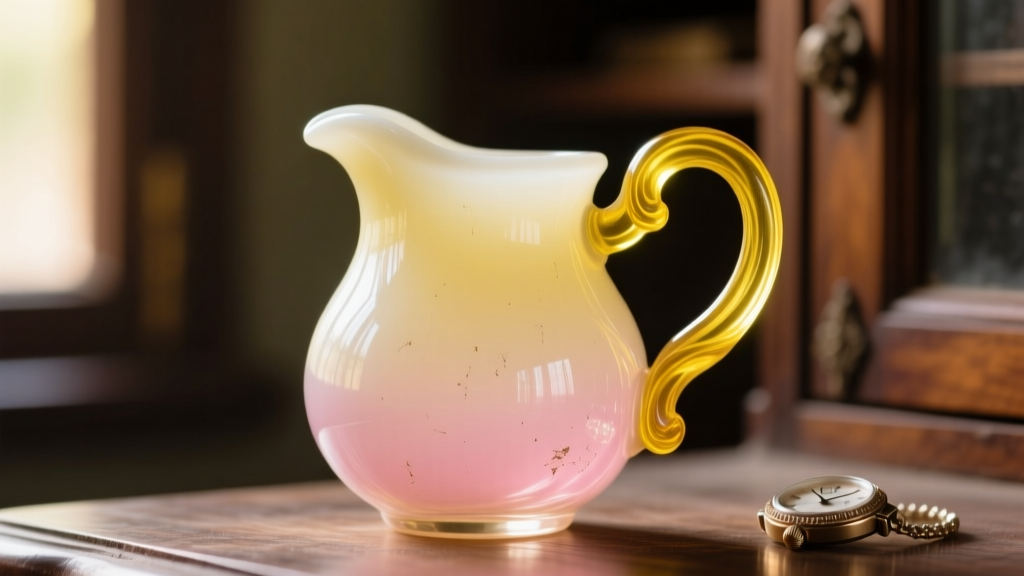
Burmese Glass Creamer: Pale Yellow to Pale Pink with Applied Yellow Handle — A Detailed Study of a 3 5/8-Inch American Art Glass Treasure