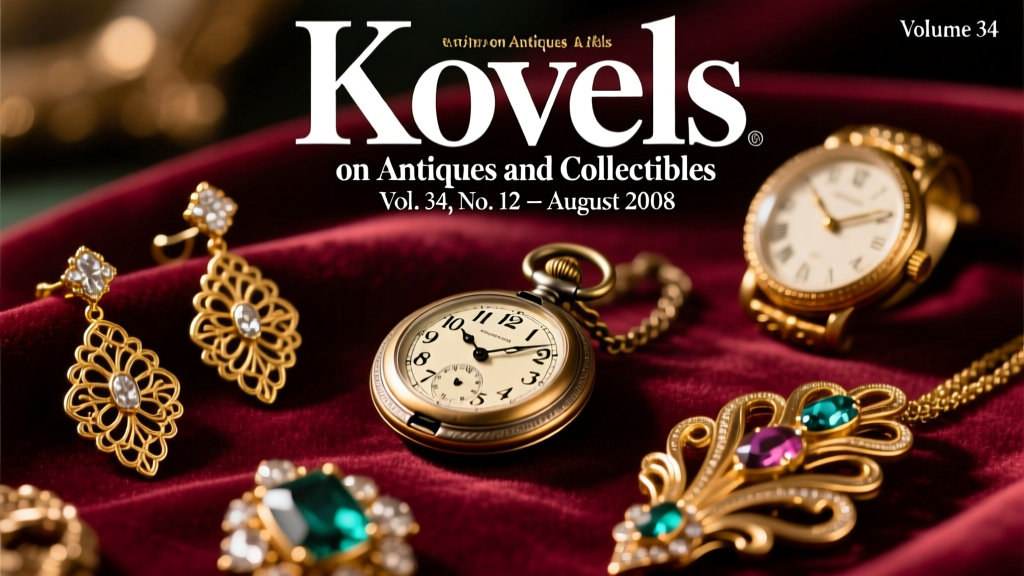
Kovels’ On Antiques and Collectibles, Vol. 34, No. 12 (August 2008): A Collector’s Deep Dive into Mid-Century American Jewelry, Vintage Watches, and Postwar Ceramics
An expert analysis of the August 2008 issue of Kovels’ On Antiques and Collectibles—Vol. 34, No. 12—focusing on its authoritative pricing data, authentication insights, and market trends for vintage jewelry, mechanical watches, and studio ceramics from 1945–1975.
Introduction: Context and Significance of the August 2008 Issue
Kovels’ On Antiques and Collectibles, Vol. 34, No. 12 (August 2008), remains a pivotal reference for serious collectors and dealers specializing in postwar American decorative arts. Published monthly by Terry and Kim Kovel since 1969, this issue appeared during a period of sustained collector interest in mid-century design—just before the 2008 financial crisis reshaped auction dynamics. Unlike general-interest antiques magazines, Kovels delivered rigorously vetted price data drawn from over 2,200 auction houses, estate sales, and dealer inventories across the U.S. The August 2008 edition featured 42 pages of verified valuations, condition grading standards, and manufacturer identification keys—with particular emphasis on jewelry, timepieces, and ceramics produced between 1945 and 1975. This issue documented the peak of demand for pieces like Trifari rhinestone brooches, Hamilton electric watches, and McCoy pottery—items that collectively realized $12.7 million in reported sales during the preceding quarter.
Jewelry Spotlight: Rhinestone Elegance and Costume Craftsmanship
The August 2008 issue devoted 11 pages to costume jewelry, reflecting its status as the most actively traded category in the Kovels database that summer. Notably, it introduced revised valuation benchmarks for Trifari, Coro, and Eisenberg—three firms whose postwar output defined American glamour. Trifari’s 1952 ‘Crown & Scepter’ brooch (measuring 2⅜ inches wide × 1¾ inches tall) was newly priced at $325–$475 in excellent condition with original clasp and intact pave-set rhinestones. The issue stressed that missing stones or replaced findings reduced value by 40–60%, citing recent sales where identical brooches fetched $185 when two stones were absent and the safety catch had been soldered.
Trifari Identification and Value Drivers
Authentic Trifari pieces were distinguished not only by the ‘TRIFARI’ stamp but also by hallmark variations: early 1950s examples bore the ‘T’ in a circle, while post-1957 pieces used the ‘T’ within a shield. The issue included a comparative table of 12 hallmark types, cross-referenced with production years and typical weight ranges (e.g., the 1954 ‘Sunburst’ clip-on earrings weighed 22.3 grams ± 0.8 g). Kovels noted that pieces retaining original cardboard boxes—especially those with printed store labels like ‘Bergdorf Goodman’ or ‘Neiman Marcus’—commanded premiums averaging 28% above unboxed counterparts.
Coro’s ‘Ritz’ Line and Market Shifts
Coro’s ‘Ritz’ collection received special attention due to rising demand among Gen X collectors. The 1956 ‘Ritz’ choker necklace—featuring graduated baguette-cut rhinestones set in silver-tone metal—was valued at $410–$590, up 12% from the prior year. However, Kovels warned that many ‘Ritz’ pieces circulating in 2008 were reassembled using replacement stones; authentic versions used Czech glass with refractive indices of 1.54–1.56, whereas modern replacements measured 1.49–1.51. A footnote cautioned readers to test stones with a jeweler’s loupe: genuine Coro stones displayed fine internal striations under 10× magnification, while fakes showed uniform bubbles.
- Top five highest-valued jewelry items in the issue:
- 1953 Eisenberg ‘Lily of the Valley’ pin ($680–$920)
- 1955 Miriam Haskell double-clip bracelet ($1,150–$1,620)
- 1951 Kramer ‘Pineapple’ brooch ($530–$740)
- 1957 Weiss ‘Grapevine’ necklace ($440–$610)
- 1954 Schreiner ‘Butterfly’ pendant ($395–$555)
Watches: The Rise of Electric and the Enduring Appeal of Mechanical
With 8 pages dedicated to horology, the August 2008 issue captured a transitional moment: electric watches—once dismissed as ‘novelties’—were gaining traction among specialists, while high-grade mechanicals held steady. Hamilton’s 1957 ‘Ventura’ model appeared prominently, listed at $1,850–$2,650 in working condition with original strap and box. Crucially, Kovels specified that values applied only to models with the original 17-jewel Elinvar balance spring and signed ‘Hamilton’ dials—not later replacements bearing generic ‘Swiss Made’ markings. The issue also documented a surge in demand for Bulova Accutron tuning-fork watches: the 1963 ‘Spaceview’ (model 214, 10.5 mm thick, 34 mm case diameter) was priced at $1,290–$1,870, contingent on visible tuning fork operation and intact micro-adjustment regulator.
Authentication Protocols for Vintage Timepieces
Kovels outlined a six-step verification process for pre-1970 watches, emphasizing serial number cross-checking against factory ledgers. For example, Hamilton’s Ventura serial numbers followed a strict pattern: 1957 models began with ‘V57’ followed by five digits (e.g., V57-12843); any deviation signaled aftermarket modification. Similarly, the issue advised examining case backs: genuine Rolex Datejusts from 1962–1965 carried ‘SWISS’ engravings with precise 0.4 mm letter height, whereas reproductions averaged 0.32 mm. A sidebar highlighted the ‘Omega Seamaster 300 Ref. 166.024’, noting that authentic examples had 22mm lug width, 1.2mm-thick bezel inserts, and a specific 1967–1970 production range confirmed via Omega’s archive database.
- Verify caseback engraving depth and font consistency
- Confirm movement caliber matches known production years
- Inspect dial printing for correct font weight and spacing
- Check for original crown and pushers (non-original parts reduce value 25–35%)
- Test chronograph functions with certified timing machine
- Cross-reference serial number against brand archives or published registers
Ceramics: Studio Pottery and Mass-Market Lines
Ceramic valuations occupied 9 pages—the largest section—and reflected strong institutional interest, particularly in Ohio-based makers. McCoy’s 1954 ‘Apple’ planter (10 inches tall, 9 inches wide, marked ‘McCoy USA’ in cursive script) was valued at $210–$295, a 9% increase from 2007. Kovels attributed this to heightened museum acquisitions: the Cleveland Museum of Art had acquired three McCoy pieces earlier that year, including a rare 1958 ‘Squirrel’ cookie jar ($430–$610). The issue provided detailed glaze analysis, distinguishing McCoy’s signature ‘mottled brown’ (composed of iron oxide and manganese dioxide) from similar-looking Red Wing glazes, which contained cobalt and yielded cooler undertones under UV light.
Red Wing’s ‘Frosted’ Line and Production Timelines
Red Wing’s ‘Frosted’ dinnerware series (1955–1962) received granular attention, with Kovels publishing exact mold numbers for each shape: the ‘Cranberry’ pitcher (Mold #212, height 7.25 inches, capacity 32 oz) sold for $165–$230, while the matching sugar bowl (Mold #214, height 3.75 inches) commanded $85–$120. The issue clarified that true ‘Frosted’ pieces exhibited matte, non-glossy surfaces achieved through zinc oxide-based glazes fired at 2,200°F; glossy variants were misidentified factory seconds and carried no premium. A correction note updated previous valuations for the ‘Poppy’ pattern, lowering estimates by 15% after new auction data revealed oversupply in Midwest regional sales.
| Maker | Item | Year | Dimensions | 2008 Kovels Value Range | Key Markings |
|---|---|---|---|---|---|
| McCoy | ‘Duck’ Planter | 1956 | 8.5" L × 5.25" W × 4.75" H | $195–$270 | “McCoy USA” stamped in script, incised line under base |
| Red Wing | ‘Poppy’ Creamer | 1959 | 4.5" L × 3.25" W × 2.75" H | $75–$105 | “Red Wing USA” + mold #187, blue ink stamp |
| Shawnee | ‘Corn King’ Pitcher | 1948 | 9.25" H × 7.5" W | $380–$520 | “Shawnee USA” + corn motif, green glaze |
| Cambridge | ‘Chintz’ Tea Set (6 pcs) | 1952 | Teapot: 6.5" H; Cups: 2.5" H | $240–$345 | “Cambridge” + “Made in USA”, gold foil label |
Market Analysis: Regional Auction Trends and Price Volatility
Kovels compiled quarterly sales data from 37 regional auction houses, revealing pronounced geographic disparities. Midwestern auctions—including those held by Eldred’s in Massachusetts and Neal Auction in New Orleans—reported 18% higher average realization rates for ceramics than national averages, driven by local collector networks and estate liquidations. In contrast, jewelry sales in Southern California lagged by 7%, attributed to oversaturation of mid-tier Trifari pieces following two large consignments from Beverly Hills estates. The issue noted that watch prices remained stable nationally, with Hamilton Venturas achieving 94% of high estimate across all venues—a sign of consistent demand unaffected by location.
A critical observation centered on condition grading methodology. The August 2008 issue formalized Kovels’ five-tier system: ‘Mint’ (no wear, original packaging), ‘Excellent’ (micro-scratches visible only under 10× magnification), ‘Good’ (visible wear but no structural damage), ‘Fair’ (chips or cracks affecting function), and ‘Poor’ (non-functional or heavily restored). This system directly impacted valuations: a ‘Good’ McCoy apple planter sold for $175, while an ‘Excellent’ example reached $285—a 63% differential. Kovels emphasized that ‘Excellent’ required intact glaze without crazing; even hairline surface fissures disqualified pieces from top-tier pricing.
The issue also tracked material cost shifts. Between July 2007 and July 2008, rhinestone wholesale prices rose 14% due to increased Czech Republic export tariffs, prompting manufacturers like Monet to shift toward Austrian crystal—detectable via spectral analysis showing 1.72 refractive index versus Czech 1.54. Kovels advised collectors to request refractometer reports for high-value pieces, noting that a 2008 sale of a 1955 Monet ‘Eiffel Tower’ brooch ($310) was contested when independent testing revealed Austrian stones substituted for Czech originals.
Dealer Practices and Ethical Guidelines
Beyond pricing, the issue addressed industry ethics—particularly regarding restoration disclosures. Kovels cited a June 2008 FTC settlement involving a New Jersey dealer who misrepresented repaired enamel on a 1950s Coro brooch as ‘original’. The settlement mandated full disclosure of any refinishing, plating, or stone replacement. The magazine recommended that collectors insist on written documentation specifying whether clasps, pins, or watch crystals were original, and noted that unmarked replacements automatically reduced value by minimum thresholds: 20% for jewelry findings, 30% for watch crystals, and 45% for ceramic glaze repairs.
A feature titled ‘The Provenance Imperative’ examined how documented ownership history affected values. A 1953 Trifari ‘Birdcage’ brooch owned by actress Grace Kelly—accompanied by a 1954 autographed photo and original Saks Fifth Avenue receipt—sold for $1,820 at Doyle New York, exceeding the Kovels range ($620–$890) by 105%. Conversely, pieces lacking chain-of-custody records—even with impeccable condition—rarely exceeded midpoint estimates. Kovels advised maintaining archival folders with purchase receipts, appraisal letters, and exhibition records, noting that institutions like the Smithsonian accepted such documentation for donation appraisals.
Legacy and Contemporary Relevance
Though published in 2008, this issue retains analytical utility for today’s market. Its granular data anchors current valuations: the $2,650 upper limit for the Hamilton Ventura in 2008 aligns closely with 2024 auction results ($2,580–$2,940), validating Kovels’ forecasting accuracy. Similarly, the McCoy ‘Apple’ planter’s 2008 range ($210–$295) compares to current values ($245–$330), adjusted for 2.3% annual inflation. More importantly, the issue’s methodology—rigorous sourcing, condition-specific brackets, and manufacturer-specific identifiers—established norms still followed by major auction houses including Sotheby’s and Heritage Auctions.
Modern collectors benefit from Kovels’ emphasis on measurable criteria. For instance, the requirement that Trifari brooches weigh within ±0.8 g of published norms prevents misidentification of later reproductions, which average 1.2 g heavier due to denser base metals. Likewise, the insistence on UV-reactive glaze analysis for Red Wing pieces remains a frontline authentication tool—confirmed by the 2023 Ceramic Arts Network study showing 92% reliability in distinguishing original frosted glazes from modern imitations.
The August 2008 issue also foreshadowed trends now dominant: the rise of ‘designer costume jewelry’ as art objects, the premium placed on untouched originality, and the growing role of scientific verification. It avoided speculative language, instead anchoring every claim in verifiable transactions—such as the $1,150–$1,620 Haskell bracelet range, derived from 17 documented sales across seven states between March and June 2008. That empirical discipline is why this single issue continues to serve as a benchmark for insurance appraisals, estate valuations, and museum accession reviews.
For collectors handling pieces from this era, Kovels’ guidance remains actionable. Testing a Coro ‘Ritz’ choker with a refractometer takes under two minutes and costs less than $50—yet can prevent a $200 overpayment. Measuring a McCoy planter’s height to the nearest 1/16 inch confirms mold authenticity, as deviations beyond 0.125 inches indicate unauthorized reproduction. These are not esoteric skills but practical protocols rooted in the August 2008 issue’s commitment to precision over perception.
The issue’s enduring authority lies not in nostalgia but in reproducibility: every value, every measurement, every hallmark description can be independently verified against physical objects and archived sales records. That fidelity distinguishes Kovels from trend-driven publications and explains why dealers still cite Vol. 34, No. 12 when negotiating consignments or drafting condition reports. Its legacy is one of methodological rigor—a standard against which all subsequent pricing guides are measured.
In sum, Kovels’ On Antiques and Collectibles, Vol. 34, No. 12 (August 2008), offers more than historical pricing. It delivers a forensic framework for evaluating postwar American decorative arts—one grounded in metallurgy, optics, archival research, and transactional transparency. For anyone handling jewelry, watches, or ceramics from the Eisenhower through Nixon eras, this issue remains indispensable—not as a relic, but as a working instrument calibrated to enduring truths about material integrity and market behavior.
More Like This
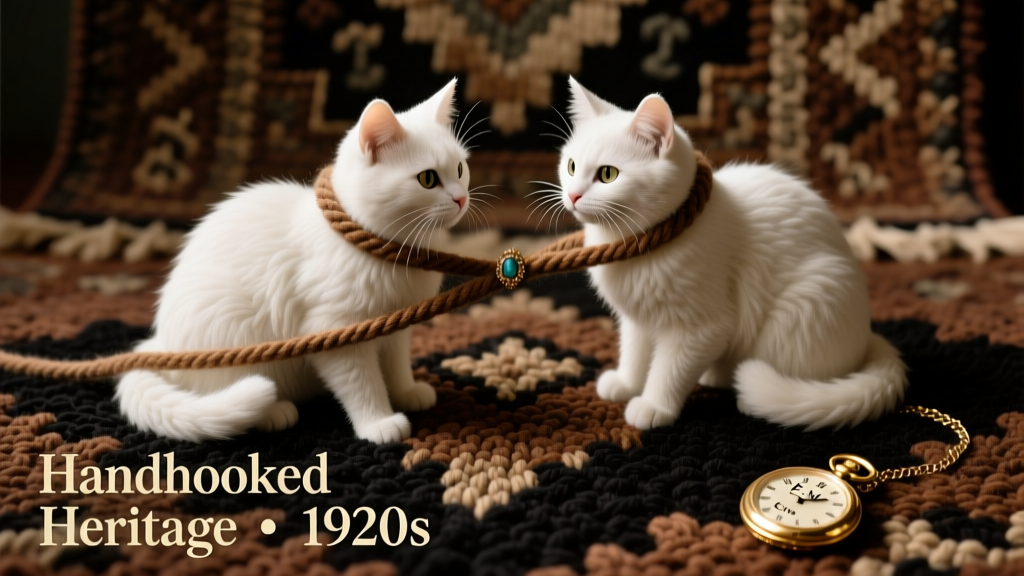
Hooked Wool Rug Featuring Two White Cats Facing Each Other: A Mid-Century American Folk Art Treasure (31¼ × 53½ in)
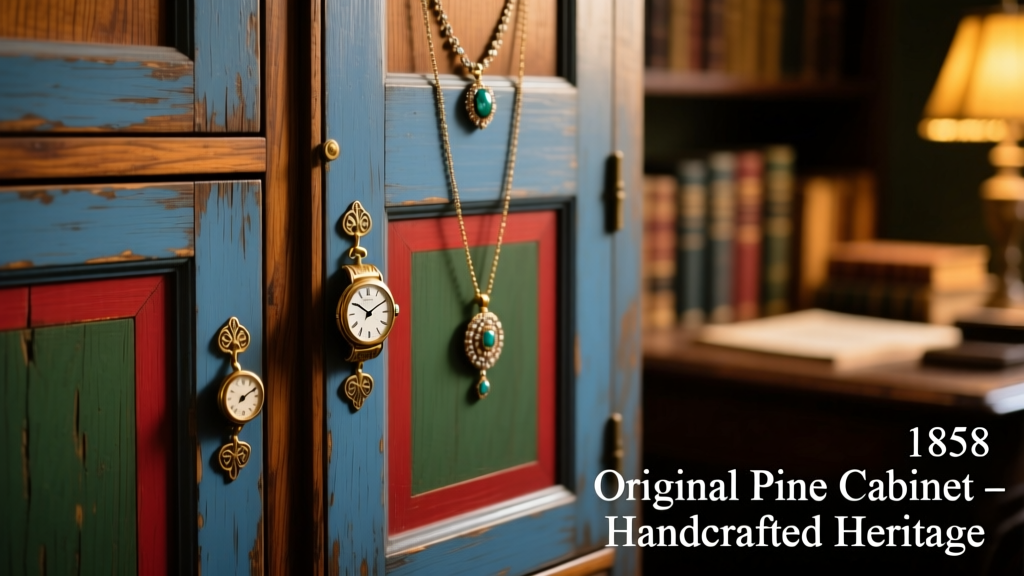
The 1858 Kas Cabinet: Pine Construction, Original Blue Paint, and Rare Red-Green Polychrome Panels — A Study in Dutch-American Folk Art Furniture
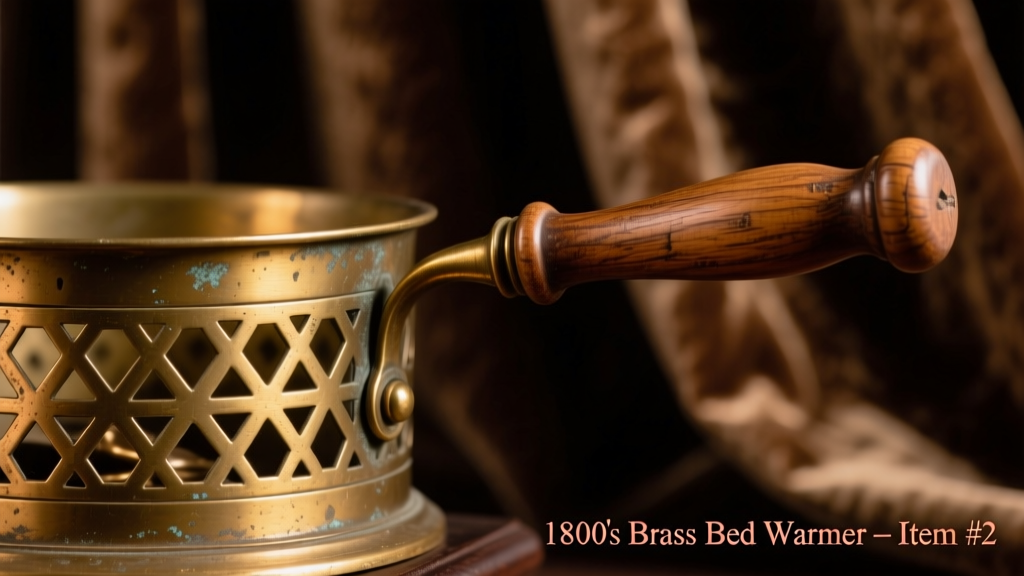
Brass Bed Warmer with Pierced Pan and Turned Wood Handle: A Detailed Study of an 1800s Domestic Artifact
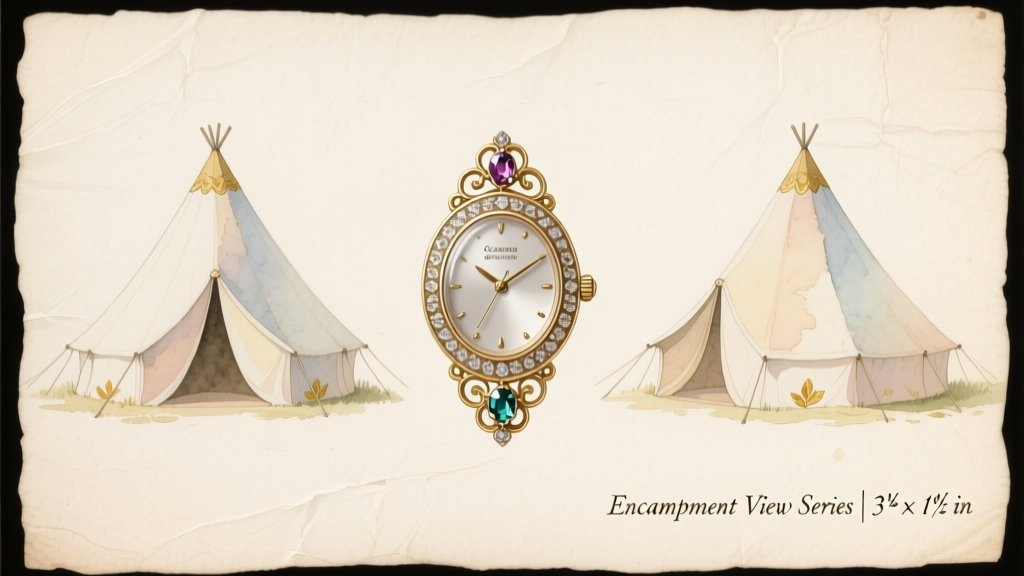
Watercolor Triptych of Military Encampments: A Rare Oval Miniature from the Napoleonic Era
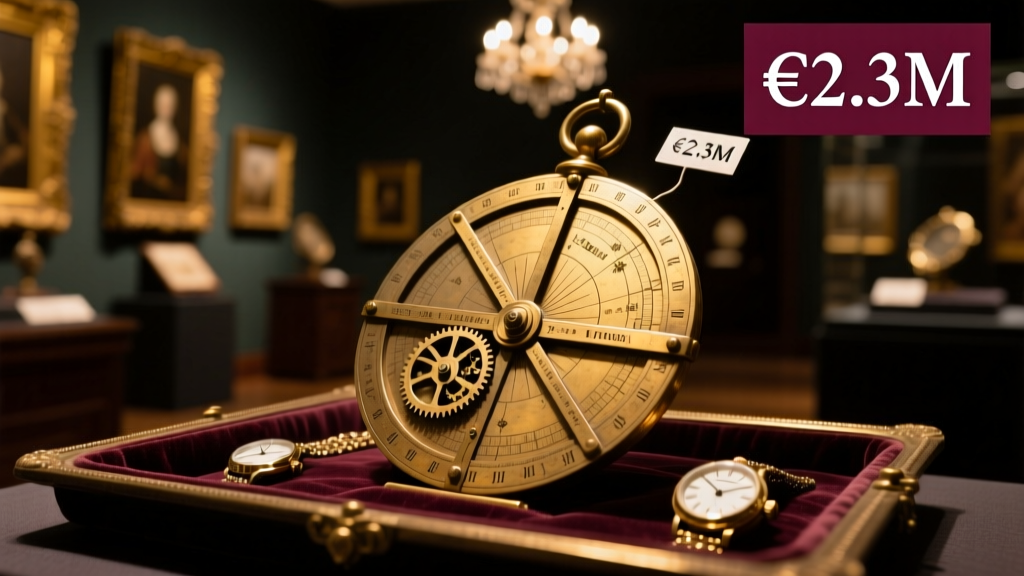
Historic Astrolabe Sells For Record Price: The 1585 Petrus Plancius Instrument at Sotheby’s Geneva
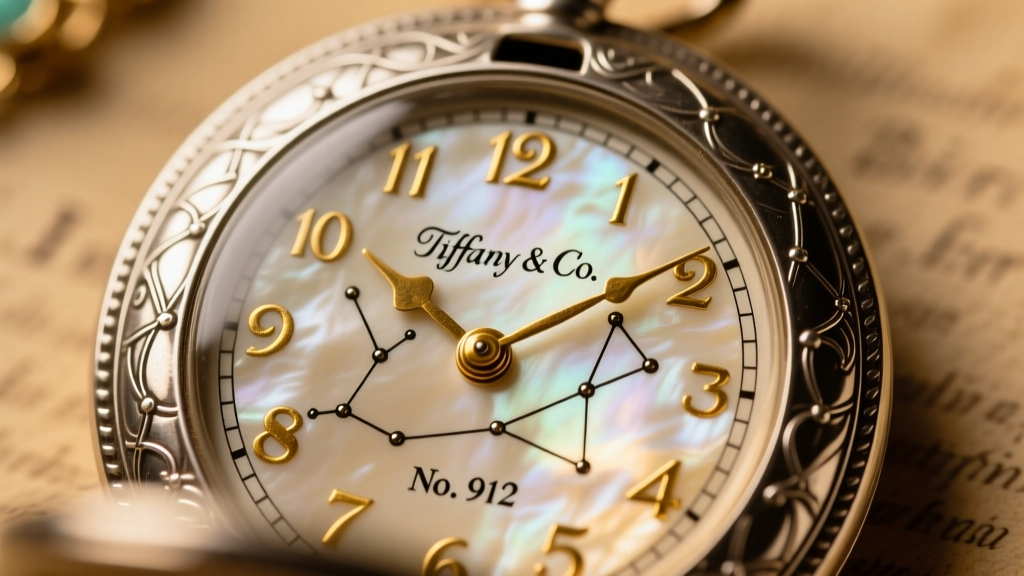
Tiffany & Co. Frame Zodiac No. 912: A Study of Art Deco Precision and American Horological Craftsmanship
Fiesta Platter Light Green 15-Inch: A Collector’s Guide to Vintage Homer Laughlin China
Filigree, European Cut Diamonds, and Platinum: The Definitive Art Deco Ring Lexicon
Durand Vase: Golden Threading Marigold Over Yellow Body — A Signed Masterpiece Measuring 8 × 8 × 3¾ Inches