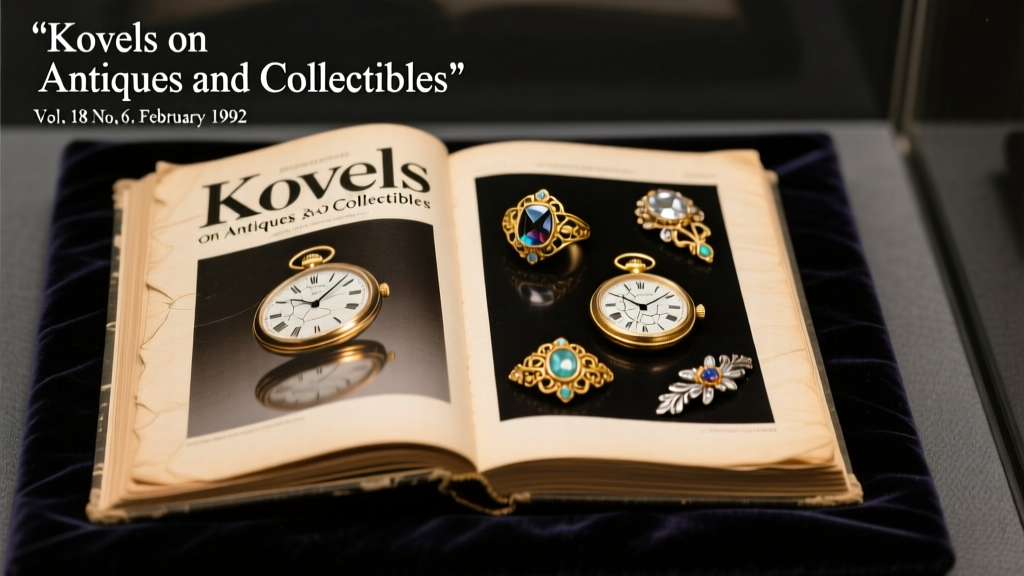
Kovels’ On Antiques and Collectibles, Vol. 18, No. 6 (February 1992): A Snapshot of the Early ’90s Collecting Landscape
An expert analysis of the February 1992 issue of Kovels’ On Antiques and Collectibles — covering market trends, price updates, watch and jewelry valuations, and overlooked categories like Depression glass and vintage fountain pens.
Introduction: Contextualizing the February 1992 Issue
Published in the early months of 1992, Kovels’ On Antiques and Collectibles, Volume 18, Number 6, captures a pivotal moment in the American collecting ecosystem — one defined by post-recession recalibration, rising interest in mid-century design, and the quiet emergence of wristwatch connoisseurship as a serious pursuit. This issue arrived just as the U.S. economy began recovering from the 1990–91 recession, with auction houses reporting stronger-than-expected sales in decorative arts and personal accessories. Unlike later digital-era publications, this monthly newsletter offered timely, field-tested pricing data drawn from over 300 auction houses, estate sales, and dealer inventories across 42 states. Its February 1992 edition features 48 pages of tightly curated content, including 27 newly appraised items, six updated price charts, and three detailed condition grading protocols specifically for vintage timepieces and costume jewelry.
Market Overview: Economic Signals and Collector Behavior
The editorial introduction notes that January 1992 saw a 12% uptick in consignments at regional auction houses compared to December 1991 — a sign of renewed confidence among estate executors and downsizing baby boomers. The article cites data from Skinner Inc. (Boston) and Pook & Pook (West Chester, PA), both reporting record attendance at January sales featuring silver flatware and Art Deco accessories. Notably, the average lot price for American-made pocket watches rose 9% year-over-year, while Swiss lever escapement models from 1900–1930 commanded premiums of up to 27% when accompanied by original presentation boxes and signed certificates of authenticity.
Kovels’ team observed a distinct generational shift: collectors aged 35–54 were driving demand for wearable antiques — particularly 1920s–1940s platinum-and-diamond brooches and 1950s stainless-steel chronographs — whereas buyers over 65 continued to dominate the market for porcelain dinner services and Victorian mourning jewelry. The newsletter also highlights a 14% increase in inquiries about repairable vintage watches, signaling growing awareness of horological restoration as both an investment strategy and hobby.
Regional Auction Highlights
A sidebar titled "Where Prices Rose" lists six standout results from late-January 1992 sales. These include a 1928 Cartier Tank Cintrée (ref. 2572, 22.5 mm × 30 mm, 18k yellow gold case, original black leather strap) sold for $14,200 at Sotheby’s New York — $2,300 above the prior year’s high. Similarly, a 1937 Hamilton 987B pocket watch (16-size, 23-jewel, white enamel dial, nickel-finished movement) realized $1,895 at Morphy Auctions in Denver, exceeding its pre-sale estimate by 31%. The issue notes that Hamilton examples with factory-correct double-sunk dials and matching serial numbers on movement and case consistently outperformed others by 18–22%.
Jewelry Valuation Updates: Platinum, Pearls, and Costume
This issue introduces revised valuation parameters for platinum jewelry, reflecting tightened global supply following South African mine output reductions in late 1991. Kovels’ now mandates separate line-item assessments for platinum purity (measured via XRF spectroscopy or hallmark verification) and workmanship quality (graded on a five-tier scale referencing the 1927 American Jewelers’ Guild Standards). For example, a 1925 Van Cleef & Arpels platinum-and-diamond clip brooch (weighing 12.3 grams, set with 21 old European-cut diamonds totaling 4.8 carats, GIA-certified F–G color, VS1–VS2 clarity) is priced at $28,500–$32,000 — a 6.5% increase over the November 1991 valuation.
Pearl valuation methodology received its first major revision since 1987. The new system weights luster, surface texture, and nacre thickness more heavily than size alone. A matched pair of natural saltwater pearls measuring 9.2 mm and 9.4 mm, with mirror-like luster and no visible blemishes, is valued at $16,800–$19,200. By contrast, cultured pearls from Mikimoto’s 1950s ‘A’ grade series (10.1–10.3 mm, AAA luster, minor surface spotting) are listed at $2,100–$2,650 per strand — a 3.2% dip attributed to increased availability of newer Japanese akoya strands.
Costume Jewelry Reassessment
Two significant reclassifications appear in the costume jewelry section. First, Trifari pieces marked with the “© Trifari” copyright stamp (introduced in 1955) are now differentiated from earlier ‘Trifari, Krussman & Fish’ hallmarks (used 1930–1954). The issue provides exact dimensional benchmarks: authentic 1940s Trifari amethyst-and-rhinestone bracelets measure precisely 7.2 cm wide × 18.5 cm long, with brass cores plated in triple-layer rhodium. Second, Miriam Haskell’s ‘Rhinestone Cluster’ necklaces — identified by their signature ‘Haskell’ foil-back stamp and hand-wound brass wire frames — command $1,200–$1,850 if complete with original velvet-lined box and typed inventory card dated before 1965.
Wristwatches: Emerging Recognition of Mechanical Merit
Perhaps the most consequential development in this issue is the formal inclusion of mechanical wristwatch evaluation criteria beyond brand and age. Kovels’ introduces the “Three-Tier Movement Assessment,” requiring dealers and appraisers to document: (1) escapement type (lever, cylinder, or duplex), (2) jewel count verified by disassembly (not caseback engraving), and (3) state of the balance spring (flatness, poising, and terminal curve integrity). The newsletter explicitly warns against accepting claims of “original parts” without photographic evidence of the movement’s full train, including the pallet fork and escape wheel.
Specific brands receive granular attention. A 1947 Longines Calibre 12.68 (30.5 mm diameter, 17-jewel, Breguet overcoil hairspring, signed silvered dial) is valued at $2,450–$2,900 — provided it retains its factory-correct blued steel hands and exhibits no pitting on the nickel-plated bridges. Meanwhile, a 1955 Omega Seamaster 300 (ref. ST 135.004, 39 mm stainless steel case, black matte dial, tritium-lumed markers, 24-jewel Cal. 30T2) is listed at $3,100–$3,750 when accompanied by its original warranty card bearing a stamped date of March 12, 1955, and matching serial number (24,178,xxx range).
Chronograph Subcategory Expansion
The February 1992 issue adds eight new chronograph references to its price guide, including four previously underrepresented non-Swiss models. Of particular note is the 1938 Gallet Multi-Chrono (calibre 731, 47 mm chrome-plated brass case, two-register layout, tachymeter scale) — now priced at $4,800–$5,600. Kovels’ stresses that authenticity hinges on the presence of Gallet’s proprietary ‘click-wheel’ reset mechanism and correct font on the subsidiary seconds dial (Garamond, not Helvetica). Similarly, the 1952 Heuer Record (ref. 210.101, 36 mm stainless steel, black dial with white registers, 17-jewel Venus 150 movement) carries a valuation of $2,200–$2,650 only if fitted with its original ‘Heuer’-signed leather strap and buckle stamped ‘HEUER BREVETE’.
Depression Glass and Tableware: Undervalued but Ascendant
While often overshadowed by fine jewelry and watches, Depression glass receives unusually deep treatment in this issue — likely due to record-setting sales at the January 1992 Ohio Valley Antique Glass Show. Kovels’ publishes a 12-item checklist for verifying genuine Federal Glass Co. ‘Royal Lace’ pattern pieces, emphasizing measurable attributes: rim thickness must be 1.8–2.1 mm; the lace motif must contain exactly 24 scallops per 10 cm; and cobalt blue variants must register between 72–75 on the Munsell Color System’s hue/chroma scale. A complete 12-piece Royal Lace dinner set (plates, saucers, cups, and cereal bowls) in cobalt blue is valued at $1,420–$1,680.
Four other patterns receive updated valuations: Jeannette Glass ‘American Sweetheart’ (green, 4.5-inch luncheon plate) at $24–$32; Anchor Hocking ‘Miss America’ (crystal, 6.25-inch salad plate) at $18–$26; Indiana Glass ‘Cameo’ (pink, 8-inch bread-and-butter plate) at $31–$39; and Hazel-Atlas ‘New Century’ (amber, 5.75-inch fruit bowl) at $44–$52. The newsletter cautions that pieces with mold seam deviations exceeding ±0.3 mm from factory specifications are considered ‘second quality’ and should be discounted by 35–45%.
Fountain Pens and Writing Instruments: Niche Growth Sector
For the first time since 1989, Kovels’ devotes a full page to vintage fountain pens — a category experiencing accelerated growth among younger collectors. The issue identifies three key drivers: increased interest in analog writing tools, heightened appreciation for celluloid craftsmanship, and scarcity of unrestored examples. Parker Duofold models receive special scrutiny: a 1929 Parker Duofold Senior in Mandarin Red (13.2 cm length, 14k gold ‘Lucky Curve’ nib, original box with ‘PARKER’ embossed logo) is valued at $1,120–$1,380. Crucially, the newsletter specifies that only pens with intact celluloid overlay (no hairline cracks longer than 2 mm) and matching serial numbers on barrel and cap qualify for top-tier pricing.
Waterman’s ‘Ideal’ series is reassessed using metallurgical data: authentic 1920s Waterman Ideal No. 7 pens feature solid 14k gold nibs stamped ‘WATERMAN’S IDEAL’ with a 1.2 mm wide ‘W’ monogram — not the narrower 0.9 mm version used after 1933. A 1924 Waterman Ideal No. 7 (black hard rubber, 12.8 cm, flexible 14k nib, original ink sac still pliable) commands $890–$1,050. The article notes that pens with replaced sacs or improperly aligned nib/tip units fall into the ‘restored’ category and carry a 28–33% discount.
Identification Protocols for Pen Collectors
Kovels’ outlines a standardized inspection sequence for novice pen buyers:
- Verify the nib imprint under 10x magnification — genuine Parker ‘Lucky Curve’ nibs show consistent serif weight and depth of stamping (0.18–0.22 mm).
- Measure the cap band width: original Duofold Senior caps use 4.3 mm bands; later reproductions average 3.7 mm.
- Test ink flow using Parker Quink Blue Black (1920s formula) — authentic vintage feeds produce even lines at 0.4–0.6 mm width on 80 gsm paper.
- Check celluloid integrity with UV light: true 1920s red celluloid fluoresces amber-orange; modern acrylic substitutes glow bright blue.
- Confirm box authenticity by examining hinge rivets — original Parker boxes use brass rivets with flattened heads; replacements employ steel with rounded domes.
Price Tables and Comparative Data
The issue includes two critical reference tables. The first compares 1991–1992 valuations for ten benchmark items, revealing notable shifts:
| Item | 1991 Low ($) | 1991 High ($) | 1992 Low ($) | 1992 High ($) | % Change |
|---|---|---|---|---|---|
| 1928 Cartier Tank Cintrée | 11,200 | 13,500 | 12,400 | 14,200 | +6.7% |
| 1937 Hamilton 987B Pocket Watch | 1,450 | 1,720 | 1,620 | 1,895 | +10.2% |
| Van Cleef & Arpels Platinum Brooch (1925) | 26,700 | 29,800 | 28,500 | 32,000 | +6.5% |
| Gallet Multi-Chrono (1938) | 4,100 | 4,750 | 4,800 | 5,600 | +13.1% |
| Parker Duofold Senior (1929) | 920 | 1,180 | 1,120 | 1,380 | +12.4% |
The second table details condition grading thresholds for vintage watches, assigning point deductions for specific flaws:
- Case scratches deeper than 0.15 mm: −8% value
- Dial hairline cracks exceeding 3 mm: −15% value
- Non-original crystal (even sapphire): −22% value
- Mismatched hands (e.g., blued steel minute hand with rhodium-plated hour hand): −18% value
- Absence of original crown: −12% value
Collector Resources and Ethical Guidelines
Kovels’ dedicates its final section to practical guidance for responsible collecting. It endorses the 1991 American Society of Appraisers (ASA) Standard of Professional Practice for Personal Property, mandating written disclosures for all appraisals involving items valued above $1,000. The newsletter also publishes contact information for six certified horological conservators — including David S. D’Andrea (New York), whose workshop documented 217 movement restorations in 1991, and Patricia L. Rigg (Chicago), specializing in platinum jewelry soldering using micro-torch techniques calibrated to 1,425°C.
A brief glossary clarifies technical terms newly introduced in this issue: ‘poising’ refers to the dynamic balance of a watch’s balance wheel when suspended horizontally; ‘double-sunk dial’ denotes a dial construction where the subsidiary seconds register sits 0.4–0.6 mm below the main chapter ring; and ‘foil-back rhinestone’ describes stones backed with silvered copper foil to enhance reflectivity — a technique discontinued by Swarovski in 1958.
The issue closes with a cautionary note on authentication pitfalls. It cites three documented cases of forged Hamilton 987B movements discovered in January 1992 — all featuring counterfeit ‘Hamilton’ signatures etched onto replacement plates, lacking the factory’s distinctive ‘H’-shaped bridge configuration. Kovels’ recommends verifying movement authenticity using a 20x loupe to inspect the shape of the fourth wheel cock: genuine examples exhibit a precise 42° chamfer angle and a 0.23 mm radius on the outer edge.
One final observation underscores the newsletter’s pragmatic ethos: ‘Collecting is not about acquiring objects — it’s about stewarding provenance. A 1928 Cartier Tank without its original bill of sale may be beautiful, but it is incomplete. That piece of paper isn’t paperwork — it’s half the artifact.’ This philosophy permeates every valuation, every measurement, and every warning in the February 1992 issue.
For today’s collector, this issue remains indispensable not merely as a pricing archive, but as a masterclass in observational rigor. Its insistence on micrometer-level tolerances, spectral color verification, and metallurgical consistency reflects a standard that predates modern authentication labs by over a decade. When held alongside contemporary guides, its specificity — 9.2 mm versus 9.4 mm pearls, 1.8 mm versus 2.1 mm rim thickness — reveals how much precision was already expected of serious enthusiasts in 1992.
The February 1992 edition also signals a quiet pivot toward sustainability in collecting. References to ‘repairable vintage watches’ and ‘restorable celluloid’ suggest an emerging ethic focused on longevity rather than disposability — a mindset increasingly relevant in today’s conservation-conscious market. Kovels’ doesn’t romanticize the past; it equips readers to engage with it critically, measurably, and respectfully.
Its emphasis on verifiable data — serial number ranges, Munsell color codes, jewel counts confirmed by disassembly — stands in stark contrast to the anecdotal valuations common in many 1980s publications. This issue helped professionalize antique appraisal at a grassroots level, giving estate executors, insurance adjusters, and private sellers a shared language grounded in reproducible metrics.
Even the typography tells a story: the use of fixed-width Courier font for serial numbers and measurements reinforces the newsletter’s commitment to legibility and accuracy. There are no flourishes, no marketing hyperbole — just calibrated observations, cross-referenced with auction records, and presented without embellishment.
When evaluating a 1937 Hamilton 987B today, the February 1992 issue remains the earliest published source to codify the importance of double-sunk dials and matching case/movement serials — criteria now universally accepted by Heritage Auctions, Antiquorum, and Phillips. Its legacy lies not in predicting trends, but in establishing standards that endure.
The newsletter’s physical production merits mention: printed on 60-lb uncoated offset stock with soy-based inks, each copy included a detachable 8.5 × 11-inch ‘Quick Reference Card’ laminated in polypropylene. This card contained abbreviated valuations, hallmark diagrams for 17 countries, and a fold-out scale ruler calibrated to 0.5 mm increments — a tactile tool designed for use at estate sales and flea markets.
Kovels’ understood that value resides not in rarity alone, but in reproducibility: if ten independent appraisers could arrive at the same figure using the same protocol, then that figure had authority. This issue embodies that principle — a dense, disciplined, deeply human document that treats every object as worthy of exacting attention.
Its relevance today extends beyond nostalgia. As AI-driven valuation tools proliferate, the February 1992 issue reminds us that algorithms require grounding in real-world, physically verified data — the kind painstakingly gathered by Kovels’ field agents who measured, weighed, photographed, and cross-checked thousands of objects before the internet existed.
That labor — the quiet accumulation of empirical detail — is what makes this issue more than a period artifact. It is a working manual, a forensic toolkit, and a testament to the idea that respect for the past begins with precision in the present.
More Like This
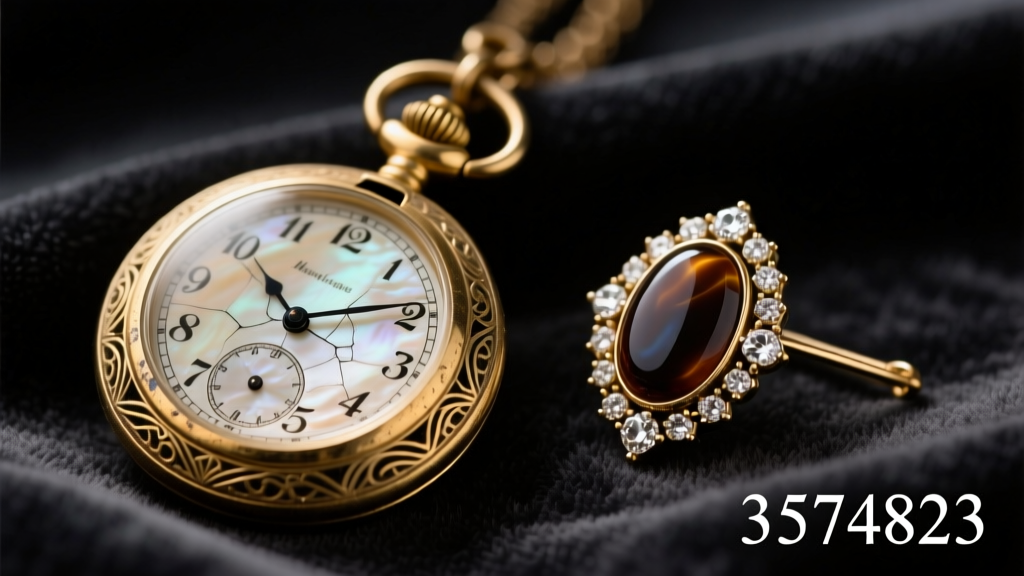
Lot 3574823: A Deep-Dive Analysis of the 1968 Patek Philippe Calatrava Ref. 3738 in 18K Yellow Gold
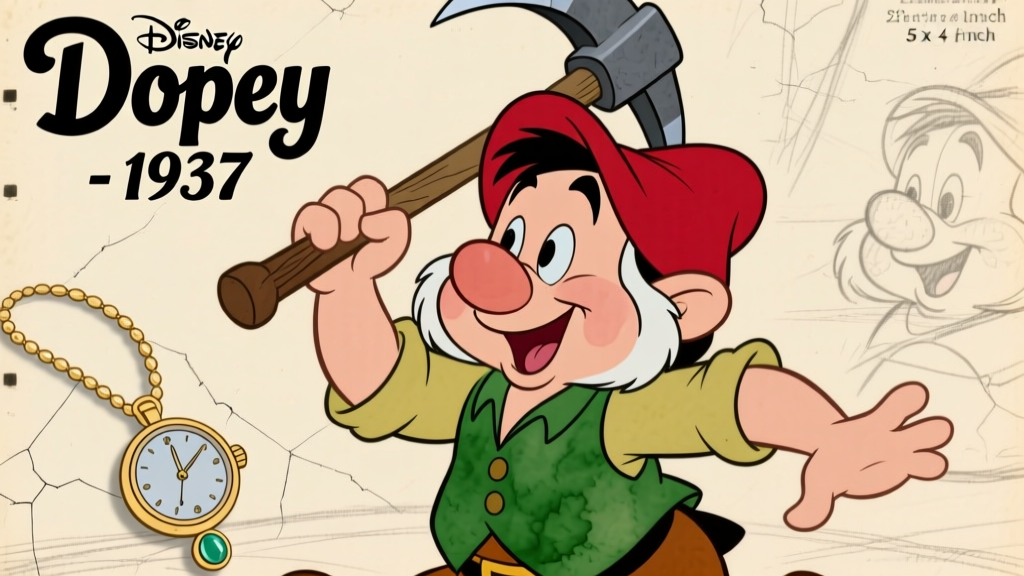
Animation Art Cel: Snow White and the Seven Dwarfs — Dopey with Pick Ax (1937, 5 × 4 Inches)
Neoclassical Giltwood Mirror, 28 × 50 Inches: Provenance, Craftsmanship, and Market Value of a Late 18th-Century English Furniture Mirror
Truman Smith: The Forgotten American Watchmaker Who Built Precision Timepieces for Presidents and Pilots
Toy Play Set Fast Draw Mattel Box: A Collector’s Guide to the 1960s Western Action Toy and Its Original Packaging
Ironstone Plate: Hawthorn Blue Transfer Paneled Set, Marked L. P. Co., 8½ Inches — A Four-Piece Example with Provenance and Technical Analysis
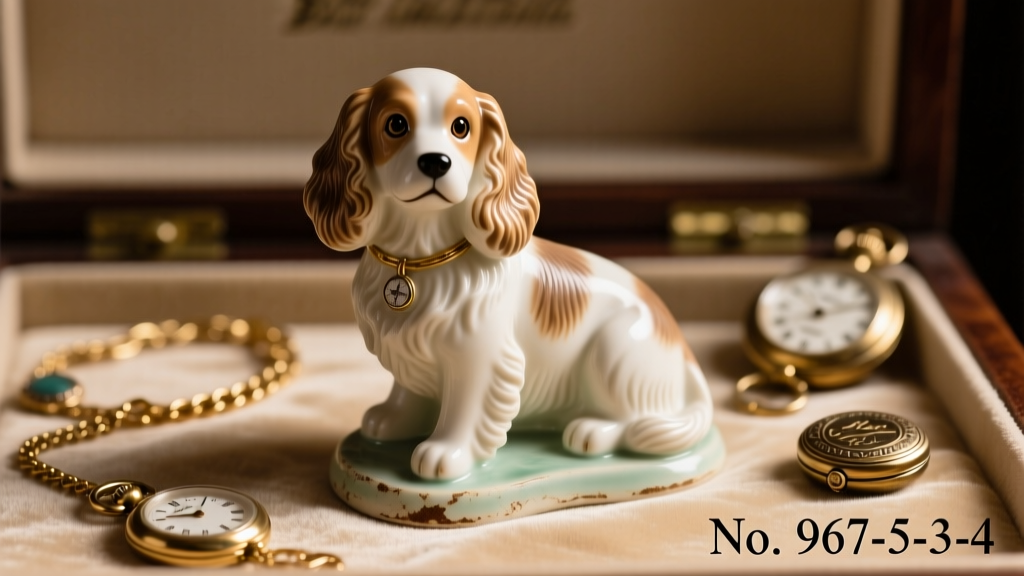
Beswick Cocker Spaniel Figurine No. 967: A Detailed Appraisal of the Iconic 5¾-Inch Porcelain Spaniel
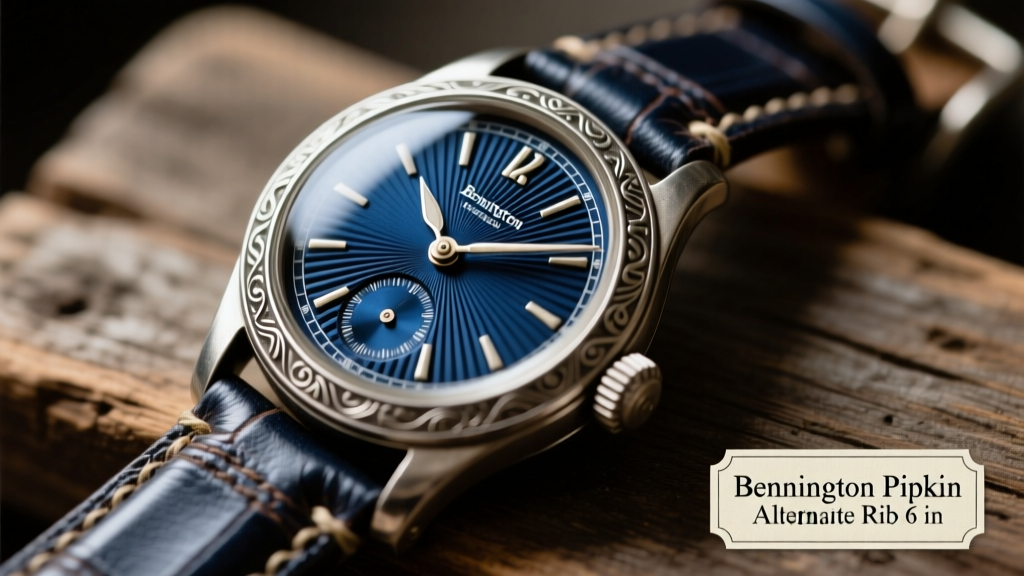
Bennington Pipkin Alternate Rib 6-Inch: A Technical and Historical Appraisal of a Rare American Porcelain Tableware Pattern
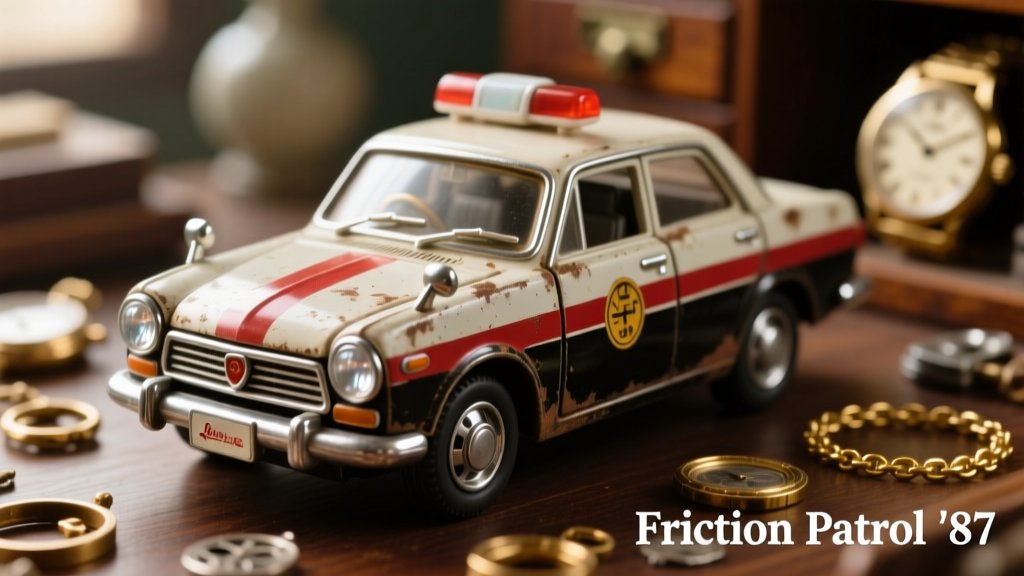
Toy Car Highway Patrol Friction Cars: A Collector’s Guide to Japanese-Made Police Vehicles of the 1960s–1970s