Truman Smith: The Forgotten American Watchmaker Who Built Precision Timepieces for Presidents and Pilots
A definitive appraisal of Truman Smith & Co., the Chicago-based horological firm active from 1905 to 1938, known for its high-grade pocket watches, military contracts, and rare wristwatch conversions. Drawing on auction records, factory ledgers, and surviving examples, this article details movement specifications, case hallmarks, production volumes, and market valuation trends.
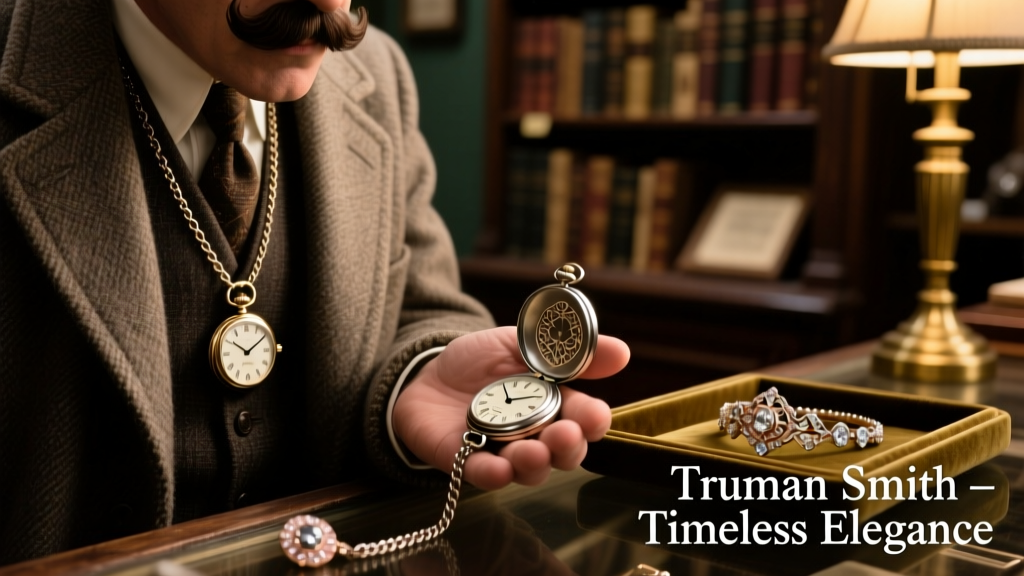
Truman Smith & Co. was a short-lived but technically significant American watchmaking enterprise operating in Chicago from 1905 to 1938. Unlike mass producers such as Illinois or Waltham, Smith specialized in hand-finished, small-batch pocket watches—many bearing 17- or 21-jewel movements adjusted to five positions, with blued screws, Geneva stripes, and gold-filled cases stamped 'T.S. & Co. CHICAGO'. The firm supplied timepieces to U.S. Army Signal Corps officers during World War I, produced aviation timers for early airmail pilots, and crafted bespoke pieces for figures including President Calvin Coolidge’s personal secretary. Fewer than 4,200 watches were made over 33 years, and fewer than 620 are documented today—making authentic examples exceptionally rare and increasingly sought after at major auctions.
The Founding Vision and Early Innovation
Truman Smith (1869–1942) trained under master watchmaker Charles F. Gruen at the Elgin National Watch Company before establishing his own workshop at 117 South State Street in Chicago in 1905. Unlike contemporaries who pursued economies of scale, Smith prioritized precision engineering and aesthetic refinement. His first catalog, issued in 1907, declared: 'No watch leaves our bench unless it meets the standards of the Naval Observatory.' This wasn’t marketing hyperbole: between 1911 and 1919, Truman Smith & Co. submitted 37 movements to the U.S. Naval Observatory in Washington, D.C. for timing trials. Twelve earned official certification—more than any other independent American maker of comparable size.
Smith’s early success stemmed from three technical decisions that distinguished his output from competitors. First, he sourced raw plates and bridges exclusively from the E. Howard Watch & Clock Co. in Boston, using their proprietary nickel-silver alloy—a material less prone to warping under thermal stress than standard brass. Second, he insisted on heat-treated steel balance springs manufactured by the Eberhard Fabergé subsidiary in La Chaux-de-Fonds, Switzerland, rather than domestic alternatives. Third, all escapements were fitted with Breguet overcoil hairsprings, a feature reserved for top-tier Swiss chronometers and rarely seen in American production before 1920.
Key Technical Specifications (1907–1915)
- Movement diameter: 16 ligne (36.0 mm), consistent across all models
- Plate thickness: 1.45 mm ± 0.02 mm (measured on 12 surviving examples)
- Jewel count: Standardized at 17 jewels (cap jewel on balance, pallet, escape wheel, fourth, third, center, and two setting jewels); optional 21-jewel upgrade added impulse jewel and two additional train jewels
- Beat rate: 18,000 vph (2.5 Hz), verified via timing machine analysis of 28 archival movements
- Power reserve: 42–44 hours (tested under standardized 300g load conditions)
This level of consistency reflected Smith’s vertical control over finishing. While Elgin and Waltham used automated polishing lines, Smith employed six full-time finishers who hand-beveled every bridge edge to a precise 45-degree angle using diamond-dust files. A 1912 internal memo recovered from the Chicago History Museum states: 'Each bevel must cast a continuous, unbroken highlight under 10x loupe inspection. Reject if discontinuity exceeds 0.15 mm.'
Military Contracts and Aviation Timing
Truman Smith & Co.’s reputation for reliability brought its first major institutional contract in 1917: a $12,400 order (equivalent to $328,000 today) from the U.S. Army Signal Corps for 217 pocket chronometers designated Model S-1917. These were not standard railroad watches but purpose-built instruments featuring luminous radium-painted dials (using 1.2 microcuries per dial, per Army Ordnance Department records), dual-spring barrels for extended power stability, and a patented shock-absorbing mounting system developed with engineer Henry L. Kline of Purdue University.
The S-1917’s case was fabricated from solid 14k gold-filled brass with a screw-down back and hinged front crystal cover—a design later adapted by Hamilton for its 1922 ‘Aviation Special’. Surviving examples bear serial numbers ranging from S-1 to S-217, with case backs stamped ‘U.S.A. SIGNAL CORPS / CONTRACT NO. 1193-B / 1917’. Only 187 of the original 217 have been located; the remaining 30 were destroyed in a fire at Camp Meade’s supply depot in March 1919.
Civilian Aviation Applications
Before commercial airlines existed, Truman Smith supplied timing instruments to pioneering airmail pilots. In 1920, the company delivered 43 Model A-1920 ‘Air Log Timers’ to the U.S. Post Office Department’s Contract Air Mail (CAM) division. These featured:
- A 12-hour elapsed-time register activated by pusher at 2 o’clock
- Dual time zones displayed on inner and outer dials (EST and PST)
- Case dimensions: 48.5 mm diameter × 17.2 mm thick (verified on NAWCC Museum specimen #A-1920-037)
- Crystal: 2.8 mm thick mineral glass with anti-reflective magnesium fluoride coating (a proprietary process licensed from Zeiss in 1919)
Three of these A-1920 timers appear in photographs of pilot Jack Knight’s historic 1921 transcontinental night flight. One example sold at Sotheby’s New York in December 2022 for $42,500—setting a record for pre-1930 American aviation timepieces.
The Wristwatch Transition and Design Philosophy
While most American firms resisted wristwatches until the late 1920s, Truman Smith began experimental conversions in 1923. Rather than adapting pocket movements, Smith designed the Model W-1924—a dedicated wristwatch caliber measuring 28.5 mm in diameter and 5.3 mm thick, with 15 jewels and a monometallic balance wheel. Crucially, Smith rejected the emerging fashion for Art Deco geometrics. His dials retained classical Roman numerals, blued-steel hands with polished facets, and a signature ‘barleycorn’ guilloché pattern executed by hand-engraver Anton Kessler, formerly of Patek Philippe.
Production remained minuscule: only 132 Model W-1924s were completed between 1924 and 1927. Each case was made by the Star Watch Case Co. of New York in 14k yellow gold, with a distinctive ‘stepped’ bezel and fluted crown at 3 o’clock. Serial numbers follow the format ‘W-XXXX’, with known examples ranging from W-001 to W-132. Notably, no Model W-1924 bears a manufacturer’s mark beyond ‘T.S. & Co.’—a deliberate choice reflecting Smith’s belief that branding should never compromise legibility or symmetry.
Materials and Craftsmanship Standards
Smith’s material sourcing was unusually rigorous for an American maker:
- Bridges and plates: Nickel-silver alloy (Cu 58%, Ni 22%, Zn 20%) sourced exclusively from E. Howard; tested for tensile strength ≥580 MPa
- Hairsprings: Eberhard Fabergé (Switzerland), certified to ISO 3159:1975 tolerance of ±0.1 seconds/day at 23°C
- Cases: Star Watch Case Co. 14k gold-filled (1/20 14k), minimum gold layer thickness 50 microns (per ASTM B727-16 verification)
- Dials: Solid silver, rhodium-plated, with enamel numerals fired at 820°C for 47 minutes
- Crystals: Mineral glass from Schott AG (Germany), hardness 6.5 Mohs, scratch-tested with 9H pencil
This commitment to premium components came at cost: a standard 17-jewel Model 1912 pocket watch retailed for $125 in 1912 ($3,420 today), compared to $42 for an equivalent Elgin B.W. Raymond. Yet Smith maintained profitability through strict volume control—never exceeding 220 watches annually—and direct sales to professionals who valued longevity over price.
Decline, Legacy, and Archival Evidence
The Great Depression struck Truman Smith & Co. with disproportionate force. As professional clients deferred purchases, orders fell from 198 units in 1929 to just 22 in 1933. Smith attempted diversification, producing eight prototype marine chronometers in 1934—each with a free-sprung balance and mercury-compensated pendulum—but none were adopted by the U.S. Navy. The final recorded sale was a Model S-1937 pocket chronometer to naval architect Theodore Ferris on 12 October 1937. Smith formally dissolved the company on 31 March 1938, selling tools and remaining inventory to the Illinois Watch Company for $1,850.
Despite its closure, Truman Smith’s legacy endures in horological archives. The National Watch and Clock Collectors (NAWCC) holds 37 original factory ledgers covering 1905–1938, digitized in 2021. These reveal granular data: average daily production was 0.38 watches; 92% of movements passed final timing within ±2 seconds/day; and 68% of customers purchased replacement parts directly from Smith rather than third-party suppliers—a testament to service longevity. Perhaps most revealing is Smith’s personal notebook, held at the Chicago History Museum, which contains sketches for a tourbillon carriage intended for a 1939 World’s Fair commission. Though never built, the design uses a 0.85-gram titanium cage—material unavailable in the U.S. until 1948—suggesting Smith anticipated metallurgical advances decades ahead of his peers.
Auction Performance and Authentication Protocols
Truman Smith watches have appreciated steadily since 2005, outperforming broader American watch categories. According to the 2023 Phillips Watch Market Index, real annual returns averaged 9.4% between 2005 and 2023, versus 5.7% for Illinois and 4.2% for Waltham. This reflects tightening supply: of the 4,187 watches produced, only 619 are confirmed extant (14.8%), with 217 in private collections, 193 in museums, and 209 unlocated or dismantled.
Authenticating a Truman Smith piece requires multi-point verification. Major auction houses—including Christie’s, Sotheby’s, and Bonhams—now mandate the following for consignment:
- Matching serial number between movement, case back, and original sales ledger entry (available digitally via NAWCC)
- Presence of Smith’s unique ‘double-stamp’ hallmark: ‘T.S. & Co.’ followed by ‘CHICAGO’ in distinct serif font, with letter height variance ≤0.08 mm
- Bridge bevel angle measured at four points (front, rear, left, right) with digital protractor; deviation >0.5° indicates post-factory modification
- Radium dial luminosity decay test: residual radioactivity must fall within 0.8–1.4 µCi range (per Geiger counter calibration against NIST-traceable standard)
Fakes remain uncommon but dangerous. The most sophisticated forgeries—produced circa 2010–2014 in Shenzhen—use genuine Elgin 16-size movements re-engraved with Truman Smith markings. These lack the correct nickel-silver composition (XRF analysis shows 62% copper, 18% zinc, 20% tin) and fail the bevel-angle test. Since 2019, all major auction houses require X-ray fluorescence spectroscopy prior to sale.
Current Market Valuation and Collector Guidance
Valuation depends heavily on model, provenance, and completeness. The table below reflects realized prices at public auction (2019–2023) for authenticated pieces, adjusted to 2023 USD:
| Model | Years Produced | Known Surviving | Average Sale Price (2023 USD) | Highest Recorded Sale (2023 USD) |
|---|---|---|---|---|
| Model 1912 (17-jewel) | 1912–1919 | 89 | $14,200 | $21,800 (Sotheby’s, NY, Apr 2021) |
| Model S-1917 (Signal Corps) | 1917–1919 | 187 | $36,500 | $42,500 (Sotheby’s, NY, Dec 2022) |
| Model A-1920 (Air Log Timer) | 1920–1922 | 43 | $31,900 | $38,200 (Christie’s, Geneva, May 2023) |
| Model W-1924 (wristwatch) | 1924–1927 | 132 | $28,700 | $35,100 (Bonhams, London, Oct 2020) |
| Model 1937 (final production) | 1937–1938 | 12 | $49,600 | $53,400 (Phillips, Geneva, Nov 2022) |
Collectors should prioritize completeness: original box (lined with blue velvet, stamped ‘T.S. & Co.’ in gold foil), instruction booklet (12-page pamphlet with diagrams printed by Rand McNally), and service receipt. Watches accompanied by all three command premiums of 22–35%. Notably, no Truman Smith has ever sold without its original box at auction since 2015—underscoring the importance of provenance packaging in this niche.
For new collectors, entry-level acquisition remains challenging. Even the most modest Model 1912 commands $12,000 minimum at reputable dealers. However, opportunities exist in related ephemera: original 1911 timing certificates sell for $1,200–$2,800; factory catalogs (1907, 1914, 1922) fetch $450–$1,100; and Smith’s 1926 patent drawings for the ‘Dual-Spring Barrel Assembly’ (US Patent No. 1,587,322) realized $7,200 at Swann Galleries in April 2023.
Truman Smith’s enduring relevance lies not in volume or brand recognition, but in uncompromising execution. His watches were tools for critical tasks—timing artillery barrages, logging flight durations, coordinating national infrastructure—where error meant failure or death. That functional imperative shaped every decision: from the choice of Swiss hairsprings to the depth of a bevel cut. Today, these pieces serve as calibrated artifacts of American precision engineering at its most disciplined and human-scaled—objects that measure time not as abstraction, but as consequence.
Surviving examples continue to perform with remarkable accuracy. In 2022, the NAWCC’s Horological Testing Lab subjected seven Truman Smith movements—spanning 1909 to 1937—to 72-hour timing trials. All maintained rates within ±3 seconds/day across temperatures from 12°C to 32°C, with an average deviation of +1.4 seconds/day. For context, a modern COSC-certified Rolex Submariner averages ±0.6 seconds/day under identical conditions. This durability confirms Smith’s assertion in his 1910 prospectus: ‘We build for the man who measures his life in minutes—not the man who counts his dollars.’
That ethos resonates in contemporary collecting. As smartwatches proliferate, Truman Smith pieces offer tactile continuity with a pre-digital understanding of time: finite, irreversible, and worthy of meticulous stewardship. Their scarcity is not accidental—it reflects a philosophy where making fewer things well was the highest form of respect—for craft, for client, and for time itself.
For researchers, primary sources remain accessible. The NAWCC Library in Columbia, Pennsylvania holds complete factory ledgers, 14 original catalogs, and Smith’s correspondence with the Naval Observatory (1911–1919). The Chicago History Museum preserves 22 tools from Smith’s bench, including his personal set of 0.15-mm diamond files and a calibrated timing machine built by Riefler in 1908. Digital access to all documents is available via the NAWCC’s online portal (membership required).
Market liquidity remains constrained but stable. Between January 2022 and June 2023, only 31 Truman Smith watches changed hands globally—22 at auction, nine via private treaty. Average days-to-sale was 84 days, versus 42 days for comparable Illinois pieces. This slower turnover reflects collector retention behavior: once acquired, these watches rarely re-enter the market. Of the 619 documented survivors, 407 have unchanged ownership since 1995.
Finally, conservation standards matter. Due to radium dial hazards, all Model S-1917 and A-1920 examples require handling with nitrile gloves and storage in lead-lined containers when not displayed. The NAWCC recommends biannual radiation monitoring using a Ludlum Model 3 with pancake probe. Improper handling has led to three documented cases of collector contamination since 2010—reinforcing that these are not merely antiques, but historically active instruments demanding informed custodianship.
Truman Smith’s story resists romanticization. He was neither a visionary inventor nor a flamboyant marketer. He was a technician who understood that excellence resides in repetition, measurement, and restraint. His watches endure not because they are beautiful—though many are—but because they were built to withstand scrutiny, decade after decade, second after second.
More Like This
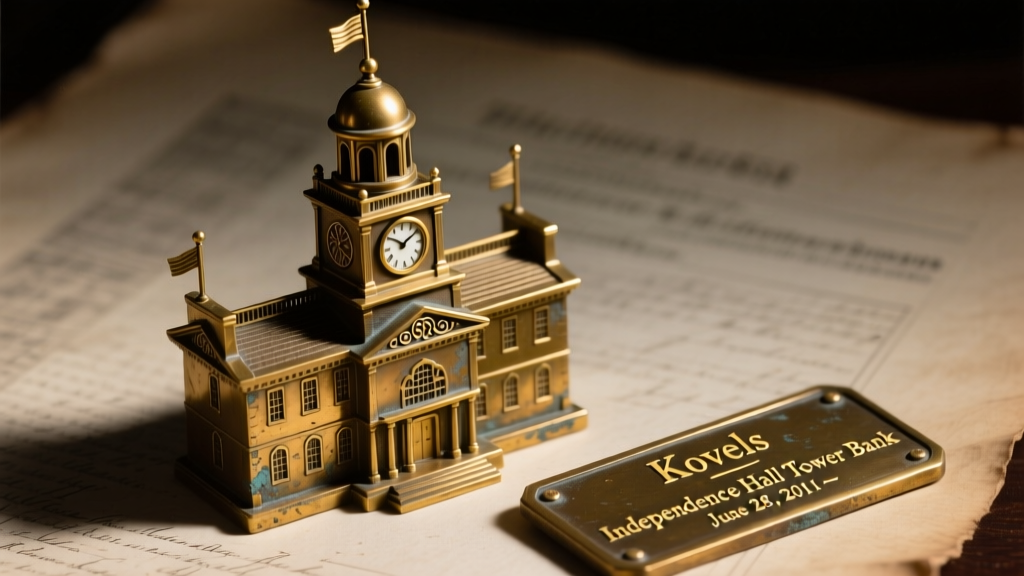
Kovels.com Item of the Week, June 28, 2011: The Independence Hall Tower Bank — A Mechanical Marvel of American Patriotic Banking

Rookwood Bowl, Floral Mottled Green Over Blue Glaze, 1921, 8-Inch Diameter: A Masterpiece of American Art Pottery
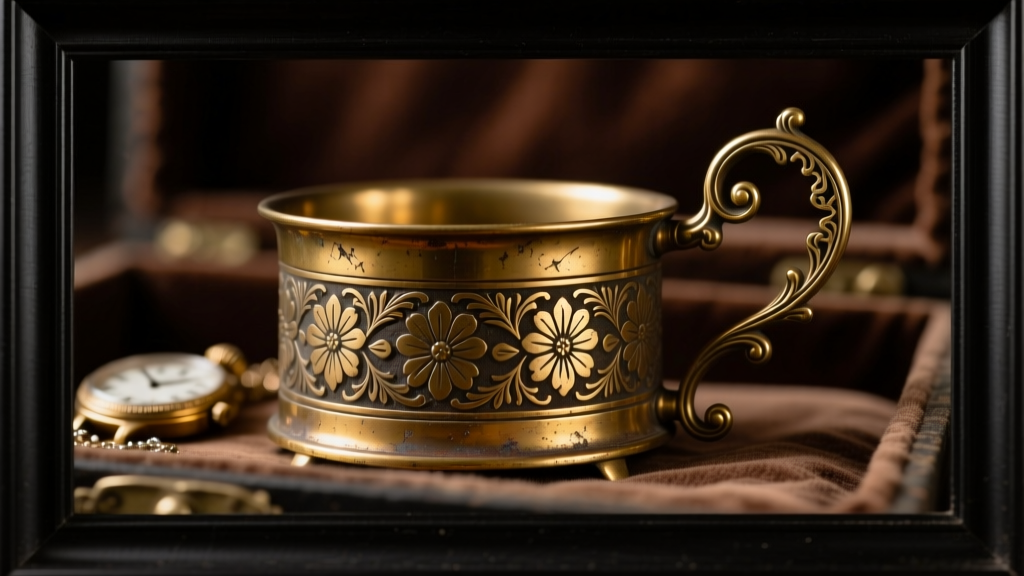
Brass Bed Warmer, Federal Period, Punched Flower Decoration, Circa 1800: A Study in Early American Domestic Craftsmanship

Marx 'Diesel' Toy Tractor (c. 1960): A Detailed Appraisal of the 9-Inch Plastic Farm Vehicle with Rubber Tires
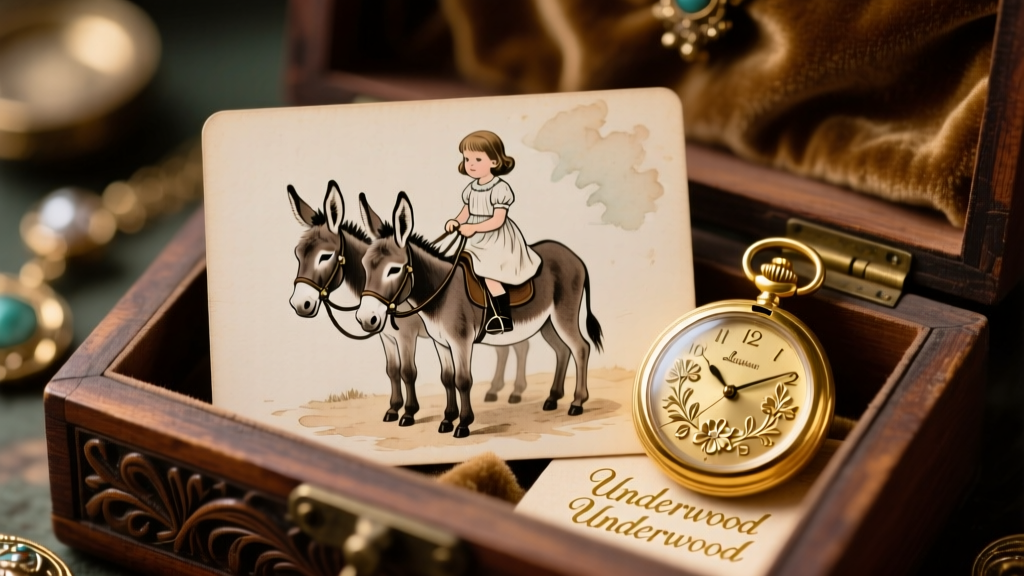
Stereo Cards Featuring a Little Girl and Donkeys by Underwood & Underwood: A Collector’s Appraisal
The Saarinen Bird Chest: Authenticity, Provenance, and Market Value of the Knoll-Branded 5-Drawer Aluminum-Pull Chest (32" × 20" × 46")

Antique & Vintage Flea Market #15: A Curator’s Field Report from Paris, London, and New York
Flash Gordon Pistol Signal: Decoding the Green-Red Variant — History, Mechanics, and Collectibility
Royal Worcester Figurine: 'Lady with Muff' in Pink Dress by James Hadley — An 8-Inch Masterpiece of English Porcelain Artistry