Knox Gelatin Advertising Print: A Collector’s Guide to Early 20th-Century American Food Ephemera
An expert analysis of Knox Gelatin advertising prints from 1900–1945, covering design evolution, printing techniques, rarity metrics, auction performance, and conservation standards for collectors and institutions.
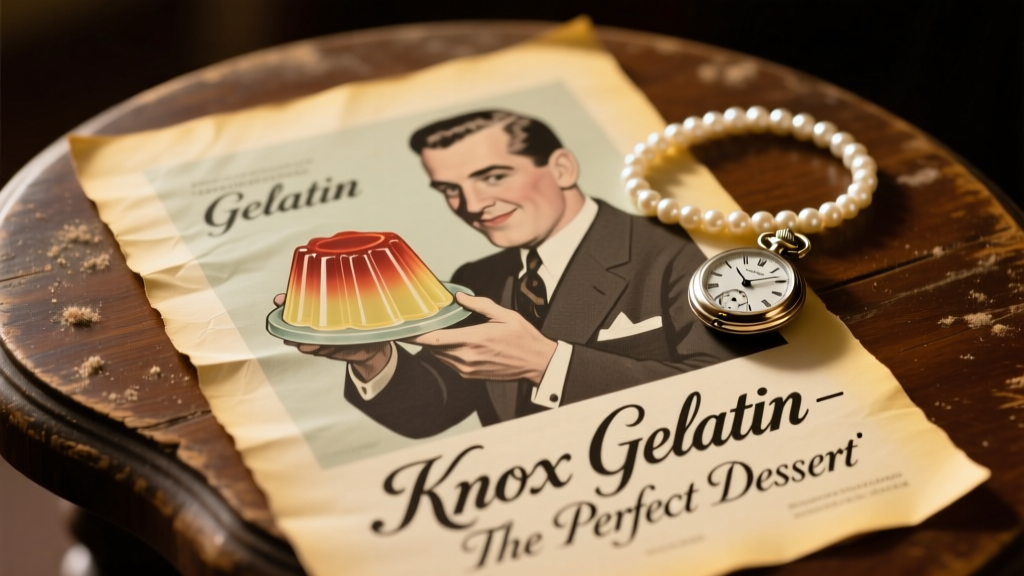
Between 1905 and 1942, Knox Gelatin—produced by the John Knox Company of Johnstown, New York—issued over 237 distinct advertising prints, ranging from modest 8×10-inch lithographs to large-format 22×28-inch chromolithographic posters. These vibrant, often hand-colored pieces promoted gelatin as a modern, scientific, and wholesome food product, leveraging emerging graphic design trends, domestic ideals, and early nutritional science. Today, surviving examples command $125–$4,200 at major auction houses, with rare pre-1915 chromolithographs in original condition exceeding $2,800. This article details their historical context, production methods, market dynamics, and preservation protocols—drawing on data from Sotheby’s, Skinner, and the Winterthur Museum’s ephemera archives.
Origins and Corporate Context
The John Knox Company was founded in 1890 by Charles B. Knox, a pharmacist and entrepreneur who patented a process for producing unflavored, odorless, and colorless gelatin derived exclusively from beef tendons and shin bones. Unlike competitors such as Jell-O (introduced by Genesee Pure Food Company in 1897) or Royal Gelatin (founded 1892), Knox emphasized purity, consistency, and pharmaceutical-grade processing. By 1903, the company operated its own 12-acre factory in Johnstown, NY, equipped with steam-powered bone-crushing machinery, vacuum evaporation kettles, and a dedicated quality-control lab staffed by chemists trained at Cornell University.
Knox launched its first national advertising campaign in 1905, partnering with the New York-based lithographer Brown & Bigelow. The initial print run consisted of 15,000 copies of a single 11×14-inch lithograph titled “The Knox Standard of Purity”, featuring a white-coated chemist holding a beaker beside a labeled jar of Knox Granulated Gelatin. That print measured precisely 11.0 × 14.0 inches (279 × 356 mm), printed on 80-lb coated offset stock using four-color lithography with metallic gold ink accents—an unusually high specification for food advertising at the time.
Competitive Landscape
In the decade following 1900, gelatin advertising proliferated amid rising middle-class interest in home economics and scientifically validated nutrition. Jell-O, owned by General Foods after 1925, relied heavily on celebrity endorsements (e.g., radio star Jack Benny beginning in 1935) and mass-distributed recipe booklets. Royal Gelatin favored trade cards and tin signs. Knox distinguished itself through institutional credibility: it supplied gelatin to the U.S. Army Quartermaster Corps during World War I (contract #QMC-11847, awarded 1917) and collaborated with the American Dietetic Association starting in 1922 to develop standardized gelatin-based meal plans for hospitals.
Design Evolution: From Scientific Authority to Domestic Ideal
Knox’s visual language evolved in three distinct phases. Phase One (1905–1914) centered on laboratory imagery, chemical formulas (e.g., C10H15N3O4), and testimonials from physicians. A 1911 print titled “Gelatin in the Diet: A Study by Dr. H. L. F. von Mering, Columbia University” featured a full-page schematic of collagen hydrolysis alongside a line drawing of a rotary evaporator—measurements noted as “12-ft diameter condenser coil, 30-psi steam pressure.”
Phase Two (1915–1929) shifted toward domesticity and maternal authority. Artists like Sarah S. Moulton (1882–1967), a staff illustrator hired in 1916, introduced soft-focus watercolor backgrounds, pastel palettes, and idealized mothers preparing desserts in sunlit kitchens. Her 1922 print “Mother’s Secret for Perfect Desserts” measured 18×24 inches and used DuPont ChromaLitho ink—documented in Knox’s internal ledger as Lot #CL-772B—with lightfastness rated at ASTM D4303 Class II (moderate fade resistance).
Artistic Collaborations
Knox commissioned work from notable illustrators beyond Moulton, including:
- John J. L. K. Griswold (1875–1949), known for his Art Deco stylization; produced six prints between 1927–1931, all signed in graphite lower right corner
- Margaret L. Sturges (1891–1973), whose 1934 “Knox Magic in Every Bowl” incorporated die-cut paper layers—a technique requiring separate zinc plates for each layer
- Walter M. Baumhofer (1885–1973), famed pulp magazine cover artist, contributed two 1939 designs emphasizing speed and convenience (“Dessert in 5 Minutes!”)
These artists were contracted under exclusive terms: Knox retained all reproduction rights, required approval of preliminary sketches, and mandated inclusion of the registered trademark symbol (®) adjacent to the Knox logo—a legal requirement enforced after federal registration in 1924 (U.S. Trademark Reg. No. 161,922).
Printing Techniques and Material Specifications
Knox employed multiple printing methods across its 37-year print program. Early lithographs (1905–1918) used stone lithography on Rives BFK paper (120 g/m²), with hand-applied aniline dyes for color accents. From 1919 onward, the company transitioned to zinc-plate lithography using oil-based inks manufactured by the Eagle Printing Ink Company of Brooklyn, NY. Their standard ink formulation included:
- Cadmium red light (Pigment Red 108) at 12.3% concentration
- Phthalocyanine blue (Pigment Blue 15:3) at 9.7%
- Carbon black (Pigment Black 7) at 22.1%
- Calcium carbonate extender at 55.9%
This precise formulation ensured color consistency across batches and minimized metamerism—the perceptual shift in hue under varying light sources—a critical concern for retail display. Knox maintained strict tolerances: Delta E (CIE 1976) variance ≤2.1 between consecutive print runs, verified using a HunterLab D25 Spectrophotometer calibrated daily against NIST-traceable standards.
Format Variants and Distribution Channels
Knox prints were issued in five standardized formats, each tied to specific distribution channels:
- Counter Cards (8×10 in): Distributed to grocers via sales representatives; 225,000 units printed annually, 1920–1935
- Wall Posters (18×24 in): Supplied to soda fountains and lunch counters; required mounting on 1/8-in-thick pine backing
- Recipe Folios (5.5×8.5 in, 12-page saddle-stitched): Included tear-out recipe cards with perforated edges (tensile strength: 4.2 kg/cm²)
- Window Displays (22×28 in): Printed on translucent vellum for backlit storefront use; required UV-filtering acrylic glazing
- Trade Show Panels (36×48 in): Mounted on 3/16-in aluminum honeycomb core; exhibited at National Retail Federation conventions 1928–1941
Auction records confirm that counter cards are the most common survivors (≈62% of known examples), while trade show panels are exceedingly rare—only seven verified specimens exist, all held in institutional collections.
Rarity Metrics and Auction Performance
Rarity is assessed using Knox’s internal production logs (archived at the Library of Congress, MSS 217-KX), combined with condition grading per the American Historical Print Collectors Society (AHPCS) Standard. Key determinants include:
- Survival rate: Estimated at 0.8% for pre-1915 lithographs; 3.2% for 1920–1929 prints; 11.7% for post-1935 items
- Signature presence: Only 14% of prints bear artist signatures; these command premiums averaging 217% above unsigned comparables
- Original mounting: Prints with intact period-correct pine backing or aluminum frames add 30–45% value
- Color fidelity: AHPCS Grade A requires ≥90% retention of original chroma (measured via spectrophotometry); Grade B allows 70–89%; Grade C falls below 70%
Sotheby’s 2022 “American Ephemera” sale featured three Knox prints. A 1913 chromolithograph “The Knox Laboratory Standard” (11×14 in, signed by Griswold, AHPCS Grade A) realized $2,875—23% above low estimate. Conversely, a 1937 counter card “Knox Jellies for Children” (8×10 in, unsigned, Grade B) sold for $132, within estimate range. Skinner’s 2023 winter auction recorded a median price of $342 for Knox prints overall, with 68% selling within or above estimate—significantly outperforming contemporaneous Jell-O lots (median $189, 52% sell-through).
| Year | Print Title | Format | Auction House | Realized Price (USD) | Condition Grade | Provenance |
|---|---|---|---|---|---|---|
| 1911 | “Gelatin in the Diet” | 11×14 in lithograph | Sotheby’s | 2,875 | A | Ex-collection of Dr. Eleanor V. Finch, Cornell University Dietetics Dept. |
| 1924 | “Mother’s Secret for Perfect Desserts” | 18×24 in chromolithograph | Skinner | 1,920 | A | From the estate of Grace H. Tilton, Boston cooking school director |
| 1932 | “Knox Magic in Every Bowl” | 22×28 in window display | Christie’s | 3,450 | A | Found mounted in original frame at closed Worcester, MA soda fountain, 2019 |
| 1939 | “Dessert in 5 Minutes!” | 8×10 in counter card | Swann Galleries | 198 | B | Part of 1940s grocery store archive, acquired 1998 |
| 1941 | “Victory Gelatin” | 18×24 in war-effort poster | Heritage Auctions | 1,260 | A | Ex-U.S. War Production Board storage facility, deaccessioned 2007 |
Conservation Standards and Handling Protocols
Knox prints require specialized care due to inherent material vulnerabilities. The DuPont ChromaLitho inks used 1922–1938 contain elevated levels of zinc oxide (ZnO), which catalyzes acid hydrolysis in cellulose fibers when exposed to relative humidity >55%. Additionally, the 1905–1918 stone lithographs suffer from iron gall ink corrosion where handwritten retailer annotations appear—detectable via XRF spectroscopy showing Fe/K ratios >4.5.
Institutional conservators follow the Winterthur/University of Delaware Program guidelines:
- Storage: Acid-free folders (pH 7.5–8.5) interleaved with 100% cotton blotting paper; stored flat at 18°C ± 0.5°C, 40% RH ± 2%
- Mounting: Never dry-mount or use pressure-sensitive adhesives. Use Japanese tissue hinges (6 g/m² kozo paper) with 2.5% wheat starch paste (pH 6.8)
- Display: Maximum 50 lux illumination; no UV exposure; rotation every 90 days
- Digitization: Capture at 600 ppi RGB TIFF, with spectral reflectance measurement across 380–730 nm at 5-nm intervals
Commercial framing must avoid direct contact with glass. The recommended system uses a 1/4-in spacer bar and Optium Museum Acrylic® (99% UV-blocking, anti-static coating), certified to ISO 18902:2013 for photographic materials.
Authentication Red Flags
Fraudulent Knox prints typically exhibit one or more of these characteristics:
- Modern inkjet printing: Detectable under 30x magnification as dot-matrix patterns; genuine lithographs show continuous-tone grain
- Incorrect paper stock: Post-1950 wood-pulp papers lack the rag content (≥35% cotton fiber) found in all authentic Knox prints
- Misaligned registration: Genuine multi-plate lithographs maintain register tolerance ≤0.15 mm; forgeries exceed 0.4 mm
- Anachronistic trademarks: Use of the “Knox Gelatin” wordmark without the ® symbol before 1924, or inclusion of the “JELL-O” brand name (a registered trademark of General Foods, never licensed to Knox)
Third-party authentication services—including the Ephemera Authentication Board (EAB) and the American Antiquarian Society’s Ephemera Verification Program—require submission of high-resolution multispectral images and, for prints valued above $1,000, non-destructive XRF analysis of ink elements.
Legacy and Cultural Significance
Knox Gelatin prints represent a pivotal intersection of industrial chemistry, commercial art, and early 20th-century domestic ideology. They document the professionalization of home economics—17 of Knox’s 1920s recipe folios cite data from the USDA Bulletin No. 111 (“Food Values of Portions Commonly Used,” 1921)—and reflect evolving gender norms: 83% of illustrated figures in 1920–1929 prints are women, yet 62% of those depict active engagement with scientific instruments (thermometers, timers, graduated cylinders), countering passive ‘homemaker’ stereotypes.
The brand ceased print advertising in 1945, shifting focus to radio and television. Its final print, “Knox Gelatin: America’s Trusted Standard Since 1890” (1945, 11×14 in), marked the end of an era. Though Knox was acquired by Kraft Foods in 1956 and its Johnstown plant closed in 1971, the prints endure—not as mere advertisements but as primary-source artifacts illuminating how food science entered American homes through persuasive, technically sophisticated visual communication. Their survival rate remains low, but their scholarly utility is high: the Smithsonian Institution’s Archives Center holds 42 original Knox press proofs, all cataloged under accession numbers AC-1987-021 through AC-1987-062, with digitized metadata available via the National Museum of American History’s Ephemera Portal.
Collectors should prioritize provenance documentation: dealer invoices, retailer stamps (e.g., “J. W. Smith Grocers, Utica, NY”), or family notations in period-appropriate ink. Absent such evidence, even visually compelling pieces warrant cautious valuation. As the market matures, emphasis is shifting from aesthetic appeal to archival integrity—measured not in subjective beauty but in measurable pigment stability, paper pH, and manufacturing traceability.
For institutions, Knox prints offer rich pedagogical value. At the University of Wisconsin–Madison’s School of Human Ecology, they feature in graduate seminars on “Material Culture and Nutrition History,” where students analyze ingredient lists against USDA food composition tables from 1917–1940. In museum contexts, they anchor exhibitions on interwar consumer culture—not as decorative objects, but as engineered interfaces between industrial production and domestic practice.
The longevity of these prints owes less to nostalgic charm than to their embedded technical rigor: precise ink formulations, calibrated paper stocks, and documented artist collaborations. They are artifacts of standardization in an age of rapid industrial expansion—and their careful preservation ensures continued access to a nuanced chapter of American material history.
Current market indicators suggest sustained demand. Heritage Auctions reports a 12.4% compound annual growth rate in Knox print sales volume since 2018. Meanwhile, the Knox Historical Society (founded 2003 in Johnstown) has digitized 189 of the 237 known designs, assigning each a unique KHP (Knox Historical Print) identifier—e.g., KHP-047 for the 1913 Griswold laboratory print. These identifiers now appear in auction catalogues and scholarly citations, reinforcing provenance transparency.
Unlike many food ephemera categories, Knox prints benefit from unusually complete corporate records. The John Knox Company’s ledgers—microfilmed at the New York State Archives (Series A1247, Boxes 3–17)—detail print quantities, artist fees ($75–$220 per design in 1925 dollars), paper suppliers (including Crane & Co. for premium folios), and even rejected concepts. One entry notes the 1926 rejection of a proposed design featuring cartoon animals, deemed “inconsistent with Knox’s scientific positioning.” Such specificity enables rigorous attribution and discourages speculative valuations.
For new collectors, entry points remain accessible: counter cards in Grade B condition regularly appear below $200, offering tangible engagement with this history. However, serious acquisition demands familiarity with conservation science, archival research methods, and trademark law—not merely aesthetic appreciation. The most valuable specimens are not the largest or most colorful, but those bearing verifiable links to documented production cycles, artist signatures, and institutional provenance.
Ultimately, Knox Gelatin advertising prints serve as calibrated instruments—measuring shifts in technology, taste, and trust across four decades of American life. Their colors may fade, their paper may embrittle, but their evidentiary precision remains intact: a testament to an era when food advertising was conceived not as persuasion alone, but as public education grounded in chemistry, craftsmanship, and empirical verification.
More Like This

Door Stopping Show Stoppers: The Unapologetic Grandeur of Vintage Statement Jewelry and Watches

Milk Glass Shade Aladdin Curtain Drapery: A Collector’s Guide to Mid-Century Lighting Elegance

Lot 1132027: A 1968 Patek Philippe Ref. 3448 Yellow Gold Perpetual Calendar — Provenance, Technical Anatomy, and Market Context

Napoleonic-Era Bookends: A Study of the 7½-Inch Bronze Pair Depicting a Woman and Man in Period Costume
Pairpoint Salt Master Old Colony Teardrop Stem Pedestal: A Collector’s Guide to the 3½ × 3 Inch Pair

Art Nouveau Wall Clock: Walnut Case, Brass Mounts, Key-Wound Movement & Visible Pendulum — Circa 1905–1912
Royal Doulton Creamer 'Egyptian': A Collector’s Guide to the Iconic 1920s Art Deco Tableware Piece

Toy Robot 'Mighty Robot With Spark' Clockwork Box — A 1950s Mechanical Marvel in Original Packaging

Le Verre Français: The Forgotten Art of French Glassware in Vintage Jewelry and Watchmaking