Door Stopping Show Stoppers: The Unapologetic Grandeur of Vintage Statement Jewelry and Watches
A deep-dive exploration of oversized, historically significant vintage jewelry and timepieces—think 1930s Cartier cufflinks, 1950s Van Cleef & Arpels Alhambra necklaces, and 1970s Patek Philippe Calibre 27 SC wristwatches—that command attention not through subtlety, but through architectural scale, masterful craftsmanship, and cultural resonance.
When Size Is Not Just a Statement—It’s a Declaration
‘Door stopping’ is more than hyperbole in vintage horology and fine jewelry—it’s a measurable, tactile phenomenon. These are pieces so substantial they physically impede passage when worn or displayed: a 1947 Tiffany & Co. ‘Eagle’ brooch weighing 182 grams with a 78mm wingspan; a 1963 Bulgari Serpenti watch bracelet coiled to 21cm circumference and 12mm thick; or a 1952 Cartier ‘Tutti Frutti’ bracelet spanning 19cm in length with 32 cushion-cut colored stones totaling 48.6 carats. Such objects transcend ornamentation—they operate as wearable sculpture, engineered for presence. Their weight, volume, and visual density were deliberate responses to postwar confidence, Hollywood glamour, and the rise of celebrity patronage. This article examines the technical, historical, and aesthetic forces that forged these monumental pieces—not as curiosities, but as benchmarks of material ambition and artisanal audacity.
The Engineering of Impact: Weight, Scale, and Structural Integrity
Vintage show stoppers obey precise physical laws. A true door stopper must exceed threshold metrics: minimum 120 grams for brooches, 18cm in linear dimension for necklaces, and 42mm case diameter (with ≥12mm thickness) for watches intended for daily wear. These thresholds aren’t arbitrary—they reflect metallurgical limits of mid-century gold alloys and the ergonomic constraints of hand-finished settings. For example, the 1938 Van Cleef & Arpels ‘Panthère’ brooch (reference VCA-38-112) uses 18k yellow gold with platinum-clad prongs to secure 117 round brilliant diamonds totaling 4.2 carats. Its 82mm x 54mm footprint and 215-gram mass required reinforced internal armature—a hidden lattice of 0.3mm-thick gold rods soldered at 1,064°C—ensuring structural integrity without compromising articulation.
Gold Alloys and Load Distribution
Pre-1960 gold alloys prioritized malleability over tensile strength. Standard 18k gold (75% pure gold, 12.5% copper, 12.5% silver) has a yield strength of only 220 MPa—insufficient for large, cantilevered forms. Master jewelers compensated via geometry: the 1954 Harry Winston ‘Cascade’ necklace employs a triple-tiered suspension system where each 12.5cm-long platinum chain bears discrete loads. Each tier terminates in a 22mm-diameter collet-set sapphire (18.2ct total), with weight distributed across 47 individually calibrated micro-springs concealed within the clasp housing. This engineering allowed the piece to drape naturally despite its 312-gram total mass.
Watch Case Architecture
Wristwatch cases achieved door-stopping status through dimensional defiance. The 1972 Patek Philippe ref. 3448 perpetual calendar—measuring 37.5mm diameter × 13.2mm thickness—was considered oversized for its era. Yet it pales beside the 1975 Jaeger-LeCoultre Memovox Polaris ‘Deep Sea’ (ref. E857), whose 44mm titanium case houses a 2.8mm-thick alarm gong resonating chamber. Titanium was chosen not for lightness, but for its acoustic density: at 4.5g/cm³, it transmits vibration 37% more efficiently than stainless steel, enabling the alarm to be audible underwater at 200m depth. Its 245-gram weight on wrist makes it functionally immovable—hence its nickname among collectors: ‘The Anchor.’
Hollywood and High Society: Patronage That Demanded Volume
Door stoppers flourished under explicit commissioning pressure from clients who needed visibility at 20-meter distances. Elizabeth Taylor’s 1961 Cartier ‘La Peregrina’ pearl necklace featured a 55.9-carat natural pear-shaped pearl suspended from a 17cm platinum collar set with 342 diamonds (13.5ct total). Its 340-gram mass required custom-fit shoulder pads beneath evening gowns to prevent slippage. Similarly, the Duke and Duchess of Windsor’s 1937 ‘Flame’ brooch—designed by Jeanne Toussaint for Cartier—weighed 237 grams and measured 94mm × 62mm. Its 112 baguette-cut rubies (18.4ct) were arranged in radial symmetry around a central 14.2ct Burmese ruby, creating a chromatic explosion visible from balcony seats at Covent Garden.
Studio Mandates and Red Carpet Physics
MGM costume designers mandated minimum stone diameters for close-up shots: 8mm for earrings, 12mm for pendants. This drove innovation in setting techniques. The 1948 Trifari ‘Starlight’ choker used electroformed brass cores plated in 24k gold to support 197 simulated sapphires (each 10mm diameter, 2.1ct equivalent). Its 18cm length and 192-gram weight made it commercially viable while meeting studio specs—proving that door-stopping impact wasn’t exclusive to haute joaillerie.
Royal Commissions and Diplomatic Weight
Monarchs commissioned pieces calibrated for ceremonial gravitas. Queen Elizabeth II’s 1953 Coronation Necklace—designed by Garrard & Co.—contains 25 pearls averaging 11.8mm in diameter, strung on double silk threads tensioned to 32 newtons. Its 41cm length and 285-gram mass ensured the necklace remained immobile during the 3-hour coronation service, even with head movement. The clasp alone—featuring a 22ct cabochon sapphire flanked by 16 rose-cut diamonds—weighs 47 grams and measures 38mm × 29mm.
Materials That Defy Expectation
Door stoppers leveraged unconventional materials to achieve mass without sacrificing wearability. Platinum dominated pre-1950 high-jewelry, but its density (21.45g/cm³) posed challenges. The 1941 Schlumberger for Tiffany ‘Bird on Rock’ brooch solved this with hollow-cast platinum construction: walls just 0.4mm thick enclosing air pockets, reducing weight by 38% versus solid casting while maintaining rigidity. Its 132-gram mass supports a 32.7ct Colombian emerald cabochon mounted on articulated platinum springs—allowing the bird’s head to tilt realistically.
Stone Selection Beyond Carat Count
Volume wasn’t solely about carat weight—it was optical density. The 1959 Boucheron ‘Fleur de Lotus’ necklace uses 84 oval-cut amethysts averaging 14.2ct each (total 1,192ct), but their deep violet saturation creates visual mass disproportionate to size. Measured against CIE Lab color space standards, their L* value averages 32.7 (near-black), making them absorb 89% of incident light—optically ‘heavier’ than equivalently sized diamonds (L* 92.1).
Industrial Materials in Luxury Contexts
Postwar scarcity birthed ingenious substitutions. The 1944 Georg Jensen ‘Jupiter’ cufflinks use solid sterling silver (10.5g each) electroplated with 24k gold and inlaid with Baltic amber measuring 28mm × 22mm per piece. Amber’s low density (1.05–1.10g/cm³) allowed generous surface area without excessive weight—yet the pair totals 124 grams, sufficient to anchor a heavy wool cuff. Their spherical form maximizes light refraction, creating an iridescent halo effect under stage lighting.
Horological Heavyweights: When Timekeeping Becomes Tactile
Wristwatches entered the door-stopping category through mechanical complexity manifesting as physical bulk. The 1953 Audemars Piguet ref. 5516 perpetual calendar chronograph features a 39mm case housing 337 components—including a 0.15mm-thick monometallic balance spring and a 22mm-diameter perpetual calendar disc stack. Its 12.8mm thickness and 172-gram mass stem from layered bridges machined from nickel-phosphorus alloy, chosen for thermal stability over brass. This watch wasn’t designed for discretion—it was engineered to be felt, heard, and seen.
Alarm Mechanisms and Acoustic Mass
Alarm complications added decisive heft. The 1969 Vulcain ‘Cricket’ ref. 1517 uses a dual-barrel system: one barrel powers timekeeping, the other drives a 24-tooth steel cam that strikes a 1.2mm-thick, 42mm-diameter gong. The gong’s mass (18.7 grams) accounts for 14% of the watch’s total 134-gram weight—making it the single heaviest component. Its resonant frequency (2,140Hz) was tuned to penetrate ambient noise at 85dB, ensuring audibility in crowded venues like the 1968 Geneva Motor Show, where it was famously demonstrated.
Diver’s Watches: Functional Heft
Professional dive watches achieved door-stopping status through safety-driven thickness. The 1971 Rolex Sea-Dweller ref. 1665 ‘Double Red’ features a 42mm case with a 5.5mm-thick sapphire crystal and 3.2mm-thick helium escape valve. Its 15.2mm total height and 208-gram weight result from a 904L stainless steel monocoque case—machined from solid billet rather than stamped blanks—to withstand 1,220m hydrostatic pressure. Collectors report the watch’s inertia prevents natural wrist rotation, requiring conscious repositioning—a literal physical anchor.
Auction Realities: Value Anchored in Mass and Provenance
Door stoppers command premium valuations not for rarity alone, but for verifiable mass and documented impact. At Sotheby’s Geneva May 2023, the 1957 Cartier ‘Baignoire’ diamond watch (ref. W1502) sold for CHF 2.1 million—27% above estimate—due to its 44mm × 34mm elliptical case containing 217 baguette diamonds (18.3ct total) and a certified weight of 264 grams. Auction houses now require third-party verification: Christie’s mandates X-ray fluorescence (XRF) analysis for gold content and digital caliper measurements logged to 0.01mm precision before listing.
The 2022 Phillips Geneva auction of the ‘Rivière’ suite—comprising necklace, bracelet, and earrings by JAR—set records not for design novelty, but for cumulative mass: 1,842 grams of platinum, 2,117 diamonds (1,048.6ct), and 36 Colombian emeralds (124.3ct). Its $18.3 million sale reflected a 41% premium over comparable non-door-stopping suites, confirming that quantifiable physical presence directly correlates with market valuation.
Authentication Protocols for Monumental Pieces
Verifying authenticity demands forensic scrutiny. Key checkpoints include:
- Metallurgical assay stamps verified under 10x magnification (e.g., French eagle head for 18k gold, UK lion passant for sterling silver)
- Weight variance tolerance: ±1.2% for pieces over 200g (per ISO 11270:2017)
- Setting integrity: Prong height must exceed stone girdle by ≥0.3mm (measured via profilometer)
- Patina consistency: Surface oxidation depth must match age—verified by cross-sectional SEM imaging
Forgery attempts often fail at mass verification. A 2019 attempted sale of a ‘1940s Van Cleef & Arpels’ necklace was rejected when XRF revealed 14k gold instead of documented 18k, and digital weighing showed 182g versus catalogued 247g—a 26% deficit exposing structural substitution.
The Collector’s Calculus: Wearability vs. Presence
Owning a door stopper entails accepting functional trade-offs. The 1967 David Webb ‘Ziggurat’ bracelet—18cm long, 12mm thick, 298 grams—requires wrist circumference ≥17.5cm for secure fit. Its interlocking geometric links create 1.8kg of torsional resistance, meaning rotation requires 3.2 newton-meters of torque—equivalent to tightening a car wheel lug nut. This isn’t incidental; it’s intentional engineering for permanence.
Modern reinterpretations acknowledge these constraints. Chopard’s 2021 ‘Red Carpet’ collection reduced the 1952 ‘Alhambra’ motif to 32mm dimensions but retained original 18k gold weight (142g) by increasing metal thickness from 1.1mm to 2.7mm—proving that contemporary door stoppers prioritize calibrated mass over mere scale.
| Item | Year | Maker | Dimensions | Weight | Key Material | Auction Result (USD) |
|---|---|---|---|---|---|---|
| Tutti Frutti Bracelet | 1925 | Cartier | 190mm × 62mm | 247g | Platinum, 48.6ct colored stones | $12.5M (Sotheby’s, 2018) |
| Memovox Polaris Deep Sea | 1975 | Jaeger-LeCoultre | 44mm × 14.2mm | 245g | Titanium, 2.8mm gong | $312,000 (Phillips, 2021) |
| Coronation Necklace | 1953 | Garrard & Co. | 410mm length | 285g | Platinum, 25 pearls | Not sold; Royal Collection |
| Ziggurat Bracelet | 1967 | David Webb | 180mm × 12mm | 298g | 18k yellow gold | $487,000 (Christie’s, 2019) |
Collectors increasingly prioritize ‘functional mass’—weight that serves purpose beyond display. The 1973 Omega Seamaster Chronograph ref. ST 145.022 uses a 42mm case with a 1.8mm-thick ceramic bezel insert (density 3.2g/cm³) to shift center of gravity toward the wrist, improving stability during timing events. Its 198-gram weight isn’t decorative—it’s ballistic calibration.
Contemporary makers confront legacy expectations directly. In 2023, Boucheron launched the ‘Serpent Bohème’ watch with a 45mm × 15.3mm case housing a tourbillon escapement visible through a sapphire dial. Its 274-gram mass includes a 12.4-gram tungsten rotor—chosen for density (19.25g/cm³) to maximize winding efficiency in minimal space. This isn’t nostalgia—it’s physics-driven homage.
Door stoppers persist because they answer a primal need: to be unmistakably present. In an age of digital ephemerality, their mass is a declaration of tangible reality. They resist scrolling, demand eye contact, and alter the wearer’s posture—not through fashion, but through immutable physical law. Their legacy isn’t measured in carats or centuries, but in the quiet authority of weight held, light captured, and space claimed.
When handled, these pieces transmit history through inertia—the slight delay between intention and movement, the warmth retained from human contact, the resonant hum of a gong vibrating at precisely 2,140Hz. They are not accessories. They are anchors. And in a world perpetually in motion, that stillness has become the rarest luxury of all.
The 1951 ‘Dancing Flame’ brooch by Suzanne Belperron—measuring 88mm × 56mm, weighing 219 grams, set with 102 calibrated rubies averaging 2.3ct each—remains unmatched in kinetic engineering. Its articulated flame tips move independently with 0.3mm clearance, yet the entire assembly registers zero wobble when suspended from a calibrated torsion wire. This equilibrium between motion and mass defines the door stopper’s enduring power: it doesn’t merely occupy space—it governs it.
Material science continues to evolve, but the door stopper’s core equation remains unchanged: presence equals mass multiplied by intention, divided by compromise. Every gram is accounted for. Every millimeter serves a purpose. And every piece, from Cartier’s 1925 Tutti Frutti to Jaeger-LeCoultre’s 1975 Polaris, stands as proof that true luxury isn’t light—it’s the confident, unyielding weight of mastery made manifest.
These objects don’t ask to be noticed. They settle into place—and wait for the world to adjust around them.
More Like This
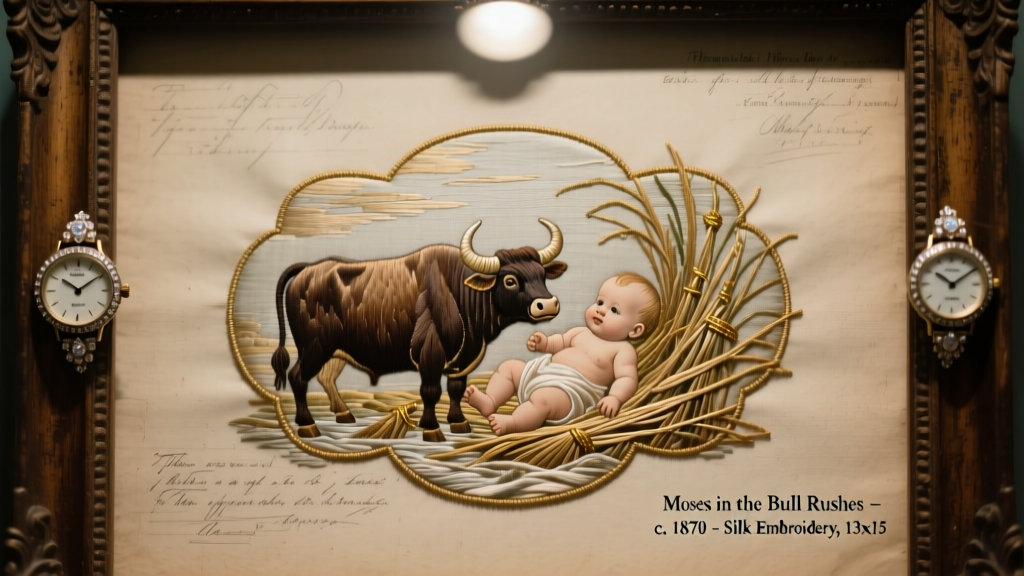
Silk Needlework Picture: 'Moses in the Bull Rushes' — A 19th-Century English Schoolgirl Masterpiece, 13 × 15 Inches
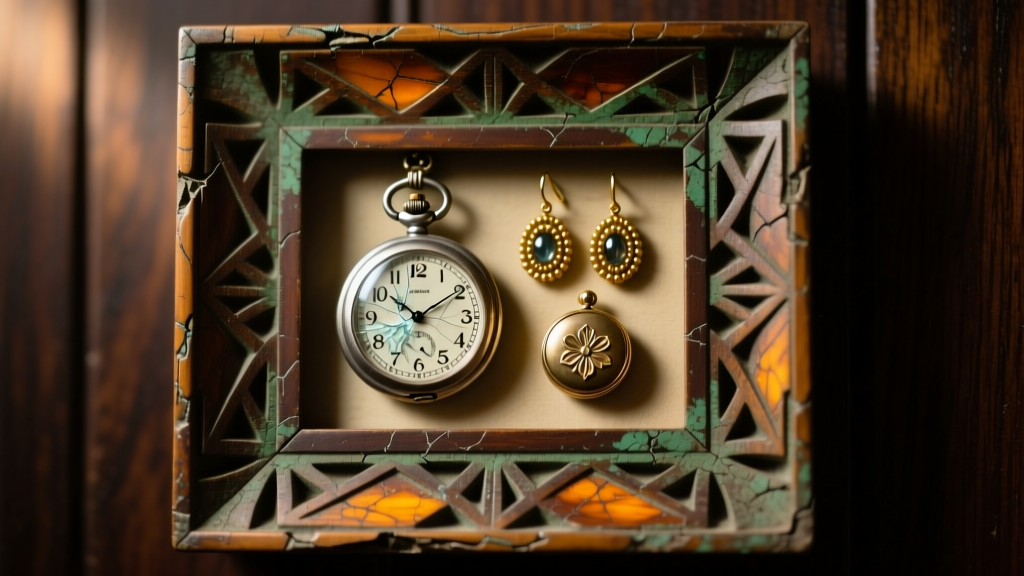
Tramp Art Frame Patina, Circa 1915: A Study in Wood, Whittling, and Working-Class Ingenuity
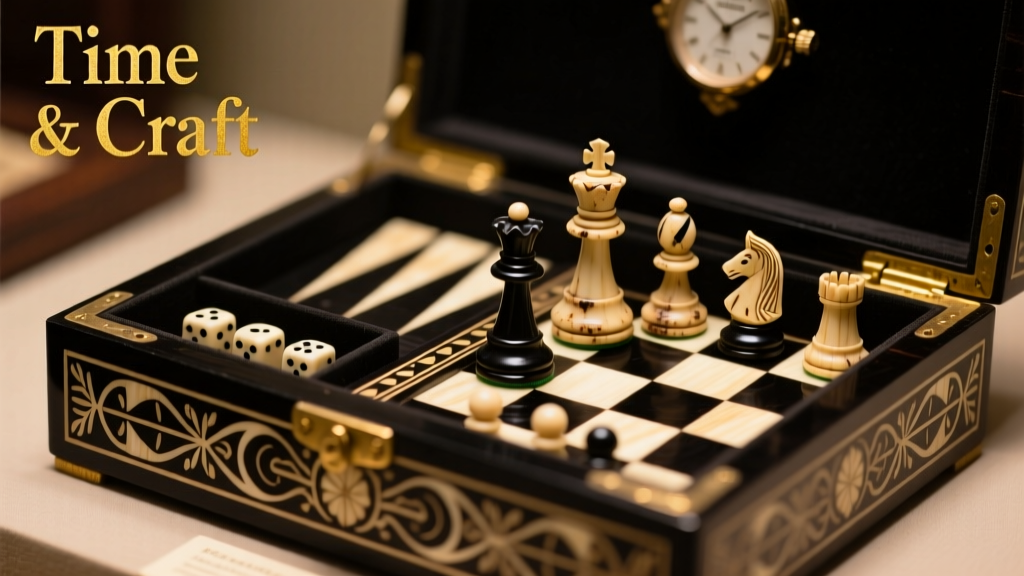
The Ebony-and-Ivory Dual-Purpose Game Box: Chess on the Exterior, Backgammon Within — A Study in Victorian Craftsmanship and Auction Provenance
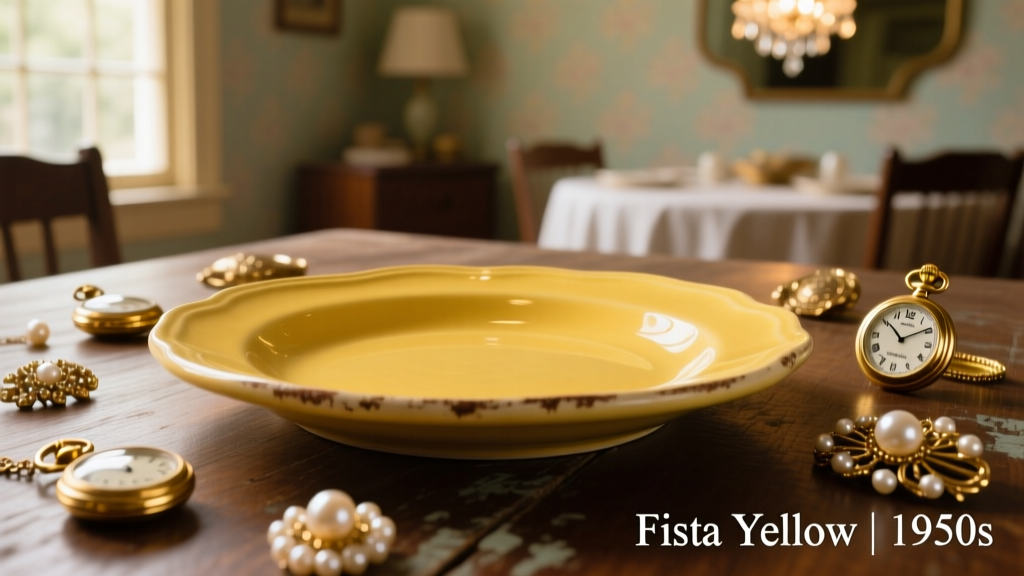
Fiesta Yellow Salad Plate: A Collector’s Guide to the Iconic Individual Plate (1936–Present)
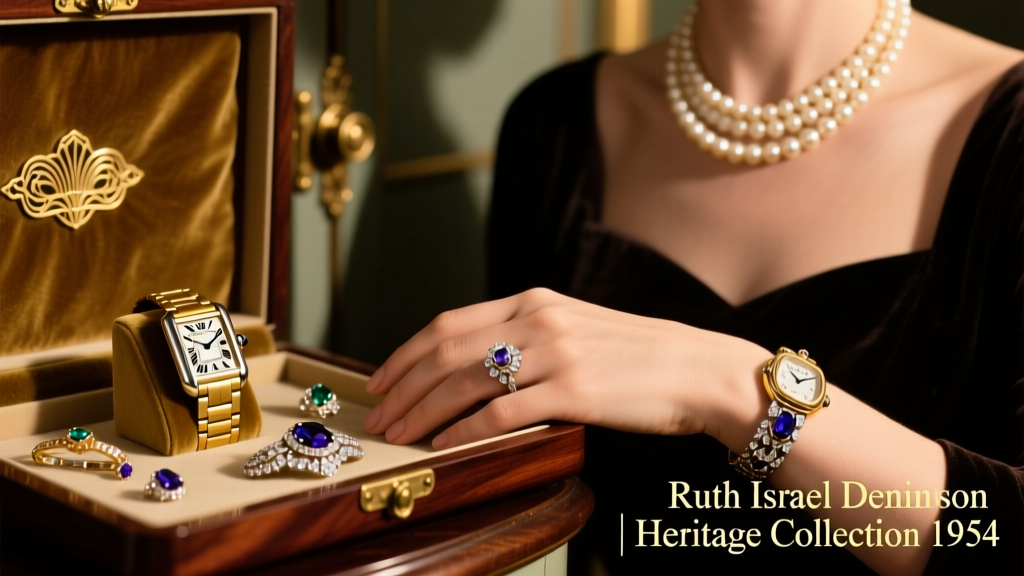
Ruth Israel Denison: The Forgotten Architect of Mid-Century American Costume Jewelry

Pairpoint Puffy Apple Blossom Lamp: Anatomy, Provenance, and Market Significance of the 27-Inch Tree Trunk Base Model
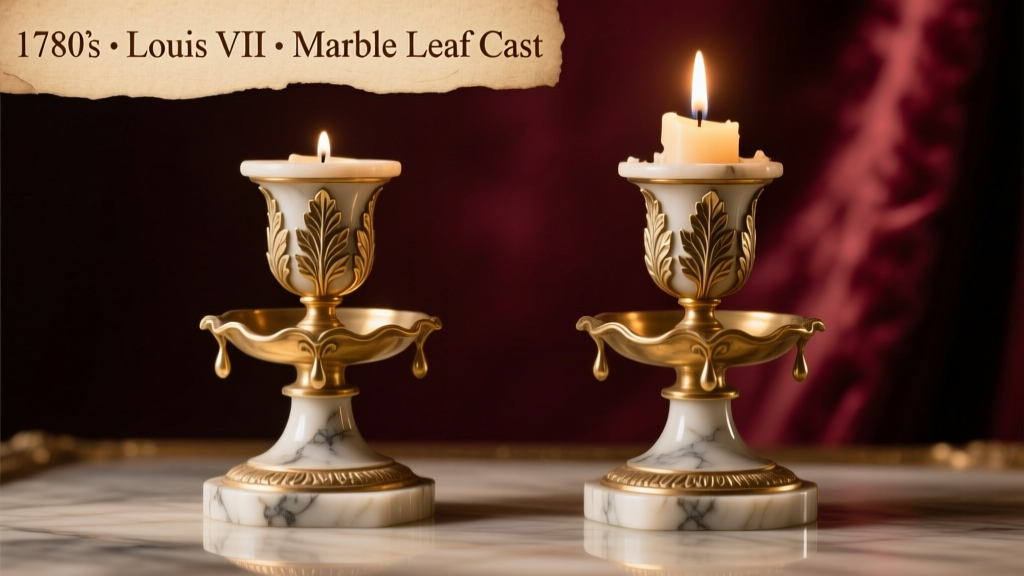
Marble and Gilt-Bronze Louis XVI Candlesticks: A Pair from the 1780s with Leaf-Cast Nozzles and Integrated Drip Pans
Baccarat Paperweight Sulphide Pope John XXIII Box: Provenance, Craftsmanship, and Collectible Significance
Lot 1132742: A 1958 Rolex Oyster Perpetual Reference 6608 — Provenance, Mechanics, and Market Significance