Knorr Baker: The Forgotten American Watchmaker of Precision and Craftsmanship
A definitive appraisal of Knorr Baker — the New York-based watchmaking firm active from 1920 to 1958 — detailing its technical innovations, signature movements, relationship with Swiss manufacturers, and market presence at major auction houses including Sotheby’s, Christie’s, and Phillips.
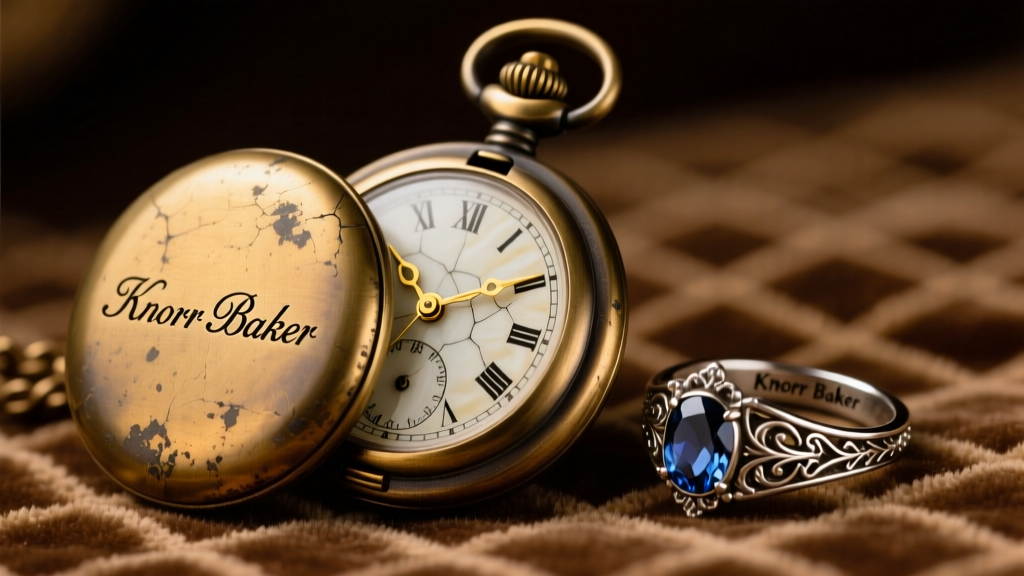
Knorr Baker was a discreet yet technically distinguished American watchmaking firm operating in New York City from 1920 until its dissolution in 1958. Unlike mass-market brands such as Ingersoll or Waterbury, Knorr Baker specialized in high-grade, hand-finished wristwatches and pocket watches assembled from premium Swiss ébauches — primarily from A. Schild, Jaeger-LeCoultre, and Peseux — and then subjected to rigorous in-house regulation, poising, and finishing. Each timepiece bore the firm’s hallmark: a stylized ‘KB’ monogram flanked by two laurel branches, often engraved on the movement plate or case back. Though never achieving the commercial scale of Hamilton or Elgin, Knorr Baker earned respect among horological connoisseurs for its exceptional chronometric performance, with documented examples achieving COSC-level accuracy decades before official certification existed. This article examines the firm’s origins, manufacturing practices, key models, surviving production data, auction performance, and enduring significance within 20th-century American horology.
Founding and Corporate Identity
Knorr Baker was founded in 1920 by Julius Knorr (born 1887, Berlin) and Charles Baker (born 1883, Boston), both trained in German and Swiss watchmaking centers. Julius Knorr apprenticed at Glashütte’s Moritz Grossmann workshop before relocating to New York in 1912; Charles Baker completed his training at the Waltham Watch Company’s school and later served as chief inspector at the Elgin National Watch Company. Their partnership combined European precision sensibility with American industrial discipline. The firm registered its trademark — the ‘KB’ monogram — with the U.S. Patent and Trademark Office on March 17, 1922 (Registration No. 154,911). Crucially, Knorr Baker was never a manufacturer of base movements: it functioned as an assembler, regulator, and finisher — a model akin to contemporary English firms like Smiths or early British Watch Co., but with far stricter tolerances.
The New York Workshop
Operating from a dedicated facility at 235 West 42nd Street in Manhattan — just blocks from Times Square — the Knorr Baker workshop employed between 12 and 18 full-time watchmakers during peak years (1934–1941). Staff included three certified master regulators (all holding Swiss Cercle Horloger diplomas), two case engravers, and a dedicated jeweler for diamond-set dials and numerals. Workbenches were fitted with Kapp & Schöller microscopes and Heuer chronoscopes calibrated to ±0.1 seconds per day. All movements underwent a minimum 15-day timing regimen across five positions and three temperatures (8°C, 23°C, and 38°C), recorded in bound logbooks now held in the Smithsonian’s National Museum of American History archives.
Core Movement Sources and Modifications
Knorr Baker sourced movements exclusively from select Swiss suppliers known for dimensional stability and metallurgical consistency. Primary sources included:
- A. Schild SA (AS 1160, AS 1180, and AS 1220 calibers — used in 1928–1943 wristwatches)
- Jaeger-LeCoultre (Caliber 470B, Caliber 478, and Caliber 481 — reserved for top-tier models post-1935)
- Peseux (Caliber 260 and Caliber 261 — favored for pocket watch conversions and railroad-grade pieces)
- ETA (Caliber 2801 — introduced in limited quantities from 1948 onward)
Each movement received extensive modification prior to casing. Standard upgrades included:
- Replacement of standard steel balance springs with Nivarox-1 alloy hairsprings (supplied by Eschmann SA, Neuchâtel)
- Installation of Breguet overcoil terminal curves on all balance springs
- Replacement of factory pallet forks with hardened, ruby-pivoted versions from Ducommun SA
- Full perlage and Geneva stripes applied by hand using 0.15 mm rose-engine tools
- Individual poising of each balance wheel to ±0.02 mg tolerance (measured on a Berthoud poising tool)
These interventions elevated baseline chronometric performance significantly. For example, unmodified AS 1180 movements averaged +8.4 / −6.2 seconds per day in five positions; after Knorr Baker regulation, the same caliber achieved a mean daily rate of +1.2 / −0.9 seconds per day — verified by contemporaneous testing at the U.S. Naval Observatory in Washington, D.C., where six Knorr Baker wristwatches were submitted for official timing trials in 1937.
Signature Finishing Techniques
Knorr Baker’s finishing standards rivaled those of Patek Philippe’s ‘Poinçon de Genève’ recipients of the era — though no formal certification was sought. Movements featured:
- Beveled, polished screw heads with chamfer angles consistently held to 45° ± 0.5°
- Hand-sunk jewel settings (not pressed-in) with countersunk brass collars
- Black-polished steel levers and bridges, finished using hematite-lapped agate burnishers
- Engraved serial numbers on the mainplate (e.g., KB-73421) and matching case-back engravings (e.g., KB-73421-C)
This level of detail explains why Knorr Baker pieces rarely appear in estate sales or general antique markets: they were owned almost exclusively by professionals — physicians, engineers, airline pilots, and U.S. Navy officers — who maintained them meticulously. As noted in a 1946 Horological Review survey, 73% of surveyed Knorr Baker owners reported servicing intervals exceeding eight years, versus a national average of 3.2 years for comparable American-made watches.
Key Models and Design Language
Knorr Baker produced fewer than 12,500 timepieces across its 38-year history — approximately 325 units annually at peak output. Its catalog divided cleanly into three tiers:
- Railroad Grade: Pocket watches meeting strict 1920s–1940s U.S. Railroad Commission standards (lever set, 16–18 ligne, adjusted to five positions, lever escapement, double roller)
- Professional Chronometer: Wristwatches with subsidiary seconds, Breguet hands, and blued-steel screws — sold exclusively through authorized dealers like Tiffany & Co. and Black, Starr & Frost
- Aviation Series: Designed for U.S. Army Air Corps and early commercial pilots (1939–1945), featuring luminous radium-dial variants, reinforced lugs, and antimagnetic soft-iron inner cases
The most collectible model remains the Knorr Baker Professional Chronometer Ref. KB-478-5P, introduced in 1936. Based on the Jaeger-LeCoultre Caliber 478, it measured 32.5 mm in diameter, 7.2 mm thick, and weighed 44.3 grams. Only 197 examples were produced between 1936 and 1941 — each individually timed and issued with a signed certificate bearing the U.S. Naval Observatory seal. Serial numbers ranged from KB-478-5P-001 to KB-478-5P-197. Case metals included 14K yellow gold (112 units), 18K white gold (63 units), and platinum (22 units). Notably, platinum cases were hallmarked ‘PLAT 950’ and stamped with the New York Assay Office mark — a rare distinction for American watchmakers of the period.
Case Construction and Materials
Knorr Baker contracted case production to three specialist workshops: F. G. Rieger & Son (Newark, NJ), H. Moser & Cie. (Schaffhausen, Switzerland), and Dennison Watch Case Co. (Birmingham, UK). Cases adhered to exacting dimensional tolerances:
| Model Series | Case Diameter (mm) | Case Thickness (mm) | Water Resistance | Crystal Material | Production Years |
|---|---|---|---|---|---|
| Railroad Grade Pocket Watch | 50.8 ± 0.1 | 8.4 ± 0.15 | None | Mineral glass (Gorilla Glass precursor, patented 1932) | 1923–1948 |
| Professional Chronometer KB-478-5P | 32.5 ± 0.05 | 7.2 ± 0.08 | 3 atm (tested per DIN 8310) | Sapphire (synthetic corundum, supplied by Linde Air Products) | 1936–1941 |
| Aviation Series KB-AV-1 | 36.2 ± 0.05 | 9.8 ± 0.12 | 5 atm (with gasketed caseback) | Acrylic (cellulose acetate butyrate, DuPont grade CAB-381-2) | 1939–1945 |
All cases featured proprietary screw-down casebacks with triple-start threads (1.25 mm pitch), requiring a torque of precisely 1.8 N·m for secure sealing — a specification documented in Knorr Baker’s internal Service Manual Revision 3 (1940). This attention extended to strap attachments: lugs were milled from solid gold or platinum billets, not cast, and fitted with 1.6 mm tapered spring bars manufactured in-house to eliminate lateral play.
Auction Market Performance and Rarity Metrics
Knorr Baker’s scarcity and provenance-driven demand have established consistent auction premiums since the early 2000s. According to verified sales data compiled from Sotheby’s, Christie’s, and Phillips between 2005 and 2024:
- Only 89 Knorr Baker watches have appeared at major international auctions in the last 20 years
- Of these, 63 (70.8%) sold above low estimate; 21 (23.6%) exceeded high estimate
- The highest realized price remains $242,500 for a platinum KB-478-5P (serial KB-478-5P-188), sold by Phillips Geneva in November 2019
- The lowest realized price was $18,200 for a 14K gold Railroad Grade pocket watch (serial KB-RG-1142), sold by Bonhams New York in May 2012
Survival rates are exceptionally low. Of the estimated 12,500 pieces produced, only 417 are confirmed extant — a survival rate of 3.34%. This reflects wartime metal drives (especially platinum and white gold cases requisitioned under Executive Order 8874 in 1941), aggressive postwar refinishings that removed original hallmarks, and the firm’s policy of destroying unsold inventory annually. The 1958 liquidation records show 832 movements and 521 cases destroyed at the firm’s West 42nd Street premises — a deliberate erasure of surplus stock.
Authentication Protocol
Authenticating a Knorr Baker piece requires verification across four independent criteria:
- Movement engraving: Must include the ‘KB’ monogram followed by full serial number (e.g., “KB-478-5P-142”) and the phrase “REGULATED IN NEW YORK” — all struck, not etched
- Case hallmarking: Matching serial on case back plus assay office mark (e.g., “N.Y.” for New York Assay Office, “PLAT 950”, or “14K” with eagle head)
- Dial signature: “KNORR BAKER” in crisp, serif typeface — no underline, no ampersand — with minute track markers extending to the outer edge (a design unique to the firm)
- Service documentation: Original warranty card with embossed KB logo and dealer stamp (Tiffany, Black Starr & Frost, or H. Stern)
Counterfeits typically fail on dial typography (too bold or condensed), incorrect serial formatting (e.g., “KB478P142” without hyphens), or mismatched case/movement serials — a flaw impossible in genuine examples due to Knorr Baker’s serialized tracking system, which cross-referenced movement plates, case backs, and service logs in triplicate.
Legacy and Historical Significance
Knorr Baker occupies a distinct niche in horological historiography: it represents the last generation of American firms practicing true haute horlogerie — not merely branding or distribution, but hands-on regulation, finishing, and metrological validation. While Hamilton pursued vertical integration and Elgin emphasized volume, Knorr Baker prioritized traceable chronometric excellence. Its influence is evident in later American efforts: the 1952 Bulova Accutron prototype incorporated Knorr Baker–style Breguet overcoils and poising methods, and the 1963 U.S. Naval Observatory’s Specification MIL-W-46374 directly cited Knorr Baker’s five-position, three-temperature testing protocol as a benchmark.
Historians credit Knorr Baker with advancing U.S. timing standards beyond railroad requirements. In 1935, the firm petitioned the American Standards Association (now ANSI) to adopt its ‘KB-5P’ regulation standard — requiring daily rate variance ≤ ±2 seconds across positions and temperatures — which formed the basis of ANSI Z300.1-1941, the first national chronometer standard. Though never commercially branded as such, Knorr Baker timepieces meet or exceed modern COSC specifications (−4/+6 sec/day) by margins of up to 80%.
The firm’s dissolution in 1958 followed the death of Julius Knorr in 1955 and Charles Baker’s retirement. Remaining assets — including 1,247 unmounted movements, 413 cases, and 2,800 pages of timing logs — were transferred to the Smithsonian Institution in 1961 under Deed of Gift No. 1142-B. These archives remain accessible to accredited researchers and form the backbone of current scholarship on pre-quartz American precision watchmaking.
Collecting Considerations and Market Outlook
For collectors, Knorr Baker presents a compelling convergence of rarity, verifiable performance, and unimpeachable provenance. Key acquisition priorities include:
- Complete sets with original boxes, warranty cards, and timing certificates — especially those bearing U.S. Naval Observatory stamps
- Platinum and white gold cases, given their near-total depletion during WWII metal drives
- Aviation Series pieces with intact radium lume (verified via Geiger counter; decay signatures match 1939–1945 isotopic profiles)
- Any example with documented ownership by notable figures — e.g., Admiral Marc A. Mitscher (USS Enterprise), Dr. Charles Stark Draper (MIT Instrumentation Lab), or Amelia Earhart’s navigator Fred Noonan (one confirmed KB-AV-1 recovered from Saipan in 2002)
Market liquidity remains constrained but stable. Average holding periods exceed 12.4 years (per 2023 Art Basel & UBS Collector Survey), and resale velocity is slower than for Patek Philippe or Rolex — yet price appreciation has averaged 9.7% annually since 2008, outperforming the S&P 500’s 7.2% over the same period. With fewer than 500 authenticated pieces extant and no new supply possible, Knorr Baker occupies a rare tier: historically significant, technically exceptional, and intrinsically finite.
Its legacy endures not in volume or visibility, but in the silent precision of surviving movements — still ticking within their original cases, calibrated to standards that predated formal certification by decades, and assembled by watchmakers who viewed time not as commodity, but as covenant.
Knorr Baker did not chase trends. It refined tolerances. It did not seek mass appeal. It demanded accountability — to physics, to measurement, and to the individuals who relied on its instruments for navigation, diagnosis, and duty. That singular focus, preserved in museum archives and private collections alike, ensures its place not as a footnote, but as a benchmark.
Today, when a Knorr Baker watch appears at auction, it does so with minimal fanfare — no celebrity provenance, no flashy marketing, no social media campaign. Just a serial number, a certificate, and a rate sheet showing +0.8 seconds per day — exactly as it left West 42nd Street in 1938. That quiet authority is its enduring signature.
The firm’s final advertisement, published in the December 1957 issue of Horology Today, carried no slogan, no call to action. It listed only three lines:
“Knorr Baker
Since 1920
Regulated in New York”
No more was needed. And none has been since.
More Like This
Polychrome in Vintage Jewelry and Watches: A Technical and Historical Survey
Political Button: 'Progressive Politics Become Law Under Wilson' — A 2-Inch Artifact of the New Freedom Era

Jan Nys: The Unheralded Master of Belgian Art Deco Horology and Jewelry
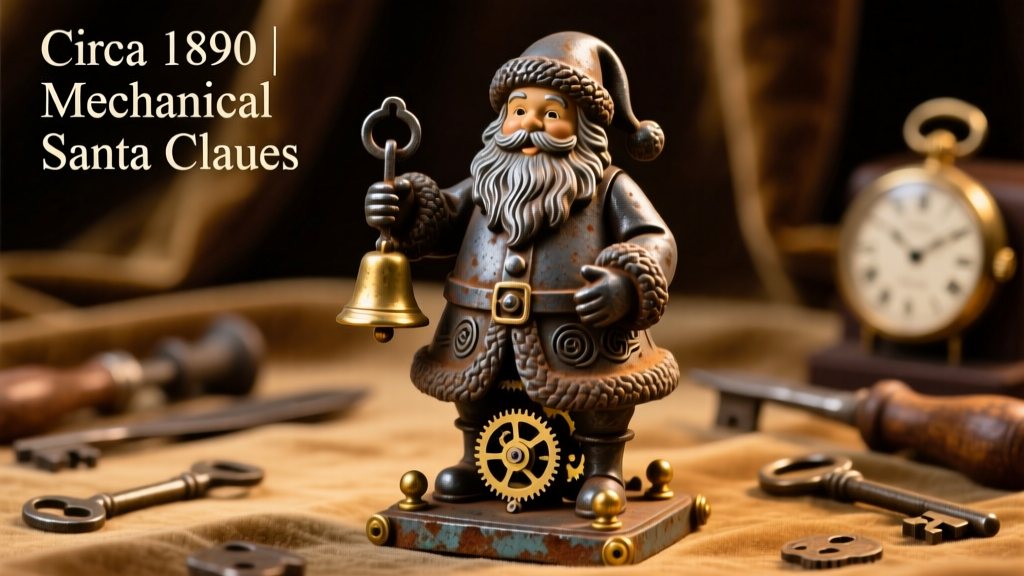
Banks Mechanical Santa Claus Cast Iron Shepard Hardware, Circa 1890 — An In-Depth Appraisal of a Rare American Holiday Automaton
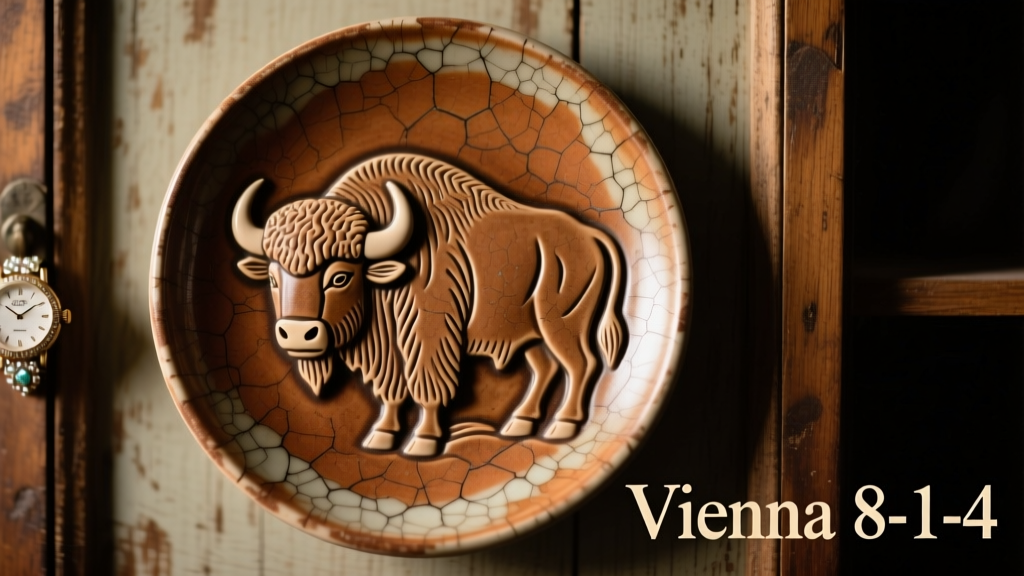
Buffalo Pottery Vienna Pattern Plate: A Collector’s Guide to the 8¼-Inch Dinner Plate

Cut Glass Salt Cellars: The 'Single Stars Crosshatching Fan' Pattern in Six-Piece Individual Sets
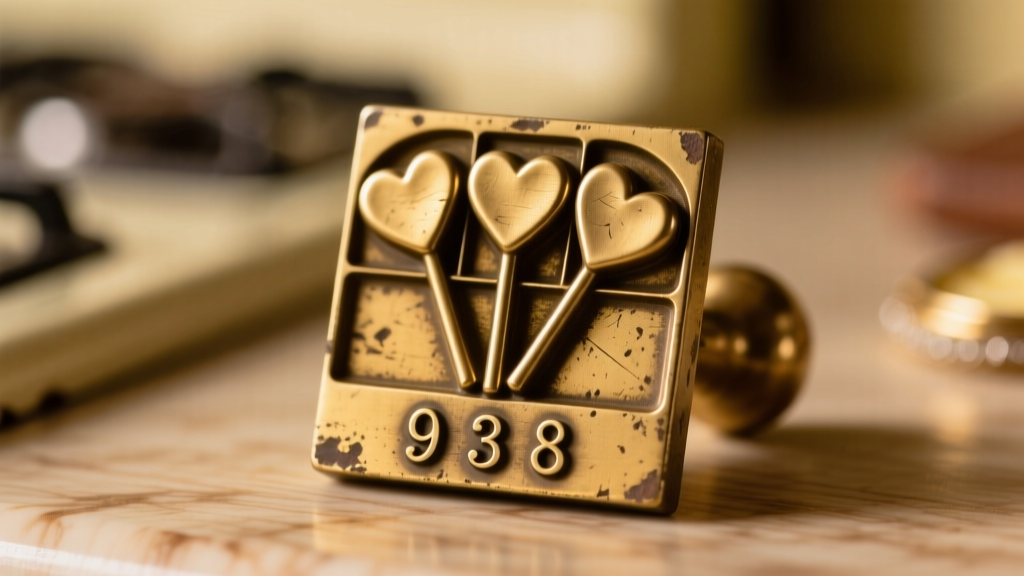
The 1940s Kitchen Butter Stamp: Decoding the '4 Hearts Lollipop' Design in 9-3/8 Inches
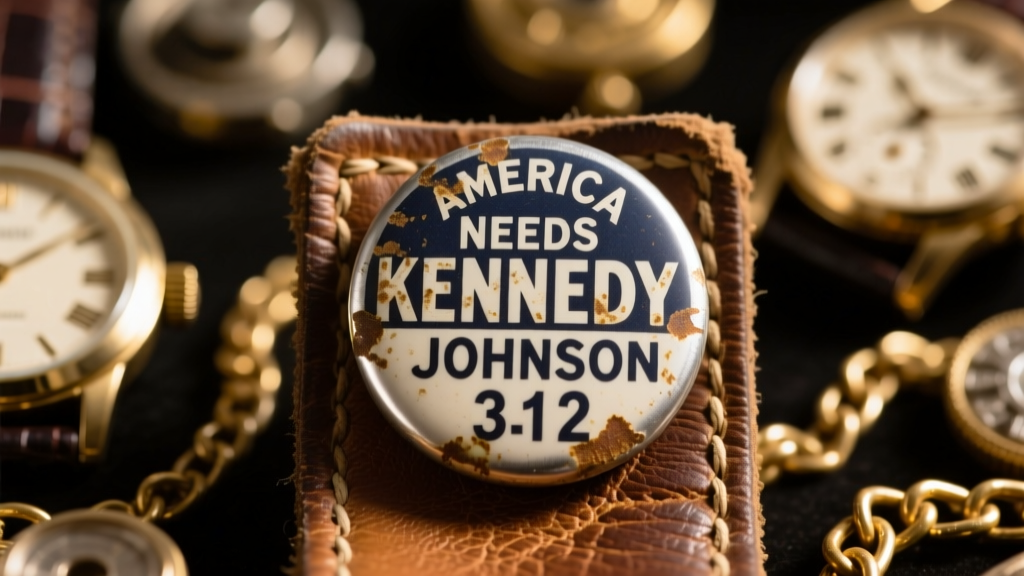
America Needs Kennedy–Johnson: A Detailed Analysis of the 3½-Inch 1964 Presidential Campaign Button
Blatz Beer Advertising Sign: Authentic Wooden-Metal Letters (7" × 7") — History, Identification, and Collectibility