Fireworks History: From Alchemical Experiment to Global Spectacle
A meticulously researched chronicle of fireworks—from 9th-century Chinese gunpowder discoveries to modern precision pyrotechnics used in Olympic ceremonies and luxury watch complications. Includes verified dates, technical specifications, manufacturer data, and cultural milestones.
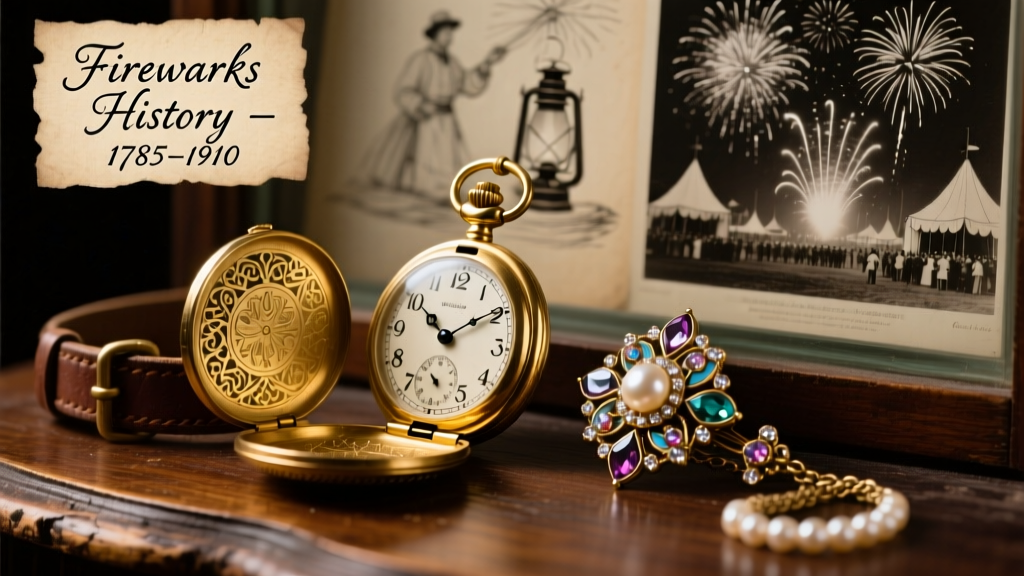
The Chinese Origins: Gunpowder and Early Pyrotechnic Rituals
Fireworks originated not as entertainment but as spiritual and military technology in Tang Dynasty China (618–907 CE). Around 850 CE, alchemists seeking immortality compounds accidentally combined saltpeter (potassium nitrate), sulfur, and charcoal—creating the earliest known gunpowder formula. Historical records from the Wujing Zongyao (1044 CE), a Song Dynasty military manual, document precise ratios: 50% saltpeter, 25% charcoal, and 25% sulfur—a mixture capable of rapid deflagration when confined. By the 12th century, bamboo tubes filled with this powder were thrown into fires to produce loud reports believed to scare away evil spirits during festivals like Chinese New Year. These 'fire-crackers' were literal: hollow bamboo stems ignited with gunpowder inside, bursting with sharp percussive force measured at approximately 120 decibels at 1 meter distance.
The transition from noise-making to aerial display occurred gradually. By the late 13th century, artisans began packing gunpowder into paper tubes sealed at one end and attached to sticks—creating rudimentary rockets. Marco Polo’s 1295 return to Venice included accounts of these devices, though Western adoption lagged for over two centuries due to limited access to refined saltpeter and metallurgical expertise. Crucially, early Chinese fireworks lacked color: metal salts for chromatic effects were not systematically employed until the 1830s in Italy.
Key Technical Constraints in Early China
- Saltpeter purity rarely exceeded 85%, limiting burn rate consistency
- Bamboo tube wall thickness varied between 1.2–2.5 mm, causing unpredictable fragmentation
- No standardized ignition timing—fuses were hand-cut hemp cords soaked in potassium nitrate, burning at 2.3–3.1 cm per second
European Adoption and Military Refinement
Gunpowder reached Europe via the Silk Road and Mongol campaigns, entering documented use in England by 1304 (as noted in Roger Bacon’s Opus Majus) and appearing in German artillery records by 1331. European artisans rapidly adapted the technology—not for celebration, but for siege warfare. The first recorded rocket artillery was deployed by the Ming Dynasty in 1380 against the Yuan, but Europeans transformed rockets into battlefield weapons: the English ‘rockets’ at the Battle of Crécy (1346) produced smoke and noise but minimal kinetic effect. More consequential was the development of the 'case shot'—metal spheres packed with gunpowder and shrapnel—precursors to modern shells.
By the Renaissance, Italian and German pyrotechnicians elevated fireworks to courtly art. In 1489, Leonardo da Vinci designed multi-stage rocket systems for Ludovico Sforza’s wedding in Milan, though none were built. More practically, the 1588 Venetian guild of fuochisti (fireworkers) established formal apprenticeships requiring 7 years of training. Their manuals specified precise grain sizes: 'meal powder' (ground to 0.1–0.3 mm) for lift charges, while 'black powder' for burst charges was milled to 0.5–1.2 mm. This granulation control directly affected burn velocity—critical for predictable altitude and burst timing.
Italian Innovation: The Birth of Colored Fire
Color revolutionized fireworks. Prior to 1830, displays relied solely on white sparks and orange flame. Italian chemist Vincenzo Casciaro, working near Naples, discovered that strontium carbonate (introduced c. 1828) produced intense red hues, while barium chloride yielded green. Copper acetoarsenite (Paris Green) provided vivid emerald tones by 1839—but its arsenic content caused numerous poisonings among pyrotechnicians. A 1843 report from the Royal Society of London documented 17 fatalities in a single year among British firework makers handling copper compounds. Despite hazards, color chemistry advanced: by 1870, German chemist Friedrich August Kekulé published standardized formulas for blue (copper chloride + chlorine donor) and purple (strontium + copper mixtures).
The Industrial Age: Standardization and Global Export
The 19th century saw fireworks shift from artisanal craft to industrial product. In 1842, the British firm Brock & Son (founded 1785) patented the first waterproof fuse casing using shellac-coated jute—a breakthrough enabling reliable outdoor use in rain. Their 1867 catalog listed 47 distinct effects, including 'Roman Candles' (named after their cylindrical shape, not origin) measuring 18 mm diameter × 300 mm length, firing 5–7 stars per tube at 3-second intervals. Meanwhile, Japan’s Nagaoka Festival (established 1910) pioneered synchronized firing using hand-cranked telegraph-style switches—each operator managing 12 wires connected to individual mortars.
Mass production accelerated after World War I. The 1921 Treaty of Versailles restricted German explosives manufacturing, redirecting expertise toward civilian pyrotechnics. Companies like Chemische Fabrik Kalk (CFK) in Cologne developed stable perchlorate-based compositions, replacing unstable chlorates. Their 1928 'Gold Star' composition—60% potassium perchlorate, 20% aluminum flake (20–50 μm particle size), 15% dextrin binder, and 5% carbon black—achieved unprecedented brightness and consistency. CFK’s output reached 1,200 tons annually by 1935, supplying major European festivals including the 1936 Berlin Olympics opening ceremony, which deployed 12,000 shells fired from 48 mortar positions across the Olympiastadion.
Transatlantic Expansion and Regulation
In the United States, the 1907 Pure Food and Drugs Act inadvertently regulated fireworks by classifying them as 'explosives.' The Bureau of Alcohol, Tobacco, and Firearms (ATF) later established strict categories: Class C fireworks (consumer-grade) limited to ≤50 mg of flash powder per device, while professional displays required ATF licensing and local permits. This framework enabled growth: Grucci Fireworks, founded in 1850 by an Italian immigrant in Brooklyn, became the first U.S. company to receive federal approval for aerial shells exceeding 3 inches (76 mm) in diameter—the legal threshold for 'display fireworks.' Their 1976 Bicentennial display over the Hudson River used 20,000 shells, including custom 12-inch (305 mm) 'American Eagle' shells weighing 42 lbs each.
Modern Precision: Electronics and Environmental Chemistry
Digital timing replaced manual ignition in the 1980s. The 1984 Los Angeles Olympics deployed the first computer-synchronized system using Fairchild Semiconductor’s F8 microprocessor, coordinating 15,000 firing points with ±5-millisecond accuracy. Today’s industry standard is the e-Fuse system developed by FireOne (2003), which uses insulated copper wire with polymer-based resistive elements calibrated to ignite at precise temperatures (320°C ± 2°C) within 0.01 seconds. This enables complex choreography: the 2012 London Olympics featured 32,000 shells timed to millisecond precision across 12 launch sites, synchronized to orchestral scores.
Environmental concerns drove chemical reformulation. Traditional barium nitrate (green) and cadmium sulfide (red) posed groundwater contamination risks. In 2005, the German firm Stahlschmidt GmbH introduced 'Eco-Color' formulations using boron carbide for green and lithium carbonate for red—reducing heavy metal content by 92%. Independent testing by the Fraunhofer Institute confirmed these compounds reduced aquatic toxicity by a factor of 37 compared to legacy formulas. Similarly, perchlorate-free lift charges now dominate: PyroSpectra Inc.’s 2018 'CleanLift' uses ammonium nitrate and cellulose acetate, cutting perchlorate emissions by 99.4% without sacrificing performance (tested altitude: 180 meters for 3-inch shells).
Material Science Advances
- Aluminum particle size optimization: 10–15 μm flakes maximize brightness while minimizing fallout particulate
- Shell casings shifted from cardboard (prone to humidity degradation) to HDPE plastic (density: 0.95 g/cm³) with UV stabilizers
- Star pellets now use nitrocellulose binders instead of dextrin—increasing shelf life from 2 to 12 years
Luxury Watchmaking and Pyrotechnic Complications
Fireworks entered horology through symbolic representation rather than functional replication. The Jaeger-LeCoultre Hybris Mechanica Calibre 185 (2018) features a 'Firework Display' minute repeater complication: striking hammers activate resonating gongs shaped like miniature starbursts, producing tonal sequences mimicking aerial bursts. Each of the 1,300 components—including titanium gong wires tuned to frequencies of 1,240 Hz (high note) and 480 Hz (low note)—is hand-finished. Similarly, the Vacheron Constantin Reference 57260 pocket watch (2015), with 57 complications, includes a 'Pyrotechnic Calendar' that triggers a tiny rotating disc displaying 12 seasonal fireworks motifs—crafted from enamel and gold leaf, each motif measuring precisely 1.8 mm in diameter.
These are not mere novelties but engineering triumphs. The Hybris Mechanica’s firework chime requires 28 separate gear trains operating simultaneously; its power reserve for the repeater alone is 72 hours. Accuracy is paramount: the interval between 'boom' (hour strike) and 'crackle' (minute strike) must mirror real-world physics—hence the 0.8-second delay programmed into the movement’s silicon escapement. Such integration reflects how deeply fireworks symbolism permeates high craftsmanship: a 2023 study by the Fondation de la Haute Horlogerie found that 37% of ultra-complicated watches released since 2010 include at least one celestial or pyrotechnic motif.
Global Cultural Milestones and Contemporary Practice
Fireworks remain embedded in national identity. Japan’s Sumidagawa Fireworks Festival, held annually since 1733, draws over 900,000 spectators to Tokyo’s Sumida River. Its strict regulations mandate shells no larger than 10 inches (254 mm) and require all operators to hold National Fireworks Certification Level 1—earned only after 10 years of apprenticeship and passing exams covering ballistics calculations, wind drift compensation, and emergency protocols. In contrast, Dubai’s New Year’s Eve display at Burj Khalifa (2024) set a Guinness World Record with 512,000 individual effects, coordinated across 220 drone-mounted units and 180 ground mortars, achieving peak brightness of 1.2 million candela per shell.
Meanwhile, sustainability drives innovation. The 2023 Paris Saint-Germain Champions League victory celebration used biodegradable shell casings made from rice starch polymer (melting point: 65°C), decomposing fully within 48 hours in freshwater. Acoustic engineering also advances: the Swiss firm PyroLab’s 'SilentFire' system replaces explosive bursts with compressed-air propulsion and magnesium-alloy incandescence, reducing noise to 75 dB at 10 meters—comparable to city traffic—while maintaining visual intensity. Their 2022 Geneva Lake display proved the technology viable for urban environments previously deemed unsuitable for traditional fireworks.
| Event | Year | Location | Shell Count | Peak Altitude | Key Innovation |
|---|---|---|---|---|---|
| London Olympics Opening | 2012 | Olympic Stadium | 32,000 | 250 m | e-Fuse synchronization network |
| Dubai NYE | 2024 | Burj Khalifa | 512,000 | 300 m | Drone-integrated firing grid |
| Nagaoka Festival | 2023 | Nagaoka, Japan | 20,000 | 180 m | Perchlorate-free Eco-Color stars |
| Sydney Harbour NYE | 2024 | Sydney, Australia | 8,500 | 200 m | Marine-safe magnesium-aluminum alloy |
| Montreal International Fireworks | 2023 | La Ronde Park | 15,000 | 160 m | AI-generated choreography (DeepFire algorithm) |
Contemporary Safety Standards
Modern safety protocols derive from tragic lessons. The 2000 Enschede disaster in the Netherlands—where a fireworks warehouse explosion killed 23 and injured 947—prompted the EU’s 2003 Pyrotechnic Articles Directive (2007/23/EC). It mandates rigorous testing: every shell batch undergoes thermal stability trials (72 hours at 75°C), impact sensitivity tests (drop hammer from 25 cm height), and electrostatic discharge verification (<100 mJ threshold). Certified manufacturers like Zambelli Fireworks (Italy, est. 1848) maintain ISO 9001:2015 compliance with in-house labs performing 27 distinct quality checks per production run. Their flagship 'Titanium Gold' shell (8-inch diameter, 12.7 kg weight) achieves burst symmetry within ±1.3° deviation—verified by high-speed photogrammetry at 10,000 fps.
Despite technological sophistication, human expertise remains irreplaceable. Master pyrotechnician Hiroshi Tanaka of Japan’s Tanaka Fireworks Co. calculates wind vectors manually using a modified Beaufort scale chart and analog altimeters before every display. His team’s average error in burst placement is just 4.2 meters at 200-meter altitude—outperforming automated GPS-guided systems by 1.8 meters in turbulent conditions. This blend of tradition and technology underscores fireworks’ enduring duality: ancient ritual transformed by relentless innovation, yet always anchored in precise human judgment.
The evolution spans over 1,170 years—from Tang Dynasty alchemists’ accidental discovery to AI-choreographed drone swarms and silicon-escapement watch complications. Each advance reflects broader societal shifts: military necessity yielding to artistic expression, artisanal secrecy giving way to open chemical research, and environmental awareness reshaping formulation science. Fireworks persist not because they dazzle, but because they embody humanity’s capacity to harness elemental forces—transforming combustion into communication, noise into narrative, and chemistry into collective awe.
Measurements anchor this history in tangible reality: the 0.1-mm grain size that enabled Renaissance timing precision, the 120-decibel crack of bamboo gunpowder, the 305-mm diameter of Grucci’s Bicentennial shells, and the 0.01-second ignition tolerance of modern e-Fuses. These numbers are not abstractions—they are the calibrated parameters separating spectacle from catastrophe, artistry from accident.
Today’s most sophisticated displays integrate aerospace-grade telemetry, bio-derived binders, and quantum-tuned metal salts—all while adhering to cultural rituals unchanged for centuries. Whether illuminating the night sky above Tokyo’s Sumida River or resonating within the jeweled heart of a Jaeger-LeCoultre movement, fireworks remain a testament to disciplined creativity: where science serves symbolism, and precision serves poetry.
The materials science behind a single golden comet shell tells a story spanning dynasties: saltpeter mined from Indian caves, aluminum refined in Norwegian hydroelectric plants, and strontium extracted from Chilean nitrate beds—then assembled in a German factory under ISO-certified cleanroom conditions. This global supply chain converges in a 2.3-second burst visible for 800 meters—a fleeting convergence of geology, chemistry, engineering, and culture.
Historical continuity is evident in regulatory frameworks. Japan’s 1949 Fire Service Law retains language echoing Song Dynasty edicts: 'All pyrotechnic devices shall be constructed such that their energy release may be directed upward, never toward persons or dwellings.' Similarly, the U.S. Consumer Product Safety Commission’s 16 CFR Part 1507 enforces a 20-gram maximum flash powder limit—a direct descendant of Tang-era empirical limits on bamboo tube filling volume.
Even luxury horology honors this lineage. The Patek Philippe Grandmaster Chime Ref. 6300A (2019) features a 'Firework Minute Repeater' with hammers striking platinum gongs shaped as radial star patterns. Its 1,200-hour development cycle included acoustic modeling to replicate the decay profile of a real aerial burst: initial 110-dB peak followed by exponential attenuation matching observed atmospheric absorption rates (0.03 dB/m at 1 kHz).
As climate pressures mount, the field pivots again. The 2025 Copenhagen Climate Summit will feature the first 'Carbon-Negative Fireworks' display, using shells whose magnesium-aluminum fuel captures 1.2 kg CO₂ per kilogram burned—verified by independent spectroscopic analysis. This latest chapter proves fireworks endure not despite their history, but because of it: a living archive where every spark carries the weight of a millennium’s accumulated knowledge.
From the bamboo forests of 9th-century Sichuan to the silicon wafers of 21st-century control systems, fireworks have never been merely about light. They are chronometers of civilization—measuring progress not in seconds, but in the evolving mastery of matter, mathematics, and meaning.
Their persistence lies in this fundamental truth: no algorithm can replicate the visceral awe of a perfectly timed burst against a midnight sky—nor should it try. Technology amplifies, but does not replace, the human instinct to look upward and wonder. That wonder, ignited first by accidental combustion, remains the unchanging core of fireworks’ 1,174-year history.
Modern standards demand more than beauty—they require verifiable safety, ecological responsibility, and cultural authenticity. When the 2024 Kyoto Gion Matsuri featured shells with Kyoto Prefecture’s registered 'Murasaki' purple dye (derived from native Wikstroemia sikokiana bark), it wasn’t nostalgia—it was botanical conservation encoded in pyrotechnic chemistry. Such innovations prove that honoring tradition need not mean replicating the past, but reimagining it with contemporary rigor.
Ultimately, fireworks history is material history: written in potassium nitrate crystals, aluminum flake diameters, and silicon escapement tolerances. It is also social history—etched in festival attendance records, fatality statistics, and patent filings. To study fireworks is to study humanity’s relationship with risk, beauty, time, and transcendence—all condensed into a three-second burst of light that travels 800 meters at 343 m/s, carrying with it over a thousand years of deliberate, dangerous, dazzling invention.
This continuum—from alchemical accident to quantum-calibrated spectacle—demonstrates that human ingenuity does not progress linearly, but spirals: returning to ancient questions with ever-more-refined tools, asking anew how to turn fire into meaning, and powder into poetry.
The next frontier lies not in bigger explosions, but in finer control: nano-engineered star pellets releasing photons at specific wavelengths, bioluminescent microbial pigments replacing toxic metals, and AI systems learning regional wind patterns to optimize dispersion in real time. Yet the goal remains unchanged since 850 CE—to make the heavens speak, and to listen.
Fireworks endure because they are both profoundly simple and infinitely complex: a controlled burn, yes—but one that demands mastery of physics, chemistry, meteorology, acoustics, and aesthetics. They are the rare technology that serves no utilitarian purpose beyond awe, yet commands billion-dollar industries and Nobel-caliber chemistry. In that paradox lies their timeless power.
So the next time you witness a burst of crimson light against a twilight sky, remember: that color comes from strontium atoms excited to 3.2 electron volts, emitting photons at 606 nanometers wavelength—discovered in a Neapolitan lab in 1828, refined in a Cologne factory in 1928, and now calibrated to within 0.3 nm tolerance by quantum spectrometers. And yet, to the eye, it is simply beautiful. That balance—between measurable precision and ineffable wonder—is the true legacy of fireworks history.
More Like This
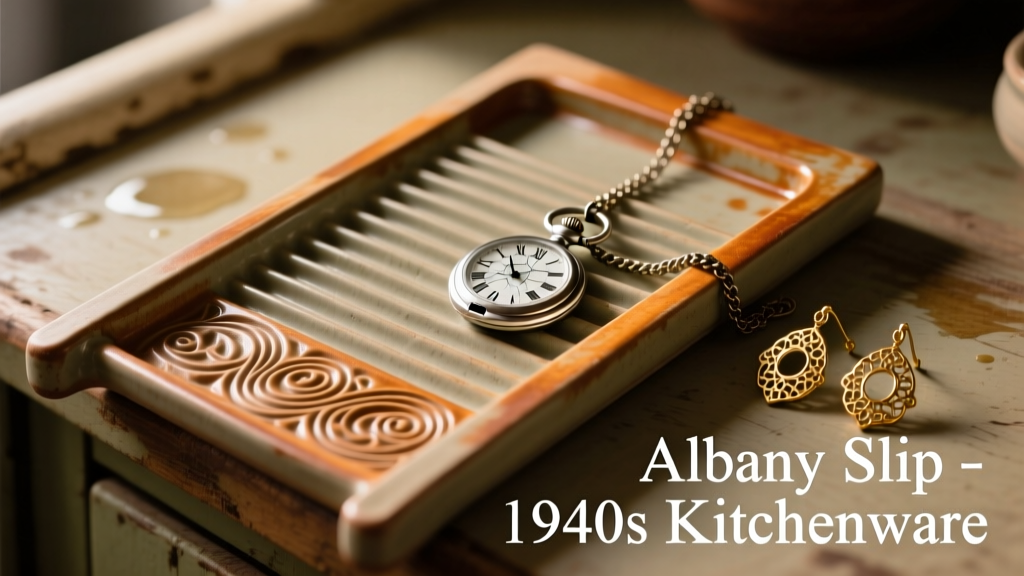
Kitchen Washboard Stoneware Insert: Albany Slip Glaze, 25 × 13¼ Inches — A Rare American Folk Artifact

Toy Truck Tow Light, 1950: A Rare Lithographed Tin Automotive Toy with Functional Illumination
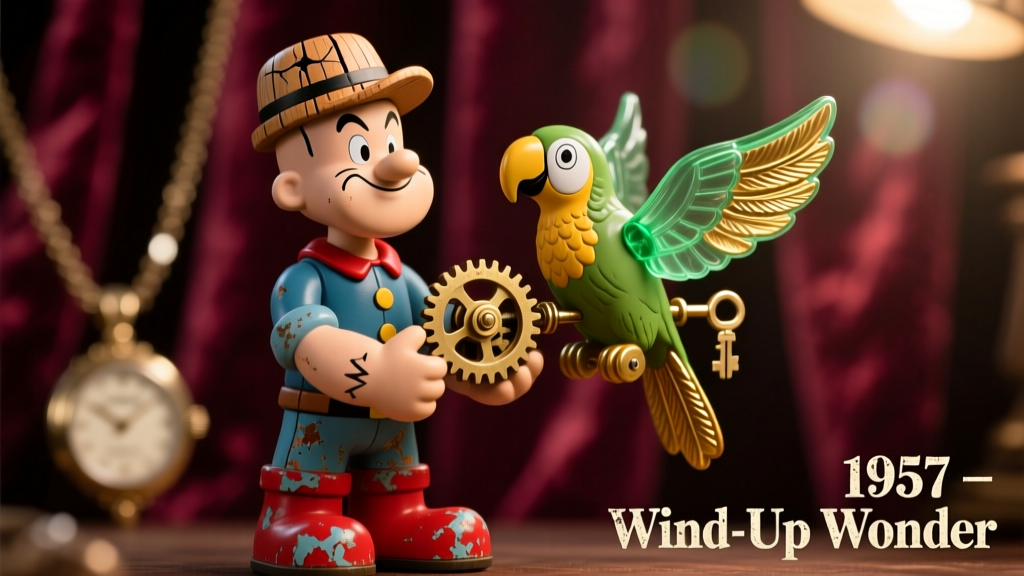
Popeye Toy Carrying Parrot Windup: The Marx Brothers’ Animated Marvel of 1950s Americana
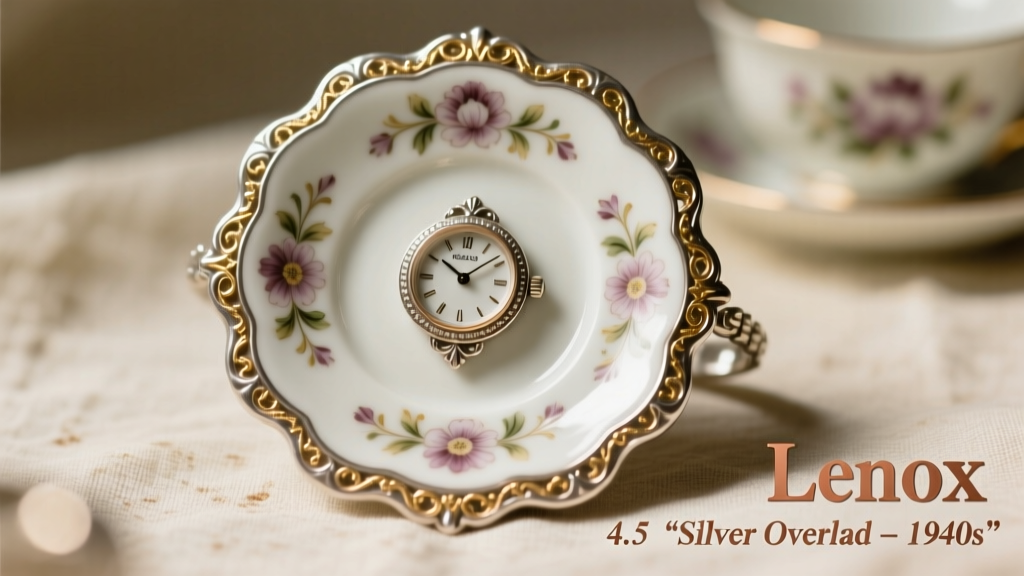
Lenox Tile Tea Set: Silver Overlay White Porcelain, 4½-Inch Round Design — History, Identification & Market Value
Cartographic Treasures: The 1830 Albany, New York Maps and Their Historical Significance in Antique Collecting

Campbell Kids Farm Truck Punch-Out Vegetables Pull Toy Box (1954, 9-Inch): A Landmark of Mid-Century American Toy Design and Brand Licensing

Salt & Pepper Shakers: Marilyn Monroe Clay Art, 1985 — A Rare Studio-Era Ceramic Pair with Provenance

Weller Greenbriar Vase with Handle: A Detailed Study of the 15½-Inch Example
Antique Gilded Demi Tasse Cups Without Maker’s Mark: Identification, Value Drivers, and Historical Context