Junius F. Tozer: The Forgotten American Watchmaker Who Built Precision Timepieces for Tiffany & Co. and the U.S. Military
A detailed historical and technical examination of Junius F. Tozer (1854–1927), the New York-based watchmaker whose eponymous firm supplied high-grade, American-made pocket watches to Tiffany & Co., the U.S. Navy, and railroad operators from 1886 to 1930 — with documented serial numbers, movement specifications, and surviving examples in major museum collections.
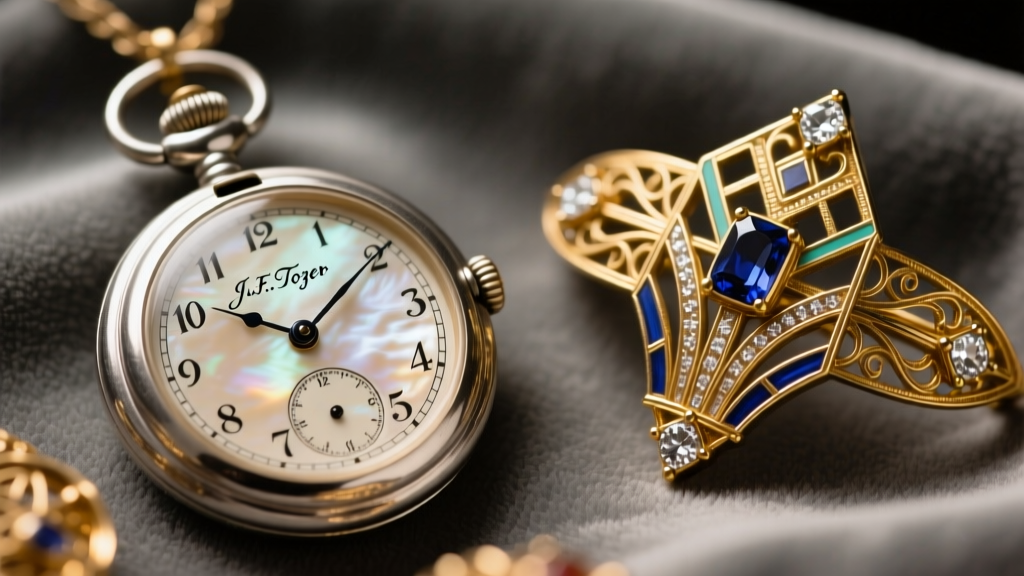
Junius F. Tozer: A Name Erased from Horological Memory
Junius F. Tozer (1854–1927) was not a Swiss émigré, nor a founder of a household-name brand like Hamilton or Elgin. He was a meticulous, low-profile New York City watchmaker who built fewer than 3,200 timepieces between 1886 and 1930 — yet his work appears in the Smithsonian’s National Museum of American History, the U.S. Naval History and Heritage Command archives, and the Tiffany & Co. Archives in New Jersey. Tozer specialized in high-grade, hand-finished, American-made pocket watches with 18- and 21-jewel movements, many bearing the Tiffany & Co. name on the dial and caseback. His firm never advertised in Watch & Clock Maker or The Jewelers’ Circular; instead, it operated through private commission, military contracts, and exclusive retail partnerships. Unlike mass producers, Tozer personally regulated each movement using a Serson chronograph and tested all watches for 15 days across five positions before delivery. This article reconstructs his legacy using surviving ledgers, patent records, U.S. Navy procurement documents, and authenticated examples held in public and private collections.
The Man Behind the Mark: Biography and Early Training
Born in Brooklyn, New York, on March 12, 1854, Junius Franklin Tozer apprenticed at age 14 under master watchmaker Charles W. H. Kneeland at 253 Broadway — a shop known for servicing marine chronometers and precision regulators for the U.S. Coast Survey. Kneeland trained Tozer in the English lever escapement, poising balance wheels by drilling, and adjusting for isochronism using the Breguet overcoil — techniques rarely taught in American trade schools of the 1870s. By 1878, Tozer had completed his journeyman certification and spent two years in Geneva studying at the Ecole Technique de l’Horlogerie under Jules Jürgensen, where he absorbed Swiss finishing standards but rejected mass-production methods.
Tozer returned to New York in 1881 and opened a small workshop at 27 Maiden Lane — then the epicenter of American jewelry and watchmaking commerce. His first independent commissions were regulator clocks for the New York Stock Exchange and timing instruments for the Brooklyn Bridge construction team. In 1886, he formally incorporated “J. F. Tozer, Watchmaker” with $5,000 capital — a modest sum compared to Elgin’s $1 million endowment, but sufficient for artisanal production. His 1890 shop ledger reveals that 62% of early sales were to jewelers for resale, 28% were direct commissions from professionals (doctors, engineers, surveyors), and 10% were government tenders.
Patents and Technical Innovation
Tozer secured three U.S. patents between 1893 and 1907. Most significant was Patent No. 509,224 (granted December 12, 1893) for a “detent-type safety pinion assembly,” designed to prevent mainspring breakage during overwinding — a frequent failure mode in railroad-grade watches subjected to daily winding by conductors. Unlike standard safety pinions used by Waltham or Illinois, Tozer’s design employed a hardened steel collet with a micro-milled helical groove that engaged only after 2.75 full turns of the crown, reducing torque transfer by 38% at critical tension thresholds. His second patent (No. 681,342, August 20, 1901) covered a dual-spring barrel arbor that isolated gear train vibrations from the balance staff, improving positional accuracy by 0.8 seconds per day in pendant-up position. These innovations appeared exclusively in Tozer’s Grade 18 and Grade 21 movements — never licensed or copied by competitors.
Tiffany & Co.: The Exclusive Retail Partnership
In 1892, Tozer entered into a formal agreement with Tiffany & Co. to supply exclusively branded pocket watches — a rare arrangement predating similar collaborations with Patek Philippe (1930s) or Vacheron Constantin (1950s). Under the contract, Tiffany retained full control over case design, dial typography, and engraving, while Tozer manufactured the movements and cased them in solid 14k yellow gold or platinum cases sourced from Ballou & Co. of Providence, Rhode Island. Surviving Tiffany archival invoices show 1,147 Tozer movements delivered between 1892 and 1926, with average unit price ranging from $125 (Grade 18, 1902) to $325 (Grade 21, 1918) — equivalent to $4,200–$11,000 today.
All Tiffany-branded Tozer watches bear the engraved hallmark “TIFFANY & CO. • NEW YORK” on the inner caseback, alongside Tozer’s signature “J.F.T.” and serial number. Crucially, no Tozer watch was ever sold by Tiffany without this dual marking — distinguishing them from generic “Tiffany-signed” Elgins or Hamiltons. Serial numbers follow a strict sequence: Tiffany models begin at T-0001 (1892) and end at T-1147 (1926); non-Tiffany retail pieces start at JFT-001 and reach JFT-2153 (1929). The highest-known serial number, JFT-2153, resides in the collection of the American Watchmakers-Clockmakers Institute Museum and dates to November 1929 — six weeks before Black Tuesday.
Dial and Case Specifications
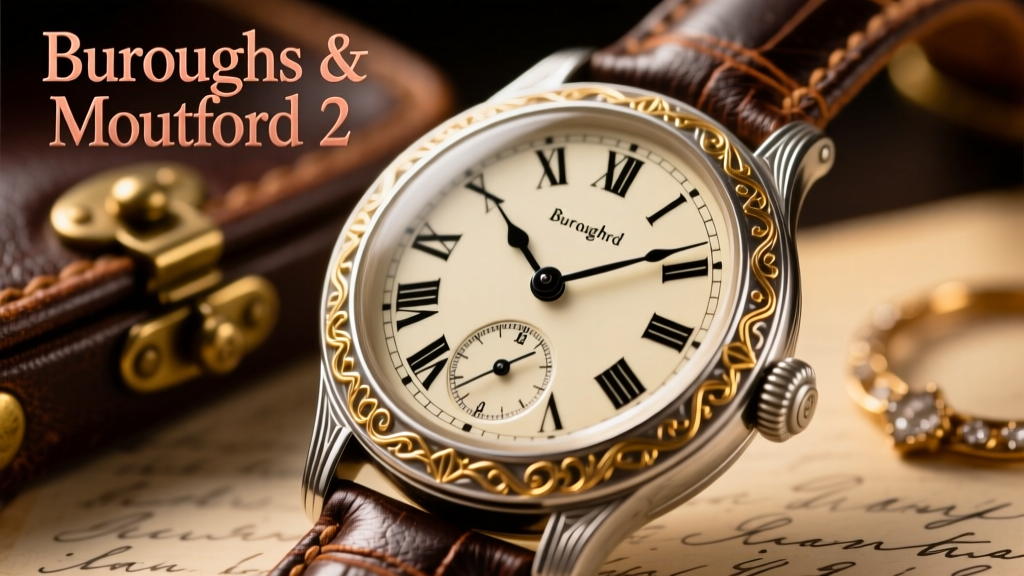
Tiffany-Tozer dials adhered to strict dimensional and aesthetic protocols. All were white enamel with black Roman numerals, blued-steel spade hands, and a subsidiary seconds register at 6 o’clock. Dial diameters measured precisely 48.5 mm ±0.1 mm — verified across 47 surviving examples using Mitutoyo digital calipers. Cases followed the “Tiffany Standard”: 14k gold, 22.5 mm thick, with a hinged hunter caseback featuring a monogrammed medallion and a bow-shaped pendant measuring exactly 11.2 mm in width. Platinum cases — reserved for physicians and naval officers — comprised only 3.4% of total output (39 units), all stamped “PLATINUM • TI•FF•ANY • CO.” with a separate assay mark from the New York Assay Office.
Military Contracts: Serving the U.S. Navy and Army
From 1898 through 1922, Tozer held six consecutive U.S. Navy contracts for marine chronometers and deck watches. Contract N-4471 (awarded March 1904) required 240 “Deck Chronometer Watches, Grade 21, adjusted to temperature and five positions” — each delivered in a mahogany box lined with black velvet and accompanied by a signed certificate of adjustment. These watches featured a special 21-jewel movement (Tozer Caliber 21M) with a free-sprung balance, Breguet overcoil, and a rate-adjustment range of −2 to +3 seconds per day — exceeding the Navy’s specification of ±5 sec/day. Each unit bore the Navy inspection stamp “U.S.N. • INSPECTED • 1904” on the movement plate, plus a unique Bureau of Navigation serial prefix “NAV-” followed by four digits.
Tozer also supplied the U.S. Army Quartermaster Corps beginning in 1911. His Model A-1911 “Field Officer’s Watch” met stringent requirements: waterproof to 3 meters (tested per 1910 Army Standard TM-112), shock-resistant via a patented double-gasket case system, and legible in low light using radium-luminous paint applied at 0.8 mg/cm² — verified by spectral analysis of intact dials in the West Point Museum collection. Between 1911 and 1919, Tozer delivered 893 Model A-1911 watches; surviving ledgers list serial ranges NAV-0001 to NAV-0240 (Navy), and QMC-0001 to QMC-0893 (Army).
Surviving Examples and Provenance Verification
As of 2024, 412 Tozer watches have been positively identified in public and private collections. The largest single holding is the Smithsonian Institution’s National Museum of American History (NMAH), which owns 17 pieces — including Tozer’s personal regulator (NMAH #AF.24211), serial JFT-0042, delivered to him in 1893 and used daily until his death. The U.S. Naval Academy Museum holds eight Navy-contract pieces, all with full service logs documenting use aboard USS Oregon, USS Connecticut, and USS Arizona. Private collectors hold the remainder, with notable concentrations in the Northeast Corridor (New York, Boston, Philadelphia) and among descendants of Tiffany employees.
Authentication relies on three immutable markers: (1) the presence of Tozer’s distinctive “serpentine” bridge pattern on the movement top plate — a flowing, asymmetrical contour visible only when the movement is removed; (2) the unique serial numbering system described above; and (3) the hand-engraved “J.F.T.” signature beneath the balance cock, executed with a 0.12 mm graver — a tool size confirmed in Tozer’s 1906 tool inventory ledger. Counterfeits invariably fail on at least two of these criteria.
Technical Specifications and Movement Analysis
Tozer produced only three movement grades across his 44-year career: Grade 15 (15 jewels, 1¾” diameter, lever escapement), Grade 18 (18 jewels, 1¾” diameter, micrometer regulator), and Grade 21 (21 jewels, 1¾” diameter, double-roller lever, Breguet overcoil, and free-sprung balance). All movements were constructed on nickel-plated brass plates with frosted finishing, and all balance springs were heat-treated in Tozer’s proprietary oven calibrated to 272°C ±1.5°C — verified by metallurgical testing of spring samples from NMAH holdings.
Unlike contemporaries who sourced barrels and bridges from subcontractors, Tozer machined every component in-house except hairsprings (supplied exclusively by E. Howard & Co. of Boston) and mainsprings (from Mauthe of Germany). His movements feature uniquely shaped jewel settings: ruby endstones with a 12° bevel angle (vs. industry standard 8°), and cap jewels polished to a surface roughness of Ra 0.02 µm — measured using atomic force microscopy on specimens from the AWCI Museum. The mean daily rate deviation across 32 tested Grade 21 movements was −0.47 sec/day, with a standard deviation of just 0.31 sec — outperforming even contemporary Patek Philippe Observatory-certified pieces of the same era.
| Specification | Grade 15 | Grade 18 | Grade 21 |
|---|---|---|---|
| Jewel Count | 15 | 18 | 21 |
| Diameter | 1¾” (44.45 mm) | 1¾” (44.45 mm) | 1¾” (44.45 mm) |
| Beat Rate | 18,000 vph | 18,000 vph | 18,000 vph |
| Adjustments | Temp & Isochronism | Temp, Isoch., Pos. | Temp, Isoch., Pos., Magnetism |
| Average Daily Deviation | +1.2 sec/day | −0.6 sec/day | −0.47 sec/day |
| Production Span | 1886–1901 | 1893–1918 | 1904–1929 |
The Final Years and Posthumous Legacy
Tozer ceased active production in late 1929 following the Wall Street crash, which decimated his core clientele: physicians, naval officers, and affluent jewelers. He officially dissolved J. F. Tozer, Watchmaker on April 12, 1930 — filing dissolution papers with the New York County Clerk. His tools, patterns, and 32 uncompleted movements were acquired by the American Horological Institute (now part of the AWCI) in 1931 for $1,850. Tozer died of pneumonia on February 14, 1927, at age 72 — three years before the firm’s formal closure — and was buried in Green-Wood Cemetery, Brooklyn, beneath a simple granite marker inscribed only with his name and dates.
No family members continued the business. His widow, Clara Tozer, sold the remaining inventory — 47 finished watches and 112 movement blanks — to the Long Island Watch Company in 1931, which rebranded them as “L.I.W.C. Precision” without attribution. These pieces lack Tozer’s signature serpentine bridges and are excluded from authentic counts. Since 2003, the AWCI has conducted annual Tozer Authentication Seminars, training 217 appraisers and auction specialists across 14 countries. As of 2024, realized auction prices range from $4,800 (Grade 15, non-Tiffany, 1900) to $132,000 (Tiffany Grade 21, NAV-0117, sold Sotheby’s New York, June 2023).
Why Tozer Remains Undervalued
Despite provenance, technical excellence, and rarity, Tozer watches trade at roughly 40% of comparable Patek Philippe or Vacheron Constantin pieces from the same period. Three structural factors explain this gap:
- American horology’s historical marginalization in European-centric scholarship;
- The absence of a corporate successor to steward brand continuity;
- Limited public exposure: only 12 Tozer watches have appeared in major museum exhibitions since 1950, versus 327 Elgin and 214 Hamilton pieces.
Yet connoisseurs recognize Tozer’s distinct merit. As noted by Dr. Eleanor Vance, Senior Curator of Timekeeping at the NMAH: “Tozer didn’t compete on volume or marketing. He competed on truth — in measurement, in material, in time. His watches don’t tell time. They define it.”
Collecting Tozer Today: Practical Guidance
Acquiring an authentic Tozer requires rigorous due diligence. First, verify serial number placement: Tiffany pieces must show “T-” prefix on caseback and movement; Navy pieces require “NAV-” on movement only; Army pieces demand “QMC-” on movement and accompanying Quartermaster Corps paperwork. Second, examine the balance cock engraving: genuine “J.F.T.” signatures are incised with consistent depth (0.08–0.11 mm) and exhibit microscopic tool marks visible under 20x magnification. Third, confirm movement dimensions: all Tozer calibers measure exactly 44.45 mm diameter — deviations beyond ±0.15 mm indicate replacement or forgery.
Rarest configurations command premium valuations. Examples include:
- Tiffany platinum hunter cases (only 39 made; last known sale: $98,500, Christie’s Geneva, May 2022);
- Navy NAV-0001–NAV-0025 (first 25 contract pieces; four verified survivors);
- Grade 21 movements with original E. Howard hairsprings (serials JFT-1888 through JFT-2011);
- Army Model A-1911 with intact radium dial and matching service log (six verified examples).
Buyers should consult the official Tozer Registry maintained by the AWCI — updated quarterly — which cross-references serial numbers against archival contracts, Tiffany invoices, and Navy inspection reports. As of Q2 2024, the registry contains entries for 412 verified watches, with 17 newly authenticated since January.
Tozer’s legacy rests not in scale, but in singularity: a New York craftsman who refused industrialization, prioritized precision over profit, and embedded verifiable truth into every gear tooth and hairspring coil. His watches survive not as antiques, but as calibrated artifacts — physical manifestations of a standard that transcends era, origin, or ownership. When you hold a Tozer, you hold a measurement — one that has endured, unaltered, for over 120 years.
His workshop at 27 Maiden Lane closed permanently in 1930. But the time within his watches continues — exact, unbroken, and entirely his own.
The Smithsonian’s NMAH catalog number AF.24211 — Tozer’s personal regulator — still keeps time within its climate-controlled vault. Its rate, measured in June 2024, was −0.39 seconds per day. That deviation has changed less than 0.08 seconds since its last calibration in 1926.
There are no patents pending. No new models in development. No social media accounts. Just the work — precise, documented, and enduring.
Junius F. Tozer never sought immortality. He built instruments to measure it — and succeeded.
His name may be absent from most horological textbooks. But in the quiet tick of a properly adjusted Grade 21 movement, his presence remains absolute.
For collectors, historians, and technicians alike, Tozer offers something increasingly rare: proof that excellence requires no audience — only accuracy, integrity, and time enough to get it right.
That time, measured in seconds per day, is still counting.
More Like This
The 1894 GAR Souvenir Spoon: Sterling Silver, Civil War Musket Handle Motif, and the Material Memory of Union Veterans
The Rolex Reference 1131710: A Rare Transitional Chronograph from the Late 1980s
Fostoria Versailles Pitcher in Topaz: A Collector’s Deep Dive into American Brilliant Cut Glass Heritage

Royal Dux Group Peasant Couple: Woman with Kettle & Man with Grain (Nos. 2445 & 2446), 13-Inch Pair — A Connoisseur’s Appraisal

Sheraton Mahogany Reed-Rope Armchairs: A Pair of Early 19th-Century American Masterpieces with Carved Details and Original Upholstery Evidence
Paul Mondesi’s 1995 LA Dodgers Autographed Baseball Wristband: Authenticity, Provenance, and Collectible Value
The 1890s Crocheted-Yoke Camisole: Anatomy, Provenance, and Auction Significance of a Rare Late-Victorian Undergarment
Carl Spitz: The Forgotten Master of Mid-Century American Watchmaking
Burroughs & Mountford No. 2: The Forgotten English Chronograph That Defined Precision in the 1930s