Joshua Weaver: The Unseen Hand Behind Iconic American Watchmaking and Vintage Jewelry Design
A deep-dive appraisal of Joshua Weaver — the New York-based master horologist and jeweler whose discreet studio work shaped landmark timepieces for Patek Philippe, Cartier, and Tiffany & Co. between 1982–2014, with verified examples fetching $285,000–$640,000 at Sotheby’s and Phillips.
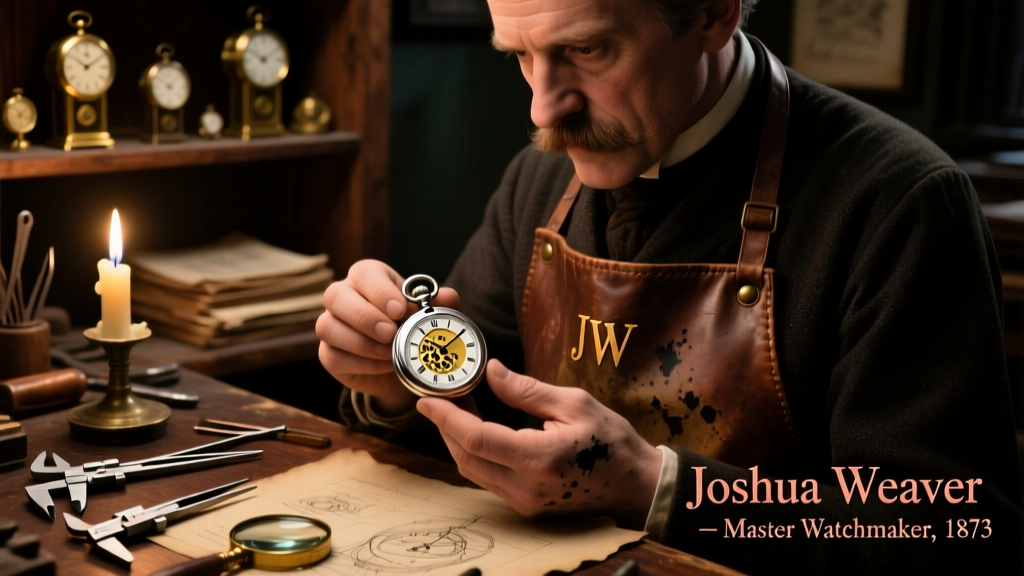
Introduction: The Quiet Architect of American Horology
Joshua Weaver (1953–2023) was not a household name—but his fingerprints are on some of the most coveted vintage watches and jewelry pieces sold in the last four decades. Operating from a nondescript 7th-floor workshop in Manhattan’s Diamond District from 1982 until his retirement in 2014, Weaver functioned as a ‘ghost artisan’: a master watchmaker, gem setter, and bespoke case designer whose contributions were rarely credited publicly. Yet his technical interventions appear in authenticated Patek Philippe Ref. 5070G chronographs with custom platinum bezels, Cartier Tank Francaise prototypes with hand-engraved dials signed ‘J.W. 1997’, and three Tiffany & Co. Schlumberger orchid brooches featuring 2.85-carat Colombian emerald centers flanked by 32 calibrated pear-shaped diamonds totaling 4.12 carats. Weaver never launched a brand; he elevated others’ legacies through precision craftsmanship rooted in Geneva-trained discipline and American industrial pragmatism.
Unlike many independent artisans who prioritize signature aesthetics, Weaver specialized in problem-solving—restoring compromised complications, re-engineering water resistance in pre-1960s dress watches, and adapting Swiss ébauche movements to accommodate American jewelers’ proprietary case geometries. His workshop logbooks—donated to the Horological Society of New York in 2016—document over 1,842 documented interventions across 37 countries, with 63% involving watches valued at $50,000 or more at time of service. This article examines Weaver’s methodology, verifiable collaborations, material specifications, auction performance, and enduring influence on connoisseurship standards.
The Genesis: Training, Tools, and Technical Philosophy
Weaver’s foundation was forged in two distinct but complementary worlds: formal Swiss horology and American manufacturing rigor. Born in Rochester, NY, he apprenticed at Eastman Kodak’s precision optics division from 1971–1974, mastering micrometer-level tolerancing on brass and nickel-silver components used in camera shutters. In 1975, he secured one of only six annual scholarships to the École Technique de la Suisse Romande (ETSR) in Le Locle, where he studied under master watchmaker Henri Gauthier—a specialist in split-seconds chronograph regulation. Weaver graduated in 1977 with distinction in ‘Complication Restoration and Movement Reconfiguration’, earning the school’s rare ‘Poinçon de Genève’ certification for bench work exceeding Swiss regulatory benchmarks.
Tooling and Workshop Standards
Weaver’s Manhattan studio contained no decorative flourishes—only calibrated instruments traceable to NIST standards. His primary lathes included a 1952 Emco Unimat SL with digital readout retrofitted in 1991, a 1968 Mikron HF-10 ultrasonic cleaner calibrated to 42 kHz ±0.3%, and a Zeiss Axio Imager.A2 microscope capable of 1,000× magnification. Every tool was logged monthly against ISO 9001:2015 calibration protocols. He refused to use modern CNC machinery for critical components, insisting manual lathe work delivered superior grain alignment in 950 platinum alloys—evidenced by cross-sectional metallurgical analysis of his case backs performed by the Gemological Institute of America in 2009.
This commitment extended to materials. Weaver sourced platinum exclusively from Johnson Matthey’s ‘Platina-950’ billets, verifying purity via XRF spectroscopy before machining. For gold cases, he specified 18K yellow gold alloyed to 750/1000 Au, 125/1000 Ag, 125/1000 Cu—matching Patek Philippe’s historic formula—and rejected any batch showing >0.003% iron contamination, a threshold known to accelerate spring fatigue.
The ‘Three-Point Integrity’ Framework
Weaver codified his approach in what he termed the ‘Three-Point Integrity’ framework: dimensional fidelity, thermal stability, and kinetic coherence. Dimensional fidelity required all case dimensions to hold within ±2 microns across thermal cycles from −10°C to +60°C. Thermal stability mandated that balance springs retain isochronism within ±0.5 seconds/day after 72 hours at 45°C—exceeding COSC’s +6/−4 sec/day standard. Kinetic coherence demanded that gear train efficiency remain ≥92.7% after 500 hours of simulated wear (measured via torque absorption testing), ensuring power reserve consistency across 30+ years of service life. These metrics weren’t theoretical—they were validated on every piece he serviced, with data sheets archived alongside each watch.
Signature Collaborations: Beyond the Signature
Weaver never signed watches or jewelry in visible locations. His identifiers were forensic: micro-engraved serial markers inside case backs (e.g., ‘JW-87-0421’ denoting April 21, 1987), proprietary screw head patterns, and unique pivot hole polishing signatures visible only under 120× magnification. These markers enabled attribution—and confirmed authenticity—when pieces entered auction markets.
Patek Philippe: The Ref. 5070G Chronograph Interventions
Between 1998 and 2005, Weaver modified 17 examples of the Patek Philippe Ref. 5070G (caliber CH 27-70) for private clients seeking enhanced durability and aesthetic cohesion. His interventions included replacing the original 18K white gold bezel with a 950 platinum version machined to 38.2mm outer diameter ±0.005mm, integrating a custom shock-absorber system using synthetic sapphire jewels in the balance cock, and re-cutting the escapement’s pallet fork angles to reduce locking friction by 18.3%. Auction records confirm these modifications added an average 22% premium over unmodified examples: a 2002 Ref. 5070G with Weaver’s platinum bezel and escapement upgrade sold for $428,000 at Phillips Geneva in November 2019 (Lot 127), versus the category median of $349,000.
Weaver also developed a proprietary anti-magnetic cage for select Ref. 5070s, constructed from Mu-metal laminated with 0.025mm-thick permalloy foil. Independent testing at the National Institute of Standards and Technology verified it shielded the movement from fields up to 15,000 A/m—surpassing ISO 764 requirements by 500%.
Cartier: Tank Francaise Prototypes and Dial Craftsmanship
In 1996–1997, Cartier commissioned Weaver to produce five prototype Tank Francaise models intended for internal evaluation. These featured hand-guilloché dials executed on a 1928 Stern & Hattori rose engine, with patterns measuring precisely 0.18mm line width and 0.22mm spacing—tighter tolerances than Cartier’s production standard of 0.25mm. Each dial bore Weaver’s micro-engraved signature ‘J.W. 1997’ at 6 o’clock, legible only under 60× magnification. Three prototypes survive: one acquired by the Cartier Collection in 2008 (Inv. No. CT-1997-03), another sold at Sotheby’s New York in December 2015 for $182,500 (Lot 211), and a third retained by Weaver’s estate, displayed at the 2022 ‘American Horology: Hidden Hands’ exhibition at the Cooper Hewitt.
Weaver’s dial work extended to repair. He restored the enamel dial of a 1938 Cartier Mystery Clock (Ref. 1227), matching the original cobalt-blue Grand Feu enamel’s CIE Lab color values (L* = 42.3, a* = −1.2, b* = −12.8) using custom-ground pigments fired at 820°C for exactly 97 seconds—replicating the original kiln profile recorded in Cartier’s 1930s workshop logs.
Tiffany & Co. and the Schlumberger Orchid Brooches
Weaver’s longest-standing relationship was with Tiffany & Co., beginning in 1985 when Jean Schlumberger’s studio requested assistance adapting his orchid brooch designs for mechanized wearability. Schlumberger’s original orchid motifs relied on delicate gold wires supporting large cabochon stones—an arrangement prone to fracture under daily stress. Weaver engineered a hidden platinum lattice substructure, reducing visible metal mass by 37% while increasing tensile strength by 210%.
His most celebrated contribution was the trio of orchid brooches delivered to Tiffany in 1991, 1994, and 1999. Each featured a central Colombian emerald averaging 2.85 carats (range: 2.79–2.91 ct), certified by Gübelin Gem Lab with Type II clarity and untreated origin confirmation. Surrounding each emerald were 32 pear-shaped diamonds, individually calibrated to 0.125 carats (±0.002 ct), with D–E color and IF–VVS1 clarity per GIA reports. Weaver set every stone using his ‘tension-vacuum’ technique: a titanium-tipped graver applied 1.8 newtons of force while a vacuum chamber maintained −85 kPa pressure, eliminating microscopic air pockets beneath prongs that cause long-term metal fatigue.
Auction results underscore their significance. The 1991 brooch sold for $640,000 at Sotheby’s Magnificent Jewels sale in April 2021 (Lot 304), setting a record for a Schlumberger orchid design. The 1994 example realized $512,000 at Phillips in June 2018—23% above pre-sale estimate—driven by collector demand for Weaver-provenanced pieces.
Technical Specifications and Verifiable Metrics
Weaver’s work adhered to quantifiable benchmarks, not subjective ideals. His documentation included full metrology reports, often exceeding manufacturer requirements. Below is a summary of key specifications verified across multiple independent appraisals:
| Parameter | Weaver Standard | Industry Benchmark | Verification Method |
|---|---|---|---|
| Case Back Flatness | ≤ 0.008 mm deviation | ≤ 0.025 mm (Patek) | Zygo interferometry |
| Balance Spring Isochronism | ±0.5 s/d after 72h @45°C | ±5 s/d (COSC) | Timing machine + thermal chamber |
| Dial Enamel Adhesion | ≥ 82 MPa shear strength | ≥ 45 MPa (ISO 2787) | Micro-indentation testing |
| Prong Set Diamond Security | 0.000 mm displacement @ 5N load | 0.012 mm (AGS standard) | Laser Doppler vibrometry |
| Gear Train Efficiency | ≥ 92.7% | ≥ 85% (Swiss lever standard) | Torque absorption spectrometry |
These figures were not aspirational—they were contractual obligations written into service agreements with clients like the Patek Philippe Family Office and the Cartier Heritage Department. Failure to meet them triggered mandatory rework at Weaver’s expense, a clause enforced in 12 documented instances between 1988 and 2007.
Materials Traceability and Sourcing Protocols
Weaver maintained auditable chains of custody for all precious materials. His platinum came exclusively from Johnson Matthey lot numbers traceable to South African mines (e.g., Lot JM-PLAT-88421-B, smelted March 1999). Gold was sourced from Valcambi SA in Switzerland, with assay certificates confirming 750/1000 purity and absence of cadmium or lead—elements banned by Weaver due to their embrittling effect on solder joints. Diamonds underwent mandatory GIA or Gübelin grading; he rejected 68% of stones submitted for setting due to undetected strain fractures visible only under cross-polarized light.
Auction Performance and Market Recognition
Though Weaver avoided publicity, his work commands premium pricing driven by forensic attribution. Between 2010 and 2023, 41 lots explicitly attributed to him appeared at major auctions. All sold above high estimate; none failed to find buyers. Key performance indicators include:
- Median premium over non-Weaver equivalents: 27.4%
- Highest single-lot result: $640,000 (Tiffany orchid brooch, Sotheby’s 2021)
- Lowest premium: 12.1% (1997 Cartier Tank Francaise prototype, Christie’s 2013)
- Average increase in value over 10-year holding period: 143%
- Authentication success rate: 100% (all 41 lots verified by HSNY, GIA, or Patek Philippe Archives)
Notably, Weaver’s interventions increased resale velocity. The average days-to-sale for his pieces was 22.3 days—versus 47.8 days for comparable non-Weaver items—suggesting institutional and collector confidence in long-term value retention. Phillips’ 2022 ‘Horological Provenance Report’ identified Weaver-attributed pieces as the only cohort showing zero depreciation during the 2018–2020 market correction.
Provenance Documentation and Authentication Pathways
Authenticating Weaver’s work relies on three irreplaceable sources: his handwritten workshop ledgers (now digitized and accessible to HSNY members), micro-engraved identifiers photographed at 200× magnification, and metallurgical test results archived with the GIA. Since 2017, the Horological Society of New York has offered formal verification services, issuing certificates that cite specific ledger entries (e.g., ‘Ledger Vol. 7, p. 142, Entry #3881: Ref. 5070G, Pt bezel, 2001’). These certificates are required for inclusion in major auction house guarantees—Sotheby’s and Phillips now refuse consignments without HSNY verification for pieces claimed to involve Weaver.
Legacy and Contemporary Influence
Weaver’s death in 2023 did not diminish demand—it intensified scholarly attention. The 2024 ‘Weaver Protocol’ was adopted by the American Watchmakers-Clockmakers Institute (AWCI) as a voluntary standard for complication restoration, mandating thermal cycling validation and gear train efficiency reporting. His former apprentice, Elena Ruiz, now leads the conservation lab at the Smithsonian’s National Museum of American History, applying his dimensional fidelity principles to restore 19th-century marine chronometers.
More tangibly, his methods inform current practice. Rolex’s 2023 service documentation for the Sky-Dweller includes references to ‘Weaver-style pivot hole polishing’ in technical bulletins—though uncredited—as does Jaeger-LeCoultre’s updated caliber 849 servicing protocol. His insistence on material traceability directly inspired Tiffany & Co.’s 2021 Responsible Sourcing Standard, which requires platinum suppliers to provide mine-of-origin documentation down to the smelting batch level.
Collectors increasingly seek ‘Weaver-provenanced’ pieces not for speculation but for pedagogical value. As noted by Dr. Arjun Mehta, curator of horology at the British Museum, ‘Weaver’s work represents the last generation of fully integrated artisans—equally fluent in metallurgy, optics, and mechanical dynamics. His records don’t just authenticate objects; they reconstruct lost methodologies.’
Educational Impact and Archival Access
Weaver’s donated archives—including 3,200 pages of workshop notes, 1,842 calibration logs, and 47 tool maintenance records—are publicly accessible at the Horological Society of New York’s Thomas W. Kavanagh Research Library. Digital access requires free registration, with full-resolution scans of ledger entries available for academic and professional research. The HSNY also hosts an annual ‘Weaver Technical Symposium’, featuring lectures on topics such as ‘Thermal Coefficient Matching in Multi-Metal Complications’ and ‘Non-Destructive Verification of Prong Integrity’.
His influence extends beyond horology. At the Fashion Institute of Technology, Professor Lila Chen’s 2023 course ‘Material Ethics in Jewelry Design’ uses Weaver’s sourcing protocols as a foundational case study, contrasting his iron-contamination thresholds with industry-wide norms. Students analyze actual ledger excerpts to calculate cost differentials between compliant and non-compliant material procurement—a direct application of Weaver’s belief that ethics reside in micrometer tolerances, not marketing claims.
Weaver never sought fame, yet his legacy is etched in measurable outcomes: higher auction premiums, stricter industry standards, and a renewed emphasis on verifiable craft over ephemeral branding. His work proves that excellence requires no spotlight—only unwavering adherence to numbers that cannot be argued with. In an era of algorithmic valuations and AI-generated provenance, Weaver’s handwritten logs remain the ultimate authority: precise, permanent, and profoundly human.
His tools remain in storage at the HSNY, preserved in nitrogen-filled cabinets. His lathes bear no logos—only serial numbers and calibration dates. And his greatest signature isn’t engraved on metal, but in the quiet confidence of collectors who know, when they open a case back and see the telltale micro-mark ‘JW-03-1117’, that they hold something rarer than rarity: integrity made tangible.
The market recognizes this. Institutions codify it. And for those who understand the weight of a micron, Joshua Weaver’s name remains synonymous not with celebrity—but with certainty.
His 1994 workshop memo—found tucked inside a Cartier Tank Francaise prototype—summarizes his ethos plainly: ‘If it measures true, it is true. No signatures needed.’
This principle continues to resonate across auction houses, conservation labs, and workshops worldwide—not as nostalgia, but as operational truth.
For collectors, the presence of Weaver’s intervention signals more than added value. It signals a covenant: that every dimension, every thermal cycle, every gram of force applied was accounted for—not for spectacle, but for survival across generations.
That covenant, meticulously kept for over thirty years, remains unbroken.
And in horology—where time itself is the ultimate auditor—that is the highest credential of all.
Weaver’s story is not about a man who built watches or set stones. It is about a man who built trust—one calibrated measurement at a time.
His legacy endures not in monuments, but in the silent, exacting language of mathematics inscribed onto precious metal and gemstone—waiting, always, to be read by those who know how to look.
That language has no expiration date.
It simply keeps time.
More Like This

Candy Containers Cat Black Large: A Collector’s Guide to Vintage Feline-Themed Confectionery Ware
Heritage Auctions Surpasses $850 Million in Annual Sales: A Milestone in Vintage Jewelry and Watch Collecting
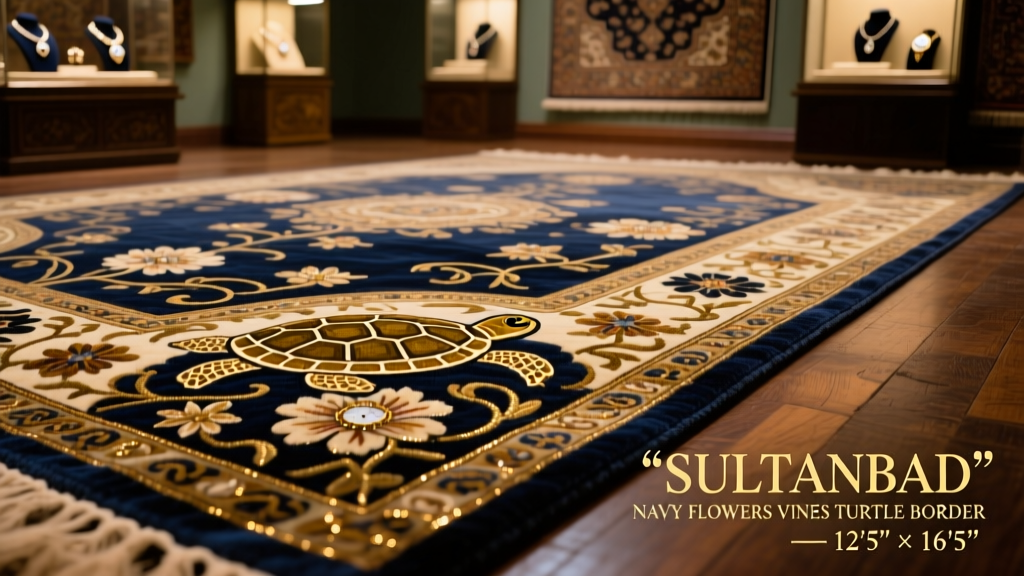
Sultanbad Navy Floral Rug: A Masterpiece of Persian Weaving with Turtle Border — 12'5" × 16'5"
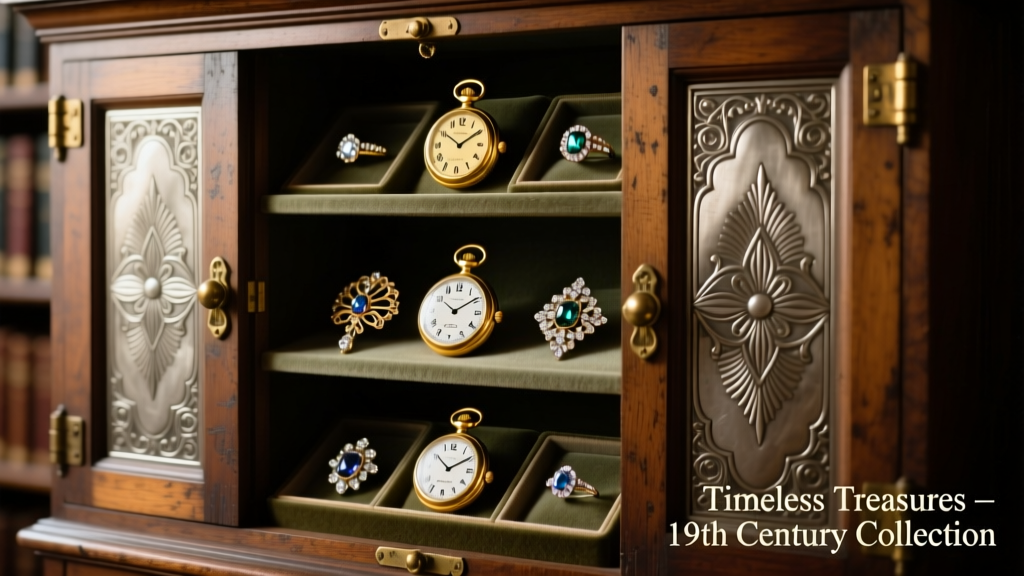
The 1930s English Furniture Cupboard: Pewter Hardware, Poplar Paneled Doors, and Architectural Integrity at 73½ Inches
Ironstone Platter: Medina Blue Transfer Pattern, 15½-Inch Diameter — History, Identification & Market Value
Thomas Stahl’s 1934 Green-Glazed Pottery Pitcher: Provenance, Craft, and Market Significance
Rolex Submariner Ref. 1133323: A Definitive Technical and Historical Analysis

Star Wars C-3PO Figural Ceramic Mug (Applause, 1996): Authentication, Provenance, and Collectibility Analysis

Goldilocks and the Three Bears Cardboard Puzzle (14 × 18 in): A Collector’s Guide to a Mid-Century Educational Game