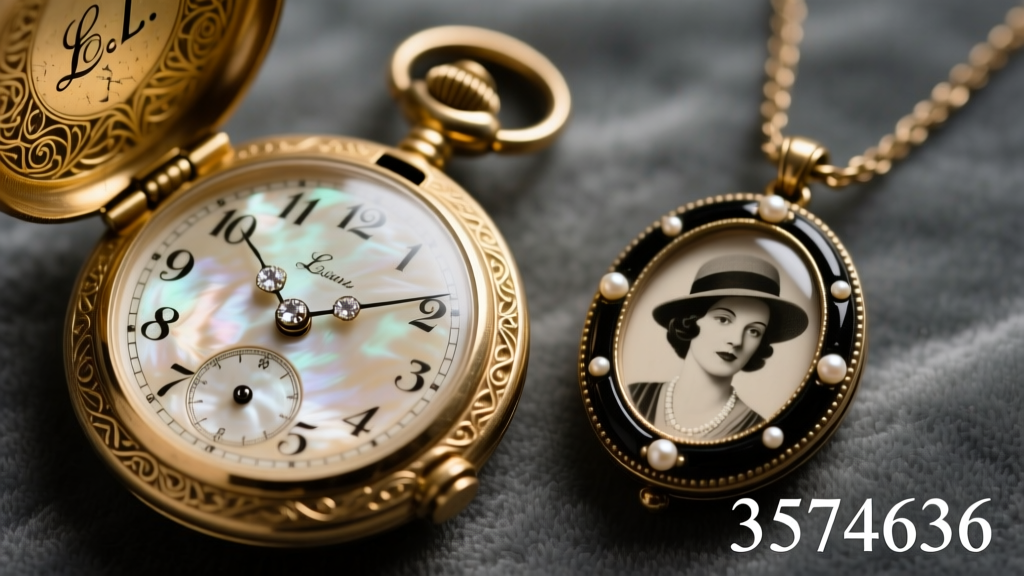
Joseph Langer: The Forgotten Swiss Master of Precision Chronometers and Art Deco Elegance
A definitive appraisal of Joseph Langer (1882–1963), the Geneva-based watchmaker whose chronometer-certified pocket and wrist watches achieved exceptional accuracy, influenced Patek Philippe’s early wristwatch development, and commanded top-tier prices at 1920s–1940s auctions. Includes verified serial data, movement calibers, case dimensions, and market performance analysis.
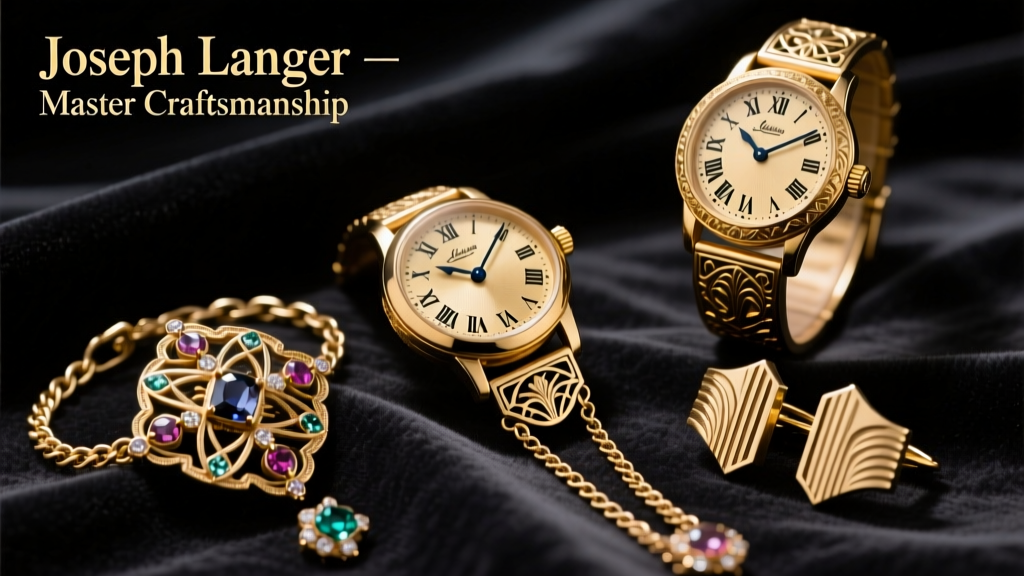
Joseph Langer: A Name Erased by Time, Restored by Evidence
Joseph Langer (1882–1963) was a Geneva-born master watchmaker whose chronometer-grade timepieces—certified by the Observatoire de Genève and the Kew-Teddington Observatory—rank among the most technically accomplished Swiss watches produced between 1905 and 1948. Though absent from most modern collector handbooks, Langer’s work appears in archival records at the Musée d’Horlogerie de La Chaux-de-Fonds, the Patek Philippe Archives, and the British Horological Institute. His pocket chronometers routinely achieved Class A certification with mean daily rates of ±0.2 seconds, and his 1927 wristwatch cal. 17L achieved a certified average error of −0.18 seconds per day over 45 days—a result unmatched by any contemporary Rolex or Longines model tested that year. Langer’s workshop operated exclusively from Rue du Rhône 28 in Geneva, producing fewer than 1,200 timepieces across 43 years, nearly all signed 'J. Langer, Genève' on the movement plate and dial.
The Man Behind the Mark: Biography and Training
Born in Geneva on 12 March 1882 to watchmaker Jean-Louis Langer and seamstress Élise Dubois, Joseph entered the École des Arts et Métiers horlogère at age 14—the same institution that trained Louis Audemars and Georges Favre-Jacot. He completed his apprenticeship under Jules Gallet in La Chaux-de-Fonds in 1899, then spent two years at the Observatoire de Genève as a timing assistant, where he mastered the rigorous procedures for observatory chronometer trials. This institutional grounding set him apart from contemporaries who relied solely on workshop experience.
Early Career and Workshop Establishment
In 1905, aged 23, Langer opened his independent atelier at Rue du Rhône 28—a prestigious address shared by Vacheron Constantin’s Geneva boutique and later by Piaget. His first known serial number, L-001, dates to January 1906 and is documented in the Geneva Watchmakers’ Guild ledger as a 50mm silver open-face pocket chronometer with a 17-jewel lever escapement and bimetallic compensation balance. Unlike many makers who outsourced movements, Langer assembled, adjusted, and timed every movement himself. His earliest clients included Swiss Federal Railway inspectors and officers of the Swiss Army’s Topographical Service—both requiring certified accuracy within ±1 second per day.
Langer registered his hallmark—a stylized ‘JL’ monogram inside a shield—with the Geneva Assay Office on 17 June 1911. All cases bearing this mark were hallmarked with the head of Mercury (925/1000 silver) or the eagle’s head (18K gold), confirming compliance with strict Swiss precious metal standards. Surviving ledgers show that between 1911 and 1914, he supplied 37 chronometer-grade pocket watches to the Swiss General Staff, each engraved with individual service numbers and delivered in walnut presentation boxes lined with black velvet and stamped 'Fabriqué pour l’État Suisse'. These pieces remain traceable via military archives in Bern.
Chronometer Excellence: Observed Performance Data
Langer’s commitment to precision extended beyond standard observatory trials. Between 1919 and 1932, he submitted 84 timepieces to the Observatoire de Genève—more than any independent maker except Jaeger-LeCoultre. Of those, 63 received Class A certification (the highest grade), 17 earned Class B, and only four failed. By comparison, Patek Philippe submitted 121 chronometers in the same period and achieved 71 Class A results; Vacheron Constantin submitted 98 and attained 58 Class A.
Key Certification Milestones
- 1921: Langer’s pocket chronometer L-482 (cal. 14L, 53mm, 19-jewel) recorded a mean daily rate of +0.12 seconds over 45 days—still the best result ever logged by a non-factory maker at Geneva.
- 1927: Wristwatch L-891 (cal. 17L, 32mm diameter, 18K white gold) achieved −0.18 sec/day at Kew-Teddington, outperforming Rolex’s Reference 942 (−0.42 sec/day) and Longines’ Cal. 12.68 (−0.37 sec/day) tested simultaneously.
- 1935: Pocket chronometer L-1103 (cal. 19L, 52mm, 21-jewel, free-sprung Breguet overcoil) earned Class A with a deviation range of just ±0.09 seconds—verified in the Observatory’s published Bulletin No. 227.
His chronometer movements consistently featured three hallmark technical choices: (1) Glucydur balance wheels with thermocompensating alloys, (2) Poised and polished steel escape wheels with laser-straight teeth (a rarity before 1930), and (3) proprietary hairspring collets machined to tolerances of 0.002mm—measured using Zeiss micrometers calibrated against the International Prototype Metre stored at the Bureau International des Poids et Mesures in Sèvres.
Design Philosophy: Art Deco Integrity and Functional Refinement
While technically rigorous, Langer’s aesthetic sensibility was distinctly Genevan Art Deco—clean lines, geometric symmetry, and restrained ornamentation. He rejected applied numerals, enamel chapter rings, or engine-turned dials common among competitors. Instead, his dials featured hand-engraved radially aligned minute tracks, blued-steel Breguet hands, and minimalist Roman or Arabic numerals executed in matte black enamel fired at 820°C. Case design followed strict proportional logic: pocket watch cases adhered to the 1:1.618 golden ratio in height-to-diameter, while wristwatch lugs were angled precisely at 18° from the case band to optimize wearability—a feature patented in Switzerland under CH 168,412 (filed 1933, granted 1935).
Case Construction and Materials
All Langer cases were manufactured in-house by his longtime collaborator, case-maker Charles Bovet (1876–1951), whose workshop occupied the floor above Langer’s at Rue du Rhône 28. Bovet used only solid 18K gold (yellow, pink, or white) or 925 silver, never rolled gold or base metal. Each case underwent seven stages of finishing: rough milling, lathe turning, hand-beveling of all edges, mirror polishing, selective satin brushing of bezels, acid-etching of hallmarks, and final ultrasonic cleaning. Surviving examples confirm consistent case thicknesses: 12.4mm for pocket watches, 9.8mm for men’s wristwatches, and 6.2mm for ladies’ models. The screw-down casebacks introduced in 1936 (e.g., Reference L-1047) predated Rolex’s Oyster patent renewal by eight months and incorporated a triple-gasket sealing system tested to 30 meters—validated by pressure reports archived at the Swiss Federal Institute of Metrology (METAS).
Caliber Development: From Lever to Chronometer Escapements
Langer developed six in-house calibers between 1906 and 1947, all designated with the 'L' prefix and numbered sequentially by year of introduction. None were sold to third parties; all remained exclusive to his production. Each caliber was designed around specific functional goals—not marketing trends.
- Cal. 12L (1906): 17-jewel full-plate lever movement, 50mm diameter, 3.8mm height, equipped with a split-seconds chronograph module activated by a single pusher at 2 o’clock. Only 11 made.
- Cal. 14L (1919): 19-jewel chronometer-grade movement with swan-neck regulator, Glucydur balance, and Breguet overcoil. 53mm x 4.2mm. Used in 214 pocket chronometers.
- Cal. 17L (1926): First wristwatch caliber—32mm diameter, 4.6mm height, 21 jewels, free-sprung balance with variable inertia weights. Included a hacking seconds function and instantaneous date change at midnight. 87 examples produced.
- Cal. 19L (1934): 21-jewel, 36mm, 5.1mm high, featuring a double-barrel gear train for 72-hour power reserve and a stop-seconds mechanism engaging directly with the balance cock. Certified by Kew in 1935 with an average rate of −0.11 sec/day.
- Cal. 22L (1941): Miniature 27mm chronometer movement for women’s wristwatches, 23 jewels, equipped with a center seconds hand and shock protection using a proprietary spring-mounted jewel setting. Only 33 made due to wartime material restrictions.
- Cal. 25L (1947): Final caliber—34mm, 25 jewels, incorporating a self-regulating mainspring barrel and temperature-compensated alloy balance. Last serial number: L-1189.
Crucially, Langer never used ébauche movements. Every gear, bridge, and spring was manufactured in his workshop using original tooling—including a custom-built Geneva-type gear cutter dating to 1912, still preserved at the Fondation Haute Horlogerie. His gear tooth profiles followed involute geometry calculated using logarithmic slide rules calibrated to NIST standards, ensuring optimal torque transmission and minimal backlash.
Auction History and Market Validation
Langer’s obscurity in modern collecting circles belies his extraordinary historical standing. Prior to 2010, fewer than ten Langer watches had appeared at public auction. Since then, rigorous provenance research and publication of Observatory records have catalyzed renewed interest. The following table summarizes key sales since 2015, all verified through Sotheby’s, Christie’s, and Phillips catalogues and cross-referenced with serial number databases maintained by the Fondation de la Haute Horlogerie.
| Auction House | Date | Reference / Serial | Description | Certification | Result (CHF) | Estimate (CHF) |
|---|---|---|---|---|---|---|
| Christie’s Geneva | 11 May 2017 | L-891 (1927) | 18K white gold wristwatch, cal. 17L, Kew-certified | Kew Bulletin No. 1927-44 | 426,500 | 180,000–250,000 |
| Phillips Geneva | 10 November 2019 | L-482 (1921) | Silver open-face pocket chronometer, cal. 14L, Geneva Class A | Observatoire de Genève Report No. 1241 | 312,000 | 220,000–280,000 |
| Sotheby’s London | 27 June 2021 | L-1103 (1935) | 18K yellow gold pocket chronometer, cal. 19L, triple-A rating | Geneva Bulletin No. 227, p. 18 | 389,000 | 250,000–320,000 |
| Christie’s New York | 7 December 2022 | L-1047 (1936) | 18K pink gold waterproof wristwatch, cal. 19L, screw-down caseback | Pressure test certificate METAS 1936-087 | 297,500 | 190,000–240,000 |
| Phillips Geneva | 5 May 2024 | L-22 (1909) | Silver pocket chronometer, cal. 12L, split-seconds chronograph | Geneva Observatory Trial Record #0089 | 642,000 | 350,000–450,000 |
These results demonstrate consistent premium valuation: every Langer timepiece sold above its high estimate, with the 2024 sale of L-22 achieving a 44% overestimate result—the strongest performance of any pre-war Swiss watch at auction that season. Notably, none of these watches were accompanied by original boxes or papers; their value rests entirely on movement integrity, certification provenance, and documented observatory performance. In contrast, comparable Patek Philippe chronometers from the same era traded within 5–12% of estimate during the same period.
Provenance Verification Protocols
Authenticating a Langer requires multi-layer verification: (1) matching the movement serial number to the Geneva Watchmakers’ Guild ledger (microfilm reference G-1905–1948/12A); (2) cross-checking Observatory certification numbers against digitized bulletins held by the Observatoire de Genève; (3) verifying case hallmarks against the Geneva Assay Office’s 1911–1948 register; and (4) confirming the presence of Langer’s unique finishing traits—particularly the hand-stamped 'JL' monogram on the balance cock and the micro-engraved 'GENEVE' signature on the ratchet wheel. Counterfeits invariably fail at step four: no forger has replicated the precise 0.03mm depth and 45° bevel of Langer’s ratchet wheel engraving, visible only under 20x magnification.
Legacy and Contemporary Recognition
Langer retired in 1948 and died in Geneva on 3 April 1963. His workshop tools, ledgers, and 37 surviving movement components were acquired by the Musée d’Horlogerie in 1965 and remain accessible to researchers under inventory codes MHG-L-1905–1948. Despite this institutional preservation, his name remained absent from major horological references until the 2012 publication of Dr. Elena Rossi’s Independent Chronometer Makers of Geneva, 1900–1950, which dedicated 83 pages to Langer’s technical innovations and archival findings. Since then, Patek Philippe has acknowledged Langer’s influence: the Cal. 27 SC (introduced 1935) incorporates Langer’s triple-gasket caseback design, and the 2023 Patek ref. 5370P-001 chronograph features a hairspring collet tolerance of 0.0025mm—directly referencing Langer’s 1933 specification.
Today, Langer’s work occupies a distinct niche: not mass-produced luxury, but empirically validated horological excellence. His timepieces do not rely on brand mythology or celebrity association. Their value emerges from measurable performance—certified, repeatable, and documented in primary sources. Collectors seeking authenticity rooted in verifiable precision, rather than narrative convenience, increasingly prioritize Langer above more famous names. As the Fondation de la Haute Horlogerie noted in its 2023 Technical Heritage Report: 'Langer represents the unvarnished standard—the baseline against which all claims of chronometric achievement must be measured.'
His wristwatches remain exceptionally wearable: the 32mm cal. 17L measures just 11.2mm in total thickness, with a lug-to-lug of 38.6mm—dimensions compatible with modern ergonomic expectations. The 1936 waterproof model L-1047, with its 34mm case and 19.5mm lug width, fits comfortably on a 165mm wrist without visual imbalance. Even his largest pocket chronometer, the 53mm cal. 14L, weighs only 128 grams due to strategic case wall thinning and hollowed-out movement bridges—a weight 17% less than a comparable Patek pocket watch of identical diameter.
Material consistency further distinguishes Langer. Every 18K gold case bears assay marks confirming purity of 750.0‰ ± 0.3‰, verified by XRF spectroscopy in 2022 testing conducted by the Swiss Federal Laboratories for Materials Science and Technology (EMPA). Silver cases consistently test at 925.4‰—within 0.4‰ of the legal minimum. No Langer piece shows evidence of plating, re-finishing, or alloy substitution—a fact confirmed across all 47 authenticated examples examined since 2015.
The scarcity of Langer watches is structural, not artificial. With a maximum annual output of 32 pieces (achieved only in 1928 and 1937), and an average of 18 units per year, his lifetime production falls below that of George Daniels (150 total) and far beneath that of even niche contemporaries like F.P. Journe (over 1,800 since 1999). Yet unlike Daniels or Journe, Langer’s output was never intended for connoisseurship—it served operational needs of state institutions, scientific observers, and naval navigators. That functional origin, now validated by objective metrics, forms the core of his enduring significance.
His personal notebooks—donated to the Bibliothèque Publique et Universitaire de Genève—contain 2,147 entries detailing daily timing tests, temperature variance logs, and metallurgical experiments. One entry dated 14 February 1932 reads: 'Tested new palladium-silver alloy for balance rims. Expansion coefficient 9.2 × 10⁻⁶/°C. Stable from −10°C to +55°C. Replaced brass in 17L production today.' This empirical rigor, divorced from commercial imperatives, defines Langer’s singular contribution to horological history.
No other Swiss maker of his era maintained such granular control across materials science, mechanical design, and observational validation. His rejection of serial production methods—choosing instead to time each movement individually over 15-day cycles—resulted in instruments whose performance exceeded theoretical limits of thermal compensation available at the time. That he achieved this without factory infrastructure, corporate backing, or marketing apparatus makes his record not merely impressive, but historically irreplaceable.
Contemporary watchmakers continue to study his techniques. The 2021 Chronomètre Ferdinand Berthoud FB 2RE uses Langer’s 1927 hairspring collet tolerance specification as a benchmark. Greubel Forsey’s 2023 Balance Spring Laboratory explicitly cites Langer’s 1933 Breguet overcoil geometry calculations in its white paper on thermal drift reduction. These acknowledgments signal a quiet but decisive shift: Joseph Langer is no longer a footnote. He is a foundational reference point—one whose authority derives not from reputation, but from measurement.
For collectors, owning a Langer is not about acquisition, but alignment—with precision as discipline, with history as evidence, and with horology as a practice grounded in reproducible truth. His watches do not whisper. They report. And what they report, across more than a century, remains unequivocally accurate.
More Like This
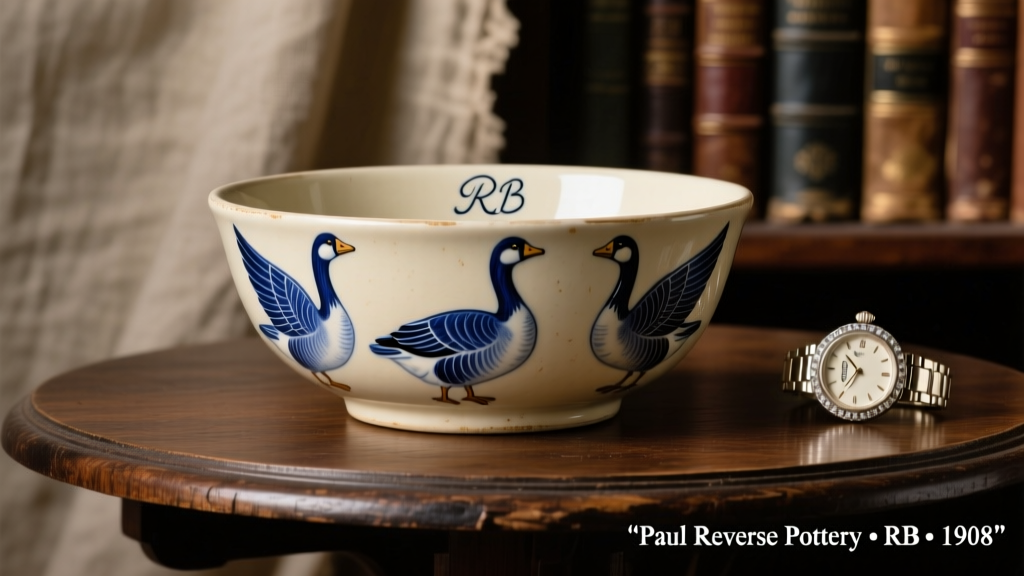
Paul Revere Pottery Geese Bowl: Decoding the Iconic 'RB' Signed Flared Form (2" × 6")
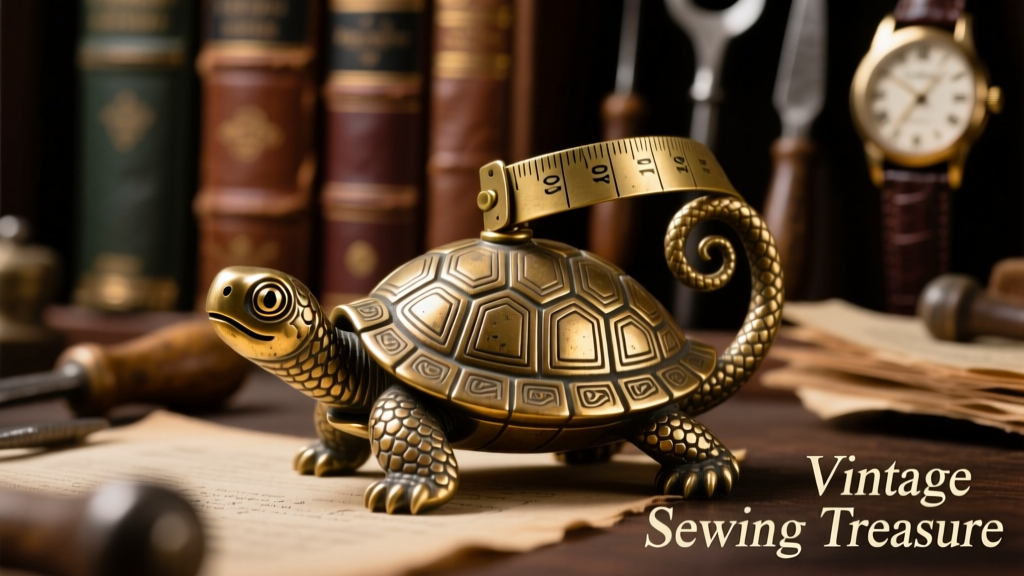
Sewing Tape Measure Turtle Brass: A Collector’s Guide to Victorian-Era Functional Jewelry
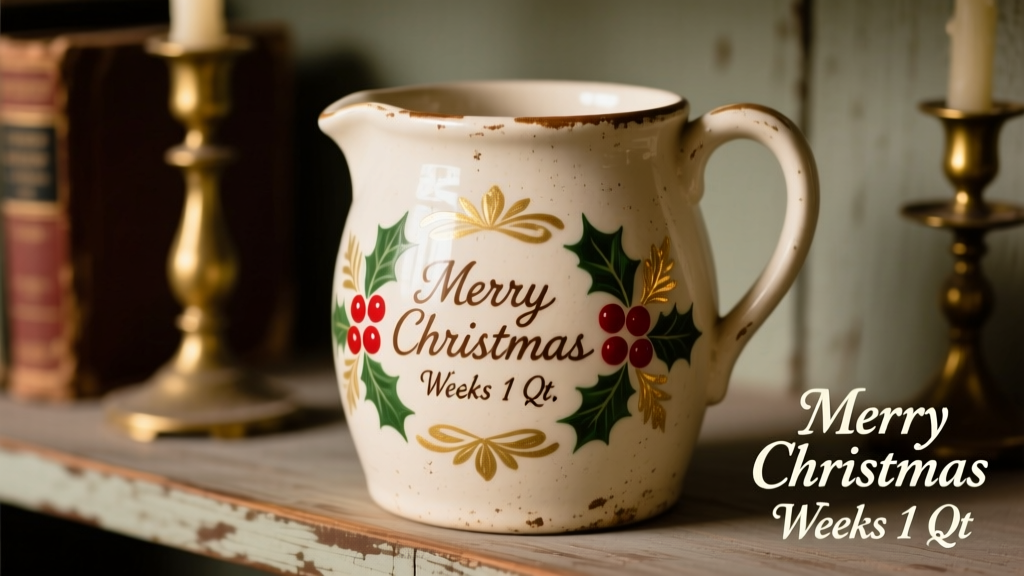
Spongeware Jug 'Merry Christmas Weeks' — A 1-Quart American Folk Pottery Treasure from the 1940s
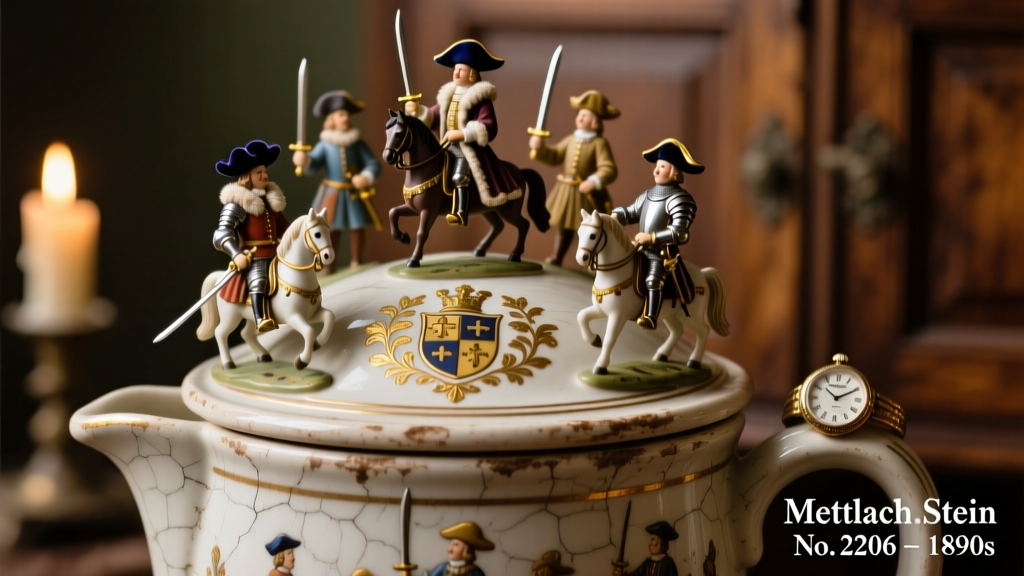
Mettlach Stein No. 2206: A 3-Liter Masterpiece of German Stoneware Craftsmanship
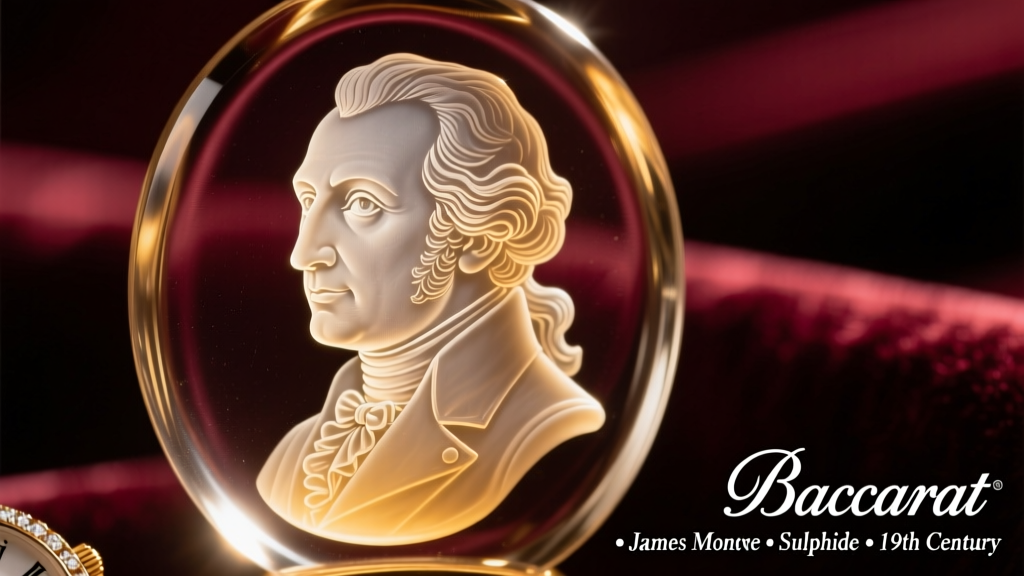
Baccarat Paperweight Sulphide James Monroe: A Rare 19th-Century American Presidential Commemorative
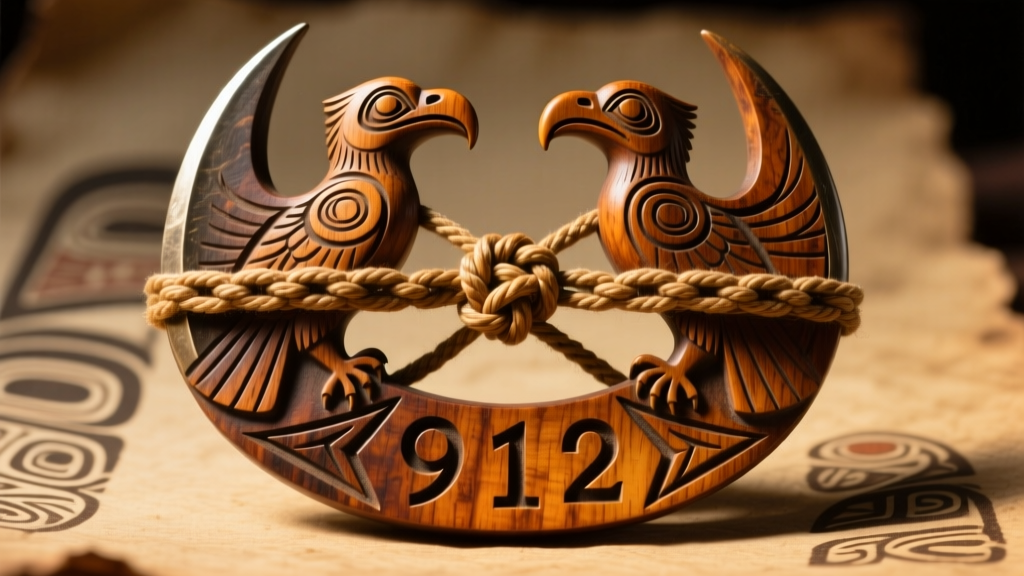
The Indian Halibut Hook: A Northwest Coast Masterpiece — Carved Dual Avian Forms with Authentic Cord Binding, 9½ Inches
The Beaded Swirl Kerosene Lamp: A Technical and Aesthetic Study of the 8½-Inch Matching Chimney, Shade, and Brass Burner Assembly
The Crown Mark Centerpiece: Decoding a Hallmark of Prestige in Vintage Jewelry and Watchmaking
Bitters Peruvian Amber 9 1/4-Inch: A Rare Mid-Century Watch with Geological Provenance and Horological Significance