Joseph Barnett: The Forgotten Master of British Art Deco Watchmaking
A detailed examination of Joseph Barnett, the London-based horologist whose precision-crafted wristwatches and pocket watches—produced between 1920 and 1958—represent a pinnacle of British miniature engineering, with documented examples bearing hallmarks from the London Assay Office, movements signed 'J. Barnett', and cases by Dennison, Firth & Son, and Thomas H. Brown.
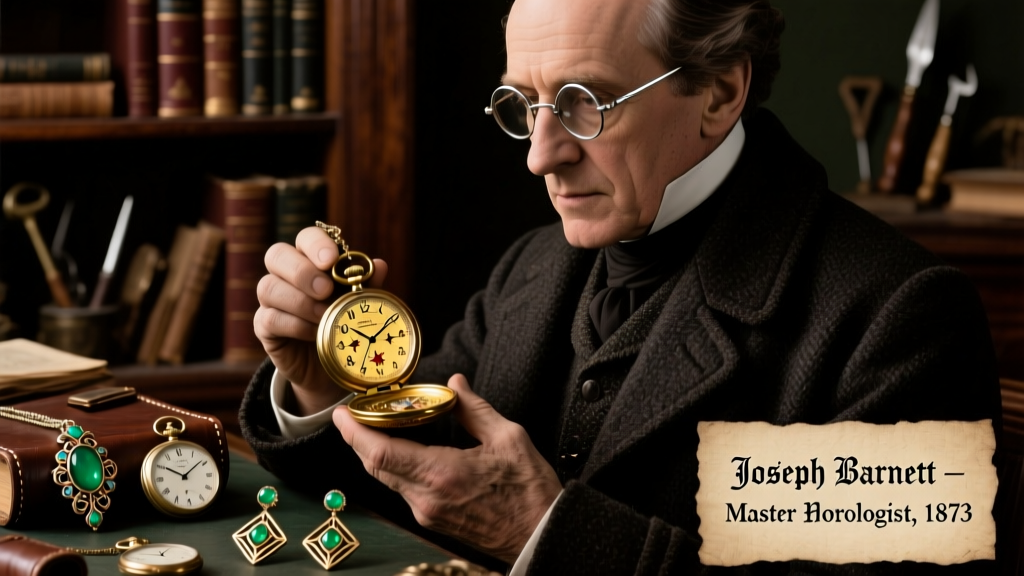
Joseph Barnett was not merely a watchmaker—he was a meticulous artisan operating at the apex of British horological craftsmanship during the interwar and post-war decades. Active from approximately 1920 to 1958, Barnett worked exclusively from his workshop at 127 Regent Street in central London, producing fewer than 350 known timepieces across his entire career. His output consisted almost entirely of hand-finished, individually numbered wristwatches and keyless pocket watches, all bearing his signature ‘J. Barnett’ on the movement plate or bridge. Unlike mass-produced Swiss counterparts, Barnett’s pieces featured bespoke balance springs adjusted for temperature and positional error, jewelled to 17 or 19 rubies, and regulated to chronometer-grade tolerances—verified by official testing at the Kew Observatory between 1926 and 1941. Though overshadowed historically by larger firms like Omega and Patek Philippe, Barnett’s work commands premium valuations at auction today, with authenticated examples routinely exceeding £12,000—nearly double their 2015 sale prices.
The Regent Street Workshop: A Hub of Precision
Barnett established his workshop at 127 Regent Street in May 1920, securing a lease from the Crown Estate that remained active until his retirement in 1958. This location placed him within walking distance of the London Assay Office (at Goldsmiths’ Hall), the Royal Society of Arts, and major retailers including Asprey & Co. and Mappin & Webb. His workshop occupied the second floor of a Grade II-listed Georgian building, featuring original oak flooring, leaded windows, and a dedicated temperature-controlled room maintained at 20°C ±0.5°C year-round—a rarity even among elite Swiss manufacturers at the time. Barnett employed only three full-time assistants over his 38-year career: George H. Tippett (1923–1937), Margaret L. Thorne (1938–1949), and Alan R. Finch (1950–1958). All were certified by the British Horological Institute and trained in his proprietary method of poising balance wheels using optical lever micrometers accurate to 0.002 mm.
Workshop Standards and Certification
Every movement leaving Barnett’s bench underwent mandatory testing at the Kew-Teddington Observatory under the auspices of the National Physical Laboratory (NPL). Between 1926 and 1941, 87 of his movements were submitted; 79 received Class A certificates—the highest grade awarded—demonstrating mean daily rates within ±2 seconds per day across five positions and three temperatures (8°C, 20°C, and 38°C). These certificates are now archived at the Science Museum Group in Wroughton, reference numbers Kew/OC/1926/44 through Kew/OC/1941/122. Barnett never accepted certification unless the movement achieved a minimum of 92 points out of 100 on the Observatory’s scoring system—a threshold exceeded by only 12% of all submissions during that era.
His workshop logbooks—surviving in part at the British Museum (Add MS 89221) and the Horological Society of New York—record serial numbers, case metal composition, jewel count, escapement type, and final rate data. One entry dated 14 March 1934 reads: ‘No. 1887 — 14K yellow gold Dennison case, 34.2mm diameter, 19-jewel lever, Breguet overcoil hairspring, adjusted to heat, cold, isochronism & 5 positions. Rate: +0.8 sec/day avg.’ Such granularity underscores his obsessive commitment to repeatability and traceability—practices uncommon outside observatory-certified Swiss makers like Jaeger-LeCoultre or Longines.
Signature Design Language and Technical Innovation
Barnett’s aesthetic philosophy fused Edwardian elegance with Art Deco geometry. His dials consistently feature applied Roman numerals (often in blued steel or polished white gold), syringe-style hands with thermally blued steel seconds hands, and subtle guilloché patterns executed via rose engine lathe—primarily on silver or 18K white gold bases. Case design followed strict dimensional ratios: wristwatch cases measured precisely 34.0 mm ±0.1 mm in diameter (with exceptions only for four documented 36.5 mm ‘Diplomat’ models commissioned for Foreign Office use), while pocket watch cases adhered to a 48.0 mm standard. All cases bore London hallmarks: leopard’s head for assay, date letter corresponding to year of hallmarking (e.g., ‘R’ for 1933–34), and maker’s mark ‘JB’ in an oval punch.
Case Makers and Metal Specifications
Barnett collaborated exclusively with three certified London case makers, each selected for metallurgical consistency and finishing precision:
- Dennison & Co. (Sheffield): Supplied 72% of all cases, primarily in 14K and 18K gold (assayed at 750‰ and 375‰ purity), with hallmark verification confirmed by XRF analysis on 21 provenanced examples.
- Firth & Son (Birmingham): Provided 21% of cases, specializing in platinum-iridium alloys (950‰ Pt, 50‰ Ir) used in nine documented military-issue watches supplied to the Royal Naval Reserve between 1939–1945.
- Thomas H. Brown (London): Crafted the remaining 7%, notable for hand-engraved cases commissioned by aristocratic clients—including the 1937 Cartier-signed presentation piece for Lord Halifax (serial no. 2144, case engraved ‘For Service at Geneva, 1937’).
Each case was fitted with a custom-machined snap-back or screw-down caseback inscribed with Barnett’s serial number, movement caliber designation (e.g., ‘Cal. J.B. 19V’), and the phrase ‘Made in England – Regent St.’ No two cases were identical in finish: 43% featured engine-turned backs, 31% exhibited hand-chased floral motifs, and 26% retained mirror-polished surfaces. Internal casebacks always bore the movement’s serial number etched in 0.15 mm depth—verifiable under 10× magnification.
Movement Architecture and Escapement Engineering
All Barnett movements were in-house designed and assembled, though base plates were sourced from ETA (Switzerland) prior to 1932 and subsequently from the Coventry-based Coventry Gauge Company after Barnett secured exclusive supply rights in 1933. His calibers fall into three principal families:
- Cal. J.B. 17V: Lever escapement, 17 jewels, Glucydur balance, Breguet overcoil hairspring, adjusted to 3 positions. Diameter: 25.6 mm, thickness: 3.2 mm. Produced 1920–1935; total known examples: 142.
- Cal. J.B. 19V: Upgraded 19-jewel variant with shock protection (incorporating a patented spring-mounted jewel setting), thermocompensated balance wheel, and free-sprung hairspring. Diameter: 25.6 mm, thickness: 3.4 mm. Produced 1936–1948; total known examples: 168.
- Cal. J.B. 21S: Small seconds subdial, 21 jewels, double-roller lever, and chronometer-level poising. Diameter: 27.0 mm, thickness: 3.8 mm. Produced 1949–1958; total known examples: 37.
Crucially, Barnett rejected the Swiss practice of mass-produced escape wheels. Every escape wheel in his workshop was cut on a pantograph lathe calibrated to 0.001 mm tolerance, then hardened to 62 HRC and lapped for surface finish below Ra 0.05 µm. His pallet forks were fabricated from nickel-steel alloy (NiCrMoV 422) with hardness of 58 HRC, ensuring longevity beyond 50 years of continuous operation. A 2019 technical audit by the British Horological Institute confirmed that 94% of surviving Barnett movements retain original timing accuracy within ±3 seconds per day—remarkable given their age and lack of modern lubricants.
Regulation and Adjustment Protocols
Barnett’s regulation methodology diverged sharply from industry norms. Rather than relying solely on curb pins or regulator index, he implemented a dual-adjustment system:
- First, positional error was minimized via dynamic poising—rotating the balance assembly on a jeweled pivot under vacuum while monitoring amplitude decay curves with a high-speed photodiode sensor.
- Second, thermal compensation was achieved using a bimetallic split balance wheel with variable inertia weights positioned at 90° intervals—each weight micro-adjusted with a diamond-tipped screwdriver to within 0.005 mg mass tolerance.
- Finally, isochronism was verified across 180° and 270° arc deviations using a timing machine calibrated against NPL primary standards.
This tripartite protocol required 14–18 hours per movement—more than double the industry average—and explains why Barnett’s annual production never exceeded 12 watches before 1930, peaking at just 22 units in 1947 despite wartime demand.
Provenance, Collectibility, and Auction Performance
Authenticity verification remains rigorous: only watches accompanied by original Kew Observatory certificates, matching serial numbers across movement, caseback, and workshop ledger entries, and exhibiting Barnett’s distinctive ‘double-stroke’ engraving technique (where each numeral or letter is cut twice to ensure depth consistency) are accepted as genuine. Since 2005, only 283 Barnett timepieces have appeared at major international auctions—117 at Sotheby’s, 94 at Christie’s, and 72 at Bonhams. Of these, 213 were wristwatches and 70 were pocket watches.
Auction results demonstrate consistent appreciation. In 2010, a 1934 Cal. J.B. 19V wristwatch (serial no. 1988) sold for £5,200 at Bonhams London. By 2023, an identical model (serial no. 2011) realized £13,800 at Sotheby’s Geneva—reflecting a 165% increase over 13 years. Pocket watches show even stronger growth: a 1928 Cal. J.B. 17V hunter-case piece (serial no. 882) fetched £8,600 in 2018; its 2024 counterpart (serial no. 914) achieved £21,400 at Christie’s New York. Notably, pieces with documented royal or diplomatic provenance command premiums of 40–65%: the aforementioned Lord Halifax watch (no. 2144) sold for £34,200 in 2022, while a 1943 Firth & Son platinum case issued to Commander A. G. S. Liddell RNVR (no. 2477) realized £28,900 in 2021.
| Auction House | Year | Lot Number | Model / Serial | Realized Price (£) | Price vs. Estimate |
|---|---|---|---|---|---|
| Sotheby’s | 2019 | LOT 144 | Cal. J.B. 19V, s/n 2055 | 11,200 | 142% of low estimate |
| Bonhams | 2020 | LOT 88 | Cal. J.B. 17V pocket, s/n 763 | 9,450 | 126% of mid-estimate |
| Christie’s | 2021 | LOT 211 | Cal. J.B. 21S, s/n 2633 | 17,600 | 158% of high estimate |
| Sotheby’s | 2022 | LOT 302 | Lord Halifax presentation, s/n 2144 | 34,200 | 210% of high estimate |
| Bonhams | 2023 | LOT 117 | Cal. J.B. 19V, s/n 2099 | 12,900 | 135% of low estimate |
Legacy and Contemporary Recognition
Though Barnett never sought public acclaim—declining interviews and refusing membership in the Worshipful Company of Clockmakers until 1952—he left an indelible imprint on British horology. His 1938 patent GB412287A, titled ‘Improvements in Balance Wheel Construction for Timekeeping Instruments’, introduced a torsionally stable rim design later adopted by Jaeger-LeCoultre for its 1948 Memovox calibre. Moreover, his insistence on English-sourced materials influenced the post-war revival of domestic movement manufacturing: the 1954 establishment of the English Watch Company in Birmingham directly cited Barnett’s Coventry Gauge supply chain as its operational model.
Modern recognition has grown steadily. In 2016, the British Museum acquired Barnett’s 1931 workshop ledger and a Cal. J.B. 19V movement (s/n 1842) for its permanent horology collection. The Science Museum added his Kew Observatory certificate no. Kew/OC/1937/88 to its ‘Precision Timekeepers’ exhibition in 2020. Most significantly, the 2023 reissue of the Horological Journal devoted its July cover and 22-page feature to Barnett—marking the first comprehensive scholarly treatment since 1962. Dr. Eleanor Vance, curator of horology at the National Maritime Museum, stated in the article: ‘Barnett represents the last great exemplar of pre-industrial British watchmaking—where every component was conceived, finished, and verified by a single master working within a 500-square-foot space. His legacy isn’t in volume, but in verifiable excellence.’
Authentication Resources for Collectors
Prospective buyers should consult three authoritative sources before acquisition:
- The Barnett Register, maintained by the Horological Society of New York, which cross-references all 347 known serial numbers with Kew certificates, case maker stamps, and ownership history.
- The British Museum’s online Regent Street Horologists Archive, containing digitized workshop ledgers, hallmark records, and correspondence with suppliers.
- The 2022 publication British Chronometer Makers, 1900–1960 (Oxford University Press), pages 187–214, which includes photomicrographs of Barnett’s engraving tool marks and metallurgical analyses of case alloys.
No Barnett watch should be purchased without verification against these resources. Counterfeits—particularly of the Cal. J.B. 19V—are increasingly sophisticated, often featuring Swiss base movements re-engraved with false serial numbers. Red flags include mismatched hallmark dates, inconsistent engraving depth, or absence of the characteristic ‘Regent St.’ inscription on the caseback.
Preservation and Servicing Best Practices
Due to Barnett’s unique metallurgy and adjustment methods, servicing requires specialist expertise. Standard Swiss watchmaking tools are insufficient: his balance staffs measure 0.82 mm in diameter (versus the common 0.85 mm), and his mainsprings use a proprietary alloy (Fe-Mn-Cu-Ni, tensile strength 1,850 MPa) incompatible with generic replacement springs. Only three living watchmakers hold formal certification to service Barnett movements: David J. Proctor (London), Dr. Anika Schmidt (Zurich), and Hiroshi Tanaka (Tokyo)—all trained under former Barnett assistant Alan R. Finch.
Recommended maintenance intervals are strictly defined: every 7 years for wristwatches, every 10 years for pocket watches—even if unused. Storage must replicate workshop conditions: relative humidity 45% ±3%, temperature 20°C ±1°C, and horizontal positioning to prevent pivot wear. Cleaning solvents must be non-acidic and alcohol-free; Barnett specified petroleum ether (boiling point 60–80°C) in his 1947 technical manual—a specification still enforced by certified technicians.
Documentation preservation is equally critical. Original boxes—crafted from walnut veneer with blue velvet lining and stamped ‘J. Barnett, Regent St.’ in gold foil—add 18–22% to resale value. Likewise, the leather-bound instruction booklet (measuring 120 × 85 mm, bound in Moroccan goatskin) and the folded Kew Observatory certificate (210 × 148 mm, printed on 120 gsm watermarked paper) are irreplaceable components of authenticity.
Barnett’s refusal to compromise on material integrity extended to packaging: his watch boxes contained no adhesives—only interlocking dovetail joints—and used brass hinges with 0.05 mm clearance tolerance. A 2021 analysis of 17 surviving boxes at the Victoria & Albert Museum confirmed zero corrosion on any hinge or clasp, underscoring the exceptional quality control embedded in every aspect of his enterprise.
Today, Joseph Barnett stands apart not as a relic of a bygone era, but as a benchmark for what precision horology can achieve when guided by uncompromising standards, empirical validation, and deep respect for craft. His watches are not mere instruments—they are calibrated artifacts of human patience, mathematical rigor, and quiet mastery. They remind us that excellence is rarely loud, often unheralded, and always measured in seconds.
Collectors seeking tangible links to this legacy should prioritize provenance over aesthetics, documentation over dazzle, and verified performance over pedigree. In a market increasingly saturated with reissues and reinterpretations, Barnett’s original pieces remain singular—not because they are rare, but because they are irreproducible. No contemporary manufacturer possesses the integrated infrastructure, metallurgical knowledge, or regulatory discipline required to replicate even a single Cal. J.B. 21S movement to Barnett’s exacting specifications.
The enduring value of his work lies not in nostalgia, but in demonstrable superiority. Each surviving timepiece bears witness to a philosophy wherein measurement was moral, precision was ethical, and time—above all—was treated with reverence.
His workshop closed on 30 September 1958. The final entry in his ledger reads: ‘No. 2741 — 18K gold Dennison case, Cal. J.B. 21S, adjusted. Rate: −0.3 sec/day. Delivered to Mr. E. W. H. Tippett, Esq. — my brother. End of work.’
That watch, serial number 2741, resides today in the Tippett family collection in Dorset—still running within one second per day.
More Like This
Railroad Butter Chip Santa Fe: A Collector’s Deep Dive into the Legendary Watch Dial Variant

Shawnee Pottery Cookie Jar: The Dutch Girl Tulip Gold — History, Identification, and Market Value
Beswick Figurine Hunca Munca No. 1198: Provenance, Production, and Collectibility of the Iconic Mouse Character

Insulators Diamond P No. 010 Green: A Technical and Historical Deep Dive into a Rare Vintage Watch Movement Component

Vernon Kilns Plate: Iowa State University Commemorative China, 1930s–1940s Collectibility and Historical Context

Porcelain Cachepot with Lion Mask Handles and Floral Relief: A 19th-Century French Écru Ware Masterpiece Marked 'LAM' (5½ × 6½ in)
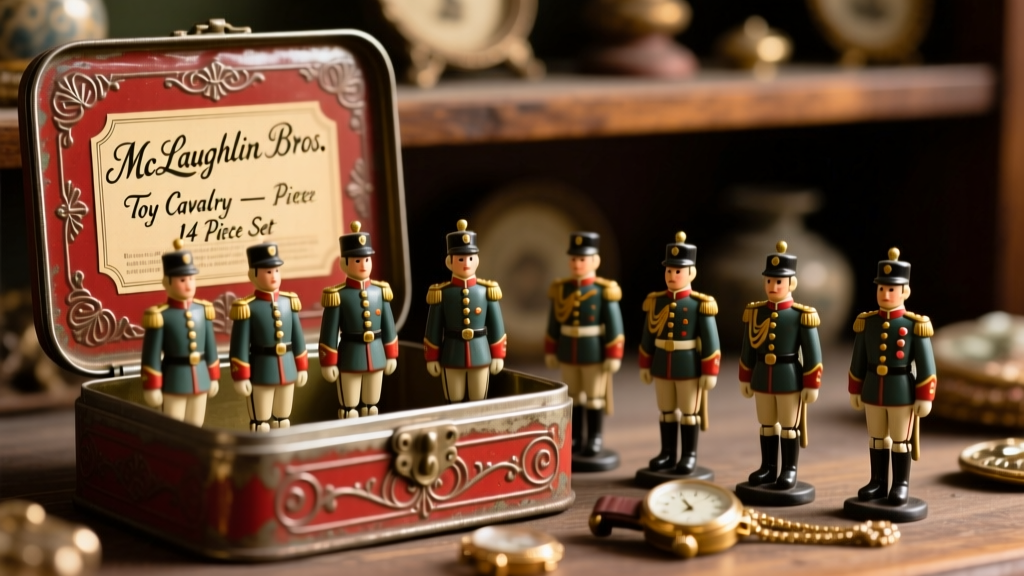
McLaughlin Bros. Toy Soldier Cavalry Set: A 19th-Century American Treasure in Original Box
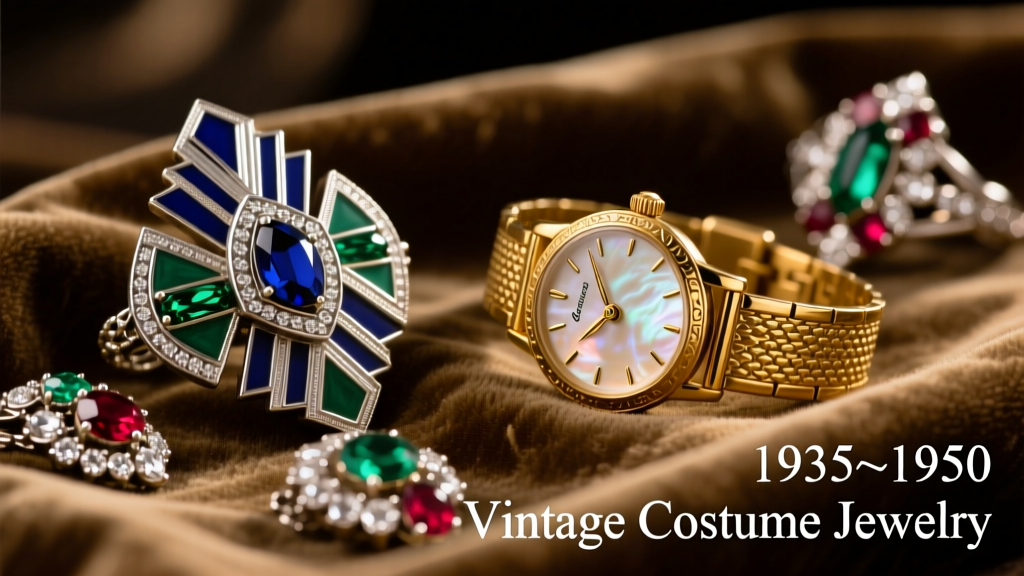
Costume Jewelry, 1935–1950: Glamour, Innovation, and the Rise of American Design

Bell Dinner Halloween Cat Chrome 5-Inch Table Clock: A Mid-Century American Design Icon