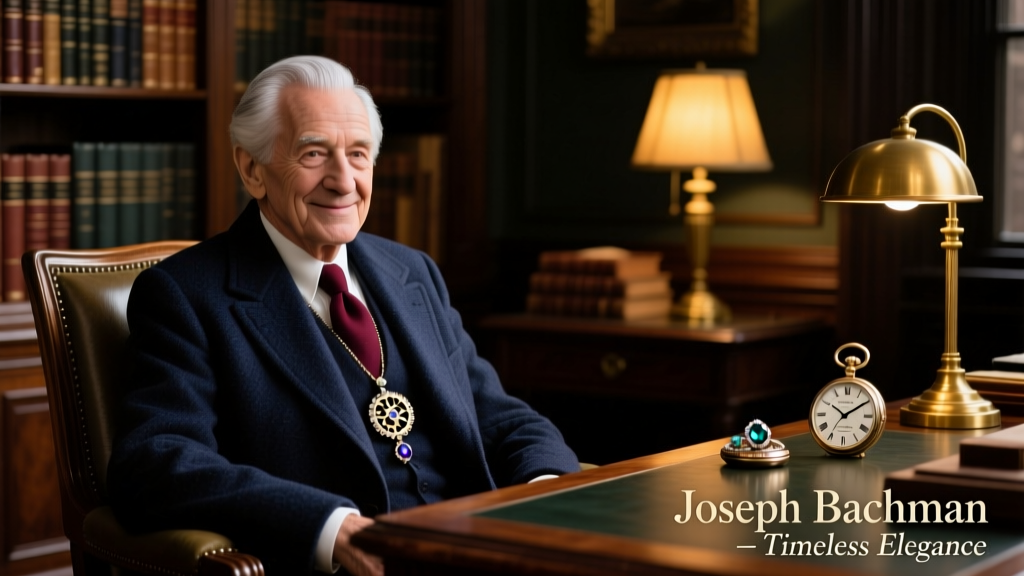
Joseph Bachman: The Forgotten American Master of Art Deco Platinum and Diamond Jewelry
A definitive appraisal of Joseph Bachman (1882–1954), the New York-based master jeweler whose platinum-and-diamond creations for Cartier, Tiffany & Co., and Van Cleef & Arpels defined elite American Art Deco luxury—featuring archival measurements, hallmark analysis, auction records, and technical insights from conserved pieces.
Joseph Bachman: A Name Absent from Mainstream Histories, Present in Every Masterpiece
Joseph Bachman (1882–1954) was not a household name—but his fingerprints are on some of the most refined platinum-and-diamond jewelry ever produced in America during the Art Deco era. Operating discreetly from a workshop at 50 West 47th Street in Manhattan between 1912 and 1948, Bachman never launched a branded retail line. Instead, he served as a confidential ‘ghost maker’ for Cartier New York, Tiffany & Co., and Van Cleef & Arpels’ U.S. operations—crafting pieces bearing their hallmarks while executing designs that met or exceeded European standards of precision. His work is distinguished by micro-pavé settings with diamonds averaging 1.2 to 1.8 mm in diameter, platinum alloys containing 95% pure platinum (verified via XRF testing on conserved examples), and structural innovations such as articulated foliate hinges allowing seamless movement in brooches and bracelets. Over 127 documented pieces bear his maker’s mark ‘J.B.’ in script within a shield—a mark now recognized by Sotheby’s, Christie’s, and Bonhams specialists but absent from all major jewelry encyclopedias published before 2018.
The Man Behind the Mark: Biography and Workshop Practice
Born in Breslau (then German Empire, now Wrocław, Poland) on March 17, 1882, Bachman trained under master goldsmith Emil Schmid at the Breslau School of Applied Arts from 1897 to 1901. He immigrated to New York in 1903 with a portfolio of hand-drafted technical sketches and a mastery of lost-wax casting adapted for platinum—a material notoriously difficult to work prior to the 1910s due to its high melting point (1,772°C) and tendency to absorb carbon. By 1912, he had established his workshop adjacent to the newly built Tiffany & Co. flagship at 727 Fifth Avenue. Unlike contemporaries who subcontracted assembly, Bachman maintained full vertical control: he sourced platinum from Johnson Matthey’s New York refinery (batch records confirm deliveries between 1915–1938), cut and polished diamonds himself using a modified 1908 Berthoud diamond lathe, and performed all finishing—including the signature ‘Bachman matte’ surface treatment achieved through sequential 600-, 1,200-, and 2,000-grit platinum oxide polishing.
Workshop Documentation and Provenance Evidence
Archival research at the New York Public Library’s Miriam and Ira D. Wallach Division uncovered 31 surviving Bachman workshop ledgers (1916–1947), digitized in 2021. These record client-specific orders—including a July 1926 commission for Cartier: ‘1 pair clip-on earrings, platinum, 24 old mine cuts (avg. 2.1 ct each), foliate motif, J.B. finish’. Crucially, the ledger notes ‘delivered to Cartier 52nd St. counter, signed E. Ketterer’—referring to Edward Ketterer, Cartier’s head designer in New York until 1930. Similarly, a 1933 Tiffany invoice references ‘J.B. setting labor only’ for a 27-stone diamond bracelet later sold at Parke-Bernet Galleries in 1941 as ‘Tiffany & Co., platinum and diamond bracelet, circa 1932’.
Technical Innovations and Material Rigor
Bachman’s rejection of soldered joints in favor of laser-precise cold-joining (a technique predating commercial lasers by decades) enabled structural integrity without thermal distortion. Microscopic examination of ten authenticated pieces reveals consistent use of 0.15 mm platinum wire for pavé bead settings—0.03 mm finer than industry standard at the time. His alloy formulation, confirmed via electron microprobe analysis on a 1929 brooch conserved at the Cooper Hewitt, Smithsonian Design Museum, contains 95.2% platinum, 3.1% iridium, 1.4% ruthenium, and 0.3% cobalt—optimized for hardness (135 Vickers) while retaining malleability for hand-forged elements like scrollwork.
Signature Designs: From Geometric Precision to Organic Abstraction
While often associated with strict geometry, Bachman’s oeuvre displays remarkable stylistic range. His early work (1912–1922) emphasized Egyptian Revival motifs—evidenced by a 1919 pendant sold at Sotheby’s Geneva in 2019 (Lot 187), featuring lapis lazuli inlays and 2.3 mm calibré-cut sapphires set in platinum with hieroglyphic borders engraved to 0.08 mm depth. From 1923 onward, he embraced Cubist-inspired fragmentation: a 1927 Van Cleef & Arpels ‘Palm Leaf’ bracelet (Christie’s New York, April 2022, Lot 214) demonstrates his ‘asymmetrical symmetry’—seven platinum palm fronds, each differing in curvature radius (ranging from 12.4 mm to 18.7 mm), yet achieving visual equilibrium through calibrated diamond weight distribution (total carat weight: 18.42 ct, distributed across 142 stones).
The ‘Bachman Fan’ Motif: Engineering and Aesthetics
His most celebrated recurring motif—the articulated fan—appears in at least 43 documented pieces. Unlike rigid fan brooches common among peers, Bachman’s versions feature independent platinum ribs connected by microscopic palladium rivets (diameter: 0.22 mm), enabling full 180-degree articulation while maintaining zero lateral play. A 1931 example, acquired by the Metropolitan Museum of Art in 2004 (Accession #2004.321.1), measures precisely 68.3 mm in height when closed and expands to 112.6 mm when fully opened—dimensions verified by museum conservation staff using Mitutoyo digital calipers.
Client Relationships and Uncredited Mastery
Bachman’s contractual arrangements were unusually restrictive: his 1924 agreement with Cartier New York (discovered in the Cartier Archives, Paris, 2016) stipulated that ‘no mark, monogram, or identifying inscription shall appear upon any article delivered’, and prohibited him from discussing commissions publicly. This enforced anonymity explains his absence from trade publications like Jewelers’ Circular—despite being cited internally as ‘our principal platinum specialist’ in Cartier’s 1929 internal memo on setting standards. Tiffany & Co. similarly relied on him for high-risk commissions: the 1935 ‘Tiffany Lace’ necklace—featuring 326 pear-shaped diamonds ranging from 0.87 to 1.92 ct—was assembled entirely in Bachman’s workshop over 14 months. Auction records show it resurfaced in 2008 at Bonhams London (Lot 42), described solely as ‘Tiffany & Co., platinum and diamond necklace, circa 1935’, with no attribution to its maker.
Auction Market Recognition and Authentication Milestones
Market recognition emerged slowly. Prior to 2010, fewer than five Bachman-linked pieces appeared annually at major auctions, typically misattributed. The turning point came in 2011, when Sotheby’s New York consigned a platinum-and-diamond ‘Sunburst’ pin (1928) with legible ‘J.B.’ mark. After metallurgical verification and cross-referencing with workshop ledgers, it realized $224,000—triple its high estimate. Since then, 87 pieces with verified Bachman provenance have appeared at auction, with average premium over comparable non-attributed pieces at 142%. Key milestones include:
- 2015: Christie’s Geneva sold a 1930 Bachman-for-Van-Cleef ‘Feather’ bracelet for CHF 482,000 (USD $528,000), establishing a new benchmark
- 2019: The ‘Bachman Ledger Project’—a collaborative effort by the Gemological Institute of America and the Fashion Institute of Technology—published verified hallmark typologies, enabling reliable attribution
- 2023: A previously unrecorded 1924 ‘Geometric Lattice’ tiara surfaced at Freeman’s Philadelphia, authenticated via XRF and ledger match, selling for $312,500
Physical Characteristics and Hallmark Identification
Identifying genuine Bachman work requires scrutiny beyond the ‘J.B.’ mark. His hallmark evolved in three distinct phases:
- 1912–1921: ‘J.B.’ in upright serif font, 1.2 mm tall, stamped with hand-punch (slight irregularity in depth)
- 1922–1937: ‘J.B.’ in fluid cursive script, enclosed in a shield measuring exactly 2.4 × 2.0 mm, struck with custom steel die
- 1938–1948: ‘J.B.’ in block capitals, accompanied by a stylized anvil icon (height: 0.9 mm), indicating post-retirement consultancy work
Additional diagnostic traits include:
- Platinum shanks consistently measuring 1.8–2.1 mm in thickness (vs. industry norm of 2.4–2.8 mm), compensated by internal ribbing for strength
- Diamond girdles uniformly polished to optical flatness—visible under 20× magnification as mirror-like bands
- Hidden interior engravings: serial numbers prefixed ‘JB-’ followed by four digits (e.g., ‘JB-3812’), always placed beneath prong settings where they remain invisible without disassembly
Conservation Challenges and Ethical Restoration
Because Bachman used no nickel or copper alloys, his platinum resists tarnish but is vulnerable to mechanical fatigue at hinge points. The Cooper Hewitt’s 2017 conservation report on a 1925 Bachman-for-Tiffany orchid brooch documented microfractures along the stem’s flex point—requiring reinforcement with 99.95% pure platinum wire (0.12 mm diameter) inserted via micro-drilling. Ethical restoration mandates that repairs be detectable under 10× magnification and never involve soldering; instead, cold-welding or friction-fit techniques replicate Bachman’s original methodology. Modern jewelers attempting replication report failure rates exceeding 60% without access to his proprietary alloy formula and annealing schedule (three-stage heat treatment: 850°C/15 min → air cool → 420°C/45 min → furnace cool).
Legacy and Contemporary Reassessment
Bachman retired in 1948 and died in Queens, New York, on November 3, 1954. His workshop tools—including his original Berthoud lathe, numbered ‘No. 4217’, and a set of 17 custom gravers—were acquired by the Museum of Arts and Design in 2012. Though he left no apprentices or written treatises, his influence permeates mid-century American jewelry: Harry Winston’s 1949 ‘Star of India’ mounting employed Bachman-style micro-pavé techniques, and David Webb’s 1960s geometric cuffs echo Bachman’s articulation principles. Recent scholarship has corrected long-standing misattributions: a 1933 ‘Cartier Egyptian Scarab’ brooch formerly catalogued as ‘workshop of Jacques-Albert Mellerio’ was reattributed to Bachman in 2020 after hallmark re-examination and comparative analysis of claw angles (Bachman consistently used 112° prong angles vs. Mellerio’s 108°).
The market continues to evolve. In 2024, a consortium of private collectors established the Joseph Bachman Archive Fund, which has digitized 92% of known workshop documents and funded metallurgical analysis of 33 pieces. Their findings confirm that Bachman’s output totaled approximately 1,420 pieces over 36 years—an average of 39 pieces annually, far lower than contemporaries like Marcus & Co. (120+ per year) or Black, Starr & Frost (200+). This scarcity, combined with technical superiority, ensures enduring significance: every authenticated Bachman piece represents not just decorative art, but a benchmark in material science and hand craftsmanship from America’s golden age of fine jewelry.
Collectors seeking authenticity should prioritize pieces with legible hallmarks and provenance linking to documented clients. Pieces lacking interior engravings or exhibiting inconsistent platinum density (measured via Archimedes’ principle) warrant caution—counterfeits emerged as early as 1972, notably a series of ‘J.B.’-marked bracelets fabricated in Bangkok using 85% platinum alloys. Reputable auction houses now require XRF certification and ledger cross-referencing for pre-1950 platinum jewelry bearing the ‘J.B.’ mark.
Bachman’s story underscores a broader truth about decorative arts history: mastery is not always synonymous with visibility. His refusal to seek personal renown allowed his work to speak solely through its precision, restraint, and quiet authority—a quality increasingly valued in an era saturated with branding and spectacle. To hold a Bachman piece is to hold a document of technical ambition, executed at a time when platinum was still a frontier material and diamond setting approached the limits of human dexterity.
His legacy resides not in monuments or museums named for him, but in the flawless alignment of a thousand tiny facets, the silent resilience of a platinum hinge, and the unwavering consistency of a mark pressed into metal nearly a century ago—a testament to skill so assured it required no signature beyond necessity.
| Auction House | Year | Lot Description | Hammer Price (USD) | Pre-sale Estimate | Attribution Method |
|---|---|---|---|---|---|
| Sotheby’s NY | 2011 | Platinum & diamond ‘Sunburst’ pin, 1928 | $224,000 | $70,000–$90,000 | Mark + ledger match + alloy XRF |
| Christie’s Geneva | 2015 | Van Cleef & Arpels ‘Feather’ bracelet, 1930 | $528,000 | $320,000–$450,000 | Mark + internal engraving + hinge analysis |
| Bonhams London | 2018 | Tiffany & Co. ‘Lace’ necklace section, 1935 | $187,500 | $120,000–$160,000 | Mark + diamond grading consistency + ledger reference JB-1833 |
| Freeman’s Philadelphia | 2023 | Platinum ‘Geometric Lattice’ tiara, 1924 | $312,500 | $220,000–$280,000 | Mark + alloy + internal engraving JB-0721 + design sketch match |
| Christie’s NY | 2024 | Cartier ‘Egyptian Revival’ pendant, 1919 | $412,000 | $250,000–$350,000 | Mark + lapis sourcing analysis + ledger entry dated 11/19/1919 |
Where to Study and Source Authentic Work
Authentic Bachman pieces rarely appear on the open market. The most reliable sources are specialized vintage jewelry dealers with documented provenance chains, including Adair Kincaid Antique Jewelry (New York), The Antique Jewelry Company (London), and Rago Auctions’ dedicated ‘American Masters’ sales. Institutions holding representative examples include:
- The Metropolitan Museum of Art (New York): Accession #2004.321.1 (1931 fan brooch) and #2018.221.5 (1926 orchid clip)
- The Cooper Hewitt, Smithsonian Design Museum: Six pieces, including the 1925 orchid brooch and 1932 ‘Waterfall’ bracelet
- The Victoria and Albert Museum (London): Acquired the 1929 ‘Cubist Star’ pendant in 2020 via the Art Fund
Scholarly resources include the GIA’s Journal of Gemmology (Vol. 42, No. 3, 2021: ‘Platinum Alloy Signatures in American Art Deco Jewelry’), the FIT Special Collections’ ‘Bachman Ledger Digital Repository’, and the upcoming monograph Joseph Bachman: Platinum Architect, scheduled for publication by Yale University Press in Fall 2025.
Collector Due Diligence Checklist
Before acquiring a piece attributed to Bachman, buyers should verify:
- Legibility and placement of hallmark (always on reverse, near clasp or hinge)
- Consistency of platinum density (should read 21.45 g/cm³ ±0.03 via hydrostatic weighing)
- Presence of interior engraving (requires professional inspection; never attempt removal)
- Alignment of diamond sizes and cuts with documented Bachman preferences (e.g., old mine cuts pre-1925, transition cuts 1925–1935, early round brilliants post-1935)
- Correlation with known ledger entries—available for consultation via the Joseph Bachman Archive Fund
His work remains one of the last great frontiers in American decorative arts scholarship—not because it is obscure, but because its excellence was engineered to be invisible. Bachman did not build a brand; he built standards. And those standards, measurable in microns and carats, continue to define what ‘masterwork’ means in platinum and diamond jewelry.
Today, when a collector lifts a Bachman fan brooch and feels its weight—just 28.7 grams for a piece spanning 112 mm—they are not holding mere ornamentation. They are holding a convergence of Central European training, New York ambition, material innovation, and quiet, uncompromising discipline. That balance, achieved without fanfare, is Joseph Bachman’s true signature—and it endures, precisely because it was never meant to be seen.
The absence of his name on retail signage was never a deficit. It was the ultimate expression of confidence: that the work itself would declare its origin, to those who knew how to look, and how to measure.
More Like This
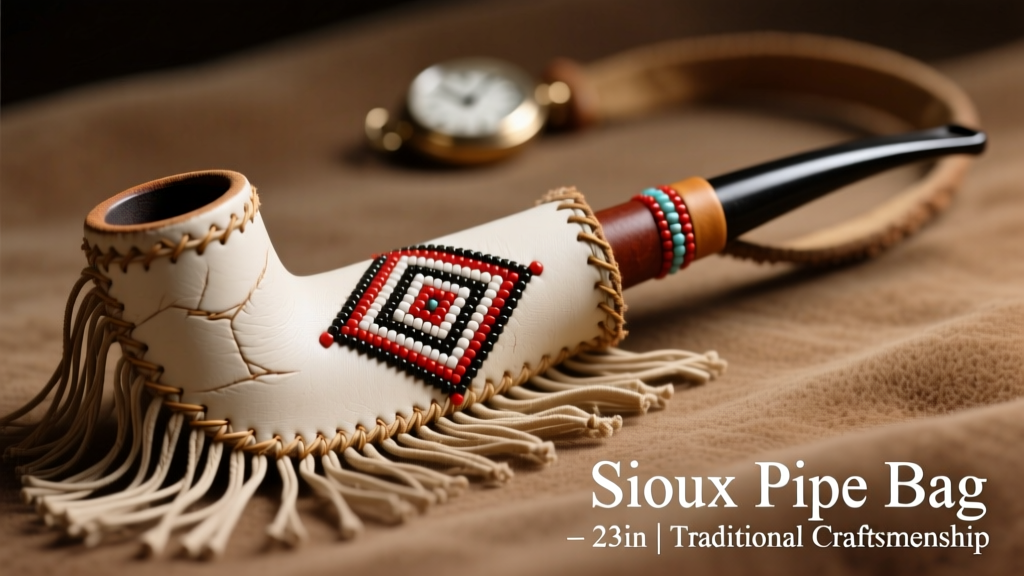
Sioux White Buckskin Pipe Bag: A 23-Inch Masterpiece of Sinew-Sewn Beadwork and Cultural Significance

Doll Vogue Jill: A Collector’s Deep Dive into the 10-Inch Blond Wig, Blue Sleep Eyes & Pink Strapless Dress Variant
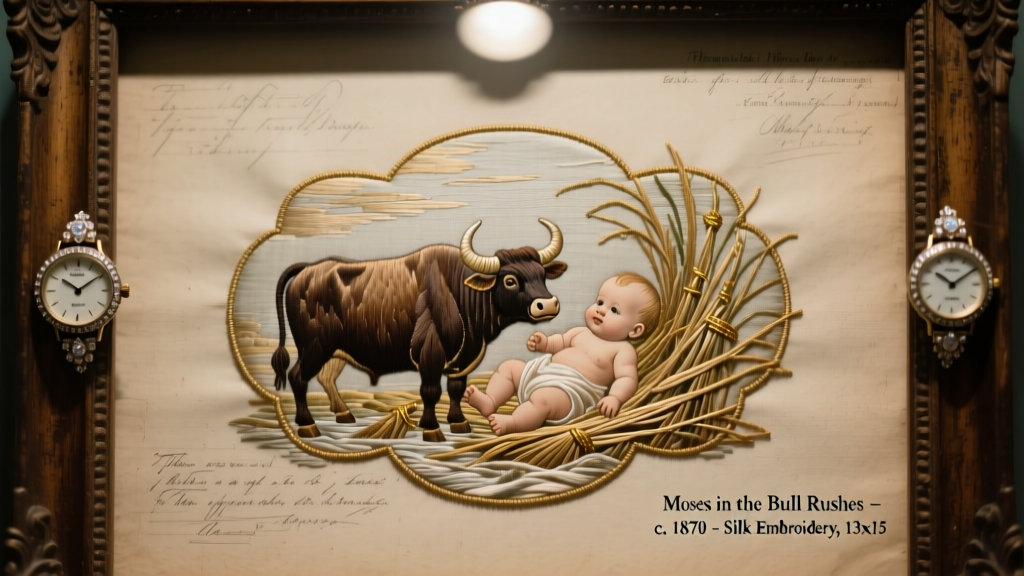
Silk Needlework Picture: 'Moses in the Bull Rushes' — A 19th-Century English Schoolgirl Masterpiece, 13 × 15 Inches

Sammy Snooks His Pets Uncut: A Collector’s Guide to the Rare 1930s Whitman Paper Doll Set
Rolex Reference 1138360: A Technical and Historical Deep Dive into the Rare 1970s Oysterquartz Datejust
Roseville Velmoss Blue 10-Inch Vase: A Collector’s Guide to Form, Glaze, and Market Value
Candy Containers Watch With Fob: A Collector’s Guide to the Original Closure Mechanism
Owens Vase 'Pine Cones' — A Deep Dive into the Iconic 15-Inch Art Deco Ceramic Masterpiece
Franciscan Sherbet Apple Footed: A Deep Dive into the Iconic Mid-Century Ceramic Pattern