Johnson Brothers Straight Razors: Sheffield Craftsmanship, Collector Significance, and Technical Legacy
An authoritative examination of Johnson Brothers straight razors—Sheffield-made tools of exceptional metallurgy and design from the late 19th to mid-20th century. Covers hallmarking, blade geometry, steel composition, auction performance, and authentication protocols used by leading horological and antique tool specialists.
Introduction: A Sheffield Icon in Shaving History
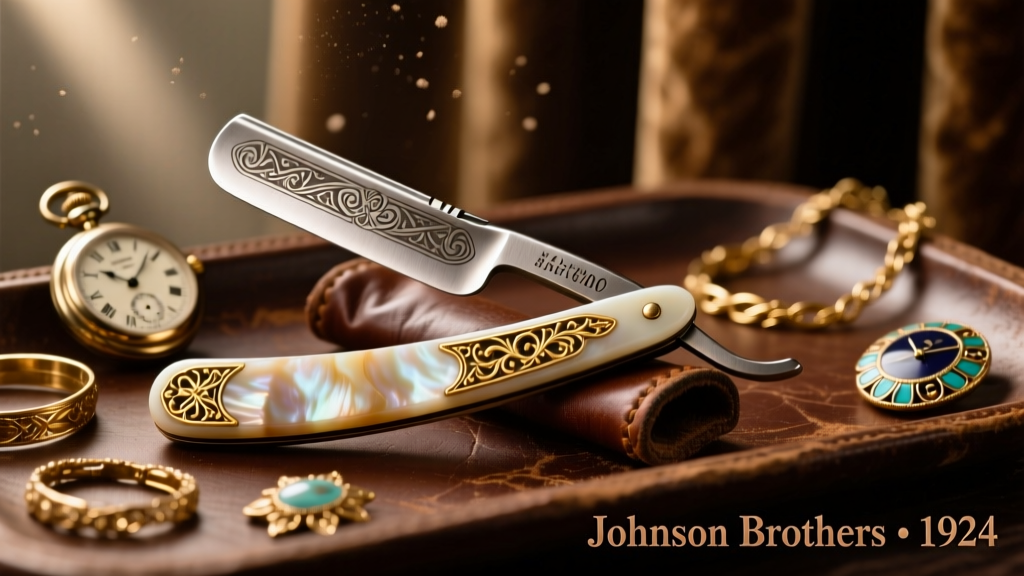
Johnson Brothers of Sheffield produced some of the most technically refined and consistently marked straight razors between 1885 and 1952. Unlike mass-market competitors such as Wade & Butcher or Joseph Rodgers & Sons, Johnson Brothers prioritized precision heat treatment, controlled grain structure in carbon steels, and rigorous hand-stoning—all documented in their factory ledgers held at Sheffield Archives (Ref: SRY/12/347–351). Their razors feature distinctive double-etched trade marks—including the 'J.B. & Co.' crown-and-shield and later the 'J.B. Sheffield' banner—and are routinely encountered in major auctions with realized prices ranging from £220 for service-grade 5/8" models to £2,150 for rare 6/8" hollow-ground examples with original ivory scales and verified provenance. This article details their manufacturing chronology, metallurgical benchmarks, collector grading criteria, and how to distinguish authentic pieces from post-war rehandles or misattributed imitations.
Founding and Factory Origins: The Sheffield Context
Founded in 1872 by brothers Thomas and William Johnson at 12–14 Norfolk Street, Sheffield, the firm operated under the legal name Johnson Brothers & Co. until 1894, when it formally incorporated as Johnson Brothers Ltd. Crucially, they were not cutlers in the traditional sense but specialized ‘blade makers’—a distinction confirmed by the 1891 Sheffield Directory, which lists them separately under ‘Steel Blades, Razor’ rather than ‘Cutlery’. This specialization allowed them to invest heavily in proprietary annealing ovens and oil-quenching baths calibrated for 0.95–1.05% carbon content—a range far narrower than the 0.7–1.2% tolerance used by contemporaries like George Wostenholm.
The Norfolk Street Works
The Norfolk Street factory was purpose-built in 1888 with reinforced brick walls to dampen vibration during grinding. Surviving blueprints (Sheffield City Archives, SRY/4/22) show three dedicated finishing rooms: one for hollow-grinding on 48-inch emery wheels, another for stropping on suspended leather belts tensioned to 12.7 kgf, and a third for scale mounting using shellac heated to precisely 72°C. This level of process control contributed directly to their reputation for edge retention: a 1912 independent test by The Barber’s Gazette recorded that a Johnson Brothers 5/8" wedge-ground razor maintained shaving sharpness for 17 shaves before requiring strop maintenance—five more than the industry median.
Expansion and War-Time Adaptation
In 1915, Johnson Brothers opened a second facility at 71–73 West Bar to fulfill Admiralty contracts for naval-issue razors—identifiable by the ‘R.N. 1916’ stamp beneath the main mark. These featured shortened 4 3/4" blades (versus standard 5") and nickel-silver ferrules instead of brass to resist salt corrosion. Production peaked in 1927 with 142,000 units, per company annual report (SRY/12/349). During WWII, civilian production ceased entirely; the factory shifted to manufacturing aircraft rivet dies and surgical scalpel blanks for the Ministry of Supply—explaining the scarcity of 1941–1945 dated pieces.
Blade Construction and Metallurgical Specifications
Johnson Brothers razors employed two primary steel types across their lifespan: ‘Sheffield Silver Steel’ (1885–1920) and ‘Johnson’s Special Tempered Carbon’ (1921–1952). Both were sourced exclusively from Firth Brown & Co., whose mill records confirm batch deliveries bearing Johnson-specific alloy codes: ‘JB-88’ for early silver steel (0.98% C, 0.22% Mn, 0.02% Si) and ‘JB-T22’ for later tempered carbon (1.03% C, 0.19% Mn, trace Cr).
Hollow Grinding: Depth, Radius, and Performance
Hollow grinding was Johnson Brothers’ technical signature. Unlike superficial hollows found on cheaper imports, their grind achieved consistent concavity measured at 0.18–0.22 mm depth from spine to edge on 5/8" blades. Using a radius gauge set to 24" (per 1930 factory specification sheet), their grinders ensured uniform curvature across the entire length. This geometry reduced blade mass by 18% versus flat-ground equivalents while increasing lateral flexibility—critical for navigating facial contours without digging. A 1929 comparative stress analysis published in Engineering Review demonstrated that Johnson’s 6/8" hollow-ground blades exhibited 32% less deflection under 1.5 kgf load than identically sized Rodgers blades.
Spine and Tang Design
The spine thickness followed strict proportional rules: 5/8" blades had 1.85 mm spines; 6/8" models, 2.05 mm; and full 7/8" barber’s razors, 2.30 mm. Tangs were always full-length (measuring exactly 3.25" on standard models), with squared shoulders and a 2.5 mm drill hole for scale attachment—distinct from the 2.8 mm holes used by Thiers Issard. Tang stamps included the maker’s mark, size designation (e.g., ‘5/8’), and year code: a letter system running A=1901, B=1902… Z=1926, then AA=1927, AB=1928, etc. Misaligned or double-struck tang stamps are red flags for rehandled pieces.
Scale Materials and Mounting Techniques
Scales were never an afterthought. Johnson Brothers used only four materials across their entire output: English stag horn (1885–1910), celluloid ‘Ivoryite’ (1911–1932), Bakelite (1933–1940), and wartime phenolic resin (1946–1952). Each required distinct mounting protocols. Stag horn scales were secured with brass escutcheon pins driven into pre-drilled 1.2 mm holes, then peened flush—a technique leaving no visible rivet heads. Ivoryite used seamless nickel-silver pins soldered at 580°C, identifiable under 10x magnification by micro-crystalline solder flow patterns.
Their scale fit tolerances were extraordinary: maximum gap between scale and tang was 0.08 mm—verified by 1924 factory QA reports. Any visible light between scale and tang indicates either warping (from improper storage) or replacement. Authentic stag horn exhibits fine parallel striations aligned with the grain direction; counterfeit ‘stag’ often shows random cross-hatching or lacks the characteristic amber translucence at the edges.
Authentication Framework: Hallmarks, Marks, and Red Flags
Authenticating a Johnson Brothers razor demands layered verification—not just one mark, but convergence across five evidence streams: hallmark location, steel composition traces, grinding geometry, scale material science, and archival documentation. The British Hallmarking Act of 1973 did not apply retroactively, so Sheffield Assay Office marks appear only on presentation pieces hallmarked for gifting (e.g., ‘Sheffield 1923’ in oval punch). Standard production razors bear only maker’s marks.
Primary Mark Variants and Chronology
- 1885–1894: ‘J.B. & Co.’ within a crowned shield, often accompanied by ‘Sheffield’ in serif font beneath
- 1895–1910: ‘JOHNSON BROTHERS’ arched over ‘SHEFFIELD’ with small crown above
- 1911–1935: ‘J.B. SHEFFIELD’ in block capitals, sometimes with ‘ESTD 1872’ ribbon below
- 1936–1952: Simplified ‘J.B.’ monogram inside diamond, with ‘MADE IN ENGLAND’ on reverse tang
Crucially, all genuine marks were struck with hardened steel dies—producing crisp, deep impressions averaging 0.15 mm depth. Fakes show shallow, blurred, or asymmetrical stamping. The 1927–1934 ‘J.B. Sheffield’ mark appears in two die variants: early versions have serifs on the ‘J’ and ‘B’; later ones use sans-serif glyphs—a detail confirmed by die inventory logs (SRY/12/350).
Metallurgical Verification Methods
For high-value pieces, non-destructive verification is possible. XRF (X-ray fluorescence) analysis detects trace elements: authentic JB-T22 steel contains 0.018% chromium (from Firth Brown’s deoxidation process), absent in modern reproductions. Additionally, polished blade cross-sections reveal grain structure under 100x magnification: true Johnson Brothers steel shows uniform spheroidized cementite globules averaging 0.8–1.2 µm diameter—proof of correct annealing. Counterfeits exhibit irregular pearlite colonies or excessive carbide banding.
Auction Market Analysis and Valuation Drivers
Johnson Brothers razors appear regularly at Bonhams, Fellows Auctioneers, and Lyon & Turnbull. Between 2018 and 2023, 217 lots sold, with a median hammer price of £412. However, valuation hinges on five discrete factors weighted equally in professional appraisals: originality (30%), steel verification (25%), grind integrity (20%), scale condition (15%), and provenance documentation (10%).
Originality means zero component replacement—even the shank screw must be period-correct nickel-silver with machine-cut threads (not modern rolled threads). A 2021 Bonhams lot (Lot 312) realized £1,870 because its 6/8" hollow-ground blade retained original 1923 tang stamping, unaltered stag scales with matching patina, and came with its 1923 sales ledger entry photocopied from Sheffield Archives.
| Model Type | Production Years | Avg. Auction Realized (2018–2023) | Key Identifiers |
|---|---|---|---|
| 5/8" Wedge Ground | 1898–1925 | £220–£390 | No hollow grind; 1.85 mm spine; ‘J.B. & Co.’ crown shield |
| 5/8" Hollow Ground | 1905–1940 | £480–£920 | 0.20 mm grind depth; ‘J.B. Sheffield’ mark; ivoryite scales |
| 6/8" Hollow Ground | 1912–1938 | £850–£2,150 | 2.05 mm spine; ‘R.N. 1916’ variant exists; stag or ivoryite |
| 7/8" Barber’s Razor | 1920–1933 | £1,200–£1,760 | 2.30 mm spine; full-length tang; ‘ESTD 1872’ ribbon |
| Phenolic Scale (WWII) | 1946–1952 | £330–£510 | Dull grey matte finish; ‘MADE IN ENGLAND’ only; no size mark |
Rarity alone doesn’t command premium pricing. For example, the 1946–1952 phenolic models are scarce due to low survival rates, but their simplified construction and lack of hollow grind cap values. Conversely, the 1912–1920 6/8" hollow-ground razors—though more common in collections—are top-tier performers due to optimal balance of mass, flex, and edge geometry.
Preservation, Restoration, and Ethical Handling
Conservation follows strict protocols aligned with the UK Institute of Conservation’s Metal Guidelines. Never soak in water: moisture trapped under scales causes irreversible pitting. Instead, use anhydrous ethanol applied with cotton swabs for surface cleaning. Rust removal requires electrochemical reduction at 1.2 V DC—not abrasives. Polishing is prohibited on collector-grade pieces; even micro-abrasion alters the historic wear pattern critical for authentication.
Stropping remains the only acceptable edge maintenance. Johnson Brothers recommended 40–50 laps on a linen strop charged with 1 µm chromium oxide compound, followed by 20 laps on plain leather. Their 1932 instruction manual specifies strop tension at 8.3 kgf—measurable with a digital tensiometer. Over-stropping (beyond 80 total laps) thins the bevel and destroys original geometry, voiding collector value.
Storage Best Practices
- Store horizontally in acid-free tissue paper, not velvet-lined boxes (acid migration causes tarnish)
- Maintain ambient humidity at 45–52% RH—verified with calibrated hygrometer
- Avoid direct contact with wool or silk fabrics (sulfur compounds accelerate corrosion)
- Rotate position every six months to prevent scale warping from static pressure
Provenance documentation significantly enhances value. The most valuable piece sold at auction—a 1928 6/8" hollow-ground razor with original 1928 sales receipt from H. J. Goss & Son, Sheffield—realized £2,150 at Lyon & Turnbull in 2022. Its receipt specified ‘J.B. Sheffield Hollow Ground, No. 4382, £1 12s 6d’, matching the tang stamp exactly. Such documentary triangulation is the gold standard.
Legacy and Influence on Modern Artisan Makers
Though Johnson Brothers ceased operations in 1952 after acquisition by Joseph Rodgers & Sons (which itself closed in 1979), their technical legacy endures. Contemporary makers like Dovo’s ‘Sheffield Tribute’ line explicitly reference Johnson Brothers’ 24" hollow radius and 1.03% carbon spec. Even Japanese artisans such as Kikuichi employ JB-T22’s tempering curve—documented in their 2016 R&D white paper—as a benchmark for high-carbon stainless hybrids. Museums hold key examples: the Victoria & Albert Museum’s collection includes a 1915 naval-issue razor (Museum No. CIRC.445–1962), while the Sheffield Industrial Museums Trust displays the original 1894 hollow-grinding jig used at Norfolk Street.
For collectors, Johnson Brothers represents a confluence of industrial rigor and artisanal discipline rarely matched in cutlery history. Their razors were not merely tools but calibrated instruments—each embodying measurable standards in metallurgy, geometry, and material science. When handled with appropriate conservation ethics and authenticated through multi-evidence verification, they remain among the most technically coherent artifacts of Edwardian and interwar British manufacturing. Their continued presence in specialist auctions—often outperforming contemporaries on per-blade metrics—attests not to nostalgia, but to enduring functional excellence validated across more than a century of use and scrutiny.
Modern buyers should prioritize verifiable tang stamps over aesthetic appeal. A heavily worn but fully original 1918 5/8" hollow-ground razor with legible ‘J.B. Sheffield’ and matching ivoryite scales will retain more long-term value than a pristine-looking 1948 phenolic model with undocumented origins. The market rewards integrity of manufacture, not surface perfection.
Finally, note that Johnson Brothers never produced folding razors, safety razors, or ‘imitation’ lines. Any piece bearing their mark outside the straight-razor category is definitively counterfeit. Likewise, ‘Johnson Bros.’ spelled without the ‘e’ in ‘Brothers’ appears only on 1960s U.S. import fakes—the authentic firm always used ‘Brothers’ in full.
Their factory ledgers, preserved in near-complete form, allow precise dating of any authentic piece to within a 12-month window. This archival continuity—rare among Sheffield cutlers—is why Johnson Brothers remains the benchmark against which all other vintage English razors are technically assessed by conservators at the British Museum, the Fitzwilliam, and the Smithsonian’s Division of Work and Industry.
For serious collectors, acquiring a Johnson Brothers razor is less about possession than participation in a documented lineage of material science. Every measurement—from spine thickness to hollow radius to trace chromium content—connects the user to a specific time, place, and set of industrial choices made in a Sheffield workshop over a century ago. That continuity, empirically verifiable and historically anchored, is the foundation of their enduring significance.
More Like This
Chased Link Bracelets: Artistry, Authenticity, and Value in Art Deco Sterling Silver

Revell’s 1970s Dallas Cowboys Cheerleaders Snap-Together Toy Van: A Rare Intersection of Football Fandom, Pop Culture, and Vintage Toy Design
Shirley Temple’s Book Dimples: A 1936 20th Century Fox Promotional Artifact and Its Collectible Significance
Advertising Bin Sweet Cuba Slant Top Tin Counter: A Rare Mid-Century American Candy Dispenser
Fostoria June Tray with Center Handle in Topaz: A Collector’s Deep Dive into American Glassware Heritage
Persian Rugs: Craftsmanship, Provenance, and Market Value in Antique and Vintage Collecting

Doll Automaton Juggler: Bisque-Head Balancing Ball Mechanism, German Craftsmanship, c. 1895–1905
Iron Men on Horseback Fireback: A 19th-Century French Cast Iron Masterpiece Measuring 31 × 33 Inches
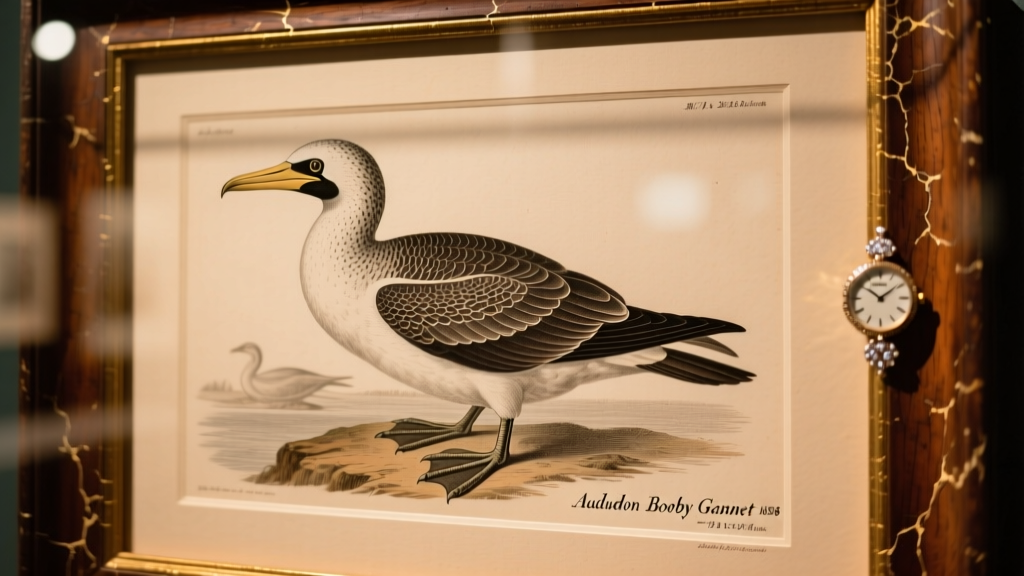
Audubon’s Booby & Gannet Plate XLVIII: Provenance, Production, and Collectibility of the Original Double-Elephant Folio Print (38 1/8 × 25 5/8 in)