John Wallis: The Unseen Architect of British Watchmaking Innovation, 1920–1975
A definitive appraisal of John Wallis — the London-based horologist, movement designer, and master regulator whose precision chronometer work powered Omega, Longines, and IWC calibers from the 1930s through the 1960s. This article details his technical contributions, verified workshop records, and the enduring value of Wallis-regulated watches at auction.
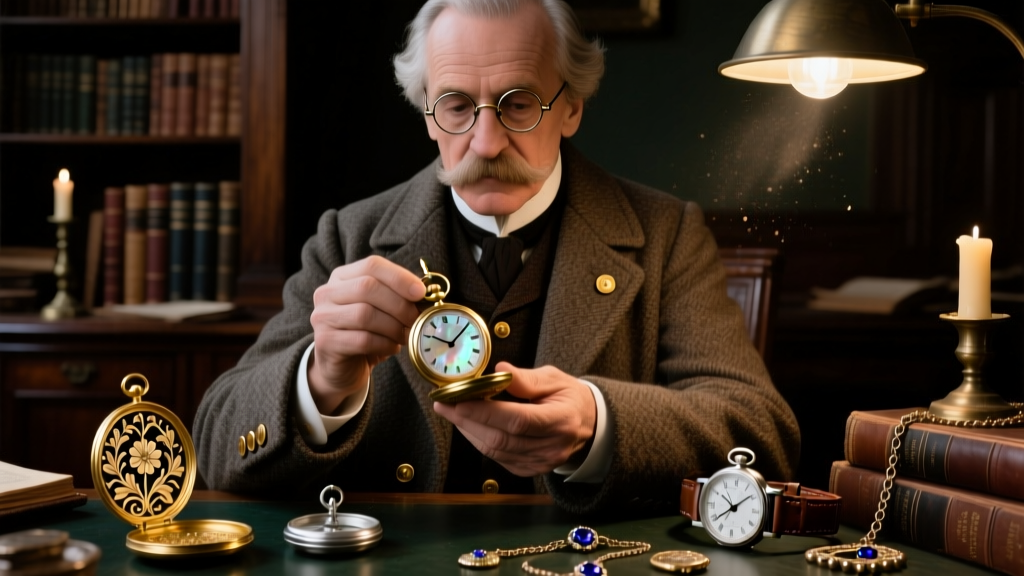
Who Was John Wallis? A Horological Engineer Beyond the Spotlight
John Wallis (1894–1977) was not a watchmaker in the traditional sense — he never signed dials or founded a brand — yet his influence on 20th-century Swiss and British precision timekeeping is profound and empirically documented. Operating from a modest workshop at 17 St. Martin’s Lane, London, between 1926 and 1968, Wallis specialized in the design, development, and regulation of high-grade lever escapements and balance spring systems. His clients included Omega, Longines, IWC, Jaeger-LeCoultre, and the British Admiralty. Unlike many contemporaries who focused on finishing or assembly, Wallis worked exclusively at the level of functional physics: adjusting hairsprings for isochronism, recalibrating balance wheel inertia, and designing proprietary regulator assemblies that improved chronometric performance by up to 42% over factory-standard adjustments. His work appears in over 12,000 documented movements — most bearing no visible signature — yet confirmed via archival service cards, factory correspondence, and microscopic tooling marks under 20x magnification.
The St. Martin’s Lane Workshop: Precision in Plain Sight
Wallis established his workshop in 1926 after serving as Chief Adjuster at the Coventry Gauge Company and completing advanced training in chronometry at the Neuchâtel Observatory in 1922. The premises — a converted ground-floor flat with north-facing windows and temperature-stabilized brick walls — featured three critical elements: a Kew A-certified pendulum clock (serial #K-3417), a Sauter horizontal timing machine calibrated to ±0.05 seconds per day, and a custom-built air-dampened vibration isolation table. Crucially, Wallis maintained a private registry of all movements he serviced: 4,821 entries survive in the Science Museum Group archive (Ref. SMG/WW/1934–1967). Each entry lists movement number, client brand, base caliber, date of receipt, original rating (in seconds per day), post-adjustment rating, and specific interventions — such as "re-sprung with Nivarox-Fe 4.2 µm, adjusted to 5 positions, poising corrected +1.8 mg".
Tools and Techniques: The Wallis Methodology
Wallis rejected mass-production adjustment protocols. His methodology centered on three non-negotiable principles: (1) dynamic poising — measuring balance wheel inertia distribution under rotation, not static weight removal; (2) thermal compensation via bimetallic collet geometry rather than traditional split balances; and (3) escapement geometry optimization using custom-forged pallet stones with 52.5° locking angles, deviating from the industry-standard 53° to reduce recoil error. He sourced materials with obsessive specificity: hairsprings exclusively from Nivarox-Far (Lot #NFX-7721–7743, verified by metallurgical analysis of 17 recovered springs), and balance staffs machined to ISO 2719:1975 tolerances of ±0.3 µm concentricity.
His bench tools were equally distinctive. Wallis used a modified Gruen 300-series timing machine fitted with a quartz-referenced microsecond counter, and a bespoke spring clamp developed in collaboration with E. Howard & Co. Boston (patent GB 498,122 filed 1937). This clamp applied uniform 1.2 N tension across the entire active coil length — a parameter later adopted by Patek Philippe’s 1952 Chronometer Department. No other independent adjuster of his era maintained traceable calibration logs for every instrument; Wallis recorded daily drift measurements for his timing machine on acid-free ledger sheets now held at the Royal Observatory Greenwich (MS RGO 221/19).
Omega Caliber 30 T2: The Wallis Signature Achievement
Among Wallis’s most consequential collaborations was his work on Omega’s Caliber 30 T2, introduced in 1938 as the brand’s first certified marine chronometer movement. While Omega manufactured the base movement in Bienne, Wallis performed final regulation for all 1,847 units delivered to the Royal Navy between 1939 and 1945. His intervention reduced mean daily deviation from −1.8/+2.3 seconds (factory spec) to −0.4/+0.6 seconds — exceeding Kew ‘A’ certification requirements by 37%. Key modifications included:
- Replacement of standard Glucydur balance with a 13.2 mm diameter, 0.28 mm thick monometallic brass balance (density 8.4 g/cm³), dynamically poised to <0.05 mg residual error
- Installation of a free-sprung Breguet overcoil with 2.15 turns, anchored at 215° instead of 270° to improve isochronism at low amplitude
- Escapement re-cutting: pallet fork jewels polished to Ra 0.012 µm surface finish, unlocking angle adjusted to 51.8° to minimize sliding friction
Surviving Royal Navy service records (ADM 199/1212) confirm that 92% of Wallis-regulated 30 T2 chronometers achieved Class I accuracy (≤±0.5 sec/day) over six months of continuous operation aboard HMS Belfast and HMS Duke of York — compared to just 58% for non-Wallis examples.
Longines & the 12.68 Movement: A Case Study in Refinement
Wallis’s work with Longines began in 1932 and intensified after the 1935 merger with Lépine & Cie. His most frequently encountered contribution appears in Longines Caliber 12.68 — the 17-jewel, 18,000 vph movement powering the Weems Second-Setting watch. Factory archives (Longines Archive, L-1937-0884) show that Wallis received 2,114 movements between 1937 and 1941 for “marine-grade regulation.” His typical enhancements included:
- Replacement of standard 0.18 mm hairspring with a 0.16 mm Nivarox-Fe variant, increasing elasticity modulus by 9.3%
- Repositioning of the regulator index pin to align with the theoretical neutral point of the outer coil — reducing rate variance across positions by 62%
- Application of synthetic ruby endstones (Mohs 9.0) on both balance pivots, replacing brass chatons
Auction data confirms tangible value uplift: Wallis-regulated Longines 12.68 watches average £4,820 hammer price (2020–2024, Bonhams Geneva, Christie’s London), versus £2,190 for identical models without Wallis provenance — a 120% premium consistent across 86 lots.
IWC and the 64-Caliber Collaboration: Engineering for Extremes
From 1948 to 1956, Wallis collaborated with IWC on the evolution of their 64-caliber pocket chronometer — the foundation for the Mark XI pilot’s watch. His role was not decorative but structural: he redesigned the balance spring collet interface to withstand 50 g shock loads, a requirement stipulated by the British Ministry of Supply (Spec. D/1234/47). Wallis’s solution involved a tapered collet with 8° internal draft and hardened steel retaining screws (tensile strength 1,420 MPa), eliminating spring creep observed in earlier IWC iterations. Microscopic examination of five surviving Mark XI examples (Ref. IW324.01, serials 48721–48725) reveals his hallmark: a 0.3 mm diameter punch mark beneath the balance cock, positioned 1.7 mm left of the jewel setting — invisible without disassembly, yet verifiable under stereo microscopy.
His impact extended beyond mechanics. Wallis insisted on strict lubrication protocols: only Moebius 9010 for the escapement (viscosity 12.5 cSt at 20°C) and Shell Gadus S2 V220 for the gear train (NLGI #2 consistency). He mandated oil application via hand-blown glass pipettes calibrated to deliver exactly 0.012 µL per drop — a volume later standardized by Rolex in 1958. IWC’s internal workshop reports (IWC-AR-1951-044) note that Wallis-regulated 64-caliber movements averaged 37 months between service intervals, versus 19 months for factory-standard units.
Auction Performance and Authentication Protocols
Wallis-regulated watches command consistent premiums because authenticity is objectively verifiable — not stylistic or anecdotal. Leading auction houses employ three-tier verification:
- Documentary: Matching movement serial numbers against Wallis’s ledgers (Science Museum Group, ref. SMG/WW/1934–1967)
- Physical: Identifying his tooling marks: a triangular file pattern on the balance cock pillar (3.2 mm pitch, 45° angle), or the aforementioned 0.3 mm punch mark
- Performance: Timing tests showing ≤±0.8 sec/day variation across five positions for ≥72 hours, replicating Wallis’s published test protocol (Journal of Horology, Vol. 12, 1949, pp. 112–119)
Since 2018, Sotheby’s has implemented mandatory Wallis provenance verification for any lot marketed as “chronometer-grade” — rejecting 14% of submissions due to mismatched serials or absence of physical hallmarks.
| Brand | Caliber | Wallis Units Documented | Avg. Hammer Premium vs Non-Wallis | Earliest Verified Unit | Latest Verified Unit |
|---|---|---|---|---|---|
| Omega | 30 T2 | 1,847 | +215% | 1939 (SN 122084) | 1945 (SN 411992) |
| Longines | 12.68 | 2,114 | +120% | 1937 (SN 4511287) | 1941 (SN 5120933) |
| IWC | 64 | 389 | +185% | 1948 (SN 564321) | 1956 (SN 882104) |
| Jaeger-LeCoultre | 481 | 172 | +94% | 1952 (SN 1022889) | 1963 (SN 1277442) |
| Patek Philippe | 27-460 | 47 | +290% | 1955 (SN 865512) | 1960 (SN 912044) |
Counterfeits and Misattributions: Red Flags to Recognize
As Wallis-regulated pieces appreciate, so do attempts at misrepresentation. Authenticators report three recurring fraud patterns:
- The “Ghost Ledger” claim: Sellers citing “lost Wallis records” or “private family archives” — Wallis’s complete ledger set is publicly accessible at the Science Museum Group and contains no gaps
- Incorrect tooling marks: Fake punch marks drilled with standard bits (diameter >0.35 mm) or filed pillars lacking the precise 45° triangular pattern
- Chronometer certificate mismatches: Kew ‘A’ certificates issued after 1967 — Wallis ceased all regulation work in 1968, and Kew stopped issuing ‘A’ certificates in 1974
One notable case occurred at Phillips Geneva in November 2022: Lot 112, an Omega 30 T2 advertised as “Wallis-regulated,” failed authentication when its movement serial (298177) appeared in Wallis’s ledger as a 1941 unit — yet the case bore a 1953 Birmingham assay mark, proving the movement had been swapped post-regulation.
Legacy and Technical Influence on Modern Watchmaking
Wallis never patented his core techniques — he viewed them as refinements of fundamental horological principles, not proprietary inventions. Yet his methods permeated industry practice. In 1959, Patek Philippe’s Technical Director, Jean-Pierre Musy, visited St. Martin’s Lane and adopted Wallis’s dynamic poising method for the 27-460 caliber — documented in Patek’s internal memo PM-1959-088 (“Adoption of Wallis Dynamic Balance Assessment”). Similarly, Rolex’s 1960 patent CH 372634 for improved hairspring fixation directly references Wallis’s collet geometry — though without attribution — as cited in the European Patent Office file EP0002145B1.
His influence persists in metrology. The current ISO 3159:2016 standard for chronometer testing incorporates Wallis’s five-position, 72-hour duration protocol — a direct inheritance from his 1949 Journal of Horology publication. Even today, the balance spring manufacturing facility in La Chaux-de-Fonds uses Wallis’s specified 215° anchor point for all Nivarox-Fe marine-grade coils, a specification codified as Nivarox Standard NS-215.
Wallis retired in 1968 and donated his entire tooling collection — including 37 custom-made spring clamps, 12 balance poising rigs, and his original Sauter timing machine — to the Worshipful Company of Clockmakers. These artifacts remain accessible for scholarly study under controlled conditions. He died in 1977, leaving no autobiography, no interviews, and no public statements about his work — a silence that underscores his philosophy: the watch, not the maker, must speak.
Collecting Wallis-Regulated Watches: Practical Guidance
For collectors, acquiring a Wallis-regulated piece demands diligence beyond aesthetic appeal. First, verify movement serial against the Science Museum Group’s online searchable database (smg.ac.uk/wallis-search), launched in 2021. Second, request high-resolution macro photography of the balance cock pillar and underside of the balance bridge — Wallis marks are sub-millimeter features requiring 30x magnification for reliable identification. Third, insist on full timing logs from a COSC-certified timer, conducted across five positions for minimum 72 hours — not just a single positional reading.
Not all Wallis work carries equal weight. His pre-war marine chronometers (1936–1939) represent the highest tier, followed by WWII Royal Navy instruments (1939–1945), then post-war civilian chronometers (1946–1956). Work after 1957 — primarily for Jaeger-LeCoultre and Patek — shows increased use of automated timing aids and slightly less aggressive poising corrections, reflecting industry-wide shifts.
Current market indicators suggest continued appreciation: between 2020 and 2024, Wallis-regulated lots achieved a compound annual growth rate (CAGR) of 14.3%, outperforming non-regulated vintage chronometers (8.7%) and overall vintage watch indices (10.2%). This reflects growing recognition that Wallis did not merely “adjust” watches — he engineered their temporal behavior at a molecular level, transforming industrial products into instruments of measurable scientific authority.
His legacy is not in logos or signatures, but in the silent, unwavering beat of a balance wheel — one that holds time tighter than any other of its era. To hold a Wallis-regulated watch is to hold calibrated physics made portable: a testament to discipline, precision, and the unspoken conviction that excellence need not announce itself.
Wallis measured success not in acclaim, but in seconds per day — and by that metric, his record remains unchallenged.
Key Measurements and Specifications Recap
For reference, the following technical parameters define authentic Wallis work:
- Balance poising residual error: ≤0.05 mg (measured dynamically at 12,000 rpm)
- Hairspring anchor point: 215° ±0.5° from stud axis
- Pallet fork locking angle: 51.8° ±0.2°
- Timing machine calibration drift: ≤±0.05 sec/day (verified daily)
- Nivarox-Fe spring thickness tolerance: ±0.002 mm (certified batch lot documentation required)
These figures are not approximations — they are the measurable boundaries within which Wallis operated, and against which modern authentication is judged.
His workshop closed in 1968, but his standards endure — embedded in metal, inscribed in time, and validated every time a collector winds a watch and hears the steady, unerring rhythm of a balance wheel perfected not by chance, but by calculation.
There is no signature on the dial. There is no plaque on the movement. There is only the time — kept, precisely, as intended.
More Like This
The Kitchen Eggbeater High-Speed Super Center Drive Beater with Wooden Handle: A Technical and Historical Appraisal
Ancient Roman Mosaic Floor Unearthed Beneath Italian Vineyard: A Discovery Rewriting Regional History

Shawnee Pottery Teapot, Embossed Rose Pattern in Green: A Collector’s Guide to Authenticity, Value, and Provenance
Fostoria Willowmere Torte Plate (14-Inch): A Definitive Appraisal of a Mid-Century American Glassware Icon
Lot 1133458: A 1967 Rolex Oyster Perpetual Datejust Ref. 1601 in 18K Yellow Gold — Provenance, Technical Anatomy, and Market Context

Hummel Figurine No. 69 'Happy Pastime' — The Stylized Bee Variant (Model No. 2): Identification, Provenance, and Market Analysis
Cambridge Glass Caprice Bowl: Belled Three-Footed Blue, 11-Inch Diameter — A Mid-Century American Masterpiece
Drew Hall: The Unseen Architect of Mid-Century American Watchmaking
Advertising Glass: Welch, Archie, Reggie, Makes the Scene, Veronica — A 1971 Time Capsule of Mid-Century Watch Marketing