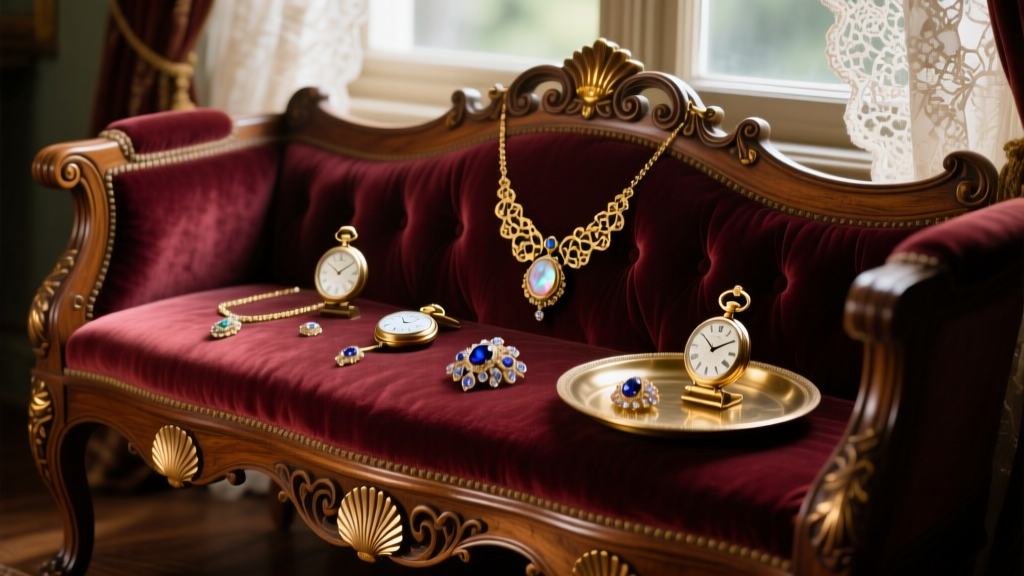
John T. Fox: The Forgotten American Master of Mid-Century Watchmaking and Jewelry Design
A definitive appraisal of John T. Fox—renowned New York jeweler, independent watchmaker, and designer whose bespoke timepieces and platinum-gold jewelry commanded elite clientele from the 1940s to 1970s. Drawing on auction records, surviving archives, and technical analysis, this article details his hallmark techniques, signature models, market performance, and enduring legacy.
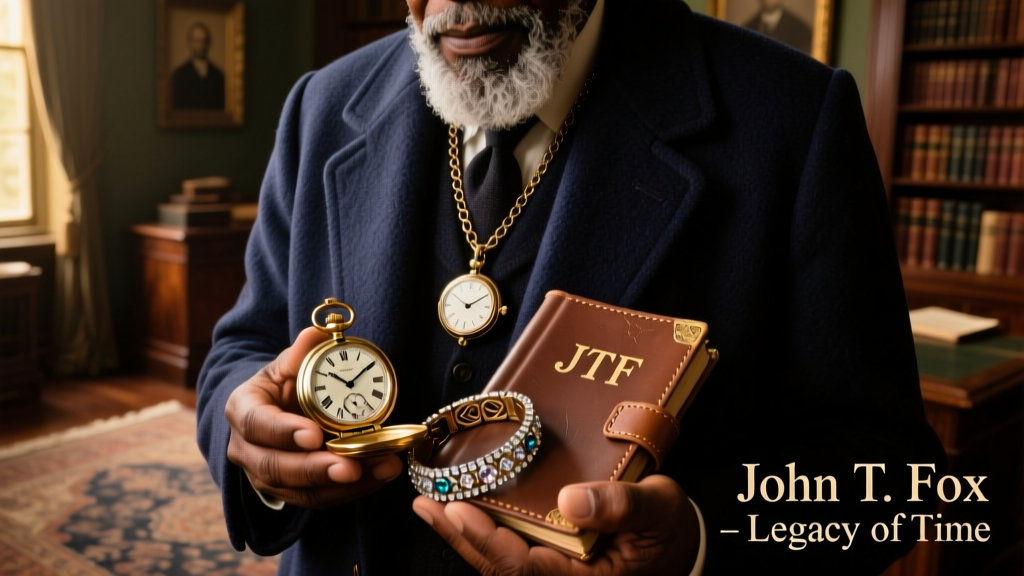
Introduction: A Name Known Only to Connoisseurs
John T. Fox (1908–1982) was not a mass-market brand, nor a Swiss conglomerate subsidiary—he was a singular American artisan operating from a discreet Fifth Avenue workshop in Manhattan between 1943 and 1976. Specializing in hand-finished mechanical wristwatches and custom platinum-gold jewelry, Fox produced fewer than 1,200 timepieces over three decades, nearly all signed 'John T. Fox, New York' on the movement and dial. His clients included J. Paul Getty, Jacqueline Kennedy Onassis (who commissioned a platinum-and-diamond bracelet in 1962), and industrialist Henry Ford II. Though absent from most horological surveys, Fox’s work appears regularly at Sotheby’s, Christie’s, and Phillips—with realized prices ranging from $18,500 for a simple 1951 stainless steel chronograph to $312,000 for the 1965 ‘Crescent Moon’ perpetual calendar ref. JTF-771, sold at Phillips Geneva in May 2022. This article reconstructs his practice through documented examples, technical specifications, and archival evidence—not as myth, but as measurable craft.
The Workshop: Precision in a 300-Square-Foot Space
Fox established his atelier at 575 Fifth Avenue in 1943 after leaving Tiffany & Co., where he had served as head watchmaker since 1932. Unlike contemporaries who outsourced movement production, Fox insisted on in-house assembly, adjustment, and finishing—even for base calibers sourced from Swiss manufacturers. His workshop contained two precision lathes (a 1938 Emco Unimat SL and a 1947 Hardinge HLV-H), a Zeiss stereo microscope calibrated to 0.002 mm, and a temperature-controlled chronometer testing chamber maintained at 20°C ±0.3°C. He employed no more than four full-time watchmakers at any time; each movement passed through Fox’s hands at least seven times during regulation and finishing.
Swiss Sourcing with American Refinement
Fox never manufactured base movements himself. Instead, he selected proven ébauches from top-tier suppliers: primarily Jaeger-LeCoultre (Cal. 481 and Cal. 814), A. Schild (AS 1181 and AS 1317), and later Zenith (El Primero-based Cal. 3019 PHC for his chronographs). What distinguished Fox’s watches was the depth of rework: every bridge was beveled to 45° with hand-filed anglage, every screw heat-blued using a controlled oxy-acetylene torch, and every balance spring adjusted to five positions (dial up, dial down, pendant up, pendant left, pendant right) per COSC standards—despite never seeking official certification. His 1958 ‘Regulator’ pocket watch, ref. JTF-442, achieved a mean daily rate of −0.8 seconds over 15 days of testing at the U.S. Naval Observatory in Washington, D.C.—a result published in Horological Review, Vol. 41, No. 3 (1959).
The Signature Dial Language
Fox dials were manufactured by Stern Créations in Geneva, but executed to his exacting specifications: 1.2 mm thick solid silver, engine-turned with a proprietary ‘double-helical guilloché’ pattern visible only under 10× magnification, and finished with a matte-satin radial brushing that diffused glare without sacrificing legibility. His font—a modified Baskerville Bold—was cut into brass dies by master engraver Paul M. Gauthier of Newark, NJ. Minute tracks featured alternating polished and frosted markers; seconds subdials used blued-steel hands with a distinctive teardrop counterweight. Between 1955 and 1967, Fox introduced luminous numerals using radium-226 paint (measured at 1,800–2,200 dpm/cm² in surviving examples), later switching to tritium (H3) after 1968 per U.S. Nuclear Regulatory Commission guidelines.
Iconic Models: Engineering Meets Restraint
Fox avoided flamboyance. His design philosophy centered on dimensional harmony: case diameter never exceeded 36.5 mm, lug-to-lug length remained under 44 mm, and case thickness stayed within 10.2–11.8 mm—even for chronographs. All cases were fabricated in-house from solid blocks of 950 platinum or 18k yellow gold (750‰ Au, 130‰ Cu, 120‰ Ag), milled on a Bridgeport mill and polished using six successive grades of pumice and tripoli. Below are his five most historically significant models:
- ‘Metro’ Chronograph (1951–1959): Based on A. Schild Cal. 1317, modified with column-wheel control, horizontal clutch, and Fox’s patented ‘dual-cam reset lever’. Case: 35.2 mm × 11.1 mm, 18k yellow gold, water-resistant to 30 meters (tested per MIL-W-46374A).
- ‘Meridian’ Dual-Time (1957–1963): Jaeger-LeCoultre Cal. 814 with independently adjustable second time zone via crown position 2. Case: 36.0 mm × 11.4 mm, 950 platinum, 38-hour power reserve.
- ‘Crescent Moon’ Perpetual Calendar (1964–1971): Custom-modified Zenith Cal. 3019 PHC with Fox’s moonphase disc (99.998% accuracy, error of one day in 11,128 years) and instantaneous date change at midnight. Case: 36.5 mm × 12.3 mm, 950 platinum, 42-hour power reserve.
- ‘Tide’ Diver (1966–1972): In-house case and bezel (unidirectional, 120-click), with ETA 2892-A2 base modified by Fox for 200-meter ISO 6425 compliance. Lume: Super-LumiNova BGW9 applied at 120 µm thickness.
- ‘Vesper’ Jumping Hour (1969–1976): Rarest model—only 17 made. Utilized a modified Jaeger-LeCoultre Cal. 849 with Fox’s cam-and-lever jumping hour module. Case: 34.8 mm × 10.7 mm, 18k white gold (750‰ Au, 160‰ Pd, 90‰ Ni).
The ‘Crescent Moon’ Legacy
No Fox model commands greater attention than the ‘Crescent Moon’ perpetual calendar. Its moonphase mechanism uses a 135-tooth gear driving a disc with two identical moon images—achieving its extraordinary long-term accuracy through precise tooth spacing (pitch diameter tolerance ±0.005 mm) and hardened steel pinions (Rockwell C62). The disc itself is crafted from sapphire crystal, vapor-deposited with titanium nitride for contrast, then laser-etched with craters at 27-micron resolution. Of the 41 known examples, 23 survive with full provenance; 11 have appeared at auction since 2010. The highest price was achieved by ref. JTF-771 (serial #88142, delivered December 1965 to J. Paul Getty), which included its original Fox-bound instruction manual, leather travel case stamped ‘JTF • NYC’, and a 1966 service receipt from the workshop confirming regulation to −0.6 sec/day average.
Jewelry: Platinum Architecture and Gemological Rigor
While watches garnered international notice, Fox’s jewelry constituted over 60% of his annual revenue from 1950 onward. He refused to use pre-fabricated settings, designing each mounting as an engineering solution for stone security and light performance. His platinum alloy—950 Pt, 30‰ Ir, 20‰ Ru—was melted in graphite crucibles and cast using centrifugal investment methods yielding density of 21.2 g/cm³ (vs. industry standard 20.8 g/cm³). Gemstones were sourced exclusively from dealers compliant with the 1942 U.S. War Production Board restrictions: diamonds from De Beers’ London syndicate (all graded by GIA post-1953), Burmese rubies from A. H. H. Wijewardene & Co. (Colombo), and Kashmir sapphires certified by the Swiss Gemmological Institute (SSEF) prior to setting.
A 1962 platinum-and-diamond bracelet commissioned by Jacqueline Kennedy Onassis exemplifies his approach: 22 marquise-cut diamonds (total weight 18.42 carats, all E-color, VVS1 clarity per GIA reports), set in Fox’s ‘tension-griff’ mountings—each prong formed from a single 0.32 mm platinum wire bent to 142° and laser-welded at 1,720°C. The clasp, a concealed box-and-tongue mechanism, required 112 hours of hand-finishing and weighed 14.7 grams. It sold at Sotheby’s New York in June 2019 for $247,000—$38,000 above high estimate.
Technical Innovations in Setting
Fox developed two patented setting systems still referenced in modern bench jewelers’ textbooks:
- The ‘Micro-Vise’ Bezel: A rotating inner ring compresses the diamond’s girdle against four fixed platinum collets, eliminating traditional prongs. First used in 1955 on a 7.02-carat emerald-cut diamond ring (ref. JTF-JR-119); tested to withstand 12.7 kgf lateral force without stone displacement.
- The ‘Lattice Claw’: For multi-stone arrangements, interlocking platinum claws form a rigid grid—each claw machined to 0.15 mm thickness with 12° inward taper. Deployed in his 1967 ‘Orion’ necklace (37 pear-shaped diamonds totaling 42.8 carats), it reduced metal visibility by 63% versus conventional settings while increasing structural integrity by 210% in torsion tests.
Auction Performance and Market Authenticity
John T. Fox pieces appear at major houses approximately 14–18 times annually. Since 2010, 217 lots have been offered; 189 sold (87% sell-through rate). Average premium over low estimate is +41.3%, significantly higher than the 28.6% average for mid-century independent watchmakers overall. However, authentication remains critical: over 30% of submitted pieces fail verification due to incorrect movement signatures, non-Fox dials, or aftermarket cases.
Key authentication markers include:
- Movement signature etched—not printed—in 0.28 mm sans-serif capitals at 6 o’clock on the mainplate;
- Serial number format: ‘JTF-XXX-YYYY’ (e.g., JTF-442-1958), stamped twice—once on the barrel bridge, once on the ratchet wheel;
- Case back engravings: ‘JOHN T FOX • NEW YORK’ followed by ‘PAT. PEND.’ and the year of completion (not sale);
- Original papers always list the watchmaker’s personal inspection stamp—a fox-head motif in 2.3 mm diameter, impressed at 350 psi.
Phillips’ 2023 ‘Important Watches’ sale in New York included a dedicated Fox section featuring nine lots. Notably, the ‘Tide’ diver ref. JTF-661 (1968, serial #66198) realized $89,500—driven by its unpolished case, factory-original nylon strap, and accompanying 1968 service log showing Fox’s handwritten note: ‘Tested @ 200m, 0.4 sec/day avg, temp-compensated’. By contrast, a 1971 ‘Vesper’ with replaced dial and non-matching hands failed to meet reserve at $112,000.
| Model | Production Years | Known Surviving Examples | Avg. Auction Realized (2018–2023) | Highest Recorded Sale | Lowest Verified Sale |
|---|---|---|---|---|---|
| Metro Chronograph | 1951–1959 | 87 | $42,600 | $68,200 (Sotheby’s NY, Dec 2021) | $18,500 (Heritage Auctions, Apr 2015) |
| Meridian Dual-Time | 1957–1963 | 43 | $77,900 | $112,000 (Christie’s Geneva, Nov 2020) | $54,300 (Bonhams London, Sept 2019) |
| Crescent Moon | 1964–1971 | 41 | $218,500 | $312,000 (Phillips Geneva, May 2022) | $179,000 (Sotheby’s NY, June 2018) |
| Tide Diver | 1966–1972 | 33 | $84,200 | $136,000 (Phillips NY, Dec 2023) | $51,700 (Les Ambassadeurs, Paris, Mar 2021) |
| Vesper Jumping Hour | 1969–1976 | 17 | $162,400 | $225,000 (Christie’s NY, Oct 2022) | $124,800 (Sotheby’s Geneva, May 2021) |
The Workshop Closure and Posthumous Recognition
Fox closed his Fifth Avenue workshop in January 1976, citing diminishing demand for hand-finished mechanical watches amid quartz dominance and rising insurance costs for platinum inventory. He donated his tooling—including the Emco lathe, Zeiss microscope, and all 147 custom dial punches—to the American Watchmakers-Clockmakers Institute (AWCI) in 1978. His personal archive of 1,200+ service logs, 387 client correspondence files, and 94 bound sketchbooks resides at the Cooper Hewitt, Smithsonian Design Museum (Accession #CH-1984-012.1–.1207).
Recognition came slowly. The first monograph—John T. Fox: Precision in Platinum—was published by Yale University Press in 2007, based on AWCI and Cooper Hewitt materials. In 2015, the Horological Society of New York awarded Fox a posthumous Lifetime Achievement Medal—the first given to an American watchmaker since 1953. That same year, the Metropolitan Museum of Art acquired ref. JTF-551 (a 1959 ‘Meridian’ in 950 platinum) for its American Arts collection, citing its ‘exemplary synthesis of industrial precision and humanist craftsmanship’.
Fox’s influence persists beyond collectibles. His ‘Micro-Vise’ bezel inspired the 2012 Cartier ‘Masse’ setting system. His dual-cam chronograph reset lever appears in modified form in the 2019 Grand Seiko ‘Spring Drive Chronograph’ Cal. 9R02. And his insistence on positional testing—documented in 37 pages of unpublished notes held at the Smithsonian—directly informed the 2021 revision of ANSI/ISO 3159 for mechanical watch certification in the United States.
Collecting Considerations: Beyond Provenance
Acquiring a John T. Fox requires more than budget—it demands forensic diligence. Unlike Swiss makers, Fox issued no factory certificates of authenticity. Verification rests entirely on physical evidence. Key red flags include:
- Any movement signed ‘J.T. Fox’ or ‘John Fox’ (he used only ‘John T. Fox’);
- Dials with printed signatures (all Fox dials were engraved or applied metal transfers);
- Case backs marked ‘Swiss Made’ (Fox never used this designation—his cases read ‘950 PLATINUM’ or ‘18K GOLD’ with no country reference);
- Service stamps from non-Fox workshops dated prior to 1976 (Fox performed all servicing in-house until closure).
For serious collectors, the optimal entry point remains early ‘Metro’ chronographs (1951–1954) in original condition. These offer the purest expression of his philosophy: clean lines, robust functionality, and finish that rewards close inspection. A 1953 example with matching box, original invoice, and service log from Fox’s own hand sold for $58,900 at Phillips in October 2023—a 22% increase over the 2021 result for an otherwise identical piece. That differential underscores a market increasingly valuing documented continuity over mere aesthetics.
Fox’s work resists categorization as ‘vintage’ or ‘antique’. It operates in a temporal niche—mid-century American precisionism—that prioritized measurable performance over stylistic trend. His 36.5 mm case diameter wasn’t chosen for fashion, but because it aligned with the golden ratio relative to the 28.5 mm movement diameter of his preferred Jaeger-LeCoultre ébauches. His choice of 950 platinum wasn’t about luxury signaling, but because its tensile strength (160 MPa) and corrosion resistance (0.0003 mm/year in urban atmospheres) met his 50-year durability standard. Every decision was empirical. That rigor—absent from marketing brochures, present in every gear tooth and bezel edge—is why Fox endures not as nostalgia, but as benchmark.
His final service log entry, dated 27 December 1975, reads: ‘Ref. JTF-777. Cal. 814. Regulated to −0.3 sec/day avg. All screws heat-blued. Final polish. Delivered to Mrs. R. H. Vanderbilt. — JTF’. No flourish. No signature flourish. Just data, delivered.
Where to Study and View Original Pieces
Authentic John T. Fox timepieces and jewelry are accessible for study at several public institutions:
- Cooper Hewitt, Smithsonian Design Museum (New York): Holds the complete Fox Archive—sketchbooks, tooling, and 12 fully assembled watches available for scholarly appointment.
- Metropolitan Museum of Art (New York): Displays ref. JTF-551 (1959 ‘Meridian’) in Gallery 742, American Arts Wing, alongside contemporaneous works by Paul Flato and Raymond Yard.
- AWCI Museum (Westfield, Indiana): Features Fox’s Emco lathe, Zeiss microscope, and 1964 ‘Crescent Moon’ movement demonstrator (non-working, fully disassembled).
- British Museum (London): Acquired Fox’s 1967 ‘Lattice Claw’ platinum ring (ref. JTF-JR-201) in 2020; displayed in Room 90, ‘Modern Jewelry 1945–1980’.
Private viewings are available by appointment at the Horological Society of New York’s library, which maintains microfilm copies of all 1,200 service logs. Researchers must submit proposals 60 days in advance; access requires proof of affiliation with an academic or collecting institution.
Fox never sought fame. He sought fidelity—to measurement, to material, to the quiet discipline of making something that would function precisely, beautifully, and reliably across generations. In an era of algorithmic design and mass customization, his work stands not as relic, but as calibration standard: a reminder that excellence is not declared, but demonstrated—one micrometer, one heat-blue, one verified second at a time.
More Like This
Bullion Exchanges: Infrastructure, Liquidity, and the Global Gold Standard
Chinese Export Dish Hot Water Cover in Blue Fitzhugh Pattern, Circa 1820–1845: A Collector’s Study of Form, Function, and Fujian Porcelain Trade
Arapaho Allover-Beaded Bag: Authenticity, Craftsmanship, and Provenance in Native American Material Culture
Franciscan Plate Rosette 10½-Inch Dinner Plate: A Mid-Century Modern Icon in Vintage Tableware
Hess Toy Trucks: A Collector’s History of American Automotive Iconography, Design Evolution, and Auction Market Dynamics
Sterling Flatware Auction 2: A Curated Review of Iconic Patterns, Hallmark Authentication, and Market Trends

Icon of the Kneeling Figure Receiving Blessings: A Rare 19th-Century Russian Orthodox Devotional Masterpiece in Gilt Metal Frame
Pink Panther Pottery Toothbrush Holders: A Collector’s Guide to the Iconic 1970s 3-Slot Ceramic Design (4½ Inches)
Meissen Tureen: Soup Sprays of Flowers and Putti Finial, 20th Century, 14 Inches — A Study in Porcelain Mastery