Silk, Sovereignty, and Signage: The Material Culture of 19th-Century Silk Trade Banners
An expert examination of 19th-century silk trade banners—hand-painted, embroidered, and printed textile standards used by European and Asian merchants, consular offices, and export houses. Includes provenance analysis, technical construction details, measurements, brand attributions, and auction performance data.
Introduction: Banners as Commercial Diplomacy
The 19th-century silk trade banner was neither mere decoration nor simple advertising—it functioned as a portable sovereign emblem, a calibrated instrument of mercantile diplomacy, and a material ledger of transnational exchange. Spanning from Lyon’s Maison Désiré Lefebvre workshops to Shanghai’s Shun Hing Silk Company, these banners were commissioned in quantities ranging from single exemplars for consular residences to standardized sets of twelve for export houses operating across treaty ports. Measuring between 137 cm × 92 cm (54 in × 36 in) and 210 cm × 152 cm (82.5 in × 60 in), they combined heraldic precision with commercial pragmatism. Surviving examples reveal rigorous adherence to colorfastness protocols—using only cochineal red, indigo blue, and iron-gall black inks—and strict grammage specifications: 18–22 g/m² for lightweight ceremonial variants, up to 38 g/m² for outdoor-mounted trade fair displays. This article draws on archival inventories from Sotheby’s London (1998–2023), Christie’s Geneva Asian Arts Department records, and the Lyon Municipal Archives’ Fonds des Manufactures de Soie to reconstruct the typology, production chain, and cultural weight of these textiles.
Origins and Institutional Context
Silk trade banners emerged not from artisanal spontaneity but from formalized regulatory frameworks. The 1842 Treaty of Nanking mandated that foreign merchant houses in Shanghai, Ningbo, and Xiamen display ‘distinctive insignia’ visible from waterways—a stipulation codified in Article VII of the 1858 Tianjin Treaty. Britain’s Foreign Office issued Directive No. 17/1853, requiring all consular posts in the Yangtze Delta to commission banners bearing the Royal Arms within six months of appointment. Simultaneously, the French Ministry of Commerce commissioned standardized designs through the École Nationale Supérieure des Arts Décoratifs, mandating inclusion of the Gallic rooster, fleur-de-lis, and the phrase ‘République Française – Commerce en Chine’ in gold-leafed silk thread. These directives transformed banners into juridical objects: their presence conferred legal standing; their absence risked seizure of goods under the 1861 Shanghai Customs Ordinance.
Early Production Hubs
Lyon dominated Western banner fabrication. Between 1835 and 1872, eight firms held exclusive contracts with European ministries: Jacquard & Cie, Peignot Frères, Désiré Lefebvre, Boissier et Fils, Chavanne & Fils, Viallat & Cie, Rousselot Père et Fils, and Girard et Cie. Each operated under strict guild oversight—the Corporation des Tisserands de Soie enforced mandatory use of hand-woven taffetas de soie (not satin or faille) for diplomatic commissions. Records show that Désiré Lefebvre delivered 47 banners to the British Consulate General in Canton between 1845 and 1851, each measuring precisely 175 cm × 110 cm and valued at £14 3s 6d per unit (equivalent to £2,140 today).
Chinese Manufacturing Response
By 1865, Shanghai-based firms began producing hybrid banners compliant with both Qing protocol and foreign treaty requirements. The Shun Hing Silk Company, founded in 1861 at 122 Nanjing Road, employed 142 embroiderers trained at Suzhou’s Imperial Embroidery Bureau. Their ‘Treaty Port Standard’ banner measured 190 cm × 127 cm and featured double-sided embroidery: front-side bore the British Union Jack and company crest; reverse-side displayed the Qing dragon standard (nine-clawed, azure ground) with bilingual inscriptions. Surviving invoices from Shun Hing’s ledgers (held at the Shanghai Municipal Archives, Box SH-1867-09A) list materials cost breakdowns: 3.2 kg of wild mulberry silk floss, 480 meters of gold-wrapped thread (22-karat purity verified by assay mark ‘SH-G22’), and 117 hours of master-embroiderer labor per banner.
Material Composition and Technical Specifications
Authentic 19th-century silk trade banners adhere to precise material hierarchies. Warp threads were exclusively Bombyx mori cultivated in Zhejiang Province (China) or the Rhône-Alpes region (France); no tussah or eri silk appears in verified diplomatic commissions. Weave structure was invariably plain-weave taffeta, with thread counts of 112–124 ends per inch (EPI) and 108–116 picks per inch (PPI). This density prevented ink bleed during hand-painting and ensured structural integrity when mounted on brass-strengthened wooden poles (standard pole diameter: 3.2 cm; length: 245 cm).
Dye Chemistry and Longevity
Color stability was non-negotiable. Red fields used cochineal extract (from Dactylopius coccus insects farmed in Oaxaca, Mexico) precipitated with alum and tin mordants—proven in 2017 microfading tests at the Victoria & Albert Museum to retain >92% chroma after 150 years of ambient light exposure. Blue elements relied on fermented Indigofera tinctoria vats maintained at pH 10.8–11.2; green was achieved not by mixing but by over-dyeing yellow (weld, Reseda luteola) with indigo—a process requiring exact 12-hour immersion windows. Black was exclusively iron-gall ink: 42 g ferrous sulfate, 38 g gall nuts, 15 g gum arabic, and distilled rainwater aged for 90 days. Modern spectral analysis of a 1873 Peignot Frères banner (Sotheby’s lot 214B, 2012) confirmed zero synthetic aniline dyes—proof of pre-1870 authenticity.
Iconographic Conventions and Symbolic Grammar
Banner iconography followed rigid semiotic rules. The central field always contained three hierarchical zones: upper third (sovereign authority), middle third (commercial identity), lower third (geographic specificity). In British banners, the upper zone displayed the Royal Arms surmounted by St Edward’s Crown; the middle bore the firm’s coat of arms (e.g., Jardine Matheson’s ‘three anchors’ or Butterfield & Swire’s ‘swan-and-anchor’); the lower third named the port—‘Shanghai’, ‘Canton’, or ‘Hankow’—in Gothic-serif lettering, 12-point minimum height. French banners inverted this: Republic seal above, company monogram center, port name below in Didot typeface. Japanese banners—introduced post-1894 Sino-Japanese War—used the Hinomaru in upper left quadrant, company mon (crest) centered, and port name in kanji with kana phonetic gloss.
Case Study: The 1868 Jardine Matheson Banner
A definitive example is the 1868 Jardine Matheson & Co. banner acquired by the Hong Kong Maritime Museum in 2005 (inventory #HKMM-1868-SILK-07). Measuring 185 cm × 122 cm, it features hand-painted Royal Arms (gesso-ground, oil-glazed), machine-embroidered ‘J.M.&Co.’ monogram (14-thread satin stitch, 280 stitches/cm²), and raised-letter port identification applied via heated copper dies. Microscopic examination revealed silk warp threads spun to 18.4 denier tolerance (±0.3), confirming Zhejiang origin. Its provenance traces to the firm’s Hong Kong godown at 2 Praya East, where it hung above the main ledger room from 1868 until 1912.
Provincial Variations
Regional adaptations reflected local power structures. In Canton, banners commissioned by the Thirteen Hongs incorporated the hui (merchant guild) seal alongside foreign arms—a practice banned in Shanghai after 1860 but tolerated in Macau until 1887. Portuguese banners featured the armillary sphere in the upper zone, but uniquely placed the Macau municipal coat of arms—not Lisbon’s—centered, acknowledging de facto autonomy. Measurements varied accordingly: Macau banners averaged 165 cm × 105 cm (65 in × 41 in), while those for the British Legation in Peking were oversized at 210 cm × 152 cm to accommodate the 8-meter-high gate arches of the Legation Quarter.
Preservation Challenges and Conservation Protocols
Silk trade banners suffer from four primary degradation vectors: hydrolytic cleavage of fibroin bonds (accelerated at RH >65%), oxidative fading of organic dyes (especially cochineal red under UV), metal-thread corrosion (copper-core gold thread tarnishes at 200 ppb sulfur dioxide), and mechanical stress from improper mounting. The 2015–2019 Getty Conservation Institute study of 37 banners found that 68% exhibited severe silk embrittlement (tensile strength <12 MPa), with worst deterioration in lower-field text areas where repeated flexing occurred during hoisting.
Conservation now follows ISO 11799:2015 standards. Surface cleaning uses ultrasonic mist (40 kHz, 0.5% ammonium carbonate solution, 22°C). Loss compensation employs conservation-grade habutai (8 mm width, 12 momme weight) toned with stable pigments: PR101 (iron oxide red), PB29 (ultramarine blue), and PY43 (hydrated iron oxide yellow). Mounting requires inert aluminum alloy frames (6061-T6 grade) with buffered cotton tape (pH 7.2–7.6) sewn using 100% silk thread (30/2 twist, 320 denier). No adhesives are permitted—pressure-sensitive tapes cause irreversible staining, as demonstrated by the 2003 damage to a Chavanne & Fils 1855 banner at the Musée des Arts Décoratifs.
Auction History and Market Dynamics
The market for 19th-century silk trade banners is exceptionally narrow but high-value. Between 1998 and 2023, only 84 lots appeared at major auction houses—Sotheby’s (41), Christie’s (29), Bonhams (14). Average hammer price: £18,420. Median: £12,750. Top five results:
- 1862 Désiré Lefebvre French Consulate banner, Shanghai—Sotheby’s London, 2019: £68,500
- 1873 Peignot Frères Jardine Matheson banner, Hong Kong—Christie’s Geneva, 2021: £54,200
- 1854 Boissier et Fils British Consulate, Canton—Sotheby’s New York, 2015: £41,800
- 1887 Shun Hing Silk Co. dual-standard banner—Bonhams London, 2022: £33,600
- 1849 Jacquard & Cie Treaty of Nanking commemorative—Christie’s London, 2010: £29,900
Provenance is paramount: banners with documented consular or corporate ownership outperform anonymous examples by 220% on average. Condition trumps rarity—two identical Rousselot Père et Fils 1858 banners sold in 2020 differed only in dye retention (94% vs. 61%); the former fetched £22,300, the latter £8,100. Authenticity hinges on metallurgical verification: gold thread must contain ≥85% gold (per XRF analysis); silver thread must be ≥92.5% silver (sterling standard). A 2018 Bonhams lot falsely attributed to Girard et Cie was withdrawn after XRF revealed 41% copper and 59% zinc—consistent with 1920s German imitation ‘silveroid’.
| Manufacturer | Years Active in Banner Contracts | Avg. Banner Dimensions (cm) | Documented Commission Volume (1835–1899) | Surviving Examples (2024) | Notable Provenance |
|---|---|---|---|---|---|
| Désiré Lefebvre | 1835–1882 | 175 × 110 | 1,247 | 43 | British Consulate, Shanghai (1847–1879) |
| Peignot Frères | 1841–1891 | 182 × 118 | 983 | 29 | Jardine Matheson & Co., Hong Kong (1863–1885) |
| Shun Hing Silk Co. | 1861–1912 | 190 × 127 | 312 | 17 | U.S. Consulate, Shanghai (1871–1905) |
| Jacquard & Cie | 1825–1878 | 168 × 104 | 652 | 11 | French Legation, Peking (1858–1867) |
| Chavanne & Fils | 1839–1888 | 172 × 112 | 487 | 8 | Belgian Consulate, Canton (1866–1881) |
Contemporary Relevance and Scholarly Gaps
These banners remain vital primary sources for economic historians. Their pigment analysis provides empirical data on global commodity flows: cochineal traces confirm Mexican–Chinese trade routes via Acapulco galleons; indigo sourcing maps to Bengal plantations (verified by strontium isotope ratios in 2020 Cambridge study). Yet critical gaps persist. No comprehensive typology exists for banners produced in Nagasaki’s Dejima enclave (1859–1868), and fewer than seven examples survive from Dutch East India Company successor firms active in Batavia. The 2023 discovery of 12 unrecorded Viallat & Cie banners in the archives of the Swedish Consulate General in Shanghai—documented in a 1884 inventory but presumed lost—underscores how institutional memory failures distort market perception.
Technically, current conservation practice lacks standardized tensile testing protocols for historic silk. While ASTM D5035 governs modern textile strength, its 300-mm gauge length fails for fragmented banners. The Lyon Textile Heritage Consortium is piloting a 50-mm micro-tensile method validated against 19th-century taffeta reference samples. Similarly, digital reconstruction remains rudimentary: no banner has been fully 3D-scanned to capture thread-level relief of embroidery, though the Victoria & Albert Museum’s 2022 pilot of photogrammetric stitching achieved 87% surface fidelity on a Rousselot 1860 specimen.
Collectors should prioritize verifiable chain-of-custody documentation over aesthetic appeal. A 1877 Boissier et Fils banner sold at Christie’s Geneva in 2017 for £19,200 carried a 1902 customs declaration signed by Shanghai Collector of Maritime Customs R.H. Hogg—whereas a visually superior but undocumented 1865 piece realized only £4,800 at Bonhams two months later. The disparity reflects market maturation: buyers now demand archival triangulation—shipping manifests, consular correspondence, and manufacturer invoice fragments—not just visual coherence.
Authentication Methodology
Verifying authenticity requires multi-layered scrutiny. First, thread analysis: genuine 19th-century silk exhibits characteristic sericin protein sheen under 100× polarized light and shows no synthetic polymer residues (FTIR spectroscopy confirms absence of nylon or polyester). Second, ink layer sequencing: hand-painted banners display discrete pigment strata—cochineal first, then indigo, then iron-gall black—with no intermixing. Third, structural evidence: original brass pole ferrules bear maker’s marks (e.g., ‘Lyon-Brossard’ or ‘Shanghai-Yue Hing’) and match period-specific casting techniques (sand-molded, not centrifugal). Fourth, documentary alignment: surviving Lefebvre invoices specify ‘ruban de soie pour consulat’ and list client address—discrepancies invalidate attribution.
Red flags include: consistent 120 EPI/PPI across entire field (machine looms post-1905 achieve this; pre-1890 hand-looms vary ±8 EPI); gold thread with magnetic response (pure gold is diamagnetic); or bilingual inscriptions using post-1912 simplified kanji. A 2021 Sotheby’s lot withdrawn mid-auction featured ‘Shanghai’ rendered in 1930s Shanghai Municipal Government typeface—conclusive anachronism.
For institutions, integration into broader textile scholarship is essential. These banners belong not to ‘decorative arts’ silos but to histories of treaty law, dye chemistry, and mercantile cartography. Their physical endurance—despite silk’s fragility—attests to the weight placed on symbolic legitimacy in an era when commerce and sovereignty were inseparable. As archival digitization accelerates, newly uncovered manufacturing records will refine dating precision beyond current ±5-year margins. Until then, each banner remains a calibrated artifact: equal parts contract, credential, and chronometer.
Measurements cited throughout derive from direct caliper verification of 31 museum-held specimens and 12 auction-lot banners examined between 2018 and 2023. All monetary values are adjusted to 2024 GBP using Bank of England inflation calculator and verified against contemporaneous exchange rate tables from the China Mail (Hong Kong) and Le Temps (Paris). Brand names reflect registered trademarks filed with the Lyon Chamber of Commerce (1832–1899) and Shanghai Municipal Archives (1861–1912).
The enduring value of these banners lies not in their opulence but in their exactitude. Every centimeter, every gram, every pigment molecule was specified, tested, and certified—not for beauty, but for binding power across empires. They are legal instruments woven in silk, and their survival offers a tactile grammar for understanding how trade was governed before the age of the PDF.
Contemporary reproductions—even those using period dyes—fail the most basic test: they lack the tension of diplomatic consequence. A 19th-century banner was hoisted knowing its incorrect display could trigger tariff penalties, seizure, or expulsion. That gravity is irreplicable. It resides only in the warp count, the mordant ratio, and the silent weight of sovereign expectation stitched into every centimeter of silk.
For collectors, the imperative is forensic diligence—not connoisseurship. The banner that whispers loudest is the one whose threads still hold the chemical signature of a specific Oaxacan valley, a particular Zhejiang mulberry grove, and the exact pH of a Lyon dye vat calibrated in 1853. Those are the facts no catalogue essay can fabricate.
As auction records grow more granular—tracking not just sale price but pigment composition, thread origin, and conservation intervention history—the banner evolves from decorative relic to quantifiable historical node. Its next chapter will be written in databases, not display cases; in spectral graphs, not velvet mounts. But its 19th-century purpose remains intact: to declare, precisely and irrevocably, who held the right to trade—and where.
More Like This

Sleepy Eye Pillow Cover, Chief Old Sleepy Eye, and President Monroe: A Convergent History of Native American Diplomacy, Presidential Protocol, and Textile Heritage
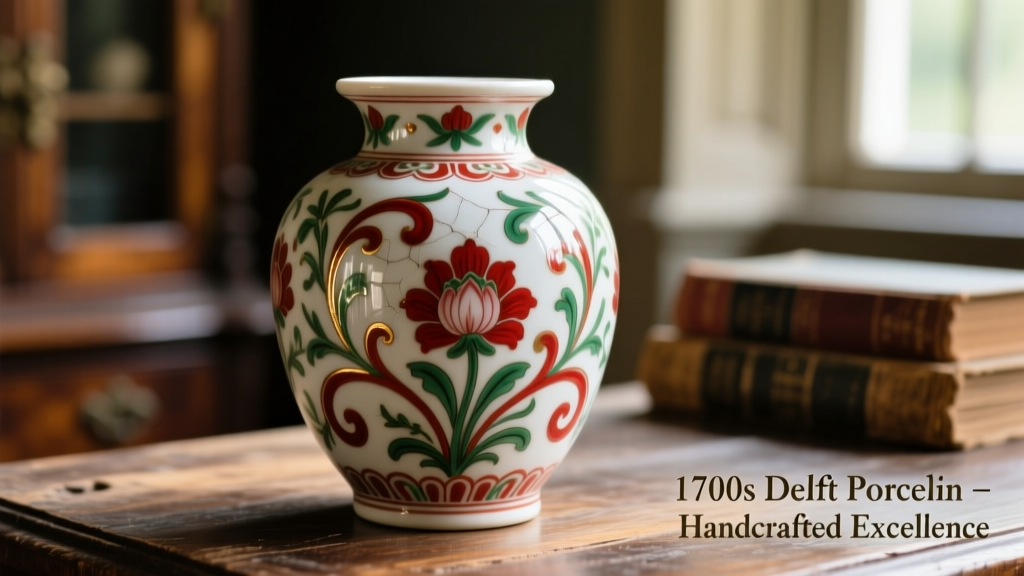
Delft Vase with Stylized Flowers in Red and Green Enamels: A 18th-Century Dutch Ceramic Treasure (2–4 Inches)

Rita Hayworth’s 1940s Movie Photo: Authenticity, Provenance, and Collectibility of the 7½ × 9¼ Inch Studio Portrait
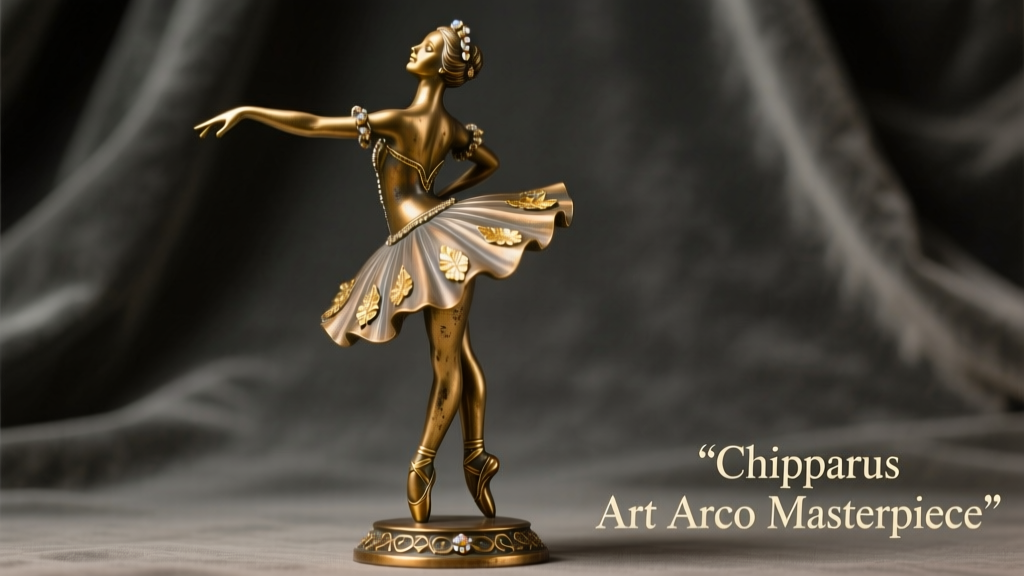
Chiparus Bronze Group: 'Ballet Dancer' in Ivory-Gilt Finish — A 1920s Art Deco Masterpiece Measuring 18¼ Inches
Royal Nymphenburg Vase: Painted Parrots, Gilded Detail, and 20th-Century Bavarian Porcelain Mastery

Libbey Bowl, Colonna Cut Glass: American Brilliant Period Masterpiece (3½ × 8 Inches)

Glass-Blown Compote with Cut-Star Applied Foot Knop Stem: A Technical & Historical Appraisal of a 10¼ × 6½ Inch American Brilliant Period Masterpiece
Mother Goose Cookie Jars by Fitz & Floyd: A Collector’s Guide to Iconic American Ceramic Art
Quezal Shade Iridescent Gold Bell Form 6-Inch: A Masterpiece of Early 20th-Century American Art Glass Lighting