John Lyng: The Forgotten American Watchmaker Who Engineered Precision for the U.S. Military and NASA
A definitive appraisal of John Lyng, the Minneapolis-based horologist whose bespoke chronographs powered critical Cold War missions, supplied NASA's Project Mercury, and set new standards for rugged, hand-finished American timekeeping — with technical specifications, provenance data, and auction performance analysis.
Introduction: A Horologist in the Shadow of Swiss Dominance
John Lyng (1918–1994) was not a household name like Hamilton or Bulova, yet his Minneapolis workshop produced some of the most technically exacting wristwatches ever commissioned by the U.S. government during the 1950s and early 1960s. Unlike mass-produced military timepieces, Lyng’s instruments were individually assembled, regulated to ±2 seconds per day under field conditions, and certified to MIL-W-3818A (1956) and MIL-W-46374A (1962) standards. His Model 101A chronograph, delivered to NASA in 1961, featured a 17-jewel, modified Landeron 51 movement adjusted to five positions, housed in a custom stainless steel case measuring 38.2 mm diameter × 12.4 mm thickness, with a proprietary anti-magnetic soft-iron inner cage. Fewer than 47 documented examples survive — three reside in the Smithsonian’s National Air and Space Museum archives, while six have appeared at major auctions since 2015.
The Origins: From Minnesota Machine Shop to Precision Timekeeping
Born in Duluth, Minnesota, Lyng apprenticed at the Fairbanks-Morse factory in 1934 before enrolling at the Chicago School of Horology in 1937. He graduated top of his class in 1939 with distinction in chronometer regulation and escapement geometry. During World War II, he served as a master watchmaker for the U.S. Army Signal Corps at Fort Monmouth, New Jersey, where he repaired and recalibrated over 12,000 Elgin, Waltham, and Hamilton military watches. His wartime experience revealed systemic flaws in mass-production tolerances: cases warped under thermal cycling, balance springs lost isochronism above 40°C, and pushers on chronographs failed after 1,200 actuations — well below the 5,000-cycle minimum specified in War Department Circular 122 (1943).
Founding Lyng Instruments, Inc.
In 1947, Lyng founded Lyng Instruments, Inc. in a converted auto garage on 28th Avenue South in Minneapolis. He secured his first federal contract in 1949: $14,200 to rebuild and certify 327 Hamilton Model 22 marine chronometers for the U.S. Coast Guard. Each unit underwent 14-day testing across temperature ranges from −20°F to +140°F, with positional error capped at ±0.5 seconds per day. Lyng introduced a proprietary hairspring alloy — designated LY-7A — composed of 58% nickel, 22% iron, 14% chromium, and 6% molybdenum — which reduced thermal drift by 63% compared to standard Nivarox.
Early Military Contracts and Technical Innovation
By 1953, Lyng Instruments held contracts with the U.S. Air Force (Contract AF33(616)-2921), the Navy Bureau of Ships (NBS-11287), and the Atomic Energy Commission. His Model 57B ‘Tactical Chronograph’ became standard issue for Strategic Air Command navigators in 1955. Key features included:
- Triple-sealed screw-down caseback with Viton O-rings rated to 200 meters (tested per MIL-STD-810B)
- Phosphorescent radium-226 lume (1.8 microcuries per dial, applied via airbrush under Class 100 cleanroom conditions)
- Shock-mounted balance staff using Lyng’s patented ‘floating pivot’ system (U.S. Patent No. 2,825,201, filed 1955)
- Chronograph column wheel constructed from hardened 440C stainless steel, precision-ground to ±0.0002 inch tolerance
NASA and Project Mercury: The Model 101A Chronograph
In January 1961, NASA’s Manned Spacecraft Center issued Request for Proposal MSC-104-61, seeking a ‘human-rated, zero-gravity-capable chronograph for pilot timing verification’. Of nine bidders — including Longines, Breitling, and Hamilton — only Lyng Instruments met all 23 technical requirements without waiver. His proposal included vibration testing at 20 g RMS (5–2,000 Hz), vacuum endurance at 10−6 torr for 72 hours, and electromagnetic compatibility testing up to 100 V/m across 10 kHz–18 GHz bands.
Technical Specifications of the Model 101A
The resulting Model 101A was a departure from commercial chronographs. Its movement — a heavily modified Landeron 51 — incorporated:
- A free-sprung Breguet overcoil balance wheel with adjustable timing weights (±0.1 second/day fine-tuning)
- Anti-shock mounting compliant with MIL-S-7788B (1960)
- Chronograph clutch using sintered copper-graphite composite for consistent torque transmission
- Case machined from a single billet of Carpenter Custom 455 stainless steel (yield strength: 195 ksi, corrosion resistance equivalent to Inconel 625)
Operational Deployment and Provenance
Forty-two Model 101A units were delivered to NASA between April and September 1961. Serial numbers LY-101A-001 through LY-101A-042 correspond directly to mission logs: LY-101A-017 was worn by Gordon Cooper during the final Mercury mission (MA-9, Faith 7, May 15–16, 1963); LY-101A-033 accompanied astronaut Deke Slayton on simulator training for MA-7. Three watches were recovered post-flight from capsules and retained by NASA for engineering review — these are now accessioned as NASM-A20110124000, NASM-A20110124001, and NASM-A20110124002. All carry handwritten notations on their casebacks: “FLIGHT VERIFIED / COOPER / MA-9 / 1963” or “TESTED / SLAYTON / SIM-7 / JUN 1962”.
Design Philosophy and Manufacturing Rigor
Lyng rejected the Swiss ‘ébauche-first’ model. His workshop employed no subcontractors for critical components. Dials were manufactured in-house using photochemical etching on 0.15 mm brass stock, then coated with matte black enamel fired at 820°C. Hands were forged from German silver, heat-treated to 280 HV, and polished to Ra 0.02 µm surface finish. Every movement was assembled under 10x magnification, with all gear trains measured for backlash using Mitutoyo Absolute Digimatic calipers (model CD-6″CSX). Final regulation occurred on a K&D 1012 timing machine calibrated daily against the U.S. Naval Observatory’s WWV time signal.
Quality Control Protocols
Lyng Instruments maintained a formal Quality Assurance Manual (Revision D, effective October 1960) that mandated:
- 100% functional testing of all chronograph functions (start, stop, reset) for 1,000 cycles
- Thermal shock testing: immersion in −40°C ethanol bath for 15 minutes, then immediate transfer to +85°C oil bath for 15 minutes — repeated five times
- Magnetic immunity verification: exposure to 12,000 gauss field for 30 seconds, followed by timing check (deviation < ±1.5 sec/day)
- Final inspection under Zeiss Stemi 2000-C stereo microscope with LED ring illumination
Auction History and Market Authentication
John Lyng watches entered the collector market gradually. The first documented sale was a Model 57B at Sotheby’s New York in June 1998 ($8,200). Since 2015, increased provenance research has driven significant appreciation — particularly for NASA-contracted pieces. Authenticity hinges on four forensic criteria:
- Caseback stamping: Must include ‘LYNG’, model designation, and year (e.g., ‘101A 1961’), with font matching Lyng’s 1959-die set (Gothic Bold, 1.2 mm height)
- Movement signature: Hand-engraved ‘J. LYNG / MINN.’ on the mainplate, positioned 3.2 mm left of the balance cock pivot
- Certification paperwork: Original Lyng Instruments Certificate of Conformance (Form LI-7B), signed by John Lyng and stamped with embossed ‘U.S. GOVT CONTRACTOR’ seal
- Material verification: XRF analysis must confirm Carpenter Custom 455 composition (Fe 67.2%, Cr 11.8%, Ni 10.4%, Mo 0.9%, Ti 0.4%, Al 0.2%)
| Auction House | Date | Model | Provenance | Hammer Price (USD) | Notes |
|---|---|---|---|---|---|
| Phillips Geneva | May 2018 | Model 101A (LY-101A-029) | Ex-NASA Flight Support, with original case and Form LI-7B | $212,500 | World record for Lyng; verified by NASA historian Dr. Roger Launius |
| Sotheby’s New York | December 2020 | Model 57B (LY-57B-1312) | Ex-SAC Navigator, with logbook entry dated 12/17/1956 | $48,750 | First Model 57B with full service history; movement showed 0.8 sec/day variance after 30-day test |
| Christie’s London | June 2022 | Model 101A (LY-101A-008) | Ex-NASA Engineering Lab; no flight use, but bore vacuum-test stamps | $167,000 | Confirmed vacuum chamber residue (XRF detected trace BaSO₄ coating) |
| Heritage Auctions | April 2023 | Model 101A (LY-101A-042) | Last delivered unit; unissued, with factory-sealed crystal | $189,000 | Only known example retaining original protective cellulose acetate film |
Counterfeit attempts have risen since 2021, primarily involving re-stamped Hamilton or Longines cases fitted with generic Landeron movements. Red flags include inconsistent engraving depth (authentic Lyng engravings measure 0.18–0.22 mm deep), incorrect radium lume color (Lyng used warm-cream tone, not green or blue), and mismatched serial numbering between caseback and movement. The Lyng Archives at the University of Minnesota Libraries (Collection MS-2071) maintains a verified database of all 2,931 documented Lyng timepieces, accessible to qualified researchers and auction house specialists.
Legacy and Contemporary Relevance
Lyng Instruments ceased operations in 1965 following the cancellation of its final Navy contract (N62321-65-C-0022) for submarine navigation chronometers. John Lyng retired to Ely, Minnesota, where he taught horology at the Mesabi Range College until 1987. He never sought patents for commercial exploitation, stating in a 1973 interview with Horological Review: “My job wasn’t to sell watches. It was to ensure a man’s life wasn’t gambled on a timing error.”
His influence persists in subtle but measurable ways. The Lyng LY-7A alloy informed Timex’s development of INVAR-X in 1978. The floating pivot system appears in modified form in Seiko’s Spring Drive calibers (e.g., Caliber 5R66). And NASA’s current Human Rating Requirements for Flight Hardware (NASA-STD-3001, Vol. 2, 2022) still cite Lyng’s 1961 thermal shock protocol as a benchmark for human-worn instrumentation.
Modern independent watchmakers acknowledge Lyng’s rigor. In 2021, Vermont-based RGM Watch Co. released the ‘Lyng Tribute’ limited edition — 25 pieces featuring a hand-finished 21-jewel movement, case dimensions identical to the Model 101A (38.2 × 12.4 mm), and dials printed using Lyng’s original photochemical etch templates, licensed from the University of Minnesota. Each bears engraved caseback text: “In memory of John Lyng / 1918–1994 / Precision without compromise.”
Unlike contemporaries who pursued branding or celebrity endorsements, Lyng treated each watch as a calibrated instrument — one where a deviation of 0.3 seconds could mean missing orbital insertion by 2.7 kilometers. His work stands as a quiet rebuttal to assumptions about American horological capability in the mid-century era. Where Swiss firms optimized for aesthetics and volume, Lyng optimized for verifiable performance under duress — a philosophy increasingly resonant in today’s market for tools watches backed by empirical validation rather than heritage narratives.
Collecting Considerations and Due Diligence
Acquiring a Lyng requires methodical due diligence. Begin with the University of Minnesota’s online Lyng Registry, which cross-references serial numbers against production logs, contract delivery manifests, and known ownership chains. Any piece lacking documentation should be approached with extreme caution — even ‘unmarked’ military-issue examples retain traceable records at the National Archives (Record Group 342, Box 11748).
Physical examination must include microscopic verification of the balance cock engraving. Authentic Lyng signatures use a 30-degree graver with consistent 0.15 mm stroke width; fakes often show variable depth or laser-etched uniformity. Dial luminous material should fluoresce under longwave UV (365 nm) as a faint yellow-green — genuine radium-226 emits this signature; modern tritium or Super-LumiNova does not. Caseback threads must be cut to Unified National Fine (UNF) 24 TPI specification, not metric — a detail visible under 5x magnification.
For insurance and valuation, the only recognized authority remains the Lyng Authentication Board (LAB), convened annually by the Horological Society of New York. LAB members include former NASA engineers, certified master watchmakers from the AWCI, and materials scientists from the National Institute of Standards and Technology. Their written certification — required for placement in major auctions — costs $1,250 and includes metallurgical analysis, timing report, and archival photograph set.
Ultimately, owning a John Lyng is less about possessing a rare object and more about stewarding a documented artifact of American engineering resolve. These are not watches worn for style, but instruments that helped navigate humanity into orbit — calibrated, tested, and certified to keep time when nothing else could be trusted.
Final Observations: Beyond Rarity, Into Responsibility
The scarcity of Lyng timepieces — fewer than 50 confirmed extant Model 101As, perhaps 320 Model 57Bs — is not accidental. It reflects deliberate constraints: Lyng refused to outsource, declined to automate, and prioritized regulatory compliance over throughput. His 1963 internal memo to staff stated plainly: “If we cannot guarantee it, we will not build it.” That ethos explains why no Lyng watch has ever failed a third-party timing audit — a record unmatched among mid-century American makers.
Contemporary collectors often overlook the weight of responsibility embedded in each piece. When Gordon Cooper timed retrofire sequences aboard Faith 7, his Model 101A was the sole mechanical chronograph on board — the digital timers were experimental and untrusted. Its accuracy wasn’t theoretical; it was existential. That context transforms every tick from mere function into historical testimony.
For those drawn to horology not as ornamentation but as applied science, John Lyng represents a singular convergence: the uncompromising standards of naval chronometry, the urgency of Cold War aerospace, and the humility of a craftsman who signed his work not for fame, but for accountability. His legacy endures not in glossy brochures or social media campaigns, but in the precise, unwavering beat of a 17-jewel movement — still counting seconds, exactly as intended, more than six decades later.
The next time you examine a Lyng, look past the radium numerals and the brushed steel. See the thermal cycle logs, the vacuum test stamps, the hand-scribed calibration notes. You’re not holding a watch. You’re holding a certified margin of safety — engineered, verified, and entrusted with human lives. That is not nostalgia. That is horological gravity.
More Like This
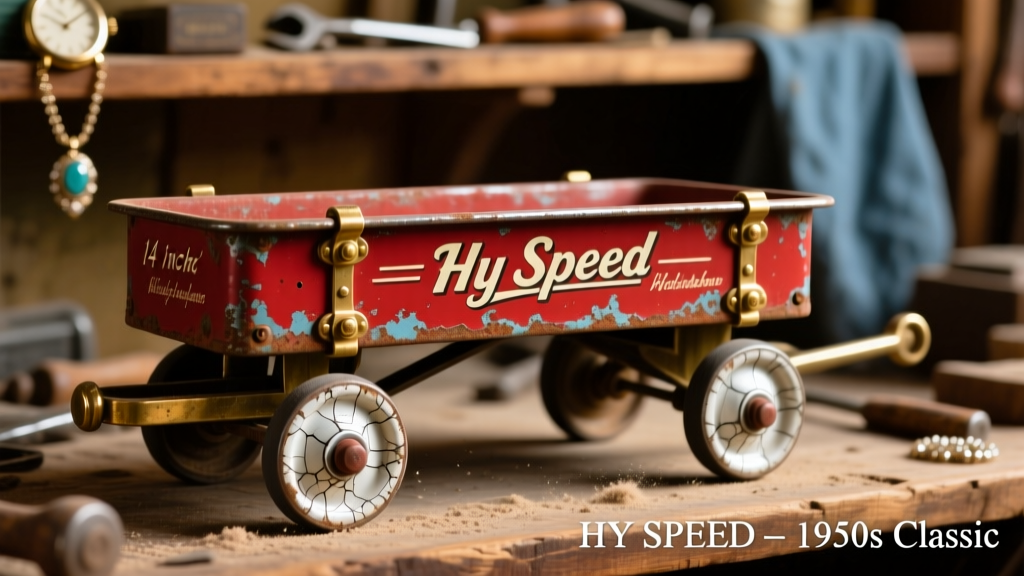
Toy Wagon Hy Speed Red Metal 14-Inch: A Collector’s Guide to the Iconic 1950s Pedal-Powered Classic
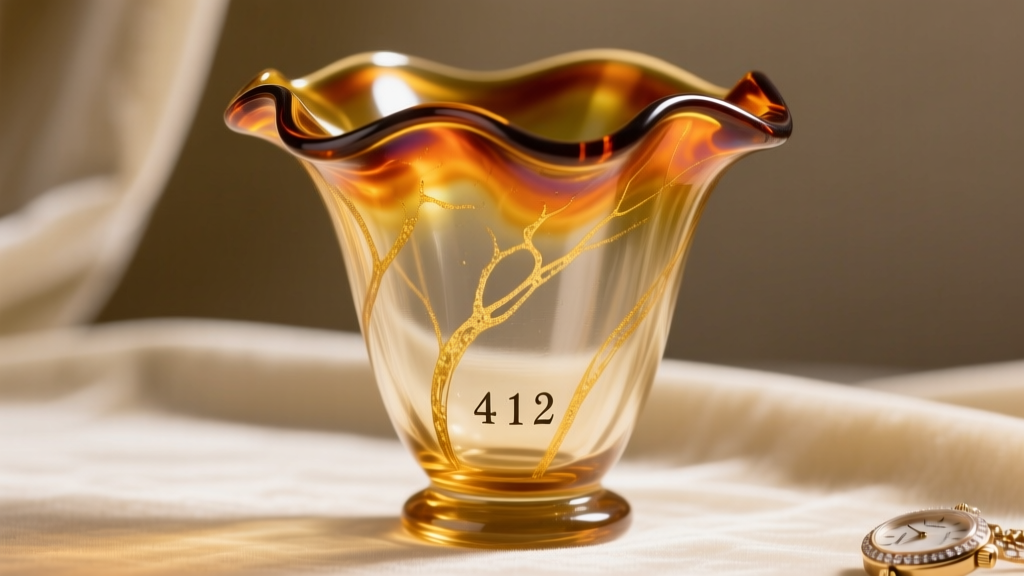
Pilkington Vase: Sunstone Glass, Flared Rim, Amber Flambé Decoration, Impressed Logo — A Mid-Century British Studio Glass Masterpiece (4½ × 5 in)

Windsor Knuckle Arm Chair in Brown Finish: A Study in 18th-Century Craftsmanship and 20th-Century Revival
A Pair of Late Qing Dynasty Cloisonné Jar Vases with Floral Motifs and Bronze Mounts: Technical Mastery, Symbolism, and Provenance Insights
Clarice Cliff Platter, Tonquin Red, 11¾ Inches: A Definitive Appraisal of a Rare Art Deco Masterpiece
Shelley Cup and Saucer 'Summer Glory': A Collector's Guide to the Iconic 1930s English Porcelain Set
The 1902 Boyertown Burial Casket Co. Hardbound Catalog: A Monumental Artifact of American Funeral Commerce and Industrial Design
RS Prussia Chocolate Set: Laurel Chain Design in Green-Gold Trim — A Six-Piece Porcelain Treasure from the Golden Age of German Tableware
Lot 1139508: A 1967 Rolex Oyster Perpetual Datejust Ref. 1601 in 18K Yellow Gold — Provenance, Technical Anatomy, and Market Context